
Specs are compiled from manufacturer listings and verified buyer reviews and can change over time — please confirm the key details on the product page before buying.
Forget hauling heavy concrete blocks or digging a trench around every flower bed. The best garden edging bricks today are lightweight resin and plastic panels that mimic real stone, lock together with spikes, and install in under an hour without a shovel. The catch is picking the right height, length, and durability for your specific yard — get it wrong and thin plastic can crack or stakes snap in hard soil.
I’m Rikta — the founder and writer behind Lawn Gear Lab. This guide is built by comparing the manufacturers’ published specifications and the patterns across verified customer reviews, so you get each pick’s real strengths and trade-offs instead of marketing spin.
You want a crisp, finished line between your lawn and flower beds without mulch spilling onto the driveway. This breakdown of the best garden edging bricks helps you match the right set to your soil type, budget, and the curb appeal you actually want.
Our Picks at a Glance

How To Choose The Best Garden Edging Bricks
Garden edging bricks keep mulch, soil, and grass where they belong while giving your yard a crisp, finished line. Choosing the wrong set usually depends on height, material, or installation method. Here are the three factors that matter most.
Height and Coverage Length
A 4-inch tall brick does a better job hiding weed-eater damage than a 2.75-inch one, but it also stands out more against low-growing ground cover. Measure the depth of the flower bed border you want to contain before picking a panel height. Total coverage length matters just as much — a 24-foot set might wrap one tree ring, while a 68-foot set handles an entire front walkway. Count your perimeter first.
Material: Resin vs Plastic
Resin edging, like the polyrock material in premium picks, resists cracking in freezing winters and holds its color longer than basic plastic. Standard plastic panels are lighter and cheaper but can become brittle under temperature swings or when hit by a string trimmer. Check the product data for the exact material type — if it only says “plastic” without a resin or PVC designation, expect less rigidity.
Spike Quality and Installation Method
Every no-dig edging set relies on anchoring spikes driven into the ground. Thicker, longer spikes — around 7.8 inches — hold better in loose soil, while flimsy spikes risk snapping in rocky or clay-heavy ground. Some designs recommend watering dry soil before driving spikes to prevent bending. Read the installation tips carefully: a few brands advise spiking every other panel, not every hole, to keep the line straight and secure.
Quick Comparison
| Model | Best For | Height | Coverage | Material | Amazon |
|---|---|---|---|---|---|
| Beuta Polyrock Bricks★ Best Overall | High-end realism & curb appeal | 2.25 in | 16 ft (4 packs) | Resin | Amazon |
| Focefec 30-Piece Set | Budget-friendly quick install | 4 in | 24 ft | Plastic | Amazon |
| JYINCPED Faux Stone | Large-area value & coverage | 2.75 in | 68 ft | Plastic | Amazon |
In‑Depth Reviews
1. Beuta Landscape Edging Polyrock Bricks
Our pick — over 4.5★ from 900+ verified ratings; the strongest balance of quality and price.
Realistic granite-look resin that installs in minutes and stays put through every season.
The first thing you notice is the weight and texture — these bricks feel substantial in the hand, and once snapped together they create a solid, smooth border that looks like cut stone pavers. Each 48-inch section holds 6 interlocking bricks, and the included 12 spikes anchor everything without needing to dig a trench. Buyers report it is sturdy and “realistic granite-like edging,” with many noting it transforms the entire curb appeal of a flower bed or raised garden.
At just 2.25 inches tall, this is the shortest pick here, which makes it ideal for shallow beds where you want a subtle, clean line rather than a tall barrier. The trade-off is that it covers less total area per box — 4 packs give you roughly 16 feet of edge, so you will need additional units for a long walkway. That lower height also means it is less noticeable from a distance, something owners praise when they want the plants to take center stage.
The crowd favorite — it holds a high score across nearly a thousand owners — and what wins people over is the appearance. Over 170 owners call out the realistic stone look as the top feature, and installation scores nearly as high. The resin material holds its integrity in all seasons without cracking. It is the most expensive per foot of the three, but buyers describe it as “worth it” for the finished result.
What wins people over
- Sturdy resin construction resists weather and weed eaters
- Realistic cobblestone texture and color that fools the eye
- Snap-together design with spikes — no digging or concrete needed
What to know
- Coverage is limited — 4 packs edge about 16 linear feet
- At 2.25 inches tall, best for shallow beds rather than deep borders
Reach for this if: your top priority is a realistic stone border that looks like you hired a mason — the resin build delivers curb appeal that basic plastic cannot match.
Look elsewhere if: you need to edge a long perimeter on a tight budget; the per-foot cost here is higher than the plastic alternatives.
2. Landscape Edging 30pcs, 4IN Tall Garden Edging Borders Kits
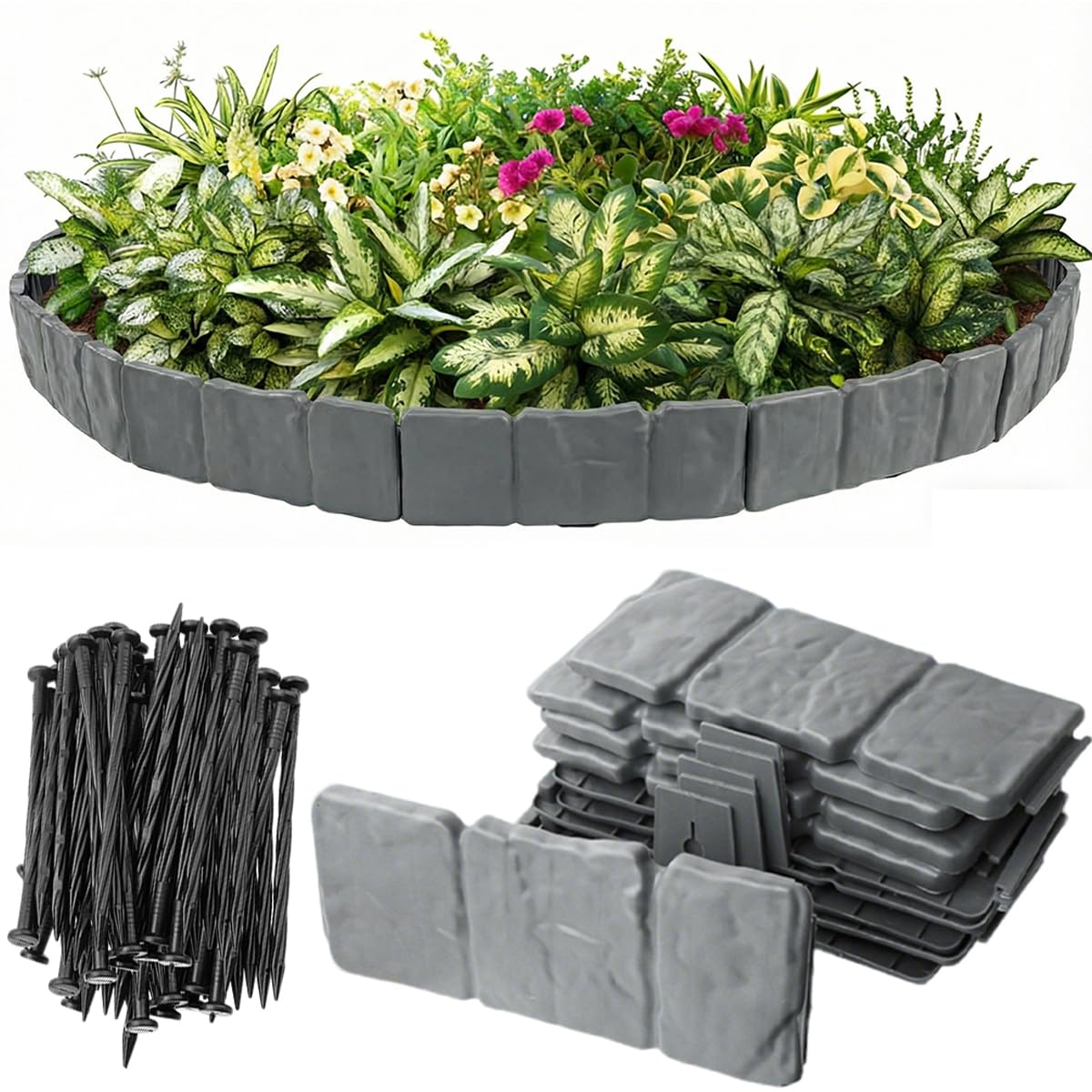
A 4-inch tall plastic edging that covers 24 feet on a budget — if your soil is forgiving.
The 4-inch height is notably taller than the other two options here, which means it does a better job blocking weed-eater damage and keeping mulch contained. The stone-like texture and gray color earn mixed reviews on appearance — some owners say it “looks great,” while others find it “very thin plastic.”
Installation is the main praise point here, with buyers calling it “so easy to install” and noting they did not need help. However, a recurring gripe is that the spikes are flimsy and “may snap in rocky/clay soil.” The manufacturer suggests watering dry ground before driving the nails, which is a sign the plastic spikes can struggle in tough conditions. At 9.6 inches per panel, the set covers 24 feet total, which is enough for a modest garden border but falls short of the 68-foot reach of the JYINCPED set below.
Owners also mention that the connection tabs can slide at angles, making it difficult to run a perfectly straight line. If you are edging a square or rectangular bed, this may require extra attention during installation. The upside is the low cost and the fact you can splice panels into various shapes.
Honest bottom line: a solid entry-level pick for soft, rock-free soil where you want a tall barrier on a small budget. The thin plastic and fragile spikes are the trade-off — treat the soil prep seriously and order extra stakes if you hit resistance.
Best for: a quick weekend project on a forgiving lawn with no heavy clay — the 4-inch height hides grass clippings and mulch effectively.
skip it if: your yard has rocky, compacted, or clay-heavy soil; the plastic spikes may snap during installation.
3. Landscape Edging Faux Stone Edging Garden Edging Border, 68FT
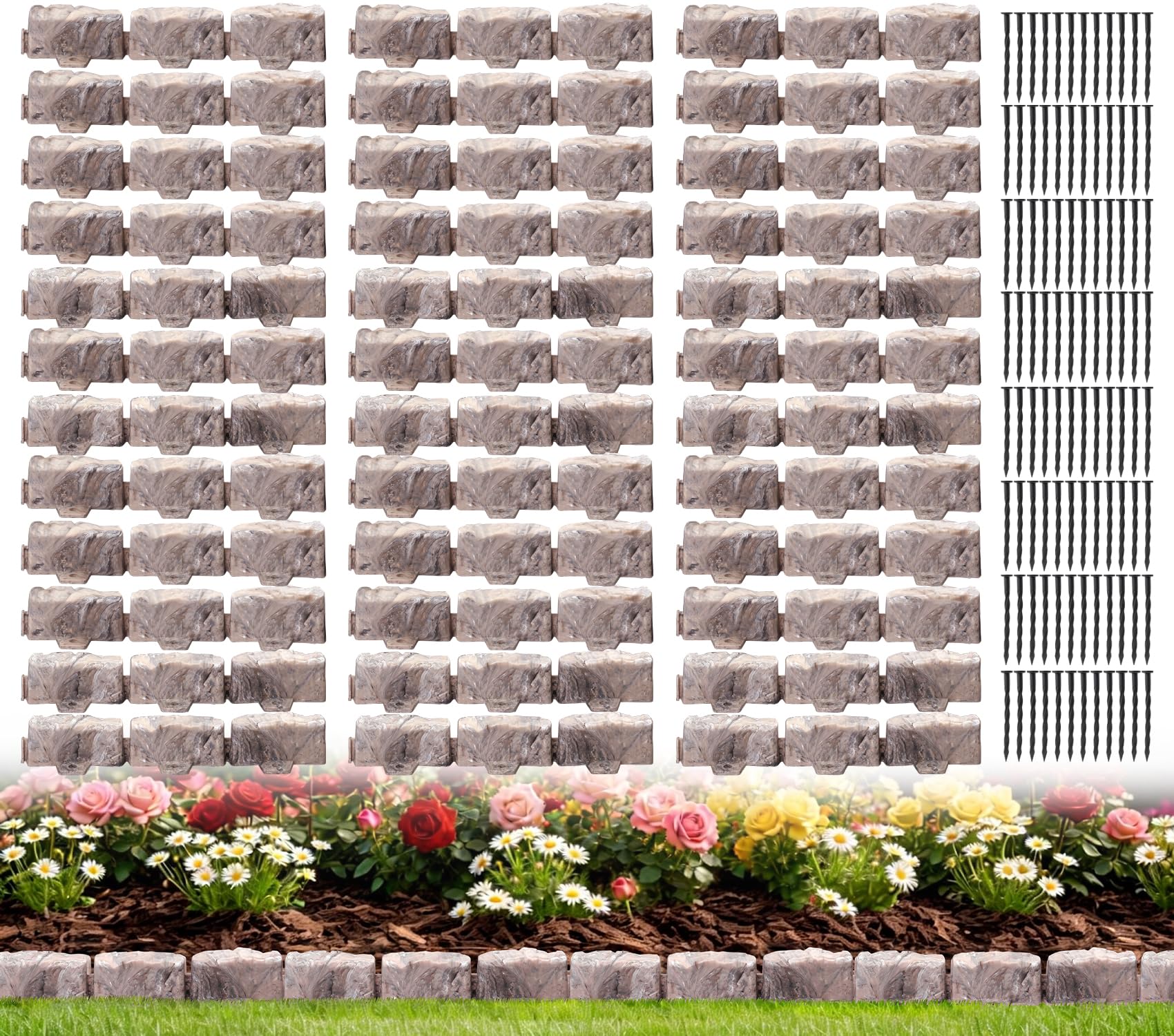
Over 68 feet of easy-to-install faux stone edging that stretches around an entire yard.
This 48-piece set covers the most ground of the three — 68 linear feet when laid end to end — making it the right choice if you are edging a long driveway, multiple flower beds, or a large pathway. At 2.75 inches tall, it sits between the Beuta (2.25 inches) and the Focefec (4 inches) in height, offering a moderate barrier that looks like rustic stone without being too imposing. The brown color blends naturally into soil and mulch, which is why over 30 owners call out the appearance as a strength.
Installation is straightforward: the panels snap together, and the anchoring spikes go into the side holes only — not the center hole — a detail owners emphasize as important for getting it right. One buyer says, “if you follow instructions and spike every other unit they are very secure and plenty of spikes.” That advice is echoed by others who note that trying to spike every hole can lead to a wavy line or insufficient stakes. A few owners mention needing an extra stake pack for curves and corners, so budget for that if your garden has tight angles.
The plastic material gets mixed feedback — some call it “thin plastic” while others say it holds up well against string trimmers and weather shifts. At 6.99 kg, this is the heaviest set here, which actually helps it stay grounded once installed. It is more expensive than the Focefec set but delivers more than double the coverage, so the value proposition leans strongly toward larger projects.
The key takeaway: this is the coverage king for the price. If your project runs 50 feet or more, the per-foot cost here beats both competitors. Just follow the spike-every-other-unit rule and you will avoid the common complaints of waviness or insufficient stakes.
Best for: covering a long perimeter on a budget — 68 feet of border for a price for for 68 feet versus for 16 feet of the Beuta.
Think twice if: your garden has many tight curves or corners; the overlapping post design works for gentle bends but you will want extra stakes to keep sharp turns secure.
Understanding the Specs
Panel Height (inches)
This is the vertical measurement of a single edging brick from the ground up. A 2.25-inch panel sits low and subtle — good for shallow flower beds where you want a clean line without blocking a low-growing plant. A 4-inch panel provides a taller barrier that hides string trimmer damage and keeps thicker mulch layers contained. Choose height based on how much separation your bed needs and how visible you want the edge to be.
Total Coverage (linear feet)
This spec tells you how many feet of border a single box covers when all panels connect end to end. A 24-foot set handles one tree ring or a small garden bed. A 68-foot set can wrap around a front walkway, multiple flower beds, and the driveway. Measure the perimeter of every area you plan to edge before buying — you can always order extra boxes, but mixing different product lots can cause slight color variation.
FAQ
How do I install garden edging bricks without digging a trench?
Will plastic edging bricks crack in freezing winter weather?
How do I connect the panels to create a straight line?
Can I cut the edging bricks to fit a specific length?
Will the spikes hold in sandy or loose soil?
Do garden edging bricks rust or stain the soil?
How many inches tall should garden edging bricks be for a raised bed?
Will the edging stay in place during heavy rain or wind?
Do I need to remove grass or dig a trench before installing no-dig edging?
What is the difference between resin and plastic edging bricks?
Final Thoughts: The Verdict
For most people, the best garden edging bricks are the Beuta Polyrock Bricks because they deliver the most realistic stone look and sturdy resin build that holds up through all seasons. If you need to cover a long stretch of yard on a tighter budget, grab the JYINCPED Faux Stone Edging for 68 feet of coverage at a solid per-foot value. And for a quick, low-cost project in soft soil where height matters, the Focefec 4-Inch Tall Set does the job without digging. The real winner is knowing your soil and your perimeter length before you open the first box.
How We Picked
We do not accept paid placement. Every pick is matched to a real buyer and a real use-case; we do not hands-on test units.
Sources & Methodology
Specifications: manufacturer listings and product documentation. Review insights: verified customer reviews, as of July 2026. Pricing: not shown on this page (it changes often); check the current price via the retailer link.
As an Amazon Associate, Lawn Gear Lab earns from qualifying purchases. This does not affect which products we feature.