
Specs are compiled from manufacturer listings and verified buyer reviews and can change over time — please confirm the key details on the product page before buying.
Getting a crisp, clean edge between your lawn and flower beds can feel like a never-ending battle against creeping grass and scattered mulch. The wrong choice here leads to warped plastic, broken stakes, and a yard that looks messy no matter how much you weed. This guide cuts through the options to find the landscaping bricks for edging that deliver a clean line and actually hold it.
I’m Rikta — the founder and writer behind Lawn Gear Lab. This guide is built by comparing the manufacturers’ published specifications and the patterns across verified customer reviews, so you get each pick’s real strengths and trade-offs instead of marketing spin.
You’ll find everything from faux stone blocks that look like real masonry to flexible plastic systems that bend around tricky curves. The goal is to match the right system to your yard’s layout, your soil type, and how much abuse the edging will take from mowers and weather. These are the best landscaping bricks for edging that real buyers rate highest and trust most.
Our Picks at a Glance


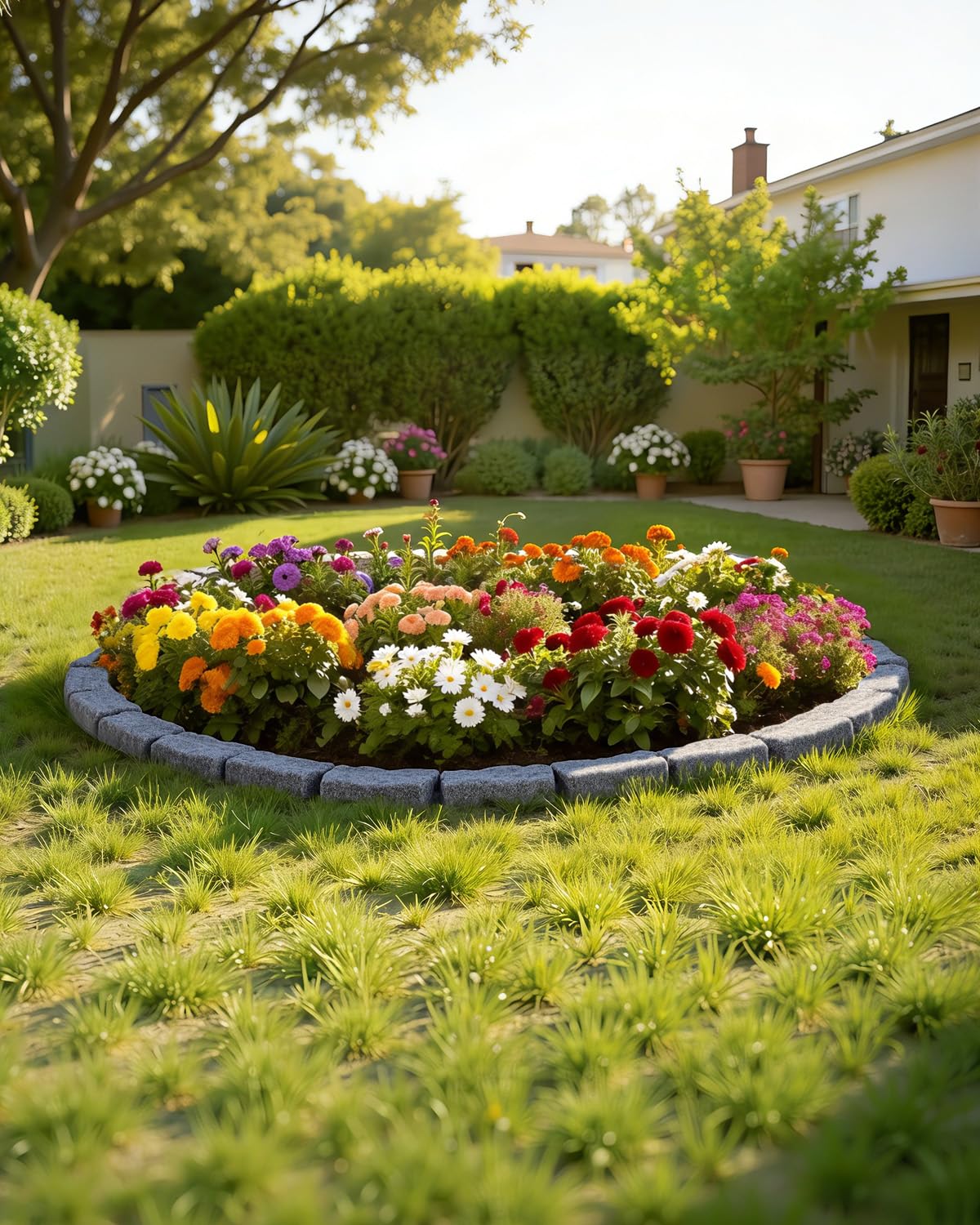
How To Choose The Best Landscaping Bricks For Edging
Picking the right edging starts with understanding your yard’s demands. A straight bed border on flat ground has very different needs than a sloping tree ring or a curved pathway. You are balancing height, flexibility, material durability, and how much effort you want to put into installation.
Height Matters for Containment
The exposed height of the edging determines what it can hold back. A 2-inch tall strip is enough to separate grass from a flower bed visually, but you need something around 5 to 6 inches to keep a thick layer of mulch, decorative rock, or gravel contained. Deep mulch beds require taller edging to prevent the material from washing onto the lawn during heavy rain.
Material and Weather Resistance
You are choosing between a few core material families. Resin-based faux stone blocks offer a premium look and resist fading and corrosion, though they tend to be pricier. High-density polyethylene (PE) and polypropylene (PP) plastics are the backbone of most flexible edging systems. They handle temperature swings and resist rust, but the thin versions can warp in direct summer sun or become brittle in freezing cold. Look for thicker panels (around a quarter-inch or more) if your edging takes foot traffic or string trimmer hits.
Anchoring and Installation Style
The way the edging locks into the ground is the difference between a one-day project and a weekend of frustration. Some systems use a no-dig approach with metal or nylon spikes that you hammer through pre-set holes. Others rely on interlocking panels with their own anchoring stakes. The best setup for you depends on your soil. Sandy or loamy soil accepts spikes easily. Hard clay or rocky ground may require digging a shallow trench first, which makes a panel system with a tongue-and-groove connection more forgiving than driving stakes into rock.
Quick Comparison
| Model | Best For | Height | Total Length | Material | Amazon |
|---|---|---|---|---|---|
| Beuta Polyrock Blocks★ Best Overall | Stone look with curb appeal | 6.5 inches | 16 ft (4 pack) | Resin | Amazon |
| Ruppence Weaving EdgingPremium Pick | Interlocking panels for neat lines | 11 inches | 30 ft (30 panels) | Plastic | Amazon |
| VEVOR Faux Stone EdgingGreat Value | Realistic stone texture on a budget | 2.2 inches | 16 ft (4 pack) | PE Plastic | Amazon |
| HLOGREE 3D Woven Edging | Budget-friendly & flexible curves | 5.1 inches exposed | 20 ft (20 panels) | ABS Plastic | Amazon |
| AMURS Landscape Border | DIY-friendly panel system | 5.9 inches | 20 ft (20 panels) | PP Plastic | Amazon |
| JERIA 66 FT Edging Kit | Large area roll-out coverage | 2 inches | 66 ft | Plastic | Amazon |
| ZSLTLDU Landscape Edging | Complete kit with hammer included | 4 inches | 33 ft | PE Plastic | Amazon |
| Hugeleaf Garden Edging | Low-profile mower-friendly border | 2 inches | 60 ft | Plastic | Amazon |
| Quibbay Flexible Edging | Long runs with high stake count | 3.15 inches | 100 ft | PE Plastic | Amazon |
In‑Depth Reviews
1. Beuta Landscape Edging Polyrock Blocks
Our pick — over 4.5★ from 500+ verified ratings; the strongest balance of quality and price.
The crowd favorite that makes mulch behave and driveways look expensive.
This is the one that tops the charts for a reason — it averages a 4.7-star rating from over 500 owners who almost universally call it elegant and durable. The key spec driving that love is the 6.5-inch height, which buyers confirm “effectively contains mulch” and puts an end to mulch washing into the lawn after a storm. Each of the 4 sections is 48 inches long and 4 inches wide, mimicking natural stone with a greystone resin that resists rust, fade, and corrosion (so the border looks the same after a year of sun and rain).
Installation relies on a patent-pending connection system with 8 included spikes per section. You get 5 different block types — Start, Stop, Turn Right, Turn Left, and Extender — which lets you build curves around tree rings or straight runs along a driveway without forcing a bend. The trade-off is that starter and finishing blocks for each section are sold separately, and the overall investment is higher than a plastic roll. But as the owner consensus puts it, this system delivers curb appeal that holds up year after year.
Real stone look
- 6.5-inch height holds mulch and gravel securely
- Greystone resin resists fading and corrosion through all seasons
- Five block types allow both straight lines and sweeping curves
Heavy to install
- Starter and finishing blocks require separate purchase
- Upfront cost is higher than basic plastic edging systems
DIY stone lovers: Homeowners who want a polished, stone-like border that keeps mulch contained and adds real visual value to the property.
Lightweight seekers: Budget for the extra starter/finishing blocks before you begin or you may be left with an incomplete look at one end of the run.
2. Ruppence Weaving Flower Bed Garden Edging Borders (30-Pack)
Thick, tall panels that lock together without a single tool.
This is the system for the gardener who hates the look of a wavy plastic line. Each of the 30 panels is 11 inches tall, which is more than enough to contain even deep beds of shredded bark or river rock (so your mulch stays put after a downpour). The tongue-and-groove interlocking structure is the standout feature here — the thin groove design holds each panel tightly to its neighbor, preventing the gaps and peel-off that plague simpler systems.
The weaving pattern on the face adds texture that blends into a garden setting, and the reverse side offers a different pattern, giving you two aesthetic options from one kit. The 8.5-inch anchoring stakes are generous in length, though the bottom points of the panels themselves are on the thinner side, so a rubber mallet is recommended over an iron hammer. Installation on soft ground is a push-in affair; hard ground needs a shallow trench. The popular verdict is that this is an affordable, easy-to-assemble border that makes flower beds look “more put together.”
Compared to the Beuta blocks above, the Ruppence system is 11 inches tall versus the Beuta’s 6.5 inches, and it costs less per foot, but the plastic material lacks the premium stone aesthetic that the Beuta resin delivers.
Curved beds: Deep flower beds and vegetable gardens where tall containment and a clean interlocking line matter more than a boulder-like appearance.
Straight lines: You have very hard, rocky soil that makes driving the thin plastic stakes a frustrating chore — a trench is almost mandatory in those conditions.
3. VEVOR Faux Stone Landscape Edging (4 Pack)
Realistic stone texture that fools the eye without the back strain of real masonry.
VEVOR’s faux stone edging uses rotational-molded PE plastic to create a raised surface pattern that genuinely looks like chiseled stone at a glance. Each of the 4 packs contains 6 brick sections, giving you 24 bricks total for a 16-foot run, with each piece measuring 46.46 inches long and 2.24 inches tall. The hollow underside is a deliberate design — it prevents the blocks from sinking into soft soil over time, a problem solid bricks often have.
Buyers consistently praise the appearance and how easy it is to install, noting it holds back rock and mulch from falling into mower tracks. The catches are that the kit only comes with 12 spikes, which owners flag as insufficient for a full 16-foot installation, and the one-way placement (the hollow bottom has a specific orientation) means you have to plan your layout ahead. The brown color has slight red undertones that matched one owner’s red pavers well, so color matching is worth a look at the product images.
Small projects: You want the look of a stone border for a straight or gently curving bed without the weight and cost of real pavers.
Large areas: Your project involves tight 90-degree corners — reviewers found corner bending difficult and recommend this for more gradual curves.
4. HLOGREE 20 Pack Garden Edging with Stakes

Flexible enough to wrap around a rose bush without kinking.
HLOGREE’s edging covers 20 linear feet with 20 interlocking panels that stand 5.1 inches exposed above the ground (6.73 inches total height). The 0.27-inch thickness gives it enough body to resist string trimmers, yet the ABS plastic (a tough, lightweight type of plastic) bends up to 70 degrees without snapping, making it among the most curve-friendly options here. The 3D woven texture on the front mimics natural vines, while the back has an ocean-wave pattern — both sides are finished, so the back looks intentional even where visible.
The latch pin design is a practical upgrade: the top clasps into place to lock the edging, and the serrated bottom grips the soil to resist wind uplift. At 2.16 kg (about 4.8 pounds) for the entire 20-panel pack, it is substantially lighter than the Beuta blocks (10.75 kg for just 4 sections), which makes it far easier to move around the yard during layout. The recurring buyer feedback centers on its appearance and easy installation, though some note that the top tips of the stakes can break if over-torqued.
Quick setup: Gardeners with curved beds, circular tree rings, or irregular borders who need a system that bends without cracking and looks finished from both sides.
Long-term use: Projects requiring edging taller than 5.1 inches — owners with deep mulch beds wished for an 8-inch version.
5. AMURS 20Pcs Landscape Border 6 Inch

Heavy-duty panels that take a kick from a lawn mower and stay put.
AMURS uses thickened polypropylene (PP) material (a durable, warp-resistant plastic) in its 20-panel kit, each panel measuring 12.2 by 5.9 inches, for a total run of 20 feet. The manufacturer claims it can withstand 60 mph winds without warping, and the interlocking connectors allow tool-free assembly — just align the front side outward and tap the stakes with a rubber mallet. For soft soil you can push the stakes in directly; hard ground requires a shallow trench, which is standard for this type of panel.
The decorative hooks on the anchoring stakes are a unique feature — they are designed for hanging seasonal lights or small pot decor directly on the edging. Durability and ease of installation are the two most-praised aspects, with owners calling it “very sturdy” and noting it holds mulch back effectively. The honest counterpoint from a few experiences: the plastic is sturdy but not indestructible, and an accidental kick can break a board if the ground is hard. It is also note that at 2.17 kg for 20 panels, it is nearly identical in weight to the HLOGREE set, despite being slightly taller (5.9 inches vs 5.1 inches exposed).
Border definition: Straight flower bed borders and gravel paths where you want a thick, rigid panel that won’t flex in the wind.
Deep containment: You need tight-radius curves — the thick PP material is designed more for straight lines and gentle bends than sharp loops.
6. ZSLTLDU 33FT Landscape Edging with Hammer
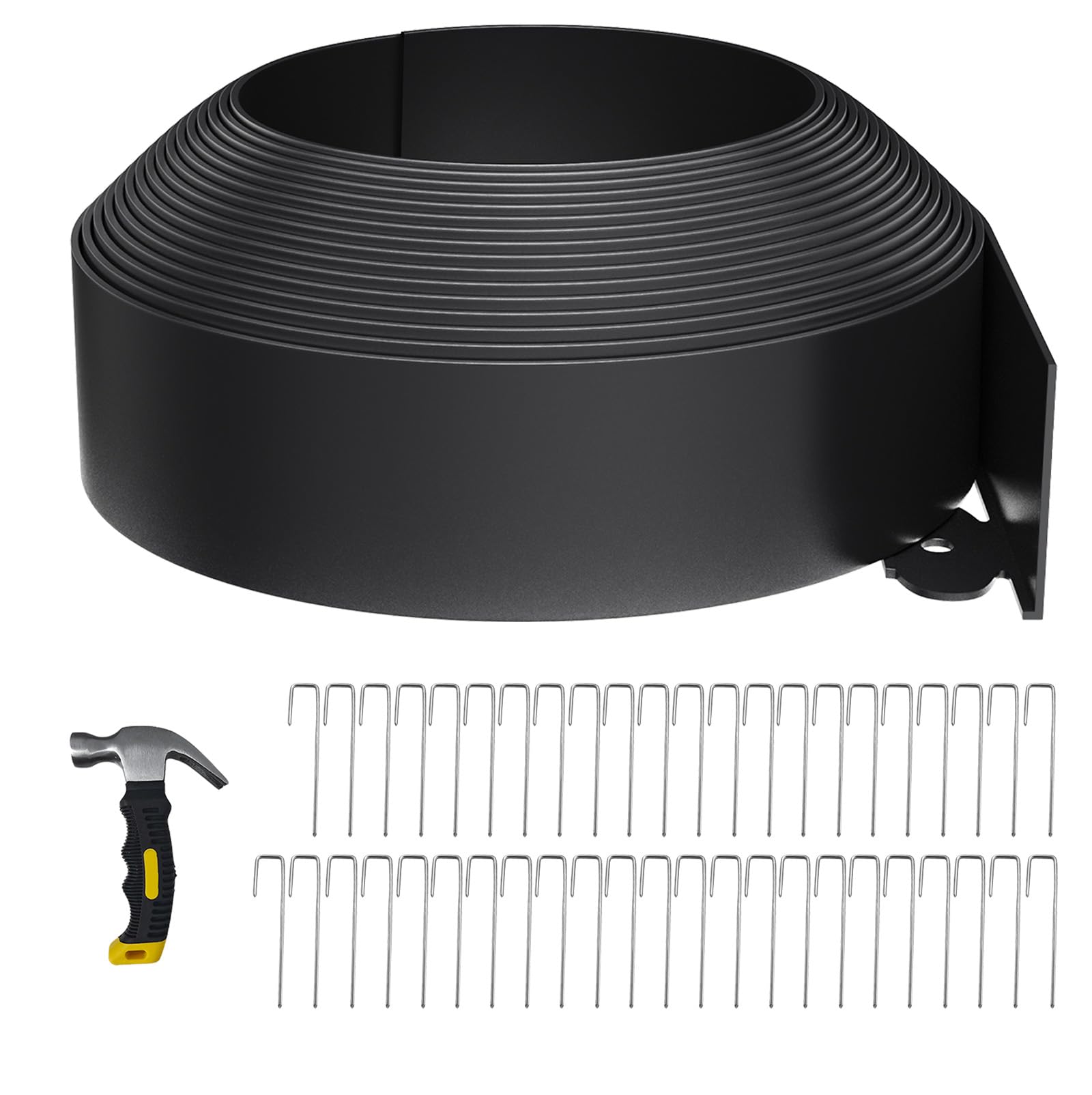
Everything you need in one box — including a hammer that’s actually decent.
This is a turnkey kit that spares you a separate trip to the hardware store. You get 33 feet of 4-inch tall PE plastic edging (polyethylene, a flexible plastic that handles temperature changes well), 45 metal J-shaped ground stakes (6 inches long), and an 8-ounce hammer. The metal stakes are a meaningful upgrade over the nylon or plastic spikes that come with many competitors. The J-shape has two anchor points, which creates a more stable hold in loose or sandy soil than L-shaped or spiral stakes.
The edging itself is made from high-density PE plastic that is flexible enough to form straight lines or curves but holds its shape without deforming in the heat. You can cut it with scissors to customize the length. The installation is straightforward — lay the edging along your border, pound a stake through every 2 or 3 pre-set holes, and you are done. The main drawback flagged by owners is that the kit includes 45 stakes, but a 33-foot run ideally needs more for a truly secure hold, especially on hills or curves.
Easy pounding: You want a complete, ready-to-install system with metal stakes that can handle hard clay soil without snapping.
Heavy duty: Your border runs across a slope — the included stakes may not be enough to keep the edging from slumping downhill.
7. Quibbay 3.15″ x 100′ Landscape Edging
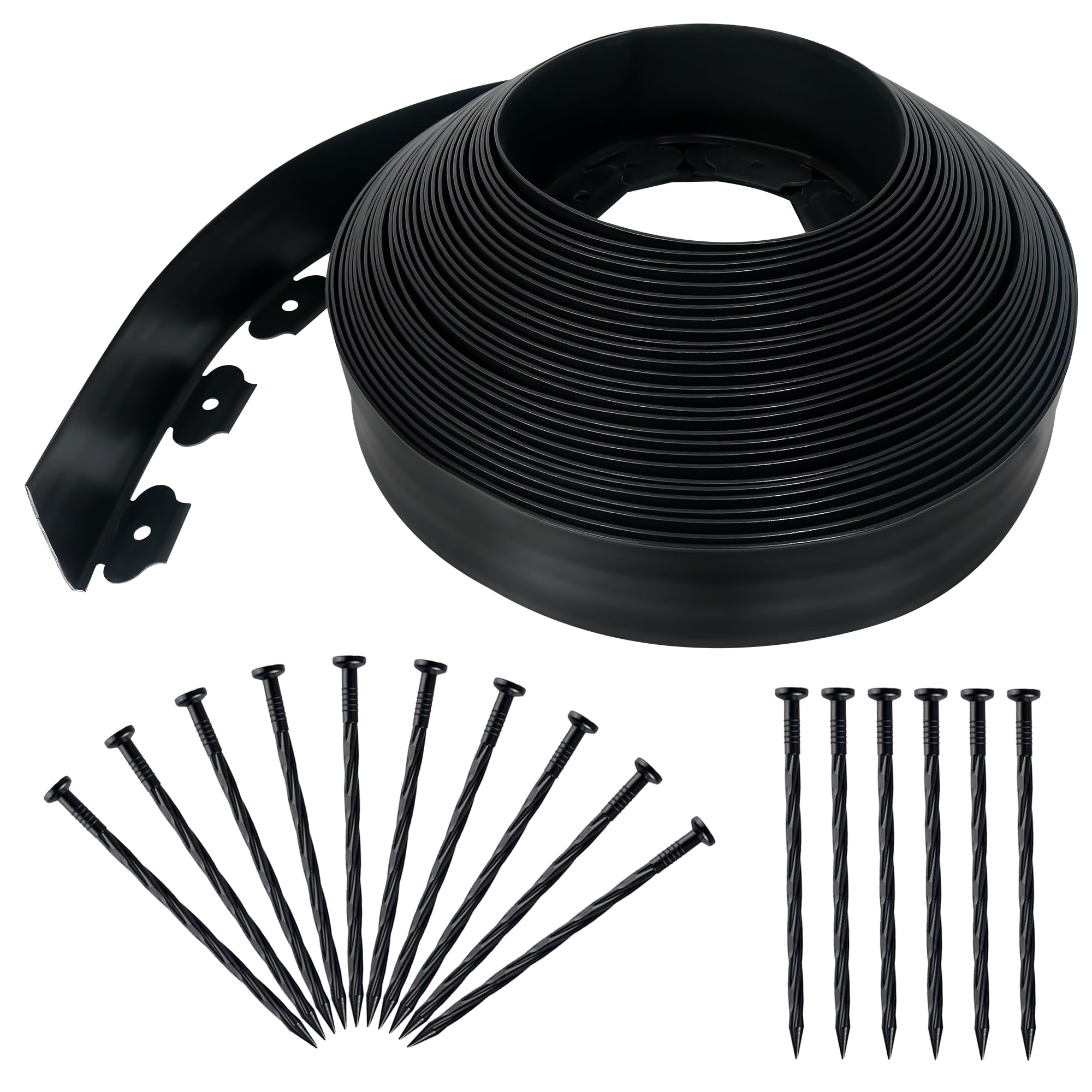
A 100-foot roll for when your yard measured in acres, not feet.
If you have a large property with long, uninterrupted borders, the Quibbay edging is built for scale. The roll gives you 100 feet of 3.15-inch tall PE plastic edging, and it comes with 150 spiral nylon anchoring spikes — the most generous stake count in this lineup. The spiral design is reusable and resists rust, though buyers warn that they are plastic, not metal, so pilot holes (small pre-drilled holes) are advisable in hard soil.
The PE material is soft enough to cut with scissors for custom lengths and bends easily into curves without breaking. Owners who bought multiple rolls (one bought 500 feet) for large landscaping projects report high satisfaction with the value. The main durability gripe is that the edging can look wavy in direct summer heat if not pulled tight during installation. Installing it on a hot day when the plastic is more pliable helps it settle straighter as it cools.
Long runs: Large-scale landscaping projects — pond borders, long driveway edges, or defining multiple tree rings across a sprawling yard.
Tall borders: Anyone with compacted or rocky soil, because the plastic spikes will break without pre-drilling or switching to metal stakes.
8. JERIA 2 Inch Tall 66 FT Garden Edging Kit

A two-inch strip that works around roses and tolerates the mower’s edge.
The JERIA kit gives you 66 feet of low-profile 2-inch edging with 90 spikes — enough for a large border at a price that undercuts most competitors by a wide margin. The plastic material is flexible enough to form circles, squares, hearts, or any shape you want, and it snaps back when accidentally stepped on. Owners successfully used it around rose bushes, noting it stands up to weekly mowing and edge trimming without coming loose.
Installation requires no digging — you just stake it down along your desired line. The main limitation is the 2-inch height, which is fine for defining a visual border between lawn and flower bed but insufficient for containing a deep layer of mulch or gravel. A few buyers also noted that the plastic is a bit too soft to form a perfectly straight, crisp line, making it better suited to curves than ruler-straight borders.
Low profile: You need a fast, no-dig border for a large area where you mainly want to separate grass from plants, not hold back piles of mulch.
Root blocking: Your flower beds have a thick layer of decorative stone or bark that needs a taller barrier to stay contained.
9. Hugeleaf 2 Inch Tall 60 Feet Garden Edging
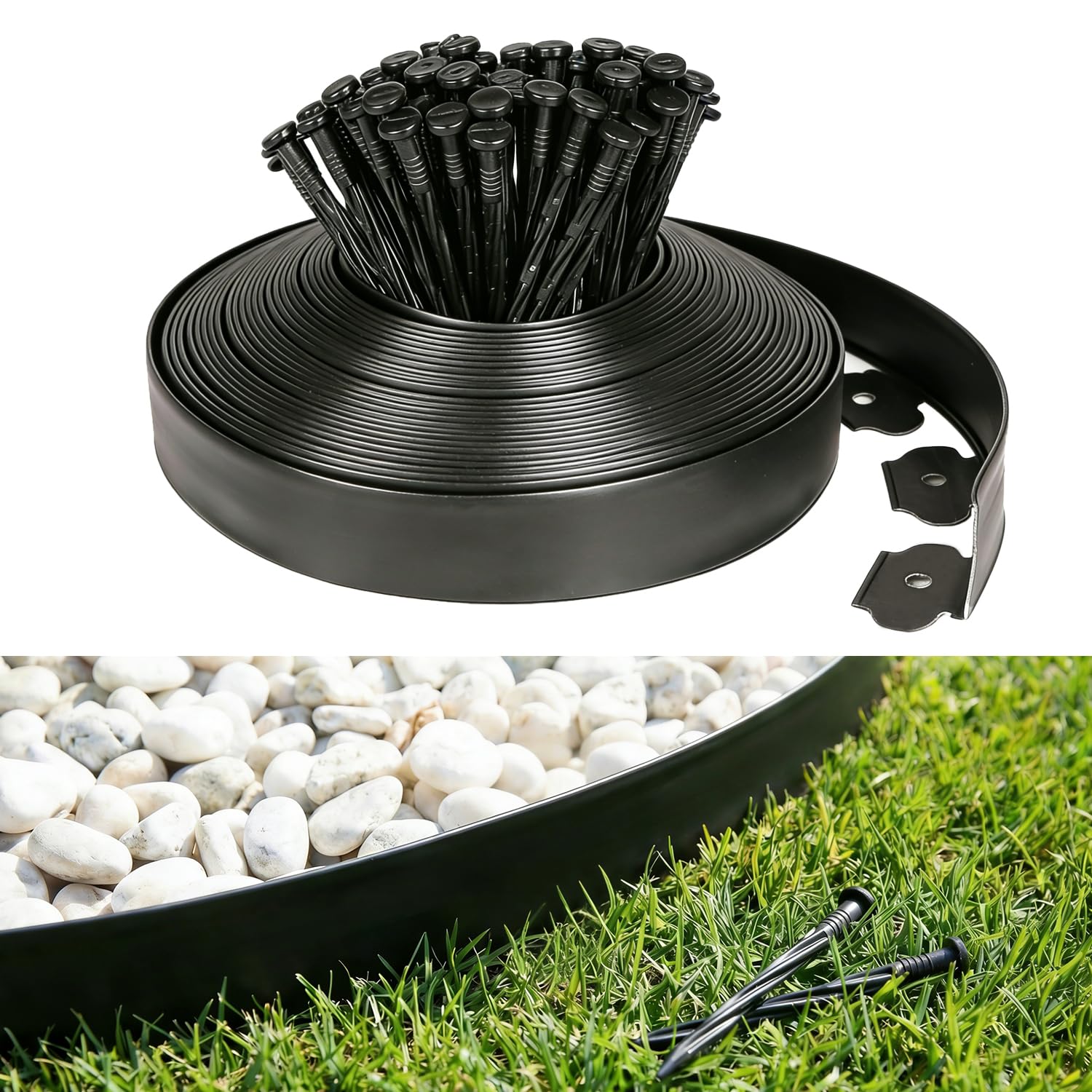
The right height for running a mower wheel right alongside the border.
At just 2 inches tall, Hugeleaf’s edging is designed to be unobtrusive — low enough that you can run your mower wheel on the other side and glide right over it, but tall enough to separate lawn from bed. The 60-foot roll includes 60 stakes, and the plastic can be trimmed with scissors to fit your exact layout. Owners who used it on a 70-foot walkway border found that letting the roll sit in the sun for a few hours before installation helped the material relax and lie flatter.
The main strength is simplicity: it works for simple borders in semi-rocky clay soil, and it keeps pine straw and bark contained. The consistent feedback about durability is mixed — some find it sturdy while others note the plastic stakes break if hit too hard. The instructions recommend dampening the soil before driving stakes in hard ground, and using a rubber mallet rather than an iron hammer reduces breakage. The practical workaround owners shared is that even if a stake breaks, the nail portion still goes into the ground and gets covered by mulch.
Budget friendly: Homeowners wanting a quick, low-profile divider between lawn and a pine straw or mulch bed, where the mower needs to pass directly over the edge.
Durable needs: You need significant mulch retention — at 2 inches, this will not keep deep gravel or thick bark from spilling onto the lawn.
Understanding the Specs
Exposed Height (Visual Containment)
The height of the edging that sits above the ground determines its primary job. A 2-inch tall strip is a visual separator — it clearly marks where the grass ends and the bed begins, but it will not hold back a heavy layer of mulch. Edging that stands 5 to 7 inches tall acts as a real barrier, keeping decorative rock, shredded bark, and soil inside the bed even during heavy rain. The 6.5-inch height on a product like the Beuta blocks is specifically designed for this containment role, and homeowners confirm it works.
Material and Weather Resistance
The three main materials you see are resin, polyethylene (PE), and polypropylene (PP). Resin (used in the Beuta blocks) is a denser, more UV-stable material that resists fading and corrosion over years of sun exposure. It has a heavier feel and mimics stone well. PE and PP plastics are lighter and more flexible. High-density PE holds up better against temperature swings and is less likely to become brittle in winter than standard plastic. The key difference is that thin PE or PP edging (under 0.1 inches) can warp or soften on a hot day, while thicker panels (around 0.27 inches, like the HLOGREE set) maintain their shape.
Total Coverage (Length per Kit)
Knowing how many linear feet you need before buying is essential. A small front garden bed might only need 20 feet, but a border around the entire backyard can run 100 feet or more. Kits range from 16 feet (the Beuta and VEVOR block sets) to 100 feet (the Quibbay roll). The panel-style systems (AMURS, HLOGREE) give you 20 feet per kit and can be expanded by buying additional packs. The roll-out systems (JERIA, Hugeleaf) give you the most coverage per dollar, but are harder to curve tightly than individual panels.
Anchoring Stakes and Installation
The stakes that hold the edging in place are the weak link in many systems. Metal spikes (like the J-shaped ones in the ZSLTLDU kit) penetrate hard clay and gravel better than plastic or nylon spikes, which can snap if the soil is compacted. The number of stakes matters too — more stakes mean the edging stays flatter and resists lifting in wind or from mower tires. A general rule is one stake every 12 to 18 inches for a stable hold, and many kits under-supply stakes for the length they provide. Check the stake count and consider buying extras if your soil is loose or your border is on a slope.
FAQ
How do I keep landscape edging from shifting or lifting after heavy rain?
Can I install landscape edging without digging a trench?
What is the best height of edging for keeping mulch in a flower bed?
Will plastic landscape edging become brittle and crack in winter?
Which is better for curved borders — brick-style blocks or flexible panels?
How many stakes do I really need per foot of edging?
Can I use landscaping edging to separate gravel from grass?
How do I keep the edging from looking wavy in the hot summer sun?
What is the difference between resin and plastic landscape edging?
How long should outdoor landscape edging last before needing replacement?
Final Thoughts: The Verdict
For the majority of shoppers, the landscaping bricks for edging winner is the Beuta Landscape Edging Polyrock Blocks because its 6.5-inch height, realistic greystone finish, and modular connection system deliver the best balance of containment, curb appeal, and owner satisfaction — backed by a near-perfect average from hundreds of owners. If you want an ultra-flexible system that bends around tight curves without breaking, grab the HLOGREE 20 Pack Garden Edging. And for the largest properties where budget and coverage are the priority, the JERIA 66 FT Garden Edging Kit gives you the most linear footage for the lowest investment.
How We Picked
We do not accept paid placement. Every pick is matched to a real buyer and a real use-case; we do not hands-on test units.
Sources & Methodology
Specifications: manufacturer listings and product documentation. Review insights: verified customer reviews, as of July 2026. Pricing: not shown on this page (it changes often); check the current price via the retailer link.
As an Amazon Associate, Lawn Gear Lab earns from qualifying purchases. This does not affect which products we feature.