
Specs are compiled from manufacturer listings and verified buyer reviews and can change over time — please confirm the key details on the product page before buying.
A hard frost doesn’t have to mean the end of your harvest. One cold snap can undo weeks of work, but the right floating row cover acts like an invisible shield — letting in sun and rain while holding in enough warmth to keep plants alive through the night. The secret is knowing which fabric weight, size, and breathability actually match the weather you face.
I’m Rikta — the founder and writer behind Lawn Gear Lab. This guide is built by comparing the manufacturers’ published specifications and the patterns across verified customer reviews, so you get each pick’s real strengths and trade-offs instead of marketing spin.
From thicker blankets that shrug off deep freezes to lighter fabrics that extend your season without overheating, here is your breakdown of the very best garden floating row covers for every budget and backyard setup.
Our Picks at a Glance
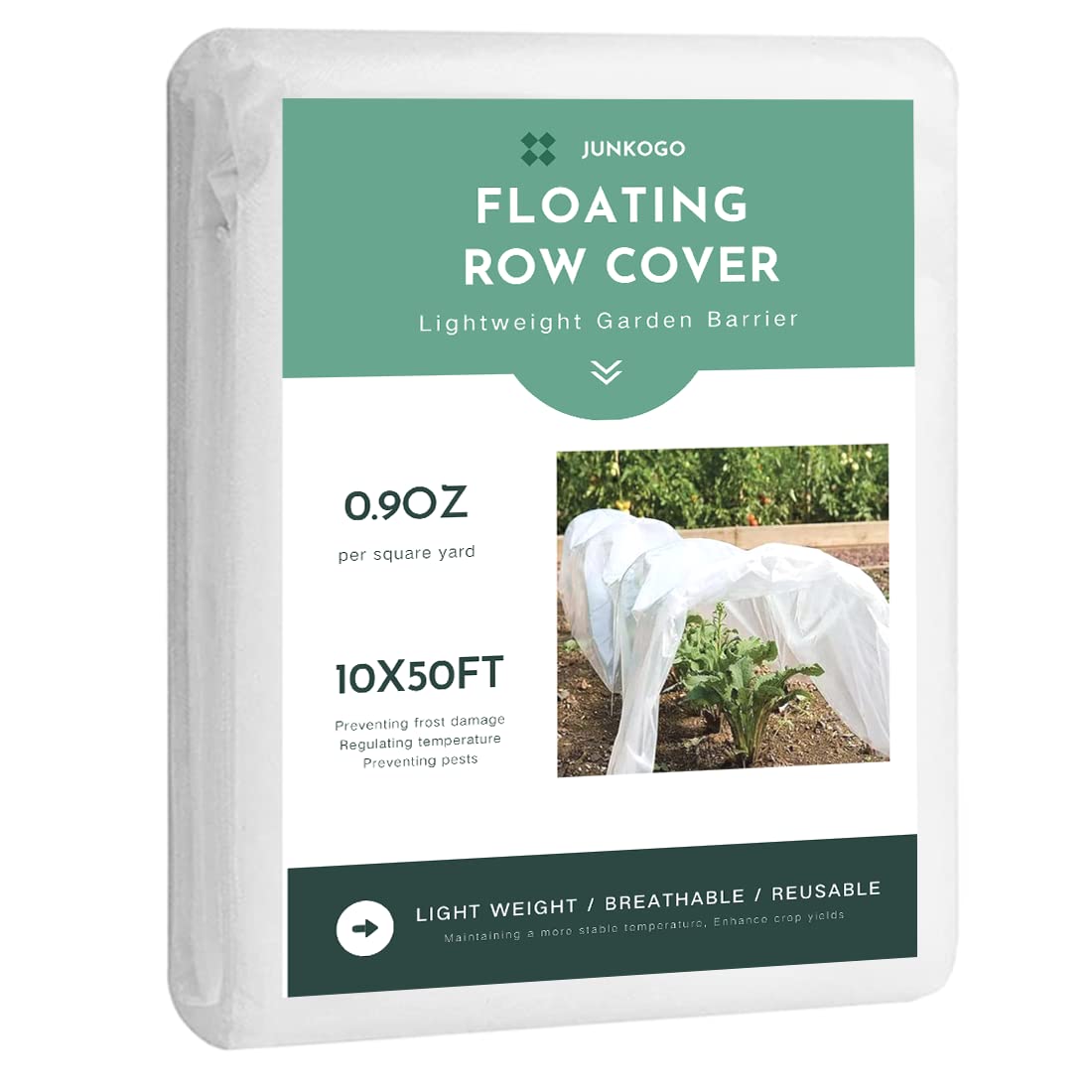

How To Choose The Best Garden Floating Row Covers
A floating row cover is basically a lightweight fabric blanket you lay directly over your plants. The trick is matching its thickness and material to your specific climate and what you are trying to protect. Here are the two things that matter most.
Fabric Weight: The Thickness That Decides Everything
Fabric weight is measured in ounces per square yard (oz/sq yd) — and it is the single number that tells you how much cold the cover can fend off. A 0.5 oz fabric is ultra-light, great for insect barriers and light frost, but it offers almost no warmth. A 1.5 oz or heavier fabric traps more daytime heat and releases it slowly at night, making it the choice for hard freezes. Heavier fabric also blocks more light — a 1.1 oz cover transmits about 85% of available light, so your plants still photosynthesize underneath.
Size and Breathability: Fit Without Suffocation
Row covers come in rolls (10 ft x 50 ft, for example) that you cut to fit. You want enough slack to drape over hoops or the plants themselves without crushing them. And breathability matters — a non-woven fabric lets air, moisture, and sunlight pass through, which prevents the mold and rot you get from trapping condensation under plastic. A good cover also doubles as a summer shade cloth or a barrier against birds and insects, so you get year-round use from one purchase.
Quick Comparison
| Model | Best For | Fabric Weight | Size | Weight | Amazon |
|---|---|---|---|---|---|
| Plant Freeze Protection Cover 10×50 FT★ Best Overall | Best Overall | 0.9 oz/sq yd | 10 x 50 ft | 2.33 lb | Amazon |
| Garutom Plant Covers 10×33 ftLight & Bright | Light Transmission | 1.1 oz/sq yd | 10 x 33 ft | 15.7 oz | Amazon |
| Gardzen 1.5 oz Plant Covers 10x30FT | Extra Thickness | 1.5 oz/sq yd | 10 x 30 ft | 1.39 kg | Amazon |
| Thicker Plant Covers 1.77 oz 6.5ft x 33ft | Deep Freeze | 1.77 oz/sq yd | 6.5 x 33 ft | 2.66 lb | Amazon |
| Harvest Guard Freeze Protection 5′ x 25′ | Versatile Use | — | 5 x 25 ft | 6.4 oz | Amazon |
| Plant Covers Freeze Protection 10x20ft | Budget Pick | 0.9 oz/sq yd | 10 x 20 ft | 1.26 lb | Amazon |
| Alpurple Thicken Plant Covers 32.8 x 9.8 ft | Animal Barrier | 1.03 oz/sq yd | 32.8 x 9.8 ft | 1.14 kg | Amazon |
In‑Depth Reviews
1. Plant Freeze Protection Cover, 10×50 FT Floating Row Cover
Our pick — over 4.5★ from 250+ verified ratings; the strongest balance of quality and price.
The crowd favorite that survived multiple winters and still came back for more.
The raw length here — 10 feet wide by 50 feet long — is the first thing you notice. It covers a lot of ground, and the 2.33 lb weight means it sits firmly on the plants without needing a ton of extra anchoring. The 0.9 oz per square yard fabric is light enough to let air and moisture through, but thick enough that buyers report it surviving high winds and sub-freezing temps in Virginia and beyond. The review pages sum it up: “Worked great for my winter/spring garden to protect from frost as well as worm/flies that would like to get at my cabbage and brassicas.”
What wins people over is layered protection. It doubles as an insect barrier in spring and a sun shade in summer, so it isn’t just a winter throwaway — it earns its keep year-round. One owner noted it kept their eucalyptus plants alive through a Virginia winter with zero damage come summer.
Large coverage area
- Massive 50-foot roll leaves extra for other beds
- Breathable non-woven fabric prevents rot and mold
- Proven through multiple winters with high winds
Thin fabric
- Does not come on a roll — fold carefully to avoid tangles
Large gardens: you need one cover that does it all — frost, bugs, shade — across a large garden, with the heaviest real-world testing of any pick here.
Harsh winters: you need a perfectly compact storage roll; the flat-fold packaging can be unwieldy to refold.
2. Garutom Plant Covers Freeze Protection 10ft x 33ft 1.1 oz
A 1.1 oz blanket that transmits 85% of sunlight — your veggies barely notice it is there.
The step-up in density from a 0.9 oz to a 1.1 oz fabric is small on paper but real in the garden. At 15.7 ounces total, this 10 x 33 ft cover is noticeably lighter than the 50-footer above, which makes it easier to drape over delicate seedlings without crushing them. Owners consistently highlight its frost protection as the top aspect, with one noting it “saved my veggies from the cold” and another calling it a good investment for cutting down and reusing next year.
At 604 reviews with a 4.4 average, the Garutom earns strong marks for value, and the breathable polypropylene fabric lets water pass right through — so you don’t have to pull the cover off to irrigate. The catch is durability. The material gets mixed feedback here, with some owners reporting it is not the toughest against repeated handling. Treat it gently, and it rewards you with several seasons of solid service.
Lightweight material
- Easy to cut with scissors to fit any bed shape
- Lets 85% of sunlight through for active growth
- Doubles as summer shade and pest barrier
Single season use
- Durability is the most common mixed point — handle with care
Mild climates: you want maximum light for fall greens and spring seedlings, and plan to cut the fabric for multiple small beds rather than one giant run.
Heavy frost: you need a heavy-duty cover that will withstand aggressive tugging and wind for several years.
3. Gardzen 1.5 oz Plant Covers Freeze Protection, 10ft x 30ft

Thicker at 1.5 oz per square yard, compared to 0.9 oz and 1.1 oz — built for the nights when frost is a sure bet.
The Gardzen steps up to 1.5 oz per square yard, which is a meaningful jump in warmth retention. It is thicker than the 0.9 oz and 1.1 oz fabrics above, so it traps more daytime heat and holds it through cold nights. The 10 x 30 ft size gives you 300 square feet of coverage, and the white non-woven fabric won’t weigh down your plants. Owners say it protects potted plants from winter cold and even deters deer, with the top praise going to overall plant protection — 54 mentions.
With 642 ratings and a 4.5 average, this is among the most popular mid-weight options. For temperatures just below freezing, owners mention it works very well. One owner in Houston noted it withstood heavy winds, dogs, and ice, though it couldn’t save sub-tropical plants from a hard freeze. The mixed durability feedback here echoes what many thicker fabrics face — it holds up if you are careful, but some units have arrived with tears.
Medium weight
- 1.5 oz/yd² traps more heat than standard lightweight covers
- Covers up to 300 square feet in one piece
- Simple to install with soil, stones, or staples
Limited width
- Durability and freezing resistance draw mixed reviews — best for moderate frosts
Moderate cold: overnight frosts in the 20s and 30s where a lightweight blanket won’t cut it, and you need easy coverage for raised beds.
Wide beds: you face deep freezes below 20°F and need a fabric that doubles as a heavy winter armor.
4. Thicker Plant Covers Freeze Protection 1.77 oz/yd², 6.5ft x 33ft

The heaviest fabric on the list — it survived a Boston winter with four feet of snow.
At 1.77 oz per square yard, this is the thickest row cover we looked at, and owners in serious climates put it to the test. One Colorado gardener in Zone 5b/6a reported that with a 170W incandescent light underneath, the bed stayed above freezing when the outdoor temp dropped to 24°F. Another owner in Boston shared that their plants survived a record-breaking winter with four feet of snow and collapsed frames, still emerging in spring. The 6.5 ft width is narrower than the 10 ft covers above, but the 33 ft length still gives you 214 square feet of coverage.
At 148 ratings with a 4.6 average, the FUZE cover earns top marks for durability and frost protection — both tied as the most-praised aspects at 13 mentions each. The eco-friendly UV protector (UPF 30+) means it won’t break down under sunlight as quickly as lesser fabrics. One owner did wish for a wider width to fit garden hoops better, so check your hoop spacing before buying.
Thicker fabric
- Thickest fabric here at 1.77 oz/yd² for serious cold
- UPF 30+ prevents UV degradation
- Proven in deep freeze and heavy snow conditions
Narrow width
- Narrow 6.5 ft width may not cover wide raised beds without overlap
Deep freeze: you garden in a zone where hard freezes, snow, and single-digit nights are the norm, and you want the thickest fabric available.
Broad coverage: your beds are wider than 6 ft and you don’t want to piece two covers together.
5. Harvest Guard Freeze Protection Plant Cover, 5′ x 25′

A 6.4-ounce fabric that somehow deters birds, rabbits, and deep freezes all at once.
Harvest Guard is a different breed — it is made in the USA from US-sourced materials, and at 6.4 ounces for the whole 5 x 25 ft roll, it is the lightest cover here. But light doesn’t mean fragile. Owners in Northern California use it year-round for lettuce, reporting it survives deep freezes in winter and reflects heat during 100°F+ summers. One owner found it so effective that they “won’t garden without it,” starting warm-season seeds a full month early.
The 4.5 average across 631 ratings is proof of its versatility. The non-woven fabric floats directly over crops without support, and it works beautifully with soaker hoses underneath. The trade-off is the same one that lighter fabrics face — it tears more easily in strong wind. Owners recommend holding it down with 2x4s rather than poking holes, which avoids rips. It also does a surprisingly good job at keeping rabbits and birds away from your greens.
Compact size
- Very lightweight at 6.4 oz — easy to handle and store
- Works as a winter frost blanket and a summer shade cover
- Deters birds and small animals from seeds and seedlings
Small coverage
- Fabric can tear in strong winds if not weighted down properly
Small plots: the gardener who wants one roll that works for seed germination, frost protection, and pest control, all while staying affordable.
Large areas: heavy-duty winter coverage in extreme northern climates; this is a multi-season extender, not a hard-freeze specialist.
6. Plant Covers Freeze Protection 10x20ft Frost Cloth

A 200-square-foot entry point that proves you don’t need expensive gear to beat the cold.
At 1.26 pounds, this is lighter and smaller than the 50-foot cover that sits at the top of this list, and the price reflects a genuine entry-level cost for someone dipping their toes into season extension. The 0.9 oz per square yard UV-stabilized polypropylene fabric is the same weight as the top pick, so you get identical breathability and light transmission. The difference is sheer square footage — 200 square feet versus 500 — and the weight. Owners say it does its job, calling it “light weight and pretty easy to cover your plants, if it’s not windy.”
The crowd is large — 807 ratings with a 4.5 average — which is the highest review count on this list. The most-discussed aspect is plant protection. For light frosts and early spring starts, this is a fantastic value. The thin material gets mixed feedback, and some owners say it isn’t 100% freeze-proof for sub-tropical plants, which is a fair caution for anyone expecting deep-freeze performance from a lightweight fabric.
Budget friendly
- Light enough that plants don’t bend under the weight
- UV-stabilized material won’t degrade in sunlight
- Large 200 sq ft coverage for the price
Thin cloth
- Thin fabric needs extra anchoring in wind
- Not sufficient for hard freezes below 20°F
Light frosts: you are new to row covers and want a low-cost, lightweight blanket for mild frosts and spring seed starting.
Extended cold: you routinely face overnight temps in the teens or have tropical plants that need serious warmth retention.
7. Alpurple Thicken Plant Covers Freeze Protection, 32.8 x 9.8 ft
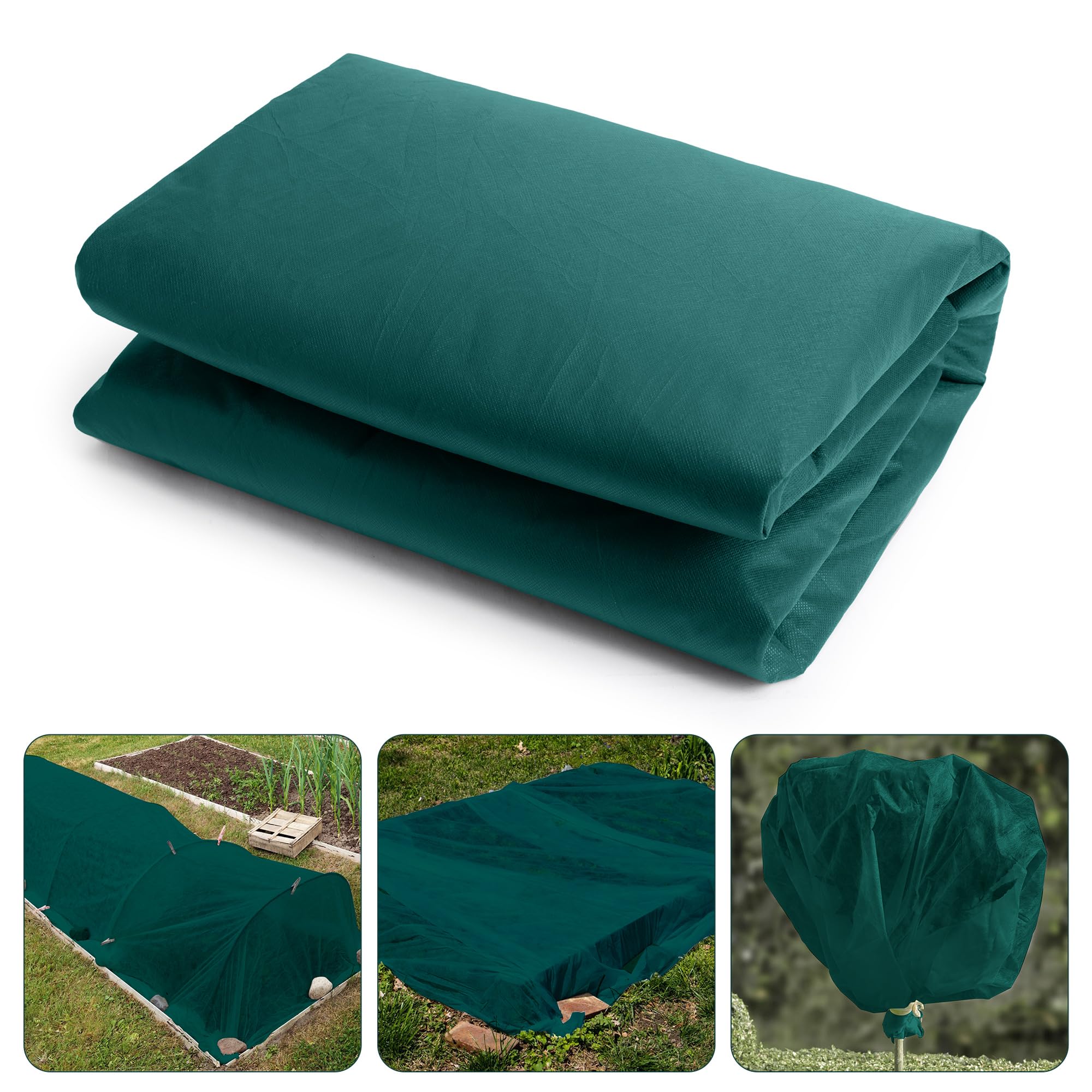
A dark green cover rated to -7.6°F, built for the gardener who also fights deer and rabbits.
The Alpurple cover stands out visually — it is dark green rather than the white or translucent fabrics most row covers use. That color helps it blend into the garden, but the real story is the 1.03 oz per square yard fabric and the manufacturer’s claim of protection down to -7.6°F (-20°C). Whether that exact number holds depends on your setup, but owners in rough weather have used it successfully. One reported it saved greens during “teens and 20 degree nights and snow” when doubled with a tarp.
At 453 ratings with a 4.2 average, the Alpurple is a solid mid-tier option. The promised anti-animal protection works well — the dark fabric is less visible to deer, and the non-woven material creates a physical barrier. The mixed reviews on plant protection reflect the reality that no single cover guarantees warmth for every plant in every climate. Durability is also a common point of caution, with some owners reporting tears after a single season in high wind, though others in Arizona found it held up well.
Reinforced edges
- Rated to -7.6°F for serious cold snaps
- Dark green color blends into the garden and deters animals
- Covers 300 square feet in one piece
Short length
- Plant protection and durability draw mixed feedback — wind can cause tears
Windy spots: you need a dark cover that won’t stand out in a suburban yard and you face moderate winter freezes with hungry wildlife.
Long rows: your garden is in a consistently windy spot and you need a cover that lasts multiple seasons.
Understanding the Specs
Fabric Weight (oz per square yard)
This is the single most important number for a row cover. A 0.5 oz fabric is an insect barrier — it does almost nothing for warmth. A 0.9 oz fabric (like the top pick) handles light frosts and lets plenty of light through. A 1.5 oz or 1.77 oz fabric (like the Gardzen or the FUZE) traps heat for true freeze protection. The trade-off is that heavier fabric blocks more light, so your plants get a bit less sunshine underneath. For most gardeners, a 0.9 to 1.1 oz weight is the balance for year-round use.
Breathable Non-Woven Fabric
Unlike plastic sheets that trap condensation and cause mold, non-woven fabric lets air, moisture, and sunlight pass through. This is what makes a floating row cover “float” — the fabric is porous enough that you can lay it directly on delicate plants without suffocating them. You can water right through it, and the air circulation prevents the rot that kills plants under tarps. It is also what makes the cover reusable; you can hose it off, dry it, and fold it away for next season.
FAQ
Can I leave a floating row cover on all winter?
How many degrees of frost protection does a row cover add?
Can I cut a row cover to a smaller size?
Will a floating row cover protect my plants from insects and birds?
Does a row cover need to be supported by hoops?
How do I clean and store a row cover between seasons?
Can I use a row cover as a summer shade cloth?
Does the color of the row cover matter?
How do I keep the wind from ripping my row cover?
Is a 10 ft wide cover enough for most raised beds?
Final Thoughts: The Verdict
If you want one dependable pick, the best garden floating row covers is the Plant Freeze Protection Cover 10×50 FT because it combines the widest coverage with a crowd-proven 4.6 star rating across hundreds of owners who have used it through multiple winters, wind, and snow. If you want the thickest fabric for deep-freeze survival, grab the Thicker Plant Covers 1.77 oz — it survived a Boston winter with four feet of snow. And for the gardener who needs an affordable entry point for spring starts and light frosts, the Plant Covers Freeze Protection 10x20ft delivers proven results at a budget-friendly cost.
How We Picked
We do not accept paid placement. Every pick is matched to a real buyer and a real use-case; we do not hands-on test units.
Sources & Methodology
Specifications: manufacturer listings and product documentation. Review insights: verified customer reviews, as of July 2026. Pricing: not shown on this page (it changes often); check the current price via the retailer link.
As an Amazon Associate, Lawn Gear Lab earns from qualifying purchases. This does not affect which products we feature.