
Specs are compiled from manufacturer listings and verified buyer reviews and can change over time — please confirm the key details on the product page before buying.
A hexagon-shaped raised bed turns a flat patch of yard into a garden with serious visual pull. The six-sided form draws the eye naturally, and you can nest several together in a honeycomb layout that makes weeding and planting quicker than square beds. But the quality gap between a bed that lasts ten years and one that buckles in two seasons depends on three things: how the panels lock together, whether the material resists rust, and if the depth fits the plants you actually want to grow. The Anleolife 70x60x18in Hexagon wins for most gardeners because its 18-inch depth and galvanized steel (steel coated with zinc to prevent rust) with rolled edges give you root space and durability the others cannot match.
I’m Rikta — the founder and writer behind Lawn Gear Lab. This guide is built by comparing the manufacturers’ published specifications and the patterns across verified customer reviews, so you get each pick’s real strengths and trade-offs instead of marketing spin.
A good hexagonal raised garden bed should stay rigid when filled with wet soil and look clean from every angle — without a frustrating assembly that makes you wish you had paid for a handyman.
Our Picks at a Glance
How To Choose The Best Hexagonal Raised Garden Beds
Three factors separate a bed that lasts a decade from one that bows out after two seasons: the material’s weather resistance, the depth of the soil column, and how much assembly frustration you are willing to accept. Steel beds hold their shape under wet soil better than thin plastic, but they also transfer heat faster (so the soil near the edges can dry out quicker). Composite resin (a plastic blend that mimics wood) beds look like wood without the rot, but their sturdiness depends on how the corners lock together. Depth changes what you can grow — 12 inches handles lettuce and flowers, while 18 inches gives carrots and tomatoes room to stretch their roots.
Material: Metal vs Resin vs Wood
Galvanized steel (steel coated with zinc to block rust) is the standard for longevity. The zinc coating resists rust and weather damage, and a thicker gauge (like 1 millimeter) stops the walls from bulging when you fill the bed. Resin composite beds, like Keter’s Evotech material, skip the metal entirely. They feel lighter, resist denting, and never rust, but some buyers report that corners can feel wobbly until the soil weight settles them. Wood looks natural but rots fastest — none of the picks here use it, which saves you the headache of annual sealing (applying a protective finish each year to prevent decay).
Depth and Root Room
The bed’s height directly limits what you can plant. An 11.75-inch depth like the Sunnydaze bed is fine for shallow-rooted herbs, lettuce, and strawberries. An 18-inch depth like the Anleolife bed opens up carrots, tomatoes, peppers, and other plants whose roots need a full foot and a half. If you plan to grow anything besides greens and flowers, aim for the deeper bed — your plants will repay you with stronger stems and bigger yields.
Assembly Realities
Some beds click together in minutes with no tools. Others demand a screwdriver and a second pair of hands. The customer feedback across these products is consistent: tool-free assembly earns the most praise, while beds with many small bolts frustrate solo builders. Check whether the panels have pre-drilled holes and whether the hardware is truly all included. A 5-minute setup sounds appealing, but if the corners feel flimsy before the soil goes in, the trade-off may not be worth it.
Quick Comparison
| Model | Best For | Material | Depth | Weight | Amazon |
|---|---|---|---|---|---|
| Sunnydaze Galvanized Hexagon★ Best Overall | Shallow herbs & decorative curb appeal | Galvanized Steel (1 mm thick) | 11.75 inches | 9.8 pounds | Amazon |
| Anleolife 70x60x18in Hexagon | Deep root vegetables & focal-point gardens | Galvanized Steel (Eco-powder coating) | 18 inches | 15.88 kg | Amazon |
| Keter 48″ x 48″ Wood Look | Quick tool-free setup & small-scale vegetable growing | Resin Composite (Evotech) | 12.6 inches | 14.3 pounds | Amazon |
In‑Depth Reviews
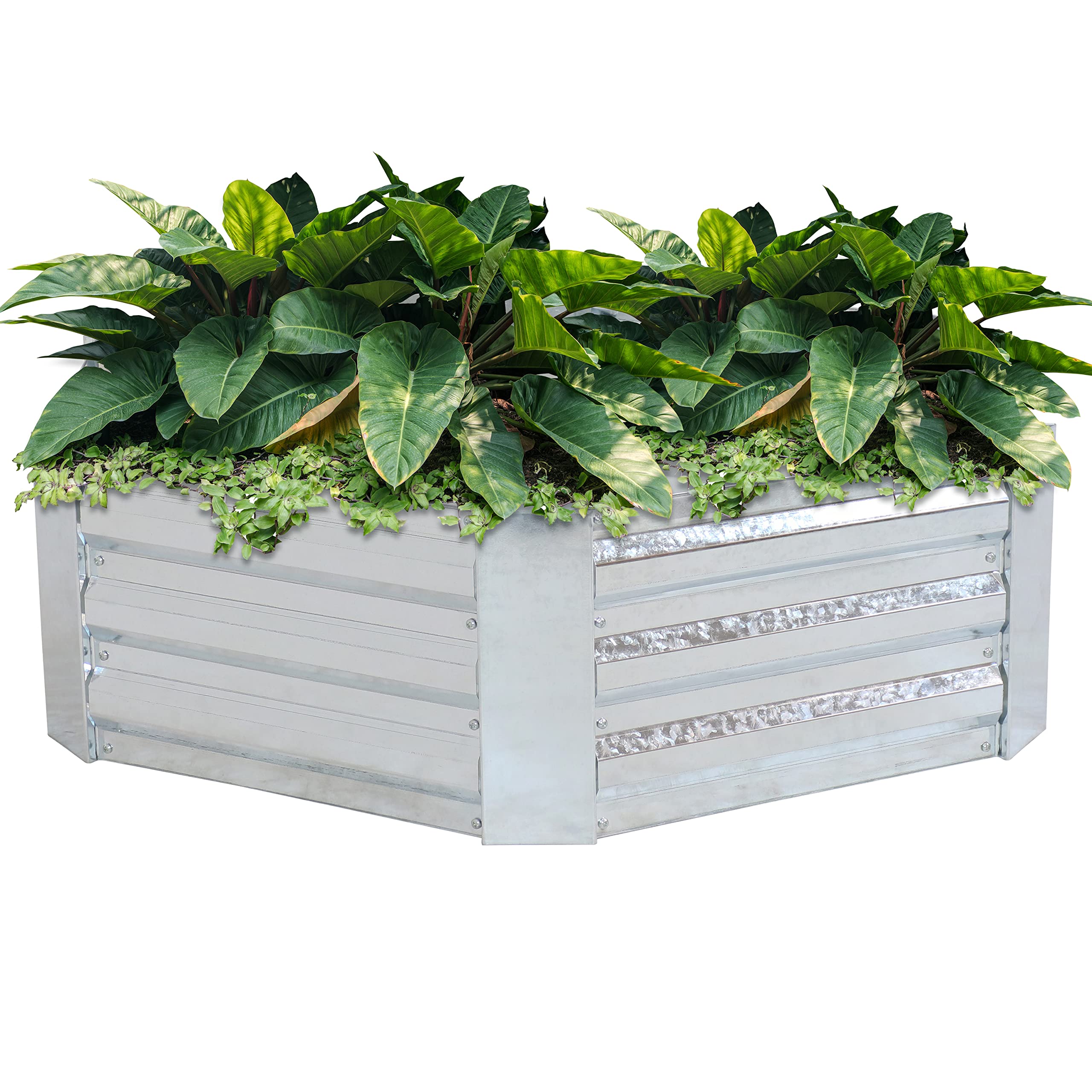
1. Sunnydaze Galvanized Raised Garden Bed Kit – 4x3x1 ft Hexagon
Our pick — over 4.5★ from 150+ verified ratings; the strongest balance of quality and price.
The shallow steel hexagon that turns front-yard trees into a landscape feature.
This bed measures 36 by 40.5 inches with a depth of 11.75 inches, making it the most compact and shallow option here — roughly half the footprint of the Anleolife bed. The 1-millimeter thick galvanized steel (the same zinc-coated steel, but measured by thickness) resists rust and weather damage without adding much weight — at just 9.8 pounds, the Sunnydaze bed is 4.9 pounds lighter than the Keter bed and dramatically lighter than the Anleolife. That light build makes it easy to move around the yard until you settle on the perfect spot.
Owners use it in creative ways. Owners mention installing the beds “around our front yard trees” to boost curb appeal, and one built a duck pool frame with a cutout for a drain pipe. The hexagon shape in silver matches well with modern landscape designs. Assembly does require a screwdriver (not included), and a few customers note the process feels “tedious” — but the end result earns high marks for appearance and stability. The open-bottom design improves drainage and reduces the risk of waterlogged roots.
At 11.75 inches deep, you are limited to shallow-rooted plants: lettuce, strawberries, flowers, and herbs. That depth is not enough for carrots or tomatoes. The 1-year manufacturer warranty adds confidence, and the included assembly hardware covers everything except the screwdriver.
What wins people over
- Lightweight at 9.8 pounds — easy to reposition before filling
- 1 mm steel resists rust and handles heavy soil without deforming
- Versatile shape works as a landscape accent, tree ring, or pet pool frame
The honest limitation
- 11.75-inch depth rules out deep-root vegetables like tomatoes or carrots
- Assembly requires a screwdriver and some patience with many bolts
Best curb appeal pick: Choose this if you want an attractive, lightweight hexagon for shallow planting around trees, walkways, or a flagpole — and you do not mind spending 20 minutes with a screwdriver.
Not for deep beds: If you plan to grow root vegetables, the 18-inch Anleolife is your only real option here.
2. Anleolife 70x60x18in Hexagon Galvanized Raised Garden Bed
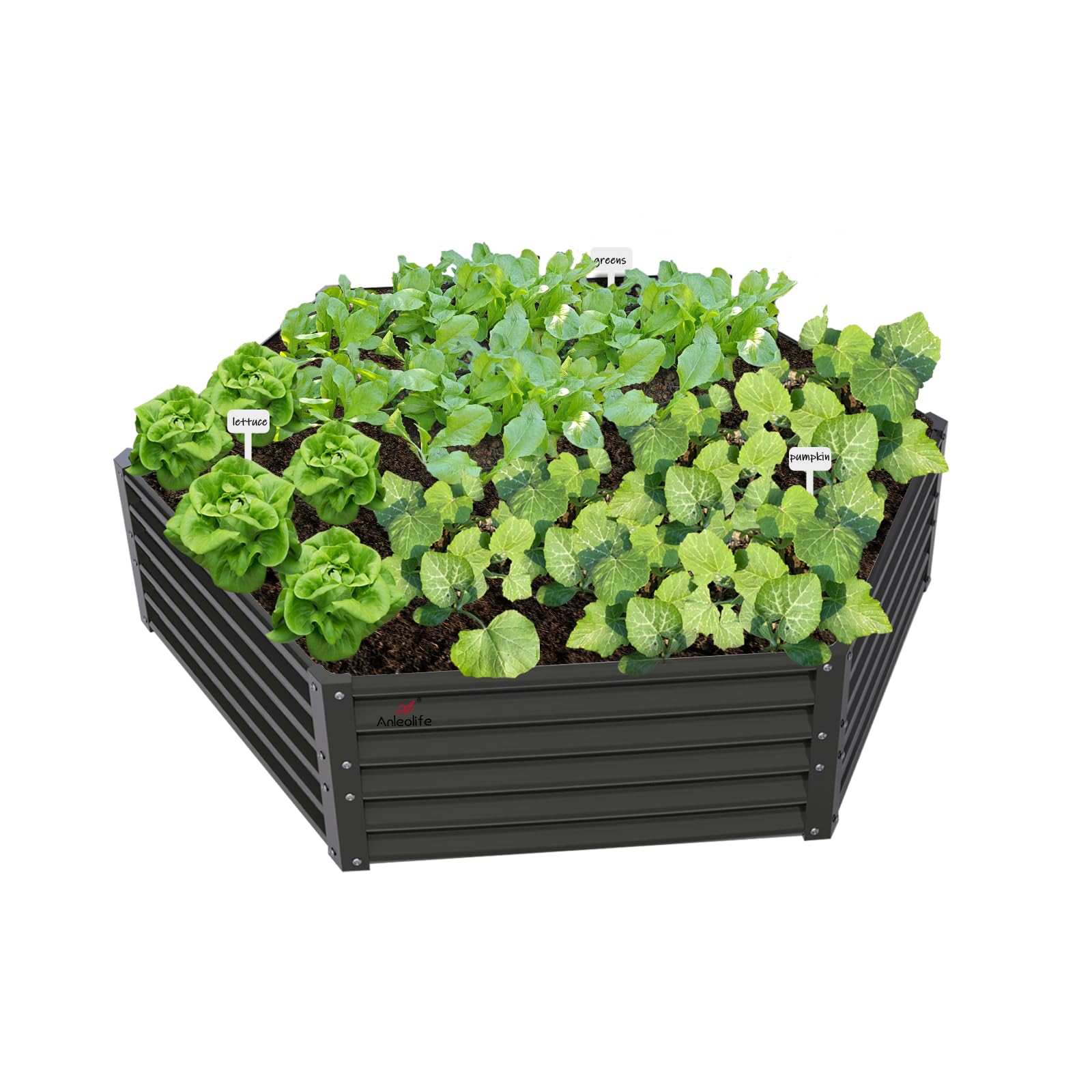
The deep-sided hex that gives root vegetables real freedom to stretch.
This is the tallest hexagon bed in the lineup at 18 inches deep — 6.25 inches deeper than the Sunnydaze bed, which means carrots and tomatoes will not hit the bottom before they mature. The galvanized steel panels (steel coated with zinc to block rust) carry an eco-powder coating in quartz grey that resists rust and feels smooth to the touch, thanks to the rolled edges (bent metal lips) that keep your hands safe during planting and maintenance. The open-bottom design (no floor panel) lets water drain into the ground below, preventing waterlogged roots that kill plants.
At 60 by 70 inches across, the footprint is noticeably larger than the other two beds (roughly 67% wider on one axis than the Sunnydaze bed), so you need open ground to place it. Assembly takes two people and a bit of patience — the kit arrives with many screws and bolts, but owners consistently praise the clear directions and the solid end result. One owner summed up the sentiment: “I ordered several of these unit and I’m so happy with them.” The steel rod braces across the sections are a detail that separates it from flimsier beds, preventing wall bulge under heavy wet soil.
The recurring praise centers on build quality and durability. The hexagonal shape looks attractive from every side, which makes it ideal for island beds in a lawn or a courtyard corner.
Deep-root champion: The 18-inch soil depth and reinforced steel construction make this the best choice if you plan to grow root vegetables or build a permanent geometric garden feature. Assembly is more involved than the tool-free resin option, so plan for a half-hour with a helper.
Floor space required: At 15.88 kg (about 35 pounds) the bed is the heaviest of the three, and its 70-inch width means you need a generous patch of level ground before you start.
Reach for this if: you want the deepest soil and the strongest walls for a long-term garden that looks like a deliberate design statement.
Look elsewhere if: you only need a shallow planter for herbs or you lack a second person to help with assembly.
3. Keter 48″ x 48″ Wood Look Raised Garden Bed

The composite resin bed that assembles in minutes and looks like real wood.
Keter’s Evotech advanced composite material (a proprietary resin blend that imitates wood grain) gives this bed a dual-finished wood-grain texture without the splintering or rot that real wood brings. At 48 by 48 inches with a 12.6-inch depth, it splits the difference between the shallow Sunnydaze and the deep Anleolife — enough room for vegetables like peppers and bush tomatoes, but short of the 18-inch column carrots need. The interior holds 443 liters of soil (about 15.6 cubic feet, enough for a solid vegetable patch), which is a generous volume for a bed that goes together without any tools.
Assembly is the headline feature here. Owners consistently report a 5- to 10-minute setup with no tools required — just snap the panels together and tighten a few screws per corner. One owner noted, “It’s holds 5 tomato plants.” The bed survived a blizzard without damage, though a few owners note the corners can feel wobbly before the soil weight settles them — a different experience from the rigid steel of the Anleolife. At 14.3 pounds it is heavier than the Sunnydaze but still manageable for one person to carry.
The trade-off is sturdiness. The composite resin material resists dents and never rusts, but the mixed feedback on stability is note — some owners call it rock-solid once filled, while others flag corner wobble. If you want a set-and-forget bed that looks good from the start and goes together faster than any steel alternative, this is your pick.
Speed champion: The 5-minute tool-free assembly is the fastest of all three picks, and the wood-grain finish makes it the best-looking resin option on the market. At 443 liters of soil capacity, you can pack a lot of plants into a single bed.
Stability note: A few reviewers point out wobbly corners until the soil is added, so this may not feel as confidence-inspiring empty as the steel beds do.
Best for impatient gardeners: If you want a bed ready to plant in under 15 minutes and you like the look of wood without the maintenance, grab the Keter.
Think twice if: you need a deep bed for carrots or want the absolute most rigid structure from the first moment — the steel beds are sturdier before any soil goes in.
Understanding the Specs
Galvanized Steel Gauge
The thickness of the steel matters when the bed is full of wet soil. A 1-millimeter wall, like the Sunnydaze uses, resists bending under heavy loads. Thinner steel can bulge outward over time. The Anleolife uses galvanized steel with an added eco-powder coating for extra rust protection.
Resin Composite (Evotech Materials)
Keter’s proprietary material blends resin with additives that mimic the grain of real wood. It will never rust, rot, or splinter, and it handles sun and rain well. The trade-off is that the panels rely on corner locks for stiffness — they feel less rigid than welded steel until the bed is full of soil.
Open Bottom Design
All three beds are bottomless, which means they sit directly on the ground. This improves drainage because excess water can escape into the soil below, and it lets earthworms and beneficial microbes move up into the bed. It also reduces the risk of waterlogged roots that kill plants.
Depth and Root Development
A depth of 11 to 12 inches suits shallow-rooted plants: lettuce, spinach, strawberries, most flowers, and herbs. An 18-inch depth supports taproots (long, single downward roots) like carrots, parsnips, and tomatoes, as well as perennials (plants that live more than two years) with extensive root systems. If you plan to grow a mix of vegetables, the deeper bed gives you more options.
FAQ
Can I put a hexagonal raised bed on grass or pavement?
How deep should a hexagonal raised garden bed be for tomatoes?
Does a galvanized steel bed get too hot in summer?
How long does a galvanized steel raised bed last?
Can I assemble a hexagonal raised bed by myself?
Will the Keter resin bed crack in freezing weather?
How much soil do I need to fill a hexagonal raised bed?
Which hexagonal bed is the best value for money?
Final Thoughts: The Verdict
For most buyers, the hexagonal raised garden beds winner is the Anleolife 70x60x18in Hexagon because it delivers the deepest soil column, the most rigid galvanized steel construction with rolled safety edges, and the most enthusiastic owner feedback across assembly ease and overall quality. If you want a quicker setup and have space for a smaller bed, grab the Keter 48″ x 48″ Wood Look — it goes together without tools and looks like natural wood. And for a lightweight landscape accent around trees or walkways, the Sunnydaze Galvanized Hexagon is the one to reach for, provided you are sticking to shallow-rooted plants.
How We Picked
We do not accept paid placement. Every pick is matched to a real buyer and a real use-case; we do not hands-on test units.
Sources & Methodology
Specifications: manufacturer listings and product documentation. Review insights: verified customer reviews, as of July 2026. Pricing: not shown on this page (it changes often); check the current price via the retailer link.
As an Amazon Associate, Lawn Gear Lab earns from qualifying purchases. This does not affect which products we feature.