
Specs are compiled from manufacturer listings and verified buyer reviews and can change over time — please confirm the key details on the product page before buying.
Growing your own vegetables indoors means you control every variable — light, temperature, humidity — instead of hoping the weather cooperates. The right grow tent turns a spare closet or corner of a room into a mini greenhouse that delivers fresh produce year-round, from spicy peppers to leafy greens.
I’m Rikta — the founder and writer behind Lawn Gear Lab. This guide is built by comparing the manufacturers’ published specifications and the patterns across verified customer reviews, so you get each pick’s real strengths and trade-offs instead of marketing spin.
Whether you are starting seeds in early spring or running a continuous indoor harvest, finding the right grow tent for vegetables depends on features like light-proofing, reflective interior materials, and the right size for your space and plant count.
Our Picks at a Glance

How To Choose The Best Grow Tent For Vegetables
A grow tent is the controlled environment where your vegetables live from seedling to harvest. Picking the wrong one usually means light leaks that confuse your plants’ growth cycle, poor reflectivity that wastes your grow light’s energy, or not enough vertical space for climbing crops like tomatoes and cucumbers. Here are the specs that separate a productive tent from a disappointing one.
Reflective Interior: The Engine for Your Light Budget
The inside lining determines how much of your grow light’s output actually reaches your plants. Tents use diamond-patterned Mylar made from materials like PET polyester. A 100% reflective Mylar interior (like the 2100D and 2000D fabrics found in several picks here) bounces stray light back onto the leaves instead of letting it disappear into the canvas. Cheaper interiors absorb more light, meaning your plants get less energy for photosynthesis even if you run a high-wattage lamp.
Fabric Density and Light-Proofing
The outer fabric’s denier (D) number tells you how thick and tear-resistant the canvas is — 600D is entry-level, 1680D is mid-range, and 2000D is premium. Higher denier blocks light better and resists punctures from equipment or curious pets. The real test, however, is the zipper. A tent’s zipper track is the most common leak point. Look for black inner linings behind the zipper, overlapping stitching, and genuine SBS-brand zippers, which owners consistently report as the smoothest and most light-tight over time.
Height and Space for Full-Sized Vegetables
Leafy greens like lettuce and herbs grow fine in a 48-inch-tall tent. Determinate (bush-type) tomatoes and peppers can work in 60 inches. But indeterminate tomatoes, pole beans, and cucumbers climb and need every inch of vertical space — a 72-inch tent gives you room for a full light system above a 3- or 5-gallon fabric pot without burning the top leaves. The floor footprint also matters: a 2×2 ft tent fits one or two plants; a 3×3 handles three or four; a 2×4 is ideal for a staggered harvest of multiple varieties.
Complete Kits vs. Bare Tents
Some tents ship as a bare shell — just the canvas, frame, and floor tray. Others come as complete kits with a full-spectrum LED grow light, an inline duct fan with a carbon filter, a digital controller, and fabric pots. A bare tent is cheaper to start, but a complete kit guarantees all the components are sized to work together. The trade-off is that bundled lights and fans are often entry-level; serious growers eventually swap them for higher-output components as their skill grows.
Quick Comparison
| Model | Best For | Footprint | Fabric Denier | Max Load | Amazon |
|---|---|---|---|---|---|
| VIVOSUN Smart Grow Tent Kit 2×2★ Best Overall | First-timer all-in-one | 24″x24″x48″ | Standard | — | Amazon |
| MELONFARM 34″x34″x72″Best Budget Tower | Tall, low-cost veg grow | 34″x34″x72″ | 2100D | — | Amazon |
| Outvita 4×2 Grow TentBudget-Friendly Runner | Budget 2×4 footprint | 47.24″x23.62″x59.06″ | 600D | 110 lbs | Amazon |
| Spider Farmer Pro 2x2x6 | Tall tent, roll-up door | 24″x24″x72″ | 2000D | — | Amazon |
| VIVOSUN PRO 2×4 | Sturdy mid-size grow | 48″x24″x72″ | 2000D | 150-400 lbs | Amazon |
| zazzy 4×2 Grow Tent | Sealed reflective grow | 48″x24″x60″ | 600D | 110 lb frame | Amazon |
| AC Infinity CLOUDLAB 632D | Two-chamber expert setup | 36″x24″x72″ | 2000D | — | Amazon |
| MARS HYDRO 3×3 Kit | Smart controlled system | 32″x32″x63″ | 1680D | 88 lbs | Amazon |
| Spider Farmer Kit 2x2x5 | Second-timer complete kit | 24″x24″x55″ | 1680D | 120 lbs | Amazon |
In‑Depth Reviews
1. VIVOSUN Smart Grow Tent Kit 2×2, 1-Plant WiFi-Integrated Grow Kit System
Our pick — over 4.5★ from 750+ verified ratings; the strongest balance of quality and price.
The complete system that makes your first vegetable harvest almost simple to use.
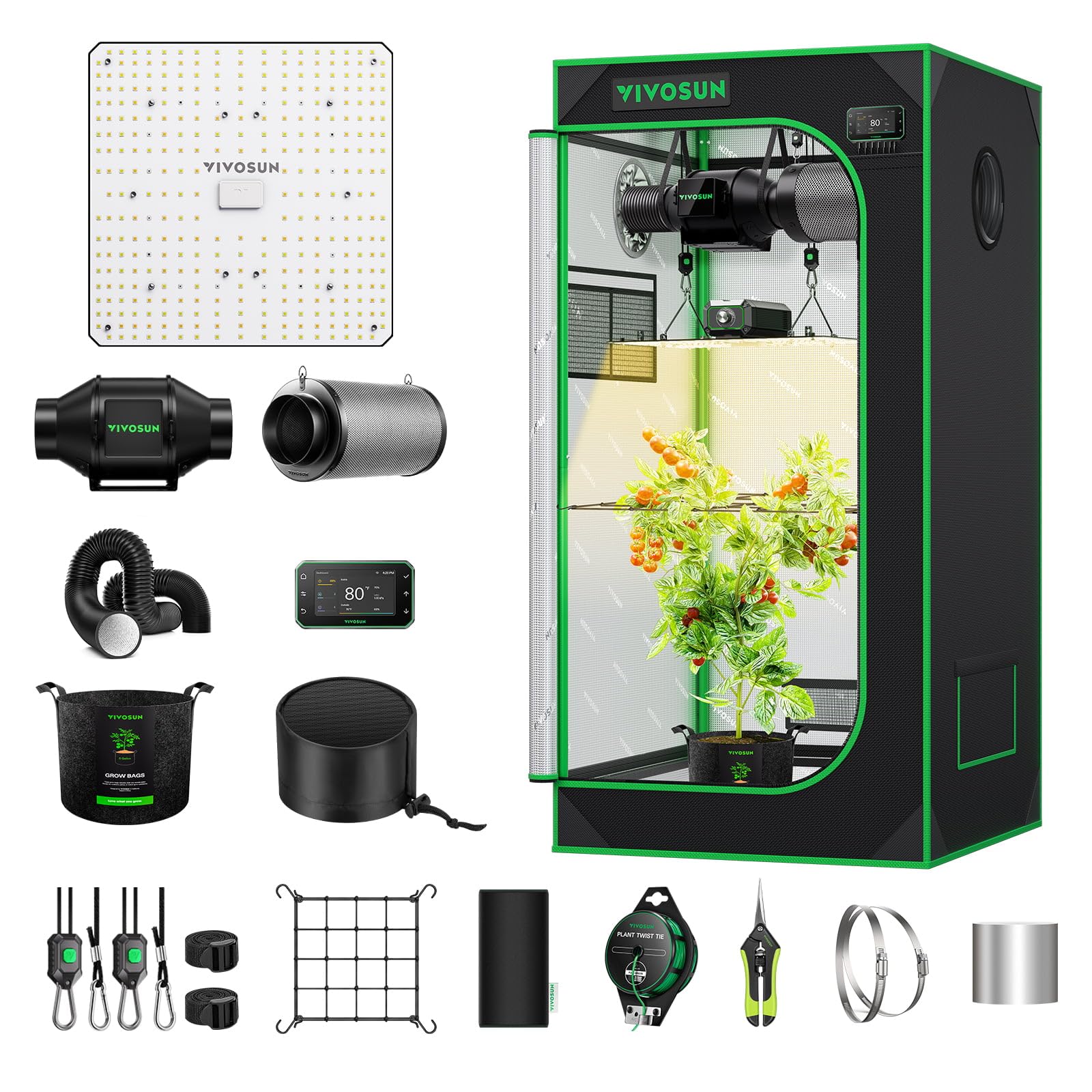
You get everything needed to start growing in one box — a 24x24x48-inch tent, a 100W full-spectrum LED light, a 4-inch AeroZesh G4 duct fan with carbon filter, and the GrowHub E42A+ controller that manages all of it through a single app. The light uses 3000K, 5000K, 660nm, and 730nm LEDs to cover every growth stage from seedling bloom. The inline fan moves 195 CFM of air, keeping humidity and temperature steady inside a 16-cubic-foot space — ideal for a single tomato plant or a rotation of basil and lettuce.
The smart controller monitors temperature and humidity in real time, and you can adjust the light schedule and fan speed from anywhere on your phone. Setup is straightforward for a complete system, though the app itself gets mixed reviews for user-friendliness. The tent comes with five 5-gallon grow bags, a trellis net, pruning shears, and duct tape — genuinely everything down to the twist ties. What owners love most is the build quality and how well the components integrate, with strong locking poles and thick Mylar lining that keeps light inside. The fan and filter assembly is a tight fit in a 48-inch-tall tent; some buyers report that the zipper can let a sliver of light through, manageable with a strip of the included aluminum tape.
What wins people over
- Truly complete kit — includes light, fan, filter, controller, pots, and tools from the start
- Smart GrowHub E42A+ lets you control light and ventilation remotely via app
- Solid build quality with thick Mylar lining and strong metal poles
The honest trade-offs
- App interface is not intuitive for beginners and requires some learning
- Fan and carbon filter assembly is a tight fit in the 48-inch-tall tent; shorter growers may need to mount the fan outside
- Some light leakage reported around the zipper window — fixable with aluminum tape
Reach for this if: You want a single-box solution for your first vegetable grow and prefer app-controlled scheduling over manual timers.
Consider alternatives if: You need a taller tent for indeterminate plants or you are confident building your own system from components.
2. MELONFARM 34″x34″x72″ Grow Tent, Double Transparent Viewing Door
A towering 72-inch interior that fits full-sized vegetables without breaking your budget.
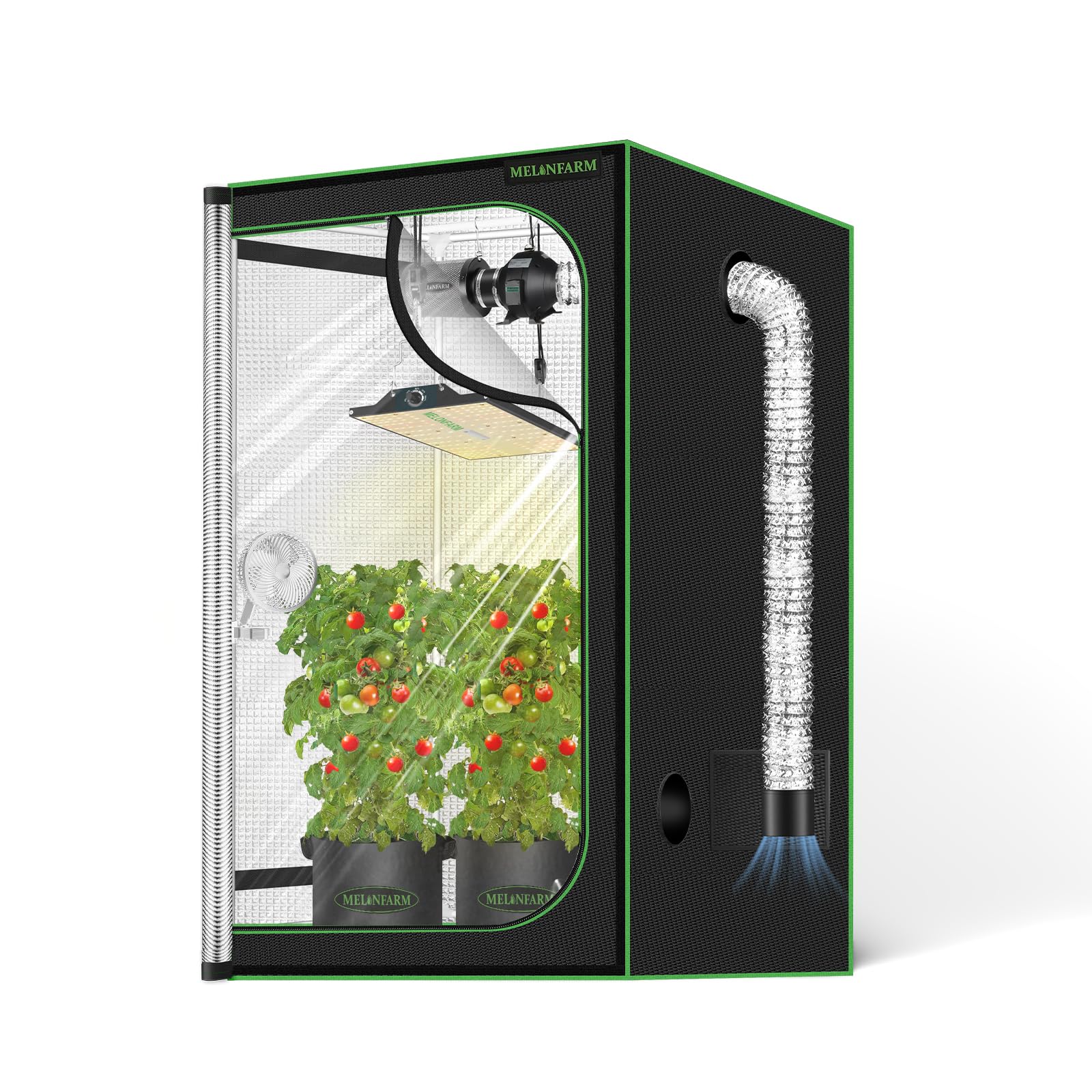
This tent delivers a 34×34-inch footprint with 72 inches of vertical clearance, giving you enough room to run climbing tomatoes or pole beans under a full light setup without scorching the top leaves. The interior is lined with 100% reflective 2100D diamond polyester film, which bounces light back onto the canopy efficiently. The outer canvas uses double-stitched 2100D fabric that blocks light well and resists tearing over time.
One of its smartest features is the double-layer observation door — a clear panel lets you peek at your plants without unzipping, while the outer opaque flap adds privacy and complete light blocking when closed. The included floor tray keeps runoff water contained, and the tool-free assembly means you can have it standing in about 20 minutes. Owners consistently praise the quality-for-price ratio: the poles are sturdy, the zippers run smoothly, and light leakage is minimal. The trade-off is that the zipper quality draws mixed long-term reviews, and some owners wish for more integrated airflow panels rather than just passive vents. At 48 cubic feet (a 3.0x size gap over the 16-cubic-foot VIVOSUN kit), this is a whole different scale for the same money as a bare-bones option.
The verdict from owners: A high-value tower that gives you real height for vegetable growing at a remarkably low cost, with the main durability caveat being the zippers over many seasons.
Best suited for: Growers who prioritize vertical space for climbing vegetables and want a large reflective interior without paying for a known brand name.
Think twice if: You plan to run heavy ventilation equipment like an oversized inline fan and carbon filter — the frame is sturdy but not reinforced for extreme loads.
3. Outvita 4×2 Grow Tent, 48″x24″x60″
A long and low budget tent that keeps your vegetable environment clean and pest-free.
The Outvita 4×2 provides a 47.24×23.62-inch footprint with 59.06 inches of height — wide enough for a couple of bush-type pepper plants and a row of lettuce side by side. The 600D Oxford canvas is paired with a 100% reflective tear-proof Mylar lining that boosts your light’s efficiency and helps retain heat inside. The heavy-duty steel frame is rated to handle 110 pounds, so you can hang a full light fixture and a small oscillating fan without worrying about collapse.
What sets this tent apart at its price is the claim of 99% light proofing. The double-stitched seams and heavy-duty zipper with a black lining do a solid job of keeping light inside during dark periods, which is crucial for flowering-stage vegetables. The observation mesh window lets you check leaf health without opening the tent and letting out heat or humidity. Assembly is straightforward with numbered poles and clear English instructions, though the frame can feel wobbly before the Mylar is installed — once the fabric is tensioned, everything tightens up. The zipper design is a minor frustration for a few owners, and some units have arrived with small holes at seam junctions. Still, for a budget 2×4 tent, the quality-to-price ratio is strong.
Strengths at this price
- 99% light-proof construction keeps dark periods truly dark for flowering vegetables
- Removable waterproof floor tray makes cleanup simple after watering or spills
- 110-pound frame capacity supports most standard LED and ventilation setups
Where it saves money
- 600D outer fabric is less dense than the 1680D and 2000D options on this list
- Zipper design is more complex than necessary, and seam quality varies between units
- The frame feels wobbly during assembly until the canvas is fully tensioned
Ideal for: New vegetable growers on a tight budget who need a 2×4 footprint and can work with a 60-inch height limit.
Not for you if: You need a tall tent for indeterminate vegetables or you want the tear resistance of a heavier 1680D+ fabric.
4. Spider Farmer Pro Series 2x2x6 Grow Tent, 24″x24″x72″
A 72-inch-tall compact tent with the kind of fabric density that blocks light like a vault.
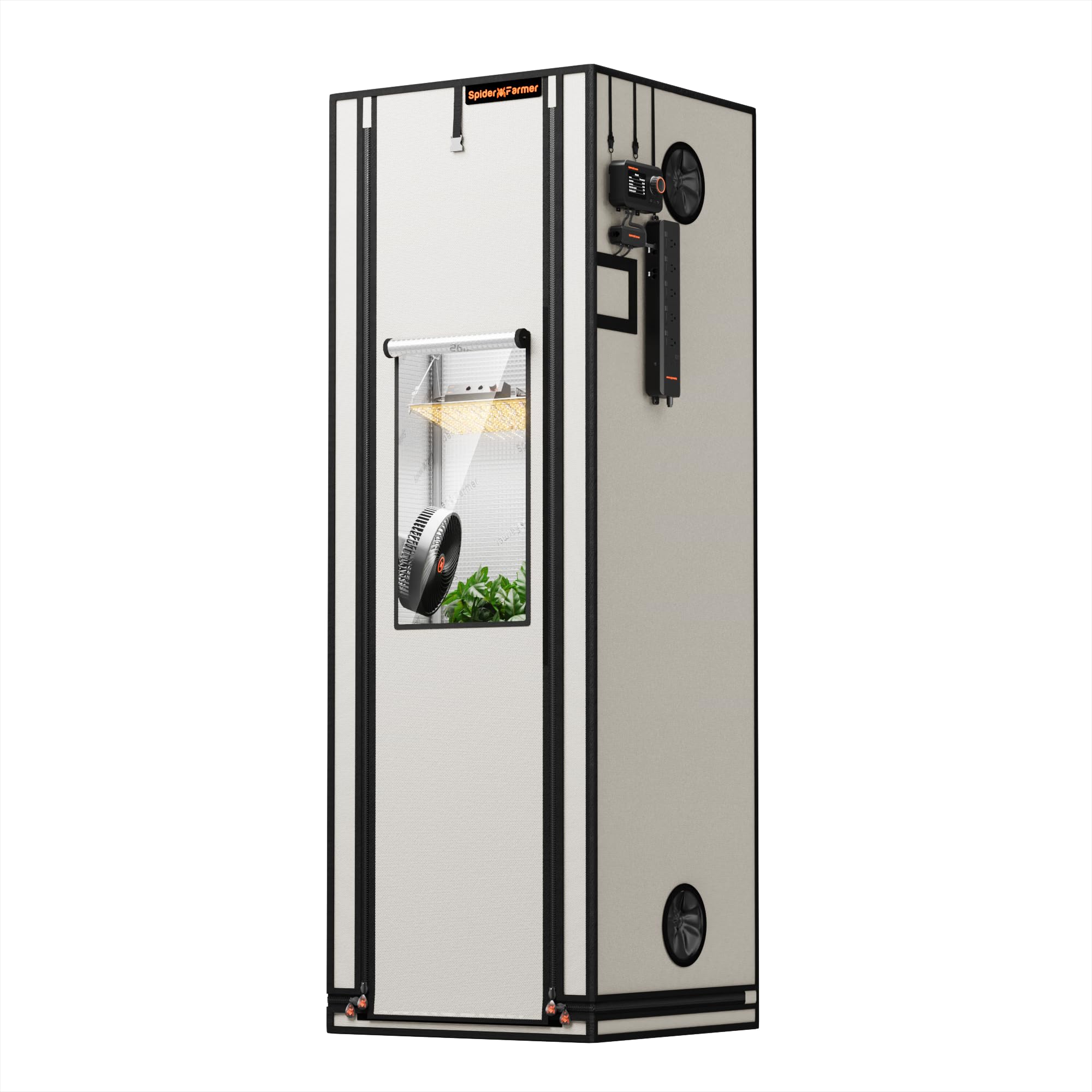
Spider Farmer’s Pro Series uses 2000D double-stitched canvas lined with 100% reflective diamond Mylar — the same dense fabric found in tents twice its price. At 24x24x72 inches, the 24 cubic foot interior gives you enough vertical clearance for a full light system above a single tall tomato plant or a small SCROG (screen of green) net setup. The 2000D fabric is noticeably thicker and more resistant to punctures than standard 600D tents; it also keeps light absolutely contained, which the reviews confirm when the environment is pitch black inside during dark cycles.
The roll-up front door uses a Velcro closure for easy access — a design that is convenient but introduces a potential light leak point if not fully sealed. The premium SBS double zippers run smoothly around the main viewing panel, though the door clasp can interfere with lighting placement. The tent comes with a removable waterproof floor tray and cable ports for running cords through cleanly. Assembly is completely tool-free with sturdy metal support poles, taking most people under 30 minutes. The honest feedback from owners is that light leakage through the zipper track and the Velcro seam is a recurring complaint, and the short 24-inch depth makes cable management tight when you have a fan, light driver, and controller all inside the tent.
Owner insight: The material quality is exceptional for the size — users upgrading from cheaper tents notice the difference immediately. The trade-off is that the roll-up door and zipper design are not as light-tight as a traditional full-zipper tent.
Best for: Hobbyists who want premium fabric density in a compact footprint and do not mind using a small strip of tape to perfect the light seal.
skip it if: Light sealing is your absolute top priority or you need more floor space for multiple vegetable plants.
5. VIVOSUN PRO Grow Tent 2×4, 24″x48″x72″

The 2×4 tent built with thick 1-inch poles that shrug off high-powered ventilation systems.
VIVOSUN’s PRO line upgrades the standard 2×4 formula in two critical ways: the frame uses 22mm (roughly 1-inch) steel poles instead of the thinner tubing found on most budget tents, and the canvas is a three-layer sandwich of 2000D Oxford fabric, plant-friendly PE, and 100% reflective Mylar. The result is a tent that can handle a maximum load between 150 and 400 pounds, depending on how many hanging bars you use — enough for even a heavy commercial-grade LED fixture, a large inline fan, and a carbon filter without any frame flex.
The 48x24x72-inch interior is ideal for vegetable growers who want to run multiple varieties in a staggered harvest. The PRO series includes a High CFM Kit — extra support poles that minimize tent flexing when you run a powerful fan on high speed. The larger SBS zipper door is removable and features a hook-and-loop fastener on the side so you can roll it out of the way and access all four plants at once. The cable management slots are cut specifically for VIVOSUN’s smart controllers, keeping cords tidy. On the downside, light leakage through the viewing window and zipper track is a mixed issue in the reviews — some owners mention pitch-black darkness inside, others need to tape over the window seams. The viewing window itself is also frequently described as less useful than expected because it lets light in during dark hours.
What makes it a PRO
- Thick 1-inch (22mm) steel poles provide exceptional stability for heavy equipment loads
- Three-layer fabric construction virtually eliminates light leaks through the canvas itself
- High CFM Kit included for extra frame support when running powerful ventilation fans
What to know before buying
- Viewing window can be a source of light leakage that needs taping over
- Air vent count is limited compared to similarly sized competitors
- Zipper seams are the primary light leak point — manageable with tape but worth knowing upfront
Reach for this when: You want a stable 2×4 platform for a larger grow light and ventilation setup, especially if you plan to run the system for years without upgrading the tent.
Consider another if: You want a truly view-window utility in a tent and are not prepared to tape over interior seams to achieve a complete light seal.
6. zazzy 4×2 Grow Tent, 48″x24″x60″ Reflective Mylar

A true enclosed grow tent – a light-tight 4×2 chamber lined with reflective mylar to bounce every watt back onto your vegetables.
Unlike a shelf greenhouse, this is the sealed, reflective grow environment that defines a grow tent. The zazzy measures 48 by 24 by 60 inches and is built from heavy 600D fabric that is double-stitched to block outside light, with a 95%-reflective mylar interior that redirects your grow light down onto the canopy instead of letting it leak out. The all-steel pole frame is rated to hold at least 110 pounds, so you can hang lights, filters, and ducting from the top bars.
The 4×2 footprint is a practical size for a row of vegetables – enough room for several full-size plants or a tray of seedlings you plan to grow all the way through. Tool-free push-connectors make the frame quick to assemble, and observation windows plus a removable floor tray help you check plants and catch spills without breaking the light seal. Across more than 3,300 ratings it holds a 4.5-star average, with growers praising the sturdy poles, the light-tight zippers, and how much brighter the sealed reflective walls make the interior.
Why it works for vegetables
- Fully enclosed, light-tight 600D chamber – a real grow tent, not a shelf
- 95% reflective mylar lining maximizes usable light
- Steel frame rated for 110 lb of lights, filters, and ducting
Things to manage
- Grow light, ducting, and fans are bought separately
- 4×2 footprint suits a compact row, not a large multi-plant grow
Perfect for: Growing vegetables through their full cycle in a sealed, reflective space you can control for light, humidity, and airflow.
Not right for: Anyone who just wants an open propagation shelf for starting seeds rather than a controlled grow chamber.
7. AC Infinity CLOUDLAB 632D, 2-IN-1 Advance Grow Tent 3×2
A two-in-one tent with a seedling chamber that earns its premium price through pure material quality.
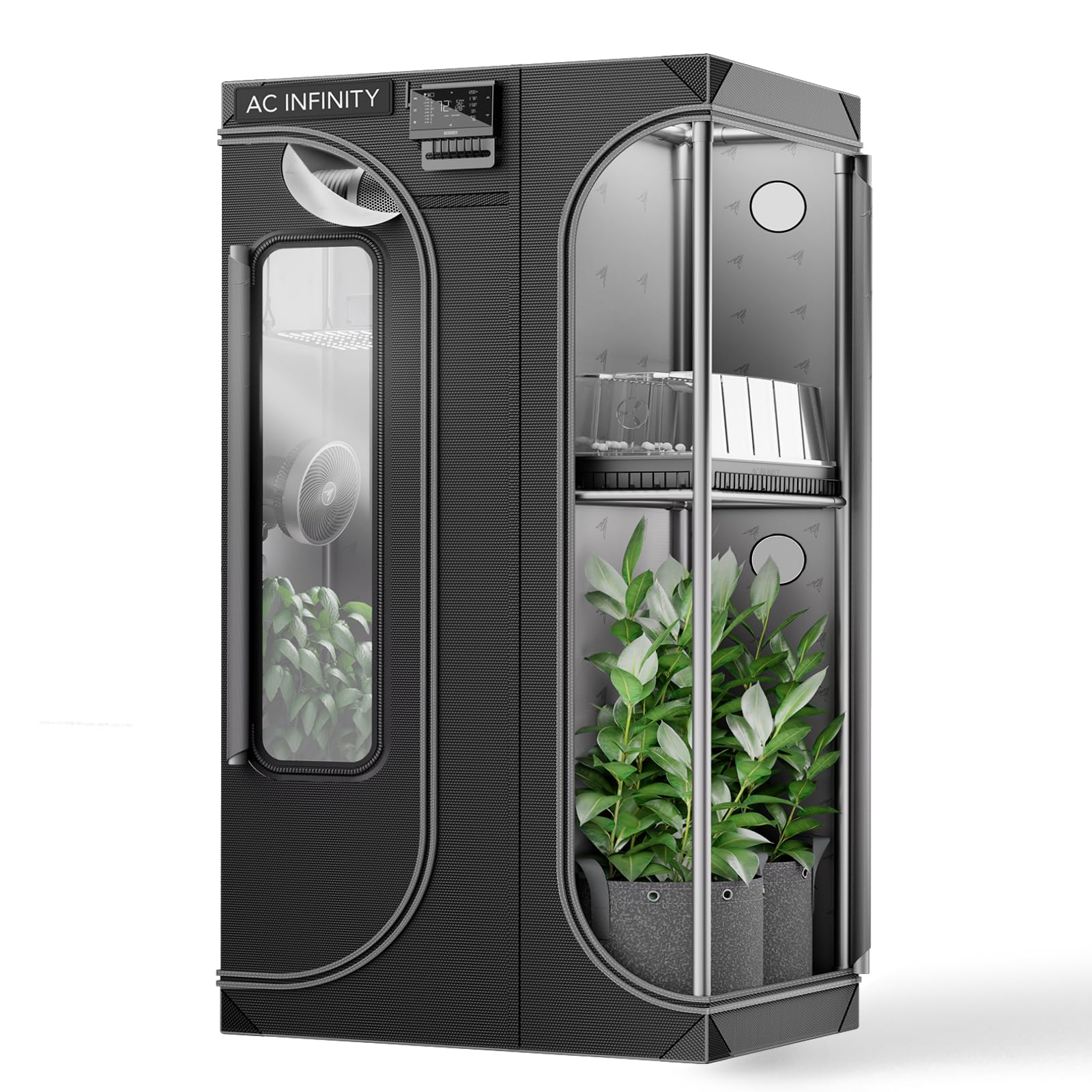
The AC Infinity CLOUDLAB 632D is a 36x24x72-inch tent with a removable internal divider that splits it into two independent grow zones — a larger main chamber for vegetative or flowering vegetables and a smaller chamber with its own detachable tray for seedlings or clones. The frame uses the thickest 1-inch steel poles in the category, and the canvas is 2000D Oxford with a lab-tested Mylar lining that AC Infinity claims has the highest light reflectivity among all grow tents.
The attention to detail is visible everywhere: genuine SBS double zippers that glide smoothly, taller-than-average viewing windows with industrial-grade Velcro flaps, reinforced corner joints, extra hanging bars beyond the standard count, and front zipper flaps that add an extra layer of light protection. The duct port configuration is generous — one 8-inch and one 6-inch roof vent, one 6-inch upper side vent, four 4-inch rear vents, plus three rectangular end vents — giving you more ventilation routing options than any other tent on this list. Owners consistently describe the build quality as a clear step above the competition, including Gorilla and Vivosun tents. The one design quirk is the two-section layout: if you do not need the separate seedling area, the shelf is non-removable and the space feels less usable than a single uninterrupted chamber of the same total footprint. The crossbars on the seedling side also feel loose to some owners.
What justifies the cost
- Two-zone design with a removable divider lets you veg plants on one side and store supplies or start seedlings on the other
- Thickest 1-inch steel poles in its class create rock-solid frame stability
- Premium SBS zippers, reinforced corners, and lab-tested high-reflectivity Mylar set a new durability standard
The design trade-off
- The two-section layout is only useful if you actually need a separate cloning/seedling chamber — otherwise the internal shelf is an obstacle
- Putting the canvas over the frame is a tight fit and almost requires a second person to avoid tearing the material
- Premium price is harder to justify if you only need a single open chamber for vegetable growing
Ideal for: The discerning vegetable grower who values superior craftsmanship, plans to run a continuous veg-plus-flower cycle, and wants a tent that will outlast several light upgrades.
Consider something simpler if: You only need an open space for a single cycle and do not want to pay for a two-chamber design you will not use.
8. MARS HYDRO 3×3 Grow Tent Kit with WiFi-Integrated Controller 43
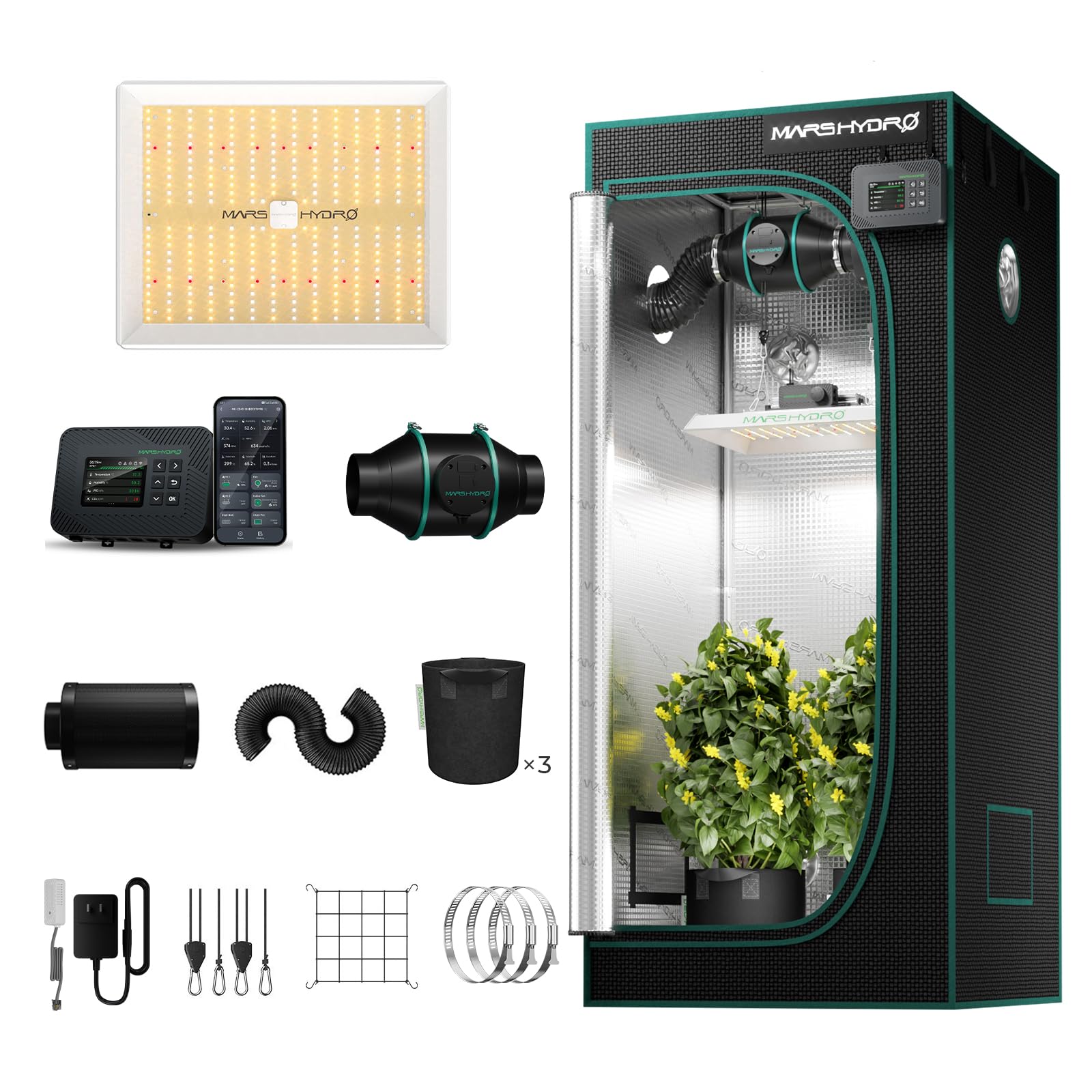
A WiFi-connected system that automates your grow environment from lights to ventilation.
The MARS HYDRO 3×3 combines a 32x32x63-inch tent with a 150W TS1000 LED light, a 4-inch 205 CFM inline fan with carbon filter, a clip-on fan, and the Smart Controller 43 that connects everything via WiFi. The 1680D diamond-patterned Mylar interior is denser than standard 600D lining — the brand claims a 25% PPFD boost over thinner linings — and the double-stitched 1680D canvas resists tearing under tension. The metal frame uses 0.8mm-thick poles and supports up to 88 pounds.
The smart controller integrates with the light, fan, and even a humidifier, letting you set target temperature, humidity, and VPD (vapor pressure deficit) values through a mobile app. The light has a patented 120-degree angle white reflector design, 354 SMD LEDs, and a 0-to-100% dimming range, drawing 150W from the wall while delivering a true full spectrum suitable for every growth stage. The 205 CFM inline fan keeps the 37.9-cubic-foot tent well ventilated at a quiet 26.8 dB. The kit comes with a 25-foot ducting, a trellis net, 4 grow bags, and a pair of safety glasses for inspecting the bright LEDs. The most common owner complaints are that some bundled accessories — like the clippers and the hygrometer — feel cheap and fail quickly, and the light timer never worked on some units. The tent itself, however, draws nearly universal praise for being easy to set up, light-tight, and sturdier than expected for its price tier.
The honest read: The tent and core electronics (controller, light, fan) perform at a genuinely impressive level for the price. The bundled extras are where the corners were cut.
Best for: Vegetable growers who want a nearly turnkey smart system with remote monitoring and can replace a few cheap accessories without frustration.
Think twice if: You expect every bundled component to be equally durable — you may need to swap out the hygrometer and clippers after a few uses.
9. Spider Farmer Grow Tent Kit 2x2x5ft Complete System, SF1000D
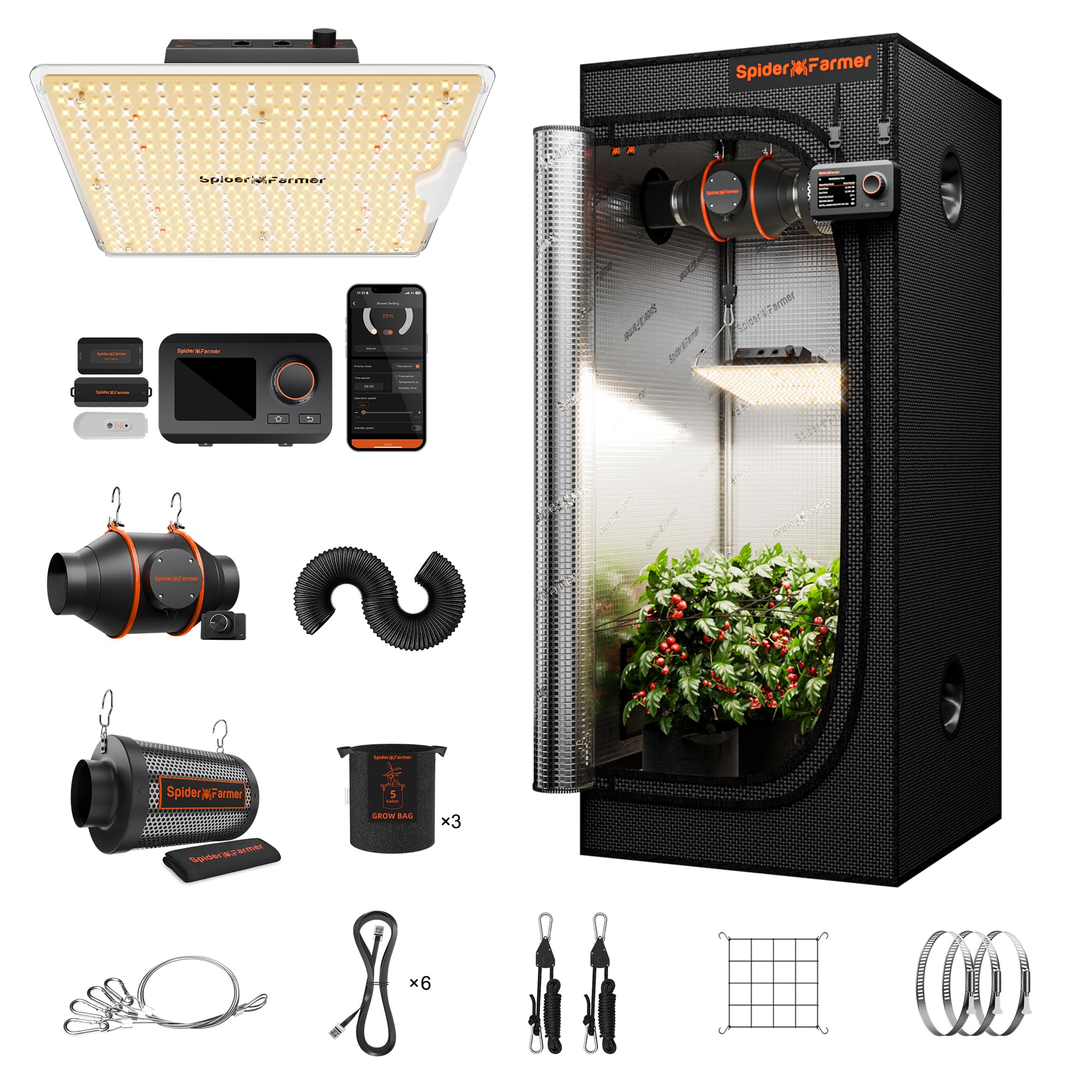
A well-rounded 2×2 kit that delivers a complete growing system for the intermediate hobbyist.
Spider Farmer’s 2x2x5 system bundles a 24x24x55-inch tent with an upgraded SF1000D LED light, a 4-inch inline fan with a 205 CFM rating and an activated carbon filter, a GGS controller, and basic accessories like grow bags and rope hangers. The light features 476 Bridgelux diodes, draws 100W from the wall, and achieves a photosynthetic photon efficacy of 2.5 μmol/J — solid efficiency for its class. The controller integrates temperature, humidity, and light sensors and lets you dim the light from 0% to 100% and set grow cycle schedules through the Spider Farmer app.
The tent itself uses 1680D Oxford fabric with high-reflective Mylar inside, smooth SBS zippers, a reinforced double-stitched frame, and a sturdy steel structure that holds up to 120 pounds. The fan operates at a quiet 26.8 dB with an energy-efficient 27-watt EC motor. Assembly takes about two to three hours for a first-timer, and the kit is genuinely complete — you just need seeds and water. After nine months of continuous use, reviewers point out the tent fabric stays flawless, the light component has zero failures, and the fan remains quiet with only a slight increase in noise as the filter degrades. The dimming function on this newer version was a common complaint on older SF1000 units; the upgraded SF1000D addresses this with full 0-100% control. The negative feedback focuses on the bundled accessories feeling entry-level — the clip fan loses tension over time, and the included hygrometer is cheap enough that most owners swap it for a higher-quality unit.
What makes it a solid kit
- Genuinely complete one-box solution — tent, light, fan/filter, controller, and all accessories
- Light-tight 1680D fabric with SBS zippers keeps the environment fully controlled
- Dimmable SF1000D light with app control runs quiet and energy-efficient (27W EC motor on the fan)
Where it cuts corners
- Bundled clip fan loses tension over extended use and may need replacement
- Included hygrometer is basic and not as accurate as a standalone unit
- Premium price for a 2×2 — you are paying for the convenience of one-box compatibility
Reach for this if: You are ready to move past the absolute entry level and want a complete, app-controllable system that will produce consistent harvests for at least a year.
Consider the VIVOSUN kit instead if: You value a taller (48-inch vs 55-inch) tent and a larger included grow bag count (5 vs 4) at a similar price point.
Understanding the Specs
Fabric Denier (D)
This number tells you how dense the outer canvas is. A 600D tent is light and budget-friendly, but it can tear more easily and may let in some light through the fabric itself. 1680D is the balance for most vegetable growers — it is thick enough to block light completely and resist punctures from trellis clips and fans. 2000D+ fabric is premium-grade and will outlast several seasons of heavy use. Think of it like jacket thickness: 600D is a windbreaker, 2000D is a winter parka.
Reflective Mylar Interior
The diamond-patterned lining inside the tent reflects stray light back onto the leaves rather than absorbing it into the canvas. A 100% reflective Mylar lining boost your grow light’s efficiency, which means healthier photosynthesis and faster growth. Cheaper tents use a less reflective material that dulls the light output, forcing you to run your lights longer or brighter than necessary to compensate.
Light-Proof Zippers
Zippers are the most common light leak point on any grow tent. High-quality tents use SBS-brand zippers with a black inner lining behind the zipper track and overlapping stitching at the corners to prevent light from sneaking in during dark periods. Genuine SBS zippers also run smoother and last longer than generic zippers, which is important when you are opening and closing the tent multiple times a week for watering and inspection.
Duct Port Sizes
These are the round openings cut into the canvas where you route your ventilation ducting. Standard sizes are 4 inches, 6 inches, and 8 inches. A 4-inch port works for smaller tents and fans under 200 CFM. If you plan to add a larger inline fan or a carbon filter, look for at least one 6-inch port. More ports — especially in different locations (top, side, rear) — give you flexibility to set up your ventilation system cleanly without ugly 90-degree bends that reduce airflow.
FAQ
What is the best size grow tent for vegetables?
Can I grow vegetables in a standard 48-inch-tall grow tent?
Do I need a carbon filter for vegetable growing?
How do I fix light leaks in a grow tent?
What does the denier (D) number mean for a grow tent?
Is a 2×2 grow tent big enough for a full tomato harvest?
Do I need a WiFi controller for my grow tent?
What is the difference between a complete grow tent kit and buying components separately?
How long does a grow tent last for indoor vegetable gardening?
Final Thoughts: The Verdict
For most vegetable growers, the grow tent for vegetables winner is the VIVOSUN Smart Grow Tent Kit 2×2 because it delivers a genuinely complete, app-controlled system that takes the guesswork out of your first harvest. If you want extra vertical space for climbing vegetables and prefer a traditional entry-level bare tent, grab the MELONFARM 34x34x72. And for the grower who values premium material quality and a two-chamber design, the AC Infinity CLOUDLAB 632D is the tent that owners compare favorably against every other option in its class.
How We Picked
We do not accept paid placement. Every pick is matched to a real buyer and a real use-case; we do not hands-on test units.
Sources & Methodology
Specifications: manufacturer listings and product documentation. Review insights: verified customer reviews, as of July 2026. Pricing: not shown on this page (it changes often); check the current price via the retailer link.
As an Amazon Associate, Lawn Gear Lab earns from qualifying purchases. This does not affect which products we feature.