
Specs are compiled from manufacturer listings and verified buyer reviews and can change over time — please confirm the key details on the product page before buying.
You spent a weekend planting, only to watch the grass creep back into the bed by August. The problem is almost never your ambition — it is cheap edging that won’t stay put, rusts through, or snaps under a string trimmer (a handheld tool that spins a nylon line to cut grass). The right pick holds a clean line through mowing, rain, and freeze-thaw cycles, keeping mulch and grass in their places.
I’m Rikta — the founder and writer behind Lawn Gear Lab. This guide is built by comparing the manufacturers’ published specifications and the patterns across verified customer reviews, so you get each pick’s real strengths and trade-offs instead of marketing spin.
Whether you are defining a flower bed, corralling river rock, or keeping Bermuda grass at bay, the best garden fence edging handles weather, weeds, and yard tools without needing to be replaced next season.
Our Picks at a Glance


How To Choose The Best Garden Fence Edging
The right edging depends on three decisions: the material that matches your soil, the height that beats your weeds, and the installation method you have time for. Here is what to look for.
Material Dictates Longevity
Steel galvanized (coated with a protective zinc layer) or COR-TEN (weathering steel that forms a stable rust layer that seals itself) will outlast plastic in heavy sun and under string-trimmer abuse. HDPE (high-density polyethylene, a durable plastic that resists rot and fading) can get wavy in long, unsupported runs. Recycled rubber is flexible and forgiving with mower blades but costs more per foot. Resin blocks mimic stone without the weight but require careful base prep.
Height Is Your Weed Barrier
A 2-inch profile is purely decorative — it marks a line but does not stop creeping roots. To block aggressive grasses like Bermuda, look for at least 6 inches below grade. The 8-inch and 10-inch options give you real root-blocking depth while leaving a visible lip above the soil.
Stakes Matter More Than the Edging Itself
A beautiful border is useless if the stakes snap on the first hammer strike. Several popular kits ship plastic stakes that break in hard or rocky soil. Check whether you can swap in metal landscape stakes or rebar hooks before you commit to a system. Extra stakes per length (5 per meter instead of 3) give a noticeably more rigid line.
Quick Comparison
| Model | Best For | Material | Height | Total Length | Amazon |
|---|---|---|---|---|---|
| Beuta Polyrock Blocks★ Best Overall | Decorative stone look | Resin | 6.5 in | 16 ft (4-pack) | Amazon |
| Edge Right COR-TEN SteelPremium Pick | Permanent, heavy-use borders | COR-TEN Steel | 6 in | 20 ft (5-pack) | Amazon |
| Thealyn Decorative FenceBest Appearance | Short decorative barrier | Powder-coated Metal | 18 in | 9.17 ft (5 panels) | Amazon |
| EcoBorder Recycled Rubber | Clean, mower-friendly lines | Recycled Rubber | 2.75 in | 24 ft (6-pack) | Amazon |
| Worth Galvanized Steel | Deep root barriers | Galvanized Steel | 10 in | 20 ft | Amazon |
| GTSABWAY Pre-Rusted Steel | Rustic look at low cost | Metal | 6 in | 40 ft | Amazon |
| Master Mark Terrace Board | Budget-friendly curves | HDPE Plastic | 5 in | 40 ft | Amazon |
| FunFanso No-Dig Plastic Kit | Quick, no-tool install | Polyethylene | 2 in | 66 ft | Amazon |
In‑Depth Reviews
1. Beuta Landscape Edging | Polyrock Blocks
Our pick — over 4.5★ from 500+ verified ratings; the strongest balance of quality and price.
The only pick that looks like natural stone while locking mulch down with a 6.5-inch bite
Most edging is a long strip you bend into place. The Beuta system works differently — four individual sections, each with six faux-stone resin blocks, connect with a patent-pending mechanism that buyers report is easier to install than cement-based alternatives (so you avoid mixing mortar or hauling heavy materials). Each section measures 48 inches long and 4 inches wide, giving you roughly 16 feet of border from the four-pack. At 10.75 kilograms total, these blocks are solid enough that a gust of wind won’t rearrange them.
The 6.5-inch height is the real story here. As one owner put it, “6.5” height keeps mulch in” — and that depth also stops most weed roots from sneaking under. The greystone finish mimics natural rock edging closely enough that visitors may not realize it is resin. Homeowners consistently call it “elegant” and note the “great curb appeal” their yards get after installation. The trade-off is that you need separate starter and finishing blocks for a fully polished look, and the price reflects the premium feel. If your project demands a stone aesthetic without hauling actual rocks, this is the one.
What wins people over
- Realistic stone appearance fools the eye at normal distance
- Patented connection system means no digging or concrete mixing, owners mention
- Flexible shape design — start, stop, turn right, turn left, and extender blocks
The honest limit
- Price is significantly higher than coiled plastic or steel — budget accordingly
- Starter and finishing blocks sold separately, adding to total cost
Perfect match for: Anyone who wants a permanent, decorative stone border without mixing mortar or hauling heavy materials.
Think twice if: You need to edge a long, straight run on a tight budget — coiled edging gives more feet per dollar.
2. Edge Right – Hammer-in COR-TEN Steel Edging
Heavy 16-gauge steel that laughs at weed eaters and develops a handsome rust patina
If you are tired of replacing plastic edging every other season, Edge Right is the “one and done” solution buyers keep mentioning. Each strip is 48 inches long and 6 inches deep, made from COR-TEN weathering steel — the same material used in architectural cladding and shipping containers. The 1/4-inch rolled top edge means no sharp metal to catch your hand or a string trimmer line (a tool that uses a spinning nylon line to cut grass and weeds). Five strips give you 20 feet of border.
Installation is straightforward: hammer it in with a block of wood over the top to protect the rolled edge. Customers note bending it by foot pressure alone for gentle curves, though tighter radii (sharper bends) require patience. The COR-TEN steel develops a protective rust patina over time that seals the surface — something buyers describe as a “cool patina” or “attractive bronze” look. The maker claims the steel can last well over 100 years. That kind of durability commands a premium price, but owners who have had it in the ground since 2023 report it is stable with no deterioration except one section eroded by concentrated rainwater. A few note it is pricey, but the consensus is clear: it beats plastic in every way.
The five-pack costs more than many plastic kits, but when you consider that you will never buy edging for that bed again, the math changes. But the result is a permanent, trimmer-proof line.
Why it stands apart
- 16-gauge COR-TEN steel is thicker and tougher than galvanized alternatives
- Rolled top edge is safe against hands and power tools
- Self-sealing rust patina means no painting or coating ever needed
The honest limit
- Bending for tight curves takes effort — not as instantly flexible as plastic
- Premium cost per linear foot vs. coiled steel options
Best for: Permanent borders that need to survive string trimmers, dog paws, and decades of weather without replacement.
skip it if: You only need a temporary border for a single season or are working with soft soil where the heavy steel is overkill.
3. Thealyn Metal Decorative Garden Fence
An 18-inch black iron fence that installs in seconds and keeps small pets out of flowers
This is not a strip you bury — it is a freestanding fence that sits on top of the soil. Each panel measures 22 inches wide by 18 inches high, and five panels connect via interlocking rings to form a 9.17-foot border. The powder-coated finish (a baked-on protective paint layer) resists rust, and the wrought-iron style adds a formal, architectural look that the data shows is the most praised feature — with 130 mentions, it is the single most discussed quality, and 125 owners call out the build quality.
Installation could not be simpler: push the pointed legs into the ground with your hands. No digging, no stakes, no tools. Owners say it stays hooked together well and “looks expensive.” It also works as a low pet barrier — small dogs cannot push through the wrought-iron pattern. The caveat is that the 0.4-inch thickness is sturdy, but a few reviewers point out that top finials (the decorative knobs on top) can snap if the panel is dropped on a hard surface. For decorative borders where you want a visible fence rather than a hidden ground strip, this is the most elegant option on this list.
A visual anchor: The powder-coated black finish stays shiny through winter weather — “left out over the winter and hasn’t rusted yet” one owner noted.
The catch: At 9.17 feet for the five-pack, you are covering less linear distance per dollar than any coiled edging in this guide; use it for accent beds, not perimeter runs.
Reach for this if: You want a short, attractive fence that defines a garden bed or keeps a small animal out, with zero installation effort.
Look elsewhere if: You need to edge a long stretch of lawn or block underground weed roots — the legs sit on the surface, not below it.
4. EcoBorder Black Recycled Rubber Edging

Recycled rubber strips that let you mow right over the edge without bending a blade
EcoBorder takes a different approach: it sits partly on top of the soil in an L-shape, creating a sharp transition between lawn and bed. The rubber is flexible enough to curve and durable enough that shoppers say it lasting under tractor snow plowing. Each strip is 48 inches long and 2.75 inches wide, sold in a six-pack for 24 feet of coverage. The recycled rubber material is heavy at 6.8 pounds per box, which helps it stay put once installed.
The data shows easy installation (105 mentions) and durability (81 mentions) are what owners praise most. One 70-year-old owner installed the full six-pack alone in about an hour, calling it “the way to go.” The L-shape design means you can run a mower wheel along the edge without chewing up plastic or bending steel. The catch is that the plastic stakes and joining pins that come with it are the weak link — owners consistently recommend replacing them with 3/16-inch dowels or metal spikes and hammering through a wood block to avoid breakage. If you swap the stakes, this edging may genuinely last a lifetime.
What it does best
- Mower can ride the edge without damage — a major time saver for large lawns
- Recycled rubber stays flexible in cold weather without cracking
- Heavy enough to stay flat without excessive staking
The honest limit
- Included plastic stakes break easily — plan to buy metal replacements
- Higher cost per linear foot than coiled plastic or thin steel
Ideal for: Homeowners who mow their own lawn and want a clean, durable line that trims itself.
Not ideal for: Deep root barriers — at 2.75 inches, this is a surface-level border, not a weed blocker.
5. Worth Narrow-Corrugated Landscape Edging 10″ x 20ft

10 inches of galvanized steel stopping roots that other edging lets right through
When the Edge Right COR-TEN is too short at 6 inches, the Worth at 10 inches is the deepest barrier in this guide. The corrugated design (ridges that add stiffness) provides stiffness while still allowing the strip to follow curves. It is made from galvanized alloy steel with hemmed edges — smooth rolled top and bottom — so there are no sharp surfaces. The 20-foot length gives you a solid run without multiple joints.
The galvanized finish is a light silver semi-sheen that stays clean — it does not develop the rust patina of the COR-TEN options. Quality is the top-cited reason owners choose this, with 45 mentions, and appearance follows close behind at 43. The trade-off is that it is not as easy to bend as thin plastic — you need to plan your curves and work gradually to avoid kinking. At 3.98 kilograms, it is slightly heavier than the 5.39-kilogram GTSABWAY below despite being half the length, pointing to a thicker gauge steel.
Root-stopping depth: 10 inches goes deep enough to block aggressive spreaders like bamboo runners and creeping Bermuda — something 2-inch plastic cannot touch.
Fair warning: The coiled strip springs open aggressively; wear gloves and have a helper when unrolling.
Best suited for: Beds plagued by invasive grass or deep-rooted weeds where surface-level edging has failed.
pass on it if: Your soil is full of large rocks — installing a 10-inch strip in rocky ground is a digging project.
6. GTSABWAY Corrugated Garden Edging 6″ x 40ft Pre-Rusted
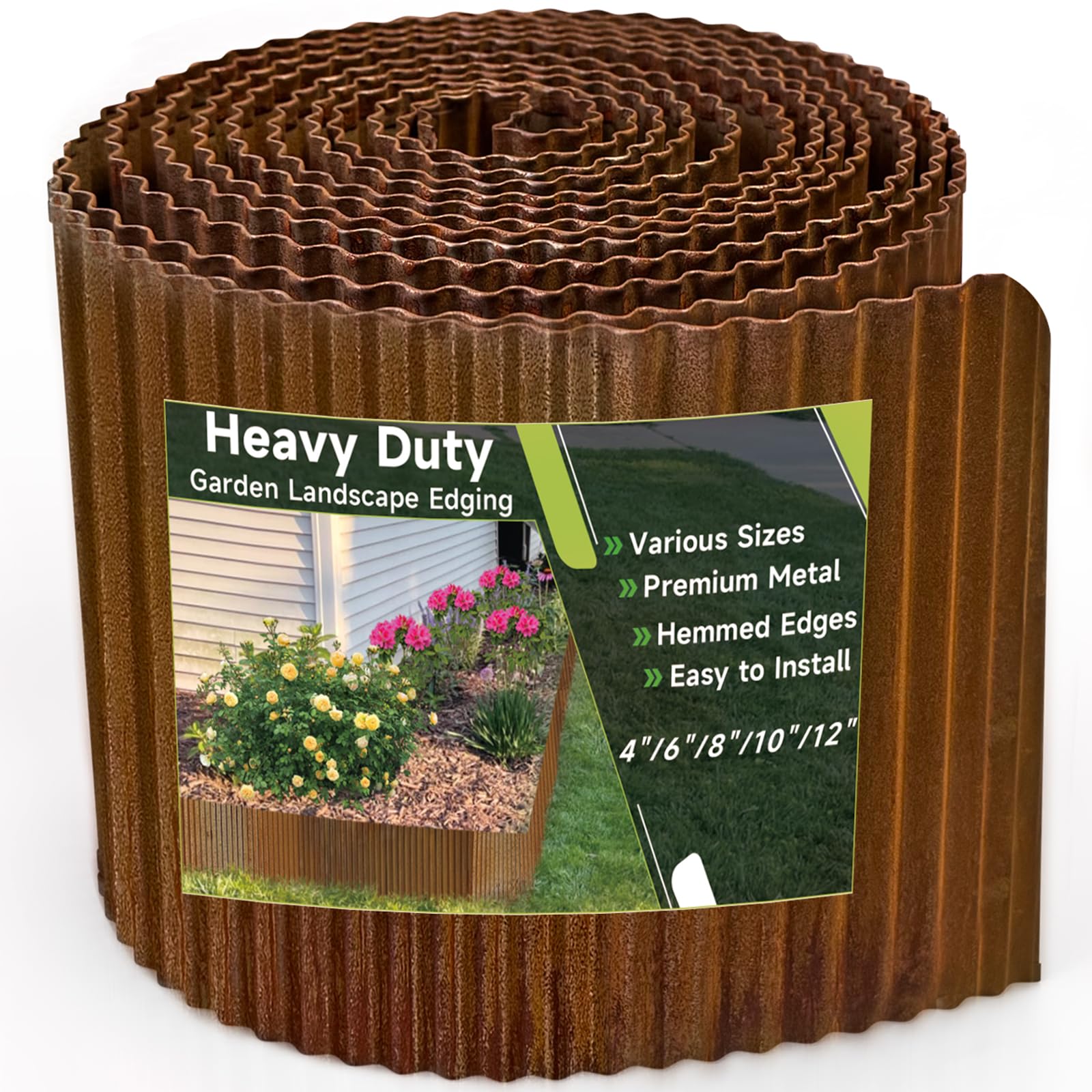
40 feet of metal edging at a price that undercuts most plastic kits
The GTSABWAY gives you the longest single run in this comparison — 40 feet from one coil — for a fraction of the cost per foot of the premium steel options. It is 6 inches tall and pre-rusted, meaning the patina is already developed, which saves you the “waiting for it to look old” phase. The metal is corrugated so it bends around curves without cracking, and the rolled top and bottom edges eliminate sharp spots.
Owners who used it to separate Bermuda grass from flower beds report that the 8-inch height (6 inches above ground plus 2 inches below grade works well) “effectively blocks Bermuda grass roots with regular weeding.” They also call it “sturdy and effective.” The galvanized steel construction is heavy-duty enough that buyers report it is “not flimsy or sharp.” One thing to note: a few owners chose the black version over the pre-rusted because of concerns about rust-through on the pre-rusted finish. If you want a predictable silver look, check for the galvanized finish option. At 5.39 kilograms, it is heavier than the 40-foot Master Mark by 1.62 kilograms, which aligns with the metal vs. plastic trade-off — steel is heavier but far more durable against sun and tools.
What makes it a value standout
- 40 continuous feet means fewer joints to worry about and less wasted material
- Pre-rusted patina gives a rustic, aged look instantly
- Solid galvanized steel — more durable than any plastic at this price point
The honest limit
- Can be unruly straight off the reel — requires patience to flatten
- Some owners wish the pre-rusted version held up longer without rust-through
Great for: Large projects where 40 feet of sturdy steel at a low cost per foot makes sense, especially in rustic or cottage-style gardens.
Consider other options if: You want a mirror-smooth, modern silver finish that will never rust.
7. Master Mark Terrace Board 5″ x 40ft

The crowd-favorite plastic coil that has been edging American gardens since 1966
Master Mark has been making HDPE (high-density polyethylene, a tough and flexible plastic) edging long enough that owners mention buying it “numerous times” and one buyer compared a new roll to one purchased 7-plus years ago — noting the new one is thinner, as happens with many products. Still, at 40 feet long and 5 inches tall with 10 included stakes, this is the most accessible entry point for budget-friendly garden borders. The textured wood-grain look is convincing from a few feet away.
The quality (66 mentions) and edging performance (43 mentions) are the top positive aspects owners single out. It is flexible enough to form tight curves, which is why it is a staple for flower beds. The trick is warming it in the sun before installing — that softens the plastic and prevents the waviness some owners mention. A few note that the included stakes are insufficient for the full length, so expect to buy extras. It also has a 34 mentions for sturdiness with mixed feedback — the plastic is flexible by design, but that can mean it bows under heavy soil pressure in long straight runs. If you need a cheap, fast border for a vegetable patch or annual flower bed, this is the proven workhorse.
Proven track record: Master Mark has been manufacturing HDPE plastics since 1966, which gives this product more institutional history than any other in this guide.
The honest trade-off: The material has gotten thinner over the years, and the waviness complaint is common — plan to warm it in the sun and use extra stakes for a taut line.
Perfect for: Quick, low-cost borders around vegetable gardens, annual flower beds, or any project where the edging may change layout next year.
Not for: Permanent, straight-as-an-arrow lines that must resist mower bumps and freeze-thaw cycles without bowing.
8. FunFanso No-Dig Plastic Edging Kit 2″ x 66ft
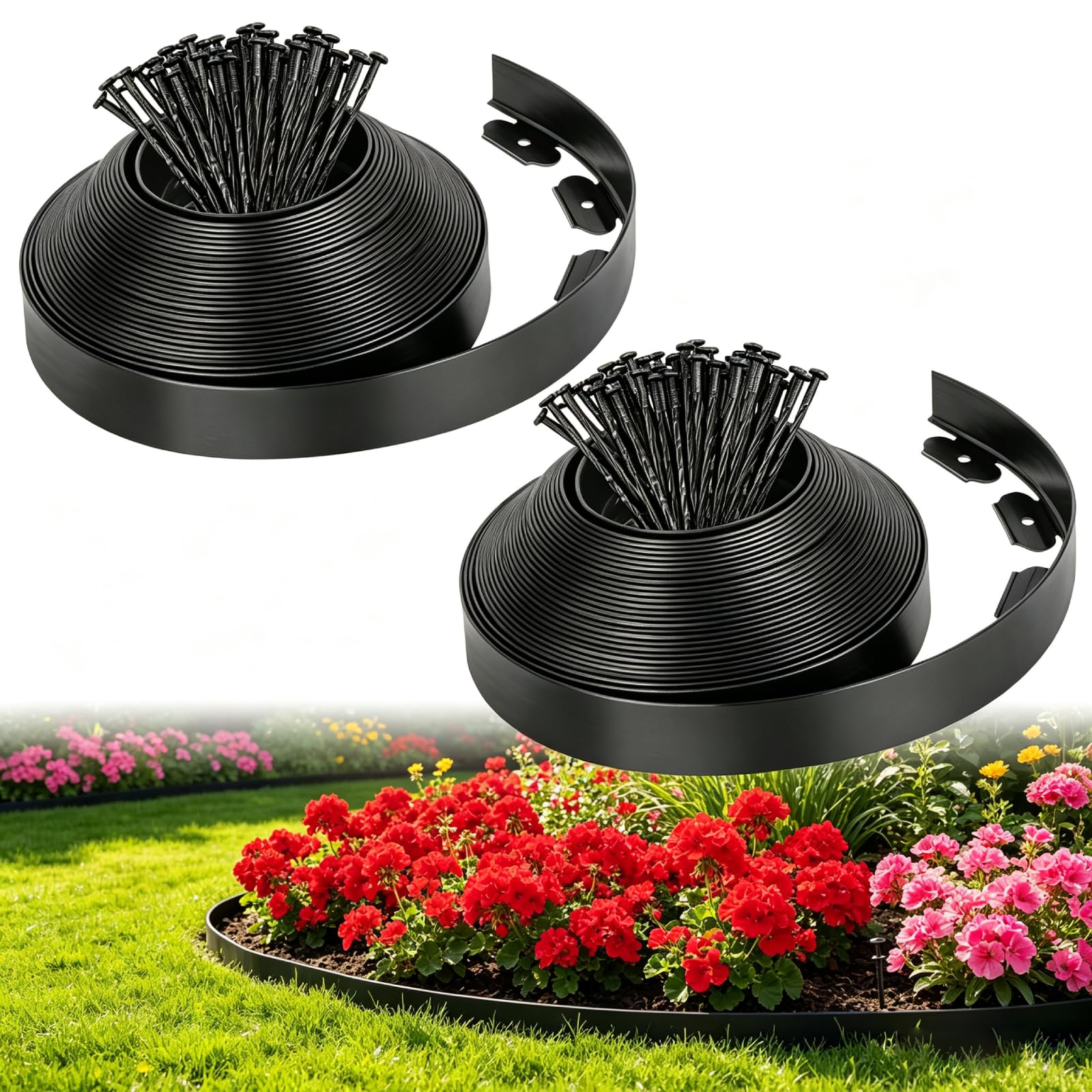
66 feet of edging and 100 stakes for anyone who wants a border in place before lunch
At 2 inches tall, this is purely decorative edging — it marks a visual line between lawn and bed but will not stop any determined root system. What it does offer is astonishing value: 66 feet of polyethylene (a lightweight, flexible plastic) edging plus 100 landscape stakes in one box. The kit is designed for no-dig installation on loose soil; you hammer in the stakes to secure the shape. The maker provides 5 stakes per meter, notably denser than the 3 stakes per meter many competitors include, which helps keep the line straight.
Owners call it “so easy to install” and “good value for the money.” The easy-install aspect gets 93 mentions, making it the most praised quality. The caveat is that the included stake tips can break off when driven into hard ground — owners recommend pre-loosening compacted soil or using a different stake. If your soil is soft and you simply want a clean line between lawn and mulch without any digging, this kit solves the problem in the shortest time of any option here. At 2 inches deep, it does not compete with the 6- and 10-inch steel options for root blocking, but it also costs a fraction of the price.
Why it is so popular
- 66 feet of coverage means one box edges most standard flower beds
- 100 stakes — more than enough for a secure installation at 5 per meter
- No-dig, no-tool process works in loose garden soil in minutes
The honest limit
- At 2 inches, it is a surface line — not a barrier against weeds or aggressive grass
- Plastic stake tips can snap in compacted soil; swap for metal if your ground is hard
Best for: Renters, temporary gardens, or anyone who wants a quick, clean edge without committing to a permanent solution.
Not for: Blocking Bermuda grass or defining beds in heavy clay soil where stakes need real bite.
Understanding the Specs
Material: Steel vs. Plastic vs. Rubber
Steel edging (galvanized or COR-TEN) is the most durable against sun, string trimmers, and ground pressure. HDPE (high-density polyethylene) plastic bends easily and costs less but can warp in long runs or become brittle over years of UV exposure. Recycled rubber is the middle ground — it is flexible and tough but heavier and pricier per foot. Resin blocks weigh the most and look the best but require careful installation and extra finishing parts.
Below-Grade Depth
This is the height of the edging that sinks into the soil. A 2-inch profile is purely decorative — it defines a line but block no roots. To stop creeping weeds and grass, you need at least 6 inches below grade. The 10-inch options on this list go deep enough to handle even aggressive spreaders like bamboo and Bermuda, but they are also harder to install in rocky soil. The right depth depends entirely on what you are trying to keep out.
FAQ
How deep should garden fence edging be to stop grass roots?
Will steel edging rust through?
Which type of edging is easiest to install for a beginner?
Can I mow over garden edging?
How do I keep plastic edging from looking wavy?
Is there edging that looks like natural stone but is lighter?
How many stakes do I really need?
Can I cut steel edging to a custom length?
Final Thoughts: The Verdict
Across the board, the garden fence edging winner is the Beuta Polyrock Blocks because it delivers a premium stone look with real root-blocking depth (6.5 inches) and the simplest connection system among decorative options. If you want a permanent steel barrier that your grandchildren will still be edging around, grab the Edge Right COR-TEN Steel. And for the fastest, cheapest way to mark a line between lawn and mulch, the FunFanso No-Dig Kit covers 66 feet with 100 stakes and gets the job done in one morning.
How We Picked
We do not accept paid placement. Every pick is matched to a real buyer and a real use-case; we do not hands-on test units.
Sources & Methodology
Specifications: manufacturer listings and product documentation. Review insights: verified customer reviews, as of July 2026. Pricing: not shown on this page (it changes often); check the current price via the retailer link.
As an Amazon Associate, Lawn Gear Lab earns from qualifying purchases. This does not affect which products we feature.