
Specs are compiled from manufacturer listings and verified buyer reviews and can change over time — please confirm the key details on the product page before buying.
Raised beds and containers don’t forgive a bad bag of dirt. A poor mix can drain nutrients in weeks, compact into clay, or sprout weeds you never planted. Finding a blend that handles the full season — from seed-starting to harvest — without a ton of guesswork is the real challenge. This guide to the best garden bed mix starts with seven blends that give roots a healthy start, which is the difference between an average harvest and a bumper crop.
I’m Rikta — the founder and writer behind Lawn Gear Lab. This guide is built by comparing the manufacturers’ published specifications and the patterns across verified customer reviews, so you get each pick’s real strengths and trade-offs instead of marketing spin.
Our Picks at a Glance

How To Choose The Best Garden Bed Mix
Not every bag labeled “garden soil” is built the same. Some are designed for in-ground beds, while others work better in containers or raised planters. A few key specs separate the long-lasting, productive blends from the ones that fade fast.
Organic Matter & Nutrients
The best mixes include a blend of composted materials (like peat moss, worm castings, or manure) and a slow-release food source (like kelp meal or feather meal). These feed your plants gradually over weeks, not all at once. A mix that relies entirely on synthetic fertilizers can burn young roots and leaves no long-term life in the soil.
Drainage & Aeration
Roots need oxygen. Ingredients like perlite (a white volcanic glass that creates air pockets), pumice (a porous volcanic rock), and sand create tiny air spaces so water doesn’t pool and the soil doesn’t turn into a solid brick. A good garden bed mix balances water retention enough for dry spells with drainage that prevents root rot.
Weight & Texture
Lighter, fluffier mixes are easier to pour and gentler on delicate seedlings. Heavier mixes hold more moisture but can compact in containers. If you are filling several large raised beds, a lighter 2-cubic-foot bag saves your back as much as your plants.
Quick Comparison
| Model | Best For | Volume | Weight | Key Additives | Amazon |
|---|---|---|---|---|---|
| Coast of Maine Bar Harbor Blend★ Best Overall | All-purpose container & bed | 16 Qt | 14 lbs | Lobster shell, kelp meal | Amazon |
| Coast of Maine Tomato & VeggieTop Performer | Heavy-feeding edibles | 20 Qt | — | Composted manure, peat moss | Amazon |
| Espoma Vegetable & Flower | In-ground amendment | 1 cu ft | — | Mycorrhizae, worm castings | Amazon |
| Black Gold Organic Potting Mix | Seedlings & custom feeding | 16 Qt | 20 lbs | Pumice, worm castings | Amazon |
| Michigan Peat Baccto Premium | Large-volume bed filling | — | 50 lbs | Reed sedge peat, perlite | Amazon |
| Espoma Organic Potting Mix | Versatile indoor/outdoor mix | 2 cu ft | — | Mycorrhizae, kelp, feather meal | Amazon |
In‑Depth Reviews
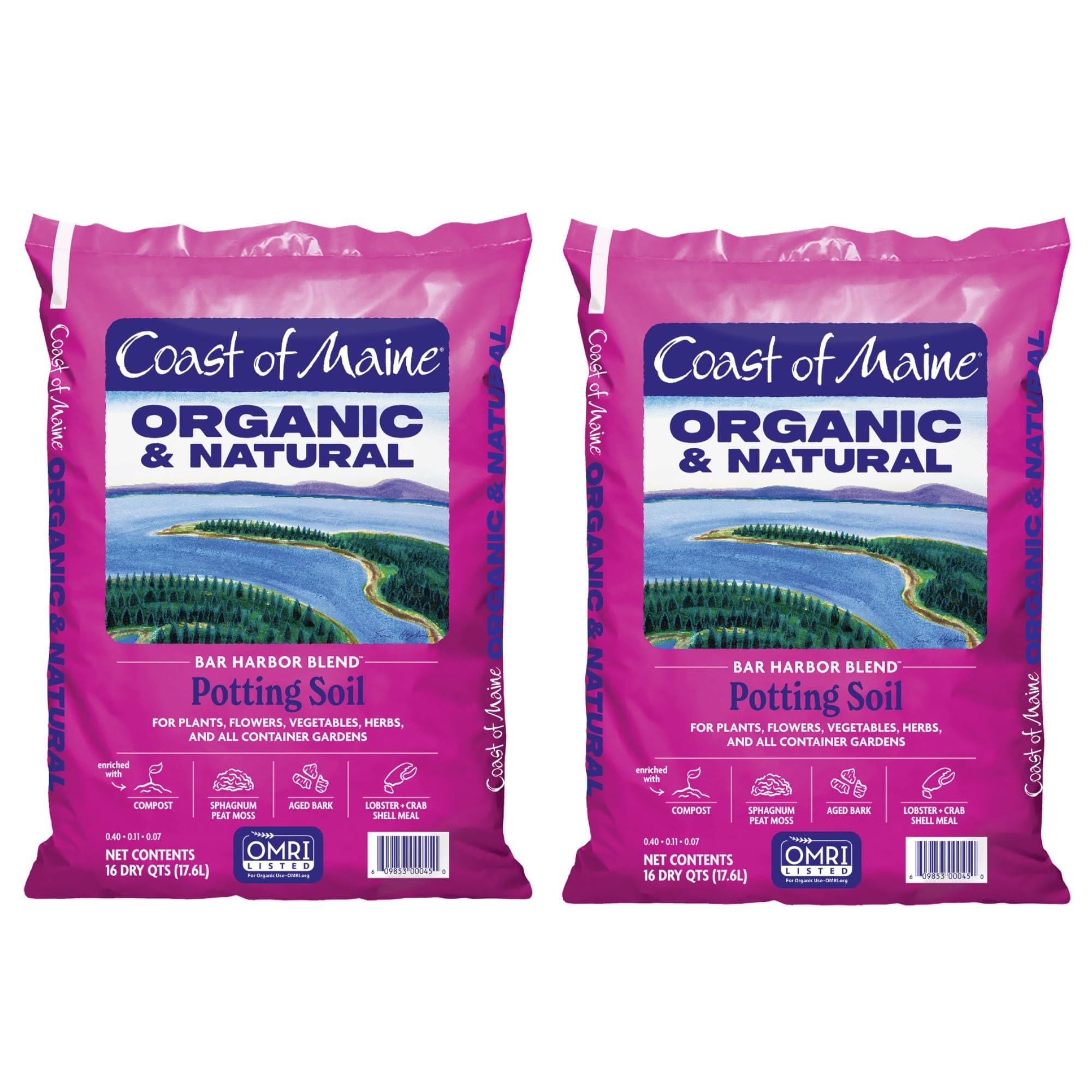
1. Coast of Maine Bar Harbor Blend
Our pick — over 4.5★ from 550+ verified ratings; the strongest balance of quality and price.
A 16-quart (14-lb) bag that turns containers into a mini-ecosystem with a 4.8-star rating across 500+ owners.
You get a rich, dark soil that is loaded with perlite for drainage and infused with lobster and crab shell meal plus kelp meal for steady organic feeding. Unlike many mass-market bags, it is not full of sticks or bark — just a smooth, consistent blend that buyers agree is “the best soil” for raised beds, pots, indoor planters, and even GreenStalk towers. Buyers report that this mix gives tomatoes, potatoes, and peas a visible boost. “Two bags were enough to mound up 8 potato plants,” they note, “and have extra for 2 more planters.” The natural slow-release nitrogen means you won’t need to fertilize right away, and the moisture retention is balanced enough that you water less often without drowning roots.
That said, the volume per bag (16 quarts) is on the smaller side if you are filling a large raised bed from scratch. You will likely need a few bags for a standard 4×4 bed, which adds up. A very occasional owner mentions the bag can be a bit moist on arrival, but the plant results still speak for themselves. The Bar Harbor Blend beats the Michigan Peat Baccto Premium in texture and nutrient density, though Baccto offers more volume for less money.
What wins people over
- Exceptional quality: dark, rich texture with no large debris
- Pre-mixed with lobster shell, kelp, and perlite for instant aeration
- Works across containers, raised beds, and hanging baskets
The honest trade-off
- Small bag size means buying multiple for big projects
- Premium price compared to basic topsoil
Perfect for: container gardeners who want a nutrient-dense, ready-to-use mix that outperforms standard bagged soils.
Think twice if: you need a budget-friendly option for filling several large raised beds — you will need several bags, and the cost adds up fast.
2. Coast of Maine Tomato & Veggie
Its 20-quart bag of composted manure gives heavy feeders like tomatoes a bigger volume per purchase than the Bar Harbor Blend.
This blend leans into composted manure and sphagnum peat moss to create a lightweight mix, one that holds moisture well while draining fast enough for pots. Owners mention that “tomatoes and zucchini thrive in 5-gallon pots” using just a single 20-quart bag per pot. The soil is aromatic with wood to deter insects and contains a balanced nutrient profile that supports heavy-feeding plants from day one. The organic OMRI listing reassures anyone growing food crops.
The notable risk here is the occasional mention of fungus gnats and mold. Some bags arrive with these stowaways, which can be an issue if you are mixing this directly indoors. It is best to open the bag outside or use it only in well-ventilated raised beds and outdoor pots. A few buyers also note small undecomposed twigs, though the soil itself still performs great. You get more volume for the price compared to the Bar Harbor Blend, but you trade some texture consistency.
Why gardeners grab it
- Lightweight but nutrient-rich composted manure base
- Excellent balance of moisture retention and drainage
- Trusted by owners of heirloom tomatoes for strong fruit set
What you should know
- Fungus gnats and mold can appear in some bags
- May contain small undecomposed twigs
Reach for this if: you are growing heavy feeders like tomatoes, zucchini, or peppers in containers and want an organic boost.
Look elsewhere if: you are planting indoors — the gnat risk makes it better suited to outdoor raised beds or pots.
3. Espoma Organic Vegetable & Flower Garden Soil

A 1-cubic-foot bag of in-ground amendment with mycorrhizae (root-helping fungi) and worm castings for a stronger start than plain compost.
This is an in-ground planting mix — you mix it with your native soil rather than using it straight in pots. The formula is a rich blend of organic ingredients, including earthworm castings and Espoma’s proprietary mix of endo and ecto mycorrhizae (beneficial fungi that help roots absorb water and nutrients). Customers note that “tomatoes and marigolds thrived” and that the soil “improved plant health and moisture retention.” Compared to a standard store-bought organic mix, plants in Espoma showed “a noticeable quality difference.” It earns high marks across the board for quality, and the mycorrhizae give new transplants a faster, stronger start than plain compost would.
The main watch-out duplicates the pattern of the Coast of Maine Tomato & Veggie: a few bags have arrived with fungus gnats. It seems to be a risk in this general category of organic soils. Also, because it is an “in-ground” mix, it is less ideal for pure container gardening without added perlite or aeration agents. Choose this over the Bar Harbor Blend if you are amending in-ground beds and want the value of a 1-cubic-foot bag.
Real-world edge: the mycorrhizae and worm castings give seedlings a stronger root network practically overnight — buyers call it “rich, well-structured, nutrient-dense organic soil” that “stopped gnat problems.”
Best for: amending tired in-ground garden beds with a premium organic boost without spending a fortune per bag.
Not ideal for: straight container growing — it needs aeration amendments for pots.
4. Black Gold Organic Potting Mix
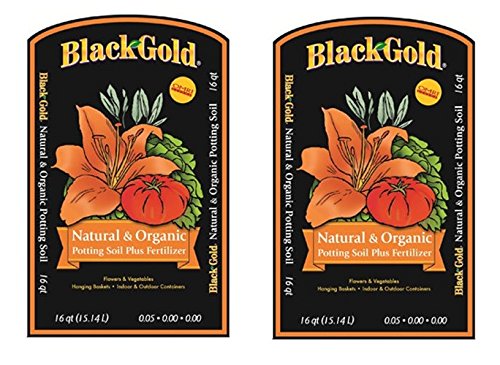
Its deliberately low 0.05% nitrogen (nitrogen, a key plant food) lets you control the feeding schedule without burning tender seedlings.
This is the only mix on the list where the nitrogen content is deliberately low (0.05%). That is a feature, not a flaw. If you like to add your own fertilizer ratios or you are starting seedlings that burn easily in strong soil, this gives you a clean base. The pumice and perlite (materials that create air pockets) create excellent aeration — owners describe it as “dark, rich, fluffy soil with good aeration, no rocks or undecomposed wood chips.” The OMRI organic listing means it is safe for food crops. While the bag is 16 quarts, it is heavier than many (20 pounds) because of the pumice and earthworm castings.
A few owners note that fungus mites can appear, though they rarely cause issues outdoors. The low nutrient load also means you must stay on top of feeding if you push heavy feeders like tomatoes — this is not a “low-maintenance” mix. Unlike the Espoma Vegetable & Flower Soil, this is designed for potting and gives you full control over your fertilizer.
The big advantage
- Very low nitrogen allows custom feeding without burning plants
- Fluffy texture with pumice ensures roots breathe
- OMRI listed and free of large wood pieces
The caveat
- Low nutrients mean you must supplement for mature plants
- Fungus mites possible, though manageable outdoors
Reach for this if: you are a hands-on grower who mixes custom fertilizers and wants a clean, aerated base for seedlings or indoor starts.
skip it if: you want a bag that feeds your vegetables all season with zero extra work — you will need to add your own nutrients.
5. Michigan Peat Baccto Premium

At 50 pounds, this bag gives you the most volume per dollar for filling multiple raised beds or containers.
If you are filling multiple raised beds or large containers, the sheer bulk of this bag makes it a practical choice. The mix is pre-blended with reed sedge peat, perlite, and sand, plus both starter and slow-release fertilizers already worked in. Reviewers point out “excellent quality” and say their plants are “thriving” in containers and beds. Long-time gardeners who have used Baccto for decades call it “the best potting soil we have found.”
The moisture retention is a mixed bag: it holds water well without becoming soggy, but some owners find it compacts significantly after watering, making it hard to tell when to water again. The soil arrives moist in the bag, which is normal for peat-based mixes but can feel heavy compared to lighter blends. At 50 pounds, this is the heaviest option, so it is not ideal if you have a long walk from the driveway to the garden. For raw volume and consistency across thousands of plants (one owner grew over 200 dozen flowers), the value per pound beats the smaller Bar Harbor Blend bag.
What owners love: the quality score is massive — 71 positive mentions — and the price-for-volume ratio is class-leading among these picks. But it compacts more than fluffier mixes like Black Gold.
Perfect for: large-scale gardeners filling multiple beds or repotting dozens of plants where volume matters most.
Think twice if: you need a lightweight, easy-carry mix or you have a short gardening season — the compaction can slow root growth in small pots.
6. Espoma Organic Potting Mix (AP2)

This 2-cubic-foot bag gives you the most volume from Espoma, blending peat moss, humus, perlite, and worm castings for any container.
This 2-cubic-foot bag is the biggest volume from Espoma, giving you a generous amount of versatile potting mix for both indoor and outdoor containers. The blend combines sphagnum peat moss, humus, perlite, and a rich line-up of worm castings, alfalfa meal, kelp meal, and feather meal. The result is a loamy, chunky soil that “doesn’t get dense or crusty” — owners praise its versatility as a base for adding bark or perlite to customize texture. One owner with houseplants over 25 years old trusted this mix for repotting, and they reported the plants are “thriving.” The feedback on quality is the top positive, with versatility close behind.
The complaints center on value: many find it pricey compared to bargain brands. Some bags have little perlite, requiring you to buy extra for heavy-drainage needs. A few reported bug issues, though not as common as with the manure-based blends. It is a better all-rounder than the Michigan Peat Baccto Premium if you value texture over raw volume.
Where it shines
- Large 2-cubic-foot bag covers more ground per purchase
- Rich organic ingredients support long-term plant health
- Light and fluffy texture doesn’t compact like heavier soils
Where it stumbles
- Higher cost per bag than some alternatives
- Low perlite content may require supplementation
Best for: indoor and outdoor container growers who want one bag that handles everything from herbs to 25-year-old houseplants.
Not for: strict budget shoppers — the cost-per-cubic-foot is higher than Michigan Peat or the Coast of Maine Tomato blend.
Understanding the Specs
Mycorrhizae: The Root Helpers
Mycorrhizae are beneficial fungi that attach to plant roots and effectively extend the root system. They help the plant absorb water and nutrients from a wider area. In the garden bed mix world, you will see “endo & ecto mycorrhizae” listed on premium bags — it is a strong sign the soil is designed for fast, strong transplant establishment.
Perlite vs. Pumice: Aeration Is Key
Perlite looks like small white Styrofoam balls, while pumice is a natural volcanic rock. Both create tiny air pockets in the soil so water flows through freely and roots get oxygen. Some gardeners prefer pumice because it doesn’t float to the surface as easily. If your bag lacks either, consider adding it yourself for container plants.
FAQ
Can I use potting soil directly in a raised bed?
How much soil do I need to fill a standard 4×4 raised bed?
What is biochar and why is it in garden soil?
How do I avoid fungus gnats in bagged soil?
Is garden bed mix the same as potting mix?
Should I add fertilizer to these mixes?
What does “OMRI listed” mean for garden soil?
Can I reuse garden bed mix from last year?
Final Thoughts: The Verdict
For the majority of shoppers, the best garden bed mix winner is the Coast of Maine Bar Harbor Blend because it delivers the highest star rating and strongest buyer consensus across the widest range of containers and beds. If you want the pure value for large-scale filling without skimping on quality, grab the Michigan Peat Baccto Premium. And for the ultimate no-compromise soil that builds living, biodiverse beds, the Coast of Maine Castine Blend is the one to reach for.
How We Picked
We do not accept paid placement. Every pick is matched to a real buyer and a real use-case; we do not hands-on test units.
Sources & Methodology
Specifications: manufacturer listings and product documentation. Review insights: verified customer reviews, as of July 2026. Pricing: not shown on this page (it changes often); check the current price via the retailer link.
As an Amazon Associate, Lawn Gear Lab earns from qualifying purchases. This does not affect which products we feature.