
Specs are compiled from manufacturer listings and verified buyer reviews and can change over time — please confirm the key details on the product page before buying.
You see the ridges rising across your lawn each morning, and the frustration builds. Moles tunnel beneath your grass, leaving behind a landscape you no longer recognize. The good news is that a physical trap stops them instantly without spreading poison across your yard. The hard part is picking one that actually works from a shelf full of options claiming the same thing.
I’m Rikta — the founder and writer behind Lawn Gear Lab. This guide is built by comparing the manufacturers’ published specifications and the patterns across verified customer reviews, so you get each pick’s real strengths and trade-offs instead of marketing spin.
You want to catch the invader and stop the damage at the source, and the right mechanical trap does exactly that. These ratings and owner reports cut through the noise to reveal the single best ground mole traps for your specific lawn conditions and patience level.
Our Picks at a Glance


How To Choose The Best Ground Mole Traps
A mole trap you cannot set correctly is just a rusting paperweight in your shed. The choice depends on three things: the design type that matches your lawn, the build material that survives damp soil, and the trigger sensitivity that actually catches a wary mole on its first pass.
Scissor vs Loop vs Tunnel Traps
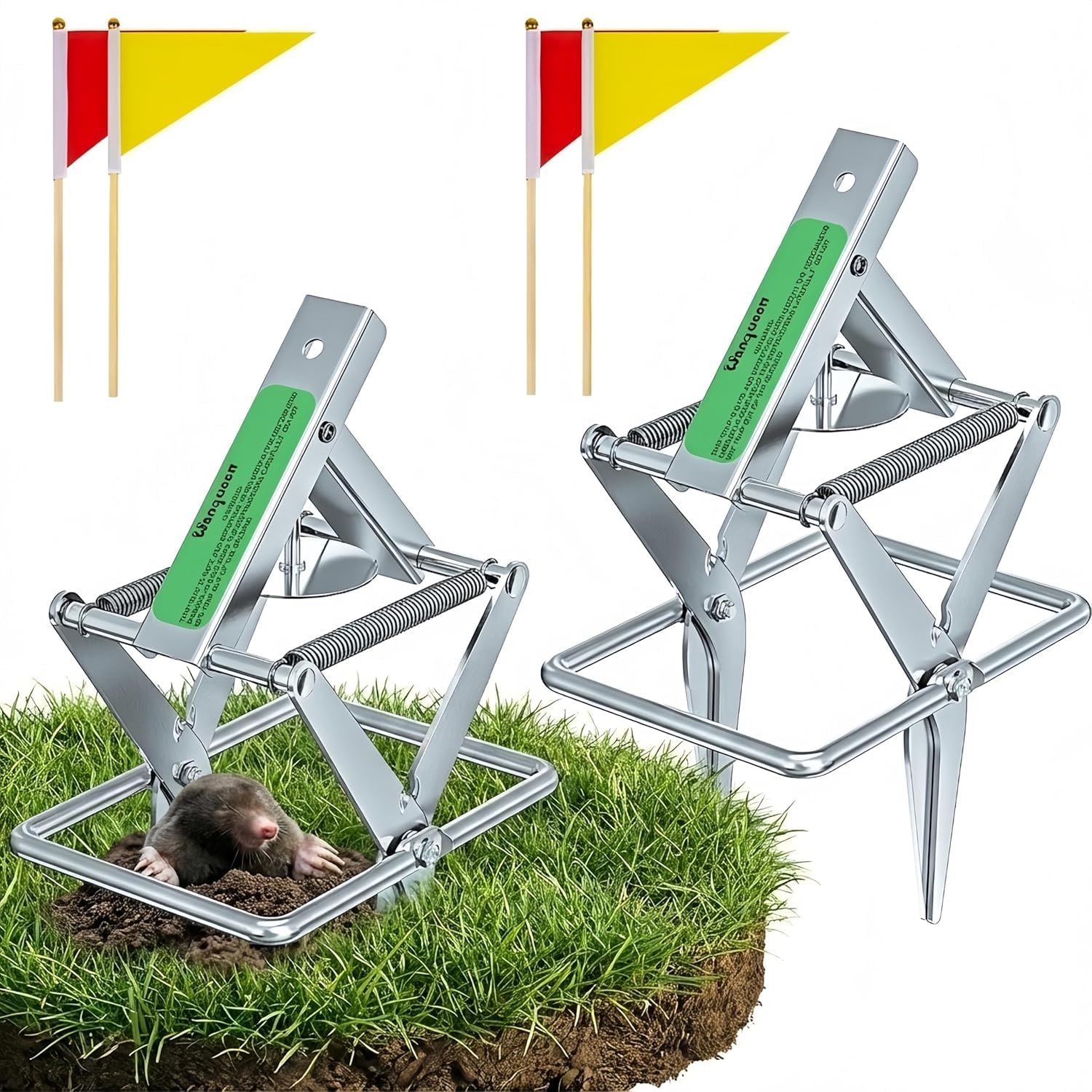
Scissor traps work by clamping vertically through the tunnel from above — you push the jaws into the ground and the rodent triggers the pan. They are easy to spot and set above the soil line but can be avoided if the mole tunnels around them. Choker loop traps sit inside the tunnel and snare the animal as it passes through. These are the design pest pros lean on because they operate entirely below ground where moles travel. Wire tong or tunnel traps also sit inside the burrow, gripping the rodent between two bars when triggered. They are harder to set by hand but leave no visible hardware above your grass.
Material and Weather Resistance
A trap buried in damp soil for weeks needs a material that resists corrosion. Galvanized steel sheds rust and survives rain-soaked ground for years without seizing up. Stainless steel is lighter and resists rust just as well. Cast iron and plain steel will degrade faster without frequent oiling. If you plan to leave traps in the ground for more than a season, choose a galvanized or stainless steel model to avoid a seized trigger mechanism right when you need it most.
Trigger Sensitivity and Soil Type
A trap that is too stiff lets a mole push past and keep tunneling. A trap that is too sensitive can snap on a falling leaf or a root. Sandy soil is loose and allows traps to shift, making a sensitive trigger a liability. Clay soil is dense and holds the trap in place, so a hair-trigger works beautifully. The best traps let you adjust the trigger tension with a screw or a notch, letting you match the sensitivity to your specific soil texture.
Quick Comparison
| Model | Best For | Type | Material | Quantity | Amazon |
|---|---|---|---|---|---|
| 2 Pack Wanqueen Scissor★ Best Overall | First-Timers / Value | Scissor | Galvanized Steel | 2 | Amazon |
| Nash 100 Choker LoopTop Performer | Professional Speed | Choker Loop | Cast Aluminum / Galvanized | 1 | Amazon |
| POlAFLEX Scissor (1-Pack)Best Value | Budget Single Trap | Scissor | 316 Stainless Steel | 1 | Amazon |
| NoMol 4-Pack Wire Tong | Invisible Underground Trapping | Wire Tong | Rust-Resistant | 4 | Amazon |
| Talpirid by Bell Labs | Ease of Setting | Scissor | Heavy-Duty Nylon | 1 | Amazon |
| POlAFLEX Black Stainless (2-Pack) | Premium Corrosion Resistance | Scissor | Black Stainless Steel | 2 | Amazon |
| Cinch Trap Kit (2 Traps) | Multi-Trap Dual Direction | Choker Loop | Alloy Steel | 2 | Amazon |
| Victor Out O’ Sight (4-Pack) | Professional Standard for All Soils | Wire Tong | Iron | 4 | Amazon |
In‑Depth Reviews
1. 2 Pack Wanqueen Scissor Mole Trap
Our pick — over 4★ from 900+ verified ratings; the strongest balance of quality and price.
The two-pack that brings speed and patience together in one galvanized frame.
You get two traps right from the start, and that single fact changes your strategy. You place one in each active tunnel direction, doubling your odds without a second trip to the store. The scissor design is made of galvanized steel that resists rust, so you can leave these in damp spring soil without worrying about the weather.
The crowds who own these traps praise their effectiveness above all else. Buyers report that the trap is “definitely sensitive” and catches its target, though the moles themselves are “trap shy for sure.” The honest reality is that a mole takes patience — one owner caught 2 in a week and then waited another week before the next one. The trick is moving the trap to a fresh run every few days. There are no complicated steps here: you step the jaws into the ground, secure them, and let the instant-reaction spring do its job when the mole pushes through.
At 2.43 pounds, this is the heaviest scissor trap in the roundup — significantly denser than the single Nash choker loop at 1 pound. That weight gives you confidence that the jaws will stay anchored even in loose soil, and the purchase includes 2 units (matching the 2.0 Count and 2 Pieces listed), so you get serious coverage for the price. The only catch is the learning curve: a few owners mention that finding the right tunnel and being patient is the real skill, not setting the trap itself.
Why Owners Keep Buying
- Two traps included means you cover both directions in one tunnel
- Galvanized steel resists rust in wet soil and rain
- Instant-reaction spring holds on tight once triggered
The Learning Curve
- Moles can be trap-shy and may take a week to approach
- At 2.43 pounds, the weight is noticeable when carrying multiple traps
Perfect starting duo: this 2-pack gives the budget-minded homeowner the coverage and corrosion resistance to win a lawn war.
skip it if: you need a single trap that catches within hours — the choker-loop designs below tend to be faster.
2. Nash 100 Choker Loop Mole Trap
A 130-year-old design that still catches faster than modern alternatives.
This is the trap that pest control professionals reach for first. The choker loop design places all moving parts underground, which is how it keeps pets and kids safe while the mole never sees it coming. The cast aluminum base and galvanized steel components give it a long life in the elements, and every single unit is hand-tested before it leaves the shop.
What wins owners over is the sheer speed. One report has a Nash trap catching a mole “within 2 hours” after other traps had failed completely. Another owner on 10 acres caught one in 10 to 15 minutes. The design works in both shallow and deep tunnels without needing bait, and owners who have caught 90+ moles over the years rely on this as their primary tool. The effectiveness is the most mentioned aspect by a wide margin (83 mentions), followed by mole-catching speed (73 mentions), and the praise is backed by a 4.1-star average across hundreds of ratings. But the setup is undeniably stiff — owners with arthritis or small hands find the spring extremely hard to compress, and the trap requires good soil to function properly. In heavy sandy soil, the slots can fill in, reducing its effectiveness.
At just 1 pound, the Nash is the lightest trap in this lineup by a long shot — the 2-pack Wanqueen weighs 2.4 pounds. That lightness is an advantage when you are covering a large property with multiple traps. The trade-off is the physical effort: you need strong hands to set the choker loop, and the mixed feedback on ease of setup (82 mentions, split positive and negative) is real. Buyers also note the mixed durability feedback (19 mentions) — while the trap holds up to weather, rough handling can eventually wear the components.
Why Professionals Swear By It
- Catches moles within hours, often the same day it is set
- All moving parts operate underground for safety
- Hand-tested quality from a veteran-run American manufacturer
The Physical Price
- Very stiff spring that is hard to set for small or weak hands
- Does not perform well in heavy sandy soil that shifts and fills slots
Buy this if you want speed: the fastest-catching trap in the lineup, proven on thousands of moles by professionals.
Look elsewhere if: you have sandy soil or you need a trap that is easy to set without strong hands.
3. Upgraded POlAFLEX Scissor Mole Trap
The single trap with a three-year warranty that doesn’t demand a heavy hand.
If your hands are not the strongest but you still want a scissor-style killer, this trap from POlAFLEX is your best shot. The design uses 316 stainless steel, which resists corrosion better than standard galvanized steel and lasts longer in damp soil. It also comes with a three-year warranty and a free pest control consulting service, which is rare at this price point.
The effectiveness is the top praised aspect by a huge margin (92 mentions), and the results back it up. One owner reported “caught 3 moles in first 3 days” after struggling with other methods. Another caught one “in 3 hours” after professional spraying and other methods had failed. The step-on setup is easier on the hands than a Nash choker loop, which is a major plus for anyone with lower grip strength. The ease of use is the second most praised aspect (40 mentions), and a family-safe design is built in — no poison worms or powder repellents, just the mechanical clamp.
The downside comes after heavy use. Several owners mention that after catching 5 to 7 moles, the spring action gets stiffer and the trap becomes harder to trigger. One buyer with a 1/5 rating said the springs were “so tight I couldn’t set the trap” even with a heavier person pressing down. The base plate can also pivot during setup if the tunnel is too deep, causing false triggers. The advice from experienced owners is to wear gloves, pre-moisten clay soil to make it easier to push the prongs in, and move the trap every 8 to 12 hours if it has not caught anything.
Engineered for Results
- 316 stainless steel construction resists rust longer than standard steel
- Step-on setting is easier than choker-loop traps for weaker hands
- Three-year warranty with free pest control consulting
Wear and Tear
- Spring can become too stiff to set after catching 5-7 moles
- Base plate may pivot in deep tunnels, causing false triggers
Grab this one if: you want a light-on-the-hands scissor trap with a warranty that covers years of use.
Think twice if: you need to catch a swarm of moles quickly — the spring may wear out halfway through the job.
4. NoMol 4-Pack Wire Tong Trap by WCS

The underground wire trap that lets you mow right over the battle zone.
Unlike the scissor traps that leave a metal prong sticking above your grass, the NoMol trap sits entirely inside the mole tunnel. You dig down, place one trap facing each direction, cover everything with dirt, and then run your mower straight over the spot. This is the invisible approach for homeowners who do not want to look at a metal contraption every time they step outside.
The 4-pack gives you two pairs, which is the recommended method — you set two traps facing opposite directions in the same tunnel to catch the mole coming or going. Owners love the simplicity. One reviewer noted it was a “brilliant, simple design” that caught a mole in one night, and another praised it for being “perfect” for smaller tunnel sizes where old-school Victor traps were too big. The rust-resistant coating means you can leave them underground for years and pull them up for the next season. The kit includes four traps and four wooden stakes for marking positions.
The honest trade-off is the sensitivity dial. The wire tong design has a center ring that must be set at just the right tension. Some owners find it “too sensitive” — the trap triggers when a mole pushes through but does not close fast enough to grab it. Others find it worthless from the start and return it. The key, according to experienced users, is widening the 1-1/4 inch opening slightly if the mole is tunneling around it, and setting two traps per hole. The 3.9-star average reflects this split: owners who dial it in swear by it, and those who do not call it junk.
The Stealth Advantage
- Sits completely underground so you can mow and water normally
- Four traps allow dual-direction placement in two tunnels
- Rust-resistant coating stands up to years in the soil
The Tuning Required
- Trigger sensitivity is finicky and needs adjustment to work reliably
- Best results require placing two traps per tunnel, using all four at once
Reach for this if: you want a trap that disappears under the lawn and you are willing to fine-tune the tension.
Pass on it if: you would rather low-maintenance — the NoMol rewards patience and tinkering.
5. Talpirid Mole Trap by Bell Labs

The nylon-bodied trap that swaps rust-proofing for a game of tunnel Tetris.
This trap takes a completely different approach. Instead of metal jaws, the Talpirid uses a heavy-duty nylon body with dual springs and curved jaws. The material choice means it will never rust, no matter how long it sits in damp soil or rain. You set it by stepping on the yellow foot pedal, which spreads the jaws open and locks them into place. For owners who struggle with the muscle required to set a Nash choker loop, this step-on mechanism is a welcome relief.
Effectiveness is the top praised aspect at 44 mentions. Owners who master the technique report that it works quickly. One caught a second mole after the learning curve, and another said it “actually works” after 3 days of experimenting with tunnel placement. The dual springs and curved jaws provide strong clamping power, and the nylon holds up better to repeated setting than a thin metal frame would. It is designed specifically for moles in grassy areas like lawns, parks, and golf courses.
The downside is the fit. This trap is large — 10.87 inches by 9.65 inches — and many owners find it “too large for tunnels.” The size means you often have to dig a wider hole to fit the trap in, which damages the tunnel structure and can make moles suspicious. The ease of use category has 36 negative mentions, more than any other aspect of this trap. Even a buyer weighing over 200 pounds reported struggling to set it. The durability is mixed (13 mentions, split), and there are multiple reports of the pincher piece snapping off underground during setup. It also has a reputation for being tricky to position: you need the trigger plate flat against the ground at just the right depth, or the trap either fails to trigger or triggers on air.
The Rust-Free Benefit
- Nylon construction never rusts, even after years in the ground
- Dual springs and curved jaws deliver strong clamping force
- Step-on foot pedal is easier than hand-set choker loops
A Bulky Design
- Too large for many mole tunnels, requiring wider holes
- Difficult to set for many buyers, with 36 negative ease-of-use mentions
Ideal for the rust-conscious buyer: you will never worry about corrosion, but you must be prepared for a bulkier setup process.
pass on it if: you have narrow or winding tunnels — this trap needs room to fit.
6. POlAFLEX Black Stainless Scissor Trap 2-Pack
Black stainless steel that looks tough and catches moles within 24 hours.
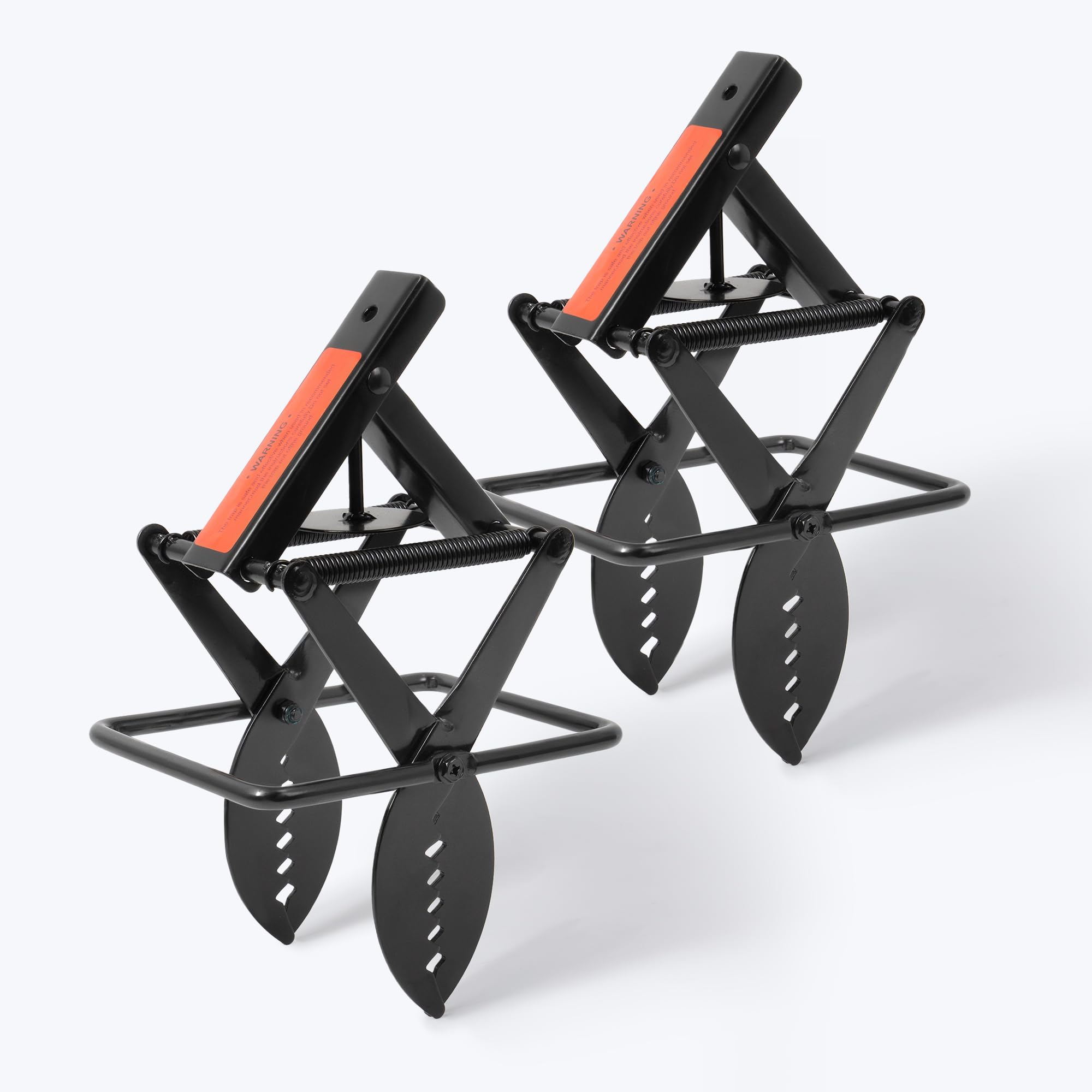
This is the same POlAFLEX brand as the third pick but upgraded to premium black stainless steel and sold as a 2-pack. The stainless construction resists corrosion even in acidic or clay-heavy soils, and the black finish makes the trap less visible above ground. At 5.2 pounds for the pair, these are heavy-duty units that do not shift around when you set them in loose topsoil.
The results are fast. Owners catch moles “within hours after resetting” and one caught one “on 4th try within 36 hours.” Another owner caught a mole every other day for a week and a half, and the garden stayed mole-free all summer. The massive number of effectiveness mentions (154) dwarfs every other aspect — this is the single most-praised feature by a wide margin. The quality (44 mentions) and durability (21 mentions) round out the positive feedback. The traps are designed for reuse, so you set them, catch the mole, release the carcass, and set them again the same day.
The catch is the trigger mechanism (9 negative mentions) and the mixed ease of use (85 mentions, split between positive and negative). Some owners find the release tricky after a catch, and the springs are stiff enough that a few people report they “came broken” straight from the start. The traps require enough strength to compress the spring during setup, and the trigger pad must sit perfectly flat against the tunnel floor. In compacted dirt, one owner had to use more force to push the prongs in all the way. The advice from successful owners is to wear gloves to mask human scent and to place the trap precisely over an active tunnel — not just any ridge.
Fast and Durable
- Catches moles within 24 hours for most owners
- Black stainless steel resists rust and looks discreet above ground
- Reusable design lets you set and reset the same day
Stiff and Tricky
- Trigger mechanism can be tough to release after catching a mole
- Occasional defective units arrive with broken springs
Best for owners who value speed and durability: this 2-pack catches fast and resists the elements.
Look elsewhere if: you have limited hand strength or want a trap with zero setup fuss.
7. Cinch Trap Kit by Cinch Traps Since 1909

A family-run Oregon brand that has been outsmarting gophers since 1909.
The Cinch trap kit is a complete system: you get two traps, two yellow lawn flags for marking locations, and an instructional brochure. The traps are made from alloy steel with a heavy-duty finish, and they are designed to catch both moles and pocket gophers. The above-ground setup is key here — there is no digging required. You position the trap over an active tunnel, the rodent trips the trigger, and the jaws snap closed from above.
The effectiveness is the absolute standout here — 283 mentions, which is the highest count of any aspect across every product in this guide. That is not a coincidence. One owner caught 15 gophers with these traps and called them “best traps for California pocket gophers,” preferring them over Victor and poison methods. Another caught 3 gophers in a single day after learning the proper technique of using fresh grass to camouflage the opening. The mixed feedback on ease of use (97 mentions) and durability (23 mentions) is worth noting: the traps are effective but not indestructible. Some customers note rust causing friction on the trigger after a few months, and others have had springs break after extended use.
The kit includes flags and instructions, which is a nice touch for beginners, but the traps require some finesse to position correctly. You need to keep the trigger sensitive enough to catch a mole but not so sensitive that wind or a falling leaf sets it off. The manufacturer is a small family-run business in Oregon, and the company has a reputation for standing behind its product. However, a few reviewers point out poor customer service responses to defective parts. The size (22 negative mentions) is also a factor: these traps are built for larger tunnels and may not fit smaller mole runs.
Backed by 283 Mentions
- Effectiveness is the most-praised feature across any trap in this guide
- No-dig above-ground setup saves time and tunnel structure
- Includes two traps, two flags, and an instruction brochure
Not Built for Small Tunnels
- Too large for narrow or winding mole runs (22 negative mentions)
- Customer service for defective parts has mixed reviews
If you want proven volume: the 283 effectiveness mentions make this the most trusted trap for heavy infestations.
it’s not for you if: your moles run in narrow, tight tunnels — these traps need room to work.
8. Victor Out O’ Sight Mole Trap 4-Pack
The 4-pack that is called the professional’s trap of choice — with a spring strength debate.
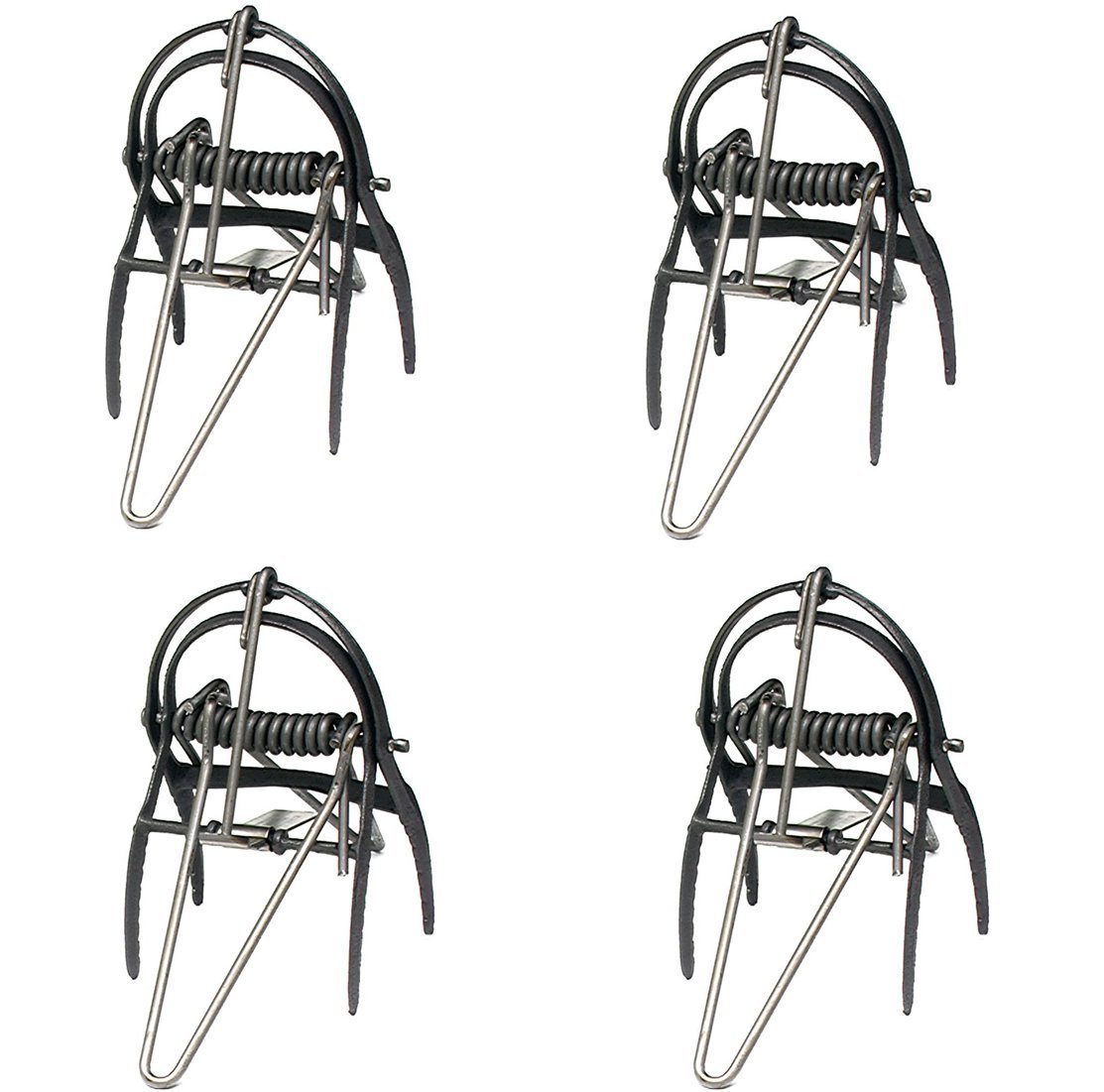
This is the trap you see in the trucks of pest control companies. The Victor Out O’Sight works in all soil types, kills moles fast, and comes as a 4-pack so you can blanket a full acre in one go. The design is a below-ground wire tong that you place in an active tunnel, cover with dirt, and leave to do its job. The brand is the most recognized name in rodent control, and this model carries that reputation.
Owners who set it correctly love the results. One homeowner caught 2 moles in the first week using a simple trick — placing a small dirt mound between the trap’s trigger plates to simulate an existing tunnel obstruction. The “professionals’ trap of choice” tagline is backed by owners who have used these for years. The iron construction is heavy enough to stay in place, and the 4-pack gives you enough traps to cover multiple tunnel systems at once.
The controversy is the spring strength. Multiple shoppers say that newer versions of this trap have springs that are noticeably weaker than older models. One owner who measured the difference found the new version to be 22 percent weaker in spring force. In heavy clay soil or after a rain, that weaker spring does not close fast enough to catch the mole before it pushes past. The same owner noted that he could open the newer trap with one hand, while the older version required two hands and the helper handles. The ease of setup is mixed — some find it straightforward, others say it is very difficult to position correctly. The trick, according to experienced owners, is to dig a clean hole, wear gloves to remove human scent, and watch tutorial videos on tunnel placement before your first attempt.
Professional’s Favorite
- Works in all soil types, from sand to heavy clay
- 4-pack covers a full acre in one session
- Recognized brand used by pest control companies
Recent Quality Concerns
- Newer versions reportedly have 22% weaker springs
- Weak springs fail to catch in heavy soil or wet conditions
Best for the pro-level approach: if you are willing to learn proper placement and want a 4-pack for coverage.
Look for older stock or a different trap if: you have heavy clay soil and need full spring power to close fast.
Understanding the Specs
Scissor vs Choker Loop vs Wire Tong
Scissor traps clamp vertically from above the tunnel — you push the jaws into the ground, and the trigger sits on the surface. They are easy to see and find again but can be avoided if the mole tunnels around them. Choker loop traps sit inside the tunnel and snare the rodent as it passes through. These operate completely underground, which makes them safer for pets and more effective at catching fast-moving moles. Wire tong traps also sit in the tunnel but work by pinching the mole between two bars when triggered. They hide below the grass line and do not interfere with mowing.
Galvanized Steel vs Stainless Steel vs Cast Iron
Galvanized steel has a protective zinc coating that resists rust but can wear off over years of use. Stainless steel (especially 316 grade) is naturally corrosion-resistant and lasts longer in acidic or damp soil. Cast iron is heavy and stays anchored but rusts quickly without regular oiling. If you plan to leave traps in the ground all season, stainless steel or galvanized steel are the smarter picks. If you take traps out after each use and store them dry, cast iron is fine with a little maintenance.
Trigger Sensitivity
Trigger sensitivity determines how much pressure is needed to snap the trap closed. A hair-trigger catches the lightest touch but can also snap on a raindrop, a leaf, or a root that falls onto the pan. A stiff trigger is harder to set but less likely to false-fire. The ideal sensitivity depends on your soil type: loose, sandy soil needs a stiffer trigger so the trap does not shift and fire on its own. Dense clay soil allows a more sensitive trigger because the trap stays put. Some traps offer an adjustable screw that lets you change the sensitivity on the fly.
Single vs Multi-Pack
Moles travel in tunnel systems that can span hundreds of feet. A single trap catches only one direction of one tunnel, which means the mole may approach from the other side and never touch the trigger. Multi-packs (2 or 4 traps) let you place one trap facing each direction in the same tunnel, effectively covering both approaches. For a serious infestation, a 4-pack gives you coverage across multiple tunnel systems simultaneously, reducing the total time to clear the yard.
FAQ
How do I find the active tunnel where the mole is currently traveling?
Is it better to use a scissor trap or a below-ground choker loop?
Will a scissor trap rust if I leave it in the ground for weeks?
Do I need to use bait or poison with a mechanical mole trap?
How many traps do I need to clear my yard of moles?
What is the best way to set a scissor trap in hard clay soil?
Why did the trap snap but I did not catch anything?
Can I reuse a trap after it catches a mole?
Are these traps safe for pets and children?
How long should I leave a trap in one spot before moving it?
Final Thoughts: The Verdict
For the majority of shoppers, the best groundtraps winner is the 2 Pack Wanqueen Scissor Mole Trap because it gives you two galvanized steel traps at a budget-friendly price, backed by a 4.4-star crowd favorite with nearly a thousand ratings and proven results. If you want the fastest possible catch and do not mind stiff springs, grab the Nash 100 Choker Loop. And for the invisible, mow-over approach, the NoMol 4-Pack is the one to reach for.
How We Picked
We do not accept paid placement. Every pick is matched to a real buyer and a real use-case; we do not hands-on test units.
Sources & Methodology
Specifications: manufacturer listings and product documentation. Review insights: verified customer reviews, as of July 2026. Pricing: not shown on this page (it changes often); check the current price via the retailer link.
As an Amazon Associate, Lawn Gear Lab earns from qualifying purchases. This does not affect which products we feature.