
Specs are compiled from manufacturer listings and verified buyer reviews and can change over time — please confirm the key details on the product page before buying.
That moment you walk out to your raised bed and find your prize tomatoes half-eaten or your broccoli tangled in a tiny web of aphids is the moment you start hunting for a real barrier. The right netting stops birds, squirrels, rabbits, and flying insects without turning your garden into a steam bath or a dark cave — but the wrong mesh just tangles, tears, or blocks the bees you actually want.
I’m Rikta — the founder and writer behind Lawn Gear Lab. This guide is built by comparing the manufacturers’ published specifications and the patterns across verified customer reviews, so you get each pick’s real strengths and trade-offs instead of marketing spin.
Whether you are shielding a single raised bed or a row of berry bushes, finding the right netting for garden beds depends on mesh density, material toughness, and how easily it lets sun and rain through — we break down the top contenders so you can match the fabric to your biggest pest problem.
Our Picks at a Glance


How To Choose The Best Netting For Garden Beds
Are Japanese beetles your main problem, or is it the neighborhood deer? The mesh density decides that. Are you in a scorching summer climate? Then you need a net that throws shade without starving your plants of light.
Match the mesh to your pest
Ultra-fine mesh — think 0.8mm x 1mm — stops thrips, aphids, and even tiny cabbage moths. Wider woven mesh, on the other hand, keeps out birds and deer but lets bees in for pollination. If you are protecting brassicas from flea beetles, you need the tighter grid. If you are keeping blueberry bushes safe from starlings, a woven net with larger openings is enough.
Material and UV resistance
A net in full sun all season needs UV-stabilized material to stay strong and not crack. Polyethylene (PE) and polypropylene (PP) are common; high-density polyethylene (HDPE) tends to be tougher against tearing and holds up longer under intense sun. Look for “UV-resistant” in the specs.
Shade rating vs. transparency
Some nets are completely transparent — water and light pass through with almost no reduction. Others come with a stated shade rating, often around 33%. If you grow heat-sensitive greens like lettuce, a slight shade can be a bonus. But for tomatoes and peppers that crave full sun, a transparent net is better so you don’t lose any growth potential.
Quick Comparison
| Model | Best For | Material | Dimensions | Mesh Type | Amazon |
|---|---|---|---|---|---|
| ANPHSIN Garden Netting★ Best Overall | All-around pest + shade | Polypropylene (PP) | 10 x 20 ft | Ultra-fine | Amazon |
| RIFNY Garden NettingMost Coverage | Two-pack for large gardens | Polyethylene (PE) | 10 x 33 ft (2-pack) | Ultra-fine | Amazon |
| Garden Tailor Fine Mesh NetPremium Build | Precision small-insect barrier | High Density Polyethylene (HDPE) | 10 x 20 ft | Ultra-fine 40 mesh | Amazon |
| GonLei Garden Netting | Budget-friendly large coverage | Nylon | 10 x 50 ft | Ultra-fine | Amazon |
| KLEWEE Garden Mesh Netting | Lightweight row cover | Polyethylene (PE) | 10 x 50 ft | Ultra-fine | Amazon |
| WiMas Garden Netting | All-around coverage | Polyethylene (PE) | 10 x 50 ft | Ultra-fine | Amazon |
| Rohuis Garden Netting | Durable multi-season use | Polyethylene (PE) | 10 x 50 ft | Ultra-fine | Amazon |
| Fetanten Bird Netting | Heavy-duty bird/deer defense | High Density Polyethylene (HDPE) | 13 x 40 ft | Woven 5/8″ mesh | Amazon |
| Hyxanons Garden Mesh Netting | Fine-mesh all-purpose cover | Polyethylene (PE) | 10 x 50 ft | Ultra-fine 0.8x1mm | Amazon |
In‑Depth Reviews
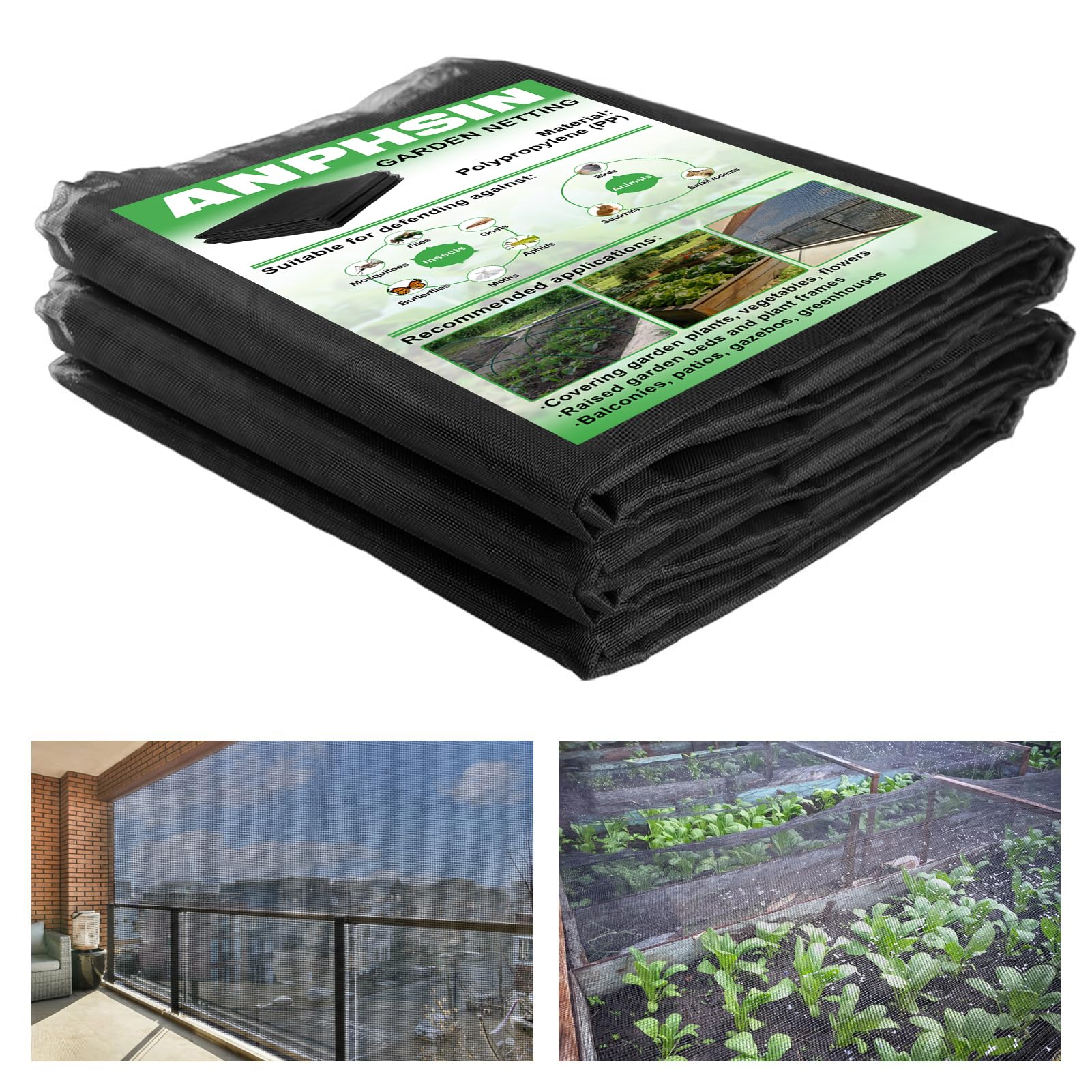
1. ANPHSIN Strong PP Nanocomposite Mosquito Net Garden Netting
Our pick — over 4.5★ from 600+ verified ratings; the strongest balance of quality and price.
A tough nano-material net that delivers dual pest-block and sun relief in one roll.
The defining spec is the nanotech-enhanced polypropylene (PP) material and this net’s 33% shade rating, which blocks one-third of sunlight to keep the air beneath cooler. The black screen cuts harsh afternoon glare, a standout for heat-sensitive greens in scorching summers. The ultrafine mesh lets sun and rain reach your plants while keeping out birds and even Florida-sized mosquitoes, as the owner feedback consistently shows. Buyers report that the material is “thicker and sturdier than others” and that the fine mesh “keeps birds/pests out while allowing sun/air/rain.”
At 1.8 pounds and covering 10 by 20 feet, this roll is a good deal heavier than the KLEWEE net (which is 1.01 kilograms) — that extra heft comes from the denser fabric, which means it resists wind flapping better once it is staked down. The trade-off is that it tends to tangle during setup, and you will need to anchor the edges well on windy days so it does not lift and let pests in underneath.
What makes it a standout
- 33% shade rating protects heat-sensitive plants from sun stress.
- Tear-resistant nano-PP is a step tougher than standard nylon or PE nets.
- Large 10×20 ft sheet cuts down to any shape you need.
The honest friction points
- Only available in black — no transparent option if you prefer full visibility.
- Needs extra securing at the edges in wind.
- Tangling requires patience during first spread.
Who this fits: you want one net that handles both intense sun and persistent flying pests without frequent replacement.
Better to skip this if: you need a completely see-through cover or prefer a lighter-weight fabric that unrolls without tangling.
2. RIFNY Garden Netting, 2 Pack 10x33Ft Ultra Fine Mesh
Two generous rolls mean you can cover a large garden or multiple raised beds in one purchase.
With a 0.04-inch ultra-fine mesh, this net stops everything from cabbage moths to birds — and the fact that you get two separate 10×33-foot sheets gives you a lot of ways to use them. You can drape one over a run of broccoli and the other over your blueberry patch without having to buy another roll. The woven PE (polyethylene) material is lightweight, so it does not crush young seedlings, but owners have noted that it stretches and tears over time, making it more of a seasonal cover than a multi-year investment. The thing owners praise most is bird protection — it is what people consistently call out in their feedback, followed by the overall quality of the fabric. A reviewer on a long-term test summed up a common experience: “I figured these would not last long. I’m very surprised. They have held up through hail and high winds. If something snags them, they don’t rip.”
One thoughtful catch: the dense mesh also blocks bees. If you have crops that need pollination (squash, cucumbers, melons), you will want to lift this net during flowering hours or swap to a wider weave for part of the season.
The case for it
- Two 10×33 ft rolls cover a lot of ground — great value for large gardens.
- Ultra-fine 0.04-inch mesh stops very small insects like cabbage moths.
- See-through white fabric lets you inspect plant health without lifting the net.
A fair heads-up
- Will need replacing after a season or two — not the most durable option.
- Blocks pollinators; must be lifted temporarily during flowering.
- Can snag on rough surfaces if pulled tight.
Best suited for: gardeners who want to protect a large area against birds and flying insects without spending a premium, and are okay with annual replacement.
Better to look elsewhere if: you want a single net that lasts three seasons or you rely on open pollination under the cover.
3. Garden Tailor Fine Mesh Insect Netting
A tightly woven 40-mesh barrier that stops even tiny aphids from wrecking brassicas.
If your garden is plagued by flea beetles and root-maggot flies on your broccoli and cabbage, the mesh count matters. This net is 100% new HDPE (high-density polyethylene) material with a 40-mesh count (40 openings per linear inch), which represents a denser weave than the standard polyethylene covers. The tight selvedge edges do not unravel, so you can cut this net to an exact 8×4-foot raised bed size and it will keep its shape season after season. Owners note that it stays tough even when wet, unlike some lighter nets that disintegrate in the rain, and the transparent fabric means light passes through with minimal reduction.
The honest downside: that same density makes this net harder to cut — a box cutter or sharp pair of scissors is required, and it does not come with any grommets or tie points, so you will need to pin or staple the edges down. But for the gardener who is tired of aphids finding a way through a standard net, this is a worthy step up. The manufacturer stands by it with a 3-year warranty, which is a stronger promise than most nets in this category offer.
The trade-off you should know: this is the specialist for small-insect exclusion. It does a fantastic job at that job. It is not a good option if you simply need to block birds from a fruit tree — a wider woven net would be cheaper and easier.
Who it fits best: anyone growing brassicas, leafy greens, or other crops that attract tiny flying insects, and who wants a net that lasts multiple seasons.
skip it if: you only need to deter birds or deer, or you prefer a net with grommets for easy tie-down.
4. Fetanten 13 x 40 FT Bird Netting

A heavy-duty HDPE mesh designed for big jobs like fruit trees, chicken coops, and whole rows of vines.
This is a different animal from the ultra-fine nets. The woven mesh openings are 5/8 inch, so it is meant for keeping birds, deer, and poultry out of large areas — not for stopping tiny aphids. The material is HDPE (high-density polyethylene), which is UV-proof and rot-resistant, meaning it will sit in the sun for multiple seasons without turning brittle. The kit includes steel landscape staples and twist ties, so installation is straightforward: unroll, cut to size with scissors, and staple the edges down. It covers 13 by 40 feet, giving you a good amount of width for taller structures.
Owners praise the quality and bird-stopping power, with some using it over chicken runs to keep hawks out. The general consensus is that it handles wind and weather well without fraying. The crucial honest limit: this is bird netting, not rodent netting. Rats and determined squirrels can chew through it. If your main pest is deer and birds, this is a top choice. If ground squirrels are the issue, you need a finer metal mesh.
The bottom line: this net is tough, heavy-duty, and proven to last years. It simply does not work against rats or persistent chewing rodents, so know your enemy before you buy.
Reach for this net if: you are protecting fruit trees, berry patches, or a chicken coop from birds and deer and you want a solution that survives rain and sun for years.
pass on it if: you are trying to exclude rats, squirrels, or insects — those require a denser mesh.
5. Hyxanons 10×50 FT Ultra Fine Garden Mesh Netting

An extremely precise 0.8x1mm mesh that keeps everything out but lets every drop of light come through.
The mesh specification on this one is 0.8 millimeters by 1 millimeter — a tighter grid than even the 40-mesh net from Garden Tailor. That level of density makes it effective against thrips, whiteflies, and the tiniest caterpillar species that sneak through coarser nets. The material is UV-resistant PE, and the net weighs 3.3 pounds for the full 10×50-foot sheet, which is noticeably heavier than most PE nets, adding to its wind resistance once draped over hoops. Owners say it stays intact without ripping across multiple seasons and that it deters deer and groundhogs from munching tomatoes and peppers.
The trade-off is that very few pollinators — if any — will get through a mesh this fine. If you grow self-pollinating crops like tomatoes and peppers, that is not an issue. If you have squash or melons, you will need to lift the net during bloom or use a different product for part of your garden.
The real strength of this net: it provides near-total pest exclusion for the gardener who sees bug damage in every leaf and wants absolute confidence. The real drawback is the weight and the pollinator barrier.
Best for: small-insect obsession and gardeners who grow self-pollinating crops like peppers, tomatoes, and beans under full-year sun.
Less ideal for: anyone with pumpkins, zucchini, or other insect-pollinated plants that need bee access.
6. GonLei Garden Netting 10 X 50 FT Ultra Fine

A massive 50-foot nylon sheet that solved one gardener’s mystery of the disappearing sweet potato vines.
For sheer square footage per dollar, this net covers a lot of ground — 10 feet by 50 feet of white nylon mesh. The clue that this is a buy-and-replace net rather than a heirloom piece is the material: nylon tends to be less UV-resistant than PE or HDPE, and owners mention that the mesh is lighter than expected and can tear in high wind. Still, its effectiveness at stopping June bugs, birds, and rabbits is proven, with one owner saying “My sweet potatoes vines were getting eaten by something at night. This stopped it.” The white mesh lets light and rain through freely.
This is a good entry-level or temporary solution for a large garden. It works well for the season, but plan to replace it next year, especially if your area gets strong winds or intense sun. The net is significantly heavier than the KLEWEE option — at 1.79 kilograms versus 1.01 kilograms — so it feels more substantial in the hand, but the material itself lacks the longevity of HDPE.
Where this net shines: it covers a lot of plants for a small investment. Where it falls short: long-term UV exposure will shorten its life. Keep replacements in mind.
Grab this if: you need immediate pest protection across a big space and are comfortable replacing the net annually.
Choose something else if: you want a net that can survive three or more seasons of full sun and storms without tearing.
7. KLEWEE 10 x 50 FT Garden Mesh Netting

Extremely lightweight PE netting that drapes over rows without crushing tender broccoli transplants.
At just 1.01 kilograms for the entire 10×50-foot roll, this is the lightest full-size net in our lineup. The ultra-fine polyethylene (PE) mesh is thin but tough enough to resist tearing, and owners say it is “great row cover for outdoor gardens; doesn’t block sunlight, water penetrates easily, keeps pests away, easy to cut.” The 590.5-inch length and 118.1-inch width give you almost the same coverage as the heavier nets, but the featherweight feel means you can use PVC poles or bamboo stakes for support without the net sagging and snapping the structure.
The light weight is also the main weakness: in a strong gust, this net will lift and flap unless it is heavily staked. It is also not UV-stabilized in the same way some of the denser nets are, so three seasons in intense sun might degrade it to the point where it snags when you lift it. This is a seasonal cover that delivers excellent value for the price; just secure the edges well and plan for replacement after a year or two.
The neat thing about the KLEWEE net: it is the closest you can get to a “no footprint” barrier — your plants do not feel any weight, and you can hula-hoop it over wire frames easily. The catch: wind is your enemy here.
Ideal for: low tomatoes, lettuce rows, and berry bushes where you want to drape and forget without crushing the plants.
Think again if: your garden sits in an exposed, windy spot without a fence or wall to break the gusts.
8. WiMas Garden Netting Pest Barrier 10x50FT
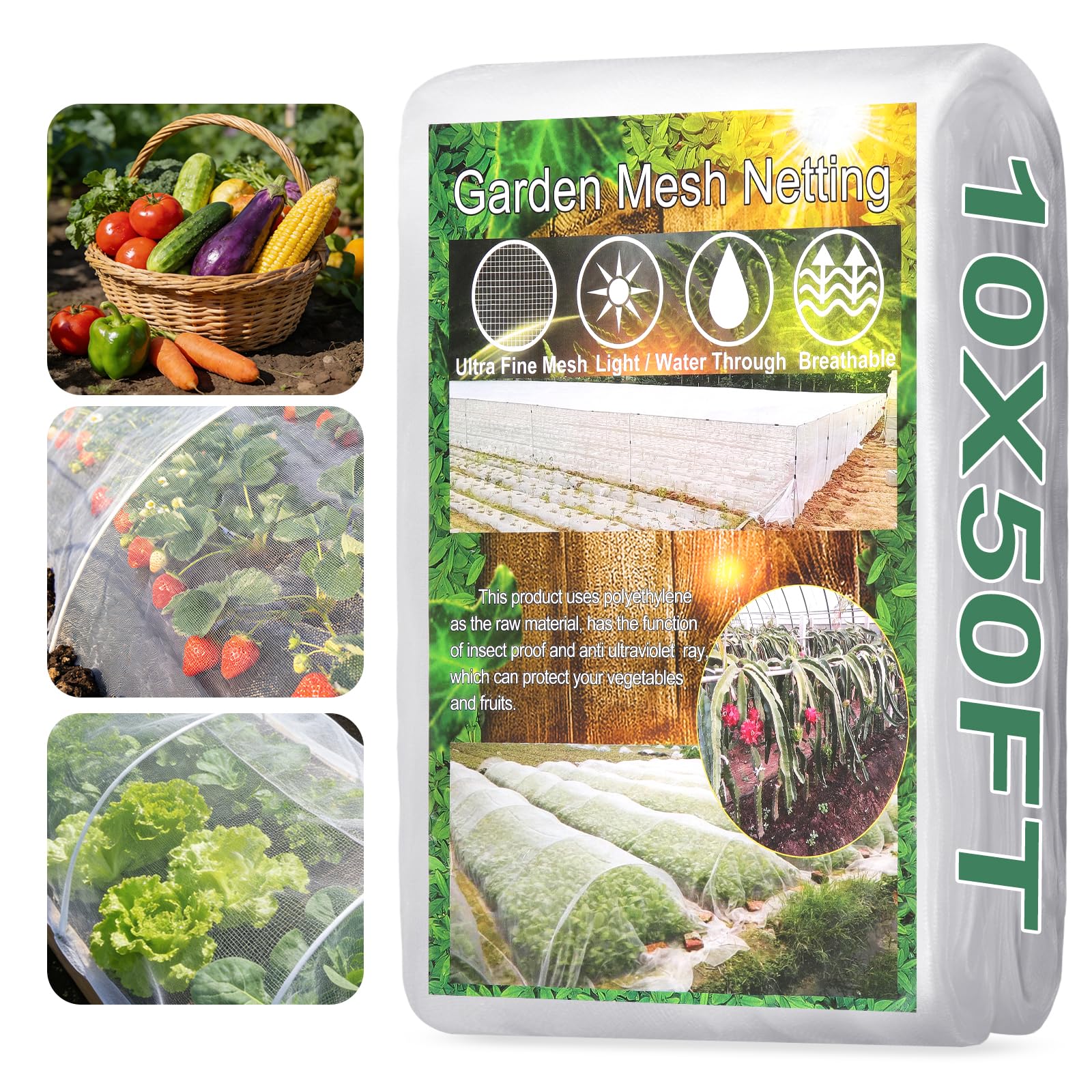
Specialized UV and weather treatment make this 50-foot PE net surprisingly resilient in rain and sun.
The WiMas net distinguishes itself with its stated treatment to enhance UV and weather resistance. The description says it “will not be torn or aging” under prolonged outdoor exposure, and the fine mesh structure keeps pests out while letting water and air circulate freely — so you do not need to lift it for watering. It weighs only 0.76 kilograms, which is lighter than the GonLei net but heavier than the KLEWEE net, hitting a nice middle ground for handling. The white color means it remains transparent enough for you to see the plants underneath.
The real-world feedback is a bit of a mixed bag on durability — some owners say it holds up fine, others report that it tears more easily than expected. The general positive consensus: it is a good all-around net for the price that does a decent job across multiple seasons if you are gentle with it. The effectiveness at pest protection is the most-discussed advantage, with many using it to protect blueberries from squirrels and birds. The size is generous at 10 by 50 feet.
The honest truth about the WiMas: it offers excellent value for money and does a fine job keeping birds, squirrels, and ground-dwelling critters out of your raised beds. The occasional tear report means it is not a low-maintenance net, but it is a strong performer for its price range.
Best for: budget-conscious gardeners who want a UV-resistant, large-area cover for a variety of crops, from broccoli to blueberries.
it’s not for you if: you need a net that you can stretch very tight or one that can be snagged on thorns without tearing.
9. Rohuis Garden Netting Pest Barrier 10x50FT
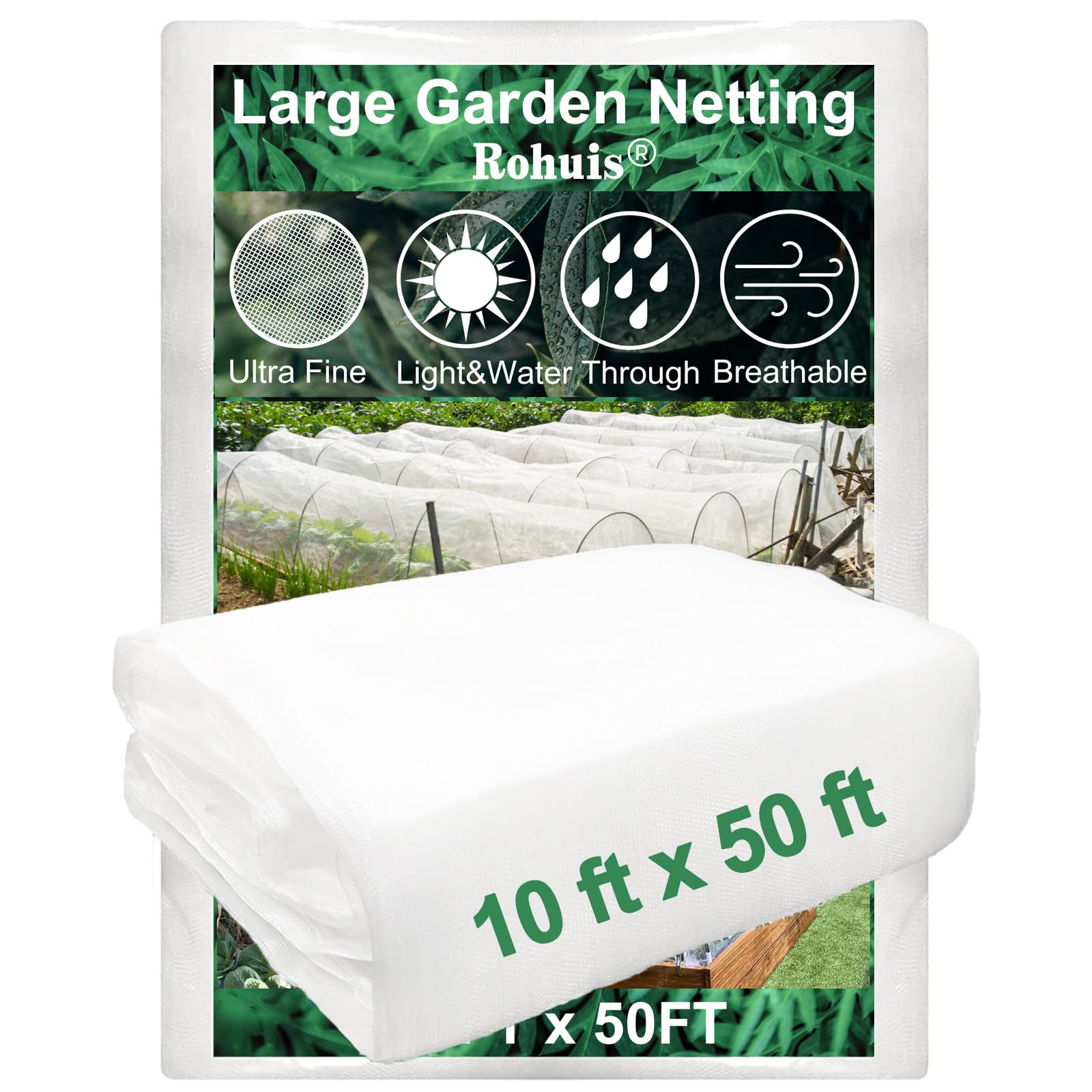
A no-fuss 50-foot PE roll that does exactly what it says — keeps birds and bugs away from your vegetables.
The Rohuis net is the definition of a reliable workhorse: 10 feet by 50 feet of white polyethylene (PE) mesh that is sturdy enough to resist ripping during normal use but still super easy to cut with household scissors. The material is a notch above the budget nets in feel, and owners consistently mention that it “kept all the critters out of and off grapes” and that “the material is more sturdy than regular mesh.” At 0.9 kilograms, it is light enough to drape over a row of blueberries without support but has enough body to not just fly away in a breeze.
One recurring note from owners: the see-through mesh works well for monitoring plant health without lifting the cover, and it allows rain and sunlight to pass through freely, so you can forget it is there. The trade-off is that the superfine mesh limits pollination, so it is best matched with self-pollinating crops. For the budget, this represents a good solid choice for any gardener wanting a long-lasting net while staying affordable.
The bottom line: a balanced performer that keeps pests out and weather off. Not the toughest net out there, but a very good value for the coverage you get. The only real complaint is that it can tear if snagged on a sharp stake, so keep your installation tidy.
Who will love this: anyone who wants a single roll to cover a medium-sized garden of self-pollinating vegetables and is looking for a low-maintenance setup.
Not the best fit for: heavy-duty applications against large animals like deer or for gardens that rely heavily on cross-pollination from insects.
Understanding the Specs
Mesh Density & Material
The number of openings per inch — or the stated hole size (e.g., 0.8mm x 1mm or 5/8 inch) — determines what can get through your net. A 40-mesh net blocks aphids and thrips; a 5/8-inch woven net blocks birds and deer but lets bees through. Material choice matters too: high-density polyethylene (HDPE) is the strongest and most UV-resistant, while standard polyethylene (PE) and polypropylene (PP) are lighter but degrade faster in direct sun. Nylon nets are the budget entry point but tear more easily.
UV Resistance and Shade Rating
A net exposed to full summer sun needs UV-stabilized material to avoid becoming brittle and cracking. Look for explicit “UV-resistant” or “UV-proof” language in the specs. Some black nets also carry a shade rating, like 33% — meaning they block a third of the sunlight, which helps heat-sensitive greens but could slow growth for sun-loving crops like peppers. A transparent white net with no shade rating gives you maximum light transmission, which is better for full-sun crops.