
Specs are compiled from manufacturer listings and verified buyer reviews and can change over time — please confirm the key details on the product page before buying.
An extra large greenhouse should be the heart of your garden — a spacious, sturdy shelter that actually extends your growing season without collapsing at the first gust of wind. But the market is flooded with flimsy frames and covers that tear before your first tomato is ripe. This guide cuts through the noise to find the structures that deliver real weather protection, usable interior space, and the right balance of light and ventilation for serious year-round growing.
I’m Rikta — the founder and writer behind Lawn Gear Lab. This guide is built by comparing the manufacturers’ published specifications and the patterns across verified customer reviews, so you get each pick’s real strengths and trade-offs instead of marketing spin.
You want an extra large greenhouse that survives snow loads and keeps your plants warm through winter, not one that collapses in the first storm. The right frame, panel, and design make that possible — and this guide names the three best options for different budgets and needs.
Our Picks at a Glance

How To Choose The Best Extra Large Greenhouse
Choosing an extra large greenhouse is a big investment in your garden’s potential. You are buying a structure that needs to stand up to heavy snow, strong winds, and years of sun exposure while keeping your plants at a stable temperature. A few key specs separate a structure that lasts a decade from one that wobbles after one season. Here is what to look for.
Frame Material: The Backbone of Your Greenhouse
The frame is everything. Cedar wood offers natural rot resistance and exceptional strength, but it requires a solid foundation. Aluminum is rust-proof, lightweight, and easy to maintain, but the gauge of the aluminum matters — thin frames bend under snow load. Galvanized steel is incredibly strong for the price, but the coating can chip over time, leading to rust. For a permanent structure, a heavy aluminum or cedar frame is your best bet.
Cover Material: Light, Heat, and Durability
You have two main choices: polyethylene (PE) fabric or polycarbonate panels. A PE cover is cheaper and easier to replace, but it tears more easily and offers less insulation. Polycarbonate panels, especially twin-wall or multi-wall types, provide much better heat retention and are nearly shatterproof. A thicker panel (4mm, 6mm, or 720g/m²) will block more UV rays and keep your greenhouse warmer on cool nights.
Ventilation: Keeping the Air Moving
Even in cold weather, the sun can turn a sealed greenhouse into an oven. Look for roof vents that let hot air escape at the highest point — this is the most effective passive cooling. Roll-up side panels, mesh windows, or an exhaust fan add extra control. Good ventilation also helps with pollination and prevents mold, so it is not optional.
Quick Comparison
| Model | Best For | Frame Material | Dimensions (L x W x H) | Cover / Panel | Amazon |
|---|---|---|---|---|---|
| Backyard Discovery Zalie★ Best Overall | Premium All-Weather Performance | Cedar Wood | 137.8″ x 86.22″ x 94.1″ | 4-Wall Polycarbonate | Amazon |
| Yardenaler 8×16Premium Wood | Wooden Aesthetics & Durability | Wood | 190.2″ x 96″ x 90.6″ | 6mm Multi-Layer Polycarbonate | Amazon |
| WUKHG 10×12Best Value | High Wind & Snow Resistance | Aluminum Alloy | 122.44″ x 144.91″ x 100.39″ | 4mm Twin-Wall Polycarbonate | Amazon |
| FLY BY YAN 8×14 | Quick Assembly & Modern Look | Aluminum | 166.1″ x 97″ x 77″ | 720g/m² Polycarbonate | Amazon |
| Sylviera 8×14 | Budget-Friendly Polycarbonate | Aluminum Alloy | 166″ x 97″ x 81″ | 4mm Double-Wall Polycarbonate | Amazon |
| ShelterLogic 10×20 | Massive Seasonal Growing Space | Alloy Steel | 240″ x 120″ x 96″ | UV-Treated PE Cover | Amazon |
| YITAHOME 6×16 | Narrow Spaces with Sliding Door | Aluminum Alloy | 192″ x 72″ x 77″ | 4mm Double-Wall Polycarbonate | Amazon |
| Jiliusure 8×10 | Compact Polycarbonate Value | Aluminum Alloy | 119″ x 97″ x 77″ | Double-Wall Polycarbonate | Amazon |
| Quictent 20×10 | Budget Tunnel with Dual Doors | Galvanized Steel | 236.3″ x 118.2″ x 78.8″ | 150 GSM PE Cover | Amazon |
| Outsunny 20×10 Tunnel | Low-Cost Entry-Level Size | Galvanized Steel | 243.25″ x 118″ x 82.75″ | 140 GSM PE Cover | Amazon |
In‑Depth Reviews
1. Backyard Discovery Zalie 11′ x 7′ Cedar Wood and Polycarbonate Walk-in Greenhouse
Our pick — over 4.5★ from 100+ verified ratings; the strongest balance of quality and price.
The cedar fortress that laughs at winter storms and looks good doing it.
The Backyard Discovery Zalie earns the top spot because its 100% cedar wood frame resists rot naturally, and its commercial-grade 4-wall polycarbonate roof traps more heat than standard double-wall panels — so your plants stay warmer in early spring and late fall. At 137.8 inches long by 86.22 inches wide, the 86 square feet of interior space includes 23 linear feet of foldable and fixed staging shelves plus a built-in workstation, giving you room for seedlings, pots, and tools without feeling cramped.
It is the only greenhouse here with a temperature-activated exhaust fan for forced ventilation, plus two easy-open windows for natural airflow. The patented PowerPort gives you 3 electrical outlets and 3 USB ports inside, and exterior and interior hose hook-ups make watering easy. Reviewers report, “That first heavy storm and wind came through and it stood solid” — a structure tested to withstand up to 4,400 pounds of snow load and winds up to 100 mph, numbers no other greenhouse in this lineup matches. The 5-year warranty adds confidence.
The Real Trade-Off: Assembly is a project. Plan for multiple weekends and at least two people. The pre-cut, pre-drilled, and pre-stained pieces fit with impressive accuracy, but the process demands patience — especially when applying sealant. A few units arrive with a damaged door in shipping, but the company resolves replacements quickly.
Who This Fits: The serious gardener who wants a permanent, beautiful structure that survives heavy snow and high winds without a second thought. If you are looking for a weekend DIY project that will last a decade, this is the one.
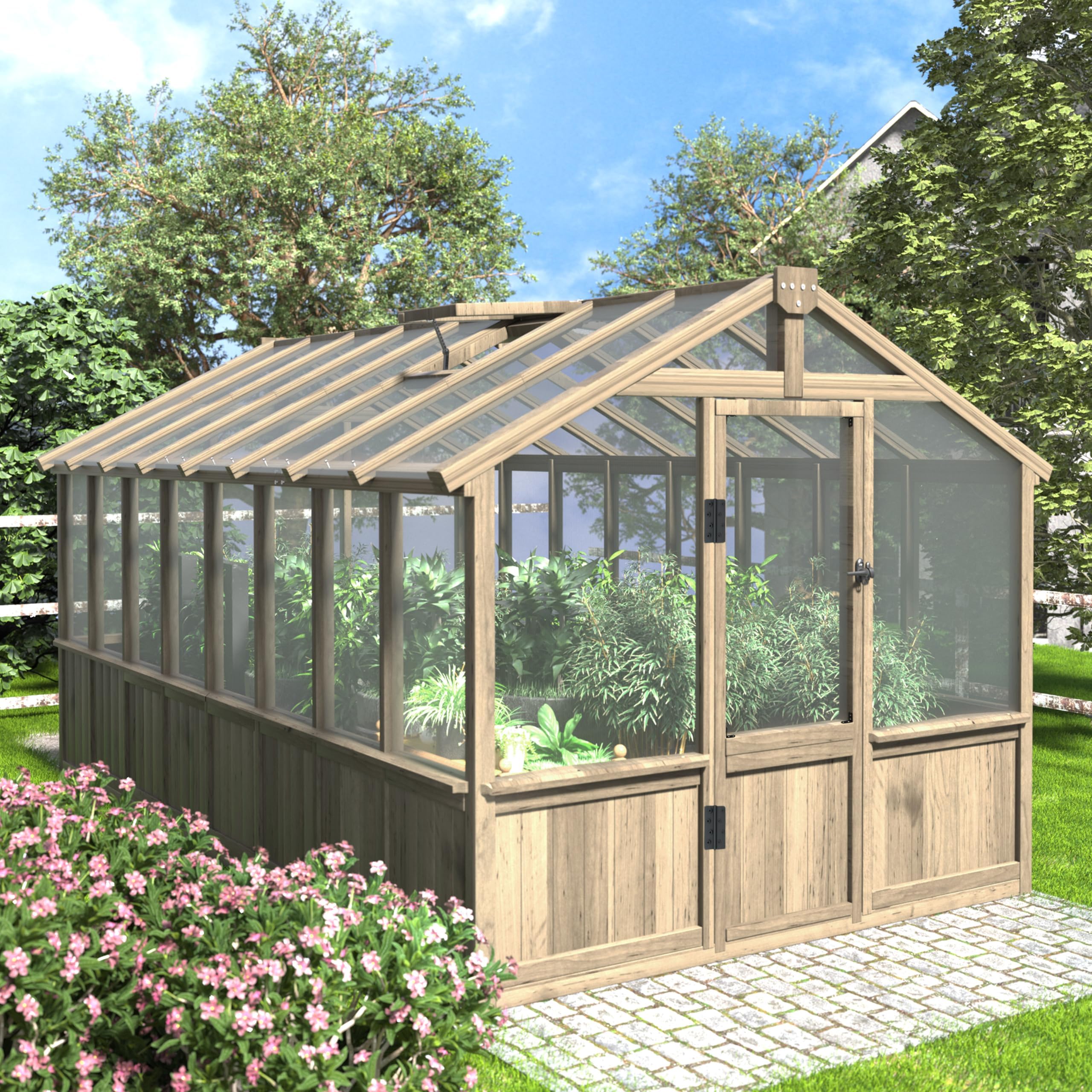
2. Yardenaler 8×16 FT Wooden Walk-in Greenhouse
A wooden beauty with 6mm polycarbonate panels that keep the cold out and the light in.
This 8×16 foot greenhouse uses multi-layer polycarbonate panels that are noticeably thicker than the standard 4mm — an upgrade that delivers better UV protection and temperature stability. The wooden frame in light mocha brown gives it a classic garden-shed aesthetic that blends into a backyard far more naturally than a silver metal tunnel. The adjustable roof opens to a maximum of 45 degrees, giving you control over ventilation that is rare in this price tier.
Owners who anchored it to a 4×4 foundation report it surviving 60-70 mph winds and blizzards with no snow intrusion. At 427 pounds, this is a substantial structure that feels permanent. The interior at 96 inches wide by 190.2 inches deep provides a generous working space, though the door is 29.1 inches wide — check if your wheelbarrow or larger equipment fits.
Why It Stands Out
- Thick 6mm multi-layer panels offer better insulation than most polycarbonate greenhouses at this price.
- Cedar frame resists decay and gives a premium, natural look.
- Adjustable roof vent with a 45-degree maximum opening for superior hot-air escape.
A Few Notes
- Assembly is labor-intensive; plan for two full days.
- The decorative frosted film on some panels may peel over time.
- You will want to pre-drill the thin wood holes and seal all seams with caulk for longevity.
Perfect For: The gardener who values aesthetics and insulation equally and wants a structure that looks like a natural part of the landscape.
Consider This: If you are not prepared for a multi-day assembly or need a wider door for equipment access, look at the aluminum-frame options below.
3. WUKHG 10X12 FT Enhanced Aluminum Greenhouse
Engineered to take a beating — rated for 35mph winds and 20 PSF snow load.
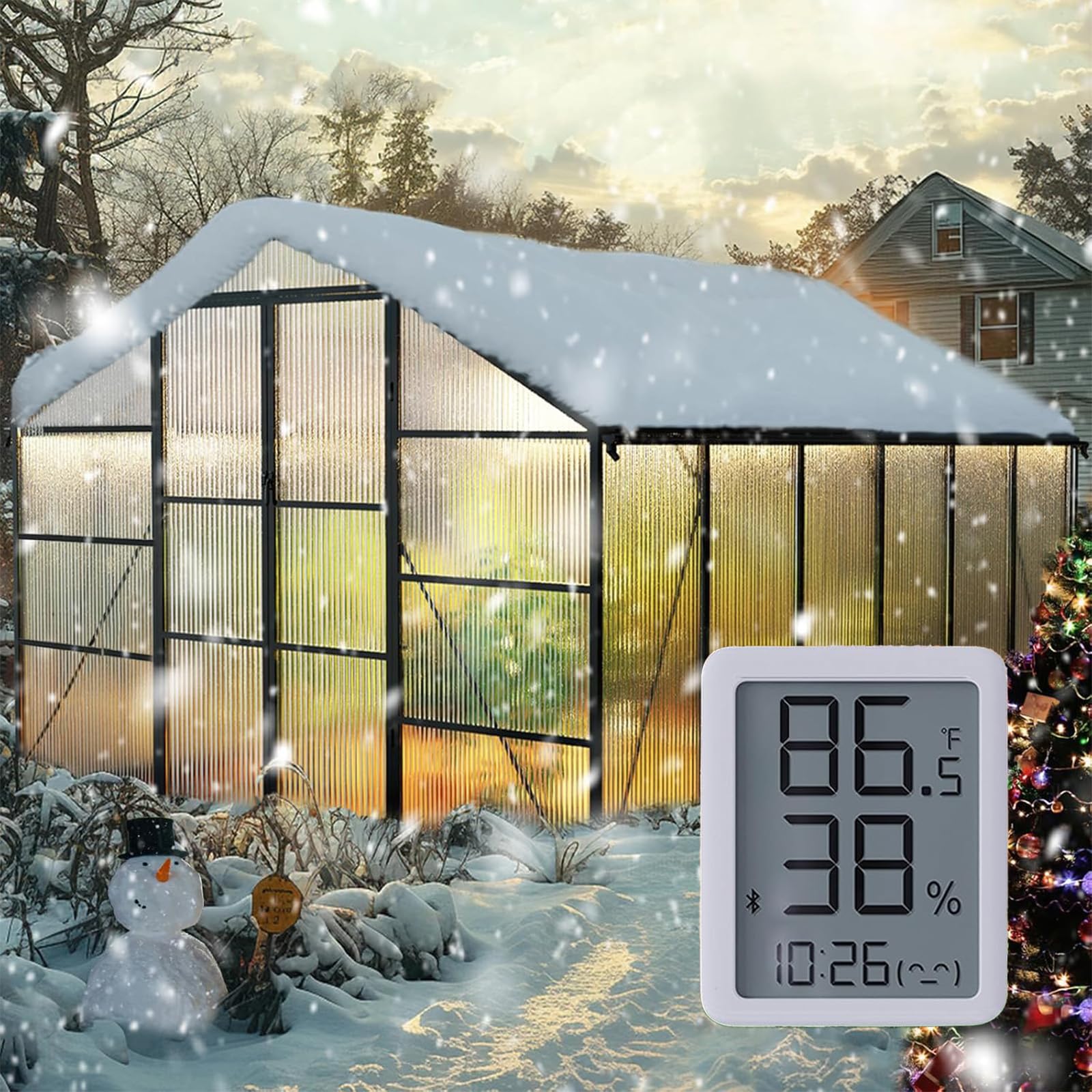
What sets the WUKHG apart from other mid-priced polycarbonate models is its transparency about real-world limits. The high-quality aluminum alloy frame and heavy-duty 4mm twin-wall polycarbonate panels are rated for 35 MPH winds and a 20 PSF snow load — a level of honesty most budget brands avoid. It also includes three adjustable ventilation windows, a lockable sliding door, and a built-in rain gutter system for efficient water collection.
The 10×12 foot footprint (122.44 inches long, 144.91 inches wide, and 100.39 inches tall) gives you enough headroom to stand comfortably and space to add a small bench or seating area. The electronic thermometer is a nice touch for tracking conditions. One experienced buyer summed it up: “Heats to 100°F when 40°F outside, but cools to ambient by midnight” — so you will still need ventilation management on sunny days.
The Catch: Assembly is genuinely difficult and requires three people. The roof window on one unit blew out the first night, so adding extra silicone sealant at every joint is mandatory. The panels are thin enough that some owners describe them as “cheap,” so treat them carefully during install.
Best For: A grower who wants serious weather resistance and a roomy interior at a mid-range price point, and has the patience and help for a challenging build.
4. FLY BY YAN 8×14 FT Polycarbonate Greenhouse
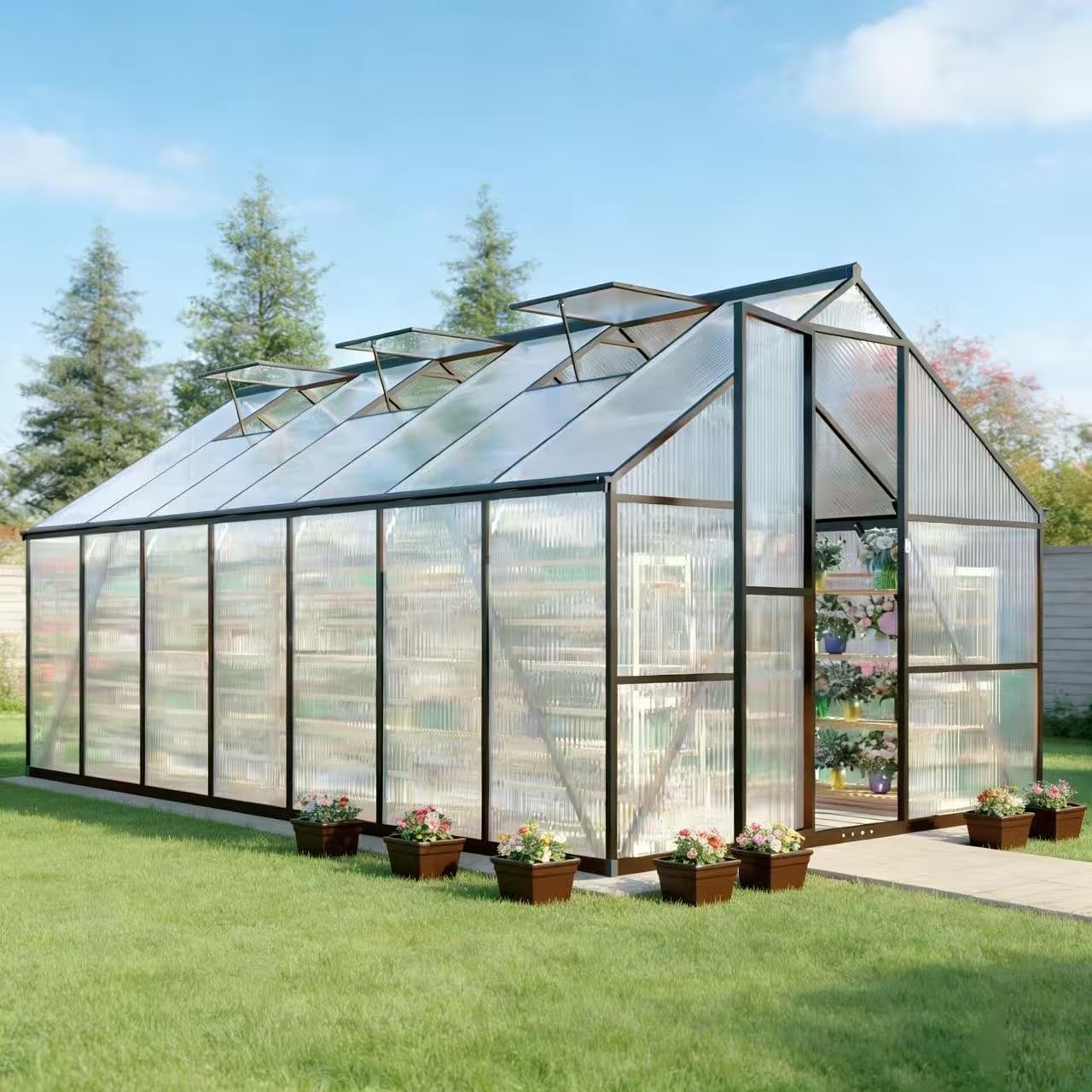
A surprisingly fast-build polycarbonate greenhouse with a stealthy charcoal finish.
At first glance, this is a premium-looking aluminum greenhouse with a scratch-resistant charcoal black finish that hides dirt and weathering better than gloss white. But the real story is the assembly: the company refined the quick-install system through 500+ tests, resulting in a slide-in panel design that the manual claims reduces assembly time and improves stability. The roof uses 720g/m² polycarbonate panels — heavier than the 4mm standard — and includes three roof vents, a lockable door, and a rain gutter system.
The true interior dimensions are reported as 7’8″ x 13′ x 8′ tall. Owners who have weathered violent storms report it surviving without damage. The three roof vents provide excellent passive airflow, and the gutter system channels rainwater away from the base.
What We Like
- Thicker 720g/m² PC panels offer better impact resistance and insulation than standard 4mm models.
- Quick-install system genuinely reduces assembly time compared to other aluminum greenhouses.
- Charcoal black color is scratch-resistant and stays looking sharp.
What to Know
- Still requires 4-5 people for assembly, and the process takes 6+ hours.
- The interior gets very hot quickly — the three vents are essential, not optional.
- Clear instructions are still a weak point; misreading the manual can lead to misaligned gutters or windows.
Who It Suits: The buyer who wants a modern, low-maintenance polycarbonate greenhouse with better panels than the budget tier and a faster build process.
Think Twice If: You need to assemble solo or want a truly heavy-duty frame that can handle extreme snow loads without a level foundation.
5. Sylviera 8×14 FT Walk-in Greenhouse with Hygrometer
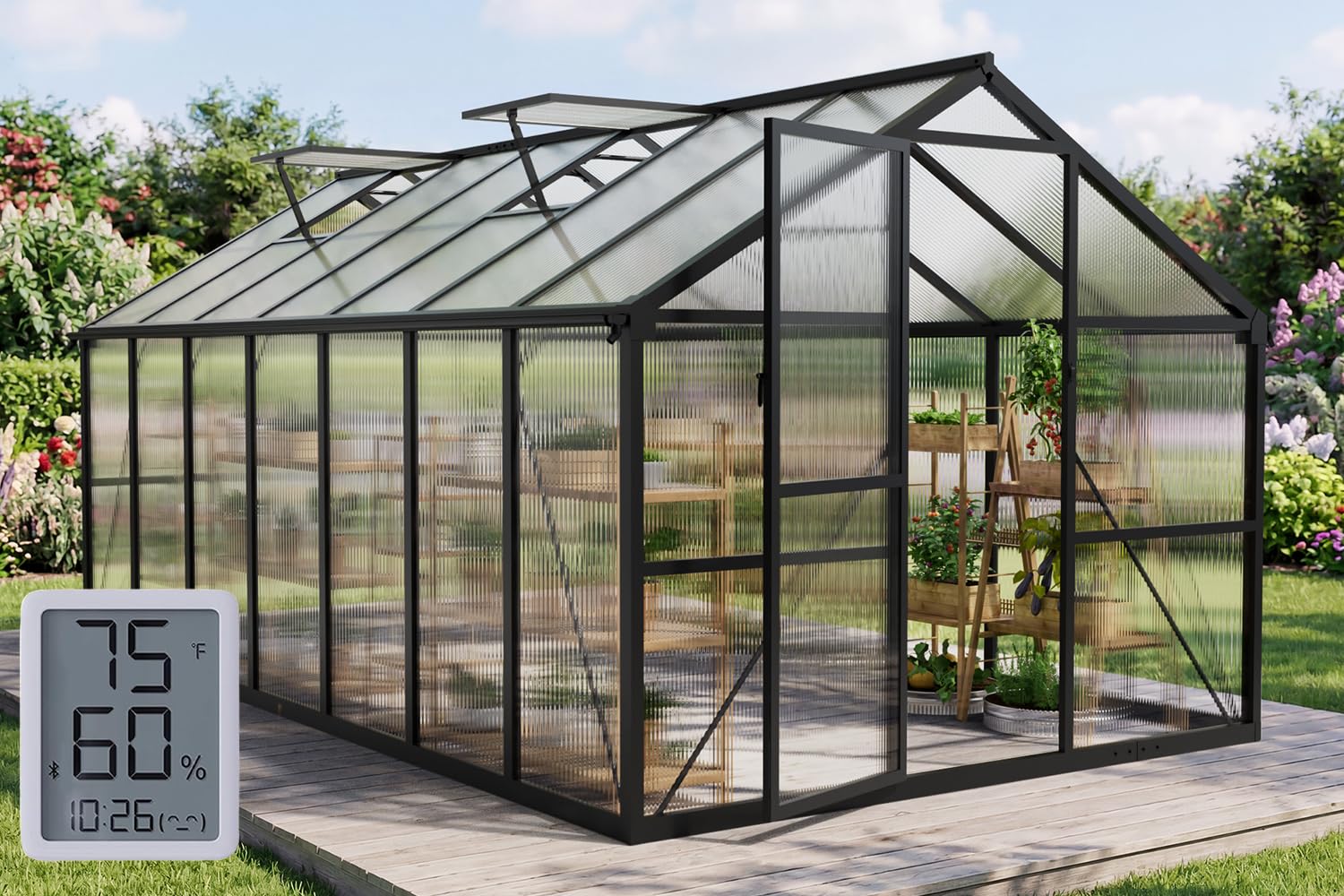
A sturdy aluminum frame and 4mm double-wall panels at a price that undercuts most competitors.
This polycarbonate greenhouse features a reinforced aluminum alloy frame and 4mm double-wall polycarbonate panels for UV protection and insulation. The included hygrometer lets you track humidity, and the adjustable roof vent paired with a lockable door gives you basic airflow control.
At 8 feet wide by 14 feet long, with a height of 81 inches, the interior feels genuinely roomy. Buyers consistently praise the heat retention, noting that the double-wall panels keep the space warm enough on cool spring nights without additional heating.
The Honest Truth: Assembly instructions are incomplete — the manual does not tell you to remove the protective film from both sides of the polycarbonate panels before installing them. The roof vents also need small rubber bands to stay attached, which is a minor but annoying oversight. One unfortunate buyer reported bent and delaminated panels, though this seems to be a quality-control lottery.
Reach For This: If you want a polycarbonate greenhouse with a sturdy frame and a good size for the money, and you are okay with a few assembly quirks you can solve with silicone sealant and patience.
6. ShelterLogic 70658 Greenhouse-in-a-Box 10′ x 20′

The biggest footprint on the list — 200 square feet of growing space on a steel frame.
When raw size matters more than permanent construction, the ShelterLogic delivers a massive 10-foot by 20-foot interior with a peak roof height of 8 feet. The patented ShelterLock 3X stabilizers create a genuinely stable structure for a PE-covered greenhouse, and the 1.34-inch diameter steel tubes are thicker than most budget tunnel frames. The translucent UV-treated cover is designed to diffuse light, reducing harsh shadows and scorching on your plants. Roll-up side panels and half-moon screen vents at each end give you airflow control.
Buyers report it surviving 30-40 mph winds when anchored with extra stakes and cinder blocks, and the 6mil woven plastic is notably tougher than the thinner covers on cheaper tunnel greenhouses.
Why It Wins on Space
- At 10×20 feet, it offers more square footage than any other greenhouse on this list.
- ShelterLock 3X stabilizers provide structural stability that most tunnel greenhouses lack.
- UV-treated translucent cover diffuses light for better plant growth.
The Trade-Offs
- The PE cover has a finite lifespan — expect 3 to 5 years depending on sun exposure and winter storage.
- Assembly is a 6-8 hour solo project with confusing 6-digit part numbers.
- This is a seasonal structure, not a permanent one. You may want to remove the cover in heavy snow.
Best For: A market grower or serious hobbyist who needs immediate, massive square footage for a temporary or seasonal setup and understands the cover will need replacement.
Skip It: If you want a permanent low-maintenance structure, a polycarbonate greenhouse will last longer and require less annual effort.
7. YITAHOME 6×16 FT Polycarbonate Greenhouse
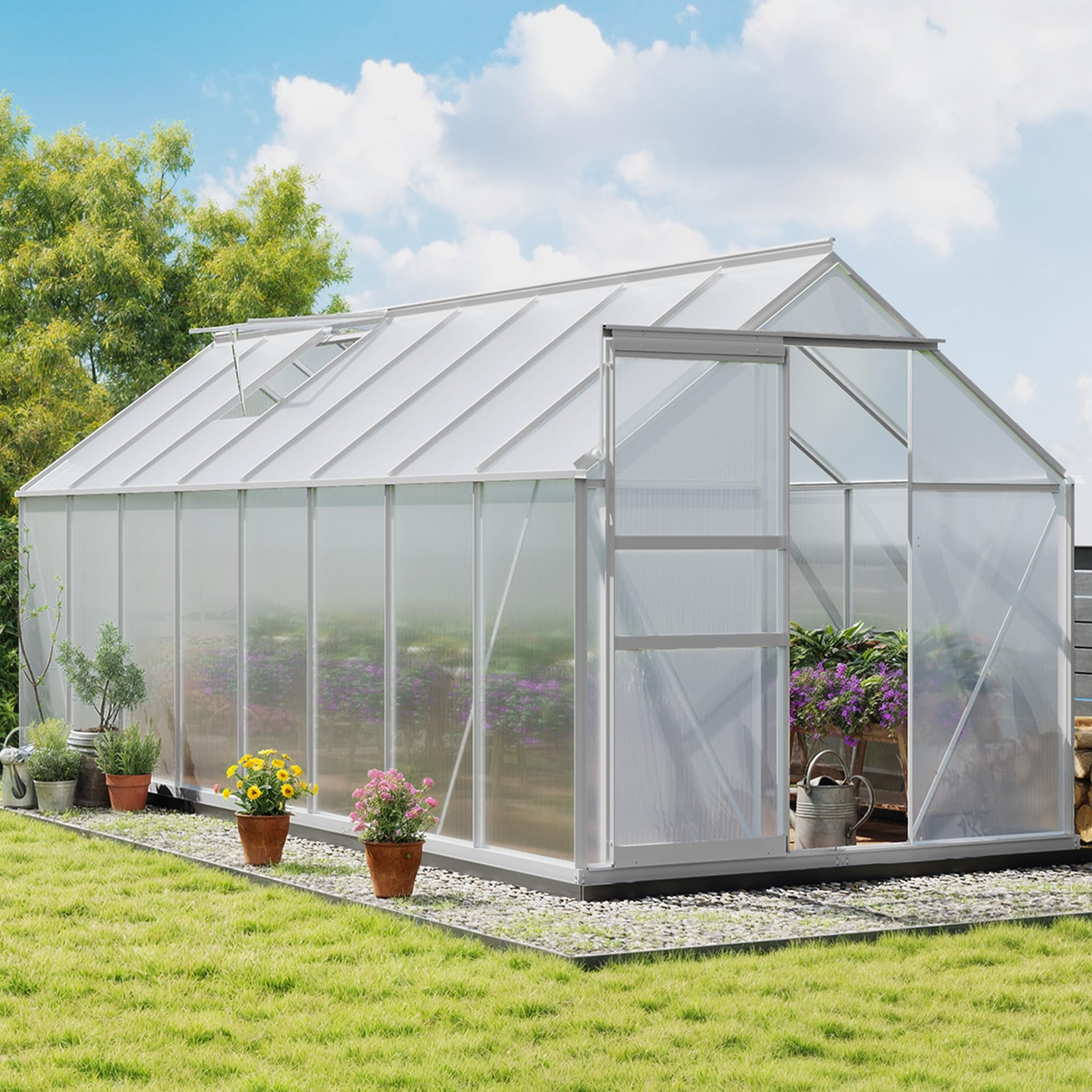
A long, narrow polycarbonate greenhouse that fits tight backyard spaces without sacrificing growing area.
At 6 feet wide by 16 feet long, this aluminum-frame greenhouse is designed for gardens where a wider structure simply will not fit. The sliding door is a space-saver — no swing radius needed — and the two adjustable skylights offer various opening angles for ventilation. The 4mm double-wall polycarbonate panels include UV protection that blocks 99% of UV radiation. The aluminum alloy frame is reinforced with rods on the sides and diagonal rod fixation for improved load-bearing capacity.
Owners mention that the dimensions are accurate and the greenhouse feels roomy for its narrow footprint, making it “perfect for medium-sized gardens.” The top tilt angle design helps with wind resistance and drainage.
The Reality Check: The instructions are universally described as unclear — hieroglyphic-level confusing according to some. Two skilled carpenters reported a 10-hour assembly. The panels can be difficult to fit, and wind can rip them off if not sealed properly with silicone. This is not a “heavy duty” structure despite the name; treat it as a mid-weight polycarbonate greenhouse that rewards careful installation.
Reach For This If: You have a narrow side yard or alley space and want polycarbonate panels rather than a PE tunnel. Bring patience and a helper.
8. Jiliusure 8×10 FT Outdoor Polycarbonate Greenhouse
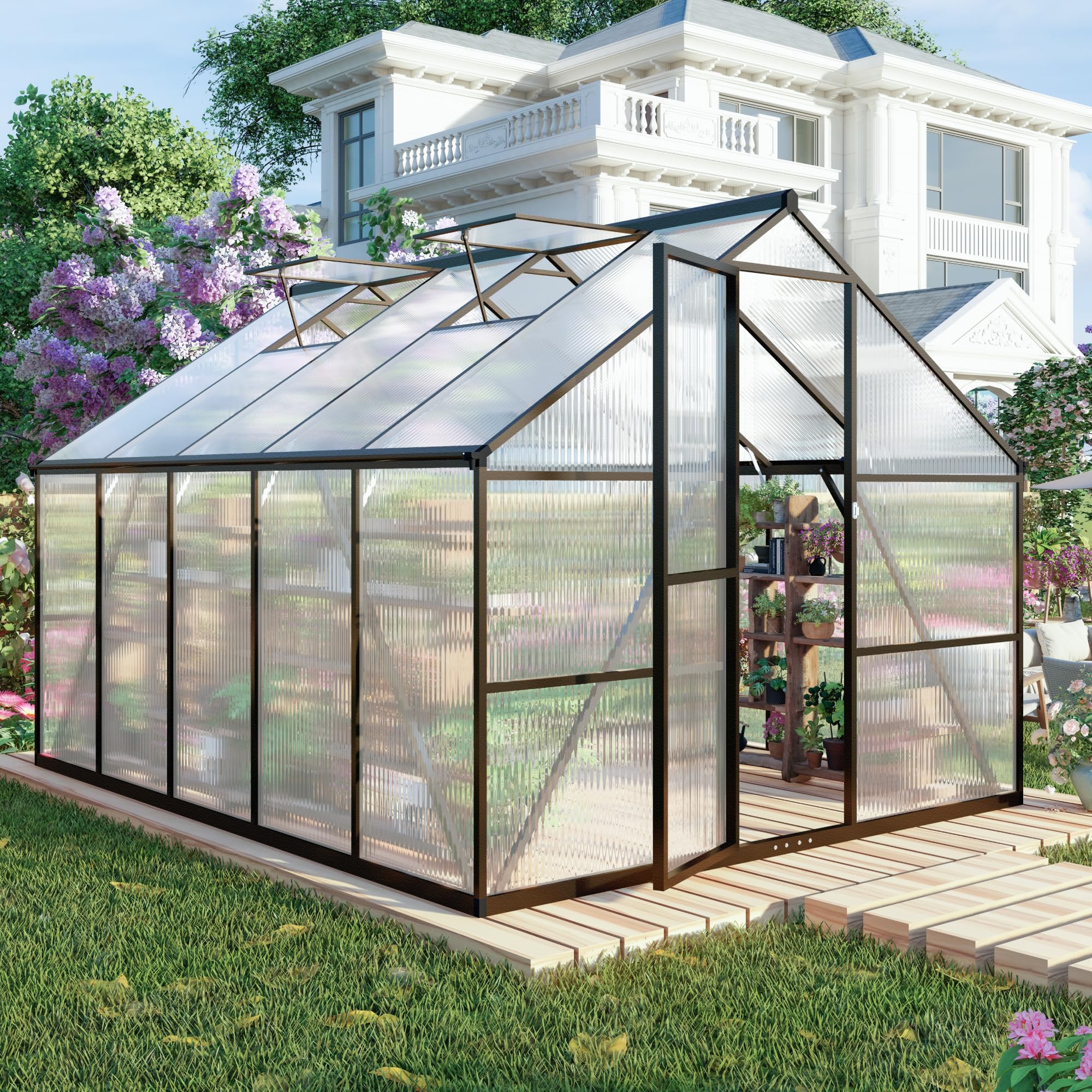
A sturdy polycarbonate option with a patented rain gutter system and a sleek dark gray finish.
The Jiliusure 8×10 is built with a matte dark gray aluminum alloy frame and high-strength, shatter-resistant polycarbonate panels. It transmits over 90% of natural light while blocking harmful UV rays — better light transmission than many competitors. The patented plastic components and rainwater gutter system help manage runoff. The frame is engineered to withstand temperatures from -4°F to 140°F.
Owners praise its stability through an Appalachian winter and note that the two roof vents promote good airflow. The manufacturer claims two DIY enthusiasts can assemble it in 3 hours, which is ambitious but not impossible for experienced builders.
High Points
- Over 90% light transmission is excellent for plant growth.
- Aluminum frame with rain gutters provides clean, low-maintenance durability.
- Designed to withstand temperature extremes from -4°F to 140°F.
Low Points
- Actual interior dimensions are smaller than advertised — closer to 7.5 x 9.5 feet according to one measurement.
- Assembly instructions are vague with poor pictures; some panels arrived broken or with shipping damage.
- Not truly heavy duty for extreme snow areas; buyers recommend not letting snow build up.
Best For: A gardener who wants a compact, attractive polycarbonate greenhouse with good light transmission and a gutter system for a tidy garden look.
Not For: Anyone expecting a quick, frustration-free assembly or a structure that matches its listed dimensions exactly.
9. Quictent 20x10x6.6 FT Premium Greenhouse
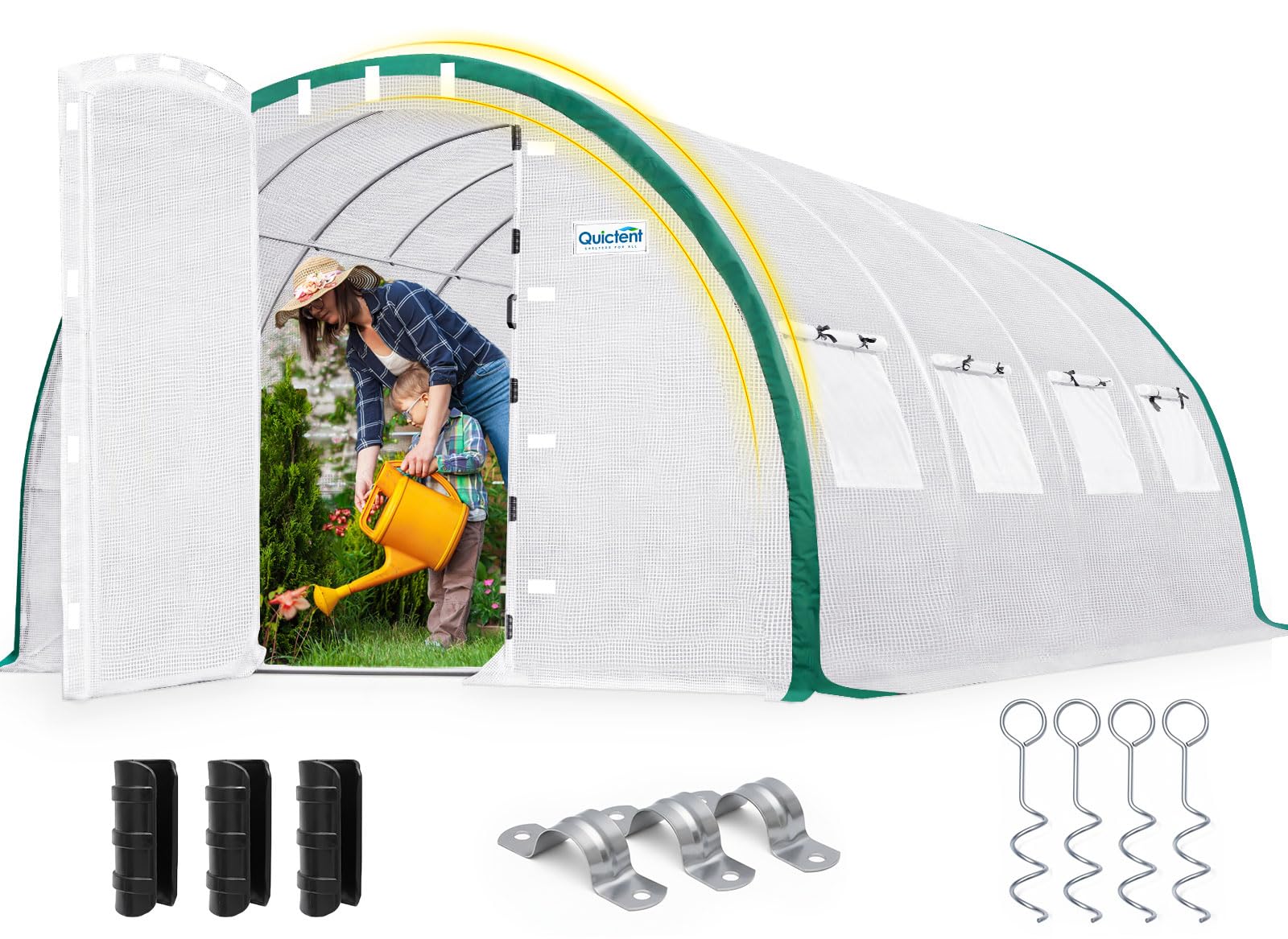
A step up in cover quality and frame thickness from the basic tunnel greenhouse.
The Quictent improves on the standard tunnel design in a few meaningful ways. The frame uses 0.7mm thickened galvanized steel — thicker than the Outsunny below — with a reinforced top structure featuring extra crossbars to prevent snow or water accumulation. The 150 GSM PE cover is heavier than the 140 GSM cover on the Outsunny, and the 8-inch overlong bottom cover can be buried in soil for better wind resistance. The dual swing-door frames (patented, no zipper) open 180 degrees for easy access with tools and let you lock them.
At 20 feet long, 10 feet wide, and 6.6 feet tall, the interior is massive. The 8 mesh screen windows provide controlled ventilation. The Quictent warranty is also worth noting: lifetime parts replacement for connectors and stakes, plus 365-day complimentary components for covers and frames.
The Honest Take: This is still a PE-covered tunnel greenhouse, not a permanent polycarbonate structure. The cover will degrade over time, though customers note the thicker fabric feels durable. Assembly is straightforward but the instructions could be clearer — one reviewer noted the clamps for the doors were missing but the seller shipped replacements promptly. A few owners note the interior can hit 140°F in direct sun, so the 8 mesh windows are essential.
Who It Fits: A budget-minded grower who wants a large tunnel with a thicker frame and better cover than the absolute cheapest options, plus a strong warranty backing it.
10. Outsunny 20′ x 10′ x 7′ Walk-in Tunnel Greenhouse
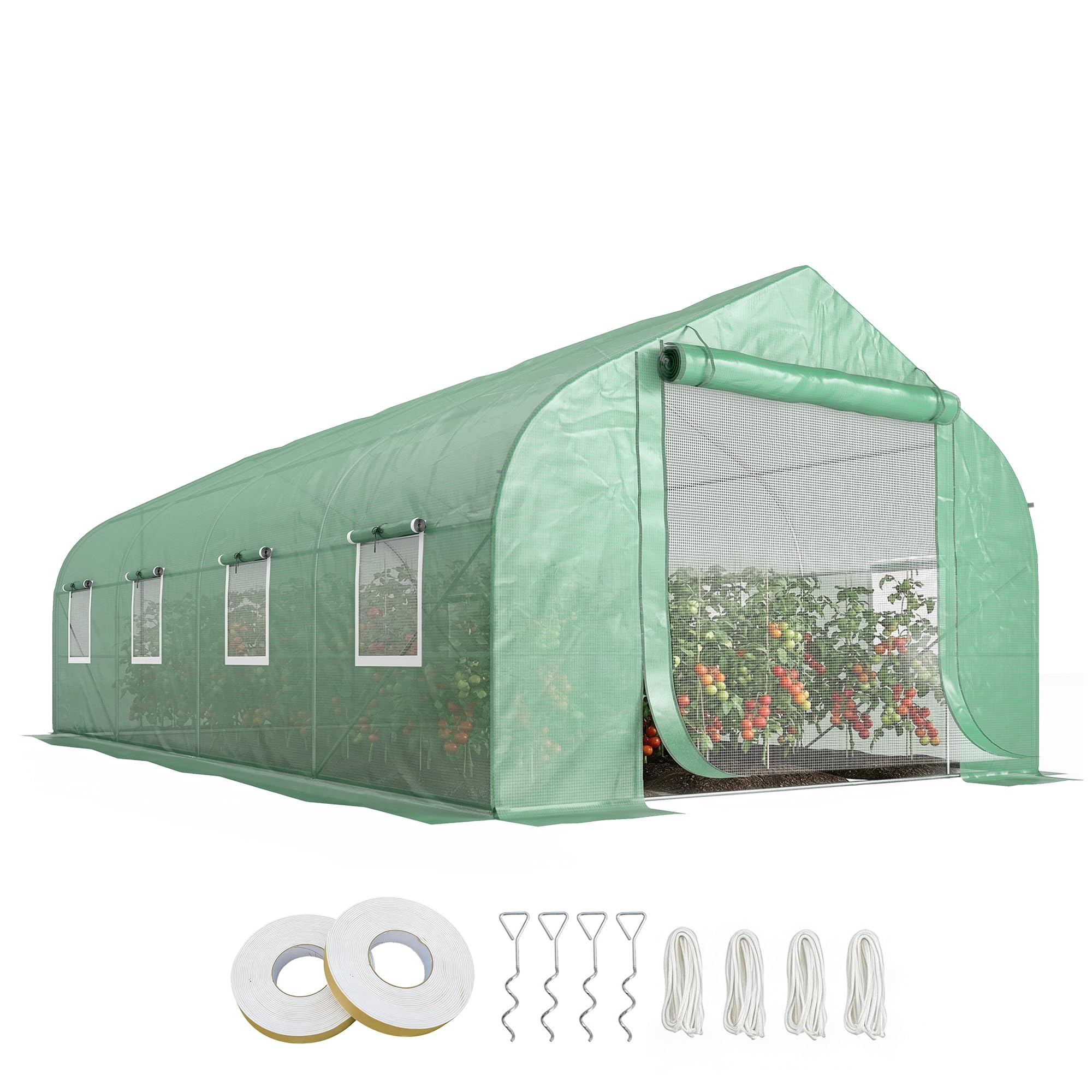
The cheapest way to get a 20-foot-long growing space, but plan to reinforce it yourself.
At 20 feet long, 10 feet wide, and 7 feet tall, the Outsunny tunnel delivers enormous square footage for the lowest entry price on this list. The galvanized steel frame includes four slant bracing tubes, a front crossbar, and middle-reinforced tubes to help stability. The 140 GSM PE cover lets in 85% of sunlight, and the six mesh windows plus a net-protected roll-up door provide ventilation. It is undeniably roomy — reviewers point out it is “rather big” and great for seed starting.
However, the frame is where the budget trade-offs show. While the manufacturer calls it heavy-duty, numerous shoppers say the metal frame is flimsy. One buyer’s experience sums up the risk: “1 week later all the metal bottom supports shear off and now it is unusable.” Others have added their own reinforcement tubes and anchors to make it survive moderate winds.
The Upside
- Massive 20×10 interior for under — class-leading price per square foot.
- Easy assembly (some solo builders finish in 1.5 hours).
- Six mesh windows and a screen door provide decent ventilation.
The Downside
- The frame is the weak point; multiple buyers report it collapsing in moderate wind or shearing at the supports.
- The 140 GSM PE cover is thin and may tear quickly without careful anchoring.
- Requires significant DIY reinforcement (extra stakes, zip ties, or aftermarket anchor system) to survive a season.
Best For: A very tight budget where getting any large covered growing space is the priority, and you are comfortable with DIY reinforcement and accepting a one-season lifespan.
Look Elsewhere: If you want a structure that will survive a full winter with minimal effort, the Quictent or any polycarbonate model is a safer long-term bet.
Understanding the Specs
Snow Load Rating (PSF)
This tells you how much weight the roof can handle before collapsing. A greenhouse rated for 20 PSF (pounds per square foot) can theoretically support a heavy snowpack. The Backyard Discovery Zalie has an extreme 4,400-pound snow load capacity, while most budget tunnels have no engineered rating at all. If you live in a snowy region, this spec is more important than the frame material itself.
Polycarbonate Thickness (mm)
Measured in millimeters, this is the thickness of the panel. A 4mm twin-wall panel is the standard entry point, offering decent insulation and light diffusion. A 6mm panel (like on the Yardenaler) provides noticeably better heat retention and impact resistance. The 720g/m² panels on the FLY BY YAN reference weight per square meter — a heavier panel typically means denser construction and better UV blocking.
Frame Material: Aluminum vs. Wood vs. Steel
Aluminum is rust-proof, lightweight, and modern-looking but comes in varying gauges — thin aluminum flexes under snow. Cedar wood is naturally rot-resistant and strong but heavy and more expensive; it needs periodic sealing. Galvanized steel is strong and affordable, but the coating can chip, exposing the steel to rust. For a permanent structure, thick cedar or heavy-gauge aluminum is ideal.
PE Cover GSM Grade
GSM stands for grams per square meter — the density of the polyethylene fabric. A 140 GSM cover (Outsunny) is on the thinner side, offering light protection for a season or two. A 150 GSM cover (Quictent) is slightly more durable. The ShelterLogic uses a 6mil woven plastic that owners mention lasting 3 to 5 years. Higher GSM numbers generally mean better tear resistance and longer life, but no PE cover matches polycarbonate for longevity.
FAQ
Do I need a permit for an extra large greenhouse?
Should I anchor my greenhouse to a concrete base or a wood frame?
How do I prevent my greenhouse from overheating?
Is a PE cover or polycarbonate panels better for winter?
How long does a PE greenhouse cover last?
Can I assemble an extra large greenhouse by myself?
What is the difference between a walk-in tunnel and a rigid-frame greenhouse?
How much snow can a standard polycarbonate greenhouse handle?
Should I seal the polycarbonate panels with silicone?
Can I use an extra large greenhouse for more than just plants?
Final Thoughts: The Verdict
For the majority of shoppers, the extra large greenhouse winner is the Backyard Discovery Zalie because it combines a natural cedar frame, exceptional snow and wind ratings, and smart features like an exhaust fan and USB ports that no other greenhouse at this size offers. If you want a beautiful wooden structure with 6mm panels and adjustable roof ventilation, grab the Yardenaler 8×16. And for the best value in a rigid polycarbonate structure with honest wind and snow ratings, the WUKHG 10×12 is the one to reach for. With the crowd loving the Zalie at 4.7 stars across 100+ ratings, it is the clear leader for anyone ready to invest in a permanent, year-round growing space.
How We Picked
We do not accept paid placement. Every pick is matched to a real buyer and a real use-case; we do not hands-on test units.
Sources & Methodology
Specifications: manufacturer listings and product documentation. Review insights: verified customer reviews, as of July 2026. Pricing: not shown on this page (it changes often); check the current price via the retailer link.
As an Amazon Associate, Lawn Gear Lab earns from qualifying purchases. This does not affect which products we feature.