
Specs are compiled from manufacturer listings and verified buyer reviews and can change over time — please confirm the key details on the product page before buying.
Raised beds give you better soil, fewer weeds, and a cleaner garden — but only if the stuff inside stays put and the grass outside stays out. That is where the right edging makes or breaks the whole setup: a shoddy border warps, scatters mulch, and lets creeping roots play tag with your vegetables. The best edging for raised beds locks down a clean boundary that looks good on day one and still holds its line season after season.
I’m Rikta — the founder and writer behind Lawn Gear Lab. This guide is built by comparing the manufacturers’ published specifications and the patterns across verified customer reviews, so you get each pick’s real strengths and trade-offs instead of marketing spin.
You need edging for raised beds that holds soil in and keeps grass out, but the best choice depends on if you want a decorative stone look, a clean steel line, or the longest continuous strip without joints. This guide breaks down the top options so you can pick the right one for your garden.
Our Picks at a Glance

How To Choose The Best Edging For Raised Beds
Raised bed edging does two jobs: it keeps your soil and mulch inside the bed, and it creates a barrier that creeping grass and weeds struggle to cross. Your choice depends on how aggressive your roots are, if you want a decorative or utility border, and how much installation time you have.
Material Matters: Resin vs. Steel
Resin brick-style edging snaps together in minutes and looks like real cut stone from a few feet away. It is light, paintable, and the easiest route to a dressed-up flower bed for a weekend project. But because it sits on the surface (or barely below it), it is not a deep root barrier. Steel, on the other hand, pushes into the soil 2–4 inches or more and stays there. Galvanized steel resists corrosion for many seasons, and the corrugated wave pattern gives the strip rigidity along its length while staying flexible enough to curve around a bed.
Height: Mulch Retention vs. Root Blocking
A short 4-inch edging keeps mulch off the lawn and defines the bed visually. If you are fighting aggressive runners like bermuda grass, you need at least 8 inches of buried barrier. Taller edging (10 or 12 inches) gives you more burial depth while still leaving a visible lip above the soil, and it lets you build up the bed’s soil level without spillage.
Single Roll vs. Modular Bricks
A continuous steel roll (20 or 50 feet long) creates a smooth border with no gaps for roots to sneak through. Modular brick systems use separate lengths and connector spikes — they look more crafted, but each joint is a potential weak point. For long straight runs, a single metal strip is the simplest install. For curvy, ornamental beds where appearance matters more than root defense, the brick-style wins on looks.
Quick Comparison
| Model | Best For | Material | Height | Length | Amazon |
|---|---|---|---|---|---|
| Beuta Landscape Edging★ Best Overall | Ornamental stone look | Resin | 2.25″ | 48″ per section (4 sections) | Amazon |
| GTSABWAY Corrugated Steel Edging | Deep root barrier in tall beds | Galvanized Steel | 12″ | 20 ft | Amazon |
| STIRLINGEAR Corrugated Edging | Long, flexible runs (50 ft) | Galvanized Steel | 5.5″ | 50 ft | Amazon |
| Worth Pre-Rusted Edging | Rusted-patina style with durability | Galvanized Steel | 10″ | 20 ft | Amazon |
In‑Depth Reviews
1. Beuta Landscape Edging (4-Pack)
Our pick — over 4.5★ from 900+ verified ratings; the strongest balance of quality and price.
A resin faux-stone system that looks like a mason spent the weekend on your beds.
Buyers single out the appearance more than anything else, and for good reason. Each 48-inch section is molded with a realistic stone texture and a greystone color that blends into the landscape instead of looking like plastic. At 2.25 inches tall, it defines the bed without blocking the view of the plants behind it. The sections interlock with built-in connectors and drive into the ground with the included spikes. As the data confirms, “three spikes per six-brick piece” lock each segment into place, so even a string trimmer bump does not knock it loose.
Because this is resin rather than metal, it lacks the deep-burial root-blocking ability that a steel strip offers. But for a raised bed that is already contained, the Beuta serves as a polished face that holds back mulch and dresses up the boundary. It is made in the USA and the sections can be cut with a hacksaw to fit tighter curves. The most common note from owners is that it is expensive compared to a coil of steel — but they also say it looks like real stone without the backbreaking labor of hauling pavers.
If you want a garden border that draws compliments and you do not need a deep underground wall against grass runners, this is the best-looking, easiest-to-install option around. The main trade-off is the cost per foot versus a plain metal strip.
What Wins People Over
- Appearance gets the most praise by far — it truly looks like stone
- Snaps together quickly; owners mention easy installation in minutes
- Holds up through weather changes without cracking or fading
Who Should Think Twice
- Price per section is higher than roll steel
- Not a deep root barrier — only 2.25 inches tall
Reach for this if: you want a decorative, realistic stone look without the labor of real stonework, and your raised bed is already protected underneath.
Look elsewhere if: your main problem is aggressive creeping grass that needs a tall buried barrier — metal is the better weapon.
2. GTSABWAY Corrugated Garden Edging, 12″x20Ft
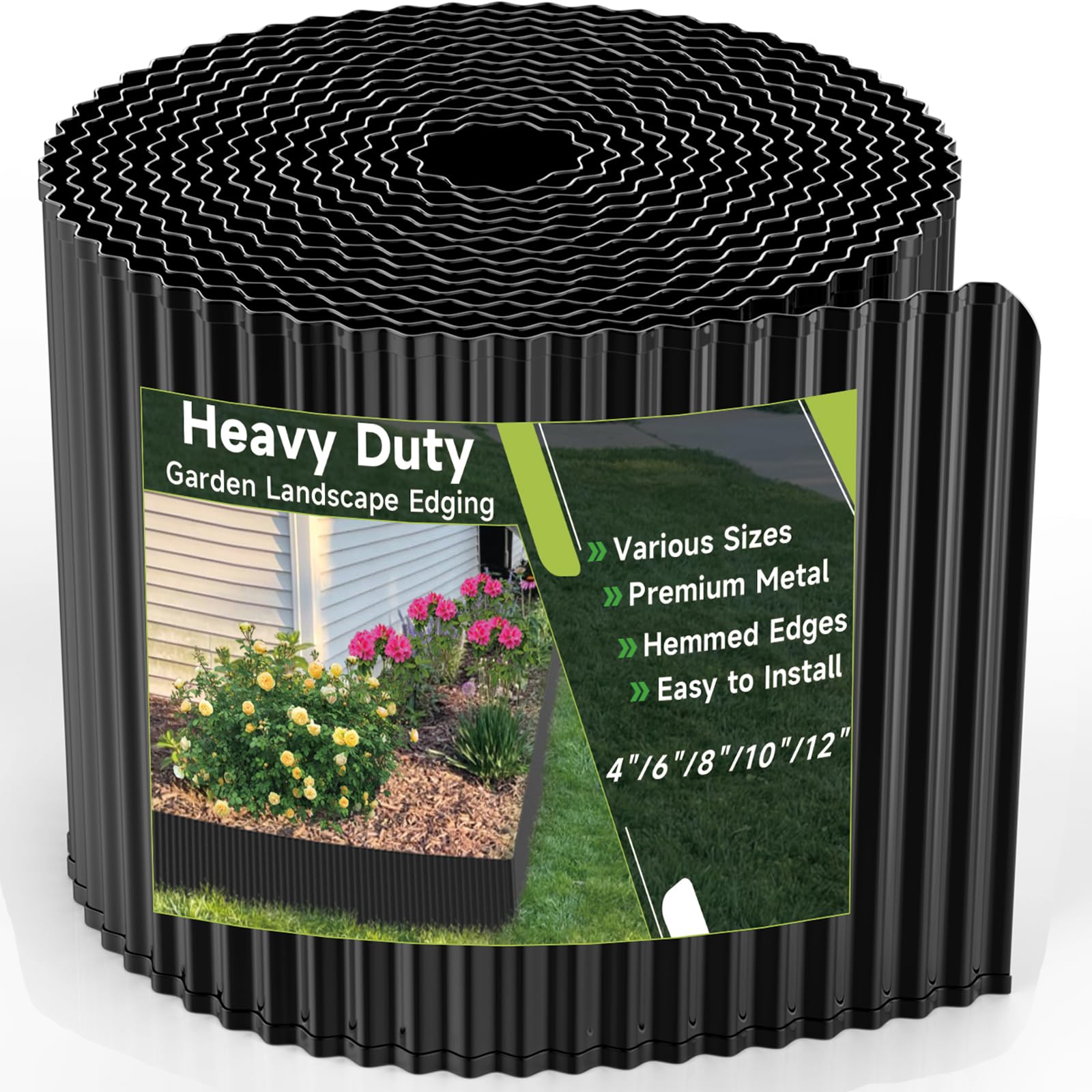
Tallest option in the lineup — a 12-inch steel wall that stops roots cold.
If you are fighting bermuda grass or other tenacious underground runners, the 8-inch burial depth of this strip (leaving a visible lip above) is your best weapon. The data confirms that the 12-inch height “keeps out bermuda grass roots if maintained” — and owners praise the installation process as the most-mentioned positive. You wet the soil, push the strip in by hand, then tap with a mallet. For hard-packed ground, dig a narrow trench, drop the edging in, and backfill. The rolled top and bottom edges mean no sharp metal to cut your hands during setup.
This is a 20-foot single roll, so unlike the brick system above, there are no joints for roots to exploit. The flexible corrugation bends easily around curves without cracking. The black coating is a clean, minimalist look that fades into the background when you want the plants, not the border, to be the star. At 12 inches, it also lets you build up the soil level inside the bed without spillage — a real advantage over shorter edges where soil can wash over the top in a heavy rain.
One recurring note: the steel arrives coiled and can be a bit unruly to unroll and flatten. Once it is in the ground, it stays put. If your beds are tall and the battle is underground, this is the one to grab.
Why Owners Buy This
- Tall 12-inch height gives serious root-blocking depth
- Installation is the most-praised aspect: easy with basic tools
- Sturdy galvanized steel resists rust and stays rigid in the ground
What to Expect
- Coiled shape takes some effort to straighten before install
- Black coating can show scratches if you cut with tin snips
Grab this if: you need a deep underground barrier against aggressive grass and you want a single, smooth strip with no joints.
skip it if: 20 feet is too much for a tiny bed — this roll covers a long run in one go.
3. STIRLINGEAR 50FT Black Corrugated Metal Landscape Edging
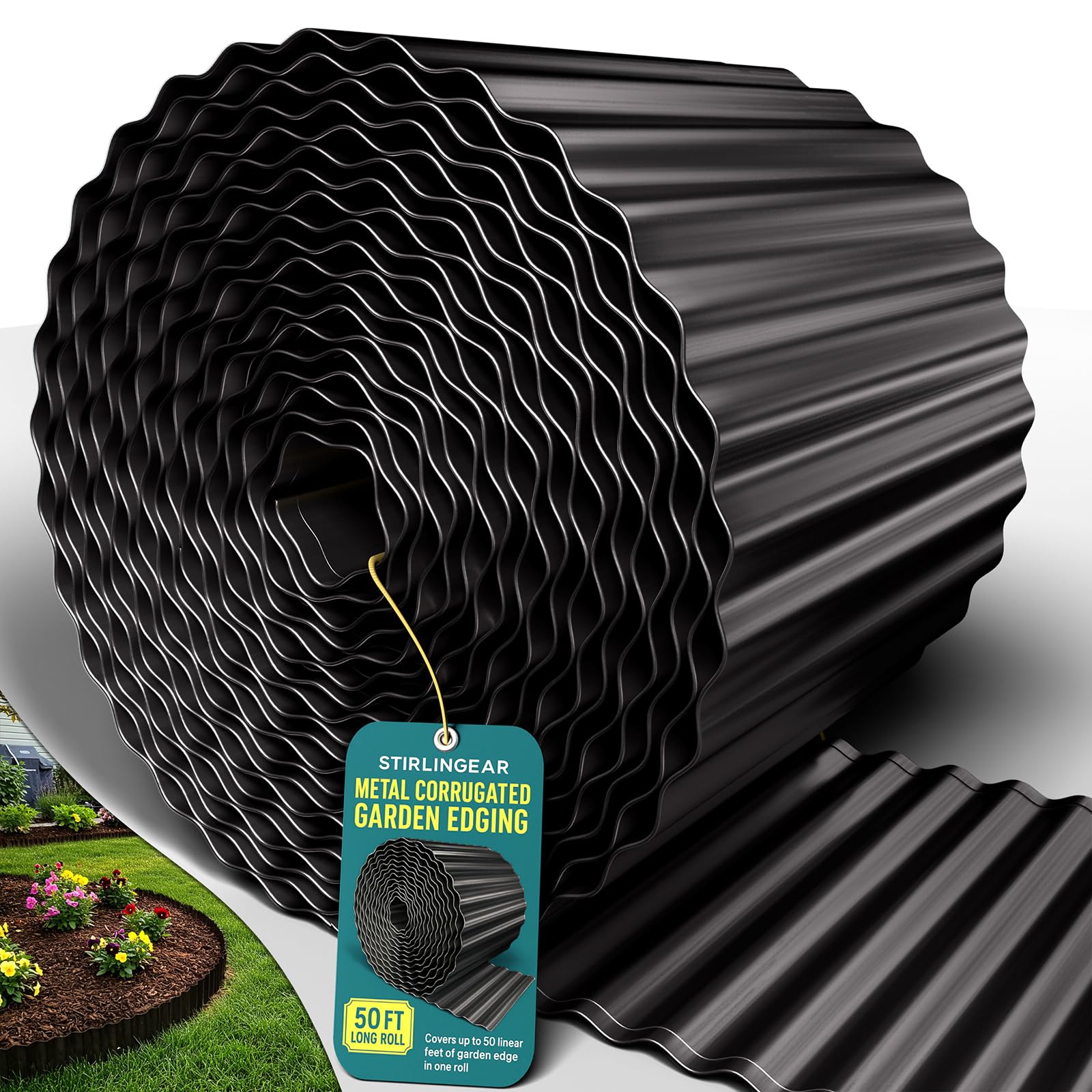
A 50-foot coil that covers large beds and winding borders in one shot.
Compared to the 12-inch tall GTSABWAY above, this STIRLINGEAR run sits at a moderate 5.5 inches — enough to contain soil and mulch and block surface grass, but not suited for deep-burial root warfare. What it lacks in height it makes up for in sheer coverage: 50 feet of continuous edging that snakes around a long raised bed, a winding flower border, or even an above-ground pool (the data notes “Easy to install around above-ground pool; flexible, forms circle easily”). The tool-free installation is a real time-saver: you press or lightly hammer it into the soil without digging a trench in most cases.
The galvanized steel core carries a black coating that holds up against rain, sun, and snow. Owners like that it is “heavy-duty” and can be trimmed with garden shears or tin snips for custom lengths. A few mention that the edges arrived chipped from shipping, but that has not affected long-term durability for most. At this price per linear foot, it is the best value for anyone wrapping a large garden.
If your raised bed project spans a significant area and you want to avoid piecing together multiple short sections, the 50-foot length is the practical winner.
What Stands Out
- 50-foot length covers large gardens in a single run
- Tool-free push-in install saves hours over trenching
- Flexible enough for tight curves and circles
Caveats to Know
- 5.5-inch height is not deep enough to block tenacious runners
- A few owners note shipping-edge chips on the coating
Pick this for: large beds, long straight runs, or curved borders where you want maximum coverage with minimal joining.
Consider something taller if: bermuda grass or quackgrass is your nemesis — you need 8+ inches buried.
4. Worth Pre-Rusted Wide-Corrugated Garden Edging, 10″ x 20Ft

A pre-rusted patina gives this 10-inch steel edging instant farmhouse character.
The galvanized steel underneath is the same quality as the other metal options here, but the surface has been deliberately aged to a rusty brown so you do not have to wait years for the look to develop. At 10 inches tall, it splits the difference between the 12-inch GTSABWAY and the 5.5-inch STIRLINGEAR — enough burial depth (roughly 6–7 inches when installed) to stop most root invaders while leaving a handsome 3–4 inch lip visible above ground. Owners praise the quality and appearance most of all, noting it “holds up to weedeater” impacts and stays in place after installation.
The wide corrugation pattern gives it a different visual rhythm than the narrower waves of the other rolls — more like old barn roofing than industrial fencing. It bends around curves without kinking, though one owner advises planning the curve carefully because the steel has memory. The edges are hemmed and smooth, so handling is safe until you cut it with tin snips for a custom length.
A small number of buyers report that the pre-rusted finish can continue to evolve, and in very wet conditions the rusting can spread beyond the intended patina. If you prefer a controlled, uniform look, the black-coated options above may suit you better. But if you love the weathered look and want it immediately, this is the only pre-aged pick in the lineup.
What Owners Love
- Pre-rusted patina looks established from day one
- 10-inch height is tall enough for serious root blocking
- Sturdy galvanized steel — one owner bought a second roll
What to Consider
- Pre-rusted finish can continue to change in wet climates
- Coiled memory requires patience to flatten into shape
Buy this for: a rustic garden aesthetic where you want the aged look straight away, paired with real root-blocking height.
Choose black-coated steel if: you prefer a uniform, controlled finish that will not weather further.
Understanding the Specs
Height and Burial Depth
Height is the total vertical measurement of the edging strip. What matters to you is how much of that height sits below soil level. For a 12-inch strip, bury 6–8 inches to stop grass roots, leaving a 4–6 inch lip above. A 5.5-inch strip gives you roughly 2–3 inches of burial — fine for containing mulch but not for stopping runners. Always match the burial depth to the root pressure in your yard.
Material: Galvanized vs. Resin
Galvanized steel means the steel is coated with a layer of zinc to resist rust. It is stiff enough to stand up to string trimmers and flexible enough to bend around curves. Resin (a durable plastic) is lighter, easier to cut, and can be molded to look like stone, but it cracks under repeated freeze-thaw cycles in very cold climates and offers no root-blocking depth. The choice is really between strength-plus-root-barrier (steel) and looks-plus-lightweight-install (resin).
Continuous Roll vs. Modular Sections
A continuous steel roll is one long strip — no joints for roots to sneak through, and you cut it to your exact length. Modular sections (like the Beuta brick system) interlock and get staked down. They look more crafted and are easier to fit into tight, ornamental beds, but each joint is a potential separation point over time. For long straight runs or aggressive root defense, a single roll wins. For curved, decorative borders, modular sections give you more design flexibility.
Pre-Rusted Finish
Pre-rusted steel is standard galvanized steel that has been deliberately oxidized to create a brown, weathered patina. It eliminates the waiting period for that rustic look. The galvanized core still resists deep corrosion, but the surface patina can continue to darken or spot in very wet environments. If you want a uniform color for many years, a coated black or silver finish is more predictable.
FAQ
How deep should I bury raised bed edging to stop grass?
Will galvanized steel edging rust through in a few years?
Can I cut metal edging to a custom length?
Which edging is easiest to install for a beginner?
Can I use these edging products around an above-ground pool?
Will the Beuta resin edging crack in freezing weather?
How long is the Beuta Landscape Edging per section?
What does “pre-rusted” mean on the Worth edging?
Can I use metal edging on a slope?
Final Thoughts: The Verdict
Across the board, the edging for raised beds winner is the Beuta Landscape Edging because it delivers a high-end stone look with the easiest snap-together installation. If you want a deep buried barrier that stops aggressive grass roots, grab the GTSABWAY 12-inch Corrugated Steel Edging. And for the best coverage per dollar on a large garden, the STIRLINGEAR 50-foot coil is the one to reach for.
How We Picked
We do not accept paid placement. Every pick is matched to a real buyer and a real use-case; we do not hands-on test units.
Sources & Methodology
Specifications: manufacturer listings and product documentation. Review insights: verified customer reviews, as of July 2026. Pricing: not shown on this page (it changes often); check the current price via the retailer link.
As an Amazon Associate, Lawn Gear Lab earns from qualifying purchases. This does not affect which products we feature.