
Specs are compiled from manufacturer listings and verified buyer reviews and can change over time — please confirm the key details on the product page before buying.
That pale, yellowing look your leafy greens get mid-season is a nitrogen cry for help — and dried blood meal is the fastest organic answer. This slaughterhouse byproduct, dried into a stable powder or granules, is pure protein nitrogen that plants can suck down almost immediately. The trick is picking the right particle size and purity for your garden style, because the wrong dose can burn roots or, worse, attract every four-legged neighbor for a block.
I’m Rikta — the founder and writer behind Lawn Gear Lab. This guide is built by comparing the manufacturers’ published specifications and the patterns across verified customer reviews, so you get each pick’s real strengths and trade-offs instead of marketing spin.
The crowd favorite — a Down To Earth formula scoring 4.7 stars across 600-plus gardeners — shows this category rewards consistency and particle size over flashy packaging. This isn’t a complex science, but choosing the wrong one can waste a season of growth, so here is the straight truth on the best dried blood for garden available right now.
Our Picks at a Glance

How To Choose The Best Dried Blood For Garden
Dried blood meal is a straight nitrogen bomb — it does one thing and does it fast. Choosing the right one means getting the form and concentration that matches your soil’s current state.
Form: Powder vs. Granules
Powder dissolves into the soil quickly, giving plants a lightning-fast green-up within days. The trade-off is a stronger smell and a higher chance of attracting curious dogs or raccoons. Granules release nitrogen more gradually over a few weeks and are easier to sprinkle without clumping, but they take longer to show results.
NPK Ratio — Why 12-0-0 Matters
Almost every dried blood product you will find carries a 12-0-0 NPK, meaning 12 percent nitrogen and zero phosphorus or potassium. That high nitrogen content is perfect for pushing leafy growth in vegetables like spinach, broccoli, corn, and lettuce. Use it too late in the season on tomatoes or peppers, however, and you will get lush foliage but fewer flowers and fruit.
Coverage And Soil Health
This stuff is potent — a little goes a long way. A standard application is about a quarter cup per 10 square feet. Overdo it and the nitrogen salt buildup can literally burn root tips, which shows up as brown, crispy leaf edges. Mixing it into the top inch of soil and watering it in immediately prevents that burn and keeps the smell from drawing pests.
Quick Comparison
| Model | Best For | NPK Ratio | Weight | Form | Amazon |
|---|---|---|---|---|---|
| Down To Earth Blood Meal★ Best Overall | Overall Garden Use | 12-0-0 | 4 lb | Granules | Amazon |
| Earth Science Blood MealCompost Activator | Compost Activation | 12-0-0 | 3 lb | Granules | Amazon |
| Espoma Organic Blood Meal | Budget Value | 12-0-0 | 3 lb | Granules | Amazon |
| Jobe’s Organics Blood Meal | Leafy Greens & Ferns | 12-0-0 | 3 lb | Granules | Amazon |
| Earthworks Blood Meal | Large Gardens & Gophers | 12-0-0 | 25 lb | Powder | Amazon |
| Gardenera Blood Meal | Trial / Small Space | 12-0-0 | 16 oz | Powder | Amazon |
In‑Depth Reviews
1. Down To Earth All Natural Fertilizers Organic Blood Meal
Our pick — over 4.5★ from 600+ verified ratings; the strongest balance of quality and price.
The bag that 600-plus gardeners trust when they need a fast, reliable green-up.
The first thing you notice with this Down To Earth formula is how quickly your plants respond. Buyers report that vegetative growth turns vigorous almost immediately after application, and the review pages confirm a pattern: side-dress your tomatoes or leafy greens with these granules, and within a week you see deeper color and stronger stems. At 4 pounds (64 ounces), compared to the 3-pound bags from Espoma or Jobe’s — which means more feedings per purchase for roughly the same price tier, making it the best value in the category without sacrificing quality.
The granules are OMRI-certified organic, so you can use them with confidence on vegetables headed for your table. What wins people over is the consistency: the nitrogen release is strong but predictable, provided you water it in after applying. The smart gardener’s trick here is to use it in early growth stages — once your tomatoes start pushing flowers, you will want to switch to a lower-nitrogen formula.
What Gardeners Rave About
- Fast vegetative response — plants “responded instantly” per multiple owner reports
- OMRI-certified organic, safe for vegetable gardens and edible crops
- Generous 4 lb bag stretches further than most competitors in the same bracket
The Honest Trade-Offs
- Strong initial smell can be off-putting and may attract dogs or raccoons if not watered in
- Overapplication causes nitrogen burn — measure carefully using the label’s mixing ratio
Reach for this if: you want the most-reviewed, highest-trust organic blood meal that works on everything from corn to container flowers.
Think twice if: you need a slow-release nitrogen that feeds over months — this is a fast-acting meal that requires careful scheduling.
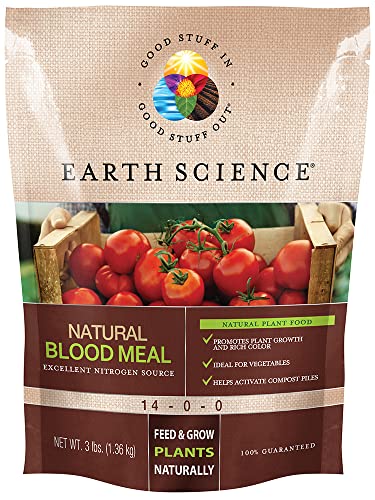
2. Earth Science Natural Blood Meal Plant Food
A slow-release nitrogen meal that shines in the compost heap as much as in the soil.
Earth Science positions this blood meal as a dual-purpose tool: feed your plants and speed up your compost pile simultaneously. The nitrogen-rich granules, rated 12-0-0, feed high-carbon materials in a compost bin, turning kitchen scraps into usable soil amendment faster. On the garden side, this is a notably slow-acting nitrogen source compared to the Down To Earth pick above — one gardener who applied it to onion plants found it worked fine for long-season crops but could not deliver the immediate hit onions need during their critical early weeks.
The 3-pound bag covers about 100 square feet, making it a good match for the home gardener with a modest raised bed setup. Owners mention the plastic pouch packaging is an upgrade over cardboard boxes, as it seals out moisture better and prevents the meal from caking into a brick. The most common praise — mentioned by over a dozen owners — focuses on how well it greens up established plants over a three-to-four-week window, especially leafy vegetables going into their main growth phase.
Where It Excels
- Dual-use: garden feed and compost accelerator in one product
- Coverage is clearly labeled at 100 square feet, easy to plan around
- Sealed plastic pouch prevents clumping from humidity
Where It Slows Down
- Too slow for crops that need a rapid nitrogen rescue — stick to the Down To Earth for emergency green-ups
- Strong, lingering smell that one buyer described as “the worst smell on earth” until watered in
Best for: gardeners who compost and want one bag to do double duty, or anyone with established perennials that benefit from a steady, slow nitrogen trickle.
skip it if: your seedlings are yellow and need an immediate fix — this releases too gradually for rescue jobs.
3. Espoma Organic Blood Meal Fertilizer

An all-American budget staple that earns its place on the shelf through sheer consistency.
Espoma has been in the organic game since 1929, and this blood meal reflects that experience. The 12-0-0 granules are advertised as 100 percent domestic blood meal with no fillers or additives — a claim that matters if you are trying to keep your garden strictly organic. Use it in spring to wake up your beds and again in the fall to rebuild nitrogen levels for the next season. The instructions are refreshingly simple: sprinkle it onto the soil like you are seasoning food, then water it in.
Tomato growers are particularly fond of this one. The review pages suggest it delivers fast, visible development on tomato plants during their vegetative stage. The catch, and an experienced gardener will know this, is that the 12-0-0 ratio means you should stop using it once the plants begin pushing flowers, or you will get giant vines with few fruit. At 3 pounds (48 ounces), it is a smaller bag than the Down To Earth at 4 pounds, making this the best entry point for someone trying blood meal for the first time.
Solid starter bag: You get a trusted heritage brand, domestic sourcing, and a simple application method. The trade-off is bag size — at 3 pounds, serious gardeners with large plots will go through it fast and may prefer the larger 4-pound Down To Earth or the 25-pound Earthworks option.
Grab this if: you are new to blood meal and want a small, low-risk bag from a reputable American brand to test on a few tomato plants or container herbs.
Look elsewhere if: you need to feed a large vegetable patch — the smaller bag runs out quickly and you will get better per-pound value from the larger options.
4. Jobe’s Organics Granular Blood Meal Fertilizer

The fern-and-fernery champion that brings tired foliage back to life in two weeks.
If you have ever watched a fern or a shade-loving plant go pale and stringy, you know how hard it can be to restore that deep green color. Jobe’s Organics blood meal is formulated with a 12-0-0 NPK and designed specifically to return vibrancy to non-flowering plants. One buyer with a collection of ferns noted that after about two weeks of application, the plants looked “green and healthy” — a turnaround that matches the pattern across the owner base. The granules are produced to minimize runoff and smells, which is a genuine improvement over some looser powders that blow away in a breeze.
Beyond foliage, this granular meal is OMRI-listed for organic gardening and works on leafy greens like spinach and broccoli. An unexpected bonus that several owners discovered: the strong scent also works as a deer and gopher repellent, keeping animals away from tender shoots. The method is straightforward — apply monthly during the growing season, water it in, and watch the color return. At 3 pounds, it sits right in the middle of the size range, and its 4.7-star score across over 100 reviews confirms that it delivers on its promises with few surprises.
The Big Wins
- Specifically praised for restoring non-flowering ornamentals like ferns within two weeks
- Granule design reduces dust, waste, and the strongest aspects of the animal smell
- Works as an accidental deer repellent — animals dislike the protein odor
The Limits
- Mixing with peat and soil helps cut the smell, as noted by owners who also use bone meal
- Not designed for fast-flowering vegetable crops — stick to foliage-focused plants for best results
Reach for this if: you grow a lot of ornamentals, ferns, hostas, or leafy greens and want a granular meal that won’t dust up your hands or blow off the bed.
Pass on it if: you need a large quantity for a sprawling vegetable garden — this 3-pound bag suits smaller beds and containers best.
5. Earthworks Health LLC Blood Meal 25 lb Bag

The bulk bag that serious gardeners and gopher fighters swear by.
When your garden footprint stretches into the hundreds of square feet, the little 3-pound bags become an annoyance. Earthworks answers with a 25-pound bag of powdered blood meal that covers a 1,200-square-foot garden across multiple feedings. The powder form means it mixes into soil and compost faster than granules, and buyers confirm the double-layer packaging — a sturdy cardboard box with a thick plastic inner bag — keeps the meal bone-dry and clump-free even in humid garages. At 4.8 stars across 303 ratings, this is the highest-rated product in the lineup, and the volume of feedback makes the consensus clear: this is the go-to for serious soil builders.
An unexpected star feature: gophers hate this stuff. Multiple customers note that working blood meal into the soil around tunnels sends the rodents packing. The same smell that offends human noses acts as a powerful deterrent. If you are mixing your own bulk fertilizer blend with coconut coir, compost, and perlite (as several owners do), this bag simplifies the whole process — one 25-pound purchase replaces six or more small bags. The only catch is the upfront commitment: you need space to store it, and you should not buy this unless you have a plan to use it within a season or two before potency starts to fade.
Bulk storage bonus: The plastic bag inside the box is heat-sealed and durable, so you can reseal it easily. The light powder texture measures out cleanly with a scoop. The trade-off is the sharp metallic smell — stronger than granules — which means you will definitely want to water it in immediately after spreading.
Buy this if: you maintain a large vegetable garden, orchard, or flower farm and want the lowest per-pound cost with the highest owner satisfaction score in the category.
Avoid if: you garden in small raised beds or containers — the bag will outlast your need, and the powder form is harder to measure in tiny doses without a kitchen scale.
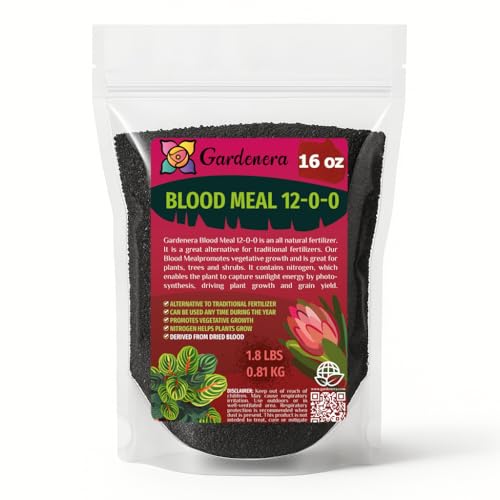
6. Gardenera Organic Blood Meal Fertilizer
A tiny 16-ounce bag for the gardener who just wants to test the waters.
Not everyone wants to commit to a 4-pound or 3-pound bag of something that smells like an abattoir. Gardenera offers a compact 16-ounce powder — compared to the 4-pound (64-ounce) Down To Earth bag above — that costs less up front and lets you see how blood meal behaves in your garden before you buy in bulk. The label suggests a mixing ratio of a quarter cup per 10 square feet, which gives you enough material to treat a small raised bed or a handful of container tomatoes through their early growth phase.
The powder form means it integrates into the top layer of soil quickly and starts releasing nitrogen almost immediately. Reviewers point out their plants “love it” — a simple but consistent verdict across the reviews. The trade-off of such a small bag is obvious: larger gardens will run through this in a single weekend. But for the urban gardener with a few pots on a balcony or a single 4×8-foot bed, this avoids the waste of a half-used bag sitting in a shed for two years.
Perfect starter dose: This is the best way to learn how blood meal behaves — how fast it greens up your plants, how strong the smell really is, and how careful you need to be with watering. Once you know, you can confidently buy the larger Down To Earth or Earthworks bag for the main season.
Ideal for: first-time blood meal users, apartment gardeners with small container setups, or anyone who wants to keep a tiny emergency bag on hand for a single yellowing plant.
pass on it if: you are feeding a full vegetable patch — you will need to repurchase multiple times across the season compared to one larger bag.
Understanding the Specs
NPK Ratio — The 12-0-0 Standard
Almost every blood meal product carries a 12-0-0 ratio, meaning 12 percent nitrogen by weight with zero phosphorus and zero potassium. That high, pure nitrogen is the reason your leafy vegetables turn dark green within days. But it also means blood meal is a one-trick pony — use it when you need foliage growth, not when you want flowers, fruit set, or root development. If your soil test shows adequate phosphorus and potassium, this is perfect; if not, you will need to supplement with bone meal or kelp.
Powder vs. Granules — Speed vs. Safety
Powdered blood meal (like the Earthworks 25 lb) dissolves into the soil almost on contact, delivering nitrogen within 24 to 48 hours. The downside is that it releases so fast that a heavy rain or overwatering can wash it past the root zone before plants can absorb it. Granules (like Down To Earth or Jobe’s) break down over one to three weeks, giving a steadier feed and reducing the risk of nitrogen burn, but they require consistent soil moisture to activate properly. For container plants, granules are safer; for a quick rescue of a yellowing bed, powder wins.
FAQ
Can I use dried blood meal on all vegetable plants?
How do I apply blood meal without burning my plants?
Will blood meal attract animals to my garden?
How is dried blood meal different from bone meal?
How long does smell last after applying blood meal?
Can I use blood meal in hot summer weather?
Does blood meal expire or lose potency over time?
Should I mix blood meal into compost or apply it directly to soil?
Can I use blood meal on indoor potted plants?
What is the difference between organic and synthetic nitrogen fertilizers?
Final Thoughts: The Verdict
For most gardeners, the clear winner among dried blood for garden options is the Down To Earth Organic Blood Meal because it delivers the fastest, most consistent vegetative response, carries OMRI organic certification, and offers the best weight-to-value ratio in the mid-price tier. If you are managing a large garden and want the lowest per-pound cost with the top owner satisfaction score, the Earthworks 25 lb bag is the heavy-duty choice. And for small-space gardeners or first-time users who just want to see what blood meal does before committing, the Gardenera 16 oz powder is the smart, low-risk entry point.
How We Picked
We do not accept paid placement. Every pick is matched to a real buyer and a real use-case; we do not hands-on test units.
Sources & Methodology
Specifications: manufacturer listings and product documentation. Review insights: verified customer reviews, as of July 2026. Pricing: not shown on this page (it changes often); check the current price via the retailer link.
As an Amazon Associate, Lawn Gear Lab earns from qualifying purchases. This does not affect which products we feature.