
Specs are compiled from manufacturer listings and verified buyer reviews and can change over time — please confirm the key details on the product page before buying.
You plant shrubs to add beauty and structure to your yard, not to serve as a salad bar for local deer. The right netting is the difference between a thriving landscape and a row of gnawed stubs, but the choice between woven meshes, zippered bags, and plastic fences can get confusing fast. The key specs that matter are mesh size, material weight, and coverage area — get those right and you keep deer away without turning installation into a weekend ordeal.
I’m Rikta — the founder and writer behind Lawn Gear Lab. This guide is built by comparing the manufacturers’ published specifications and the patterns across verified customer reviews, so you get each pick’s real strengths and trade-offs instead of marketing spin.
The six contenders below are the most practical choices available for protecting your shrubs, and after you read through them you’ll know exactly which deer netting for shrubs is worth your time and which ones will leave you frustrated.
Our Picks at a Glance


How To Choose The Best Deer Netting For Shrubs
Picking the right deer netting depends on three main things: the size of the holes, the strength of the material, and how the netting fits your specific shrubs. Get these right, and you can stop deer damage cold.
Mesh Size — How Small Is Small Enough?
The mesh, which is the grid of holes in the netting, needs to be small enough that a deer cannot poke its nose or antlers through. For serious deer protection, look for a mesh of 5/8 inch or smaller. A larger mesh, like an inch or more, might let birds and squirrels through, and deer can often push their snouts into larger openings to get a bite.
Material and Weight — HDPE vs. Standard Plastic
Most good netting is made from High Density Polyethylene, usually called HDPE. This is a type of plastic that resists tearing, handles sun exposure without falling apart (it is UV resistant), and holds up for many seasons. The weight of the fabric, given in grams per square meter (gsm) or ounces per square foot, tells you how thick and tough it is. A heavier netting, say 55 gsm, is much tougher than a lightweight 0.2-0.4 oz/ft² net, which will tear easily in wind.
Coverage Style — Roll vs. Bag
You have two basic styles to choose from. A roll of netting (like the 6.5×50 ft or 7.5×65 ft options) gives you a big sheet you cut and drape over many shrubs or a whole garden bed. This is the most flexible and usually the most cost-effective for large areas. Bag-style netting comes in a fixed size with a drawstring or zipper at the bottom, fitting neatly over a single bush. Bags are easier to put on and take off, but you need one per shrub.
Quick Comparison
| Model | Best For | Mesh Size | Material | Coverage Area | Amazon |
|---|---|---|---|---|---|
| ORIVOGAS Deer Fence Netting★ Best Overall | Heavy-duty barrier | 5/8 inch | HDPE (55 gsm) | 6.5 x 50 ft | Amazon |
| Vocray 7.5×65 Ft Deer NettingSmall Mesh | Fine-mesh protection | 5/8 inch | HDPE (25g/m²) | 7.5 x 65 ft | Amazon |
| RMBHM 2Pack Netting Bags | Individual tree/shrub bags | Ultra-fine | HDPE | 10 x 10 ft (2 bags) | Amazon |
| Fetanten Garden Bird Netting | Versatile garden roll | 5/8 inch | HDPE | 7.5 x 65 ft | Amazon |
| OZMI 4 Pack Netting Cover | Multiple small shrubs | Ultra-fine | Polyethylene | 4 x 5 ft (4 packs) | Amazon |
| codree 3 Pcs Deer Netting | Quick frost/deer cover | — | Plastic (non-woven) | 7.8 x 7.8 ft (3 covers) | Amazon |
In‑Depth Reviews
1. ORIVOGAS Deer Fence Netting
Our pick — over 4.5★ from 350+ verified ratings; the strongest balance of quality and price.
A hefty woven barrier that stands up to persistent deer pressure season after season.
If you need a serious physical barrier, this 55 gsm HDPE (high-density polyethylene, a tough plastic) netting is the heaviest option in the roundup — the spec sheet says the netting is heavier than regular netting, and that extra heft translates into a tactile difference. You feel the strength the moment you unfold it. The 5/8-inch square mesh keeps out not just deer but also dogs, groundhogs, and other large pests, and the reinforced top and bottom edges include a drawstring to cinch it tight around posts, so it does not sag. The package includes 50 zip ties and 8 ground stakes, which reviewers confirm makes installation straightforward on T-posts.
Buyers report it works as an “effective deer/pest barrier after 3 months,” with one owner noting that even with high deer activity in their area, the netting held up when they supplemented it with a solar electric fence. Another reviewer mentioned that it stretches “like spandex,” which helps it hug curved garden beds without leaving big gaps. At 3.6 pounds for a 6.5×50 ft sheet, it is significantly heavier than the 2.75-pound Fetanten roll, which tells you it is built for tougher jobs — but two people are recommended for installation.
Standout Strengths
- 55 gsm HDPE weave is far denser than standard netting, providing excellent tear resistance.
- Comes complete with 50 zip ties and 8 ground stakes — no extra trip to the hardware store.
- Reinforced edges with drawstring prevent sagging, which keeps the barrier effective along the bottom.
Honest Trade-offs
- At 3.6 pounds, it is the heaviest roll here and requires two people for a smooth setup.
- Some buyers found it unravels when cut, requiring care to tie off the ends.
Who it works for: Homeowners with large garden perimeters, raised beds, or areas with heavy deer traffic who want a reusable barrier that will not tear in wind.
Who should look elsewhere: Anyone who needs to cover a single small shrub fast — you will be cutting and hemming a big roll for a tiny job.
2. Vocray 7.5×65 Ft Deer Netting
The defining spec on this one is the 1/2-inch mesh — smaller than the 5/8-inch opening on the ORIVOGAS netting. That half-inch grid is small enough that most birds cannot push through, and the manufacturer states it has a load-bearing capacity exceeding 100 pounds, which means a deer pressing against it will stretch the netting but is unlikely to tear it. The woven HDPE construction weighs in at 25g/m², putting it in the mid-weight range — lighter than the 55 gsm ORIVOGAS but much tougher than flimsy 0.2-0.4 oz/ft² nets. At 1.45 kilograms (about 3.2 pounds), versus the ORIVOGAS roll at 3.6 pounds, so it is easier to handle alone.
Reviewers consistently call it “lightweight, flexible” and “easy to apply.” One chicken owner reports it worked for 5 months against eagles, and another said they have “never had it rip or tear.” The large 7.5×65 ft sheet gives you a lot of coverage for the money, and the black color blends into the background. Unlike the ORIVOGAS netting, this one does not come with stakes or ties in the box, so you will want to pick some up if you do not have them on hand.
Why It Stands Out
- At 5/8 inch, the mesh stops small birds and prevents animals from getting tangled — a safer choice for wildlife.
- The 100-pound load rating means it can handle a deer leaning into it without ripping.
- Weighs 1.45 kg for a 7.5×65 ft sheet, making it manageable for a single person to install.
One Real Limitation
- No stakes, ties, or installation hardware included in the package.
- The diamond-shape mesh can stretch and change dimensions if pulled unevenly, so careful tensioning is needed.
Grab this if: You need a large, strong barrier that also blocks small birds and want the tightest mesh available for the widest coverage area.
Pass if: You prefer a complete kit with stakes and ties included, or you want the absolute thickest fabric.
3. RMBHM 2Pack Fruit Tree Netting Bags
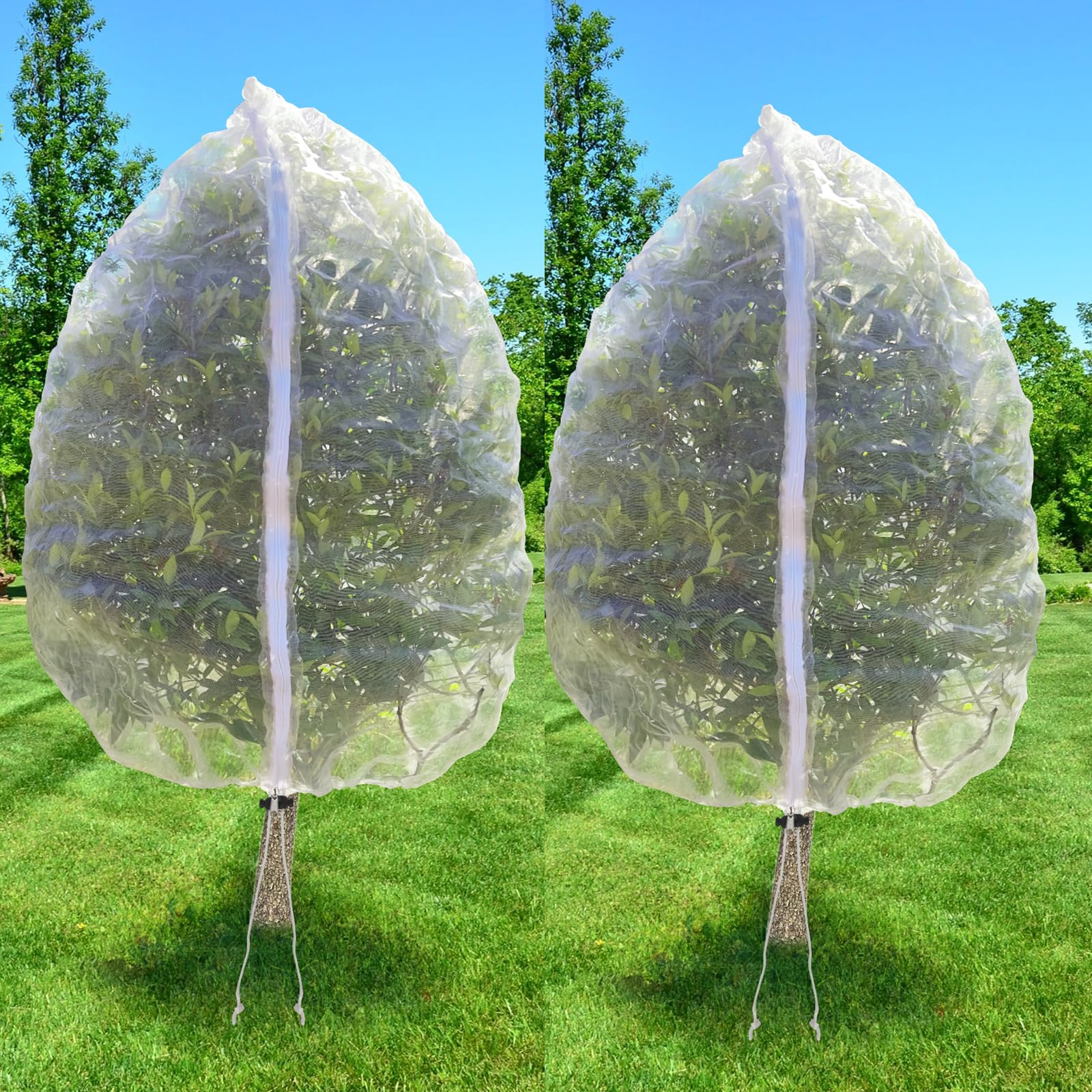
A zippered tent you unzip to harvest — no more wrestling with tangled netting every time.
This is a completely different approach from the big rolls. You get two 10×10 ft bags made of HDPE with a full zipper and an adjustable drawstring at the bottom. Instead of draping a sheet and securing the edges, you simply place this bag over a shrub or small tree, cinch the drawstring around the trunk or base, and zip it shut. When it is time to pick fruit or inspect the plant, you unzip the bag, reach in, and zip it back up. The ultra-fine mesh allows sunlight and water through, so you can leave it in place for the whole season.
One buyer with a 4-fruit hybrid tree (nectarine, peach, plum, white peach) reported the 13×13 ft bag was the perfect size to cover the entire canopy. Another reviewer with a large blueberry bush said the zipper made harvesting “easy” and that they were able to fold the bags up for reuse next year. The 10×10 ft size is generous, but buyers do note that if a branch with fruit pushes directly against the bag from the inside, birds can peck through — one owner solved this by using a second netting “tent” over the line of trees as a backup.
Key Advantages
- Full zipper provides instant access for harvesting and inspection without removing the entire net.
- Drawstring bottom seals the base against ground-level pests like rabbits.
- Two bags in the pack give you backup coverage for multiple shrubs or a spare for next season.
Watch Out For
- Birds can punch through the bag where it rests directly against outer fruit — consider an extra layer for high-value crops.
- At 10×10 ft, these are best suited for smaller trees and larger shrubs, not spreading ground covers or long rows.
Reach for these if: You have a few specimen trees or large shrubs you want to protect individually and you value easy harvest access over covering a whole bed.
Skip them if: You need to protect a long hedge row or a large garden area — a roll will be far more practical.
4. Fetanten Garden Bird Netting
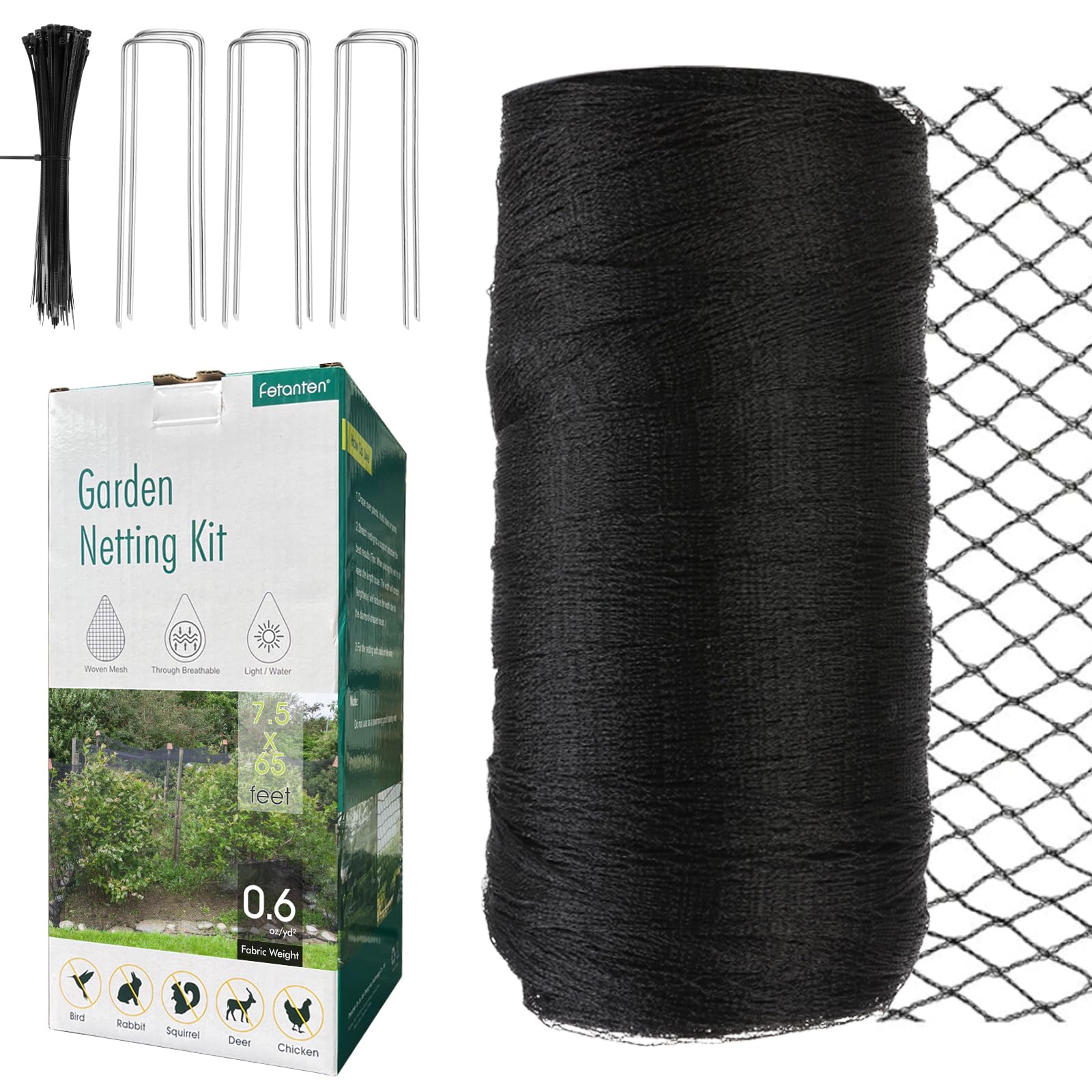
A solid mid-weight roll that buyers praise for keeping deer out through an entire summer.
This 7.5×65 ft roll is made from HDPE with a 5/8-inch woven mesh. It comes with steel landscape staples and twist ties included, which saves you a trip to the store. The mesh weighs 0.6 oz/ft², putting it in the heavier end of standard netting but lighter than the 55 gsm ORIVOGAS. At 2.75 pounds, it is notably lighter than the 3.6-pound ORIVOGAS roll, making it easier to handle for a single person, and it covers the same 7.5×65 ft area as the Vocray netting. The manufacturer describes it as UV-proof and rot-resistant, so it can sit in the sun all season without getting brittle.
Buyers have good things to say about its real-world performance. One reviewer noted it “kept out the deer” from their tomatoes and made it through the whole summer, ready for a second season. Another wrote that it “worked great for strawberries” and that they are now using the same netting for black raspberries, noting it holds up with “no rips and no holes.” One honest 4-star review points out that while it is excellent bird netting, it will not stop squirrels or rats, which can chew through it — so if your problem is rodents, not deer, this is not the answer.
What Shines
- Steel staples and twist ties are included, making it a true ready-to-install kit.
- Light enough at 2.75 pounds to handle alone, but strong enough to last multiple seasons according to reviewers.
- UV-proof and rot-resistant HDPE construction holds up under direct sun and winter cold.
What to Know
- Length and width change noticeably when you pull it tight — you may need to cut extra length to reach your desired dimensions.
- Not effective against rats or squirrels, which can tear and chew through the mesh.
Best for: Gardeners who want a complete netting kit with hardware included for covering vegetable patches, berry bushes, and flower beds against deer and birds.
Not for: Shrubs that need protection from rodents or raccoons, which will chew through this woven material.
5. OZMI 4 Pack Fruit Tree Netting Cover
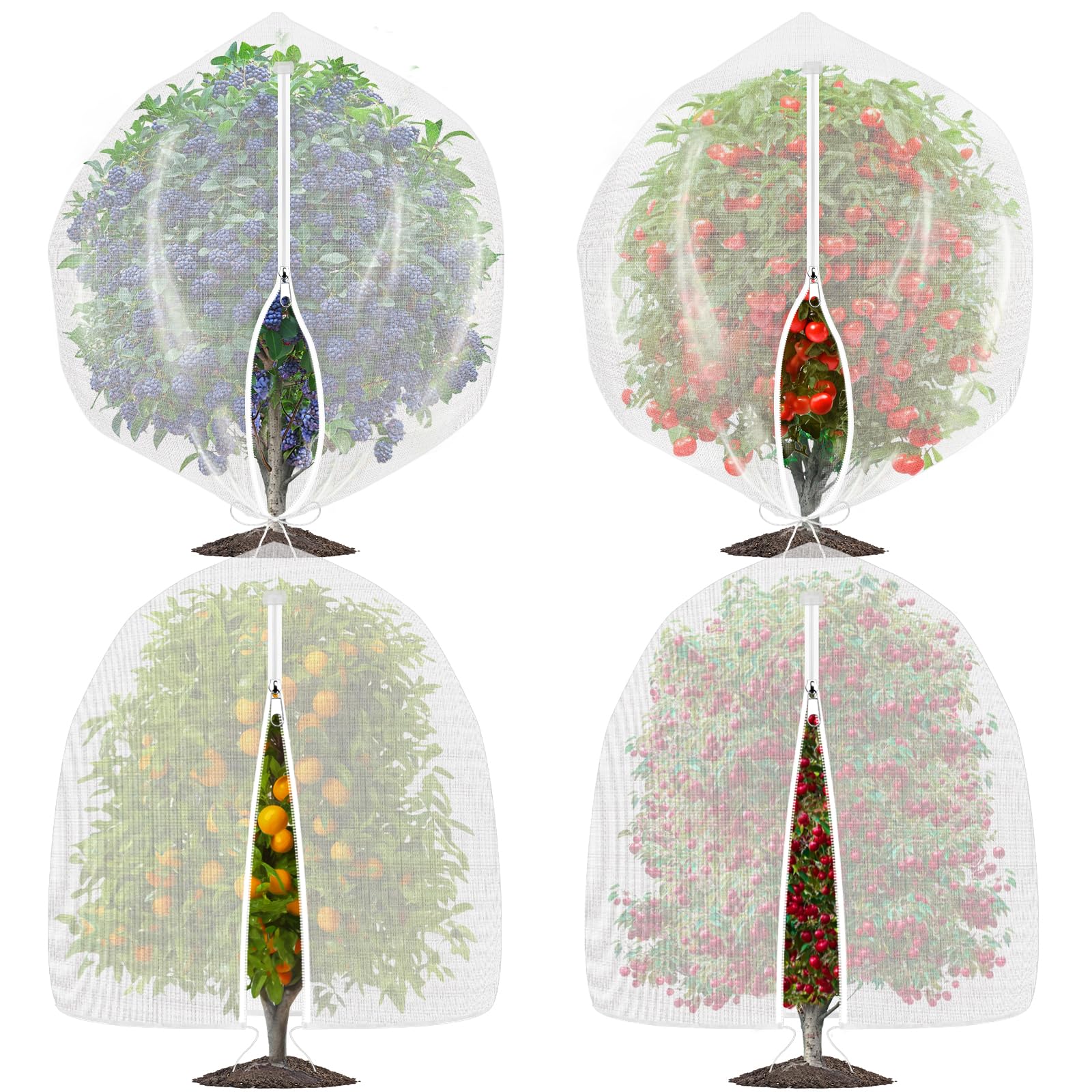
Four individual zip-up covers that protect multiple shrubs without tangling.
The OZMI pack gives you four separate netting bags, each measuring 4 ft by 5 ft, with a zipper and a drawstring at the bottom. This is the same bag-style concept as the RMBHM product, but in a smaller size and a larger quantity. Each bag weighs in at 0.95 kilograms total, so each individual bag is light enough to place over a bush in seconds. The ultra-fine mesh is made from lightweight, washable polyethylene, and the bottom drawstring cinches tight around the base of the plant to block ground-level entry. At a premium price point, you are paying for the convenience of having four ready-to-use covers rather than one big roll you have to cut and hem.
Reviewers are enthusiastic. One buyer called them “thick netting” that “won’t tear,” and another said the zipper allowed them to pick blueberries without damaging branches or knocking off fruit. A 5-star reviewer mentioned the drawstring bottom seals out bugs and birds effectively, and they were so satisfied they ordered another set of 4. At 4×5 ft, these bags are best for smaller shrubs, blueberry bushes, or dwarf fruit trees — larger specimens may need the 10×10 ft RMBHM bags instead.
Pros
- Four bags in one pack let you cover multiple shrubs immediately with no cutting or measuring.
- Zipper provides easy access for harvesting without removing the entire cover.
- Drawstring bottom seals the net against the ground, stopping deer from rooting underneath.
Cons
- Each bag is only 4×5 ft, so it will not fit large shrubs or small trees.
- Premium cost per square foot compared to buying a roll of netting.
Who it fits: Anyone with several smaller shrubs, blueberry bushes, or potted plants who wants a tidy, instant solution that lets them water and harvest without removing the net.
Who it doesn’t fit: Gardeners covering large hedges or long rows — you will run out of bags fast and spend more per plant than a roll would cost.
6. codree 3 Pcs Deer Netting for Shrubs

A three-pack of drawstring covers that blends protection with frost defense.
These are fabric-style covers, not woven mesh netting. Each of the three covers measures 7.8 x 7.8 ft and is made from a soft, non-woven plastic material that the manufacturer says offers air permeability and frost protection. The drawstring design lets you cinch the bottom tight against the trunk or base of the shrub. Unlike the HDPE netting in the other products, this material is more like a thin fabric sheet, and its primary purpose is to keep cold air out and protect plants from frost, snow, and heavy rain in addition to deterring deer and birds.
The codree covers are the lightest in the roundup at 0.48 kilograms per set — a 3.0x weight difference compared to the 1.45 kg Vocray netting. That lightness makes them easy to toss over a bush in seconds, but it also means they are less sturdy. Buyer experiences are split. One 5-star reviewer confirmed the nets work, saying they “blend nicely into the garden while keeping the deer from nibbling the bushes.” Another reported “deer attempted to access shrubs but moved on.” But a 1-star review calls them a “lousy piece of trash,” noting the netting arrived crumpled and tangled with frayed ties, and the openings were too large for deer protection. This inconsistency in quality control is the main risk.
What Works
- Three large covers (7.8×7.8 ft each) give you broad coverage for the money.
- Drawstring base cinches tight, and the fabric offers frost and weather protection, not just pest deterrence.
- At 0.48 kg total, these are the lightest and easiest to handle in the lineup.
The Risks
- Non-woven plastic material is less durable than HDPE and prone to tangling and fraying, per some buyer reports.
- Quality control is uneven — some units arrive damaged or with holes too large to stop deer effectively.
Consider these if: You need a quick, low-cost solution for a few shrubs and you value frost protection just as much as deer defense — and you are willing to accept some quality risk.
Look elsewhere if: You need a durable, long-term netting that will withstand wind and repeated use, or if your deer pressure is heavy — the inconsistency in build quality makes this a gamble.
Understanding the Specs
Mesh Size
This is the size of the individual holes in the netting, usually given in inches. The smaller the number, the tighter the weave. For deer, a mesh of 5/8 inch or less is what you need — it stops a deer’s nose from poking through to grab a bite. A 5/8-inch mesh like the one on the Vocray netting also blocks most birds and prevents small animals from getting tangled, which is safer for wildlife.
Material Weight (gsm / oz/ft²)
Grams per square meter (gsm) or ounces per square foot tell you how dense the fabric is. A 55 gsm netting, like the ORIVOGAS option, is thick, tear-resistant, and will stand up to wind and animal pressure for years. Lighter netting in the 0.2-0.4 oz/ft² range is much more fragile and prone to tearing, especially if a deer pushes hard against it. Higher weight means longer life but also heavier handling.
HDPE vs. Non-Woven Plastic
High Density Polyethylene (HDPE) is a woven plastic that resists UV rays, rot, and tearing. It is the standard for long-term deer netting because it stays flexible in cold weather and does not get brittle in the sun. Non-woven plastic fabric, like the material used in the codree covers, is lighter and can offer frost protection, but it is far less durable and more likely to tear or fray at the edges. For season-after-season use, look for HDPE every time.
Roll vs. Bag-Style Netting
A roll of netting gives you a continuous sheet that you cut and drape to fit any shape, which is the most flexible and cost-effective for large areas or irregular hedges. Bag-style netting comes in fixed dimensions with a drawstring or zipper at the bottom, designed to fit over a single shrub or small tree. Bags are quicker to install and remove, and the zipper allows you to harvest fruit without removing the net. The trade-off is that you need one bag per shrub, so costs add up for larger gardens.
FAQ
Will 1/2 inch mesh stop deer?
Can deer netting protect shrubs from frost too?
How do I attach deer netting to the ground?
Is HDPE netting safe for birds and small animals?
How long does deer netting last outdoors?
Can I cut a 7.5×65 ft roll down to a smaller size?
Does deer netting stop rabbits and groundhogs?
Which is better for a single shrub — a bag or a roll?
Will heavy rain or snow damage deer netting?
Final Thoughts: The Verdict
For most buyers, the deer netting for shrubs winner is the ORIVOGAS Deer Fence Netting because its 55 gsm HDPE construction gives you the toughest barrier with the longest lifespan, and the included stakes and ties mean you can set it up the day it arrives. If you want the tightest possible mesh to also stop small birds and keep animals from getting tangled, grab the Vocray 7.5×65 Ft Deer Netting with its 1/2-inch weave. And for individual shrubs or small trees where you want easy harvest access, the RMBHM 2Pack Fruit Tree Netting Bags with their zippers and drawstrings are the easiest option.
How We Picked
We do not accept paid placement. Every pick is matched to a real buyer and a real use-case; we do not hands-on test units.
Sources & Methodology
Specifications: manufacturer listings and product documentation. Review insights: verified customer reviews, as of July 2026. Pricing: not shown on this page (it changes often); check the current price via the retailer link.
As an Amazon Associate, Lawn Gear Lab earns from qualifying purchases. This does not affect which products we feature.