
Specs are compiled from manufacturer listings and verified buyer reviews and can change over time — please confirm the key details on the product page before buying.
A layer of organic material on top of your soil does more for a vegetable bed than almost any other single step — it keeps moisture in, blocks weeds, feeds the living things underground, and shades roots during the hottest part of the day. But every mulch works differently in a kitchen garden: some steal nitrogen from your plants as they break down, others come loaded with weed seeds, and a few can even harm certain plants or pets. The right vegetable garden mulch depends on how fast you want it to rot, how much pest resistance you need, and whether you are covering raised beds, rows in the ground, or containers.
I’m Rikta — the founder and writer behind Lawn Gear Lab. This guide is built by comparing the manufacturers’ published specifications and the patterns across verified customer reviews, so you get each pick’s real strengths and trade-offs instead of marketing spin.
Below you will find six natural mulches that earn their place in a vegetable garden, from longleaf pine straw and clean wheat straw to coco coir products and cedar granules — each one offers different benefits for soil health, moisture retention, and pest control depending on your garden’s specific needs.
Our Picks at a Glance

How To Choose The Best Vegetable Garden Mulch
Vegetable garden mulch is different from the dyed wood chips you put around a foundation. It has to be clean enough not to introduce weed seeds, balanced enough not to rob your plants of nitrogen, and light enough to remove or till in at the end of the season. The three factors below will help you pick the right one.
Decomposition Speed and Soil Impact
Some mulches — like wheat straw — break down fast and add organic matter and carbon to the soil by the next spring. Others — like pine straw or cedar chips — decompose slowly, so they last through a long growing season. The trade-off is that fast-breaking mulches feed soil life quicker but need refreshing sooner.
Seed and Debris Purity
A mulch full of weed seeds or bark chips can create more work than it saves. Look for products described as “thoroughly cleaned,” “screened,” or “naturally filtered” in the description. A few stray grass seeds may still show up, but a well-filtered mulch cuts down the weeding dramatically.
Moisture Retention and Airflow
The best vegetable garden mulches hold water like a sponge while still letting air reach the soil surface. Coco coir products are famous for their high cation exchange capacity (CEC) — they grab onto water and nutrients and release them slowly. Pine straw and wheat straw also create a breathable mat that slows evaporation without suffocating the roots.
Quick Comparison
| Model | Best For | Coverage | Weight | Material | Amazon |
|---|---|---|---|---|---|
| Longleaf Pine Straw Roll★ Best Overall | Low-maintenance perennial beds | Covers up to 125 sq ft | — | Longleaf pine needles | Amazon |
| HealthiStraw GardenStrawAlso Great | All-purpose vegetable beds | 3 cu ft (covers up to 100 sq ft at 2–3″) | 6.71 kg | Wheat straw | Amazon |
| GROW!T JSCC2 Coco Coir Chips | Tropicals and container top-dressing | 0.05 Cubic Meters | 5.2 Pounds | Coco coir chips | Amazon |
| Plantonix Coco Coir Bricks (6-Pack) | Seed starting and raised-bed mix | 12.5 Gallons | 8.4 Pounds | Coco coir | Amazon |
| GranuCide Cedar Granules | Pest-repellent perimeter mulch | 1 Bag (8 lbs) | 8 Pounds | Cedar wood | Amazon |
| Hull Farm Cocoa Bean Shell Mulch | Fragrant flower-bed mulch | 2 Cubic Feet | 12.72 Kilograms | Cocoa bean shells | Amazon |
In‑Depth Reviews
1. Longleaf Pine Straw Roll
Our pick — over 4★ from 900+ verified ratings; the strongest balance of quality and price.
Premium longleaf needles that make garden beds look manicured and stay put in heavy wind.
For a tidy, long-lasting bed that shrugs off storms, the Longleaf Pine Straw Roll is the better pick than the HealthiStraw wheat straw — it lasts longer and looks more polished. Native to the Southeastern states, longleaf pine straw has extremely long needles — approximately 14 inches — which makes it the preferred ground cover for landscapers, golf course superintendents, and homeowners. This roll covers up to 125 square feet and is listed as organic and natural. Unlike the short, stubby needles that wash away in a rainstorm, longleaf needles tangle together into a self-anchoring mat that withstands wind and rain well — one buyer in the Midwest confirmed it holds up through their weather.
Owners mention the product is “very clean with no sticks or thorns,” and that “it does not have sticks in it and things don’t stab you” — a real comfort when you are hand-spreading. The catch is that coverage can be inconsistent per bale compared to the HealthiStraw wheat straw, which comes compressed and predictable. If you are covering a large flat vegetable row, the pine straw looks tidier than straw but costs more per square foot. It is better suited for perennial beds and ornamental borders than for rapid-turnover annual vegetable patches.
Why it stands out
- 14-inch needles lock together naturally against wind and rain
- Buyers praise how clean it is — “no sticks or thorns”
- Lasts longer than wheat straw before breaking down
Things to weigh
- Inconsistent bale size — some rounds come with fewer needles
- More expensive per square foot than most straw mulches
Best for the gardener who values looks and longevity: This is the mulch you choose when you want a tidy, long-lasting bed that shrugs off storms.
Not ideal for annual vegetable turnover: It decomposes slowly, so if you till your beds each spring, the pine needles will still be there.
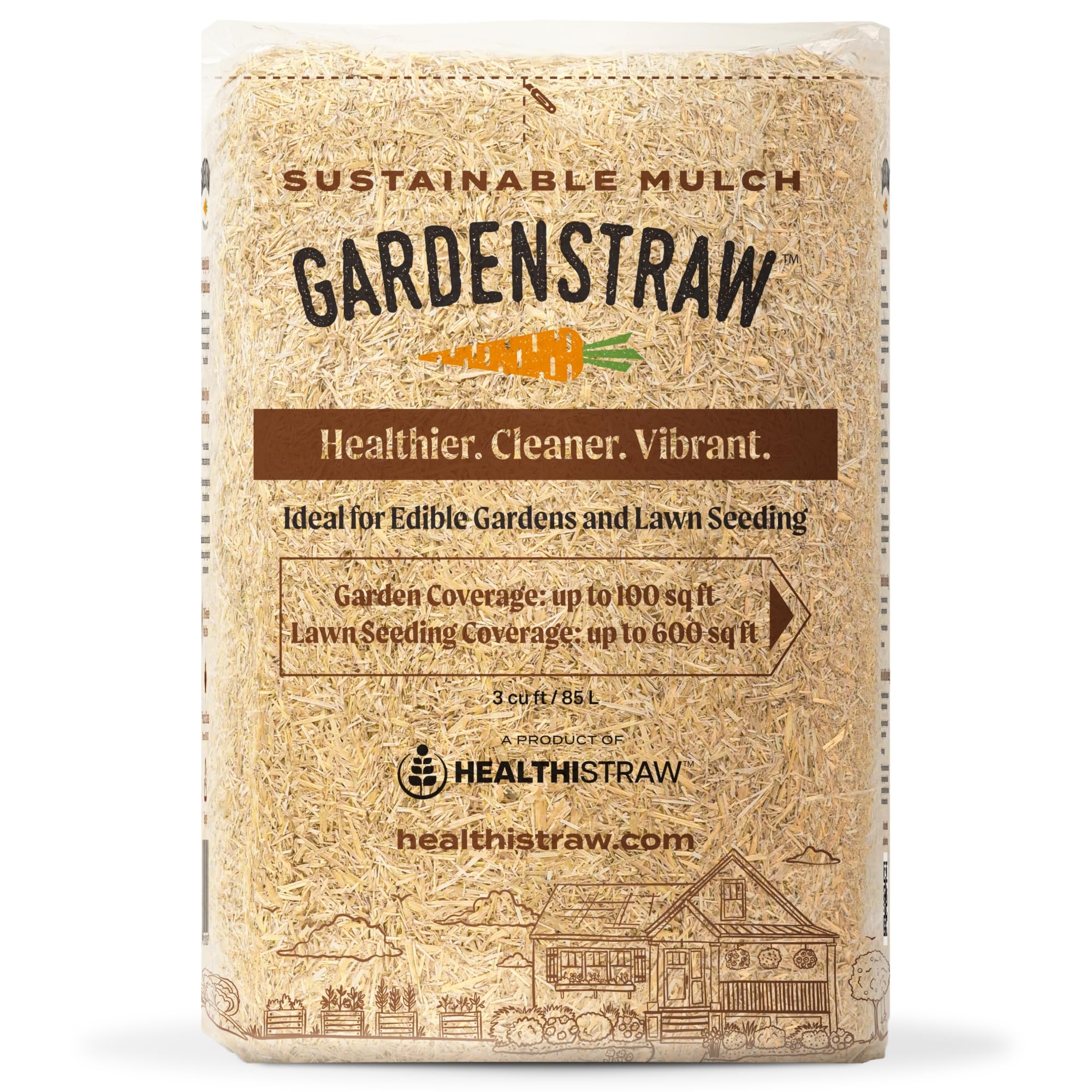
2. HealthiStraw GardenStraw, 3 cu ft
The cleanest wheat straw you can buy, purpose-built for vegetable beds and raised gardens.
If you want a mulch that locks in water and feeds the soil without sprouting a crop of weeds, HealthiStraw GardenStraw is the pick. It is a 3 cu ft compressed bale of all-natural, non-GMO (genetically modified organism-free) wheat straw that is naturally filtered to remove dust, dirt, and as many seeds as possible. The maker claims it can reduce watering needs by up to 50% — that figure matches what the data says about straw’s ability to slow evaporation and keep soil cool. One reviewer noted it “keeps plants from drying out in heat” and reported “no wheat seed germination,” which is a huge relief after dealing with straw bales that turn your garden into a wheat patch.
The straw fibers are cut in a way that helps them interlock when watered, so the layer stays in place against wind and rain without chemical binders. That makes it a better pick for sloped beds than loose pine needles or light cocoa shells. It is also compost-friendly — the used straw breaks down quickly and adds carbon to the pile. Unlike the Longleaf Pine Straw Roll, which buyers report can have “inconsistent coverage per bale,” this bale has consistent volume and expands to cover up to 100 sq ft at a 2–3″ layer.
Garden-ready and seed-conscious: Worth the premium over a plain barn bale because it saves the chore of running straw through a wood chipper and dealing with the mess afterward — one buyer mentioned exactly that, calling it “money well spent.”
For most vegetable gardens, this is the one to beat: You get a clean, fast-decomposing mulch that won’t introduce weed seeds and actually helps the soil. That said, a few buyers still spotted grass seeds in their bale, so “no seeds” is a strong claim — but far fewer than any farm-store straw.
3. GROW!T JSCC2 – Organic Coco Coir Planting Chips

Chunky coco chips with zero dust and built-in fungus and mold resistance for tropicals and containers.
Reach for the GROW!T JSCC2 Coco Coir Chips when you mulch tropicals or humidity-loving plants — its chunky texture and dust-free nature make it the best option for indoor-outdoor container gardens. This is a compressed 5.2-pound block of OMRI Listed (Organic Materials Review Institute-approved) organic coco coir chips that expands to 0.05 Cubic Meters when hydrated. It is chunkier than the fine coir bricks below, which makes it a better top-dressing for potted tropicals and a decent ground cover for outdoor beds. One reviewer called it “the only mulch brick so far that has been zero dust” — a big deal if you are working indoors or breathing near the bag. The same buyer noted it had “no foreign plant particles and only a couple small pieces of plastic,” which is better than many competing bricks.
The chips retain water and resist fungus and mold, so they work beautifully as a mulch for high-humidity environments or snake enclosures. Compared to the Plantonix Coco Coir bricks, this block is twice the unit count at 144.0 Ounce versus 135.0 Ounce, but it is heavier to carry at 5.2 Pounds and coarser in texture. The trade-off is that it is “too chunky,” in one buyer’s words, “for tilling in as an aerator” — this is strictly a mulch and container medium, not a fine seed-starter.
Chunky, clean, and versatile
- Zero dust — unique among coir bricks buyers have used
- Holds humidity well without developing mold
- OMRI Listed organic
Consider these limits
- Too coarse for seed starting or soil aeration
- Weighs 5.2 Pounds — similar price to fine coir but denser per ounce
Reach for it when you mulch tropicals or humidity-loving plants: The chunky texture and dust-free nature make it the best option for indoor-outdoor container gardens and reptile bedding.
Look elsewhere if you need a fine seed-starter mix: The Plantonix bricks below will serve you better for seedling trays and raised-bed blending.
4. Coco Coir 650gm Bricks (6-Pack) by Plantonix

Pre-rinsed, pre-screened coco coir bricks that expand in minutes and yield over 12 gallons of fluffy mulch.
For the budget-conscious vegetable gardener who also starts seeds, the Plantonix Coco Coir 6-Pack is the most versatile coco product here — and the 6-brick format makes it easy to use only what you need. This 6-pack of 650gm bricks weighs 8.4 Pounds total and expands to 12.5 Gallons of coco coir. The maker says every block is screened through an extremely small filter to remove fiber, sand, and rocks — one buyer confirmed the product was “pretty clean” and found only one piece of plastic in the whole box. Another reviewer reported that one brick “made just over 12 gallons of coco noir” and hydrated “minutes” — much faster than the bricks they were used to, which required overnight soaking or knifing.
Unlike the GROW!T chips, this coco coir is a fine-grade mulch that works as a seed-starter mix, a soil amendment for raised beds, or a top-dressing for vegetables. One buyer used a 3:2:0.5:0.5 ratio — three parts coco coir, two parts compost, half vermiculite (a mineral that holds moisture), half perlite (a volcanic glass that improves drainage) — and called it a great building block for raised-bed soil. The texture and speed of expansion make it a better value than the 5.2-pound GROW!T block, especially if you need a fine, uniform mulch rather than chunky chips.
Fast, clean, and generous: “Expanded super fast” is the refrain in the reviews, and the 6-brick format lets you use only what you need — each brick makes roughly 2 gallons, so you can hydrate one at a time.
Best for the budget-conscious vegetable gardener who also starts seeds: This dual-purpose mulch is the most versatile coco product here, and the six-pack packaging makes it easy to portion.
On the downside: It is a fine coir, not chunky — if you want a coarse top-dress for orchids or tropicals, the GROW!T chips above are the better fit.
5. GranuCide Cedar Granules, 8 lbs
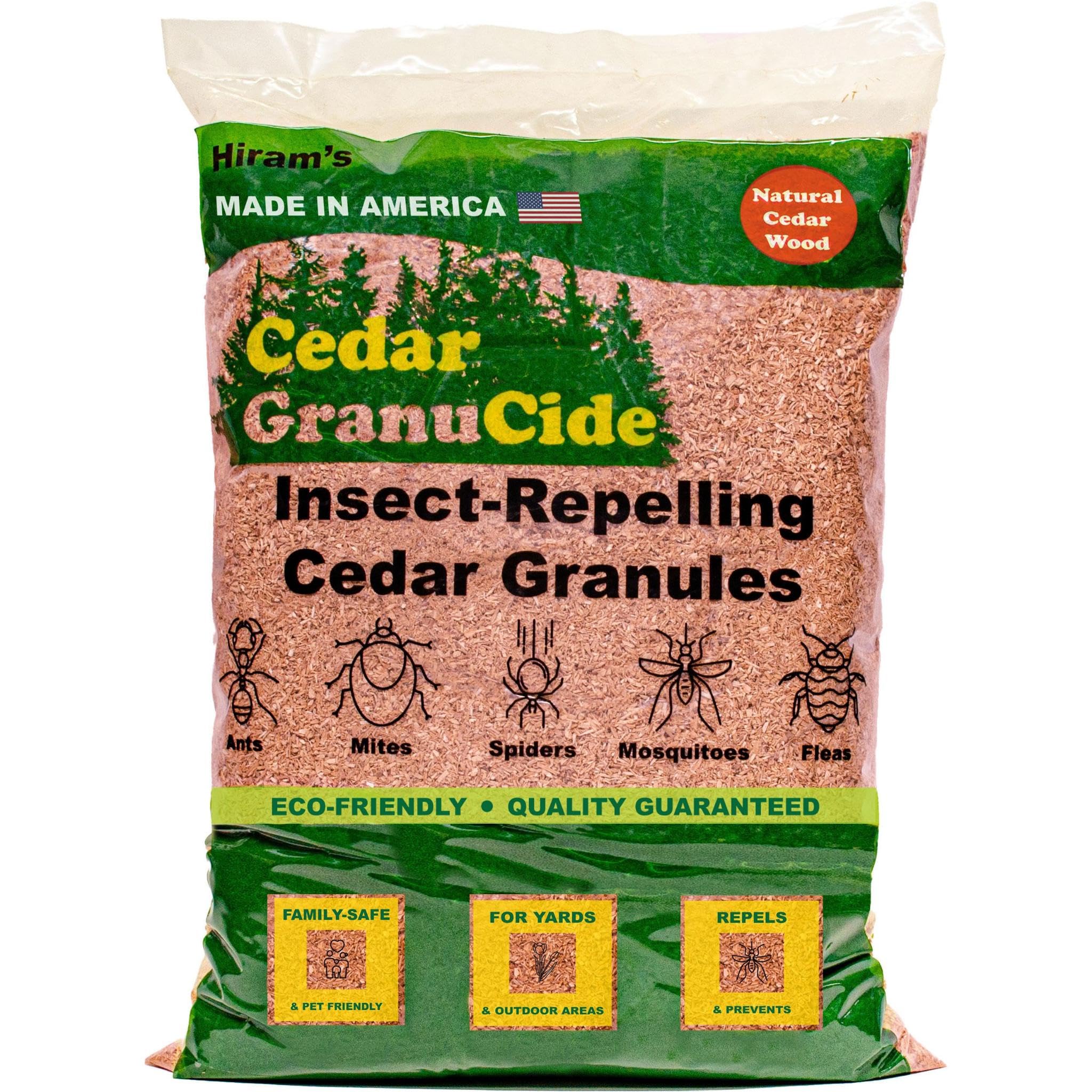
100% untreated cedar granules that smell great and naturally send ants, spiders, and mosquitoes packing.
If you are fighting ants, spiders, and mosquitoes without chemical sprays, GranuCide Cedar Granules is your pick — it doubles as a natural insect barrier and looks tidy doing it. This 8-pound bag of untreated cedar granules works as a dual-purpose product: it serves as a decorative, water-saving mulch while also emitting an aromatic vapor that deters a wide range of insects, including mosquitoes, ants, spiders, chiggers, and garden pests. One buyer called it an “amazing natural repellent product that works for our family” and appreciated that it was safe for pets. Another reviewer noted a “noticeable pest reduction but not total elimination” — a more honest take that matches the data’s claim of “reduced bugs” rather than eradicated.
The granules are easy to spread with a grass seed spreader, though a few buyers reported the granules can clump in high humidity. Unlike the HealthiStraw wheat straw, which feeds the soil as it breaks down, cedar decomposes very slowly — so this is not a product you choose for soil fertility. It is better thought of as a perimeter defense mulch for the areas around your garden beds: pathways, patio borders, and around the foundation of your home. The 16 x 4 x 24-inch bag covers moderate ground; you will need multiple bags for large vegetable rows.
Aromatic and effective perimeter mulch: “Safe for pets and family” is a repeated theme in the reviews, and the cedar scent is pleasant without being overpowering — one buyer called it “non-overpowering.”
Best for the gardener fighting ants, spiders, and mosquitoes without chemical sprays: This is your pick if you want a mulch that doubles as a natural insect barrier and looks tidy doing it.
Not a mulch for feeding the soil: Cedar barely breaks down in a season, so it adds no organic matter — pair it with a fast-decomposing mulch like wheat straw in the actual beds.
6. Hull Farm Cocoa Bean Shell Mulch, 2 cu ft

Chocolate-scented shells that hold moisture like a sponge — but come with serious safety caveats.
For the gardener with absolutely no dogs and a love for chocolate aroma, the Hull Farm Cocoa Bean Shell Mulch offers the best moisture-holding mulch with a sensory treat. This 2-cubic-foot bag of cocoa bean shell mulch has an approximate fertilizer value of 2.5-1-3 (2.5% nitrogen, 1% phosphorus, 3% potassium) and will not burn vegetation. Buyers rave about the smell — “smells heavenly if you think chocolate is heaven” — and one long-time user noted that “it holds moisture better than any other mulch I’ve ever used.” The shells form a lightweight blanket that, once watered in, sticks together and resists blowing away. A buyer from Las Vegas uses it as a cushion for container plants and loves how the cocoa smell transforms her courtyard.
The data carries a major concern: one buyer’s bag indicated that the cocoa mulch should not be used amidst flowers — information that was not available at purchase. Another buyer mentioned “don’t leave your bag outside because critters think it smells good too.” Dogs are specially attracted to the chocolate scent, and cocoa bean shells contain theobromine (the same compound in chocolate that is toxic to dogs if ingested in large amounts). For these reasons, this product is best reserved for fenced flower beds or areas where pets and dogs cannot access it freely. If you have a dog that roams the garden, skip this pick entirely and go with the GranuCide Cedar Granules instead.
What makes it special
- Chocolate aroma that buyers genuinely love during the first week
- Holds moisture better than most mulches — a repeated buyer observation
- Lightweight and easy to spread, forms a blanket after watering
Critical warnings to know
- Can be toxic to dogs — do not use where they roam freely
- Not recommended for use amidst flowers (per bag labeling)
- Very lightweight and can blow away before it is watered in
For the gardener with no dogs and a love for chocolate aroma: If you have a contained, pet-free garden space and want the best moisture-holding mulch with a sensory treat, this is the unique choice.
skip it if you have dogs or need a flower-safe mulch: The toxicity risk and the flower-caution label mean this is a niche product — most vegetable gardeners will be happier with the HealthiStraw or coco coir options above.
Understanding the Specs
Coverage Area
The most practical number on the bag: how many square feet one unit will cover at the recommended depth. A 3 cu ft bale of the HealthiStraw wheat straw covers up to 100 sq ft at a 2–3″ layer, which is a typical vegetable-bed depth. The Longleaf Pine Straw Roll covers up to 125 sq ft. Always compare coverage on the same depth — a bale that says “covers 600 sq ft” is likely for a very thin lawn-seeding layer (¼”), not for a 3-inch garden mulch.
Material Purity
The single biggest complaint across mulch reviews is weed seeds, sticks, and plastic bits. Terms like “naturally filtered,” “pre-screened,” and “thoroughly cleaned” indicate more processing and fewer foreign objects. The Plantonix coco coir bricks boast multiple screenings through an extremely small filter to remove fiber, sand, and rocks. The HealthiStraw wheat straw is naturally filtered to remove dust, dirt, and as many seeds as possible. If you see a product with many reviews mentioning “clean,” that is a good sign for low-maintenance mulching.
Decomposition and Soil Impact
Wheat straw and coco coir break down within a season, adding organic matter and improving soil structure. Pine straw and cedar decompose much more slowly, so they last longer but do not feed the soil as quickly. Cocoa bean shells have a fertilizer value of 2.5-1-3 (nitrogen-phosphorus-potassium) and will not burn vegetation. The right choice depends on if you want a seasonal mulch that enriches the soil for the next planting or a long-lasting cover that stays in place for years.
Safety and Pet Concerns
Cocoa bean shells contain theobromine, the same compound in chocolate that is toxic to dogs. Cedar products like GranuCide are 100% untreated and considered safe for pets — one reviewer described it as “pet- and family-friendly.” Pine straw and wheat straw have no known toxicity issues, but any mulch can harbor mold or fungus in very humid conditions. If you have dogs that dig or eat garden material, stick with straw, pine needles, or cedar.
FAQ
Can I use regular wood chips as vegetable garden mulch?
Will pine straw make my soil too acidic for vegetables?
How often should I replace vegetable garden mulch?
Is cocoa bean shell mulch safe for dogs?
Will wheat straw mulch introduce weed seeds into my garden?
How do I expand a coco coir brick?
Can I mix coco coir with my garden soil?
Which mulch is best for vegetable gardens in hot, dry climates?
Is cedar mulch safe for vegetable plants?
How thick should I layer my vegetable garden mulch?
Final Thoughts: The Verdict
For most vegetable gardens, the vegetable garden mulch winner is the HealthiStraw GardenStraw because it combines thorough cleaning, effective moisture retention, rapid soil enrichment, and consistent coverage in one compressed bale. If you want a dual-purpose mulch that repels pests naturally, grab the GranuCide Cedar Granules for the perimeter of your beds. And for seed starting and raised-bed mixing on a budget, the standout is the Plantonix Coco Coir 6-Pack — it expands fast, stays clean, and gives you the most usable material per dollar.
How We Picked
We do not accept paid placement. Every pick is matched to a real buyer and a real use-case; we do not hands-on test units.
Sources & Methodology
Specifications: manufacturer listings and product documentation. Review insights: verified customer reviews, as of July 2026. Pricing: not shown on this page (it changes often); check the current price via the retailer link.
As an Amazon Associate, Lawn Gear Lab earns from qualifying purchases. This does not affect which products we feature.