
Specs are compiled from manufacturer listings and verified buyer reviews and can change over time — please confirm the key details on the product page before buying.
Spider mites are tiny sap-suckers that can turn a thriving plant into a brittle, webbed mess in a week. The right spray breaks the cycle at egg, larva, and adult stages so you are not re-spraying every few days for months. This guide focuses on the proven formulas that actually deliver knockout results — from gentle organic options to professional-grade miticides that tackle resistant populations.
I’m Rikta — the founder and writer behind Lawn Gear Lab. This guide is built by comparing the manufacturers’ published specifications and the patterns across verified customer reviews, so you get each pick’s real strengths and trade-offs instead of marketing spin.
Whether you are defending indoor houseplants, a vegetable garden, or a greenhouse full of ornamentals, choosing the right product matters. If you need something that works fast and keeps working, here is the breakdown of the best spider mite control for every situation and budget.
Our Picks at a Glance

How To Choose The Best Spider Mite Control
Spider mites reproduce fast — a single female can lay hundreds of eggs in a couple of weeks. That means your spray needs to kill both the living mites and the eggs that hatch later. Here is what to look for when you compare products.
Active Ingredient and Mode of Action
The active ingredient determines how a product kills and how long it lasts. Botanical oils like neem oil extract smother mites and eggs on contact, while synthetic miticides like abamectin (the active in Avid) move through the leaf to protect areas the spray does not directly hit. Rotating between different modes of action prevents mites from developing resistance.
Ready-to-Use vs. Concentrate
Ready-to-use sprays come pre-mixed in a bottle and are convenient for a few houseplants or a small garden bed. Concentrates let you mix only what you need and stretch a single bottle into multiple gallons, which is more economical for large gardens or repeated applications. Pay attention to the liquid volume and the unit count listed on the label so you know exactly how much coverage you are buying.
Reapplication Schedule
Most spider mite sprays require repeat applications to catch the next generation of eggs as they hatch. Some products recommend a 7-14 day schedule, while others suggest spraying every 3-4 days for a month during an active outbreak. Choose a product whose schedule fits how much time you can realistically spend on treatment.
Quick Comparison
| Model | Best For | Liquid Volume | Active Ingredient | Item Form | Amazon |
|---|---|---|---|---|---|
| Fertilome Triple Action★ Best Overall | All-purpose fruit tree & shrub care | 16 fl oz | — | Liquid | Amazon |
| Syngenta Avid 0.15ECAlso Great | Heavy, resistant mite outbreaks | 8 oz | Abamectin | Spray concentrate | Amazon |
| Garden Safe Fungicide3 | Large outdoor gardens | 128 fl oz | Neem oil extract | Liquid | Amazon |
| Eliminator Natural Insecticide | Oil-free indoor flowering plants | 32 fl oz | Citric acid | Liquid concentrate | Amazon |
| Doktor Doom Spider Mite Knockout | Quick knockdown on houseplants | 16 fl oz | Pyrethrin | Liquid | Amazon |
| Hi-Yield 55% Malathion | Stubborn scale and spider mites | 227.3 ml | 55% Malathion | Liquid | Amazon |
| Grower’s Ally Crop Defender 3 | Organic gardens with kids and pets | 24 oz | Botanical oils | Liquid | Amazon |
In‑Depth Reviews
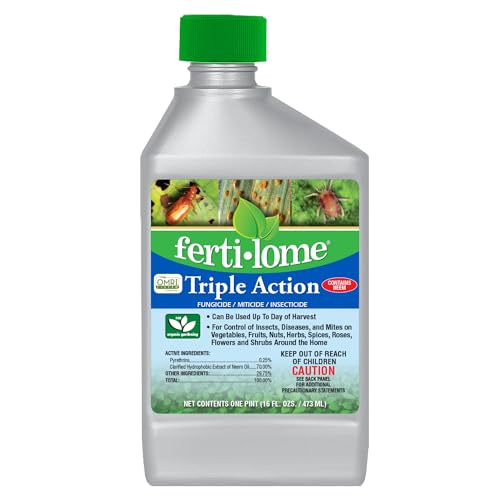
1. Fertilome (12245) Triple Action (16 oz)
Our pick — over 4.5★ from 800+ verified ratings; the strongest balance of quality and price.
The reliable triple-threat for fruit trees, vegetables, and ornamentals alike.
Fertilome Triple Action pulls triple duty as an insecticide, miticide, and fungicide, so you can tackle aphids, spider mites, leafminers, and leafrollers on one hand and powdery mildew, rust, and leaf spot on the other. It is designed for use on fruits, herbs, nuts, spices, vegetables, roses, flowers, and shrubs — essentially the entire edible and ornamental garden. The liquid volume is 16 fluid ounces, which is exactly the same size as the Fertilome bottle but a fraction of the Garden Safe’s 128 fl oz gallon.
Reviewers point out that it fights fungus and lacewings on azaleas in poorly draining beds, and that leaves revived after two applications. One long-time user says they have used this product for years on apple trees with good results. The manufacturer recommends reapplying on a 7-14 day schedule for best results. The item weight is 16 ounces, making it twice the weight of the Hi-Yield 55% Malathion at 8.1 ounces.
The 16 oz size is convenient for a targeted garden sprayer, but some reviewers mention the price has been rising, which makes it less economical for large-scale use than the gallon-sized Garden Safe alternative. It works well when used preventatively as part of a regular spray schedule.
A garden workhorse: Controls insects, mites, and fungal diseases with one bottle, which simplifies your spray routine. The 7-14 day schedule is easy to remember.
Value trade-off: The 16 oz bottle is convenient but not as cost-effective per ounce as the gallon-size Garden Safe option. Rising price has some long-time users reconsidering.
Pick this if: You want one spray for fruit trees, vegetables, and flowers that handles both bugs and fungus, and you prefer a smaller bottle that is easy to carry around the garden.
pass on it if: You have a large garden and need a bigger volume for repeated weekly spraying — the gallon option will last longer and cost less per spray.
2. Syngenta Avid 0.15EC Miticide/Insecticide
The professional-grade miticide that kills even resistant mite populations dead.
When milder sprays fail and spider mites keep coming back, this is the product to reach for. Avid contains abamectin, a potent active ingredient that moves into the leaf tissue (translaminar movement) so it keeps protecting the parts of the plant the spray doesn’t directly hit. One grower of nearly 150 dahlias calls Avid “the best defense against spider mites” and says it needs three applications over a month to break every stage of the pest’s life cycle.
It is extremely concentrated — one reviewer reports using just three drops per liter of water on indoor tomatoes and seeing no recurrence after two weeks. That means the 8 oz bottle will last a hobbyist gardener for a very long time. Unlike the preventatives like neem or spinosad, this one kills mites that have already built resistance, according to a reviewer. The catch is safety: you need full protective gear, including a hazmat suit, goggles, gloves, and a respirator, and you should re-enter the treated area only after four hours. Unlike the Hi-Yield 55% Malathion that weighs 8.1 ounces, the Avid comes in at 9.3 ounces in the bottle.
For a massive infestation on valuable plants — especially ornamentals like dahlias, roses, or indoor tomatoes — this is the miticide that works when nothing else does. You just need to treat it with the care a potent chemical deserves.
Nuclear option, done right: Translaminar action means it works inside the leaf, not just on the surface, so new growth stays protected for weeks. The 8 oz bottle is tiny but extremely concentrated — a drop per liter is enough.
The trade-off: Requires hazmat-level safety gear and a four-hour re-entry wait. Overuse risks resistance, so rotate with another miticide like Floramite or Forbid 4f as reviewers suggest.
Reach for this if: You have a severe, recurring mite outbreak on high-value ornamentals or indoor crops and you are comfortable using full protective gear.
Look elsewhere if: You want a gentle, ready-to-use spray for a few houseplants or have kids and pets that frequently touch treated leaves.
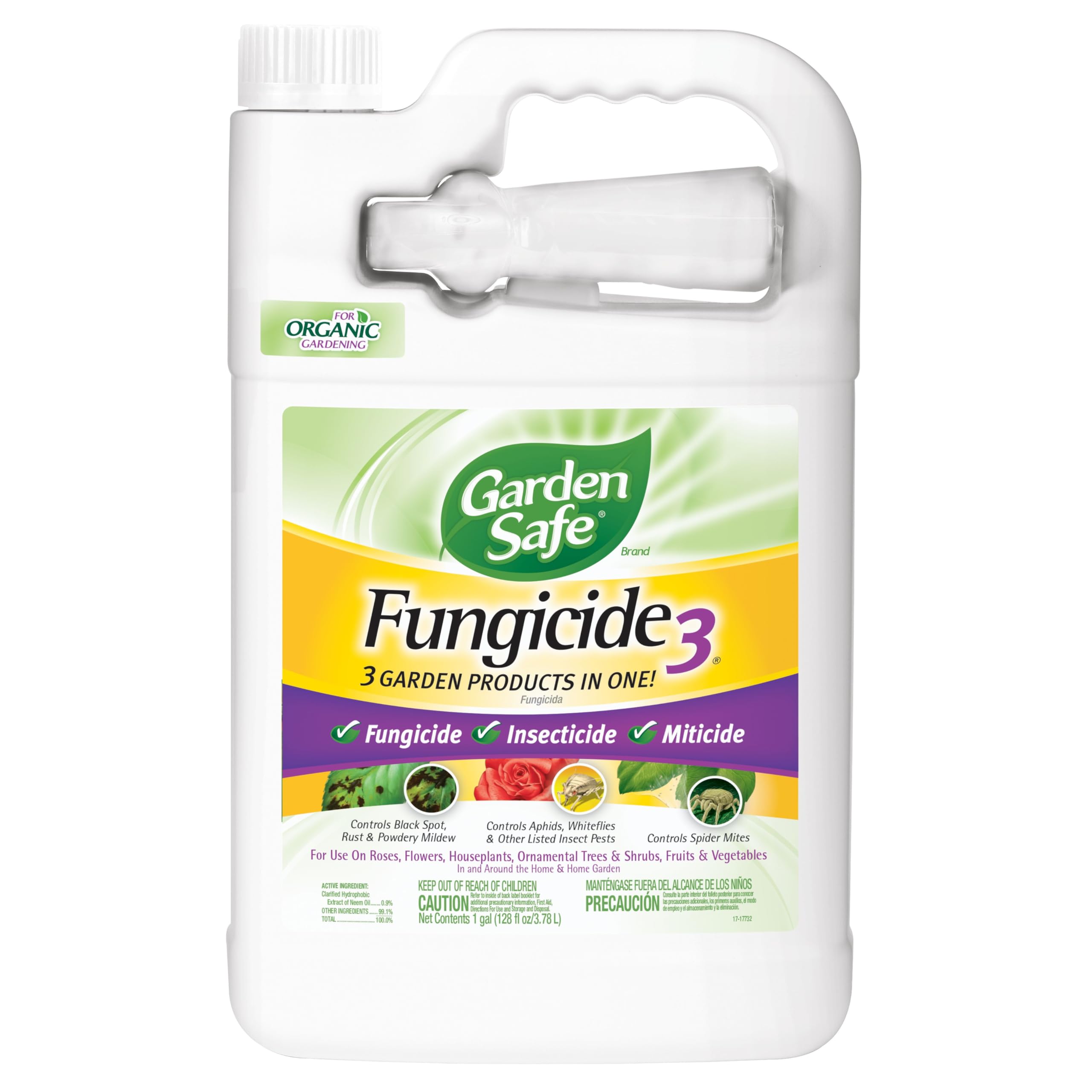
3. Garden Safe Brand Fungicide3, 1 Gallon
A full gallon of neem-oil spray that protects your whole garden for one price.
This is the largest liquid volume in the lineup at 128 fluid ounces (1 gallon), which is eight times the size of the Fertilome Triple Action’s 16 fluid ounces. That makes it a practical choice if you are spraying fruit trees, vegetable beds, roses, and ornamentals all season. The active ingredient is clarified hydrophobic extract of neem oil, which works as a fungicide, insecticide, and miticide all in one — controlling black spot, rust, powdery mildew, aphids, whiteflies, and spider mites.
Buyers report that weekly use during the growing season (except winter) eliminated powdery mildew on hibiscus, roses, tomatoes, and blueberries, and improved foliage and blossoms. One reviewer says it increased their blueberry yield. The attached sprayer is convenient — you do not need to mix anything — though several users mention the short coiled hose on the sprayer is awkward to use and suggest keeping a separate sprayer handy. The product is labeled for organic gardening and meets EPA specifications.
Compared to the Grower’s Ally Crop Defender 3 that comes in a 24 oz bottle, the Garden Safe gallon gives you over five times the volume per bottle. It is a solid all-season companion for anyone who wants one spray that handles fungus and mites without buying separate products.
What stands out
- Full gallon (128 fl oz) covers a large garden for months
- Three-in-one: fungicide, insecticide, and miticide
- Organic-compatible neem oil extract
- Convenient attached sprayer included
What to watch for
- Sprayer hose is short and coiled — awkward to reach distant plants
- Can burn leaves if used in direct sunlight or at too high a concentration
- Neem oil leaves a residue that may affect flower appearance
Best for: Gardeners with multiple beds of fruit, vegetables, roses, and ornamentals who want a single, large-volume spray that covers fungus and mites.
skip it if: You need an oil-free spray for flowering plants late in the season, or you prefer a concentrate for more control over mixing ratios.
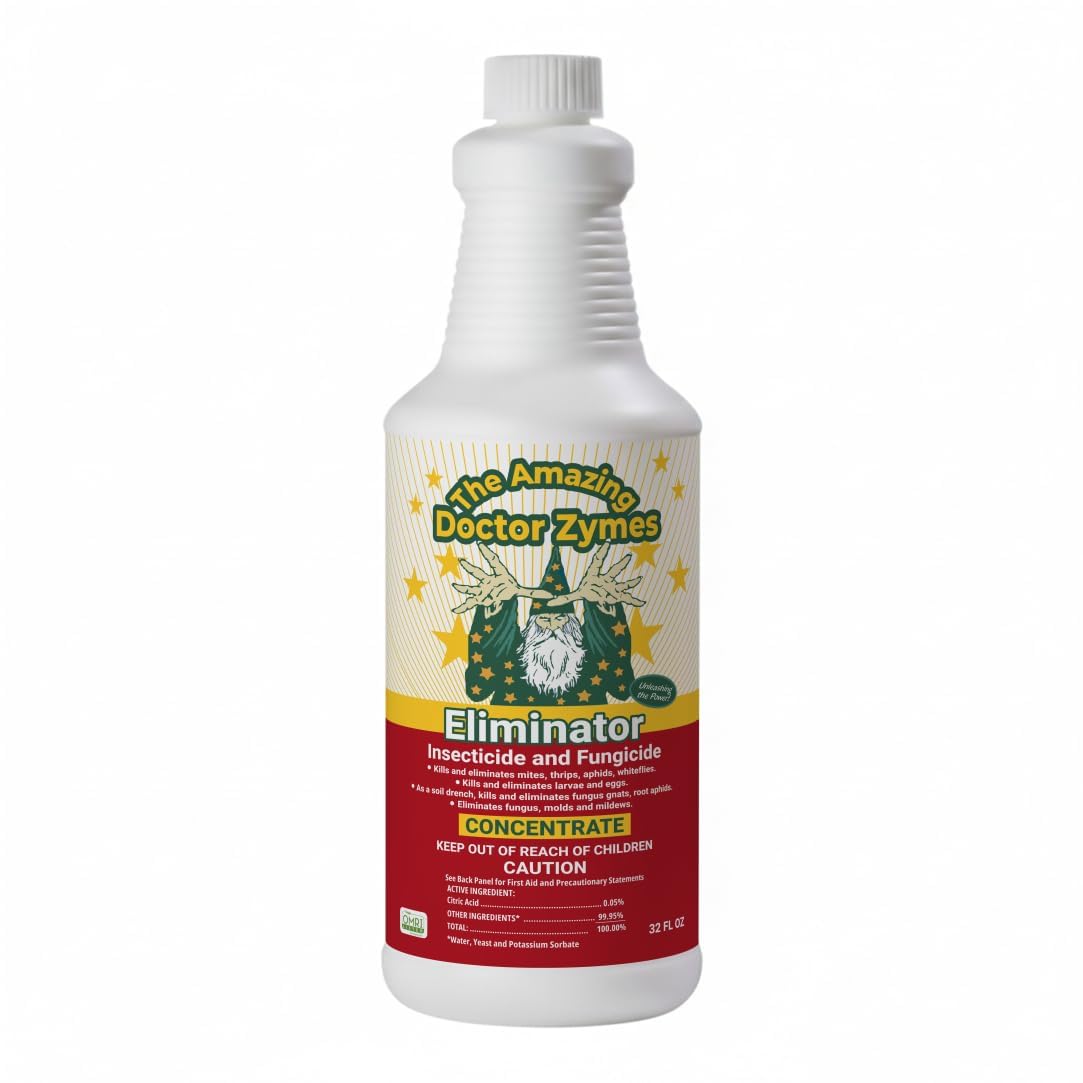
4. Eliminator Natural Insecticide & Fungicide Concentrate
An oil-free concentrate that kills mites without coating your buds in residue.
If you grow flowering plants or vegetables late in the season, oil-based sprays can leave a film on buds and trichomes. The Eliminator uses citric acid as its active ingredient, which makes it oil-free and residue-free — a major advantage for flowering plants. One reviewer notes it is “good stuff for use on your flowering plants in the end of the cycle where you don’t want to put anything oil on your plants.” The product is OMRI Listed for organic use and the manufacturer says it is biodegradable and non-toxic when used as directed.
As a 32 oz concentrate, the manufacturer says one bottle makes multiple gallons of ready-to-use spray. Owners mention it worked on spider mites in indoor gardens as part of a 14-day foliar regimen, with one user reporting no mites for six months after use. Another reviewer successfully used it on dahlias in a raised garden bed and says mites were gone within 24 hours. The catch noted by a reviewer is that it can also kill beneficial insects after the first treatment, so it is not selective — use it only when you have a confirmed mite problem and want to avoid oil residue on flowers.
Unlike the Hi-Yield 55% Malathion that requires heavy protective gear, the Eliminator is designed to be safer around people, pets, and livestock when used as directed. The 32 oz concentrate is heavier in the bottle at 32 ounces compared to the Syngenta Avid at 9.3 ounces, but it makes more total spray volume.
Ideal for late-season flowering plants: The citric acid formula leaves no oily residue on buds, so you can spray right up to harvest without ruining the flower quality.
The trade-off: Not selective — it kills beneficial insects too. Use it as a targeted treatment rather than a weekly preventative.
Choose this if: You grow flowering crops (dahlias, tomatoes, cannabis) and need a mite spray that won’t coat buds in oil. Also good if you prefer an OMI-listed organic option.
Pass on this if: You want a broad-spectrum spray that spares ladybugs and other beneficials, or you prefer a ready-to-use formula you don’t have to mix.
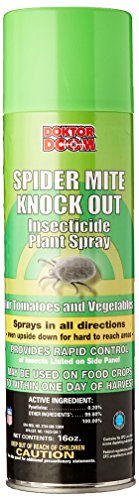
5. Doktor Doom Spider Mite Knockout, 16-Ounce
Immediate knockdown on contact — mites fall off before you finish spraying.
When you see fine webbing on your Meyer lemon tree or your jasmine is looking pale, you want something that works now. Doktor Doom Spider Mite Knockout delivers that instant hit — one reviewer noted it killed all spider mites on an indoor Meyer lemon tree immediately after the first spray. The active ingredient is pyrethrin, a plant-derived compound that attacks the nervous system of insects and mites on contact. It comes ready-to-use in a 16 fl oz bottle with no mixing required.
The catch is that pyrethrin breaks down quickly, so mites can return. The same reviewer who got immediate results noted mites returned after two weeks and required three applications spaced 3-4 days apart to eliminate them for over two months. Another reviewer found it effective on jasmine with one spray but needed a second on a baby maple tree, and warned that delicate plants may show leaf burn if you spray too heavily. The product is designed for indoor use, but you should cover soil and floor to protect pets from the residue.
One reviewer points out that this formula contains pyrethrin. Multiple applications are the key: the first kills adult mites, and the second and third catch the eggs that hatch 2-4 days later. Label’s 7-day interval between sprays can allow the population to rebuild, so the 3-4 day schedule that many reviewers use seems to work better. Compared to the Grower’s Ally Crop Defender 3 that customers note eliminates mites in one application, the Doktor Doom typically needs a follow-up.
Why it works for houseplants
- Knocks down mites on contact — visible results during spraying
- Ready-to-use, no measuring or mixing
- Designed for indoor use on houseplants and small trees
- Also effective against thrips, buyer reports
Limitations to know
- Mites often return after 2 weeks — needs multiple applications
- Can cause leaf burn on delicate plants if sprayed too close or with lights on
- Label’s 7-day interval may let the population rebuild between sprays
Perfect for: A quick knockdown on indoor houseplants when you spot the first signs of webbing. Best paired with a strict 3-4 day reapplication schedule.
Not ideal if: You want a one-and-done treatment or need to avoid any risk of leaf burn on very delicate seedlings.
6. Hi-Yield (32027) 55% Malathion Spray (8 oz)
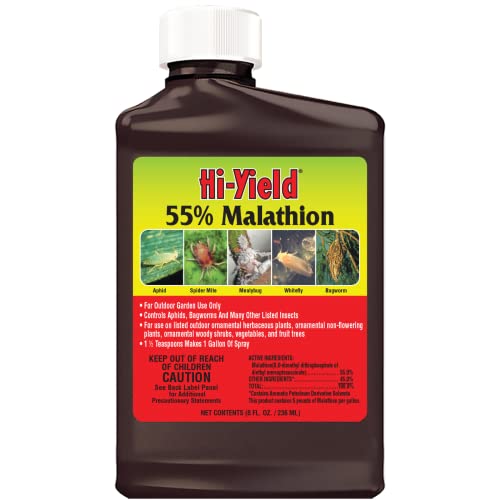
A potent concentrate that scalds through scale and red spider mites when everything else fails.
When you have tried gentler sprays and the mites keep coming — or you are dealing with stubborn scale insects alongside spider mites — this 55% Malathion concentrate is the heavy artillery. It controls aphids, thrips, spider mites, lace bugs, and more, and is labeled for use on herbaceous plants, ornamental non-flowering plants, shrubs, vegetables, and fruit trees. The unit count is 8.0 ounces, making it half the volume of the Fertilome Triple Action at 16.0 ounces.
One reviewer confirms it is “effective on stubborn scale and red spider mites.” Another buyer says it “works where other approaches failed” but issues a strong caution: Malathion is a suspected carcinogen, and users should wear protective clothing, a head cover, and a respirator. The reviewer even suggests considering hiring a licensed professional for application. The manufacturer says to apply in calm weather when rain is not expected for the next 24 hours, and to use a hose-end or tank sprayer.
Unlike the Doktor Doom Spider Mite Knockout that is designed for indoor houseplants, this product is for outdoor use on larger plants and trees. At 8.1 ounces item weight, it is lighter than the Fertilome Triple Action at 16 ounces, but the concentration is much higher. The bottle is small, but a little goes a long way when diluted properly.
What makes it powerful
- 55% Malathion is one of the highest concentrations available for home use
- Effective on scale, red spider mites, and other tough pests
- Works where organic and mild sprays have already failed
What to be careful about
- Strong suspected carcinogen — requires full protective gear (respirator, gloves, head cover)
- Not for indoor use on houseplants
- Must avoid spray drift; do not apply if rain is expected within 24 hours
Reserve this for: Outdoor fruit trees, ornamentals, and shrubs with a confirmed infestation of scale, spider mites, or lace bugs that have not responded to milder treatments. Use only with full protective gear.
Do not buy if: You want a general preventative spray, you have kids or pets that play near treated plants, or you prefer an organic approach.
7. Grower’s Ally Crop Defender 3 – Ready-to-Use (24 oz)
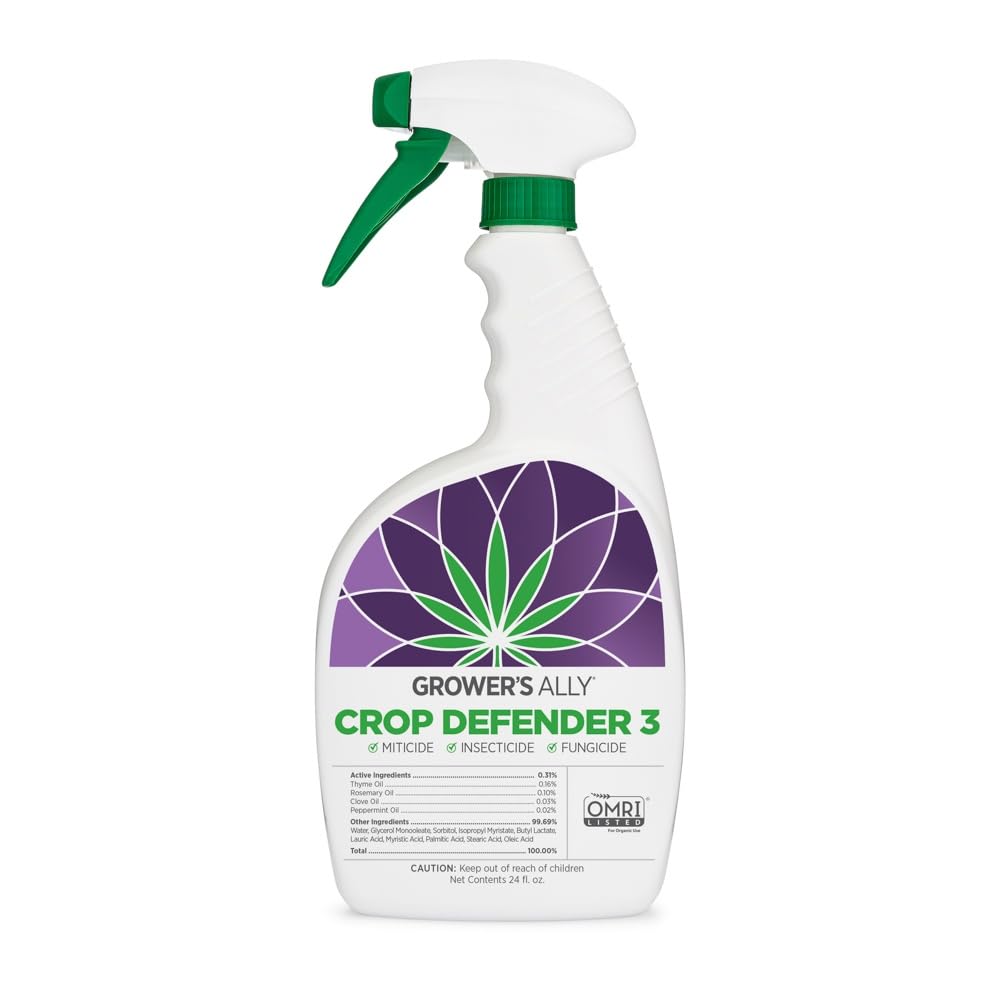
An organic formula that one-sprays mites away and smells like clove and spice.
If you want a spider mite killer that is safe to use around kids and pets and you can harvest the same day you spray, this is it. Grower’s Ally Crop Defender 3 is a ready-to-use miticide, insecticide, and fungicide made from a synergistic blend of botanical oils. It is OMRI Listed for organic gardening, and the manufacturer says it tests free of residual solvents, synthetic pesticides, and heavy metals. The 24 oz bottle is ready to spray straight from the bottle with no mixing.
One buyer reports that Crop Defender 3 eliminated spider mites after one application at the elimination concentration, with no signs of mites after two-plus weeks. Another says it “saved plants from a severe parasite infestation” after two thorough sprays that covered leaf undersides; the plants smelled of cloves and spices for days afterward. The same reviewer said it enabled a successful vegetable harvest. Unlike the Garden Safe Fungicide3 that can burn leaves in direct sun, shoppers say this spray does not burn plants even on seedlings.
The product is FIFRA 25(b) exempt and labeled as bee-safe when used as directed. It works on spider mites, russet mites, thrips, aphids, and powdery mildew. The package dimensions show the bottle weighs about 1.7 pounds, so it is larger than the Hi-Yield at 8.1 ounces but still easy to carry. The only trade-off is that it may need a higher concentration for a severe infestation, and the strong botanical smell lingers on plants for a few days.
One-and-done for most infestations: Multiple reviewers confirm a single concentrated application wipes out spider mites with no return for weeks. Zero plant burn, even on delicate seedlings.
The only catch: You may need the elimination-strength mix for heavy infestations, and the clove-like smell stays on plants for a few days after spraying. A small price for an organic solution that actually works.
Go with this if: You want an organic spray that is safe around children and pets, works in one application, and won’t burn your plants. Ideal for vegetable gardens with daily harvesting.
Look elsewhere if: You need to treat a massive, resistant mite outbreak on ornamentals that has already defeated organic sprays, or you prefer a concentrate to save shelf space.
Understanding the Specs
Active Ingredient and Concentration
The active ingredient is the chemical or botanical compound that actually kills spider mites. Common options include neem oil extract (a botanical oil that smothers mites and eggs), pyrethrin (a plant-derived nerve agent that works on contact), malathion (a synthetic organophosphate that disrupts the mite’s nervous system), and abamectin (a potent miticide that moves through leaf tissue). Higher concentration percentages (like 55% Malathion) mean you use less product per gallon of water, but they also require stronger safety precautions.
Liquid Volume and Unit Count
This tells you how much product you are actually buying. A 128 fluid ounce bottle (1 gallon) is eight times larger than a 16 fluid ounce bottle, which matters if you are treating a large garden weekly. Ready-to-use sprays are pre-diluted and convenient for spot treatments, while concentrates (like the 32 oz Eliminator or 8 oz Avid) require you to mix the concentrate with water. A concentrate with a small liquid volume can still make many gallons of finished spray, so check the label for how much water each ounce treats.
FAQ
How often should I spray for spider mites?
Can I use spider mite spray on edible plants like tomatoes and blueberries?
Will spider mite spray hurt my plants or burn the leaves?
Can I use these sprays indoors on houseplants?
What is the difference between a miticide and a general insecticide?
How long does spider mite spray keep working after I apply it?
Can I mix different spider mite sprays together?
What is the best way to apply spider mite spray to ensure I get all the mites?
How do I know if my spider mites are becoming resistant to a spray?
Can I use spider mite spray on Christmas cacti, orchids, or other sensitive plants?
Final Thoughts: The Verdict
For most buyers, the best spider mite control winner is the Syngenta Avid 0.15EC because it is the only product in this lineup that professional growers reach for on resistant mite populations and gives weeks of protection from a single application. If you want an organic option that is safe to use around kids and pets and works in one spray, grab the Grower’s Ally Crop Defender 3. And for a large garden where you need one gallon of three-in-one protection against fungus, insects, and mites, the standout is the Garden Safe Fungicide3.
How We Picked
We do not accept paid placement. Every pick is matched to a real buyer and a real use-case; we do not hands-on test units.
Sources & Methodology
Specifications: manufacturer listings and product documentation. Review insights: verified customer reviews, as of July 2026. Pricing: not shown on this page (it changes often); check the current price via the retailer link.
As an Amazon Associate, Lawn Gear Lab earns from qualifying purchases. This does not affect which products we feature.