
Specs are compiled from manufacturer listings and verified buyer reviews and can change over time — please confirm the key details on the product page before buying.
Growing herbs in pots depends on one simple thing: the soil you fill them with. A mix that holds too much water can rot the roots, while one that drains too fast leaves your basil and parsley thirsty within hours. This guide breaks down what actually matters in a bag of soil for potted herbs so you pick the right one the first time.
I’m Rikta — the founder and writer behind Lawn Gear Lab. This guide is built by comparing the manufacturers’ published specifications and the patterns across verified customer reviews, so you get each pick’s real strengths and trade-offs instead of marketing spin.
Understanding these differences is the difference between a sad pot of yellow leaves and a countertop full of fresh rosemary and mint. The right mix feeds your plants, holds just enough moisture, and stays loose so roots can spread without effort — a truly balanced soil for potted herbs makes that happen every time.
Our Picks at a Glance

How To Choose The Best Soil For Potted Herbs
Potted herbs live in a confined space with no ground soil to regulate temperature or moisture. That means you need a mix that does three things at once: drains well enough to avoid root rot, retains enough water so you are not watering every afternoon, and contains nutrients that keep your plants productive for weeks.
Organic vs. Synthetic Ingredients
Herbs you plan to eat deserve soil with natural nutrients — worm castings, compost, kelp meal — rather than chemical fertilizers. Organic mixes release food slowly as the microbes in the pot break them down, which leads to stronger flavor in the leaves you harvest. Most premium herb soils carry an organic label.
The Drainage Gap
Mediterranean herbs like rosemary, thyme, and oregano want soil that dries out between waterings. A mix packed with dense peat holds too much moisture for these plants. Look for perlite, bark fines, or biochar in the ingredient list — these create air pockets that let water flow through and keep roots breathing.
Volume and Bag Size
A single 6-inch pot uses roughly 2 quarts of soil. A 4-quart bag handles two or three pots, while an 8-quart bag covers four to six. If you are filling a larger planter or several pots at once, bigger bags save you from buying multiple times. Herb-specific mixes often come in smaller bags because you typically only need a handful of pots on a windowsill.
Quick Comparison
| Model | Best For | Volume | Weight | Key Ingredient | Amazon |
|---|---|---|---|---|---|
| Coast of Maine Bar Harbor Blend★ Best Overall | Premium Container Gardens | 16 Quarts | 14 Pounds | Lobster & Crab Shell Meal | Amazon |
| Espoma Organic Potting Mix (2 cu ft)Bulk Pick | Large & Bulk Planting | 2 Cubic Feet | 15.1 Pounds | Myco-Tone Blend | Amazon |
| Espoma Organic Potting Mix (8qt 2-Pack) | Mid-Sized Container Collections | 8 Quarts | 8.8 Pounds | Earthworm Castings | Amazon |
| Rosy Soil Herb Mix | Herb-Specific & Peat-Free | 4 Quarts | 4.0 Pounds | Biochar & Mycorrhizae | Amazon |
| Miracle-Gro Organic Indoor Mix | Indoor Herbs & Houseplants | 8 Quarts | 9 Pounds | Sphagnum Peat Moss | Amazon |
| Back to the Roots All-Purpose Mix | Budget-Friendly & Peat-Free | 6 Quarts | 4.4 Pounds | Coconut Coir & Yucca | Amazon |
In‑Depth Reviews
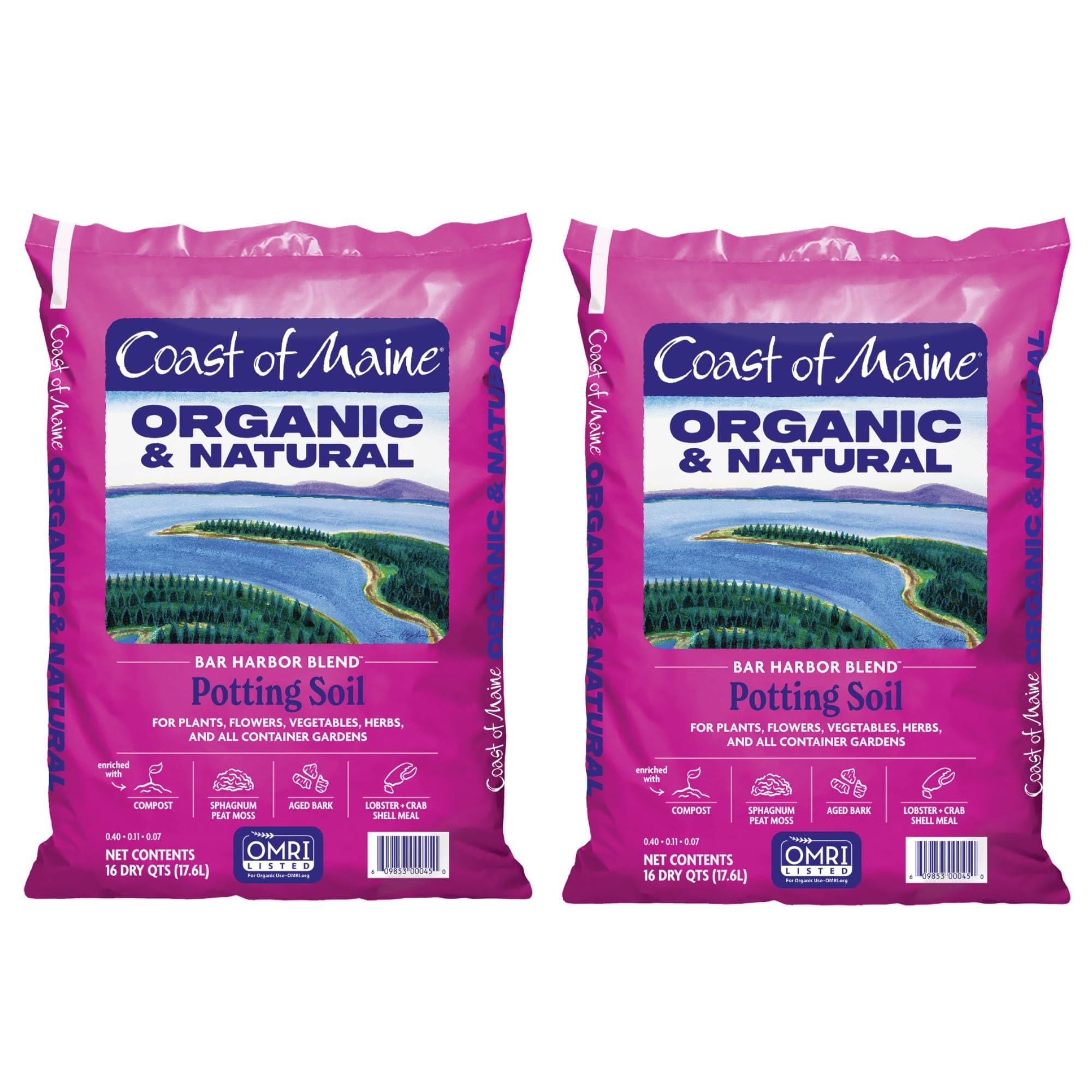
1. Coast of Maine Bar Harbor Blend Potting Soil
Our pick — over 4.5★ from 500+ verified ratings; the strongest balance of quality and price.
This bag delivers the richest organic ingredients in the list and earns a 4.8-star rating across 549 reviews — the highest score here.
You get a single soil that works for everything: herbs, vegetables, flowers, and even potato bags. The 16-quart volume is more than four times the amount of the Rosy Soil’s 4 quarts, so it fills multiple large containers at once. At 14 pounds, it is 3.2 times heavier than the Back to the Roots mix at 4.4 pounds, which shows how dense and nutrient-packed it is. Ingredients include lobster and crab shell meal, kelp meal, and compost for a slow-release food supply that keeps plants fed for weeks, meaning you do not need to fertilize as often.
Buyers report that two bags were enough to mound up eight potato plants and still have extra for two more planters. The texture is dark, rich, and loamy with perlite (small white volcanic glass beads) for drainage. Reviewers consistently note there are no big sticks or weed seeds like some other brands. The organic certification means everything in the bag is safe for edible herbs so your basil and mint are chemical-free.
The catch is the price sits at the top end — this is a premium buy. If you are only filling a couple of small windowsill pots, the bag size is more than you need. It works best when you have several containers to fill at once and want a single reliable blend for them all.
Bottom-line strength: The most nutrient-dense bag here, backed by hundreds of verified buyers who call it “the best soil” for container gardens.
Perfect for: Anyone with multiple large containers or raised beds who wants one organic mix that handles herbs, vegetables, and flowers equally well.
Consider first if: You need a smaller bag or your budget is tighter than the premium tier — the 16-quart bag may be more than you need for just a few herb pots.
2. Espoma Organic Potting Soil Mix (2 Cubic Foot Bag)
With a 2-cubic-foot bag (roughly 60 quarts), you get over seven times the volume of the Coast of Maine’s 16-quart bag — the largest here for serious planting.
You fill a whole season of pots in one go. The formula uses sphagnum peat moss (partially decomposed moss that holds water well), humus, perlite, earthworm castings, alfalfa meal, kelp meal, and feather meal. The company adds its own Myco-Tone blend, which is a mix of endo and ecto mycorrhizae (beneficial fungi that help roots pull in more nutrients and water). This means your herbs access food more efficiently than from a plain soil.
One reviewer noted they have houseplants over 25 years old and trust this soil to keep those heirlooms thriving. Another noted it is a “loamy, chunky soil” that does not get dense or crusty over time — a common complaint with cheaper mixes. Buyers also appreciate that it stays free of fungus gnats, a pest that plagues moist indoor potting soil.
The trade-off is the bag is heavy and bulky. If you only have a few small pots, most of it will sit in storage for months. Some reviewers found the mix too dry on arrival, requiring an initial soak before the peat rehydrates enough to absorb water.
Who it serves: Dedicated gardeners who want a single trusted bag to fill a whole season’s worth of containers without buying soil twice.
Ideal if: You are filling several large planters or a raised bed and want an organic mix with a proven track record for herbs and vegetables.
Look at smaller bags instead: If you only need soil for 2-3 pots, the 8-quart Espoma 2-pack or the Rosy Soil herb mix will suit you better.
3. Espoma Organic Potting Soil Mix (8qt 2-Pack)

This two-bag set gives you 8 quarts of the same Espoma organic formula as the bulk bag, without committing to the full 2-cubic-foot size.
The ingredients are identical — sphagnum peat moss, humus, perlite, earthworm castings, alfalfa meal, kelp meal, feather meal, plus the Myco-Tone blend. The difference is you get two smaller bags instead of one giant one, which makes storage easier and keeps the second bag fresh until you need it. For a mid-sized container garden with five or six 6-inch pots, this hits a useful middle ground between a tiny 4-quart mix and a 2-cubic-foot bag that might take you a year to finish.
Reviewers report that plants take to it immediately and grow quickly. One buyer used it for an African violet transplant and saw a strong response. The 4.5-star rating across 466 reviews shows consistent satisfaction, though one buyer mentioned the soil can arrive very dry and needs active wetting to start absorbing water properly.
On the downside, the cost per quart is higher than buying the bulk 2-cubic-foot bag. It is also not specifically tailored for herbs — it is an all-purpose mix — so it drains a bit slower than a dedicated herb formula like the Rosy Soil mix. If you grow Mediterranean herbs that demand fast drying between waterings, you might need to mix in extra perlite or sand.
Smart middle option: Works well for both indoor and outdoor containers and is ready to use straight from the bag for most common herbs and houseplants.
Great for: Gardeners who want Espoma’s proven organic blend in a mid-size pack that stores easily and covers several pots.
Downside to know: Not as fast-draining as herb-specific mixes — buyers growing rosemary or sage should consider adding drainage amendments.
4. Rosy Soil Herb Mix
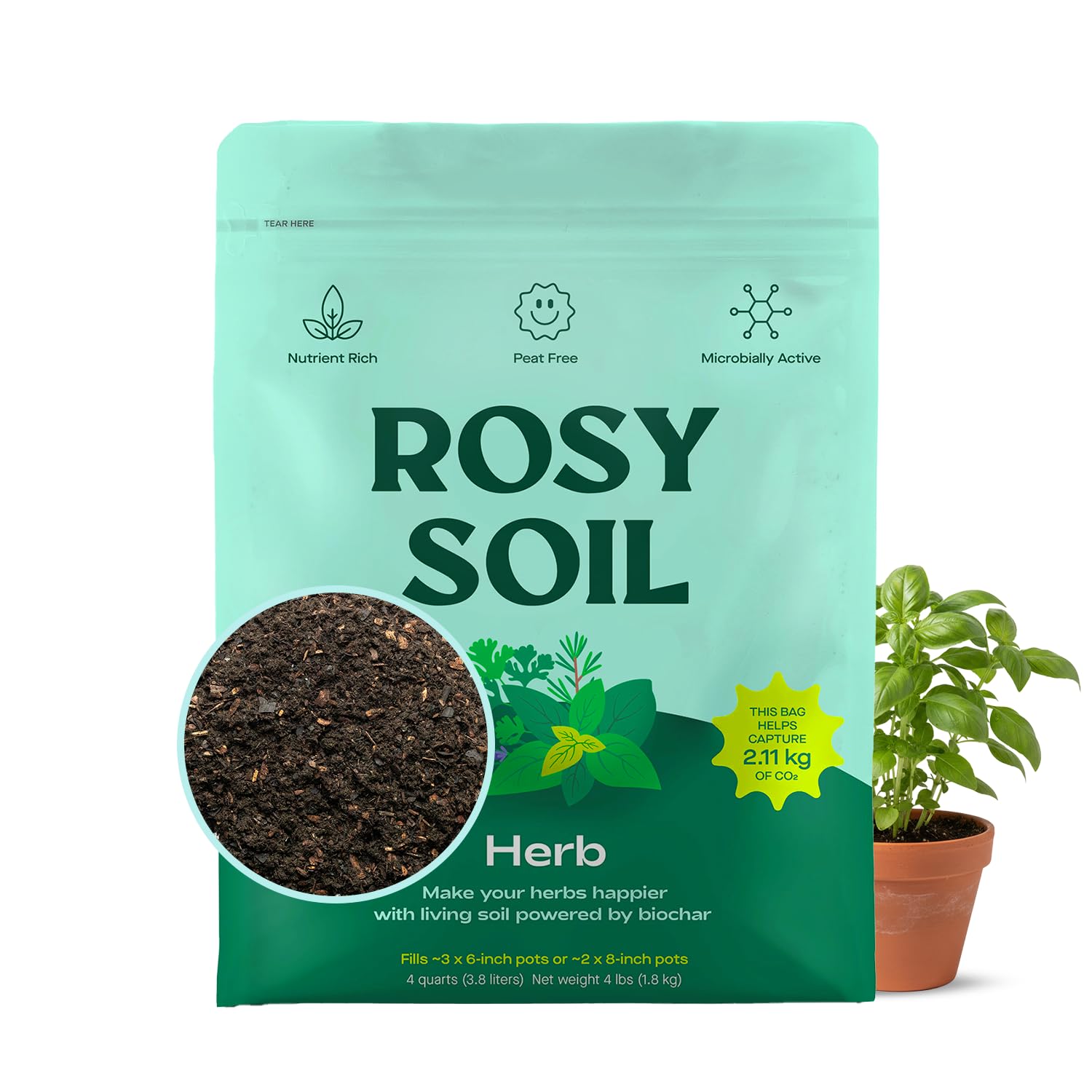
This is the only mix here built specifically for herbs, with biochar (a charcoal-like material that holds water and hosts beneficial microbes) instead of peat moss.
The 4-quart bag fills two to three medium 6-inch pots, exactly what a typical windowsill gardener needs. It uses biochar and mycorrhizae fungi to create what the company calls a “living soil” ecosystem inside your pot. This means nutrients cycle naturally rather than washing out. The mix also includes worm castings, compost, and bark fines (small wood chips that create air pockets) — so it drains faster than the Espoma all-purpose bags.
Owners mention that basil and parsley planted into this as-is thrived. One owner reported they used it for Winter Savory with excellent results. Another appreciated how clean and light the texture is — no big bark chunks or dusty particles. The 4.7 rating across 66 reviews is strong, and the resealable bag is a nice touch for apartment dwellers. Compared to the Coast of Maine’s 16 quarts, this is a much smaller bag (a 4.0x volume gap), so it is the right choice if you only keep a few herb pots on the counter.
The critical thing to know is that this mix holds water pretty well. That is great for basil and parsley, but one buyer specifically warned against using it alone for Mediterranean herbs like rosemary and sage without adding sand or perlite to improve drainage. If you grow a mix of herbs, you may end up customizing this bag for the thirstier ones versus the drier-loving ones.
Why it stands out
- Formulated for herbs, not just all-purpose
- Peat-free with carbon-negative biochar
- Small bag avoids waste for windowsill growers
What to watch for
- Holds too much moisture for rosemary, oregano, sage without added sand
- More expensive per quart than all-purpose mixes
Your best bet if: You primarily grow basil, parsley, cilantro, and mint indoors and want a clean, peat-free, herb-first mix that does not need much thought.
Not as ideal: If your herb lineup is heavy on Mediterranean dry-lovers — you will need to mix in drainage aids to make it work for those.
5. Miracle-Gro Organic Indoor Potting Mix (8 qt 2-Pack)

This bag uses an organic formula designed to regulate soil moisture, which makes it harder to accidentally over-water or under-water your indoor herbs.
The 2-pack gives you a total of 8 quarts of potting mix made with responsibly sourced sphagnum peat moss (partially decomposed moss that holds water), coir (coconut husk fiber that improves aeration), and a quick-start natural fertilizer. Each bag fills two 8-inch containers, so the set covers roughly four medium pots — a practical amount for a small indoor herb garden on a kitchen counter or windowsill.
Customers note excellent moisture retention and say that plants grow much better and healthier after switching to this mix. One reviewer described it as “easy to use, nice texture” that drains well while still holding the right amount of water. The 4.4 rating across 204 reviews is solid, and the OMRI (Organic Materials Review Institute) listing means it is certified for organic use, so you can use it on edible herbs without worry.
The limitation is that this is an indoor potting mix, not specifically a herb mix. If you grow rosemary or thyme indoors, you might find the soil stays damp too long between waterings.
Where it wins: The moisture-regulating feature is genuinely helpful for beginners who are still learning how often to water their indoor herbs.
Pick this if: You are new to indoor herbs and want a forgiving mix that buys you time between waterings, and you grow forgiving herbs like basil, mint, and parsley.
Look for a drier mix: If your herb collection is heavy on rosemary, thyme, or lavender — those need faster drainage than this formula provides.
6. Back to the Roots All-Purpose Potting Mix (6 Quarts 2-Pack)
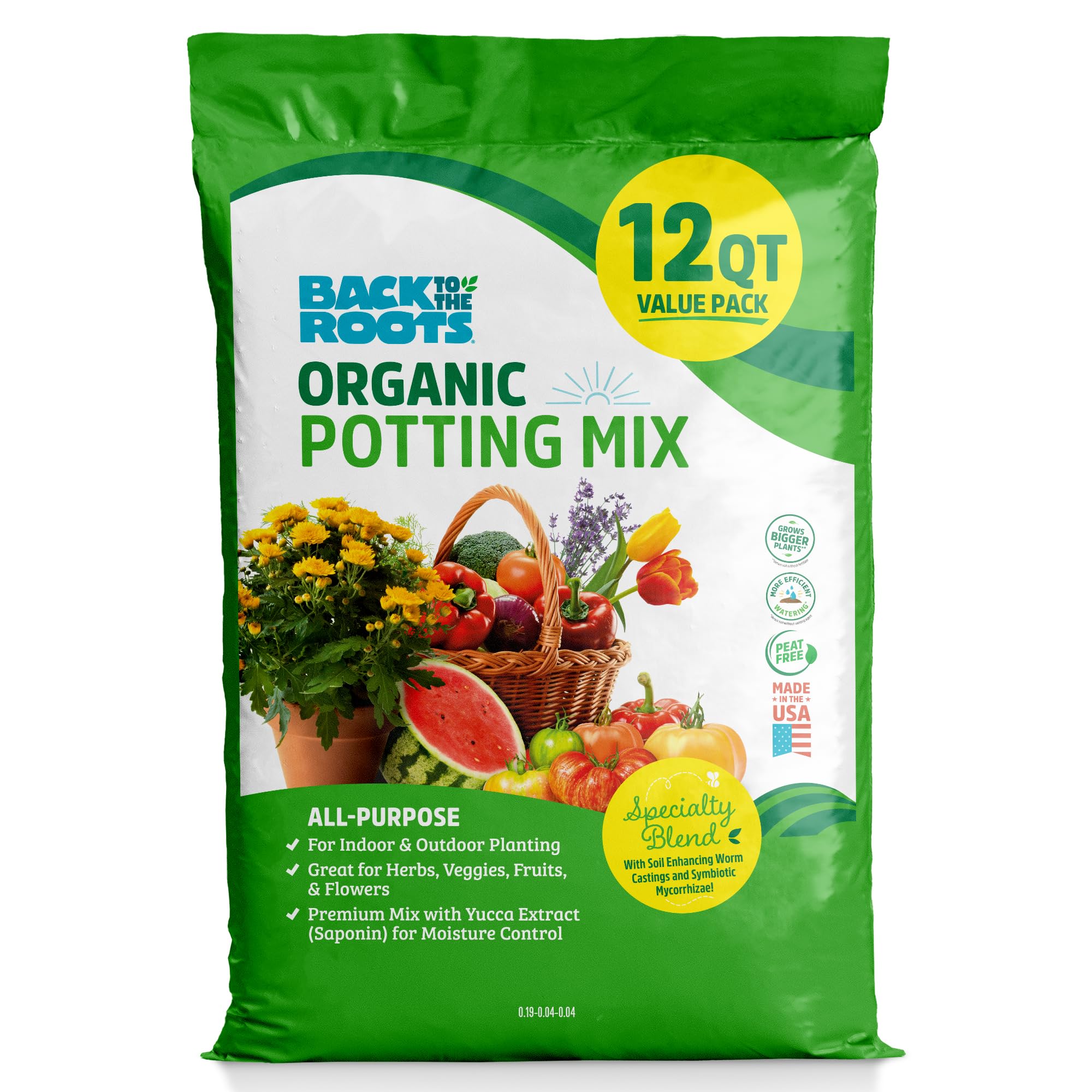
At 4.4 pounds for the 2-pack, this is 3.2 times lighter than the Coast of Maine’s 14-pound bag — a fluffier, more airy mix that also skips peat moss entirely.
You get a bag that uses coconut coir (coconut husk fiber that holds water but drains faster than peat) and yucca extract (a natural wetting agent that helps water spread evenly) instead of peat moss for moisture control. It includes mycorrhizae (beneficial fungi that help roots take in water and nutrients) and dolomitic limestone (a blend of calcium carbonate and magnesium carbonate that prevents the soil from becoming too acidic). The 6-quart total is enough for roughly three medium pots, and the company offers a 100% satisfaction guarantee.
Reviewers point out it is a “great value” and exactly what they needed for their herb pots. One reviewer wrote that it works well for transplanting larger plants and stays aerated even after watering — a sign the coconut coir holds its structure rather than compacting into mud. Another mentioned buying it three times already. The 4.5 rating across 162 reviews is consistent with the quality at this price point.
The trade-off with this mix is texture. A reviewer noted the soil contains bark particles that make it unsuitable for seed starting — the chunks are too big for tiny seedlings to push through. It works great for established plants, but if you plan to grow herbs from seed, you may want to sift this mix first or pick a finer-textured soil.
Best reasons to buy
- Peat-free and eco-friendly with coconut coir base
- Very affordable for the volume you get
- Lightweight and easy to store
Know before you buy
- Bark chunks can block germination for seeds
- Not herb-specific — drains slower than dedicated herb mixes
Smart budget pick for: Container gardeners on a tight budget who want organic, peat-free soil for moving established herb plants into larger pots.
skip it if: You plan to start herbs from seed — you will need a finer mix or you will struggle with germination.
Understanding the Specs
Volume and Bag Size
The volume of the bag tells you how many pots you can fill. A typical 6-inch pot needs about 2 quarts of soil. A 4-quart bag covers two pots. An 8-quart bag covers four. A 2-cubic-foot bag (roughly 60 quarts) handles a whole season of container planting. Buy the size that matches how many herb pots you actually own — buying a giant bag for a single windowsill pot usually means stale, dusty soil sitting in a corner for months.
Drainage and Aeration
Herb roots need oxygen, and they get it from air pockets in the soil. Ingredients like perlite (white volcanic glass beads), bark fines (small wood chips), and biochar create those pockets so water flows through instead of pooling. If the bag lists “peat moss” as the first ingredient with no perlite or coir, the mix will hold water too long for many herbs. Mediterranean herbs like rosemary and thyme need a fast-draining mix — look for those aeration ingredients explicitly listed.
FAQ
Can I use regular garden soil for potted herbs?
How often should I replace the soil in my herb pots?
What is the difference between all-purpose potting mix and herb-specific mix?
Is peat-free potting soil better for herbs?
Can I make my own potting mix for herbs at home?
Will this soil attract fungus gnats?
How much soil do I need for a standard 6-inch herb pot?
Can I use cactus or succulent soil for herbs?
Does the brand of soil affect the flavor of my herbs?
What does “organic” on a potting soil bag actually mean?
Final Thoughts: The Verdict
If you want one dependable pick, the best soil for potted herbs is the Coast of Maine Bar Harbor Blend because it delivers the richest organic ingredients, the highest user rating, and a generous 16-quart volume that covers multiple containers with a single proven mix. If you want a smaller, peat-free option made specifically for herbs on a windowsill, grab the Rosy Soil Herb Mix. And for a budget-friendly all-purpose choice that still skips peat moss entirely, the Back to the Roots All-Purpose Mix is a solid value pick.
How We Picked
We do not accept paid placement. Every pick is matched to a real buyer and a real use-case; we do not hands-on test units.
Sources & Methodology
Specifications: manufacturer listings and product documentation. Review insights: verified customer reviews, as of July 2026. Pricing: not shown on this page (it changes often); check the current price via the retailer link.
As an Amazon Associate, Lawn Gear Lab earns from qualifying purchases. This does not affect which products we feature.