
Specs are compiled from manufacturer listings and verified buyer reviews and can change over time — please confirm the key details on the product page before buying.
Pouring dense garden soil into a pothos pot is the fastest way to drown the roots. Your pothos needs a mix that drains fast, stays airy, and lets oxygen reach the roots between waterings — exactly what a dedicated indoor soil delivers. Here is how to pick the right bag so your plant thrives instead of just survives.
I’m Rikta — the founder and writer behind Lawn Gear Lab. This guide is built by comparing the manufacturers’ published specifications and the patterns across verified customer reviews, so you get each pick’s real strengths and trade-offs instead of marketing spin.
Whether you are repotting a golden pothos that has outgrown its nursery pot or refreshing soil for a collection of marble queens, finding the right soil for pothos indoors depends on drainage, aeration, and the right balance of organic ingredients that match how these plants grow naturally.
Our Picks at a Glance
How To Choose The Best Soil For Pothos Indoors
Pothos are among the most forgiving houseplants, but they are also the first to show signs of stress when the soil is wrong. Root rot, yellowing leaves, and stunted growth almost always trace back to a mix that holds too much water. Here is what you need to check before you pick a bag.
Drainage and Aeration: The two pillars of a healthy pothos mix
A good indoor soil for pothos needs to drain excess water quickly while still holding enough moisture for the roots to drink between waterings. Look for ingredients like pine bark fines (small bark pieces), pumice (a porous volcanic rock), perlite (a lightweight, white volcanic mineral), or volcanic rock — these create air pockets that let oxygen flow to the roots. A mix that feels dense or sticky in the bag is a red flag.
Chunky texture: What it really does for your pothos
Pothos are epiphytic by nature, meaning in the wild they grow up tree trunks with their roots exposed to constant airflow. A chunky soil mimics that environment by using large bark pieces and coarse materials that prevent the mix from compacting over time. A bag labeled “chunky” or “aroid mix” is usually a safe bet.
Bag size vs. pot count: How much soil you actually need
Most pothos soil bags range from 1 quart to 4 quarts. A 1-quart bag fills about one 5-inch pot. A 4-quart bag covers two to three pots, depending on pot depth. If you are repotting a single pothos, a smaller bag is fine. If you have a collection, go with the larger volume to avoid buying multiple bags.
Quick Comparison
| Model | Best For | Volume | Key Ingredient | Drainage | Amazon |
|---|---|---|---|---|---|
| Craft Aroid Mix (Grow Queen)★ Best Overall | Best Chunky Blend | 2 Quarts | Pumice & Lava Rock | Excellent | Check it |
| Rosy Soil Aroid MixPremium Pick | Premium Pick | 4 Quarts | Biochar | Excellent | Check it |
| Perfect Plants Pothos Soil | Best Overall | 4 Quarts | Coco Coir | Excellent | Check it |
| Gardenera Monstera Potting Soil | Best for Small Pots | 1 Quart | Biochar | Great | Check it |
| Perfect Plants Indoor Soil | Best General Use | 4 Quarts | Pine Bark | Great | Check it |
| Biggun Monstera Soil | Budget Option | 4 Quarts | Volcanic Rock | Good | Check it |
| rePotme Pothos/Ivy Mix | Premium Boutique Blend | 4 Quarts | Handcrafted Bark Mix | Excellent | Check it |
In‑Depth Reviews
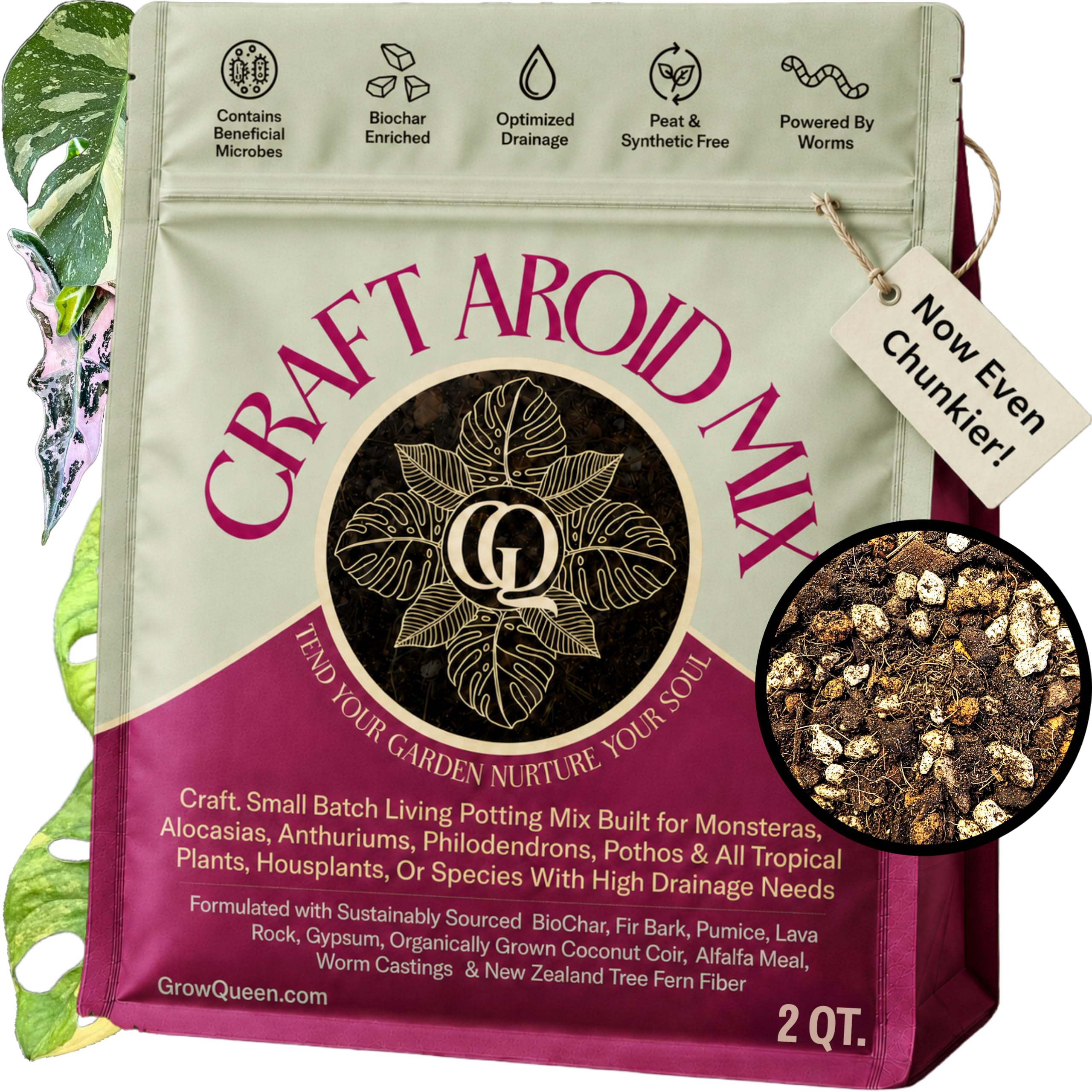
1. Craft Aroid Potting Mix (Grow Queen)
Our pick — over 4.5★ from 950+ verified ratings; the strongest balance of quality and price.
A chunky, peat-free blend built for aroids that hate wet feet.
Grow Queen’s Craft Aroid Mix uses large Douglas fir bark fines, lava rock, and pumice to create a soil that is almost impossible to overwater. It is peat-free and perlite-free, using pumice and lava rock instead — natural volcanic materials that do not require energy-intensive processing. The 2-quart bag is smaller than most competitors, but it makes sense for aroid collectors who might repot one plant at a time. Buyers praise the “light yet chunky” texture and note that plants settle in quickly.
However, one reviewer flagged a real limit: for larger plants in 6-inch pots or bigger, the mix retains too much moisture, causing root rot after about two months. That makes this a better fit for small to medium pothos (5-inch pots or smaller) rather than a sprawling mature plant. It holds 2 quarts versus the 4 quarts of the Perfect Plants Pothos Soil, so you pay a similar price for 2 quarts compared to 4 quarts.
Who it suits best: small pot pothos and aroid collectors who want a pre-mixed chunky blend without peat or perlite, and who repot one plant at a time rather than a whole collection.
The one caveat: avoid this for large, established pothos vines in deep pots — you are better off with the Perfect Plants Pothos Soil or Rosy Soil for those.
Reach for it when: you are repotting young pothos cuttings or small plants into 4- to 5-inch pots and want a peat-free mix that drains fast.
Look elsewhere if: your pothos is a mature vine in a 6-inch or larger pot where excess moisture becomes a risk.
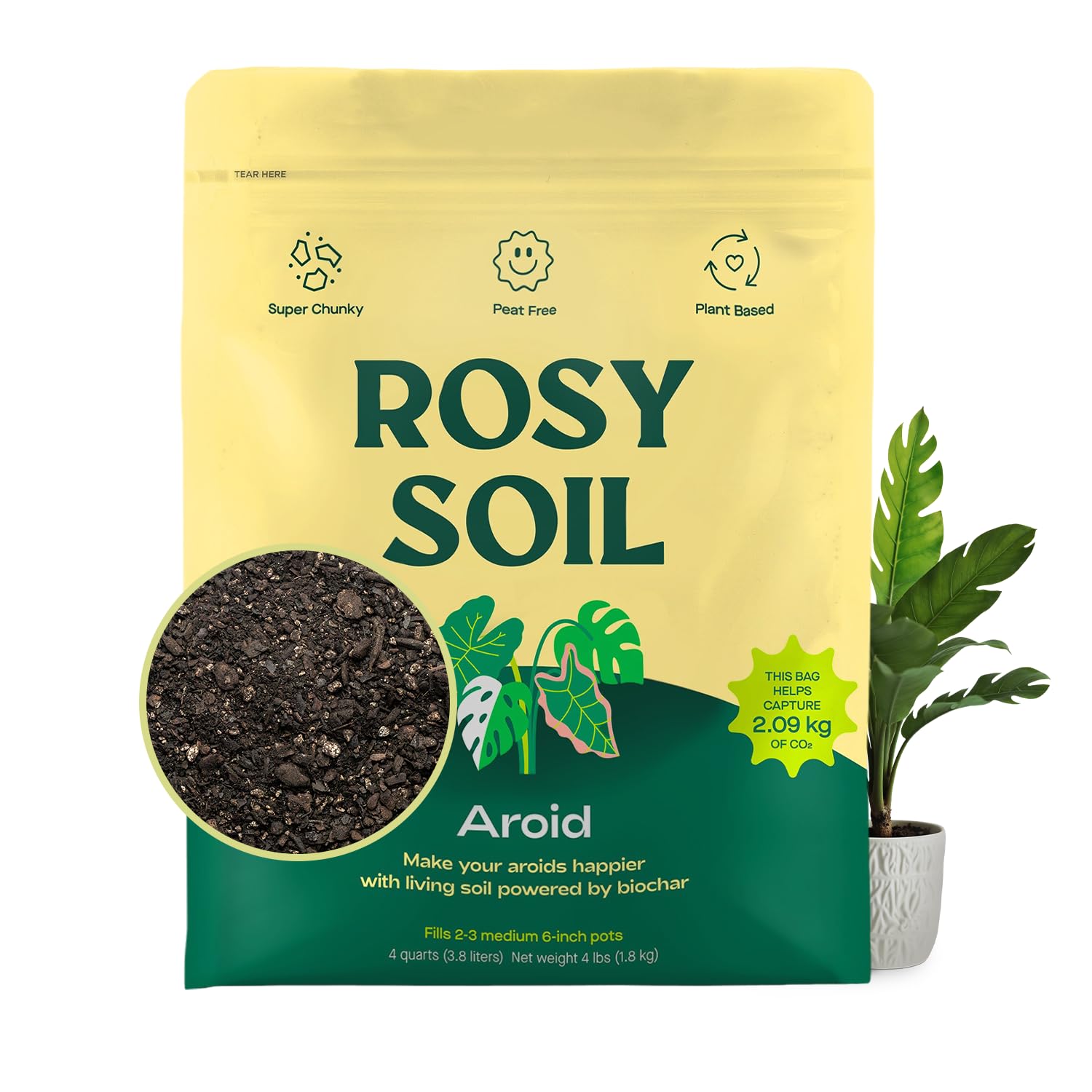
2. Rosy Soil Aroid Soil Mix
A living soil that feeds the roots with microbes while draining like a dream.
This chunky aroid mix from Rosy Soil uses pine bark fines, pumice, and biochar — a stable form of charcoal that holds nutrients and creates air pockets — so your pothos roots get constant oxygen. The 4-quart bag fills about two to three medium 6-inch pots, which is enough for a small collection. Buyers report no gnats and rapid new growth after switching, with one reviewer noting “all of my plants have put out new growth” within two weeks of repotting.
Unlike the Gardenera mix which uses peat moss, Rosy Soil is peat-free and the brand claims it is carbon-negative, meaning it stores carbon instead of releasing it. The only real trade-off is the price: at 4 quarts, it costs more per quart than the Perfect Plants options, and the resealable bag can be hard to close securely.
The living advantage: The biochar and mycorrhizae (beneficial fungi that help roots absorb nutrients) create a microbially active environment that strengthens roots over time — you are paying for long-term soil health, not just a one-time fill.
The honest limit: If you are on a strict budget and just need to repot one pothos, the smaller 1-quart Gardenera bag wastes less soil and costs less upfront.
Reach for it when: you have a small collection of tropical plants and want a peat-free mix that actually improves the soil over time.
Look elsewhere if: cost per quart matters more than long-term soil biology, and you just need a straightforward pothos mix.
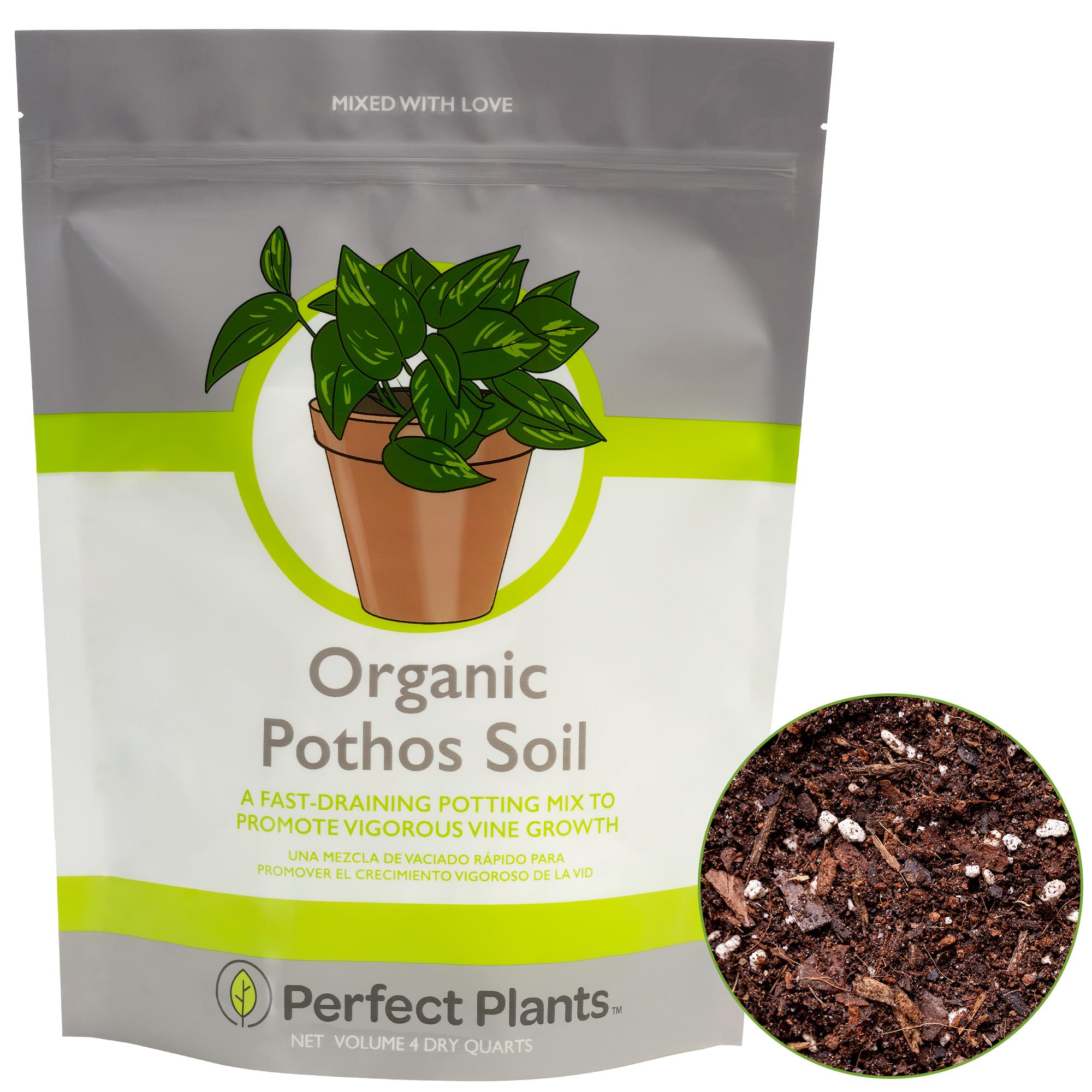
3. Perfect Plants Organic Pothos Soil
The dedicated pothos blend that delivers exactly what the name promises.
This is the one soil in the list designed specifically for pothos, and it shows in the balance: pine bark, perlite, coconut coir (a fiber from coconut husks that holds moisture without getting soggy), sand, and garden lime (a calcium additive to balance pH) create a mix that drains quickly but holds just enough moisture. A buyer who transplanted a golden pothos two months ago reported it “is now doing amazingly well” — exactly the kind of low-fuss result pothos growers want. The 4-quart bag is the same volume as the Rosy Soil but at a lower price point.
Compared to the Perfect Plants Indoor Plant Soil which is a general houseplant mix, this pothos version uses a higher ratio of sand and bark to speed up drainage — a smart move since pothos are more prone to root rot than, say, snake plants or aglaonema. Owners mention the soil can grow mushrooms, which is actually a sign of healthy organic matter, not a problem.
Why it works for pothos
- Formulated specifically for pothos varieties, so you do not have to guess at the ratio
- Farmer-grade ingredients mixed in the USA, giving consistent quality bag to bag
- Drains fast enough for bottom watering without waterlogging the root zone
The small drawbacks
- At 4 quarts, it is more than you need for a single small pothos pot
- The bag is not resealable, so you will need a clip or container for leftover soil
Best for: anyone who wants a straightforward, pothos-tailored mix that works out of the bag without mixing or adding extra perlite.
skip it if: you prefer a peat-free or perlite-free blend for environmental reasons, since this mix contains both coco coir and perlite.
4. Gardenera Premium Monstera Potting Soil

A biochar-enriched 1-quart bag that fits one pot perfectly, with no waste.
Gardenera’s mix is the smallest option here at 1 quart — enough for a single 5-inch pot, which is exactly what most first-time pothos repotters need. The formula includes IBI-certified biochar (a carbon-rich material that holds onto nitrogen and phosphorus so roots can access them gradually), along with peat moss, perlite, coco coir, worm castings, and bark. A buyer describes it as a “chunky mix, enough for 5-inch pot” with a mushroomy smell that indicates healthy, living soil.
Compared to the 4-quart Rosy Soil, Gardenera gives you biochar benefits at a smaller volume and lower absolute cost, but the price per quart is actually higher. It is designed for monstera, but the well-draining aroid-friendly ingredients (peat moss, perlite, coco coir, bark) work perfectly for pothos too. The resealable bag is a nice touch for storing leftover mix.
Why the small size works
- You buy exactly what you need for one pot, with no leftover soil sitting around
- Biochar boosts nutrient retention, so you can wait longer between fertilizing
- Sterilized bag means no hidden pests or gnats, a common issue with cheaper soils
The trade-off
- At 1 quart versus the 4 quarts of Perfect Plants Pothos Soil, you pay more per quart
- Not ideal if you have multiple plants to repot — you would need several bags
Best for: a single pot repotting project where you value a freshly sealed, sterile bag with biochar over a larger bulk bag.
pass on it if: you are repotting several pothos at once and need a bigger volume for a better per-quart value.
5. Perfect Plants Indoor Plant Soil

A balanced all-purpose mix that also happens to be great for pothos.
This is the general indoor plant version of the pothos-specific Perfect Plants soil above. It uses pine bark, coco coir, perlite, sand, and garden lime — the same base ingredients — but the ratios are tuned for a wider range of houseplants like monstera, aloe, and spider plants. For pothos, that means a slightly more moisture-retentive mix than the pothos-specific version, which can be a good thing if your home is on the dry side or you tend to forget watering. A buyer mentioned it is “great for aglaonema” and “promotes frequent new leaves.”
Unlike the Craft Aroid Mix which is designed for aroids with extreme drainage, this soil holds a bit more water, making it a forgiving choice for newer plant owners. Reviewers consistently praise it for being “completely bug-free” — a big deal for anyone who has dealt with fungus gnats (tiny flying insects that thrive in damp soil) from cheaper bags. The bag is 4 quarts, matching the volume of the Perfect Plants Pothos Soil and the Rosy Soil.
The flexibility advantage: If you have a mix of pothos, snake plants, and philodendrons, one bag of this soil works for all of them, saving you from buying multiple specialized blends.
The honest limit: For a dedicated pothos-only grower who wants maximum drainage, the pothos-specific version from the same brand is the better bet.
Reach for it when: you have a varied indoor plant collection and want one soil that keeps everything happy without needing separate bags.
Look elsewhere if: you are specifically optimizing for pothos and want the fastest-draining mix available, in which case the pothos-specific Perfect Plants soil is the move.
6. Biggun Monstera Soil Mix

A volcanic rock and charcoal blend that aerates roots while staying affordable.
Biggun’s mix is the most affordable 4-quart option in this list, using a specific ratio of 30% pine bark, 30% peat moss, 20% volcanic rock, 10% perlite, and 10% charcoal. That volcanic rock and perlite combination creates good airflow and prevents compaction, which is exactly what pothos need. A buyer noted the mix is “exceptional” and “a perfect blend of aeration,” though another mentioned it is “not very good of value for what you get for the cost” — a mixed verdict that suggests the quality is solid but the pricing could be better.
Compared to the Perfect Plants Indoor Soil at 4 quarts for a similar price, Biggun delivers a more dramatic texture with visible charcoal and volcanic rock chunks. The trade-off is the rating: 4.2 out of 5 stars from just under 200 reviews versus the 4.6 to 4.7 ratings of the premium brands. It is a decent budget entry but lacks the refined consistency of the higher-rated options.
What you get for the price
- 4 quarts of soil at a budget-friendly price point, covering two to three medium pots
- Charcoal in the mix helps absorb impurities and keeps the soil fresh longer
- Volcanic rock creates macro-pores (large air pockets) for air to reach roots effectively
Where it falls short
- Lower overall rating and fewer customer reviews than the top picks
- Some buyers feel the cost does not match the volume, questioning the value
- Peat moss content means it is not a peat-free option for eco-conscious shoppers
Best for: a tight-budget repot where you need a full 4 quarts and are okay with a less-refined mix than the premium brands.
it’s not for you if: you prefer established brands with stronger verified buyer track records and higher consistency ratings.
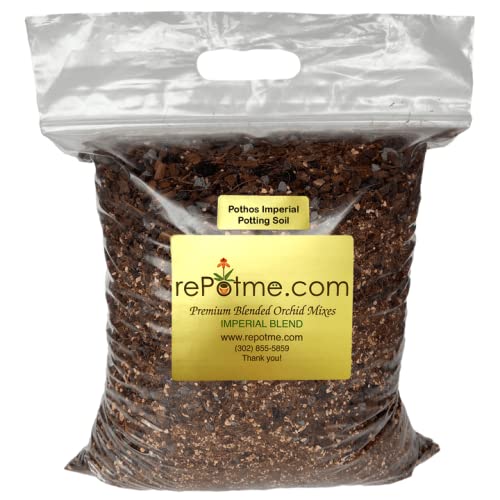
7. rePotme Pothos/Ivy Potting Soil
A handcrafted boutique mix used by major conservatories, at a boutique price.
rePotme makes their mix in small handcrafted batches daily, sourcing ingredients from around the world. It comes in a high-quality resealable pouch and includes a plant tag and butterfly clip — small touches that signal care. The mix itself is bark-heavy with visible roots, peat, and bark chips, creating a light, airy texture that drains readily. One reviewer who used it as a soil lightener for monstera mixed it 60/40 with richer soil and said the plant was “happy.”
The catch is the price: at for a 4-quart bag, this is the most expensive option in the list by a wide margin. Buyers consistently acknowledge it is “pricey” but add that “it is great stuff” and worth it for the quality. If you compare it to the Perfect Plants Pothos Soil at roughly half the cost for the same 4-quart volume, you are paying a premium for the artisanal approach and the brand’s reputation with botanical gardens.
The collectors’ choice: If you have a rare or variegated pothos cutting and want to give it the best possible start, rePotme’s quality control and fresh-batch approach offer confidence that mass-produced bags cannot match.
The value question: For a standard golden pothos or marble queen, the Perfect Plants or Rosy Soil options deliver comparable results at half the price.
Reach for it when: you are repotting a special pothos cutting or a rare aroid and want the highest quality, freshest mix available with zero compromises.
Look elsewhere if: you are repotting a standard pothos and want to keep the cost reasonable while still getting excellent drainage and aeration.
Understanding the Specs
Quart Volume
This tells you how much soil you get and, more importantly, how many pots it fills. A 1-quart bag covers about one 5-inch pot. A 4-quart bag usually covers two to three medium pots. Check your pot size before you buy — a single small pothos in a 4-inch pot only needs about 0.5 to 1 quart of soil, so a 4-quart bag leaves you with leftover mix to store.
Peat-Free vs. Peat-Based
Peat moss holds a lot of moisture, which is good for some plants but risky for pothos if the mix is not balanced with enough drainage material. Peat-free blends often use coco coir or biochar instead, which drain faster and are more sustainable. If your pothos is in a plastic pot (which holds moisture), a peat-free mix reduces the chance of root rot. If you use a terracotta pot, peat-based can work fine because the pot wicks away excess water.
FAQ
Can I use regular garden soil for my pothos indoors?
How often should I repot my pothos into fresh soil?
What is the difference between aroid soil and regular potting soil?
Why is my pothos soil staying wet for weeks?
Can I mix my own soil for pothos instead of buying a bag?
Do I need to add perlite to bagged pothos soil?
How much soil does a single pothos plant need?
What does “biochar” do in potting soil?
Can I use this soil for other houseplants like monstera or snake plants?
Why do some pothos soils have a mushroomy smell?
Final Thoughts: The Verdict
For most people, the soil for pothos indoors winner is the Perfect Plants Organic Pothos Soil because it is formulated specifically for pothos, drains fast, and comes at a reasonable price for 4 quarts. If you want a living soil that feeds roots over time with biochar and microbes, grab the Rosy Soil Aroid Mix. And for a single pot repotting job with zero waste, the standout is the compact Gardenera Premium Monstera Soil.
How We Picked
We do not accept paid placement. Every pick is matched to a real buyer and a real use-case; we do not hands-on test units.
Sources & Methodology
Specifications: manufacturer listings and product documentation. Review insights: verified customer reviews, as of July 2026. Pricing: not shown on this page (it changes often); check the current price via the retailer link.
As an Amazon Associate, Lawn Gear Lab earns from qualifying purchases. This does not affect which products we feature.