
Specs are compiled from manufacturer listings and verified buyer reviews and can change over time — please confirm the key details on the product page before buying.
Forgetting to water your indoor plants for a few days—or a week—doesn’t have to mean coming home to droopy, wilted leaves. A good self-watering system handles the job automatically, drawing moisture up from a reservoir so your plants get a steady sip instead of a drench or a drought. The trick is picking the right size, wicking method, and reservoir depth for the plants you actually own and how you live with them.
I’m Rikta — the founder and writer behind Lawn Gear Lab. This guide is built by comparing the manufacturers’ published specifications and the patterns across verified customer reviews, so you get each pick’s real strengths and trade-offs instead of marketing spin.
if you need a single large planter for a fiddle-leaf fig or a set of window boxes for a kitchen herb garden, the right self watering system for indoor plants keeps your greenery thriving without the daily chore of watering.
Our Picks at a Glance
How To Choose The Best Self Watering System For Indoor Plants
Not every self-watering pot works the same way. Some rely on a simple cotton rope to wick water upward. Others use a porous unglazed terracotta section that seeps moisture into the soil. A few combine a bottom reservoir with drainage slots so roots can breathe. The right choice depends on your plant’s thirst, your travel routine, and how much visual clutter you want on your windowsill.
Reservoir Capacity and Runtime
The depth of the built-in water reservoir determines how long you can leave the pots unattended. Systems that hold enough water for 7 to 14 days mean you can take a short trip without asking a neighbor to help. A deeper tray also reduces how often you need to top it off during normal weeks. If you tend to travel frequently or just want less maintenance, look for a reservoir that buyers report can cover a week or two.
Wicking Mechanism and Soil Match
Most self-watering planters use a cotton wick or fabric strip that pulls water from the reservoir into the potting mix through capillary action. This works well for plants that enjoy consistent moisture — African violets, pothos, ferns, and many herbs. If you grow succulents or cacti, choose a system where you can simply fill the reservoir less often or one that uses a porous terracotta wall, which lets the soil dry out between refills more naturally.
Drainage and Root Health
A common beginner worry is that constant moisture leads to root rot. The best self-watering designs combat this by including drainage holes in an inner pot or a slotted base that lets air circulate around the roots. A transparent inner liner (like the clear wick pot some models include) lets you check root growth without disturbing the plant. If you have plants that are prone to rot, prioritize models with visible aeration slots and a wick that leaves a small air gap.
Quick Comparison
| Model | Best For | Reservoir Coverage | Wicking Type | Material | Amazon |
|---|---|---|---|---|---|
| WSMKSZ 10 inch 2-Pack★ Best Overall | Busy plant owners | Up to 2 weeks | Cotton rope | Plastic | Amazon |
| Meowell 12 inch LargeAlso Great | Large statement plants | 1-2 weeks | Cotton rope | Plastic (6mm thick) | Amazon |
| KvyusFlourish 6-Pack | African violets / orchids | Up to 2 weeks | Cotton wick + clear inner | Plastic | Amazon |
| OurWarm Windowsill 3-Pack | Kitchen herbs | Varies by plant | Cotton rope + window | Plastic | Amazon |
| Vugosson 7-Pack Set | Mixed plant collections | 7-14 days | Cotton wick + slots | PP Resin Plastic | Amazon |
| FAMZ 4-Pack | Desk / small plants | Shallow reservoir | Cotton rope | PP Plastic | Amazon |
In‑Depth Reviews
1. WSMKSZ 10 inch Self Watering Pots, 2 Pack
Our pick — over 4.5★ from 800+ verified ratings; the strongest balance of quality and price.
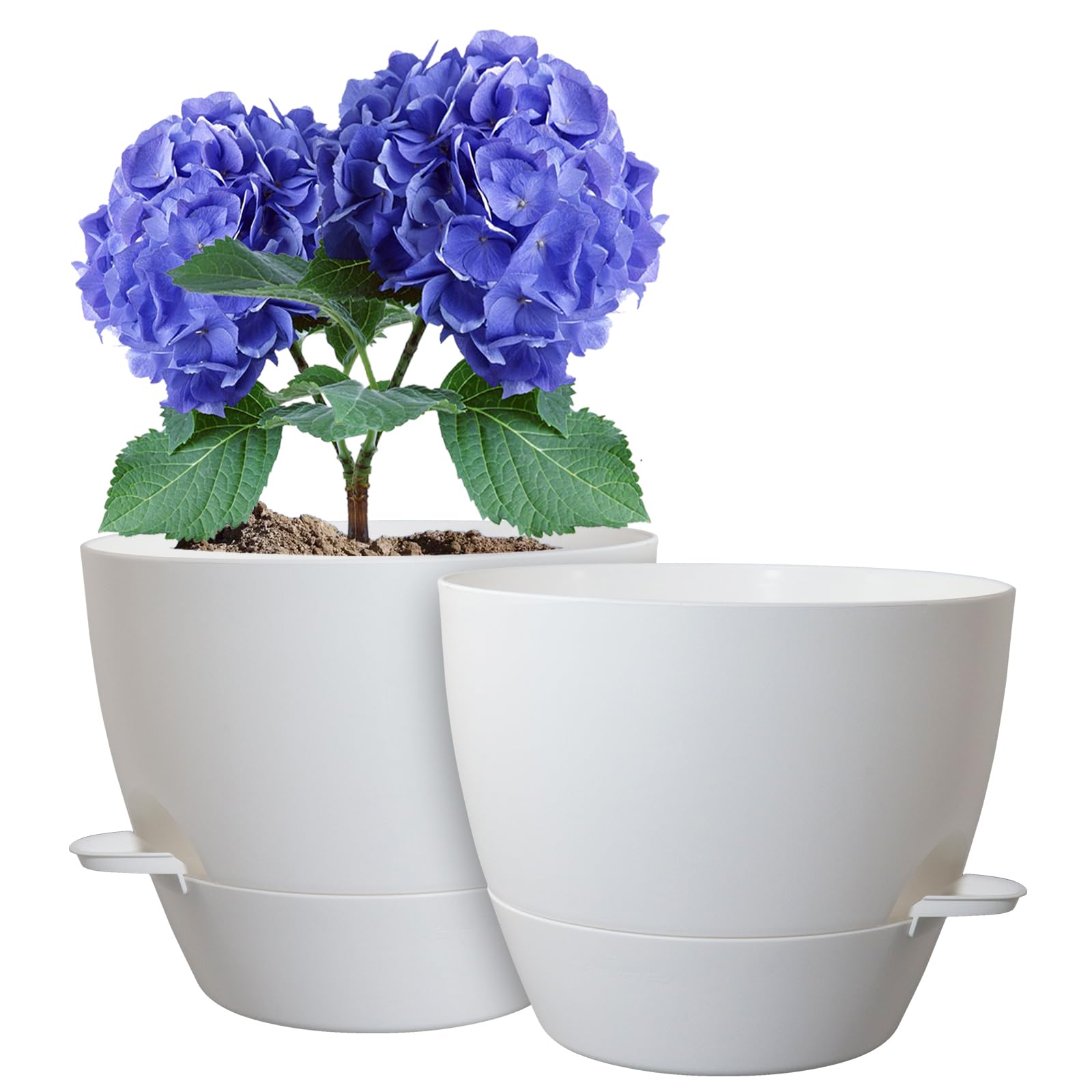
A two-pack of 10-inch white planters with a reservoir that reviewers point out holds 10+ cups of water.
If you need a pair of matching self-watering pots for your living room or patio, this WSMKSZ set gives you two 10-inch pots at a single-pot price from some competitors. The key spec here is the reservoir depth: a verified buyer reported it “holding 10+ cups” of water, which translates into up to two weeks of coverage. That is the same range as the Meowell above, but with two pots instead of one, making this the better deal if you have two medium-sized plants.
The pots are made from brand new plastic — lightweight at 0.88 kilograms each — and come in a clean matte white finish that shoppers say “contrasts beautifully with green foliage.” A visible watering spout on the side lets you refill without removing the plant. One reviewer did note the “little lip you put on to water it isn’t as secure as it could be,” so the watering spout cover can feel a bit loose.
Both pots measure 10 x 10 x 8.1 inches, making them a touch smaller in height than the Meowell 12-inch (which is 12 x 12 x 9.4 inches). For the difference in footprint, you get two pots, which is a fair trade-off if you are not growing a single extra-large floor plant.
Two-Pot Value
- Large 10+ cup reservoir covers up to two weeks
- Lightweight and easy to move around
- Clean matte white finish suits most home decor
Minor Gripe
- Watering spout cover is not very secure
- No clear water level indicator — you have to check manually
Pick this for: a pair of matching 10-inch pots for your patio or living room, especially if you want a large reservoir with a simple, functional design.
pass on it if: you need a water level window — this model relies on you lifting the pot or checking the spout to know how much water is left.
2. Meowell 12 inch Large Self Watering Pot
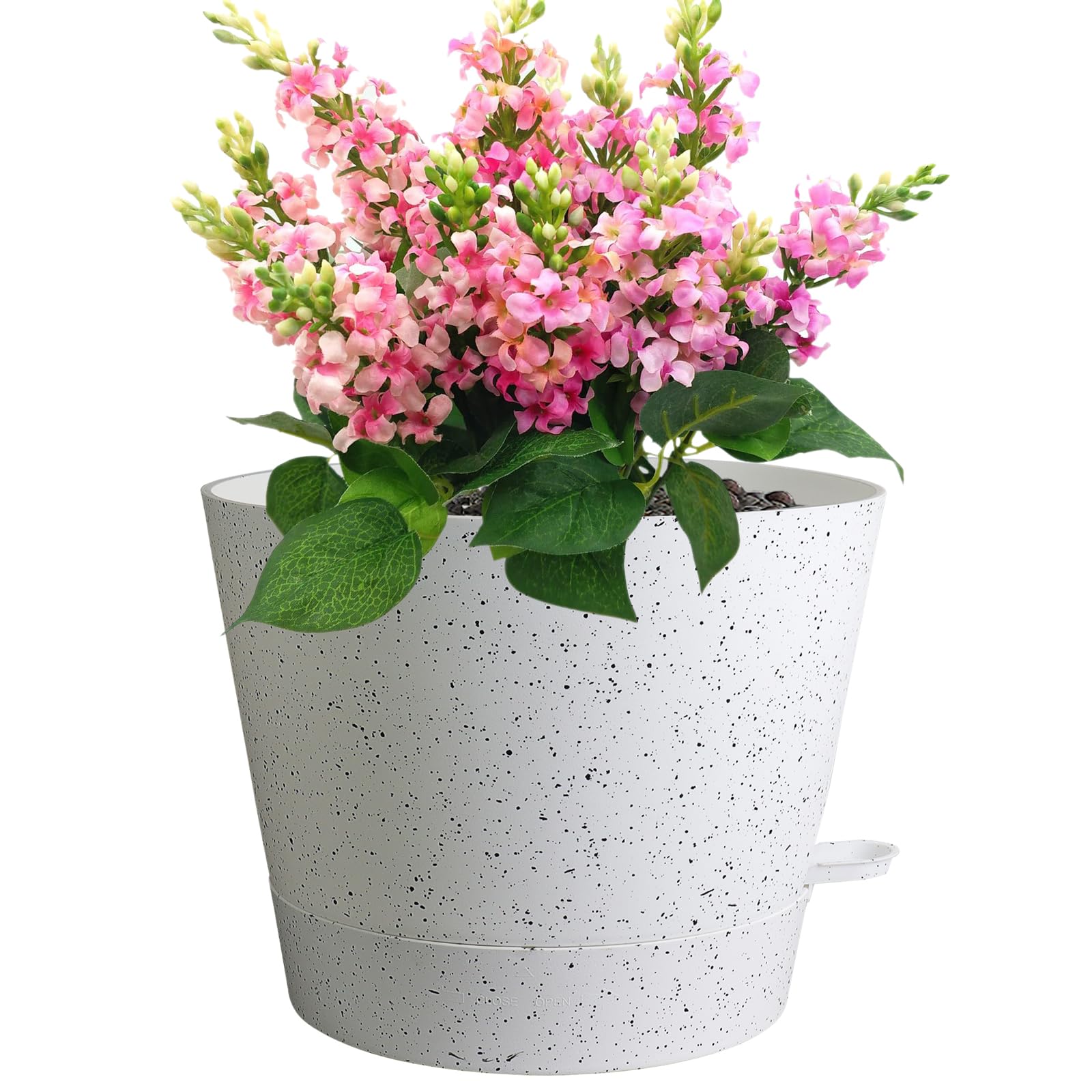
A sturdy 12-inch planter with 6mm thick walls and a deep reservoir that keeps large plants hydrated for a week or more.
This is the pot you reach for when you have a single statement plant — a money tree, a large pothos, or a fiddle-leaf fig — that needs consistent moisture without your daily attention. The cotton rope wicks water from the deep reservoir up into the soil, and the manufacturer says the water supply lasts 1-2 weeks. That is a meaningful stretch if you travel for a long weekend or simply want to water less often.
Owners mention the planter is “durable outdoors for 6 months” and that the speckled white color “blends well, lets plants stand out.” At 12 x 12 x 9.4 inches, it is noticeably larger than the OurWarm windowsill boxes (4.5 x 10.5 x 5.5 inches each) The plastic is impressively thick at about 6mm, which keeps the pot from feeling flimsy when filled with soil and a big plant.
One caution: some plants, like the reviewer’s money tree, do not like water wicking up from below. If you own a plant that prefers to dry out between waterings, you can simply skip the reservoir and use the pot traditionally — the built-in drainage slots still protect against root rot.
Solid Build, Real Coverage
- Thick 6mm plastic walls feel premium and hold up outdoors
- Deep reservoir provides 1-2 weeks of water
- Matte speckled finish looks “uptown” indoors, per buyers
One Catch to Know
- Not every plant likes bottom-watering (some prefer to dry out)
- Only one pot in the box, so it suits a solo large plant
Your best bet for: a single large indoor plant that craves steady moisture — think a fiddle-leaf fig, a large pothos, or a floor-standing fern that you do not want to haul to the sink every week.
Look elsewhere if: you need multiple pots for a collection, or your plant is sensitive to constantly moist roots (like a succulent or a snake plant).
3. D’vine Dev 6 Inch Design Self Watering Planter, Set of 2
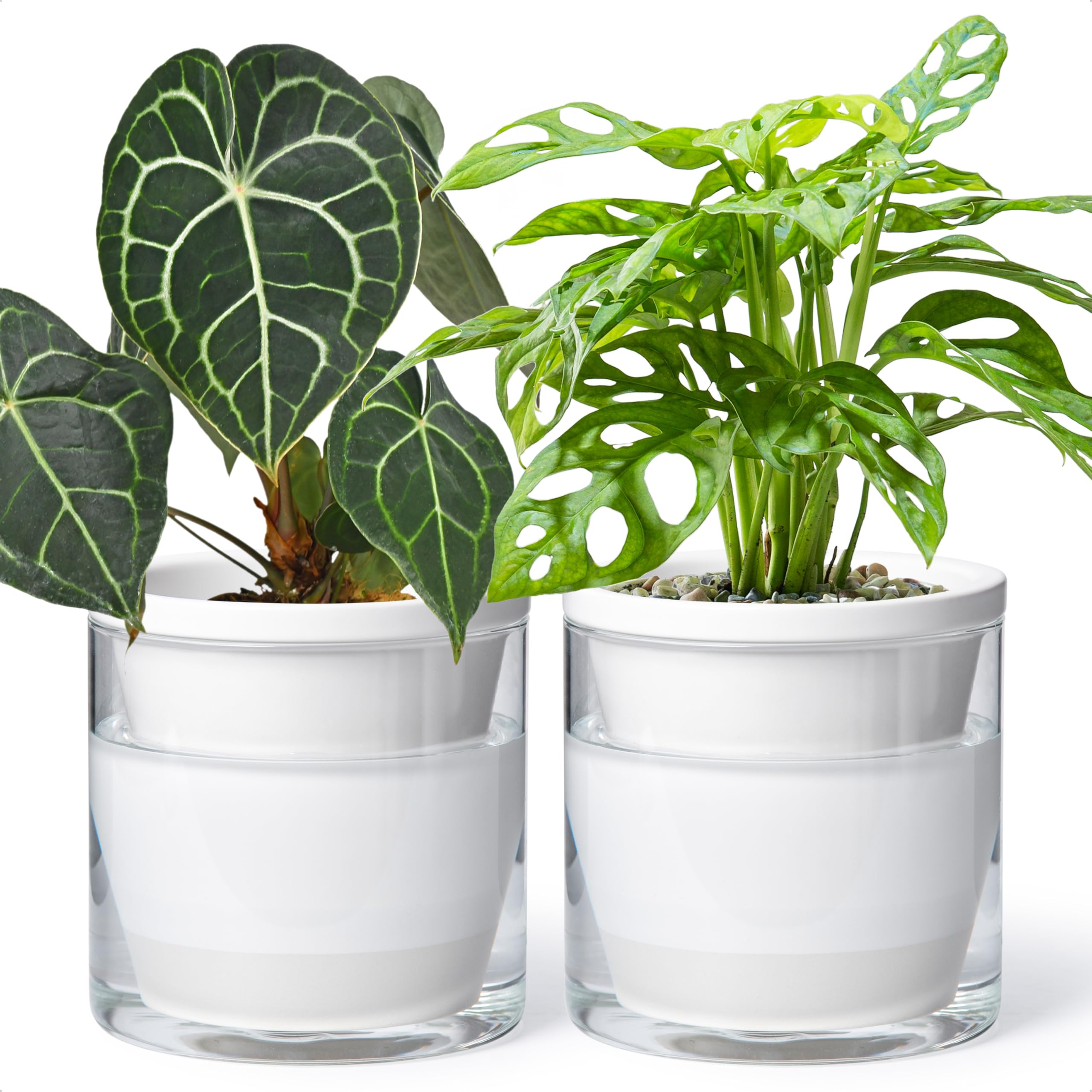
A chic terracotta pot that sits inside a clear glass cup, drawing water through its unglazed bottom quarter.
This system works differently from the cotton-wick models. The bottom quarter of the white terracotta pot is left unglazed, so when you fill the glass cup with water, the porous clay slowly seeps moisture through the pot wall into the soil. There are no drainage holes, which means no water or soil leaks onto your tabletop. Customers note they can “leave it unattended for a few weeks” and that it “takes away the worry of watering so often.”
At 6.2 inches in diameter and 6.2 inches tall, each pot holds about 0.5 gallons of soil. The handcrafted terracotta means slight size variation between pieces, but that is part of the natural look. One owner noted that “algae growth on terracotta is hard to clean” and recommended using distilled water with a bit of copper and peroxide to keep it at bay. The pots are not suited for outdoor use — direct sun and rain can turn the glass cup green with algae.
These work beautifully for moisture-loving plants like tradescantia, aloe, and small spider plants, but the slower wicking through clay also makes them a good fit for plants like Hoyas that prefer to dry out between refills, as long as you use an appropriate soil mix.
Elegant mechanism: The porous terracotta wall delivers water slowly and naturally, without a plastic wick or reservoir spout.
The trade-off: Algae can build up on the clay over time, and the glass cup means these are strictly for tabletops — no floor-standing use.
Reach for this if: you want a decorative, leak-proof self-watering system that blends into your home decor and works for both thirsty and moderate plants.
skip it if: you need a set for outdoor use, or you dislike any extra maintenance like cleaning algae from the clay pot surface.
4. KvyusFlourish 6-Pack Self Watering Pots, 6.7 inch

Six compact pots with a clear inner liner that lets you check root health and water level at a glance.
This 6-pack is built around a two-piece design: a solid outer pot and a transparent wick inner pot with drainage holes. The clear liner is a rare feature — you can pull out the inner pot to inspect root growth and see exactly when the soil is dry without disturbing the plant. The built-in cotton wick draws water up from the bottom reservoir, and the system holds enough water for up to two weeks of coverage, according to the manufacturer.
Each pot measures 6.7 inches in diameter and 5.6 inches tall. That makes them a good size for African violets, orchids, pothos, and spider plants. One reviewer noted the “slit sidewalls reduce root rot” and that the “clear liner for root check” is a “rare find.” The set comes in six color options — White, Black, Grey, Blue Gold, Rose Gold, and Grey Gold — so you can match your decor.
The main downside reported across reviews is inconsistent sizing — one buyer mentioned a 5-inch pot was “smaller than previous 4-inch.” If you are buying a second set down the road, the sizes may not stack evenly. Also, the plastic is lightweight and sturdy but not as thick as the Meowell pot above.
Smart for Root-Checkers
- Transparent inner pot allows visual root inspection
- Slit sidewalls improve air circulation and cut rot risk
- Available in 6 stylish colors
Watch Out For
- Size consistency issues between batches
- Lightweight plastic may not suit heavy floor plants
Best for: collectors of African violets, orchids, and pothos who want to keep an eye on root health and have several plants in matching pots.
Not ideal for: anyone who needs large or extra-large pots — these top out at 6.7 inches.
5. OurWarm Windowsill Herb Planter Box Indoor Set of 3

Three slim 10.5-inch window boxes with a visible water level window — ideal for a kitchen herb garden.
These are not round pots — they are rectangular window boxes that sit neatly on a sill, measuring 4.5 inches deep, 10.5 inches wide, and 5.5 inches tall each. The self-watering system uses two absorbent cotton ropes to pull water from the bottom reservoir into the soil. A transparent water level window on the front lets you see exactly how much water is left without lifting or poking the soil.
Buyers report very different thirst levels between herbs: “My peppermint plant can drain this thing in a few days while my oregano can go an entire week.” That is useful information — some herbs drink faster than others, so plan to check the water window more often for thirsty plants like mint. Each planter has a water injection port on the top, so you can add water without pulling the plant out.
A few buyers noted quality control issues — one set arrived missing the fabric wick strips, and some bottom trays were “slightly warping inwards.” The plastic is functional but not as thick as the Meowell or WSMKSZ pots. Also, the manufacturer specifies these are for indoor use only — no drainage holes means outdoor rain could create a swamp.
Visible Convenience
- Water level window shows remaining water at a glance
- Slim shape fits most standard windowsills
- Top water injection port for easy refills
Quality Quirks
- Some units missing wick strips or have warped bases
- Not for outdoor use — lacks drainage holes
Ideal for: growing basil, mint, oregano, and other herbs on a kitchen windowsill where you want to see water levels at a glance.
Not for: plants that hate wet feet or anyone who wants a single large statement pot — these are small and rectangular.
6. Vugosson 7-Pack Self Watering Planters, 4+8+17 Inch

Seven pots in three sizes with a cotton wick system that owners mention provides 7-14 days of water.
This is the biggest set in the lineup — one 17-inch long planter, two 8-inch medium pots, and four 4-inch small pots — giving you enough variety to water a whole windowsill collection from a single kit. Each pot uses a cotton wick that draws water from a bottom reservoir, and the manufacturer states it “can offer 7-14 days self watering after filled up.” The rate depends on your soil and the weather, but the range is realistic for a typical home environment.
The plastic used here is PP resin (polypropylene), which is non-BPA and odorless. The thickness varies between 1 cm and 2 cm depending on pot size, so the larger pots feel more substantial in hand. Multiple drainage slots sit in the inner pot, and there is a noticeable gap between the pot and the saucer where you can see the water level — a simple but effective design. Customers note the pots “look nice indoors” and “from a distance, they look like they could be made of ceramic.”
One common complaint is that the water tray feels “too shallow.” A reviewer noted that “the plants will likely use the water daily and require refilling often.” If you want truly long vacation coverage, the shallow reservoirs mean you may need to top off before a long weekend. Also, the dark gray color with different colored saucers might not match every decor.
low-maintenance (Mostly)
- Seven pots cover a whole collection — one 17-inch, two 8-inch, four 4-inch
- Non-BPA PP resin is safe for edible herbs
- Visible water gap for quick checks
Shallow Reservoir
- Water tray is shallow — daily refills may be needed for thirsty plants
- Self-watering wick is less effective for very dry soil mixes
Reach for this if: you are starting a whole indoor garden and want matching pots in multiple sizes — or you need the long 17-inch planter for crawling plants like pothos.
Look elsewhere if: you need a deep reservoir for week-long trips — the shallow tray here demands more frequent attention.
7. FAMZ Self Watering Pots for Indoor Plants, 4 Pack

Four white pots (10, 7, 5.5, and 4.3 inches) with magnets that hold the base securely in place.
The FAMZ set gives you four graduated sizes so you can pair a larger pot with smaller ones on the same shelf. Each pot uses a cotton wick system — actually two wicks per pot — to pull water from a bottom reservoir into the soil. The reservoir is transparent on the bottom, so you can see the water level. A neat design touch: the base has small magnets that click the reservoir tray to the pot, so it does not slide off when you lift the planter.
Reviewers point out the pots “revived a plant that wilts if watered late” and that the “winter white color” looks clean on a desk or kitchen counter. One reviewer measured the reservoir depth at 1.25 inches and noted it is “clear and deep,” though another buyer said it is “much smaller than I wanted” and “too shallow” for a week-long trip. The 4-pack includes a 10-inch, 7-inch, 5.5-inch, and 4.3-inch pot — but note that the 10-inch is the largest, not a separate floor pot.
The main complaint is that the bottom reservoir can fall off if you lift the pot without supporting the base. A reviewer said “the bottom will fall off, so it needs a latch or something.” Always carry these with one hand under the base.
Magnetic + Multi-Size
- Magnets keep the base securely attached (most of the time)
- Four graduated sizes for a varied collection
- Clear reservoir bottom lets you see water level
Detachable Base Risk
- Bottom reservoir can detach if not carried carefully
- Shallow reservoir may not cover a full week away
Best for: an office desk or a kitchen counter where you want a compact, multi-size set with a stable base — and you remember to water before a trip.
Not for: heavy floor plants (the 10-inch is the largest, but still a tabletop size) or anyone who needs a deep reservoir for extended vacations.
Understanding the Specs
Reservoir Depth and Coverage
The most important spec in a self-watering system is how much water the reservoir holds and how long that lasts. A deeper reservoir — like the WSMKSZ model with a 10+ cup capacity — can keep a plant hydrated for up to two weeks. A shallow tray, like the one on the Vugosson 7-pack, may need refilling every few days. Look for reservoirs that are at least 1.5 inches deep if you want real vacation coverage, or check buyer reviews for mentions of “10+ cups” or “7-14 days.”
Wick vs. Porous Wall
Cotton wicks are the most common wicking method — a rope or strip of fabric sits partly in the water and partly in the soil, drawing moisture up through capillary action. This works best for moisture-loving plants. Porous terracotta systems, like the D’vine Dev, use unglazed clay to slowly seep water through the pot wall. The clay method is slower and more natural, and it allows the soil to dry out more between refills, which suits plants that like to breathe. Neither method is better—they just match different plant types.
Drainage and Aeration
Just because a pot is self-watering does not mean the roots should sit in a puddle. Good self-watering designs include drainage holes or slots in an inner pot, plus a small air gap between the water reservoir and the soil. The KvyusFlourish 6-pack has a transparent inner pot with slit sidewalls that improve air circulation. If you are prone to overwatering or have plants with sensitive roots, look for these aeration features — they dramatically reduce the risk of root rot.
Water Level Visibility
Some pots include a clear window or a transparent base that lets you see the water level at a glance. The OurWarm windowsill boxes have a dedicated window on the front. The FAMZ set uses a clear bottom reservoir. Without a window, you have to lift the pot or check the spout — not ideal if the pot is heavy. If you are the type who forgets to check, a visible water indicator can save you from coming home to a dry reservoir.
FAQ
How does a self-watering pot actually work?
Will a self-watering system cause root rot?
Can I leave my plants for two weeks with a self-watering pot?
What type of plant is best for a self-watering system?
Can I use a self-watering pot outdoors?
How often do I need to refill the reservoir?
What is the difference between a self-watering pot and a regular pot with a saucer?
How do I clean algae off a terracotta self-watering pot?
Can I use a self-watering system for seeds and cuttings?
What should I do if the wick stops wicking?
Final Thoughts: The Verdict
If you want one dependable pick, the self watering system for indoor plants winner is the Meowell 12 inch Large because its thick 6mm plastic walls, deep 1-2 week reservoir, and clean speckled finish deliver the best balance of quality and coverage for a single large indoor plant. If you want a stylish, leak-proof system that works without a plastic wick, grab the D’vine Dev Terracotta Set. And for a whole collection of plants in one purchase, the standout is the Vugosson 7-pack — seven pots across three sizes for a whole windowsill garden.
How We Picked
We do not accept paid placement. Every pick is matched to a real buyer and a real use-case; we do not hands-on test units.
Sources & Methodology
Specifications: manufacturer listings and product documentation. Review insights: verified customer reviews, as of July 2026. Pricing: not shown on this page (it changes often); check the current price via the retailer link.
As an Amazon Associate, Lawn Gear Lab earns from qualifying purchases. This does not affect which products we feature.