
Specs are compiled from manufacturer listings and verified buyer reviews and can change over time — please confirm the key details on the product page before buying.
Pruning roses is a weekly ritual for most gardeners, but the wrong shears turn it into a battle against sore palms, crushed stems, and sap-glued blades. The real difference between a clean snip and a ragged tear depends on three things: blade sharpness, handle comfort, and how the tool fits your hand size. You want a bypass blade (it makes a clean scissor-like cut that heals fast) and a grip that does not punish your palm after the tenth bush. This guide sorts out seven shears against the specific demands of rose pruning.
I’m Rikta — the founder and writer behind Lawn Gear Lab. This guide is built by comparing the manufacturers’ published specifications and the patterns across verified customer reviews, so you get each pick’s real strengths and trade-offs instead of marketing spin.
Whether you are deadheading spent blooms or cutting back thick woody canes, finding the right tool saves your hands and your plants. Here is my breakdown of the best pruning shears for roses this season, from budget-friendly workhorses to premium precision tools built to last a lifetime.
Our Picks at a Glance

How To Choose The Best Pruning Shears For Roses
Picking the right shears for roses is not complicated once you know what to look for. Rose stems range from tender new growth to thick, woody canes, and your shears need to handle both without crushing or splitting the stem. Here are the key specs to focus on.
Cutting Mechanism: Bypass vs. Anvil
A bypass blade has a curved upper blade that slides past a lower one — the same action as a pair of scissors. This makes a clean, precise cut that does not crush the stem, which helps rose canes heal faster and resist disease. Anvil blades, by contrast, smash the stem against a flat surface and are better for dead wood, not live roses. For rose pruning, bypass is the only choice.
Blade Material and Coating
High-carbon steel is the standard for staying sharp cut after cut, but the coating matters just as much. A titanium or Teflon coating (a non-stick layer) reduces friction so the blade glides through stems and resists sap buildup — sticky plant resin that can gum up a blade in minutes. A fluorine coating does the same job. Uncoated steel demands frequent wiping and drying to prevent rust, especially in humid gardens.
Handle Design and Grip
Rose pruning often involves hundreds of cuts in one session. Look for a handle made of rubber, TPR (a soft, shock-absorbing rubber-like material), or aluminum with a cushioned grip — these reduce vibration and keep your hand from cramping. Some shears have a stepless opening adjustment, which lets you set how wide the handles open, so people with smaller or weaker hands can still make full-power cuts without straining.
Quick Comparison
| Model | Best For | Cutting Width | Blade Material | Handle Material | Amazon |
|---|---|---|---|---|---|
| Haus & Garten EnduroPRO★ Best Overall | Best Overall | 1 in | High Carbon Steel + Titanium | Aluminum + Rubber Grip | Amazon |
| FELCO 100Precision Pick | Cut-and-Hold Precision | 0.4 in | Carbon Steel | Forged Aluminium + Rubber | Amazon |
| Saboten Japanese Pruning Shears | Value Japanese Steel | 20 mm (0.79 in) | High Quality Carbon Steel + Fluorine | Rubber + Plastic | Amazon |
| SUIZAN Bypass Pruning Shears | Compact Premium | 15 mm (0.59 in) | Japanese Steel | Polyvinyl Chloride | Amazon |
| VOTREK Pruning Shears (Stepless) | Universal Fit / Weak Hands | 1 in | High Carbon Steel + Teflon | Thermoplastic Rubber (TPR) | Amazon |
| 8.5″ VOTREK Stepless Handle | Budget All-Rounder | 26 mm (1.02 in) | SK5 High Carbon Steel | Rubber | Amazon |
| Fiskars Floral Pruning Shears | Light Deadheading | 0.5 in | Ground Steel | Silicone / Rubber / Nylon | Amazon |
In‑Depth Reviews
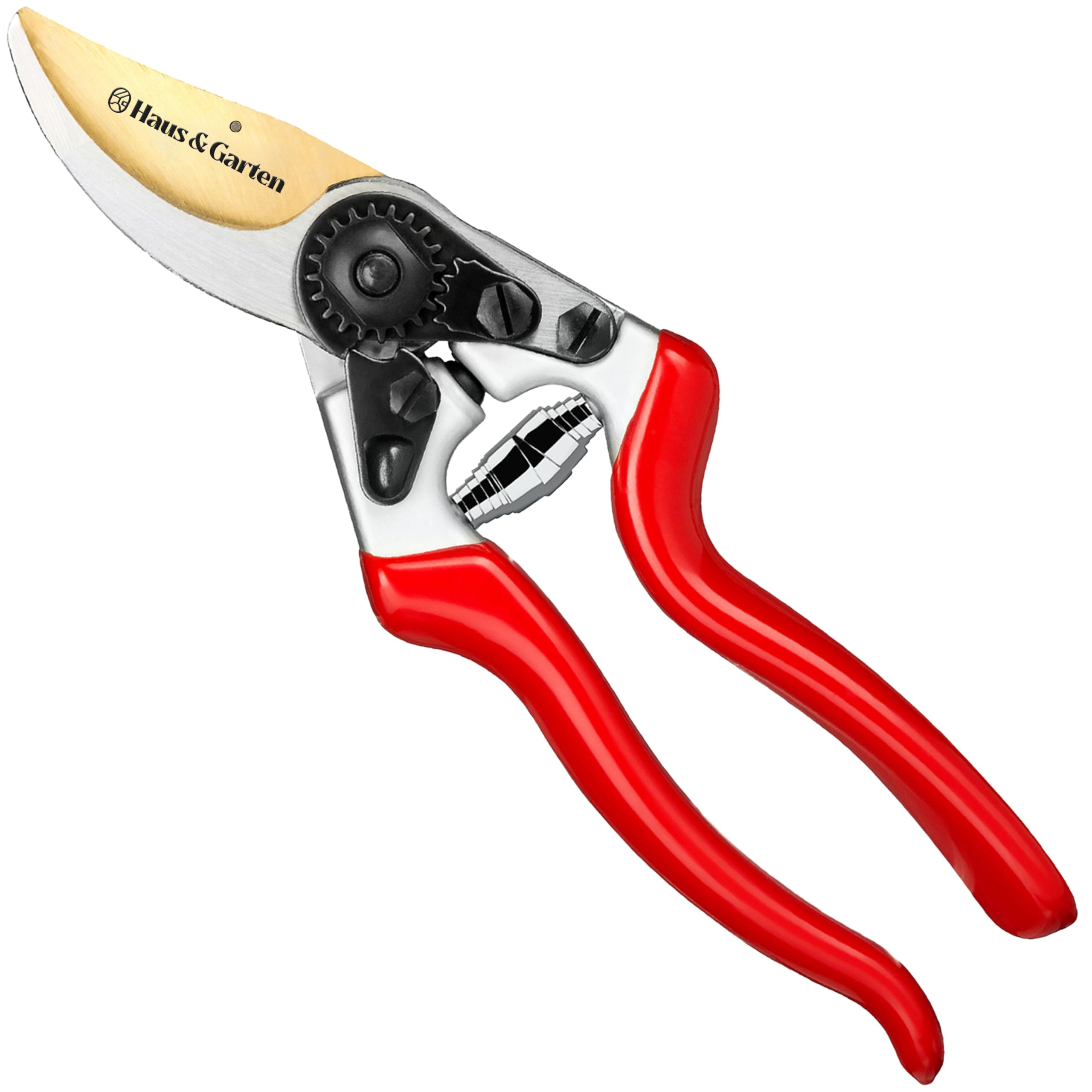
1. Haus & Garten EnduroPRO Ergonomic Bypass Pruners
Our pick — over 4.5★ from 800+ verified ratings; the strongest balance of quality and price.
The heavyweight champ that cuts thick rose canes without a second squeeze.
If you only buy one pair of rose shears, this is the one. The Haus & Garten EnduroPRO cuts through branches up to 1 inch thick — that is a full 0.5 inches wider than the Fiskars Floral shears, so you can handle old woody canes and fresh stems with one tool. Its blade is made from Japanese-grade high-carbon steel with a titanium coating, which buyers report stays “incredibly sharp” and resists rust far longer than uncoated steel. At 8.8 ounces, it is only slightly heavier than the 8.32-ounce VOTREK shears, but the extra weight comes from a heavy-duty anodized aluminum body and drop-forged handles that feel built for decades, not seasons. This is the best pick if you want one tool for both thick old canes and delicate new growth — skip it if you need a lightweight shear for quick daily deadheading only.
The ergonomic handle aligns your wrist naturally, and the textured red rubber grips keep your hand from slipping even when your palm is sweaty. Reviewers mention that the grip is comfortable but wish the handles were larger for arthritic hands. Still, for anyone tending a rose garden with a mix of delicate blooms and thick, established canes, this is the one that does everything well.
One reviewer summed it up clearly: “Incredibly sharp goes through twigs and branches easily.”
Built to outlast the season: The titanium coating and heat-treated steel mean you are not replacing these every year — a real value for anyone tired of cheap shears that rust.
One trade-off: If you have very small hands or arthritis, the grip might feel a bit wide; consider the VOTREK stepless model below for a more adjustable hold.
Your everyday shears: Pick this if you want one pair that handles everything from rose deadheading to thick branch pruning without complaining.
Skip it for tiny hands: Choose a more adjustable shear if you need the handles to close narrower for a comfortable grip.
2. FELCO 100 Cut and Hold Pruning Shears
The rose florist’s secret — cuts and holds the stem in one motion.
The FELCO 100 is a unique tool in this lineup because it does two jobs at once: it cuts the stem and then grips it, so the severed bloom does not fall to the ground. This is critical for rose pruning because dropped stems can dirty the flower or get lost in the bush. The carbon steel blades stay sharp through heavy use (owners mention they “do not wear off”), and the forged aluminum handles with rubberized grips are built to outlast everything else here — FELCO backs them with a lifetime warranty and sells every single replacement part. Choose this over the Haus & Garten if you hate chasing dropped blooms; pass on it if you prefer a lighter tool for quick snips.
Its cutting capacity is the smallest on this list at 0.4 inches, making it ideal for deadheading thin stems and cut-flower harvesting rather than chopping thick wood. One reviewer noted it “struggles with thick rose stems (dime-size).” The built-in wire cutter and stem stripper are nice extras for floral arrangers. If you are a rose grower who snips blooms for vases daily, the cut-and-hold feature changes the workflow completely.
Buyers also point out that the partially open lock reduces hand effort during repetitive cuts. It is a premium tool at a premium price, but for its specific job — clean deadheading without losing the stem — nothing else here does it quite the same way.
Saved stems, saved time: The clamping mechanism stops cut roses from falling, so you are not bending down to pick up every bloom.
Know the limit: This is a dedicated flower and thin-stem tool — do not use it for cutting thick, woody rose canes or it will struggle.
Florist-grade deadheader: Reach for this if you harvest cut roses regularly and want to catch every stem in one move.
Not for heavy pruning: Pass if your garden requires cutting canes thicker than a pencil — grab the Haus & Garten above for that job.
3. Saboten Japanese Pruning Shears 7.9″

Japanese carbon steel sharpness at a price that undercuts the competition.
The Saboten shears cut up to 20 mm (0.79 inches) — a middle ground between the delicate FELCO and the brute-force Haus & Garten — making them perfect for rose canes that are not yet tree-size. The blade is made from high-quality carbon steel with a fluorine coating, which means sap and plant gunk slide right off instead of gluing the blade shut, a common frustration when pruning roses. At 0.24 kilograms (about 8.5 ounces), it is nearly identical in weight to the VOTREK models, but the non-slip rubber grip gets specific praise from reviewers with small or arthritic hands.
One florist buyer wrote that these shears are “perfect” and uses them daily for work. The compact 7.9-inch length gives you fine control for detailed deadheading and shaping bonsai-style rose bushes. Unlike the heavier Haus & Garten, the Saboten feels nimble in the hand, and customers note it “cuts live/dead wood with little effort.” A single caveat: the plastic handle components may not survive a drop on concrete as well as the aluminum-bodied Haus & Garten. This is for the precision pruner who shapes each bush; it’s not for you if you need a rugged tool for thick, woody canes.
Reviewers also note the fluorine coating makes cleanup “take seconds” — just wipe and store — which is a real convenience when you are pruning multiple bushes in one session.
Easy on the hands: The lightweight body and rubber grip reduce wrist fatigue, so you can deadhead a whole bed without a break.
One thing to watch: The plastic in the handle is sturdy but not as durable as aluminum; avoid dropping it on hard ground.
Smart money pick: Choose this if you want Japanese steel sharpness and sap-resistant performance without spending premium dollars.
Skip for heavy wood: Pass if you regularly cut canes bigger than a sharpie marker — the Haus & Garten cuts wider.
4. SUIZAN Bypass Pruning Shears 8″

A slice of Japanese blade-making history, compact enough for tight spots.
SUIZAN makes these shears in a Japanese town with over 250 years of blade industry history, and the quality shows in the cut. Weighing just 0.46 pounds (210 grams) and measuring 8 inches, it is the lightest full-size shear on this list — significantly lighter than the 8.8-ounce Haus & Garten — which makes a real difference when you are reaching into dense rose bushes for an hour. The blade is Japanese steel with a 15-millimeter cutting width (about 0.59 inches), which is narrower than the Saboten but still handles most rose canes you will encounter. Pick this if you want the lightest full-size shear for long pruning sessions; look elsewhere if you regularly cut stems thicker than 0.6 inches.
Reviewers with small hands specifically note the “excellent gripping” fit, and one buyer who is a professional orchardist calls it “quality Japanese craftsmanship” at a fair price. The bypass design ensures clean cuts that heal fast, and the blade length of 2.76 inches gives good reach. However, the 15 mm cutting width means it will struggle with very thick, old canes — if your rose garden has established canes thicker than a dime, this is not your tool for those cuts. It is a specialist for detail work, shaping, and fresh growth.
One buyer who bought a third pair calls them “sharp strong excellent feel” and notes the layered carbonized steel stays sharp a long time — as long as you wipe it dry after use to prevent rust.
Built for precision: The compact size and razor-sharp Japanese steel let you make detailed cuts without the tool bulk getting in the way.
The catch: At 15 mm, the cutting capacity is the smallest among the bypass shears here — keep it for stems, not trunks.
Detail-oriented pruner: Pick this if you value lightweight precision and want a tool from a historic blade-making region.
Skip for thick canes: Pass if your rose bushes have canes thicker than half an inch — the VOTREK or Haus & Garten will cut them more easily.
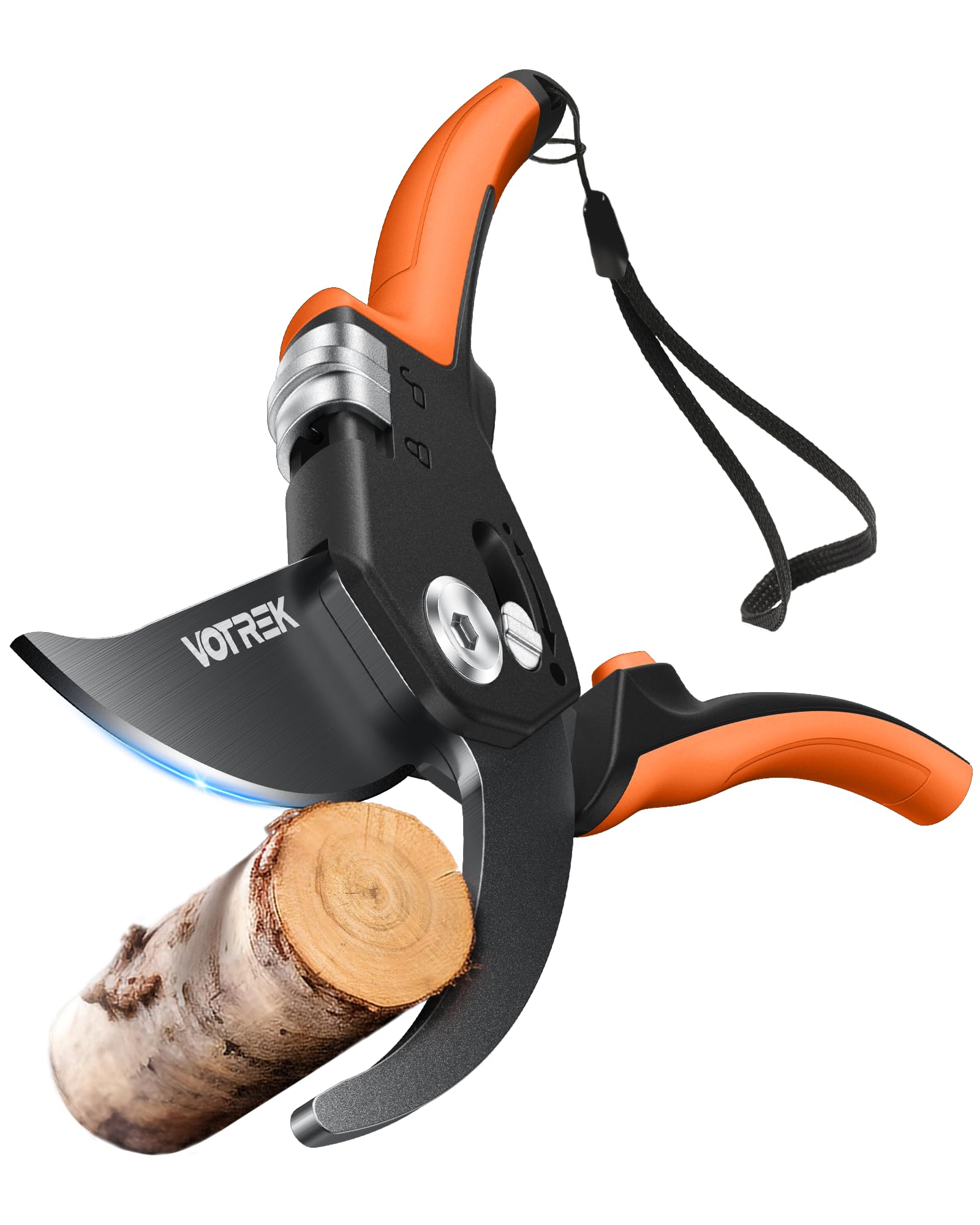
5. VOTREK Pruning Shears (Patented Stepless Handle Opening)
The shear that adjusts to your hand, not the other way around.
This VOTREK model solves a problem most shears ignore: not every hand is the same size. Its patented stepless handle opening lets you dial in exactly how wide the handles open, so someone with small hands (or weak grip strength) can still get a full-power cut without overextending. The blade cuts up to 1 inch thick, matching the Haus & Garten, and uses high-carbon SK5 steel with a Teflon coating that the maker claims reduces cutting resistance by 30% compared to traditional tools. The sealed spring design is another smart upgrade: traditional exposed springs rust and jam, but this one is enclosed in the housing, so it stays smooth and reliable. This is the best choice if you have small hands or arthritis; steer clear if you prefer a fixed-handle shear with no adjustment.
At 8.32 ounces it is nearly identical in weight to the 8.5″ VOTREK below, but the handle material is upgraded to TPR (thermoplastic rubber — a soft, shock-absorbing rubber-like material) which gives a secure, cushioned grip even when your hands are sweaty. Buyers call it “easy to grip” and praise the enclosed spring as a “nice feature.” One gardener with “elderly hands” reported it was light and easy to manage. The only downside: the serrated blade edge can slightly roughen the cut surface on very soft stems, though for woody rose canes it works fine. This is for gardeners who want the stepless adjustment plus a cushioned grip; skip it if you need a perfectly smooth cut on delicate stems.
If you or a fellow gardener in your family has arthritis, smaller hands, or just hates sore palms after pruning, this is the shear designed for that scenario.
Fits everyone: The stepless handle means you can adjust the opening to match your exact hand size and strength.
One pain point: The serrated blade edge is great for grip but may leave a slightly rougher cut on very tender green stems.
For weak hands and small grips: This is the shear to buy if hand fatigue or arthritis limits how long you can prune.
Skip for smooth cuts: Pass if you need a pristine, crushed-free cut on every single green stem — the Saboten’s straight blade is a better fit.
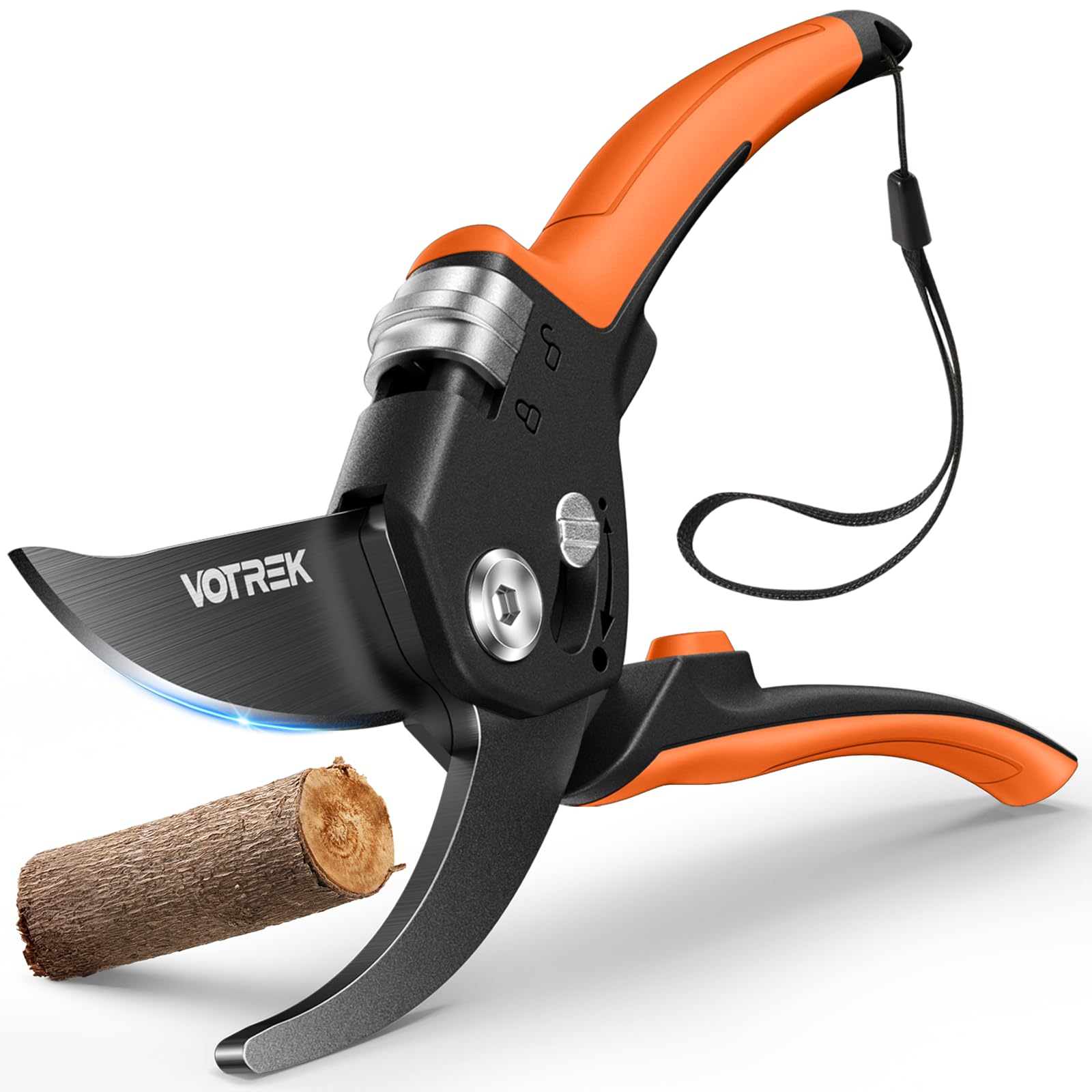
6. 8.5″ VOTREK Stepless Handle Opening Pruning Shears
Cuts a full inch at a price that leaves room in the budget for more roses.
This is the entry-level stepless VOTREK, and it delivers remarkable value for the price. It cuts up to 26 mm (just over 1 inch) in diameter — the widest cutting capacity on this list, tied with the 1-inch Haus & Garten — using SK5 high-carbon steel blades with a Teflon coating to prevent sap buildup. At 8.32 ounces it is slightly lighter than the Haus & Garten’s 8.8 ounces, and the handle adjustment system works the same way as the more expensive VOTREK above, just with a standard rubber handle instead of TPR. One buyer wrote that they “used it to cut down an entire rose bush” and the shears “worked perfectly” even on thick old stalks. This is the budget-friendly stepless option; pass on it if you want the upgraded TPR grip of the pricier VOTREK.
The internal spring mechanism makes cutting low-effort, which helps when you are working through a big bed. Reviewers point out it is “sharp, easy to handle, and sturdy,” though a small number mention the blades “at times get stuck in closed position.” The safety lock keeps the blade securely closed for storage, and the bright orange color makes it easy to spot in the garden shed. If you are on a tight budget or need a second pair for helpers, this is the smart buy.
One caveat: the serrated blade edge is the same as its pricier sibling, so it is slightly rougher on very delicate green stems than a straight-edged blade like the Fiskars or FELCO.
Huge cut for the cost: No other shear at this price point cuts a full 26 mm, so you get real heavy-duty performance on a budget.
Watch for sticky blades: A few buyers mention the blades can stick in the closed position; occasional lubrication helps prevent this.
Best bang for your buck: Pick this if you need a full-capacity shear for light-to-medium rose pruning without spending much.
Skip for daily heavy use: If you prune thick canes every week, invest in the Haus & Garten or VOTREK TPR version for better build quality.
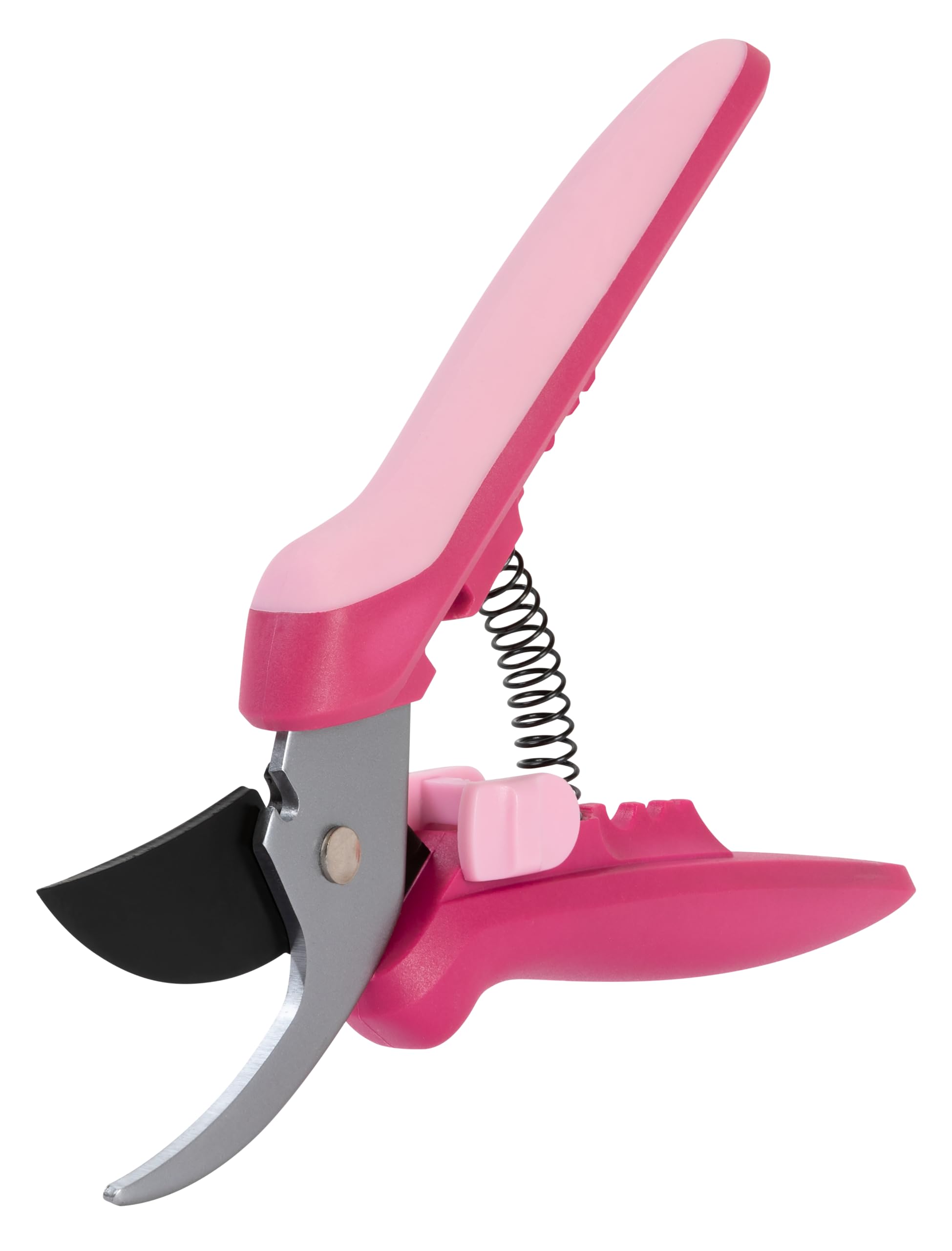
7. Fiskars Floral Pruning Shears, Rose Petal Pink
The dedicated deadheader that keeps its edge through daily use.
The Fiskars Floral Pruner is a different tool from the others here — it is built specifically for light, fast work like deadheading spent blooms and cutting flower stems for arrangements, not for chopping thick wood. Its cut capacity is 0.5 inches, which is half the width of the Haus & Garten’s 1-inch cut. That is by design: the smaller, sharper blades make delicate work easier and prevent crushing soft stems. The low-friction coating on the ground steel blade prevents sap from gumming it up, and the built-in stem stripper and wire cutter are handy extras for cleaning up stems before putting them in a vase.
Buyers love it for daily deadheading — one says it is “perfect for the flowers that need to be deadheaded daily” and another reports it “cuts easily without ripping.” The Softgrip touchpoints and Easy Action spring (which gently opens the blades after each cut) reduce hand strain during repetitive snipping. At about 0.35 pounds, it is the lightest shear on this list, which again suits its purpose: snip, snip, snip without tiring your hand. This is the dedicated light-duty tool for daily deadheading; it’s not for you if you need to cut thick woody canes over 0.5 inches.
The main trade-off is obvious: do not use this for anything thicker than a pencil. It is a specialist tool for rose maintenance, not renovation. If your garden needs both light and heavy pruning, you might pair this with the Haus & Garten as a two-tool system.
Perfect for the daily deadhead: The light weight and spring-open action make it easy to snip spent blooms one after another.
Not a pruner for thick canes: The 0.5-inch cut limit means it will struggle with any woody stem; have a bigger shear ready for those jobs.
For the weekly deadhead session: Grab this if you mostly need to snip off old blooms and thin stems, not cut back the whole bush.
Skip for heavy pruning: Pass if your rose garden needs serious cane reduction — get the Haus & Garten or a VOTREK for thick cuts.
Understanding the Specs
Bypass vs. Anvil Blade
A bypass blade (the kind used in every shear on this list) works like scissors — two blades slide past each other to make a clean, scissor-like cut. This is the only type you want for live rose stems because it does not crush the stem’s water-carrying tubes. An anvil blade, by contrast, smashes the stem against a flat surface and is better for dead wood, not live pruning. For roses: always bypass.
Cutting Width (Capacity)
This spec tells you the thickest branch the shears can cut in one clean squeeze. Measured in inches or millimeters, it ranges on this list from 0.4 inches (the FELCO 100) to 1 inch (the Haus & Garten and VOTREK models). For light deadheading and thin stems, a narrower capacity (0.5 inches or less) gives you better control. For cutting back thick, woody rose canes — the type that have grown for two or three years — you want at least 0.75 inches of capacity.
Blade Coatings Matter for Sap
Rose stems ooze sticky sap that can glue a plain steel blade shut in minutes. A coating — whether titanium, Teflon, or fluorine — creates a non-stick surface so the sap slides off instead of building up. This keeps your cuts smooth and makes cleanup as easy as wiping the blade with a cloth. Uncoated steel needs careful drying after each use to prevent rust, which is more maintenance than most gardeners want.
Handle Design and Hand Fatigue
Rose pruning involves hundreds of cuts in a row, so handle material and shape directly affect how long you can work. Rubber or TPR grips absorb vibration and stop your hand from slipping. A stepless opening adjustment (found on the VOTREK models) lets you set the handle spread to match your hand size, which is a standout for people with small or arthritic hands. Heavier aluminum handles add durability but also add weight — something to consider if you prune for an hour or more at a time.
FAQ
Can I use bypass shears for other garden tasks besides roses?
How do I keep my pruning shears from rusting?
What is a stepless handle opening and do I need it?
How often should I sharpen rose pruning shears?
Are Fiskars pruning shears good for roses?
What is the difference between SK5 steel and Japanese high-carbon steel?
Can left-handed people use these shears?
What does a fluorine coating do on pruning shears?
Is a heavier shear always better for cutting thick branches?
Can I use rose pruning shears on citrus or fruit trees?
Final Thoughts: The Verdict
For most gardeners, the pruning shears for roses winner is the Haus & Garten EnduroPRO because it cuts the widest range of stem sizes (up to 1 inch), stays sharp with its titanium coating, and feels sturdy enough to last for years. If you need a shear that fits smaller or weaker hands without sacrificing cutting power, grab the VOTREK Pruning Shears (Stepless Handle Opening). And for the daily deadheader who wants a dedicated light-duty tool that snips with zero effort, the Fiskars Floral Pruning Shears is the lightest pick at 0.35 pounds.
How We Picked
We do not accept paid placement. Every pick is matched to a real buyer and a real use-case; we do not hands-on test units.
Sources & Methodology
Specifications: manufacturer listings and product documentation. Review insights: verified customer reviews, as of July 2026. Pricing: not shown on this page (it changes often); check the current price via the retailer link.
As an Amazon Associate, Lawn Gear Lab earns from qualifying purchases. This does not affect which products we feature.