
Specs are compiled from manufacturer listings and verified buyer reviews and can change over time — please confirm the key details on the product page before buying.
Herbs and vegetables have one clear demand from their soil: it must drain quickly enough so roots never rot, yet hold moisture long enough so you are not watering twice a day. The wrong mix either turns into concrete or lets water run straight through, and your plants pay for it. This guide cuts through the shelf clutter to show you exactly which bag to grab for your tomatoes, basil, peppers, and everything in between.
I’m Rikta — the founder and writer behind Lawn Gear Lab. This guide is built by comparing the manufacturers’ published specifications and the patterns across verified customer reviews, so you get each pick’s real strengths and trade-offs instead of marketing spin.
You want a potting soil that helps your herbs and vegetables thrive in containers, not one that turns into mud or dust. Below are seven ready-to-use blends, from nutrient-dense mixes for heavy feeders like tomatoes to lighter ones for delicate seedlings, each judged on drainage, aeration, and what actual buyers report — this is your honest look at the best potting soil for herbs and vegetables for your containers this season.
Our Picks at a Glance
How To Choose The Best Potting Soil For Herbs And Vegetables
Not all soil is the same. A mix that works for a snake plant can drown your basil. Here is what to check before you buy.
Drainage vs. Water Retention
Herbs like rosemary and thyme need a loose, fast-draining mix. Leafy greens and tomatoes, however, appreciate a bit more moisture. Look for ingredients like perlite (the small white rocks) or coarse sand, which create air pockets, balanced with peat moss or coconut coir (called “coco coir”) that holds water. A bag heavy on fine peat and light on perlite will likely stay too wet for most herbs.
Nutrient Content: The Starting Meal
Potting soils come with a “starter charge” of nutrients — often from composted manure, worm castings (earthworm droppings), kelp meal, or synthetic slow-release fertilizer. A rich blend saves you from fertilizing for the first few weeks. But be careful: a mix with very high nutrient levels (often sold as “tomato soil”) can sometimes be too hot for delicate herb seedlings, causing leaf burn.
Organic vs. Conventional
Organic mixes use natural nutrient sources like bone meal, feather meal, or alfalfa meal and skip synthetic chemicals. If you grow edibles and want to avoid artificial fertilizers, look for the OMRI (a seal from the Organic Materials Review Institute) listing on the bag. Conventional soils, like the well-known Miracle-Gro line, use synthetic timed-release fertilizer — they work well but rely on manufactured inputs.
Quick Comparison
| Model | Best For | Volume | Item Weight | Rating | Amazon |
|---|---|---|---|---|---|
| FoxFarm Ocean Forest★ Best Overall | Heavy feeders & seedlings | 1.5 cu ft | 34 lb | 4.7/5 | Amazon |
| Coast of Maine Bar HarborPremium Pick | Premium all-around container garden | 16 Qt | 14 lb | 4.8/5 | Amazon |
| Miracle-Gro Potting Mix | Quick growth & easy bag handling | 8 Qt (3-Pack) | — | 4.7/5 | Amazon |
| Miracle-Gro Moisture Control | Forgetful waterers & hot climates | 16 Qt (2-Pack) | — | 4.6/5 | Amazon |
| Espoma Organic Potting Mix | Indoor & outdoor container herbs | 8 Qt (2-Pack) | — | 4.5/5 | Amazon |
| Coast of Maine Veg & Tomato | Tomatoes & zucchini in pots | 20 Qt | — | 4.5/5 | Amazon |
| Back to the Roots | Budget-friendly peat-free mix | 6 Qt | 4.4 lb | 4.5/5 | Amazon |
In‑Depth Reviews
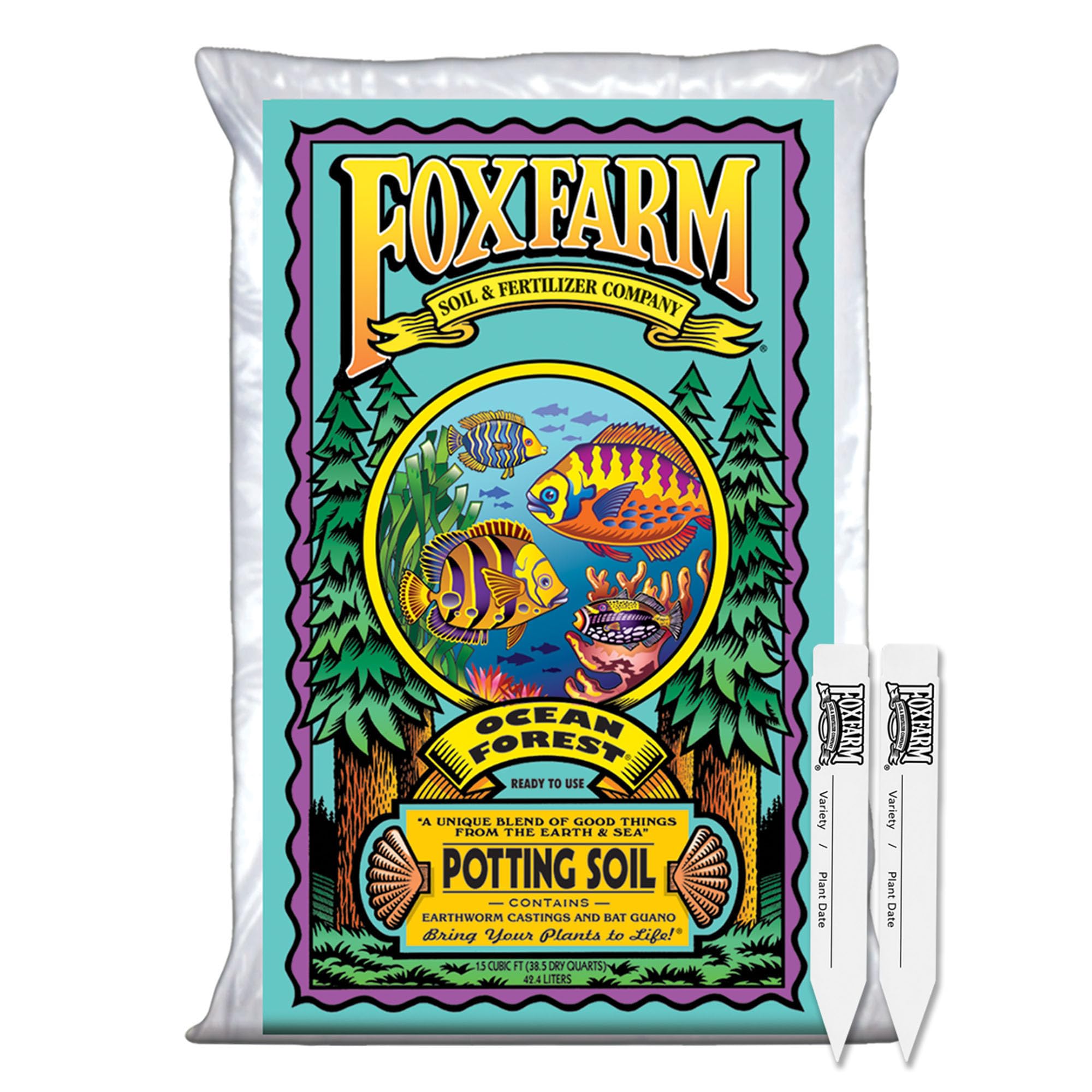
1. FoxFarm Ocean Forest Potting Soil with 2 Plant Tags, 1.5 cu ft
Our pick — over 4.5★ from 10,000+ verified ratings; the strongest balance of quality and price.
The heavyweight champion that turns container plants into vigorous producers from the moment you open the bag.
FoxFarm Ocean Forest earns the top spot because its ready-to-use nutrient blend handles everything from basil seedlings to full-size tomato plants without you adding anything else. The mix includes aged forest products, sphagnum peat moss, perlite (a lightweight volcanic rock that improves drainage), sandy loam, and a fertilizer from fish emulsion, crab meal, shrimp meal, earthworm castings, kelp meal, and oyster shell — so the nutrients are already there; you just plant and water. One reviewer noted that “Fox Farm soil outperforms Miracle-Gro for tomato plants; same seeds, size, and watering, but Fox Farm plants flourished,” which sums up the real-world edge this mix delivers. It is best if you want one bag that works for both delicate herbs and heavy-feeding vegetables without extra work. skip it if you need a peat-free or lightweight mix — this bag weighs 34 pounds for 1.5 cubic feet.
At 34 pounds for a 1.5-cubic-foot bag, it is noticeably heavier than the Coast of Maine blends, which is a direct trade-off for the dense nutrient content and sandy loam that helps prevent root rot. Unlike the lighter Back to the Roots mix (6 quarts at 4.4 pounds) versus the FoxFarm bag at 34 pounds for 1.5 cubic feet, the FoxFarm bag is a workout to carry, but you get that rich, ready-to-go composition. If you have a decent number of pots and want the highest-rated, most reliable soil in one trip, this is it.
Owners mention the soil absorbs water immediately — no frustrating dry pockets on a new plant — and they often come back for more. The two included plant tags (for labeling varieties and planting dates) are a small bonus that makes sense when you are managing multiple containers.
The edge it holds: A dense, nutrient-packed mix that a reviewer called “Simply the best” potting soil — this is the top performer for anyone serious about container vegetables.
The honest catch: The 34-pound weight makes it a chore to carry, and the price point is higher than entry-level mixes; budget-conscious buyers may prefer a smaller, lighter bag.
Reach for this if: You want a single soil that works for heavy feeders like tomatoes AND delicate herbs without needing to mix or amend anything.
Look elsewhere if: You need a lightweight bag for easy carrying or you only have a few small pots — the volume is generous.
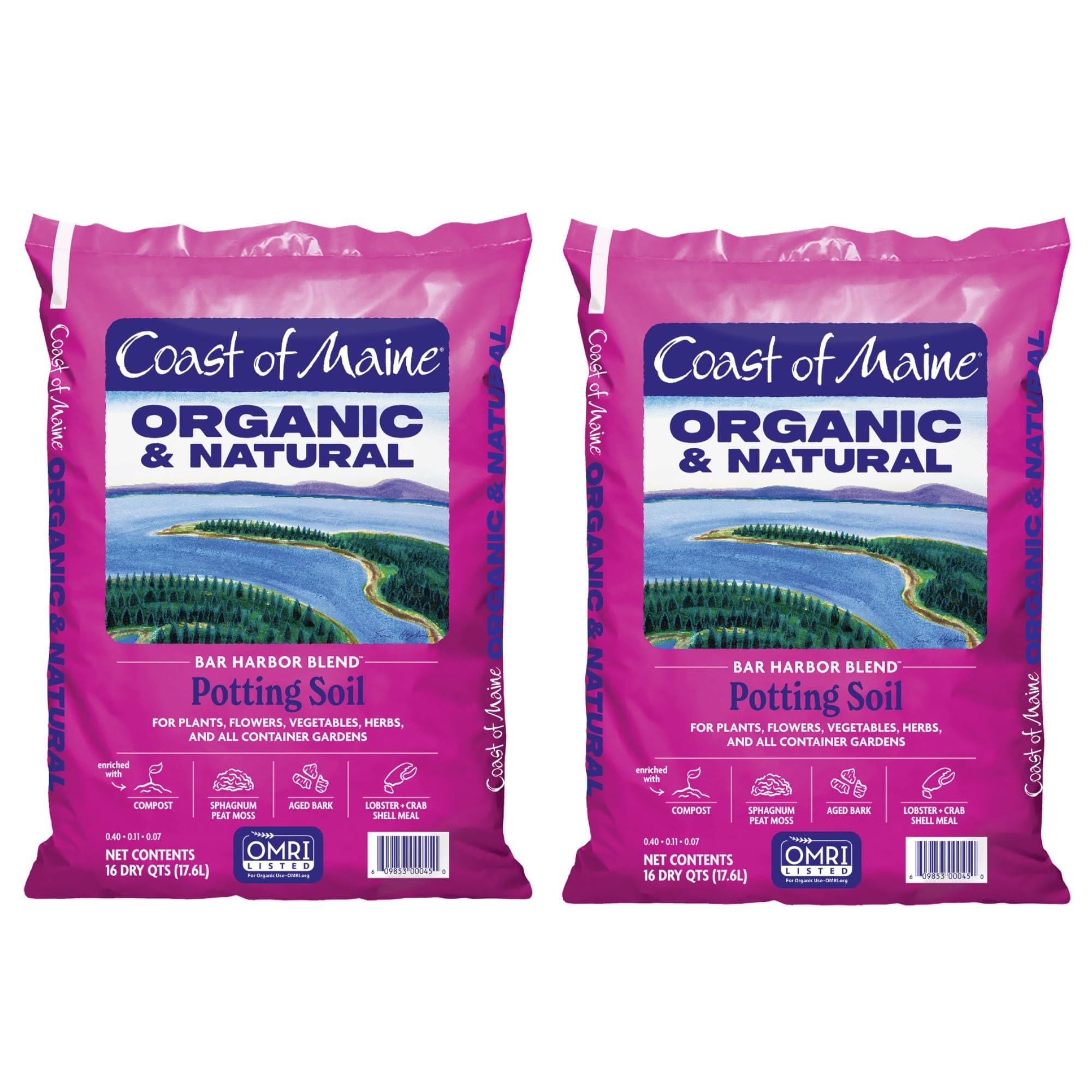
2. Coast of Maine Organic & Natural Bar Harbor Blend Potting Soil (16 QT)
The dark, nutrient-rich blend that one buyer mentioned made their tomatoes “never looked so good.”
This Bar Harbor Blend from Coast of Maine has earned a 4.8/5 rating across 549 reviews — the highest average in this lineup — and the ingredients explain why. It is formulated with sphagnum peat moss, compost, perlite, lobster and crab shell meal, and kelp meal. Those seafood-based meals provide a slow-release nitrogen source (a nutrient plants use for leafy growth) that keeps herbs and vegetables fed for weeks without needing extra fertilizer. Customers note it is “rich and not full of sticks like some others,” which makes for a consistent, easy-to-work-with texture.
Compared to the heavier FoxFarm Ocean Forest (34 pounds), this bag weighs 14 pounds for 16 quarts, making it noticeably easier to haul up a flight of stairs or carry across a yard. Yet it still packs enough organic nutrition to handle container vegetables, indoor herbs, and hanging baskets. One owner reported they used two bags to mound up 8 potato plants and had extra for two more planters, calling it “excellent value for the money.”
The slow-release nitrogen also means this is a forgiving choice for beginners — you are less likely to accidentally “burn” (over-fertilize) your herbs compared to a mix with a heavy synthetic charge. The only real downside is the price per quart, which sits at the premium end of this list.
The defining quality: A perfectly balanced premium organic soil with a 4.8/5 rating — buyers consistently say it is “some of the best soil out there” with no unexpected weeds.
The nuance: At this price point, it is best for gardeners who value organic ingredients and lightweight handling over getting the most volume for their dollar.
Best for: Gardeners who want a premium organic blend that is light to carry and proven to produce vibrant growth in both herbs and heavy-feeding vegetables.
pass on it if: You are filling many large raised beds on a strict budget — the smaller volume goes fast in big containers.
3. Miracle-Gro Potting Mix, 8 qt. (3-Pack)

The classic three-pack that feeds for six months and comes in bags you can actually carry.
Miracle-Gro’s standard potting mix — the one that the brand claims “Grows Plants Twice As Big (vs. unfed plants)” — comes in a 3-pack of 8-quart bags, and that smaller bag size is the real draw here. Buyers mention they love ordering “these smaller bags so I don’t have to lug around the large ones.” The synthetic slow-release fertilizer (a type that releases nutrients gradually with each watering) feeds container plants for up to 6 months, removing the guesswork of when to add plant food for most of the growing season. The texture has enough perlite for good drainage, and reviewers point out it “doesn’t tend to pack down enough to be hard.” This is for you if you want a no-fuss, consistent mix and do not mind synthetic fertilizer. it’s not for you if you prefer organic ingredients — this mix uses synthetic pellets, not composted meals.
Where this differs from the FoxFarm or Coast of Maine blends is the nutrient source — this uses synthetic fertilizer rather than organic meals and compost. For herbs and vegetables you plan to eat, that is a personal choice. The trade-off is that the synthetic charge is predictable and consistent, which beginners often find easier to manage. One reviewer called it “reliable soil for potting,” and with a 4.7/5 rating across 869 reviews, it is clearly a safe bet.
Each 8-quart bag fills about two 8-inch pots, so this 3-pack is ideal for a modest collection of containers — think a few herb pots and a small tomato planter. You will not need a wheelbarrow to move it.
what separates it: The 6-month feeding guarantee removes the chore of fertilizing, and the 4.7/5 rating across nearly 900 reviews gives serious confidence.
The reality: This is a synthetic-fed mix; if organic-only is non-negotiable for your edibles, look at the Coast of Maine or FoxFarm options instead.
Grab this if: You want a reliable, easy-to-carry mix with built-in feeding that lasts all season for a modest number of pots.
Pass if: You need organic certification for your vegetable garden or you are filling a very large container that would exhaust the small bags quickly.
4. Miracle-Gro Moisture Control Potting Mix, 16 qt. (2-Pack)

The forgiving choice for anyone who has ever killed a plant by overwatering or forgetting to water.
Miracle-Gro Moisture Control includes a technology that the brand claims “absorbs up to 33% more water than basic potting soil” and releases it slowly — a genuine lifesaver for herbs like basil that hate drying out completely but also rot if roots sit in water. The formula uses sphagnum peat moss, coir (coconut fiber for water retention), and a wetting agent (a substance that helps dry soil re-absorb water evenly) — so you do not get that frustrating situation where water runs straight through a dry bag. One customer observed it “comes in bags that are much easier to carry and use than most bags of this soil” (each bag is 16 quarts), and that the moisture retention feature “prevents dried out pots of soil.” This is for you if you tend to underwater or have herbs that need consistent moisture. look elsewhere if you prefer a mix without synthetic wetting agents — this one uses them.
For herbs and vegetables, this is a practical pick if your pots sit on a sunny balcony or if you travel on weekends. The feeding guarantee is the same as the standard mix — up to 6 months — so you get both watering forgiveness and built-in fertilizer. However, the moisture-control formula can sometimes make the soil feel heavier and denser than a standard perlite-rich mix. For extremely drought-tolerant herbs like rosemary or thyme, a grittier, faster-draining soil (like the FoxFarm or Coast of Maine blends) is actually a better match, because those plants prefer to dry out between waterings.
Rating: 4.6/5 across 497 reviews. The 2-pack (32 quarts total) covers multiple medium pots or one large container of tomatoes.
Why it matters:
The limitation: Herbs that need very sharp drainage (rosemary, lavender, thyme) may stay too wet; match this soil to leafy greens, basil, and tomatoes instead.
Best for: Busy gardeners or hot-climate growers who need a soil that forgives irregular watering and still feeds plants for months.
Not ideal for: Mediterranean herbs that require the soil to dry out completely between waterings.
5. Espoma Organic Potting Soil Mix, 8qt. (Pack of 2)

The clean, organic choice for indoor herb pots that one user highlighted made their plants “grow tall and green.”
Espoma’s mix uses a rich blend of sphagnum peat moss, humus, and perlite, enriched with earthworm castings, alfalfa meal, kelp meal, and feather meal — all organic sources. It also contains Myco-Tone, a blend of endo and ecto mycorrhizae (beneficial fungi that grow into plant roots and help them absorb water and nutrients more efficiently). For indoor herbs like basil, mint, or chives in a sunny windowsill, this extra root support can make a noticeable difference compared to a plain peat-perlite mix. One shopper added the soil is “Nice and clean,” though they flagged that it can be “Too dry, though, to actually absorb water on a new-plant,” meaning you may need to wet it thoroughly on first use.
Compared to the Coast of Maine Bar Harbor Blend (which also uses organic meals), the Espoma mix comes in a smaller 8-quart bag pack. That smaller volume makes it a more practical buy for a few indoor pots or a small countertop herb garden — you are not stuck with a massive open bag of soil going stale. The 4.5/5 rating from 466 reviews supports its reputation, especially for indoor use, where shoppers say “the plants took to it immediately and are growing great.”
One honest trade-off: this is more expensive per quart than the generic big-box brands. But if you want a certified organic mix without synthetic chemicals for the herbs you eat, and you only need it for a few containers, the bag size and ingredient quality justify the cost.
The value point: The Myco-Tone mycorrhizae ingredient gives roots a symbiotic boost that is rare in this price tier, especially beneficial for indoor container plants.
The heads-up: The initial dryness means you need to moisten the soil before planting; and one buyer flagged it as “too dry” on arrival for immediate water absorption.
Reach for this if: You keep herbs on a kitchen windowsill and want a clean, organic, no-chemical mix with root-boosting fungi — the bag size is perfect.
Look elsewhere if: You are filling large outdoor raised beds or need a mix that is ready to absorb water straight from the bag.
6. Coast of Maine Organic & Natural Planting Soil for Vegetables & Tomatoes (20 Qt)

The lightweight organic mix that one gardener’s wife declared “the best soil she’s tried” for their vegetable pots.
Coast of Maine Bar Harbor Blend earns its spot with the highest rating in this roundup (4.8/5) and a 20-quart bag compared to the Back to the Roots 6-quart bag — large enough to fill several 5-gallon pots but still manageable to carry. This “composted manure and sphagnum peat moss” blend is designed specifically for tomatoes and vegetables. Buyers report it is “lightweight, quality foil for potting tomatoes/zucchini in 5-gallon pots” and that their “plants are thriving, no stress.” One reviewer specifically called out seeing “visible growth within days” and praised the mix for being excellent for heirloom tomatoes that “need drainage.” Compared to the denser FoxFarm Ocean Forest (34 pounds for 1.5 cu ft), this Coast of Maine bag is noticeably lighter per volume, making it easier to lift and pour.
The mix balances moisture retention and drainage well, using the composted manure for nutrients and the peat moss for water-holding capacity. However, some buyers noted it “may contain twigs/undecomposed matter needing removal for fine soil like carrots,” so if you are starting tiny seeds (like carrot or lettuce seeds), you may want to sift it or use a finer mix for the seed-starting phase. This is for you if you grow tomatoes, peppers, or zucchini in containers and want a lightweight organic option. steer clear if you need a fine-textured soil for seed-starting — the undecomposed matter can be a problem for tiny seedlings.
The 4.5/5 rating from 785 reviews is solid, and the OMRI organic listing reassures anyone growing edibles about the ingredient sources.
What stands out: A 20-quart organic mix that is lightweight enough to handle easily and specifically formulated for moisture-loving vegetables like tomatoes and zucchini.
The practical note: The occasional twig or undecomposed piece means it is not ideal for very fine, direct-sown seeds without a quick sift.
Best for: Container tomato and zucchini growers who want an organic, OMRI-listed mix that is easy to carry and proven to produce “visible growth within days.”
skip it if: You need a perfectly fine-textured soil for starting tiny vegetable seeds directly in the container.
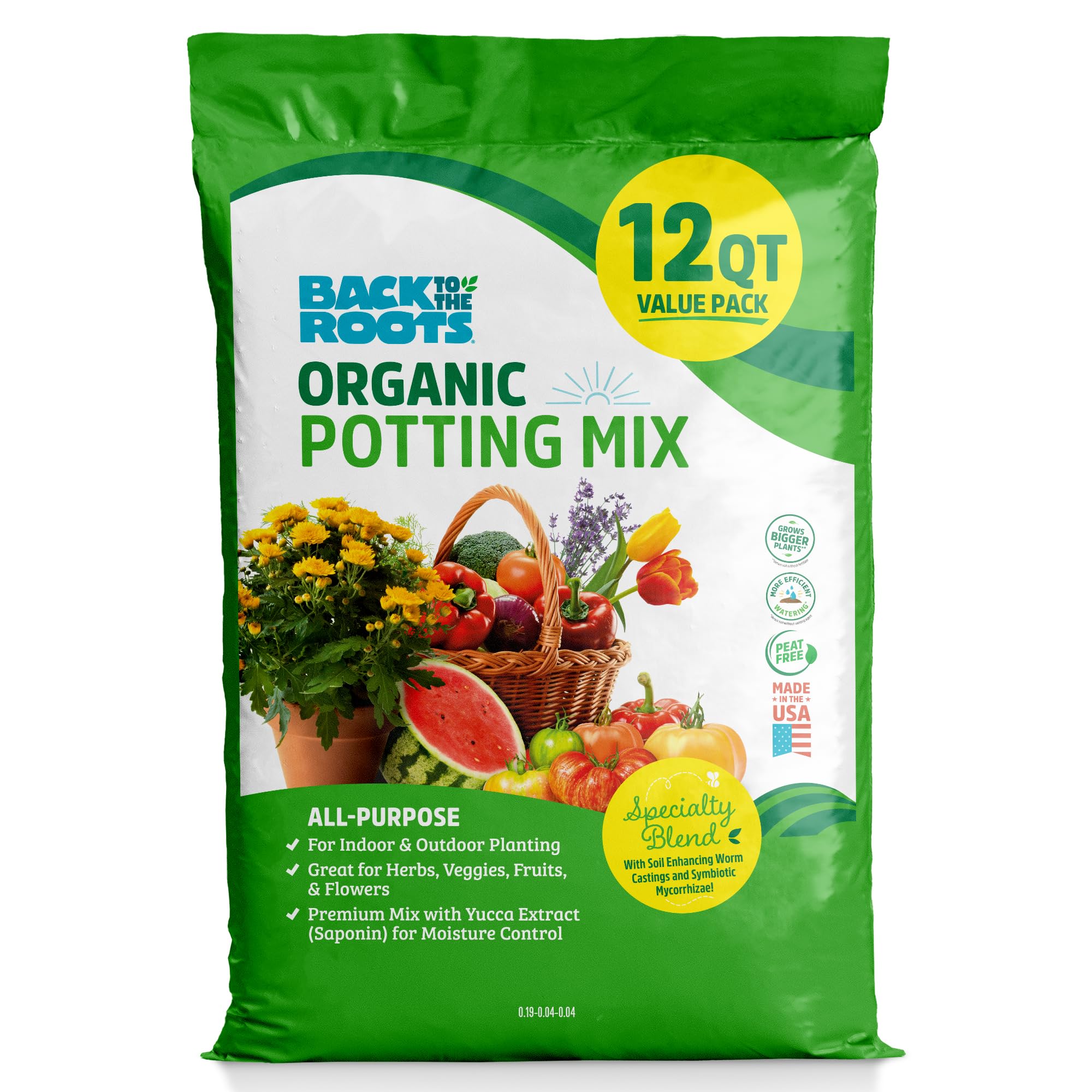
7. Back to the Roots All-Purpose Potting Mix 6 Quarts, 100% Organic (2 Packs)
The light, peat-free entry point for the budget-minded grower who still wants organic ingredients.
Back to the Roots markets this as “the 1st premium, 100% peat-free soil in the market,” using coconut coir (instead of peat moss) for water retention, plus mycorrhizae (beneficial fungi that help roots absorb nutrients) and yucca extract (a natural wetting agent from the yucca plant). It also includes pH-balancing dolomitic limestone (a mineral that neutralizes acidity). The 6-quart bag is the smallest volume in this roundup, and at 4.4 pounds it is incredibly light — at 34 pounds versus 4.4 pounds. This is the mix you grab for refreshing a few small pots or transplanting a couple of herb plants. It is for you if you want a peat-free, lightweight organic mix for transplanting a few containers. pass on it if you need a larger volume or a fine texture for seed-starting — the bark chunks are too coarse for tiny seedlings.
The organic ingredients (worm castings, coconut coir) are solid for the price point. However, one buyer flagged a real limitation: it is “good for transplanting, not seedlings due to large bark particles.” The bark chunks create great aeration for established tomato and pepper transplants, but they can be too coarse for tiny herb or lettuce seedlings, which need a finer soil texture to push through. For transplanting larger starter plants into pots, it works well — owners mention it “stays aerated” and is “great for tomatoes.”
If you value peat-free gardening (peat mining is linked to CO2 emissions) and only have a few plants, this pack is a smart, low-risk buy. Just match it to the right job: transplanting, not seed-starting.
The value angle: An organic, peat-free 2-pack at the lowest price entry point — ideal for small-scale gardeners who want natural ingredients and easy handling.
The honest limit: The bark-particle texture is too coarse for germinating fine seeds; keep this for potting up starter plants and use a finer seed-starting mix for your basil and lettuce seeds.
Reach for this if: You need a small, affordable organic mix for transplanting herbs and vegetables into pots — the peat-free ingredient list is a genuine bonus.
Look elsewhere if: You are starting plants from seed directly in the container, or you need a larger volume bag for many pots.
Understanding the Specs
Perlite vs. Peat Moss: The Drainage Trade-Off
Perlite (the small white, popcorn-like rocks you see in potting soil) creates air pockets that let excess water drain away from roots — critical for herbs like rosemary and oregano that hate wet feet. Sphagnum peat moss or coconut coir, on the other hand, act like sponges that hold moisture so it is available longer. A good potting soil for herbs and vegetables balances both: enough perlite (or coarse sand) to stay loose, and enough peat or coir to keep the soil from drying out by lunchtime. Look for a bag where perlite is visible throughout the mix, not just sprinkled on top.
What “Feeds Up to 6 Months” Actually Means
Some potting soils, especially those from Miracle-Gro, contain timed-release synthetic fertilizer pellets that break down slowly with each watering. The claim “feeds up to 6 months” means the fertilizer is engineered to release nutrients gradually over that period. Organic mixes, like those from FoxFarm or Coast of Maine, rely on composted meals (kelp, crab, feather, alfalfa) that break down more slowly and are less predictable — you may need to add liquid fertilizer after 4-6 weeks for heavy feeders like tomatoes. The trade-off: conventional is more consistent, organic is less manufactured. Neither is wrong; it is about what you prefer for your edible plants.
FAQ
Can I use regular garden soil instead of potting soil for herbs and vegetables?
How often should I replace the potting soil in my herb containers?
Is organic potting soil worth the extra cost for vegetables?
What does “pH balanced” mean on a bag of potting soil?
Will potting soil for vegetables also work for herbs?
Why does some potting soil have a strong odor?
Can I mix two different potting soils together?
How much potting soil do I need for a typical 5-gallon pot?
Is “moisture control” soil safe for all herbs?
What is the difference between “potting mix” and “potting soil”?
Final Thoughts: The Verdict
For most people, the potting soil for herbs and vegetables winner is the FoxFarm Ocean Forest because it packs the richest ready-to-use nutrient blend with a 4.7/5 rating, works for both delicate herbs and heavy-feeding tomatoes, and needs no mixing or amending. If you want a premium lightweight organic option with the highest rating (4.8/5), grab the Coast of Maine Bar Harbor Blend. And for a budget-friendly, peat-free mix perfect for transplanting a few containers, the standout is the Back to the Roots.
How We Picked
We do not accept paid placement. Every pick is matched to a real buyer and a real use-case; we do not hands-on test units.
Sources & Methodology
Specifications: manufacturer listings and product documentation. Review insights: verified customer reviews, as of July 2026. Pricing: not shown on this page (it changes often); check the current price via the retailer link.
As an Amazon Associate, Lawn Gear Lab earns from qualifying purchases. This does not affect which products we feature.