
Specs are compiled from manufacturer listings and verified buyer reviews and can change over time — please confirm the key details on the product page before buying.
A lotus needs enough soil depth and water coverage to send out strong roots, or it will struggle to bloom.
Whether you are starting from seed or transplanting a mature tuber, the right container makes the difference between a thriving bloom and a stunted plant. Here is a clear breakdown of the best pots for lotus plants based on dimensions, material, and real buyer experience.
Our Picks at a Glance
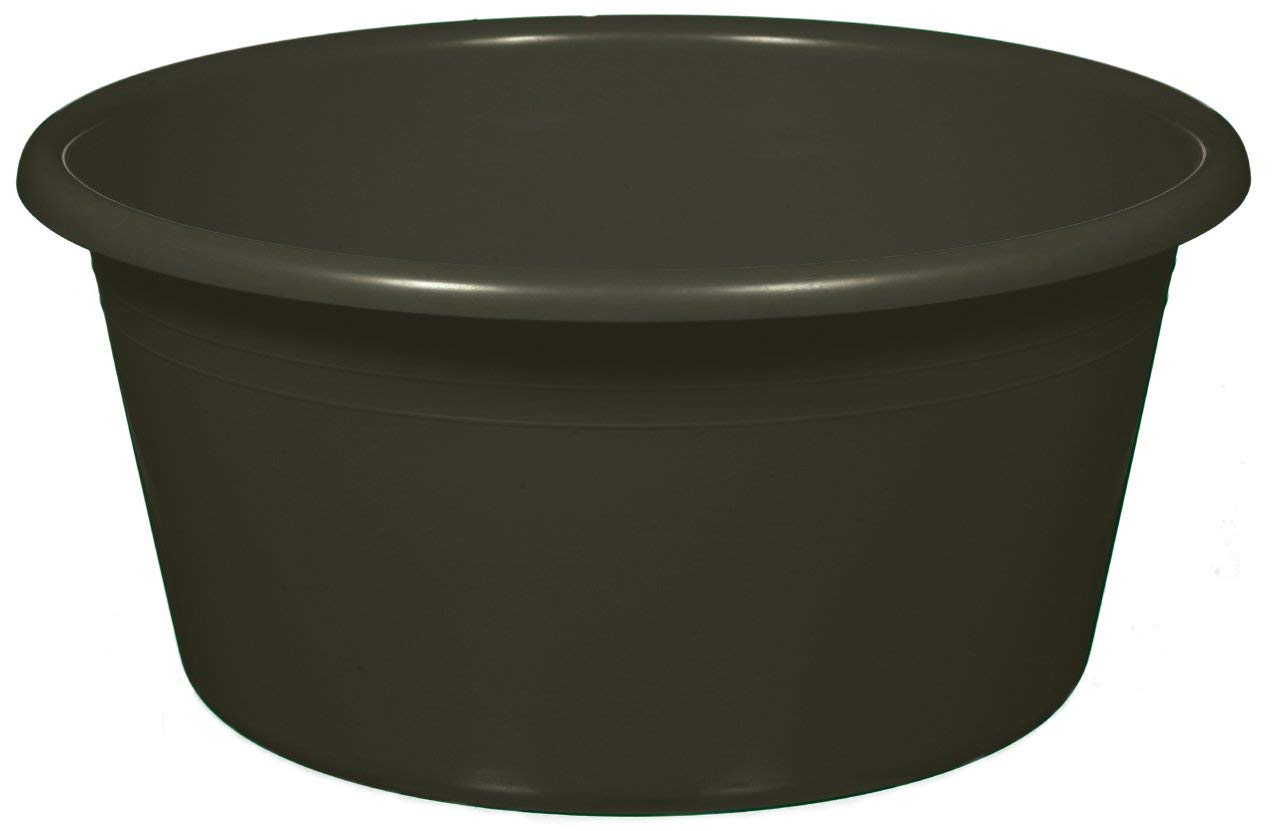
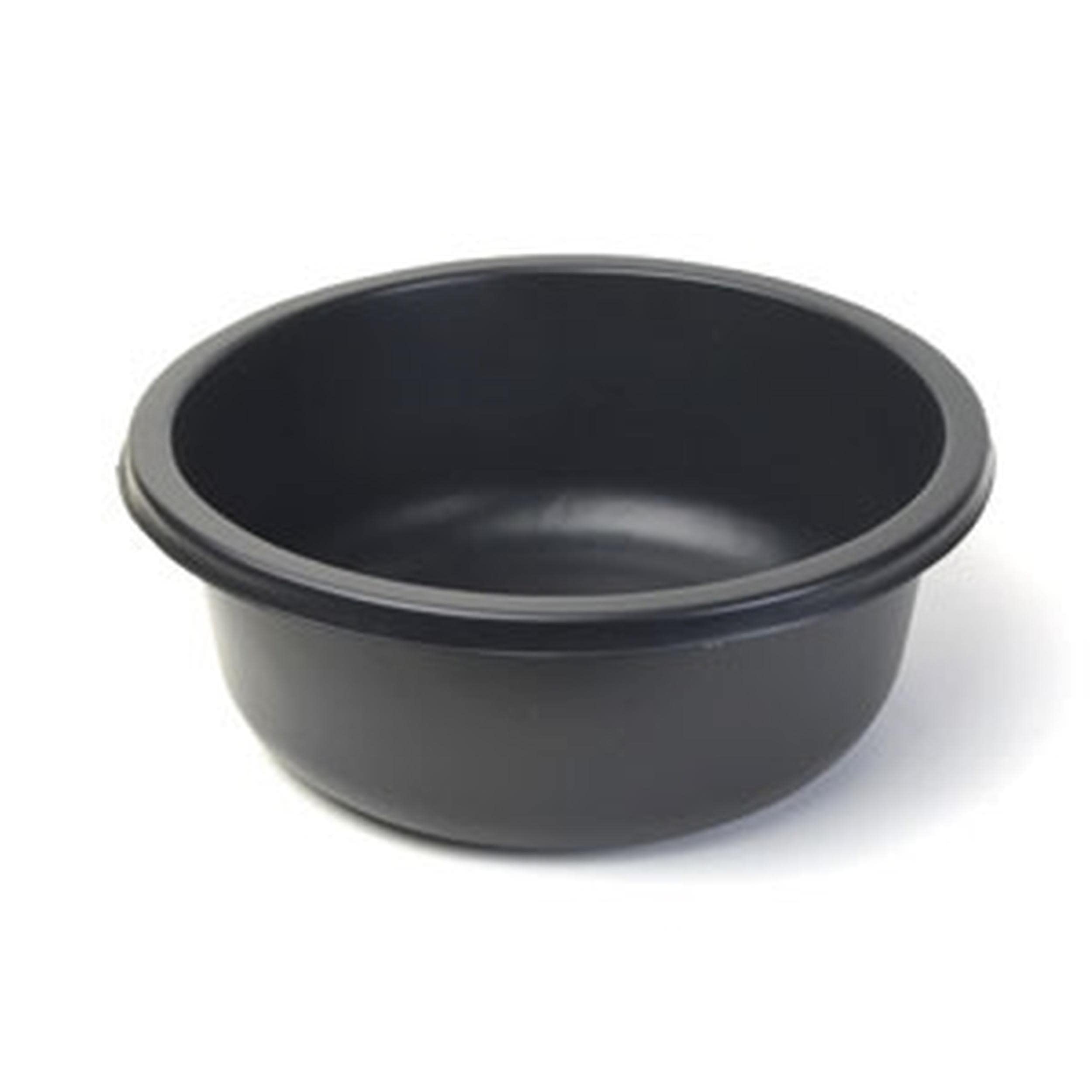
How To Choose The Best Pots For Lotus Plants
Depth and Diameter
Lotus tubers grow horizontally, not straight down. A pot that is wider than it is deep is ideal. For dwarf lotus varieties, a 6-inch depth can work. Standard lotus needs at least 9 to 10 inches of depth. Diameter should match the mature spread of the variety — 16 to 20 inches is common for full-size lotus.
Material: Ceramic vs. Plastic
Ceramic pots look elegant on a patio or tabletop. They are heavy (which keeps the pot stable) and come in beautiful glazes. But they can crack in freezing weather if left outdoors. Plastic pots — like the Laguna or Chalily tubs — are lightweight, durable, and survive winter freezes. They are the practical choice for pond use. The trade-off is visual appeal: black plastic does not decorate your deck.
No Drainage Holes
Any drainage hole means the soil dries out and the plant dies. Every pot on this list is explicitly hole-free. Do not buy a standard flower pot and try to seal the holes — the sealant often fails, and the tuber rots when water sits in trapped air pockets.
Quick Comparison
| Model | Best For | Diameter | Depth | Capacity | Amazon |
|---|---|---|---|---|---|
| Laguna Lily Planting Tub★ Best Overall | Large pond plants | 19.5 in | 9.5 in | 9 US gal (34 L) | Amazon |
| Chalily 16″ Aquatic Plant PotTop Performer | Pond lotus & lilies | 16 in | 6 in | 16 in (width ref.) | Amazon |
| Cotta Planters Bonsai Lotus Pot | Bonsai lotus & decor | 10.25 in | 4.1 in | — | Amazon |
| Baderke 2 Pcs Lotus Bowl Planter | Tabletop hydroponics | 6.5 in | 7.48 in | — | Amazon |
| 2 Pack Lotus Bowl Planter | Dwarf lotus & ikebana | 7.5 in & 6 in | 3 in | — | Amazon |
| MUZHI Ceramic Lotus Bowl Planter | Mini bowl lotus seeds | 8 in | 2.8 in | — | Amazon |
In‑Depth Reviews
1. Laguna Lily Planting Tub, 19-1/2-Inch, 9-Gallon
Our pick — over 4.5★ from 400+ verified ratings; the strongest balance of quality and price.
The 9-gallon tub that gives standard lotus roots the depth they actually require.
This is the deepest container on the list at 9.5 inches (24 cm) tall and 19.5 inches (49.5 cm) wide, with a full 9 US gallon (34 L) capacity. It is made from black plastic and has no holes or lattices, so you can fill it with heavy clay soil and submerge it in a pond without losing any dirt. The 9.5-inch depth is what standard lotus needs to grow strong roots and push up leaves that reach the surface. It is 9.5 inches deep versus the Chalily pot’s 6 inches, which matters when your lotus tuber is golf-ball sized.
Owners mention that “the measurements given were exact so it dropped right in” to an existing planter, and that the quality is “like none other.” Several owners mention using it for ferns and strawberries too, which shows how versatile a big, sturdy plastic tub can be. One reviewer noted it is “not sturdy though” at 4/5 stars, but the overall rating sits at a 4.8/5 across 427 ratings. It is the best choice for anyone growing full-size lotus or hardy water lilies in a pond setting, especially if you want a container that won’t rust like galvanized tubs.
The Strong Points
- 9.5‑inch depth gives standard lotus tubers the root room they need — far deeper than bowls at 2.8–4.1 inches.
- 9‑gallon capacity holds enough soil mass to anchor large plants.
- Hole‑free construction keeps pond water clean and soil contained.
The Weak Points
- At 1 pound the plastic is lightweight, meaning the tub can flex if lifted when full of wet soil — you need to support the bottom.
- The utilitarian black plastic design is purely functional, not decorative for patios or tabletops.
The right pick for: pond owners growing standard lotus or hardy water lilies who need a deep, hole‑free tub with exact dimensions that fit pre‑existing pond cutouts.
Not for you if: you want a decorative ceramic bowl for indoor tabletop display — this is a workhorse pond tub, not a showpiece.
2. Chalily 16″ Aquatic Plant Pot
The wide black tub that disappears into your pond while roots stretch freely.
This Chalily pot measures 16 x 16 x 6 inches and is made from polypropylene (PP) plastic — a durable, lightweight material that stands up to outdoor pond conditions. It has no holes (the maker calls it a “hole less design”), so your soil stays put and the water above stays clear. At a 6-inch depth, it suits small to medium lotus varieties and water lilies best, not the giant tubers that need a 9.5-inch depth like the Laguna below.
Buyers report the black plastic blends in perfectly with the pond liner and that it is “great quality” and “very sturdy.” One owner noted they installed it over a month ago and it held up well. The trade-off is that 6 inches of depth is borderline for standard lotus — you will need to prune roots or pick a dwarf variety. It is the best pick for anyone with an outdoor pond who wants a no-fuss, freeze-proof container.
Where It Excels
- Hole‑free design keeps pond water clear and soil contained.
- Durable PP plastic survives freezing winters without cracking.
- Black color blends in with natural pond environments.
Where It Falls Short
- 6‑inch depth is not enough for large standard lotus — you need the Laguna tub’s 9.5 inches for full‑size varieties.
- Plain black plastic lacks the decorative appeal of ceramic bowls for tabletop display.
Grab this if: you have an outdoor pond and want a rugged, low‑maintenance planter for water lilies or small lotus that fits in smoothly.
Look elsewhere if: you are growing a large standard lotus variety that needs deeper soil than 6 inches can provide.
3. Cotta Planters Bonsai Lotus Pot, Shallow Succulent Planter Pot

The copper-patina ceramic bowl that looks like art but tests your lotus ambitions.
This pot measures 10.25 inches in diameter and 4.1 inches deep, with a beautiful glazed finish inside and out. The patina glaze gives it a distinctly earthy, handcrafted look that fits right in on a coffee table or desk. It has no drainage hole, so it is ready for aquatic plants from the moment it arrives. It weighs 1.45 kilograms (about 3.2 lbs) — that heft tells you the ceramic is thick and quality-built.
Customers note the bowl is “beautiful but too small for growing lotus” and that “leaves/stems ~5 inches cannot fit without breaking stems.” One reviewer even had to order a larger pot for their dwarf lotus. The depth comparison is revealing: at 4.1 inches, it is 4.1 inches deep, while the Laguna tub is 9.5 inches deep, which is the difference between bonsai lotus and a plant that can mature. It works best as a showpiece for very small water features, succulents, or as a decorative goldfish bowl — not as a long-term lotus home.
What Works
- Gorgeous copper patina glaze that looks handmade and premium.
- Glazed inside and out for easy cleaning and water resistance.
- No drainage hole, so it is ready for hydroponic or aquatic use right away.
What Limits It
- At 4.1 inches deep it is too shallow for most lotus — even dwarf varieties struggle once leaves reach 5 inches tall.
- Several reviewers point out the product images are misleading regarding the actual growing capacity for lotus.
Reach for this if: your priority is visual impact — you want a stunning ceramic bowl for a small water feature or a goldfish bowl with a single sprouted lotus seed for decoration.
Look elsewhere if: you expect the lotus to grow into a mature flowering plant — you need a much deeper pot, like the Laguna tub at 9.5 inches.
4. Baderke 2 Pcs Lotus Bowl Planter with Base Ceramic Hydroponic Planter
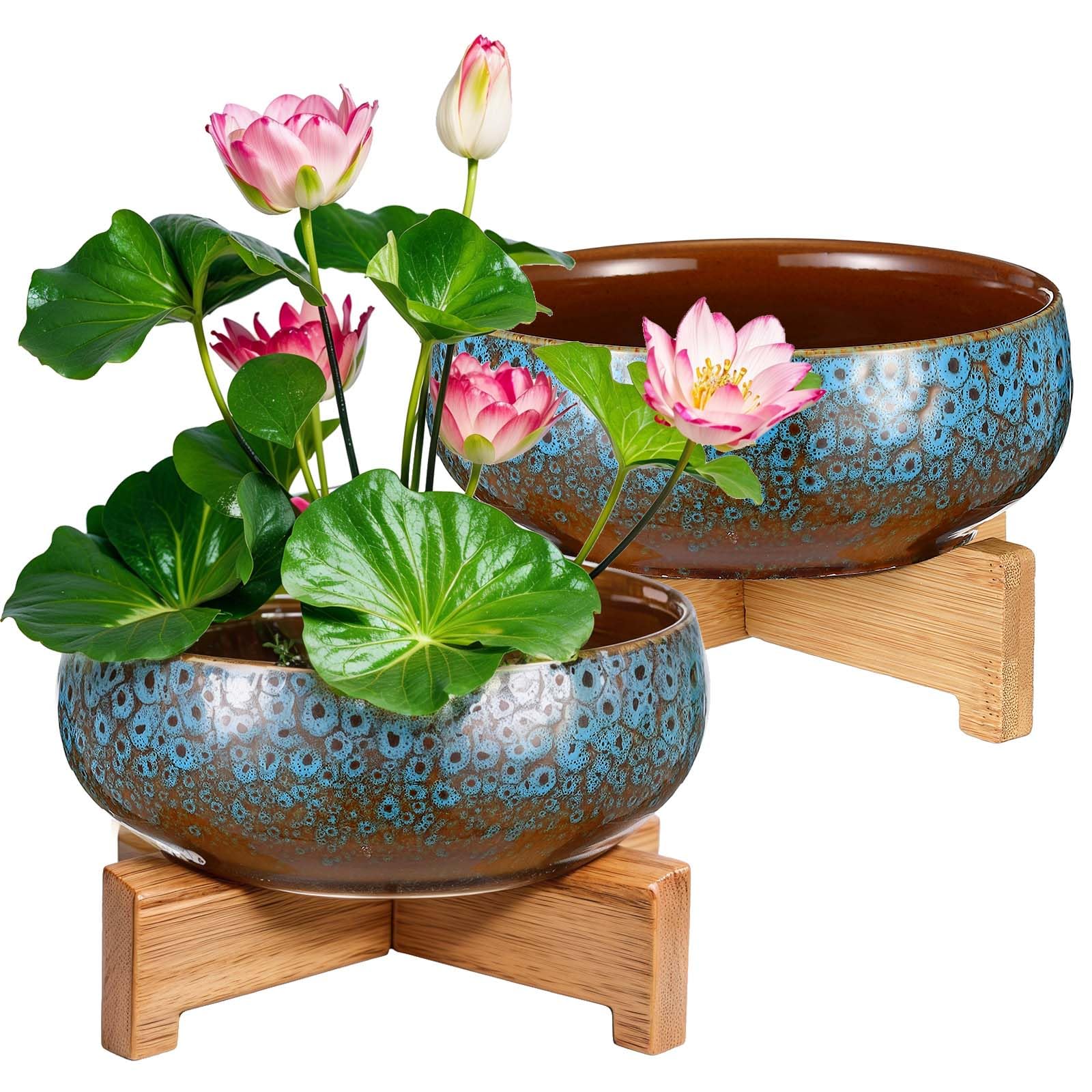
A two-piece ceramic set that marries tabletop elegance with a splash of hydroponic function.
This set includes two blue ceramic bowls, each 6.5 inches in diameter, with matching wooden bases. The total package weighs 4.1 pounds — while the Laguna plastic tub weighs 1 pound — which tells you the ceramic is thick and the bases are solid. The bowls have no drainage holes, making them watertight for lucky bamboo, peace lilies, or small lotus seeds. The 7.48-inch height measurement in the data gives each bowl a moderate depth, while the MUZHI pot is 2.8 inches deep, the Cotta Planter is 4.1 inches deep, and the Laguna is 9.5 inches deep.
Shoppers say they are “gorgeous, high quality, a bit too shallow for long term growth but well worth the price.” Another reviewer called them “far better than I imagined.” The natural-flowing glaze patterns from the high-temperature kiln firing give each piece an organic, one-of-a-kind look. The catch, as multiple buyers report, is that these bowls are better suited for starting seeds or displaying small hydroponic plants rather than growing a full lotus to maturity. They are the best-value ceramic set if you want two coordinated pots for different stages or varieties.
Why It Stands Out
- Two pots with matching bases give you a coordinated display or different sizes for starter vs. decorative plants.
- High‑temperature‑fired ceramic with natural glaze patterns — each pot looks handcrafted and unique.
- Watertight (no drainage hole) and includes wooden base stands to protect your furniture.
Why It Has Limits
- At 6.5 inches diameter and moderate depth, these are better for starting lotus seeds or small hydroponic plants than for growing mature lotus that needs root room.
- Buyers consistently note the bowls are shallow — long‑term lotus growers will outgrow them.
Best suited for: beginners who want two attractive ceramic bowls to start lotus seeds indoors or display small hydroponic plants, with the option to upgrade to a deeper pot later.
Not ideal for: experienced lotus growers who need a single deep container to bring a plant from seed to full bloom — the Laguna or Chalily tubs serve that purpose better.
5. 2 Pack Lotus Bowl Planter, Large 7.5″ & Small 6″ Shallow Lotus Pots
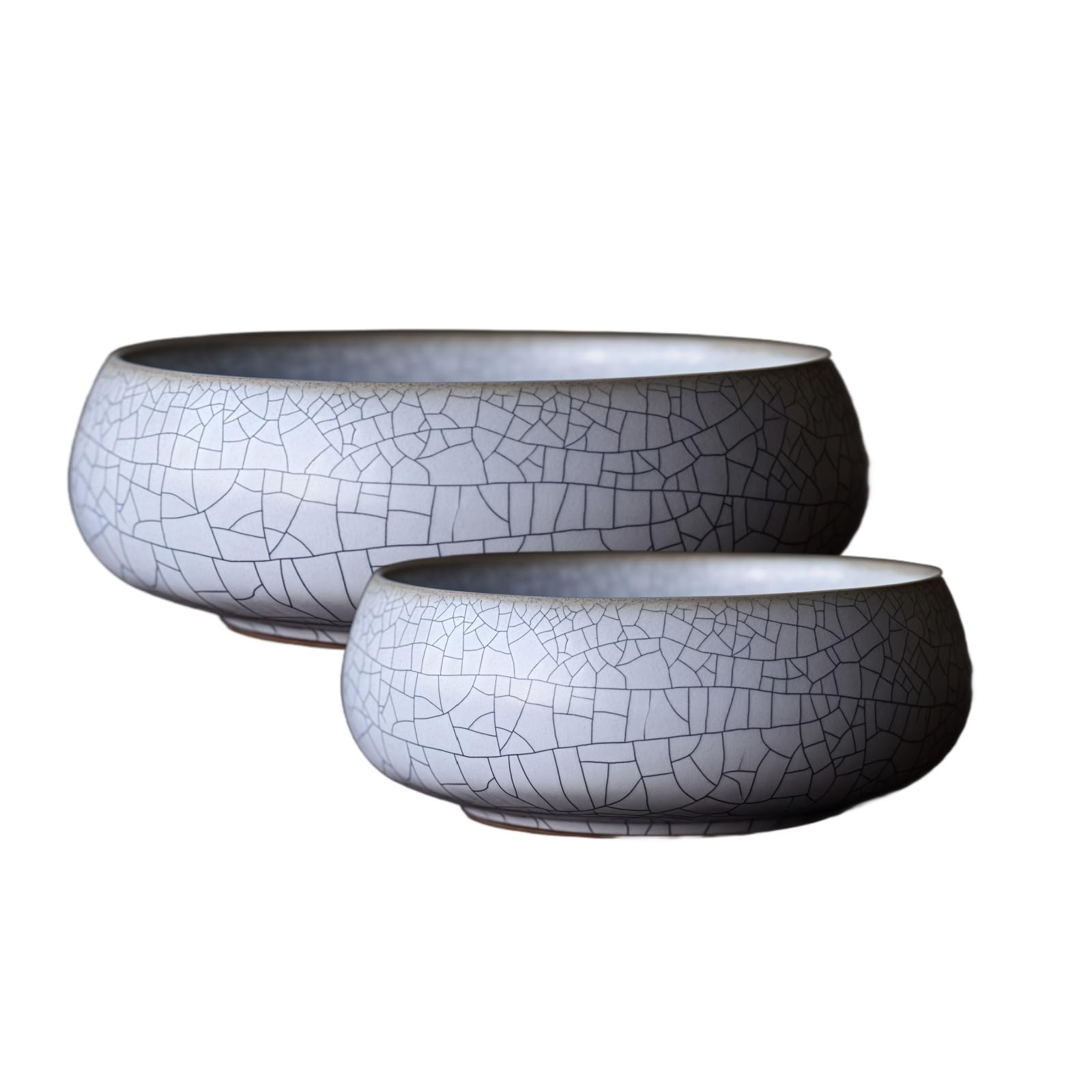
Twin crackle-glaze bowls where the smaller one fits inside the larger — but depth is thin.
This set comes with a 7.5-inch and a 6-inch ceramic bowl, both featuring a “kiln split” dark crackle glaze that mimics ancient Ru kiln pottery. They have no drainage holes and are marketed specifically for water lotus, lotus seeds, Ikebana flower arranging, succulents, and even fruit bowls. The dimensions are 2.7 x 7.5 x 3 inches for the main piece, giving each bowl a depth of about 3 inches — while the Cotta Planter is 4.1 inches deep and the Laguna tub is 9.5 inches deep.
Owners mention the set is “smaller than expected but high quality” with an “excellent finish, clean appearance, substantial weight.” One reviewer whose family lived in Japan uses them for flower arranging. The dark crackle finish is genuinely attractive and the thick ceramic body feels premium. But the 3-inch depth means these are strictly for tiny dwarf lotus varieties or for starting seeds, not for growing a plant to flowering size. Reviewers praise them for decorative versatility more than for lotus cultivation — they work as beautiful vases, succulent bowls, or desk ornaments.
What Impresses
- Exquisite dark crackle glaze (Ru Kiln style) with a glossy, smooth finish that looks museum‑quality.
- Two sizes in one set give flexibility for different plants, flower arrangements, or home decor uses.
- Thick, heavy ceramic body with no drainage holes — completely watertight and durable.
What Holds It Back
- At only 3 inches deep, these bowls are functionally too shallow for any lotus variety that grows taller than a few inches — leaves will snap against the rim.
- Multiple customers note the pots are smaller than the product photos suggest — check measurements carefully before ordering.
Choose this set if: you want decorative ceramic bowls for ikebana, succulents, or sprouting lotus seeds in a beautiful display — the crackle glaze is genuinely unique.
skip it if: your goal is to grow a lotus plant to full size and see it bloom — the 3‑inch depth is simply not enough root room.
6. MUZHI Ceramic Lotus Bowl Planter with Bamboo Stand 8″
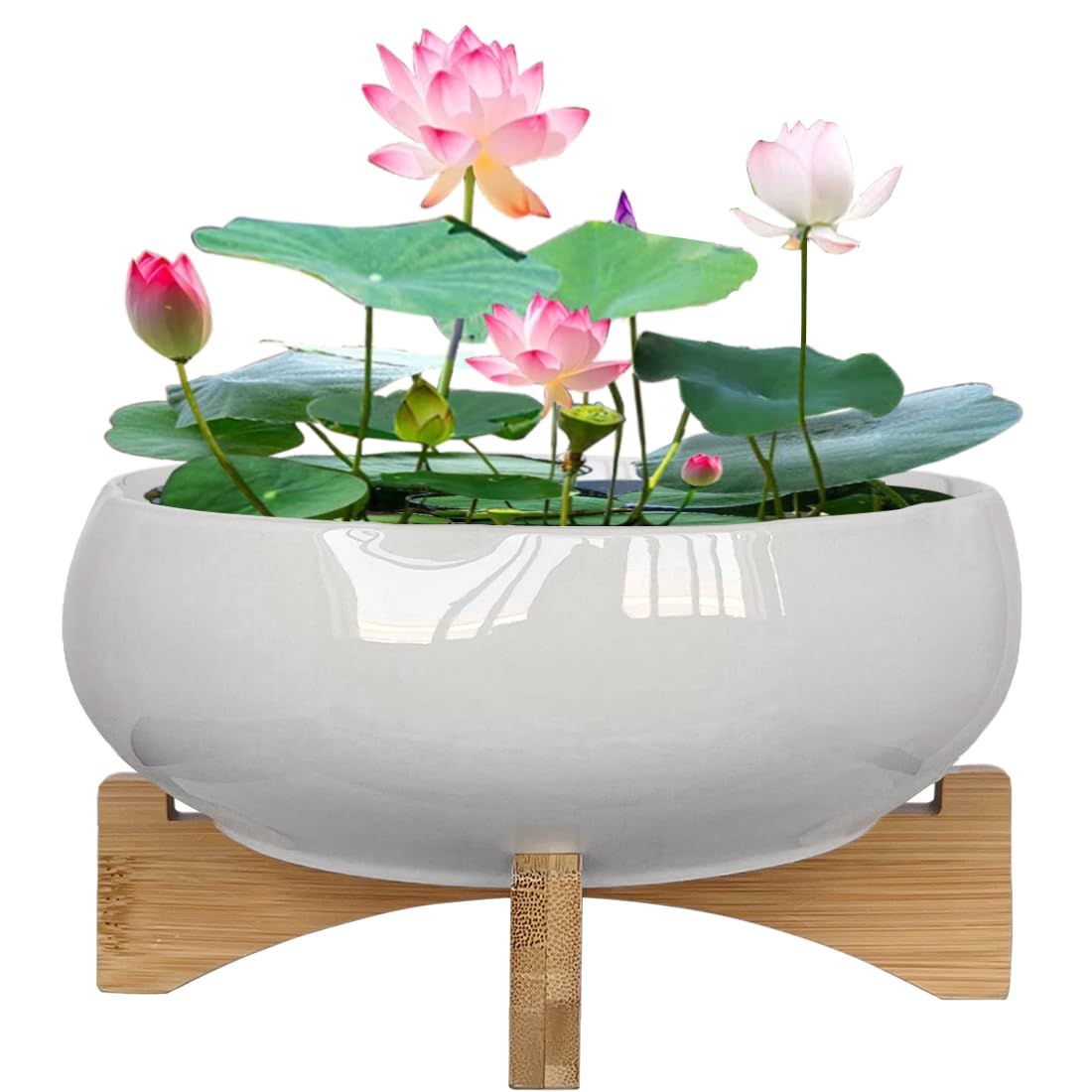
A 2.8-inch-deep ceramic bowl with an interlocking bamboo stand — pretty on a desk, tight for roots.
This MUZHI planter measures 8 inches in diameter and 2.8 inches deep, making it the shallowest pot in this roundup — at 2.8 inches deep compared to the Laguna’s 9.5 inches. It is made from high-temperature fired ceramic with a smooth curved edge and an elegant white glazed finish. The bamboo stand interlocks with the bowl to hold it in place, though reviewers point out the stand is “finicky” and the pot “constantly wiggles regardless of bamboo stand orientation.”
One buyer gave it 3 out of 5 stars for that exact reason. Others call it “very lovely and perfect size for lotus flowers” and “great for water lotus,” though another noted “it’s really not deep enough for lotus flowers.” That split in opinion is the key tension: the pot looks beautiful on a windowsill or desk, and it works for sprouting a single lotus seed or a tiny dwarf variety, but it lacks the depth for any plant to mature. The 2.8-inch depth is best thought of as a seed-starter bowl or a decorative piece for a single floating flower.
What Works Well
- Elegant white glazed ceramic with a smooth curved edge that looks clean and modern on a desk or windowsill.
- Interlocking bamboo stand adds a natural, decorative touch and improve the bowl for display.
- No drainage holes — perfectly sealed for hydroponic use or as a small fishbowl.
The Frustrations
- At 2.8 inches deep, it is the shallowest pot here — most lotus will outgrow it before they even develop true leaves.
- Bamboo stand has reported stability issues — the pot can wiggle and does not sit firmly, which is a safety concern on a tabletop.
Good for: a decorative starter pot for a single lotus seed or a tiny dwarf variety that you keep on a stable indoor surface where the wobbly stand is not a hazard.
Not for: anyone who wants a pot that can support a lotus plant for more than a few weeks — the 2.8‑inch depth and the finicky stand make this more of a display piece than a functional planter.
Understanding the Specs
Depth vs. Diameter
Lotus tubers grow horizontally, so width matters more than depth — but depth still matters. A pot that is 19.5 inches wide (like the Laguna) gives roots room to stretch sideways, but the 9.5-inch depth is what allows a standard lotus to develop a strong vertical stem. Bowls at 2.8 or 3 inches deep are really only suitable for sprouting seeds or very small dwarf varieties. For any lotus that will flower, aim for at least 6 inches of depth, and ideally 9+ inches.
Material: Plastic vs. Ceramic
Plastic tubs (polypropylene, PP) are lightweight, flexible, and survive freezing temperatures without cracking. They are the practical choice for outdoor ponds. Ceramic bowls are heavier, more decorative, and better suited for indoor tabletops, but they can crack in frost and are generally shallower. The best choice depends entirely on where you plan to place the pot — a pond needs plastic, a coffee table calls for ceramic.
FAQ
Can I use a regular flower pot for lotus plants?
How deep does a pot need to be for a dwarf lotus?
Do lotus pots need drainage holes?
What is the best size pot for a full-size lotus?
Can I use a ceramic lotus pot outdoors in winter?
How many lotus seeds can I plant in a 7.5-inch bowl?
What is the difference between a lotus pot and a water lily pot?
How do I clean a ceramic lotus pot without breaking the glaze?
Final Thoughts: The Verdict
For most people, the best pots for lotus plants winner is the Laguna Lily Planting Tub because it provides the 9.5-inch depth and 19.5-inch width that standard lotus needs to mature and flower, and it does so in a durable, hole-free plastic that survives outdoor winters. If you want a decorative display piece for a beginner dwarf lotus or an indoor water feature, grab the Baderke 2 Pcs Lotus Bowl Planter with Base. And for a rugged outdoor pond planter that keeps soil contained in a smaller space, the Chalily 16″ Aquatic Plant Pot is a reliable, freeze-proof workhorse.
How We Picked
We do not accept paid placement. Every pick is matched to a real buyer and a real use-case; we do not hands-on test units.
Sources & Methodology
Specifications: manufacturer listings and product documentation. Review insights: verified customer reviews, as of July 2026. Pricing: not shown on this page (it changes often); check the current price via the retailer link.
As an Amazon Associate, Lawn Gear Lab earns from qualifying purchases. This does not affect which products we feature.