
Specs are compiled from manufacturer listings and verified buyer reviews and can change over time — please confirm the key details on the product page before buying.
A heavy-duty greenhouse kit is a big investment, and the main thing you want to know is whether it will survive its first real storm without panels flying off or the frame twisting. The answer depends on one thing above all else: the quality of the aluminum frame and how it locks together. The best kits use reinforced cross beams, triple-lock joints, and thick twin-wall polycarbonate panels that hold warmth and block UV rays, so your plants stay safe through wind, snow, and scorching sun alike.
I’m Rikta — the founder and writer behind Lawn Gear Lab. This guide is built by comparing the manufacturers’ published specifications and the patterns across verified customer reviews, so you get each pick’s real strengths and trade-offs instead of marketing spin.
You can start seeds weeks earlier in spring or keep delicate plants alive through a freezing winter with a heavy-duty greenhouse kit that has a sturdy aluminum frame and UV-protected polycarbonate panels — these create a controlled microclimate (a small, stable environment) that extends your growing season.
Our Picks at a Glance
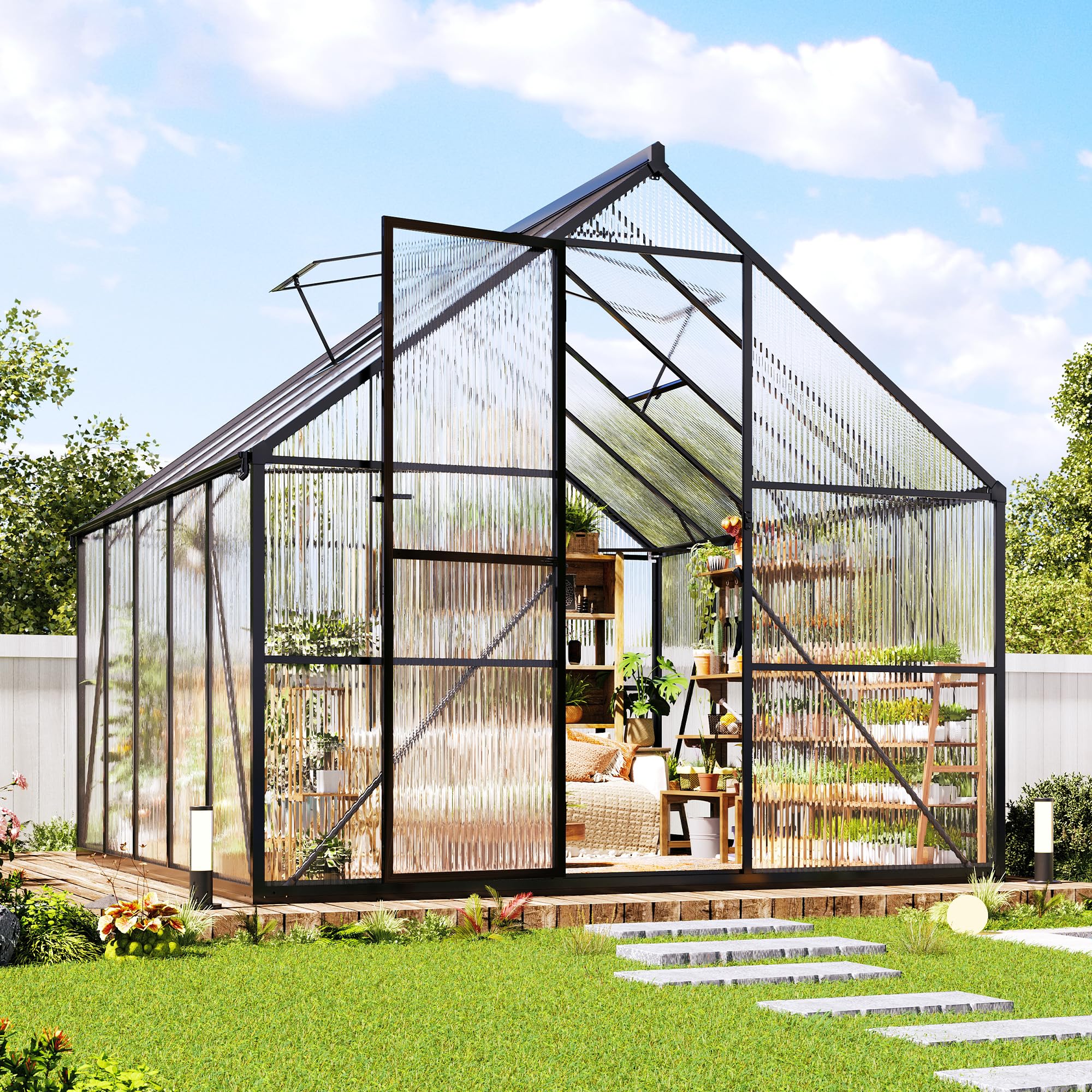
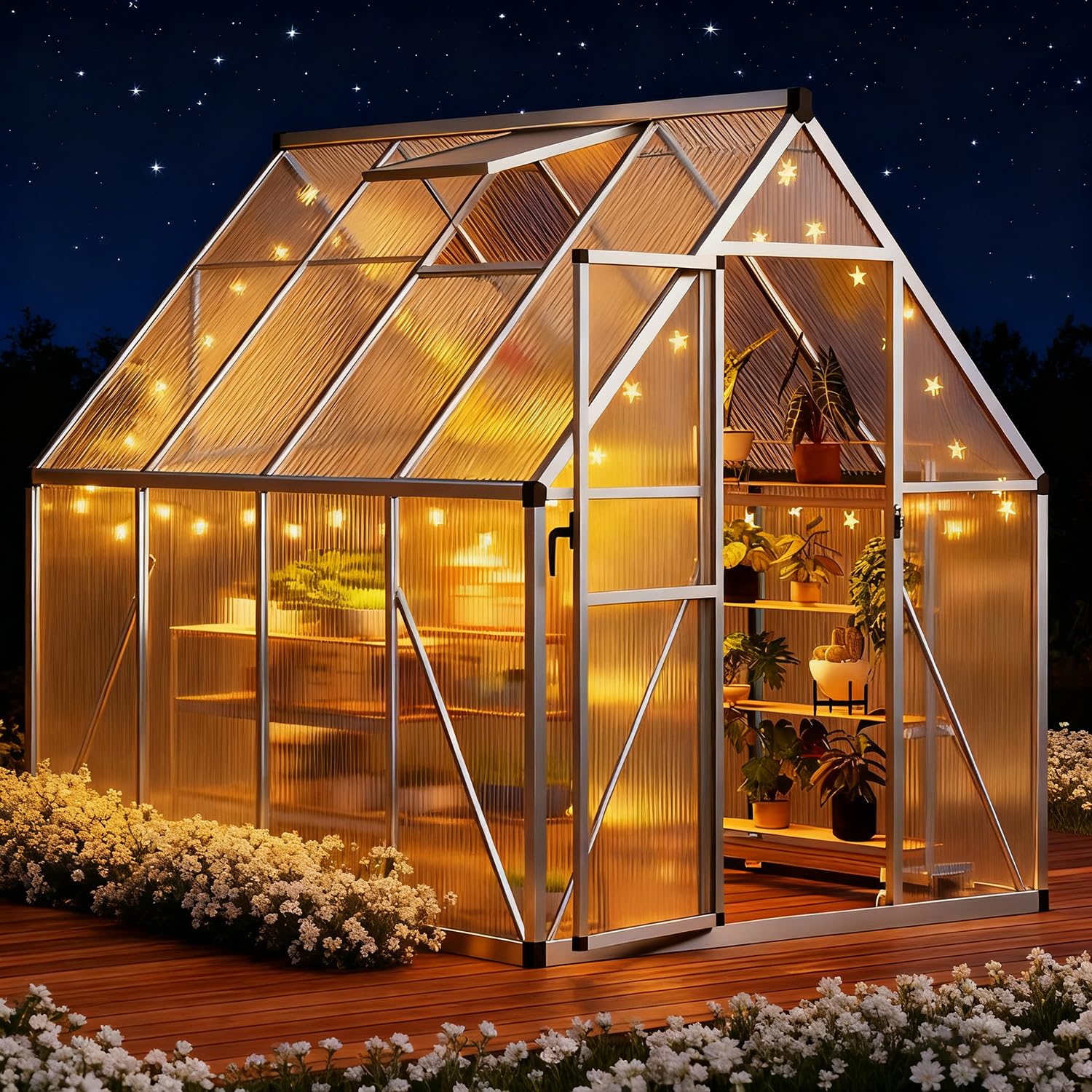
How To Choose The Best Heavy-Duty Greenhouse Kits
Buying a greenhouse kit means balancing size, frame strength, panel quality, and assembly difficulty before you ever put a seed in the ground. A few key decisions will save you from buying something that wobbles in the first gust or cooks your seedlings on a sunny day.
Frame Material: Aluminum is King
For a heavy-duty greenhouse, you want an aluminum frame. Aluminum does not rust, it resists corrosion, and it is strong enough to handle snow loads and wind when the structure is properly braced with cross beams and corner supports. Look for a powder-coated finish, which adds an extra layer of weather resistance and keeps the frame looking good for years.
Panel Type: Twin-Wall Polycarbonate Wins
Polycarbonate panels come in two main types: single-wall and twin-wall. Twin-wall panels have a hollow core that traps air, giving you much better insulation for retaining heat on cold nights. They also block up to 99.9% of harmful UV rays while still letting in plenty of visible light for plant growth. The thickness is measured in millimeters, and for most kits 4mm is the standard, though some larger kits use 5mm for extra rigidity.
Size and Your Space
Measure your available yard space carefully before choosing a kit. Greenhouses in this category range from compact 6×8 foot models up to large 8×16 foot walk-in structures. You also need to think about headroom — if you are tall, a model with a peak height around 7 feet or more lets you move around comfortably. Always leave a little extra room around the base for anchoring and access.
Ventilation and Drainage
Without good airflow, a greenhouse can turn into an oven in direct sunlight, and stagnant humid air invites mold. Look for adjustable roof vents and lockable doors that you can prop open. A built-in gutter system on the roof is a nice bonus because it channels rainwater away from the base, preventing puddles and rot around the frame.
Assembly and What to Expect
No heavy-duty kit assembles in 30 minutes. Plan on a full weekend project with two people, plus some patience. Kits with clearly labeled parts, pre-drilled holes, and a slide-in panel system are much easier to build than ones with cryptic diagrams. Reviews consistently mention that a flat, level foundation — either concrete or a wooden base — makes assembly smoother and the final structure far more stable.
Quick Comparison
| Model | Best For | Size (LxWxH) | Frame Material | Panel Thickness | Amazon |
|---|---|---|---|---|---|
| Jocisland 8x10Ft★ Best Overall | Great Value & Heat Retention | 8.12×9.9×6.73 FT | Aluminum | 4mm | Amazon |
| CABIHOME 6x7ftTop Performer | Wind & Snow Resistance | 6×7 ft | Aluminum | 4mm twin-wall | Amazon |
| VEIKOU 8×16 Ft | Large Premium Walk-in | 97.3″L x 189.56″W x 90.5″H | Powder-coated Aluminum | 4mm | Amazon |
| Palram 4×8 Ft | Lean-To for Small Spaces | 8″L x 4.1″W x 7.5″H | Powder-coated Aluminum | Twin-wall | Amazon |
| WUKHG 8×14 Ft | Extra Roomy Interior | 166.1″L x 97.2″W x 80.6″H | Aluminum | 5mm | Amazon |
| Sylviera 6×8 Ft | Budget-Friendly Starter | 88″L x 67″W x 77″H | Aluminum | 4mm twin-wall | Amazon |
| YITAHOME 6x16FT | Large Space with Sliding Door | 192″L x 72″W x 77″H | Aluminum | 4mm | Amazon |
In‑Depth Reviews
1. Jocisland 8x10Ft Polycarbonate Greenhouse
Our pick — over 4★ from 40+ verified ratings; the strongest balance of quality and price.
Generous space, twin roof vents, and warmth that holds when the mercury drops.
At 8.12 x 9.9 x 6.73 feet, this Jocisland kit gives you a lot of growing room for a mid-range price. The aluminum frame uses cross beams, top braces, and corner supports with ground stakes and bolts, so it feels solid even before you anchor it. One of its standout features is the pair of roof vents — that is double the single vent found on the Sylviera and CABIHOME models, giving you far better airflow control on hot days.
Owners mention it maintains “80s inside when low 40s outside,” which tells you the 4mm polycarbonate panels do an excellent job trapping solar heat. A few owners noted the assembly is time-consuming and the instructions can be hard to follow — one reviewer noted the vents were tricky to keep open without rubber bands. On the plus side, the kit survived 70mph storms after being bolted to 4x4s, showing what a proper anchor job can do.
One trade-off is the height: at 6.73 feet, tall gardeners may have to stoop a bit. But the 302.0 count difference in unit count compared to the Sylviera 6×8 model is not a real spec — each kit is a single unit, so focus on the footprint. If you want a large walk-in space with dual vents and proven heat retention, this is a strong value play over the more expensive YITAHOME model.
Heat Trapper: The 4mm panels and dual vents create a stable microclimate that buyers confirm stays warm in cold weather. Assembly Real Talk: Plan for a full day with two people, and do not fully tighten the frame until everything is aligned — one mislabeled part may show up, but the customer service team resolves it quickly.
Reach for this if: You want a spacious greenhouse with superior ventilation and excellent heat retention for extending your growing season into late fall.
skip it if: You are a solo builder who needs a quick, simple assembly process.
2. CABIHOME 6×7 Ft Outdoor Greenhouse
The mid-size that laughed at 50mph winds straight from the start.
If you live somewhere the weather turns ugly fast, this kit is built to take the hit. The manufacturer states a tested wind resistance of 50mph and an 18psf snow load — that is 40kg per square meter on the roof — backed by a reinforced rust-proof aluminum frame. You get an adjustable roof vent for keeping the temperature in check, plus integrated gutter channels that route rainwater away from the base so the panels stay sealed.
Buyers report that 2 days after assembly, the greenhouse “stood tall and didn’t waver in 50mph N.E. Oklahoma straight winds,” which matches the manufacturer’s claims closely. The 4mm twin-wall polycarbonate panels provide 99.9% UV protection and trap daytime heat effectively. One reviewer assembled it solo in a single day, but noted that the side panels can pop out if bumped — they snap back in easily, so it is more of a minor annoyance than a failure.
At 75.84 pounds, the frame is substantial but still manageable for two people to lift into position. The quick-connect system is genuinely faster than most kits, and the slide-in panel design means you spend less time fiddling with tiny screws. Unlike the Sylviera model below, which has thinner panels and fewer reinforcement points, this CABIHOME kit includes cross bracing that gives the whole structure noticeably more rigidity when you shake it.
Built Tough
- Tested to withstand 50mph winds and 18psf snow load.
- Innovative quick-connect system for faster assembly.
- 4mm twin-wall panels provide 99.9% UV protection.
- Integrated gutter channels for effective water drainage.
Minor Annoyances
- Side panels can pop out if bumped hard.
- Instructions had a minor error with a screw type on some units.
- Roof vent can leak slightly in heavy rain.
Your go-to if: You need a compact greenhouse that can survive harsh winter storms and wants a quick assembly without sacrificing strength.
Look elsewhere if: You plan to grow very tall plants or need more than 7 feet of interior headroom.
3. VEIKOU 8′ x 16′ Polycarbonate Greenhouse
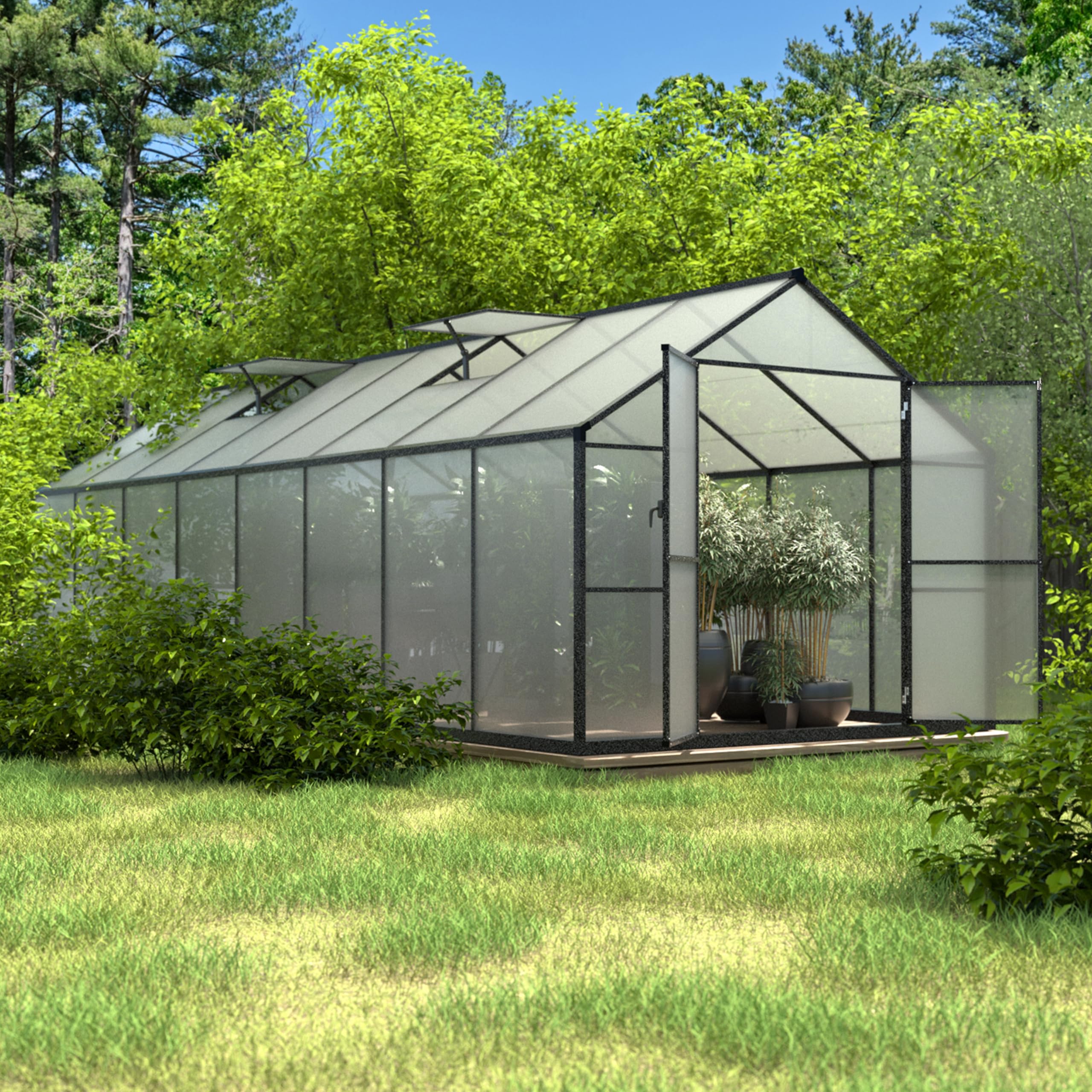
A massive walk-in with a powder-coated frame that resists rust for years.
This is the kit for serious gardeners who need serious square footage. At roughly 8 feet wide by 16 feet long with an interior height of 90.5 inches, you can walk in without ducking and still have room for benches, shelves, and a small potting table. The gray powder-coated aluminum frame is rust-resistant and corrosion-resistant, which is a meaningful upgrade over the bare aluminum used on cheaper models — it stays looking clean even after a few wet seasons.
The two adjustable roof vents use a pole-less pulley system, so you can crank them open to any angle without a long rod getting in the way. Buyers liked the finished look and said the frame feels sturdy in 30mph gusts, though they strongly recommend adding your own ground anchors for anything over 15mph of wind. A few reviews mention that the vent holders are hard to tighten enough to keep the windows propped open — one owner made simple wood stops as a fix.
Unlike the YITAHOME 6×16, which has a sliding door, the VEIKOU uses a lockable swing door with upgraded metal hinges. The two vents give it better airflow than any single-vent model in this list. Assembly is a two-person job with a lot of small parts, and one buyer had to straighten slightly bent corners, but the replacement parts service seems responsive. This is a premium investment that pays off in usable space.
Large & Sturdy
- Spacious 8×16 ft interior with 90.5 inches of headroom.
- Powder-coated aluminum resists rust and corrosion.
- Two adjustable roof vents with pulley system for fine airflow control.
- Upgraded metal hinges and lockable door.
Build Challenges
- Requires additional ground anchors for high winds.
- Some units arrived with slightly bent corners.
- Vent holders difficult to securely fasten.
Make the investment if: You have the yard space and want a long-lasting, spacious greenhouse that feels like a real structure rather than a tent.
Think twice if: Your ground is not perfectly level or you dislike spending a weekend on complex assembly.
4. Palram Canopia Hybrid Lean-To 4′ x 8′ Greenhouse

Chosen by Better Homes and Gardens as the best overall for its clever lean-to design.
If you are short on yard space but have a wall on your house, garage, or shed, this lean-to greenhouse fits right up against it and takes up minimal footprint. The 4×8 foot size is small, but the 7.5 foot peak height means you can stand up straight inside. The powder-coated aluminum frame sits on a galvanized steel base, giving it extra structural stability you do not get from aluminum-only kits.
The twin-wall polycarbonate roof panels (two layers of plastic with air between them) are designed to be very tough, and the clear wall panels let through over 90% of sunlight so your plants get enough light. An adjustable roof vent and a built-in gutter system manage airflow and water drainage. Palram includes a magnetic door catch to hold the door open in nice weather, plus a lockable handle for security when closed. Customers note the assembly is straightforward if you follow the IKEA-style graphical instructions carefully, but a few noted that the plastic panels feel thin and worry about long-term discoloration.
One clear difference from the freestanding models is the anchoring requirement — the base has pre-drilled holes, but you must supply your own bolts and a proper foundation (concrete or a strong wooden frame). Reviewed by Better Homes and Gardens as the Best Overall Greenhouse Kit of 2024, this is a well-considered small solution. It is not for large-scale growing, but for starting seedlings or overwintering a few pots, it is a polished, low-maintenance choice.
Space Saver: The lean-to design uses wall space efficiently and the galvanized steel base adds serious stability. Honest Take: The panels are shatterproof but feel thinner than the VEIKOU’s, and the assembly requires patience and a solid foundation to be truly weatherproof.
Best for: Homeowners with a blank wall who want a compact, well-designed greenhouse without taking over the yard.
Not for: Anyone wanting a freestanding walk-in structure or who needs to accommodate tall plants.
5. WUKHG 8×14FT Green Houses for Outside
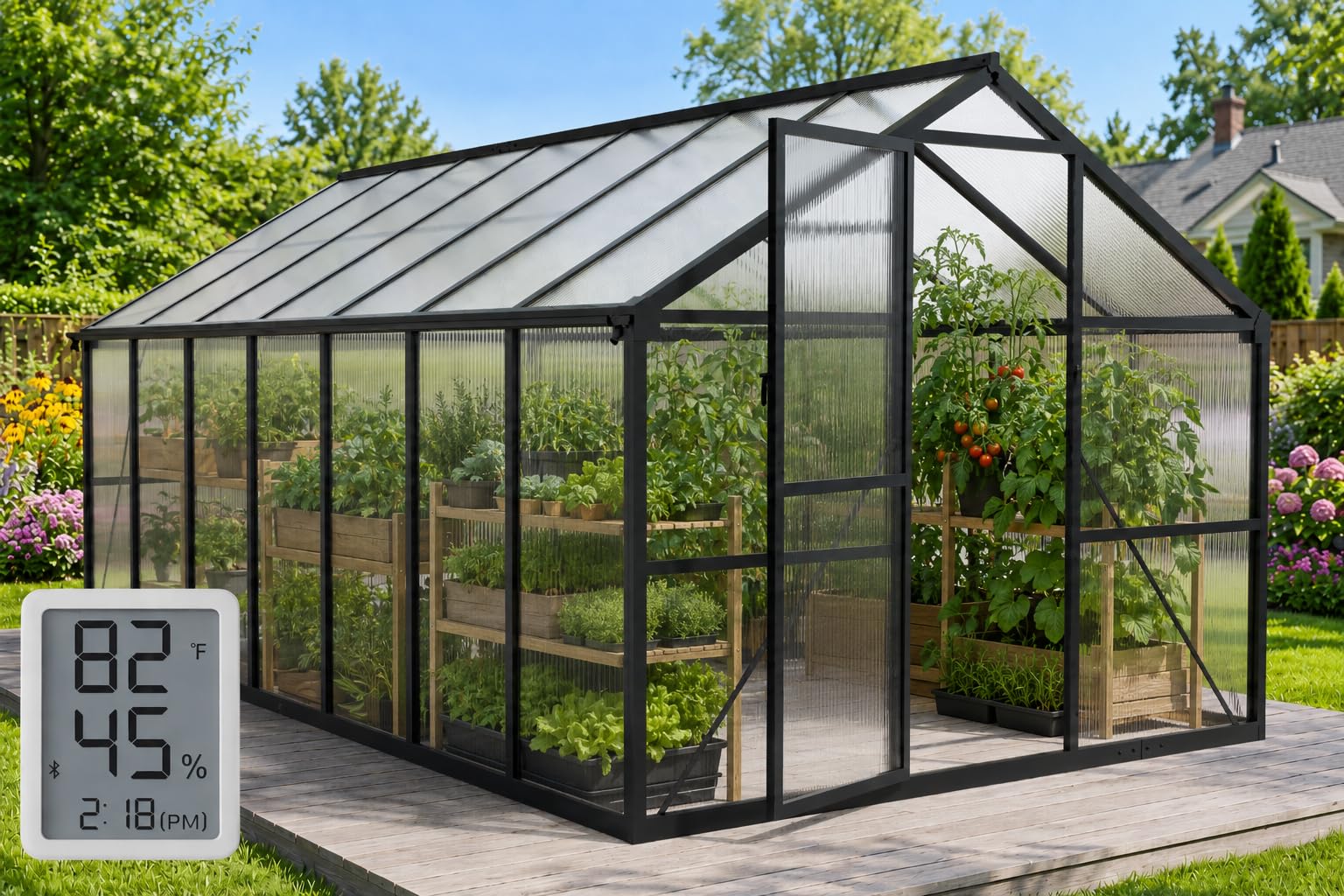
Thickest panels in the list, giving you better insulation at a larger scale.
The WUKHG stands out for its 5mm twin-wall polycarbonate panels — a full 1mm thicker than the standard 4mm found on most kits here. That extra millimeter means better heat retention and more rigidity across the 8×14 foot span. The frame is an aluminum alloy, and the manufacturer recommends injecting glass glue into the panel gaps for a fully weatherproof seal.
An adjustable ventilation window and a lockable door handle control airflow, while the built-in gutter system on the roof channels rainwater efficiently. The electronic thermometer (a digital temperature reader) is a nice bonus for tracking temperature without stepping outside. Reviewers point out the kit is spacious enough to add a lounge chair and still have room for plants, but they also warn that the roof window blew out the first night on one unit, and the panels felt thinner than expected despite the 5mm (0.2-inch) thickness spec.
Assembly is a three-person job according to several reviews, and the instructions are not the clearest. The greenhouse warms up fast — reaching 100 degrees Fahrenheit when the outside temperature is 40 degrees — but it loses heat quickly after sunset. That makes it a better seasonal option than a true four-season greenhouse unless you add a heater. Compared to the Jocisland 8×10, the WUKHG gives you more floor space and thicker panels, but the Jocisland’s heat retention in cold weather seems more reliable based on buyer reports.
Thick & Roomy
- 5mm twin-wall panels provide better insulation than standard 4mm.
- Large 8×14 ft interior fits furniture and plants.
- Built-in gutter system for rainwater collection.
- Includes electronic thermometer for easy monitoring.
Build & Winter Limits
- Difficult assembly with unclear instructions; took three people.
- Roof window is fragile and may blow out in wind.
- Poor heat retention at night without a heater.
Pick this for: A spacious seasonal greenhouse with thick panels for extra warmth during the day.
Avoid if: You need a permanent four-season structure or want an easy weekend assembly.
6. Sylviera 6×8 FT Greenhouse with Hygrometer
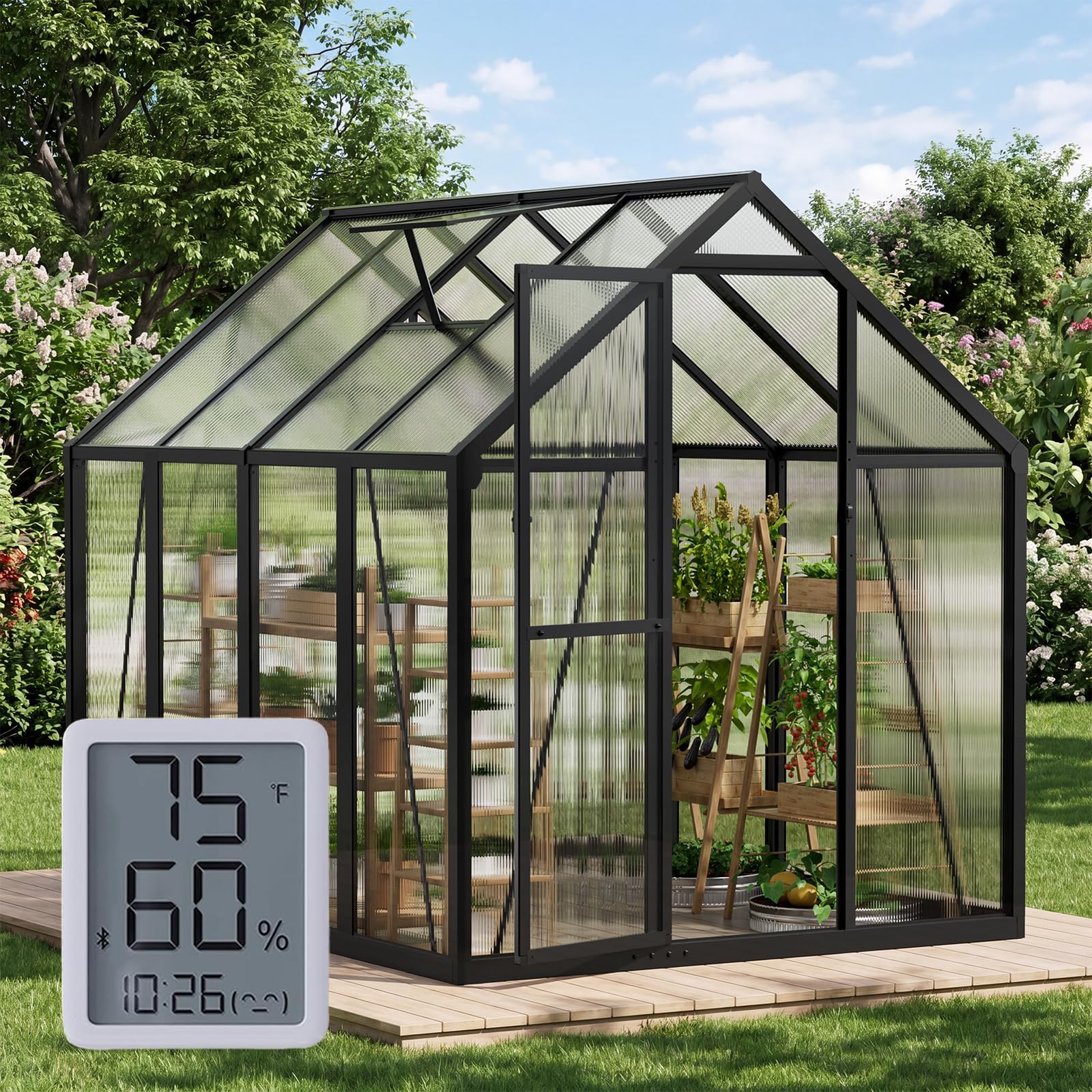
The budget-friendly aluminum option that includes a hygrometer for monitoring conditions.
This is the most affordable heavy-duty aluminum kit in this guide, making it a good starting point for beginners. The 6×8 foot size is compact — 88 inches long by 67 inches wide by 77 inches tall — but shoppers say it fits pots, seed trays, herbs, and flowers without taking over the yard. The frame is a reinforced aluminum alloy with strengthened corners, and the twin-wall polycarbonate panels are 4mm (0.16-inch) thick with UV resistance (protection from sun damage).
One thoughtful inclusion is a built-in hygrometer — a small device that measures humidity and temperature inside — so you can keep an eye on conditions without a separate gadget. The single adjustable roof vent and lockable door provide basic airflow. Buyers report the frame feels “rock solid” against regular wind and rain, and the panel insulation is a huge upgrade from cheap plastic tarps. However, some reviews warn that the panels feel thin and that you should seal the gaps with silicone for long-term durability.
Assembly is a two-person job that takes a few hours over a couple of days. The instructions could be clearer, and a few units arrived with stripped parts. The 302 count listed in the specs is the number of pieces in the kit, not a meaningful size metric — ignore it and focus on the footprint. If you are on a tight budget and want a real aluminum-frame greenhouse rather than a flimsy pop-up, this is a solid entry point, but be ready to invest extra time and silicone to make it truly weathertight.
Budget Aluminum: You get a genuine aluminum frame and twin-wall panels at the lowest entry price here. Honest Limit: The panels are thinner than premium kits, and the assembly may test your patience — plan to silicone every seam.
Best for: New gardeners who want a real heavy-duty greenhouse without a heavy investment.
Not ideal for: Harsh winter climates or anyone who wants a fast, frustration-free setup.
7. YITAHOME 6x16FT Polycarbonate Greenhouse
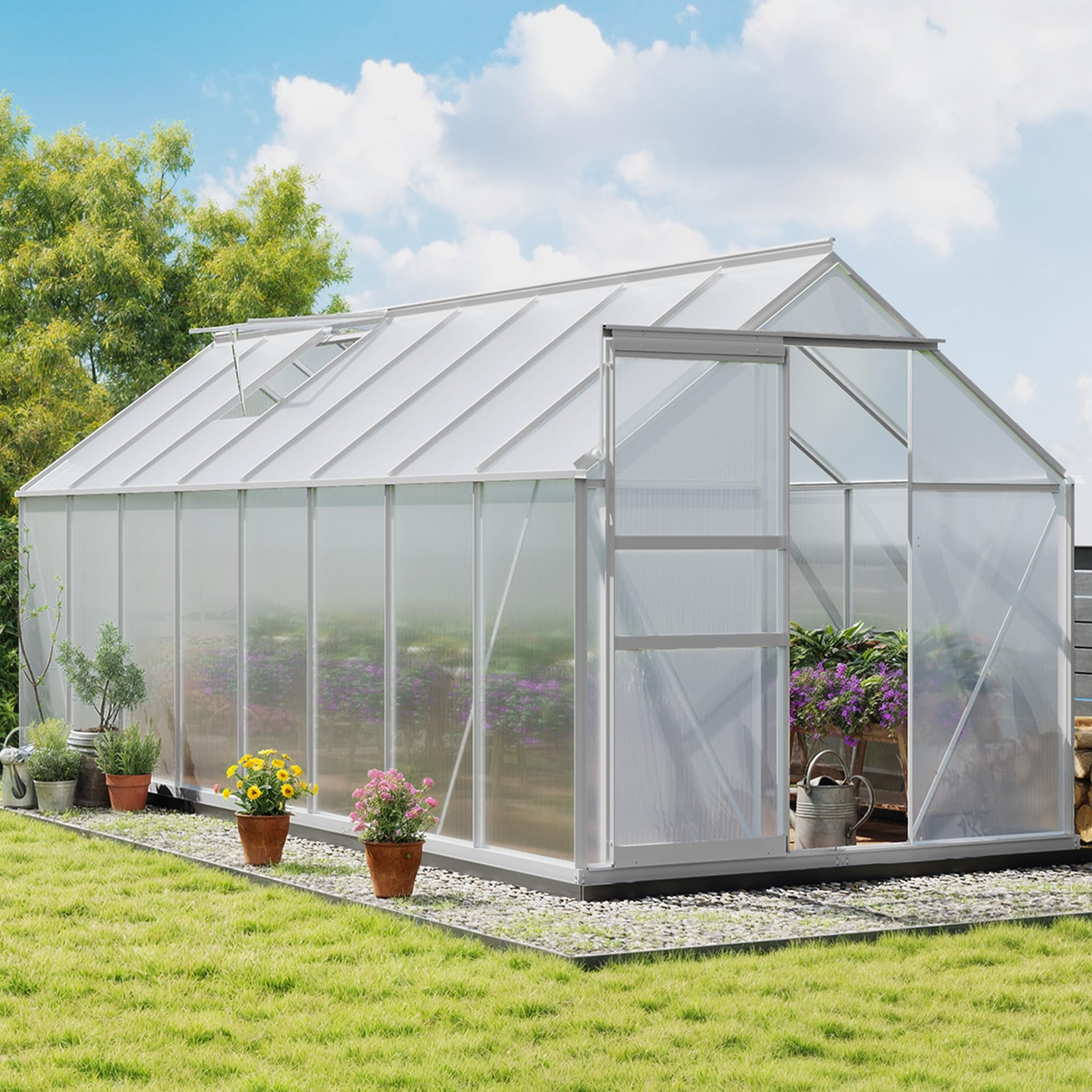
A long, narrow greenhouse with a sliding door that saves swing space.
If your garden is more rectangular than square, this 6×16 foot greenhouse gives you 16 feet of growing length with a 6 foot width. The aluminum alloy frame uses reinforced rods on the sides and diagonal brace fixation to handle the longer span. At 108.57 pounds, it is the heaviest kit here, which speaks to the amount of material in the frame.
The sliding door is the defining feature — it opens and closes without needing clearance space, making it practical for tight side yards. Two adjustable skylights with multiple opening angles manage ventilation. The 4mm double-wall polycarbonate panels block 99% of UV radiation. Buyers who succeeded with assembly say the dimensions are accurate and the structure is great for medium-sized gardens once completed.
However, the YITAHOME has the lowest average rating in this list at 3.8 out of 5, and the reviews tell a clear story: assembly is extremely difficult. Two skilled carpenters took 10 hours, and one reviewer called the instructions “hieroglyphics.” Several owners mention the panels blow out in wind because the frame is not truly heavy-duty despite the name. The kit ships in two boxes that may arrive separately. This is a large and heavy structure that could be excellent if you have the skill and patience to build it right, but it is a risky buy for a first-time greenhouse owner.
Long & Slim
- Sliding door saves space in tight garden layouts.
- Two adjustable skylights provide good ventilation.
- Aluminum alloy frame with diagonal braces for stability.
- Large 16-foot length accommodates extensive planting.
Real Drawbacks
- Extremely difficult assembly with poor instructions.
- Panels can blow out in windy conditions.
- Not truly heavy-duty frame despite the name.
- Ships in two boxes that may not arrive together.
Consider if: You are an experienced builder with patience and need a long footprint that fits a narrow space.
Avoid if: You want a straightforward assembly or live in a consistently windy area.
Understanding the Specs
Frame Material: Powder-Coated vs Bare Aluminum
The frame is the backbone of any heavy-duty greenhouse. Bare aluminum resists rust naturally, but a powder-coated finish (a baked-on paint layer) adds an extra protective layer that prevents corrosion from rain, snow, and humidity over many years. Kits like the PALRAM and VEIKOU use powder-coated aluminum, while most others in this guide use bare alloy. Either works, but the coating makes a difference in longevity if your climate is wet or coastal.
Panel Thickness: 4mm vs 5mm Twin-Wall
Twin-wall polycarbonate panels have two layers with an air gap in between, which traps heat and provides insulation. The standard thickness is 4mm, which is enough for most climates. A thicker 5mm panel, like the one on the WUKHG 8×14FT, holds more heat and is slightly more rigid, but the difference is small. What matters more is whether the panels are UV-protected — look for a 99% or 99.9% UV block rating to prevent the plastic from yellowing over time and to keep your plants from getting sunburned.
FAQ
How do I anchor a heavy-duty greenhouse kit to the ground?
Do I need a permit to install a greenhouse in my backyard?
Can I use a heavy-duty greenhouse kit year-round in freezing climates?
How long does it take to assemble a greenhouse kit?
Are polycarbonate panels better than glass or plastic sheeting?
How do I prevent my greenhouse from overheating in summer?
What is the ideal foundation for a large greenhouse?
Can I add shelves and hanging baskets to an aluminum-frame greenhouse?
Final Thoughts: The Verdict
For the majority of shoppers, the heavy-duty greenhouse kits winner is the CABIHOME 6x7ft because it combines a proven 50mph wind rating, a strong aluminum frame with cross bracing, and the most straightforward assembly process in this group. If you want a spacious walk-in with two roof vents and a powder-coated frame, go with the VEIKOU 8×16. And for a compact, budget-friendly starter kit that still uses a real aluminum frame, the Sylviera 6×8 FT gets you into a hard-sided greenhouse without a premium price.
How We Picked
We do not accept paid placement. Every pick is matched to a real buyer and a real use-case; we do not hands-on test units.
Sources & Methodology
Specifications: manufacturer listings and product documentation. Review insights: verified customer reviews, as of July 2026. Pricing: not shown on this page (it changes often); check the current price via the retailer link.
As an Amazon Associate, Lawn Gear Lab earns from qualifying purchases. This does not affect which products we feature.