
Specs are compiled from manufacturer listings and verified buyer reviews and can change over time — please confirm the key details on the product page before buying.
The three numbers on a fertilizer bag—like 5-7-3 or 4-6-2—are the single most important thing to get right for your vegetable patch, yet most gardeners grab whichever bag is cheapest and wonder why their tomatoes are all leaf and no fruit. That trio of numbers stands for nitrogen (for leafy growth), phosphorus (for roots and flowers), and potassium (for overall plant health and fruit quality). A blend too high in nitrogen gives you a lush green plant that never sets fruit, while one too heavy in phosphorus pushes flowers at the expense of sturdy stems. The right pick for your soil and crop stage is the difference between a handful of cherry tomatoes and a basketful big enough to share with neighbors.
I’m Rikta — the founder and writer behind Lawn Gear Lab. This guide is built by comparing the manufacturers’ published specifications and the patterns across verified customer reviews, so you get each pick’s real strengths and trade-offs instead of marketing spin.
Plants can’t tell you what they’re missing—but their leaves, roots, and fruit absolutely will. Here is a breakdown of the seven best options on the shelf right now so you can match the perfect garden fertilizer for vegetables to your soil, your schedule, and your growing style.
Our Picks at a Glance


How To Choose The Best Garden Fertilizer For Vegetables
Before you pick a bag or bottle, you need to know what your vegetables actually need. Leafy greens like lettuce and kale want more nitrogen to push out big tender leaves. Fruiting crops like tomatoes, peppers, and squash need more phosphorus and potassium to support flowers and heavy fruit without getting lanky. Start with a soil test if you can—it tells you exactly which nutrient is missing so you don’t guess wrong.
NPK Ratio — The Three Numbers That Matter Most
The first number is nitrogen (N), which fuels green leafy growth. The second is phosphorus (P), which supports root development and flower formation. The third is potassium (K), which strengthens cell walls and improves fruit quality. A balanced ratio like 4-6-2 works well for most vegetables at planting time, while a higher middle number like 5-7-3 helps heavy feeders like tomatoes set more fruit. A nitrogen-heavy blend like 20-20-20 gives a rapid green-up but can push too much leaf at the expense of fruit if used too late in the season.
Granular vs Liquid — How You Apply Matters
Granular fertilizers are dry pellets you sprinkle on the soil and water in. They release nutrients slowly over weeks, so you apply less often—every month or so during the growing season. Liquids mix with water and get absorbed by roots and leaves almost right away, which makes them great for a quick boost or for container plants that need frequent feeding. The trade-off is that liquids require more regular applications, typically every two to three weeks.
Organic Certification and Soil Health
An OMRI (Organic Materials Review Institute) listing means the fertilizer meets organic production standards and contains no synthetic chemicals. Organic options like fish emulsion, bone meal, and kelp meal also feed the microorganisms living in your soil, which break down organic matter and make nutrients available to plant roots over time. Synthetic fertilizers skip the soil biology and deliver nutrients directly to the plant, which works faster but does less to build long-term soil health.
Quick Comparison
| Model | Best For | NPK Ratio | Weight | Form | Amazon |
|---|---|---|---|---|---|
| Down To Earth 4-6-2★ Best Overall | All-around organic feeding | 4:6:2 | 5 Pounds | Granules | Amazon |
| FoxFarm Happy Frog Veg & TomatoTop Performer | Heavy-fruiting crops | 5-7-3 | 4 lb | Granules | Amazon |
| Espoma Garden-tone 3-4-4 | Cool & warm season veg | 3:4:4 | 4 Pounds | Granules | Amazon |
| FoxFarm Happy Frog All Purpose | Gentle all-purpose feeding | 6-4-5 | 4 Pounds | Granules | Amazon |
| GS Plant Foods 20-20-20 | Fast green-up & turf | 20-20-20 | 3 Pounds | Dry water-soluble | Amazon |
| Alaska Fish Fertilizer 5-1-1 | Leafy greens & transplants | 5:1:1 | 8.8 Pounds | Liquid | Amazon |
| The Grow Co Fish Emulsion 2-3-1 | Balanced liquid boost | 2-3-1 | — | Liquid | Amazon |
In‑Depth Reviews
1. Down To Earth All Natural Fertilizers Organic All Purpose Tomato & Vegetable Mix 4-6-2
Our pick — over 4.5★ from 900+ verified ratings; the strongest balance of quality and price.
The back-to-basics granular that feeds the soil while it feeds your plants.
If you want one box that works across everything—tomatoes, peppers, herbs, flowers, even container plants—this is it. The 4-6-2 ratio is a solid middle ground that encourages strong roots and decent fruit without going overboard on any single nutrient. The ingredient list reads like a pantry for healthy soil: fish bone meal, blood meal, feather meal, rock phosphate, langbeinite, greensand, humates, and kelp meal. It is OMRI listed, so it is certified for organic production.
Customers note it “transformed pale, flimsy tomato plants into healthy ones within two weeks of application.” Another reviewer noted the fishy smell can attract raccoons if you do not work the granules into the soil and water them in right away—a practical tip if you have critters in your yard. Down To Earth has a 4:6:2 ratio, and Espoma Garden-tone has a 3:4:4 ratio; this gives Down To Earth an edge for getting flowers to set fruit earlier in the season.
What makes it versatile
- 5 pounds of granules covers more garden area than 4-pound bags from competitors
- Eight different organic ingredients feed both plants and soil microbes
- OMRI listed for organic production
- Gentle, non-burning formula safe for transplants and seedlings
The honest trade-off
- Fishy smell can draw raccoons and other wildlife if not watered in promptly
- Granules need to be worked into the soil, not just sprinkled on top
The all-around workhorse: If you have a mixed vegetable garden and want one organic granular that handles everything from transplant to harvest without guesswork, this is the most straightforward pick.
Where it falls short: The smell is real—work it into the soil and water it in the same day, or expect four-legged visitors to dig around your beds.
2. FoxFarm Happy Frog Tomato & Vegetable Fertilizer
The tomato whisperer that turns a spindly sprout into a fruit-laden monster.
This is the granular option built specifically for the hungriest plants in your garden—tomatoes, peppers, squash, and berries. The 5-7-3 ratio delivers more phosphorus than nitrogen, which pushes your plants to set flowers and then heavy fruit rather than just bushy leaves. It also contains calcium, and the maker says it helps prevent blossom end rot (that ugly black patch on the bottom of tomatoes that ruins a harvest). Mycorrhizal fungi are mixed into the granules too, which help roots pull more water and nutrients from the soil. The bag weighs 4 lb, and because it is a slow-release granule, you apply it every month during the season rather than every week.
Buyers report it “turned tiny cherry tomato sprig into a tomato-producing tree.” Another reviewer mentioned mixing it with FoxFarm Ocean Forest soil, perlite, and coco coir for “bumper” crops of tomatoes. Unlike some organic fertilizers, owners mention it has “no chemical or fish smell,” which is a welcome change if you live in a small space or keep your garden near the back door. The catch is that at a 4 lb bag, serious gardeners with large plots will burn through it fast and may need to buy multiple bags by midsummer.
What pushes it ahead
- 5-7-3 ratio is tune for fruiting vegetables, not just general feeding
- Added calcium helps prevent blossom end rot before it starts
- Mycorrhizal fungi improve root efficiency and nutrient uptake
- Minimal odor compared to other organic granular fertilizers
What to consider
- 4 lb bag is small for large in-ground gardens with many plants
- More expensive per pound than general-purpose blends like Down To Earth
The fruiting finish: If you grow heavy feeders like tomatoes and peppers in containers or raised beds, this is the most targeted granular option you can buy—it pushes fruit, not foliage.
The limit: The 4 lb bag size means you may be reordering halfway through the season if your garden spans more than a few raised beds.
3. Espoma Organic Garden-tone 3-4-4 (Pack of 2)

The two-pack that stretches your feeding budget without stretching the truth about organics.
Espoma has been making natural organics since 1929, and this Garden-tone formula is one of their most popular for a reason. The 3-4-4 ratio is slightly lower in nitrogen than the Down To Earth blend, making it a safer option if your soil already runs high in nitrogen from compost or previous feeding. It contains exclusive Bio-tone—a proprietary mix of beneficial microbes and mycorrhizae—plus 5% calcium to support cell wall strength and fruit quality. This is a pack of two 4-pound bags, so you get 8 pounds total, which is more total product than any other granular on this list for a very competitive price.
One long-time buyer called it a “standout,” noting that after using Espoma products for a year, their garden showed noticeably better “growth, blooms and beauty.” Another reviewer has used it for years and says it “doesn’t burn the plants if you over apply.” The product is registered as an Organic Input Material and approved for organic gardening. It works on leafy vegetables like lettuce and kale as well as warm-season crops like tomatoes, peppers, squash, and melons. Apply it monthly throughout the growing season around the drip line of each plant, then water it in thoroughly.
The value play
- Two 4-pound bags give you 8 pounds total—more product than any single-box competitor at a similar price
- Bio-tone formula includes beneficial microbes that improve soil health over time
- 5% calcium helps avoid blossom end rot on tomatoes and peppers
- Low nitrogen (3-4-4) is safe for over-application and nitrogen-rich soils
What to know
- The 4-pound individual bags are smaller than Down To Earth’s single 5-pound box
- Some reviewers mention a noticeable organic smell during application
The budget-stretching choice: If you want the most total fertilizer for your money and you value a low-nitrogen formula that won’t burn plants, the two-pack of Garden-tone is the smartest value in granular organics.
The trade-off: You get two small bags instead of one larger one, which means more bag waste and more trips to the garden shed to grab a new bag.
4. FoxFarm Happy Frog All Purpose Fertilizer 6-4-5

The slow-release companion that fixes yellow leaves without shocking your soil.
This is the all-purpose version of FoxFarm’s Happy Frog line, and it is designed for a wider range of plants than the dedicated Tomato & Vegetable blend reviewed above. The 6-4-5 ratio has a bit more nitrogen, which makes it better for leafy greens, ornamentals, and plants that need a general green-up. It is packed with beneficial soil microbes and mycorrhizal fungi that help roots absorb water and nutrients more efficiently. Like the other Happy Frog products, this one is OMRI listed for organic use. It comes in a 4-pound bag of ready-to-use granules.
Reviewers point out it “revived yellow tomato/zucchini plants to green within a week.” That speed comes from the active soil microbes in the formula, which jump-start nutrient cycling in the root zone. Another reviewer uses it monthly and says it yields “the best garden ever” while noting it smells bad but is an effective dry fertilizer. Unlike the Tomato & Vegetable version, this all-purpose blend does not have added calcium, so if blossom end rot is a recurring problem in your garden, stick with the 5-7-3 version. The 6-4-5 ratio is a 4.0x gap in nitrogen compared to FoxFarm’s own Tomato & Vegetable blend (5-7-3), so be careful not to over-apply it to fruiting crops late in the season.
Why it works
- Beneficial soil microbes and mycorrhizal fungi improve root function and nutrient absorption
- Slightly higher nitrogen (6-4-5) is excellent for reviving pale, nitrogen-starved plants
- OMRI listed and safe for organic vegetable gardens
- Slow-release formula feeds gently over several weeks without burning
Consider this
- No added calcium means it won’t directly prevent blossom end rot like the Tomato & Vegetable version
- The strong manure smell can linger for days after watering, especially in greenhouses or enclosed spaces
The revival specialist: If you have yellowing leaves on tomatoes, zucchini, or leafy greens and you need a fast, gentle green-up that also feeds the soil biology, this is the most targeted fix on the list.
The catch: It smells strongly of manure during and after application—plan to use it outdoors and give the garden a day or two to air out.
5. GS Plant Foods All Purpose Water Soluble 20-20-20
The instant nutrient hit for plants that need a shot of green right now.
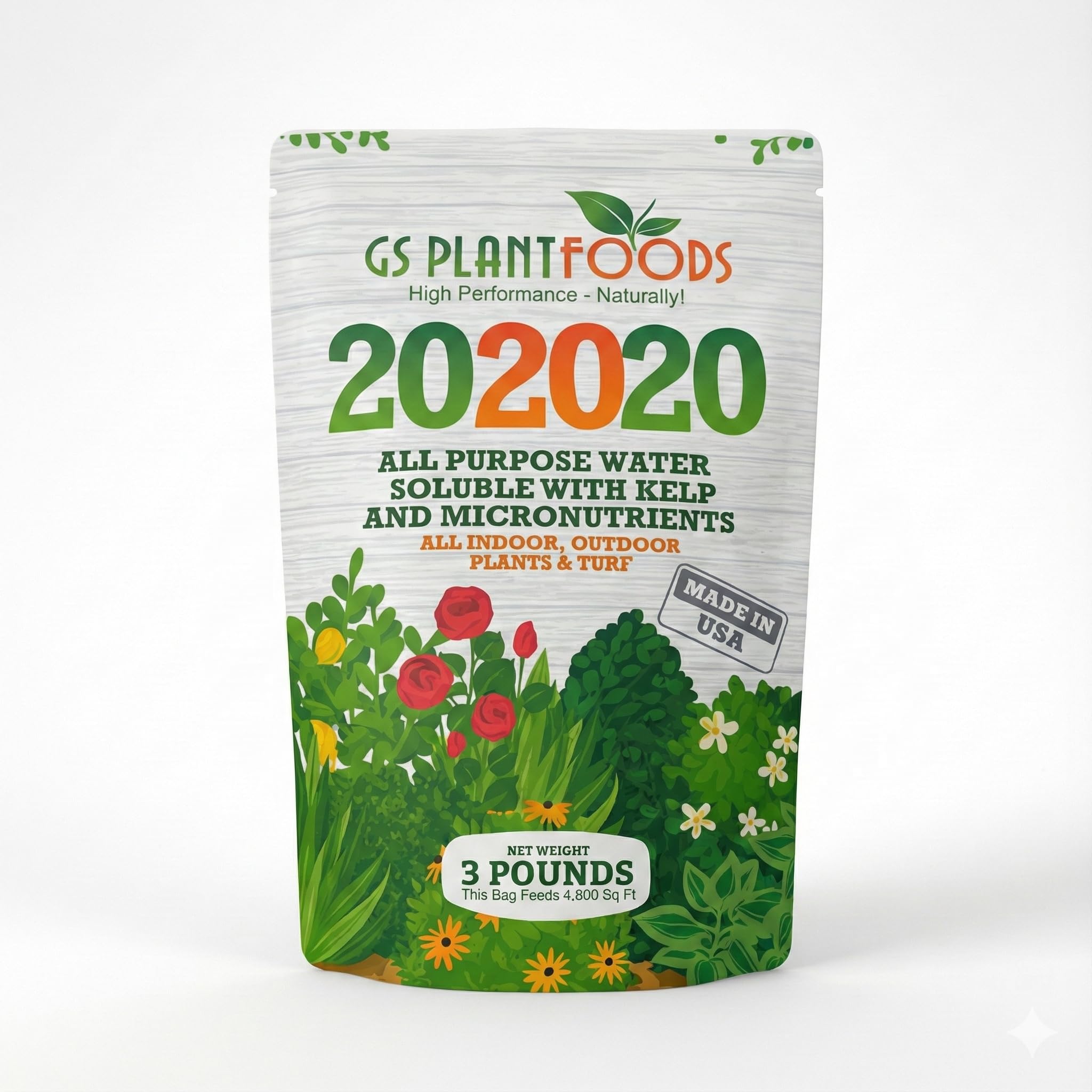
When your vegetables look pale and you need visible improvement within a week, a water-soluble fertilizer is the fastest tool. This 20-20-20 formula from GS Plant Foods delivers a balanced dose of nitrogen, phosphorus, and potassium plus micronutrients like iron, manganese, copper, zinc, boron, and molybdenum. The powder dissolves completely in water and you can apply it with a watering can, hose-end sprayer, or backpack sprayer. The maker says one 3-pound bag feeds up to 4,800 square feet of turf. It also contains kelp (Ascophyllum nodosum), a natural seaweed extract often used in plant nutrition programs.
One reviewer used it on a struggling Purple Orchid tree and saw “dark green leaves and shoots within a week” with “much larger leaves than I have seen on these trees prior.” Another buyer uses it weekly on houseplants to keep them “happy and healthy” and says it “will not burn your plants if you use it according to the instructions.” The balanced 20-20-20 ratio is a 4.0x gap in NPK concentration compared to FoxFarm’s Happy Frog Tomato & Vegetable blend (5-7-3), so a little goes a long way—but it is not organic, and the high nitrogen can push too much leaf growth on fruiting vegetables if used past the early vegetative stage.
The speed advantage
- Dissolves completely in water for immediate nutrient availability to roots and leaves
- 20-20-20 ratio provides a strong balanced boost for nitrogen-starved or struggling plants
- Kelp extract adds trace hormones and micronutrients that support overall plant vigor
- 3-pound bag covers up to 4,800 sq ft of turf, making it extremely efficient per application
Read this before buying
- Not certified organic—it contains industrially produced fertilizer salts alongside kelp
- Water-soluble fertilizers require weekly mixing and application, unlike slow-release granules you apply monthly
The emergency green-up: If your garden has a sudden nutrient deficiency and you need the fastest possible correction—especially for leafy greens and nitrogen-hungry plants—this water-soluble powder works in days, not weeks.
The warning: The high nitrogen (20-20-20) can reduce fruit set on tomatoes and peppers if used too late; reserve it for early vegetative growth or non-fruiting plants.
6. Alaska Fish Fertilizer 5-1-1

The century-old fish-based tonic that greens up leaves without burning roots.
This is a liquid fish fertilizer that has been a staple in organic gardens for generations. The 5-1-1 ratio is very high in nitrogen compared to phosphorus and potassium, which makes it ideal for leafy greens like lettuce, kale, spinach, and cabbage, as well as for giving a nitrogen boost to transplants and early-season vegetables. It is OMRI listed for organic use, so it meets organic production standards. The bottle contains 115 fluid ounces (just under a gallon) and weighs 8.8 pounds, making it a substantial liquid option that will last a full season in a moderately sized garden.
One buyer who has used it for over 10 years calls it an “excellent gentle organic nitrogen source for steady growth” and says it promotes “lush foliage, vigor, and strong plant health.” Another reviewer noted “stronger stems, vibrant leaf color, and faster growth” on tomatoes, basil, and cucumbers after application. Apply it every three weeks during the growing season by mixing it with water. The maker says it won’t burn plants when used as directed. The fishy smell is strong, but shoppers say it “dissipates within a day” when used outdoors. The 5:1:1 ratio and the 2-3-1 ratio from The Grow Co fish emulsion below differ in nitrogen content, so this is strictly for nitrogen-hungry plants—you will need to supplement with a bloom booster for heavy fruiting.
Why greens love it
- 5-1-1 ratio delivers high nitrogen for rapid leaf and stem development on greens, herbs, and transplants
- OMRI listed for certified organic vegetable gardens
- Liquid form is easy to mix with water and apply with a watering can or sprayer
- Gentle formula won’t burn plants when used as directed, even on seedlings
The honest downsides
- The fishy smell is pungent—use it in a well-ventilated area and expect the odor to linger near the garden for about a day
- Low phosphorus (1) and potassium (1) mean it is not suited for fruiting or flowering crops without supplemental feeding
The leafy-green specialist: If you grow salads, herbs, brassicas, or any crop where big, lush leaves are the goal, this liquid fish fertilizer is the most effective organic nitrogen source on this list.
What it cannot do: The near-zero phosphorus and potassium mean tomatoes, peppers, and squash will need a separate bloom fertilizer to set fruit, making this a single-season companion rather than a standalone feed.
7. The Grow Co Organic Fish Emulsion Fertilizer 2-3-1 (1 Gallon)

The gallon jug that smells like the ocean but feeds like a balanced meal.
If you want a liquid organic fertilizer that does not dump all its nitrogen into leaf growth, this fish emulsion is worth a look. The 2-3-1 NPK ratio is higher in phosphorus than nitrogen, which makes it a better fit for fruiting vegetables than the 5-1-1 Alaska fish fertilizer. The maker says the fish is sustainably sourced and “100% cold pressed” to retain nutrients, vitamins, and amino acids. One gallon (128 fluid ounces) covers over 160 gallons of mixed feed when diluted at the recommended 1:100 ratio, which makes this the most concentrated liquid option on the list and a solid value per use.
A reviewer who has purchased this product four times says “the price is right making it a great value, and so little is needed that it goes a long way.” Another buyer specifically chose this because of the 2-3-1 ratio, noting their “soil tends to run high in nitrogen” and this offers “more phosphorous for blooms/fruiting.” The smell is described as “pungent” by multiple reviewers, and one notes it is “not thick like molasses” and does not cling to the inside of the container. Use it as a soil drench or a gentle foliar spray, but the maker strongly warns it smells like real fish because it is real fish—if it did not smell, the claim goes, it would not be the real thing.
what separates it
- 2-3-1 ratio is higher in phosphorus than nitrogen, supporting blooms and fruit set rather than just leaves
- One gallon dilutes to over 160 gallons of feed, making it extremely cost-effective per application
- Cold-pressed from sustainably sourced fish waste to retain natural nutrients and amino acids
- Gentle enough to use as a foliar spray on leaves without burning
Know before you buy
- The fishy smell is noticeably pungent and lingers—this is not an indoor-friendly fertilizer
- Some reviewers found the liquid thinner than other fish emulsions they have used, though it still produced good results
The balanced liquid pick: If you want a single liquid feed that supports both leafy growth and fruit production without switching formulas mid-season, this gallon jug hits a useful middle ground between high-nitrogen fish fertilizers and bloom-specific blends.
The reality check: The strong fish smell is non-negotiable—use it outdoors, keep pets away from freshly watered soil, and do not store it in the garage unless you want the whole space to smell like a fishing boat.
Understanding the Specs
NPK Ratio — The Three-Number Code
Every fertilizer label has three numbers separated by dashes, like 4-6-2 or 5-7-3. The first is nitrogen (N), which makes leaves green and stems grow. The second is phosphorus (P), which drives root development and flower formation. The third is potassium (K), which strengthens cell walls and helps fruit ripen properly. Leafy greens need a higher first number, while tomatoes and peppers need a higher second number. Balanced ratios like 20-20-20 give equal amounts of all three, which works well for a general boost but may not target your crop’s specific stage.
Granules vs Liquid — How Fast You Want Results
Granular fertilizers are dry pellets you sprinkle on the soil around your plants and water in. They break down slowly over weeks, feeding the plant gradually with each watering. You typically apply them once a month. Liquid fertilizers are concentrates you mix with water and apply immediately. The nutrients are available to the plant within hours or days, making liquid the faster option, but you have to reapply every two to three weeks. Granules are easier for large gardens where you do not want to mix solutions every week. Liquids are better for containers and for giving struggling plants a quick green-up.
OMRI Listed — What the Label Means
OMRI stands for the Organic Materials Review Institute, an independent nonprofit that evaluates products to see if they meet USDA organic production standards. When you see “OMRI Listed” on a fertilizer bag, it means the product contains only ingredients allowed in certified organic farming. This is important for vegetable gardeners who want to avoid synthetic chemicals and who care about building healthy soil biology instead of just feeding the plant with manufactured salts.
Beneficial Soil Microbes and Mycorrhizae
Some fertilizers, like the FoxFarm Happy Frog line and Espoma Garden-tone, include added beneficial soil microbes and mycorrhizal fungi. These are living organisms that form a partnership with plant roots. The fungi extend the root system’s reach into the soil, helping the plant absorb more water and nutrients, especially phosphorus. The microbes break down organic matter in the soil, releasing nutrients that were previously locked away. Over time, this improves the overall health of your garden soil, not just the current season’s crop.
FAQ
Can I use the same fertilizer for tomatoes and leafy greens?
How often should I fertilize my vegetable garden?
Will fish fertilizer burn my plants?
What does OMRI listed mean and does it matter?
Can I mix different fertilizers together?
How do I fix blossom end rot on my tomatoes?
What is the difference between fish fertilizer and fish emulsion?
Should I use a water-soluble or granular fertilizer for container vegetables?
How do I store liquid fish fertilizer so it does not smell up my garage?
Can I use these fertilizers on houseplants or just outdoor vegetables?
Final Thoughts: The Verdict
For the majority of shoppers, the garden fertilizer for vegetables winner is the Down To Earth All Natural Fertilizers Organic All Purpose Tomato & Vegetable Mix 4-6-2 because its 5-pound box, eight-ingredient organic formula, and OMRI listing make it the most versatile one-box solution for a mixed vegetable garden without requiring multiple products or weekly mixing. If you want a liquid option for quick green-up on leafy greens, grab the Alaska Fish Fertilizer 5-1-1. And for heavy-fruiting crops like tomatoes and peppers where maximum fruit set is the goal, the standout is the targeted 5-7-3 ratio and calcium content of the FoxFarm Happy Frog Tomato & Vegetable Fertilizer.
How We Picked
We do not accept paid placement. Every pick is matched to a real buyer and a real use-case; we do not hands-on test units.
Sources & Methodology
Specifications: manufacturer listings and product documentation. Review insights: verified customer reviews, as of July 2026. Pricing: not shown on this page (it changes often); check the current price via the retailer link.
As an Amazon Associate, Lawn Gear Lab earns from qualifying purchases. This does not affect which products we feature.