
Specs are compiled from manufacturer listings and verified buyer reviews and can change over time — please confirm the key details on the product page before buying.
Yellow leaves, white powder, or black spots on your tomato plants almost always mean one thing: fungus has beaten you to the harvest. The difference between saving your crop and watching it rot depends on picking the right treatment and applying it at the right time. This guide matches you with the fungicide for tomatoes that fits your plants, your schedule, and your style of growing.
I’m Rikta — the writer behind Lawn Gear Lab. This guide compares the manufacturers’ published specs and patterns across verified customer reviews, so you get each pick’s real strengths and trade-offs.
You need to match the active ingredient to the disease and your gardening style. A broad-spectrum concentrate like chlorothalonil (a synthetic fungicide that kills many types of fungus) is great for heavy blight. A gentler neem oil option (a plant-based oil that fights fungus, insects, and mites) works well for ongoing prevention on edible crops.
Our Picks at a Glance
How To Choose The Best Fungicide For Tomatoes
Picking the right fungicide starts with knowing what is attacking your tomatoes and how you prefer to treat them. Here is a breakdown of the key factors that separate an effective treatment from a wasted effort.
Active Ingredient Matters Most
This is your first decision. Copper-based fungicides (fungicides that use copper as the active ingredient, like copper ammonium complex) are broad-spectrum (they kill many types of fungus and bacteria) and work well against bacterial spots and late blight, but they can sometimes damage sensitive plant tissue if you apply too much. Neem oil (a natural oil pressed from neem tree seeds) is a softer, organic option that works as a fungicide, insecticide (kills insects), and miticide (kills mites) all in one — perfect for preventative care on vegetables you will eat. Chlorothalonil (a synthetic broad-spectrum fungicide) is the active ingredient in products like Bonide Fung-onil; it is very effective against blight, leaf spot, and rust, making it a strong choice for active outbreaks.
Ready-to-Use vs. Concentrate
A ready-to-use spray comes pre-mixed in a bottle with a sprayer. It is convenient for small gardens or quick spot treatments, but you pay more per ounce and generate more plastic waste. A concentrate requires you to mix the product with water in your own sprayer. This is far more economical for larger gardens — a single 16-ounce bottle of concentrate can make several gallons of finished spray, giving you better control over the strength of each application.
Single-Purpose vs. Multi-Purpose Formulas
Some products are purely fungicides (they only kill fungus). Others are labeled as a fungicide, insecticide, and miticide combined. If you are also fighting aphids, spider mites, or whiteflies on your tomatoes, a multi-purpose neem oil product saves you from buying and applying separate treatments. If you only have a fungal problem, a dedicated fungicide may be more powerful and cost-effective.
Quick Comparison
| Model | Best For | Active Ingredient | Liquid Volume | Item Form | Amazon |
|---|---|---|---|---|---|
| Bonide Captain Jack’s Neem Oil★ Best Overall | Large Garden Value | Neem Oil | 128 fl oz | Ready-to-Use | Amazon |
| Bonide Fung-onil ConcentrateAlso Great | Heavy Blight Control | Chlorothalonil | 16 fl oz | Concentrate | Amazon |
| Southern Ag Liquid Copper | Bacterial & Fungal Spots | Copper Ammonium Complex | 128 fl oz | Liquid | Amazon |
| Garden Safe Fungicide3 | Multi-Purpose Prevention | Neem Oil Extract | 128 fl oz | Ready-to-Use | Amazon |
| Monterey 70% Neem Oil | Organic Concentrate | 70% Neem Oil | 1 Pint | Concentrate | Amazon |
| Neudorff Copper Soap Spray | Gentle Spot Treatment | Copper Soap | 32 fl oz | Spray | Amazon |
| Organic Insecticide & Fungicide | Whole-Garden Bio Formula | Bio-based | 16 fl oz | Concentrate | Amazon |
In‑Depth Reviews
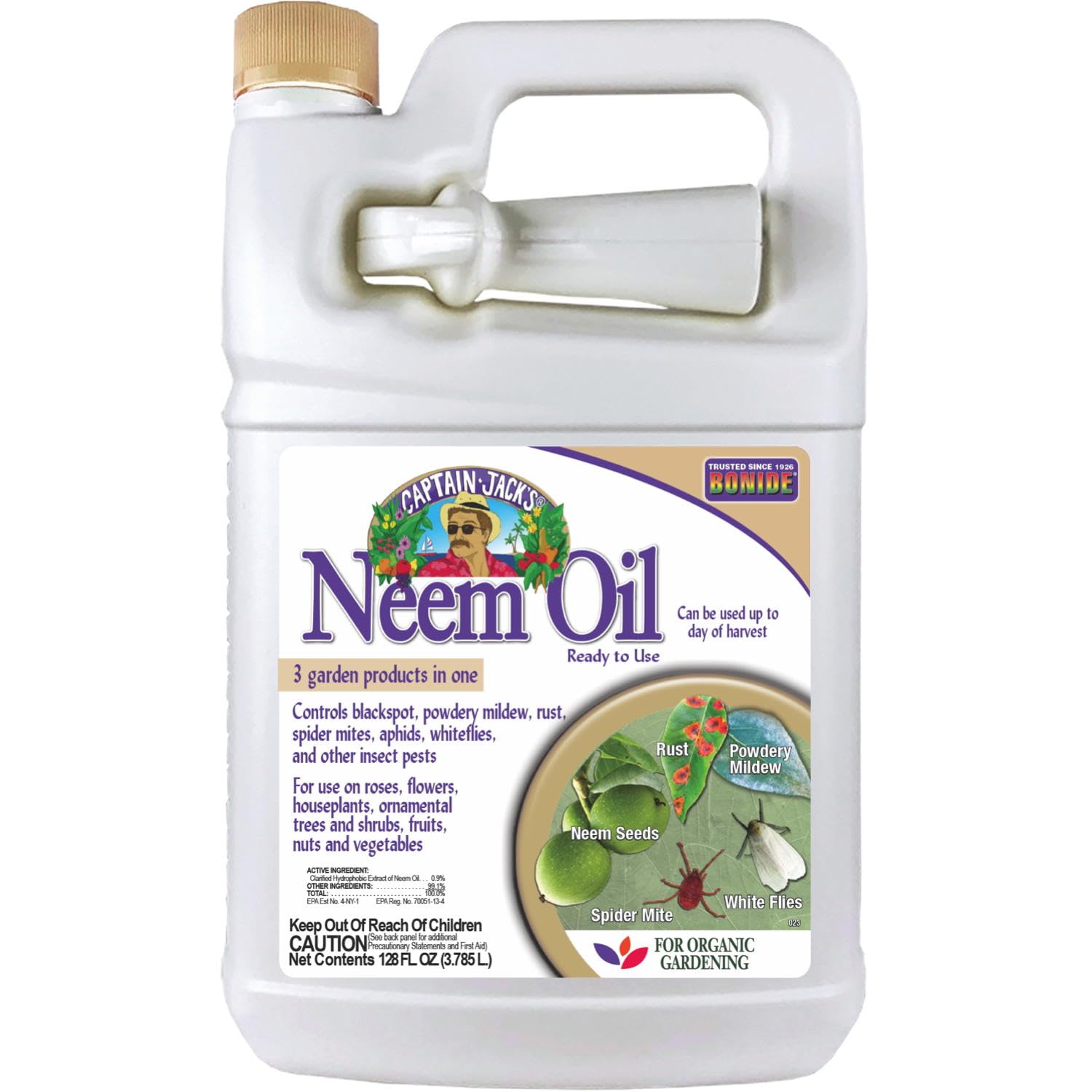
1. Bonide Captain Jack’s Neem Oil, 128 oz Ready-to-Use
Our pick — over 4★ from 48,500+ verified ratings; the strongest balance of quality and price.
A massive jug of neem oil that keeps pests and fungus away for weeks.
If you have a lot of ground to cover, this 128-ounce ready-to-use jug from Bonide is among the most popular options on the market with over 48,000 ratings and a solid 4.4-star average. The active ingredient is Clarified Hydrophobic Extract of Neem Oil, which works as a fungicide, insecticide, and miticide. It targets common tomato fungal problems like rust and powdery mildew, while also killing eggs, larvae, and adult stages of spider mites, aphids, and whiteflies. Because it is ready-to-use, you just attach the included spray nozzle and go. The large container comes with a spray or stream setting on the nozzle, which buyers appreciate.
One buyer mentioned it “didn’t work right away, but slowly after a month I’ve noticed many flies, spiders and worms are much less.” That patience pays off — neem oil is not an instant kill; it works by disrupting the life cycle of pests and fungus over time. It is approved for organic gardening and can be used up until the day of harvest, making it safe for your edible tomatoes.
The biggest downside is the weight. At 8.98 pounds, this jug is heavy, and lugging it around the garden can be tiring. Compare that to the Neudorff spray bottle at just 1 pound — a huge difference in portability. Also, some buyers reported that the bottle arrived leaking due to poor packaging during shipping.
Pros
- Very large 128-ounce size for extensive coverage
- Organic, safe for vegetables up to harvest
- Spray or stream nozzle settings
Cons
- Very heavy at nearly 9 pounds
- Neem oil takes time to show results
Pick this for: Covering a sprawling vegetable garden or multiple raised beds with a single, organic, multi-purpose spray bottle.
Think twice if: You have a small balcony garden or want a lightweight, easy-to-carry sprayer.
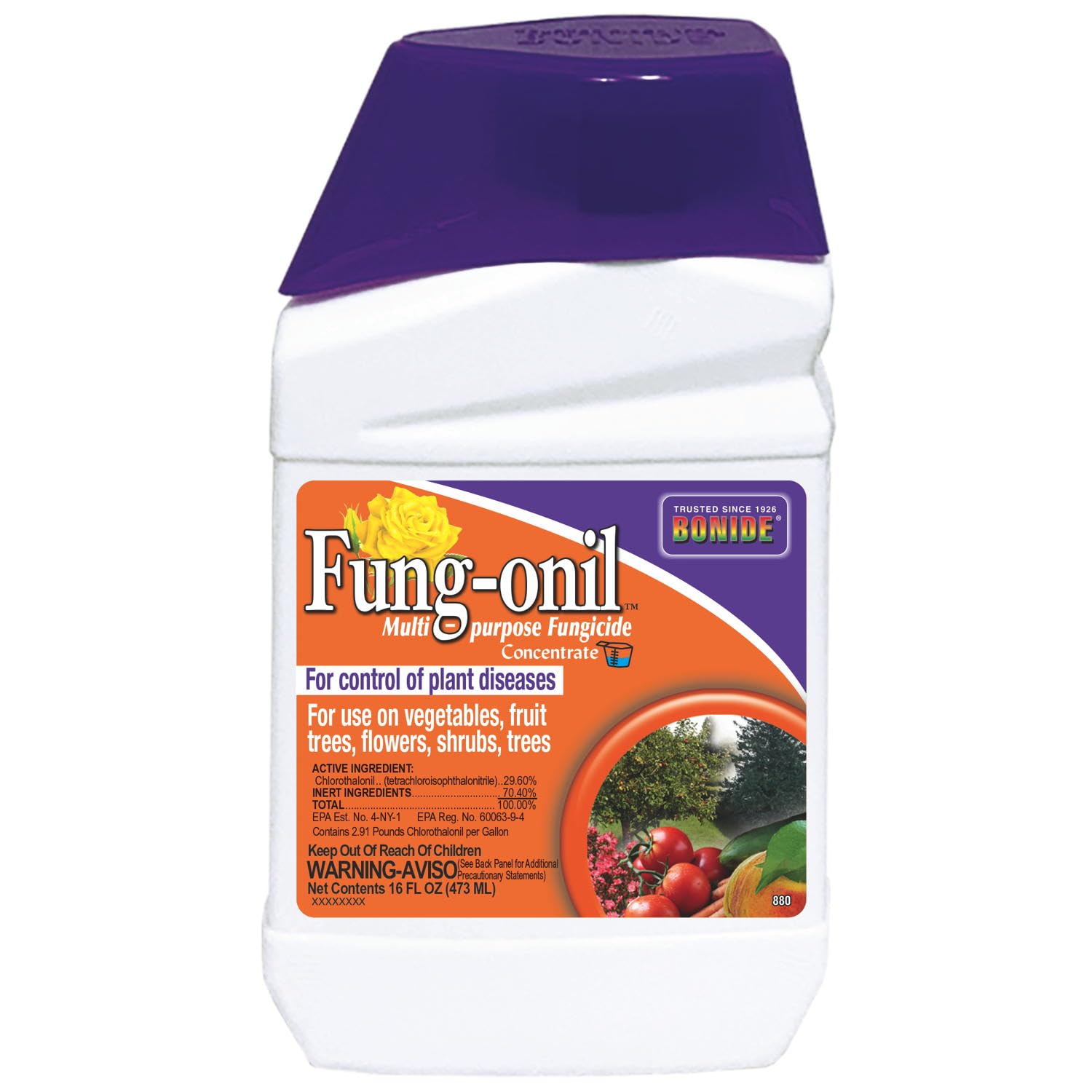
2. Bonide Fung-onil Multi-Purpose Fungicide, 16 oz Concentrate
The heavy hitter that stops blight dead in its tracks with a single active ingredient.
When your tomato leaves are turning yellow and brown spots are spreading fast, you need something stronger than a gentle organic spray. This Bonide concentrate uses chlorothalonil — a potent broad-spectrum fungicide that targets leaf spot, rust, blight, mildew, and scab. It comes as a 16-fluid-ounce concentrate, meaning you mix it with water yourself, which gives you more control over the strength and saves money over pre-mixed bottles. Buyers report that it “worked great on my tomatoes” and that after applying it, the “fungus cleared for 2 months.” One reviewer noted it “leaves white residue on plants/tomatoes, washes off, no flavor impact.”
Unlike neem oil products that also function as insecticides, this is a pure fungicide. That makes it more targeted and effective for serious fungal outbreaks, but it won’t help if you are also fighting aphids or spider mites. The concentrate format means you need a separate sprayer, but the 16-ounce bottle goes a long way.
One trade-off buyers mention is the milky white residue it can leave on leaves and fruit. Owners mention it washes off and does not affect flavor, but if you care about cosmetic appearance on your tomatoes, it is something to consider. It is also a synthetic chemical, so if you strictly want an organic option, you will want to look at the neem oil picks below.
What Makes It Effective
- Powerful chlorothalonil stops blight, leaf spot, and rust
- Concentrate format reduces cost per treatment
- Works for 2 months after application, according to buyers
Things to Watch
- Leaves white residue on leaves and fruit
- Not organic — synthetic chemical fungicide
- Requires a separate sprayer and mixing
Best for serious outbreaks: Grab this if you have active blight, heavy leaf spot, or rust on your tomatoes and want a proven, cost-effective solution that works for months.
skip it if: You need an organic product or you want a single spray that also handles insect pests.
3. Southern Ag Liquid Copper Fungicide, 1 Gallon

A copper powerhouse that handles both fungus and bacteria on your tomatoes.
If you are dealing with tomato spotted leaf mold, early blight, or bacterial spot, copper is your best friend. This Southern Ag formula contains 31.4% Copper Ammonium Complex (8% Metallic Copper Equivalent) — a high concentration that gives it serious punch against a wide range of foliar diseases. It comes in a 1-gallon jug (128 fluid ounces) and is a liquid you can use with hose-end sprayers for quick coverage. One buyer who had “tomato spotted leaf mold” confirmed it solved the problem, while another praised it for preventing fungus damage on their pine trees over years of use.
Unlike the chlorothalonil in the Bonide Fung-onil above, this copper fungicide is approved for organic gardening and can be used right up to the day of harvest. It also controls moss and algae, which is a bonus if you have other trouble spots in your garden. It weighs 9 pounds compared to the 1-pound neem oil concentrates, so you get a lot more product for larger applications.
One thing to note: a recent buyer reported receiving a bottle with 27% strength instead of the advertised 31%, so check the label on yours. Copper fungicides can also burn sensitive plant tissue if applied in hot, direct sun, so stick to morning or evening applications.
Strengths
- Controls both fungal and bacterial diseases
- 1-gallon size is excellent value for large gardens
- Organic and can be used up to harvest day
Cautions
- Some bottles may arrive at a lower copper concentration than advertised
- Can burn plants in hot sun if not applied carefully
- Not a multi-purpose product — does not kill insects
Your pick if: You want an organic, heavy-duty gallon of fungicide that tackles both blight and bacterial leaf spot, and you have a large vegetable garden to treat.
Look elsewhere if: You need a single spray that also kills aphids and mites, or you have a very small garden where a gallon is too much.
4. Garden Safe Brand Fungicide3, 1 Gallon
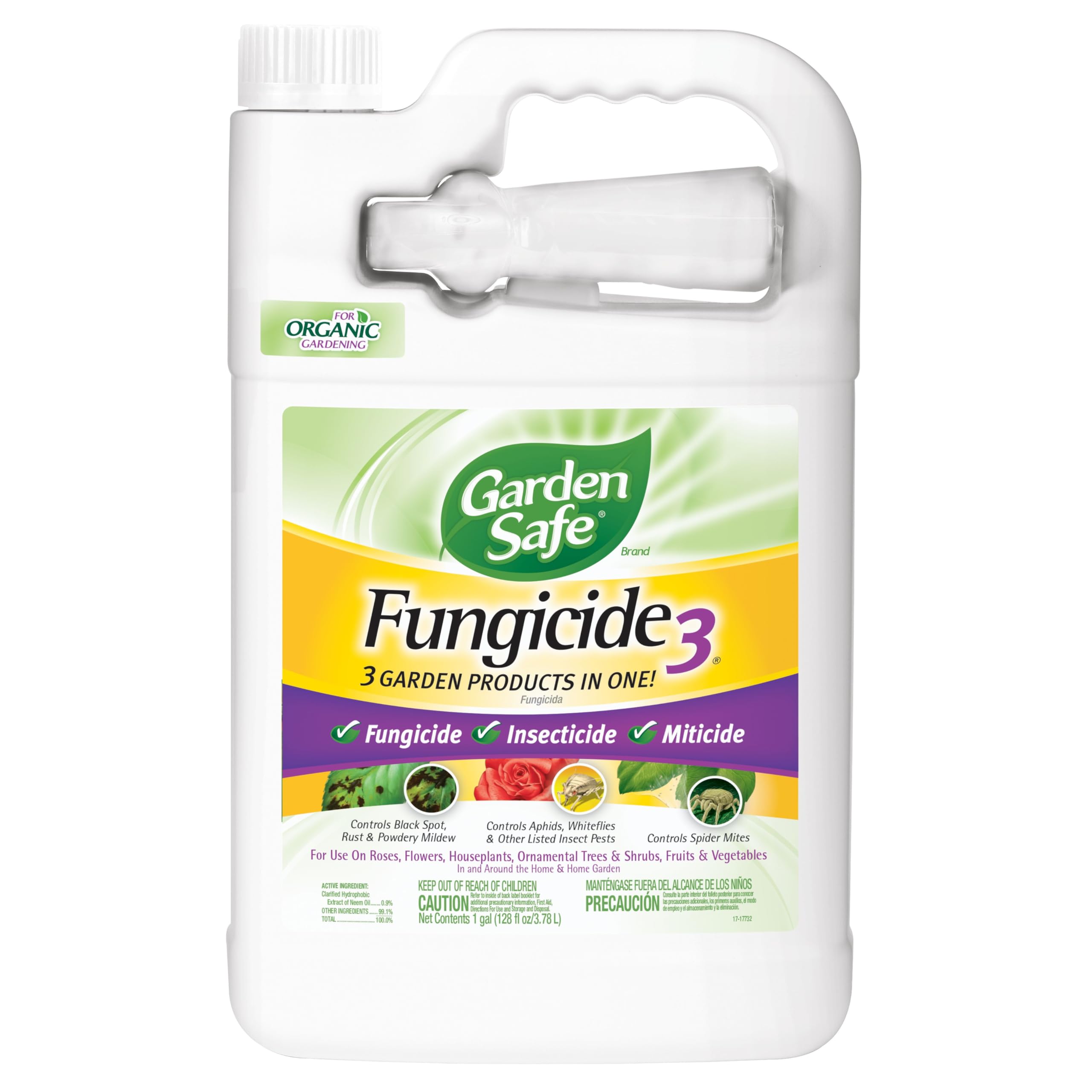
Three jobs, one sprayer, and a full gallon ready to use right now.
This is the ultimate convenience pick. The Garden Safe Fungicide3 comes as a 128-fluid-ounce ready-to-use spray with a built-in sprayer — no mixing, no measuring, no extra equipment. It contains neem oil extract, which makes it a fungicide, insecticide, and miticide all in one. So it stops powdery mildew and black spot while also controlling aphids, whiteflies, and spider mites. One reviewer called it “absolutely amazing stuff” and said it “cured mildew, boosted foliage and blooms, increased blueberry yield.”
Because it is ready-to-use, you pay more per ounce than a concentrate, but the gallon size still gives you plenty of coverage for a medium-sized garden. It is also EPA-specified and organic, so you can use it on your vegetable garden right up to harvest. Compared to the Bonide Captain Jack’s Neem Oil (also 128 ounces), this one has a slightly lower rating (4.3 vs 4.4) but a much higher number of reviews (849 vs 48799), suggesting broad satisfaction.
One frequent complaint: the built-in sprayer design is frustrating. Customers note the sprayer hose is only about 4 inches long, making it awkward to reach plants. Many recommend using your own sprayer instead. Also, some users found it can burn plants if applied during the daytime or at full strength, so start with a lighter application.
Why It Works
- Three-in-one formula (fungicide, insecticide, miticide)
- Ready-to-use — no mixing required
- Large gallon size covers many plants
Shortcomings
- Built-in sprayer hose is too short
- Can burn plants if applied during hot sun
Best for busy gardeners: If you want to grab one bottle and start spraying immediately without fiddling with a measuring cup, this is your pick.
Consider another if: You prefer concentrate to save money, or you have a large garden and want a better sprayer.
5. Monterey 70% Neem Oil Fungicide/Insecticide/Miticide, 1 Pint
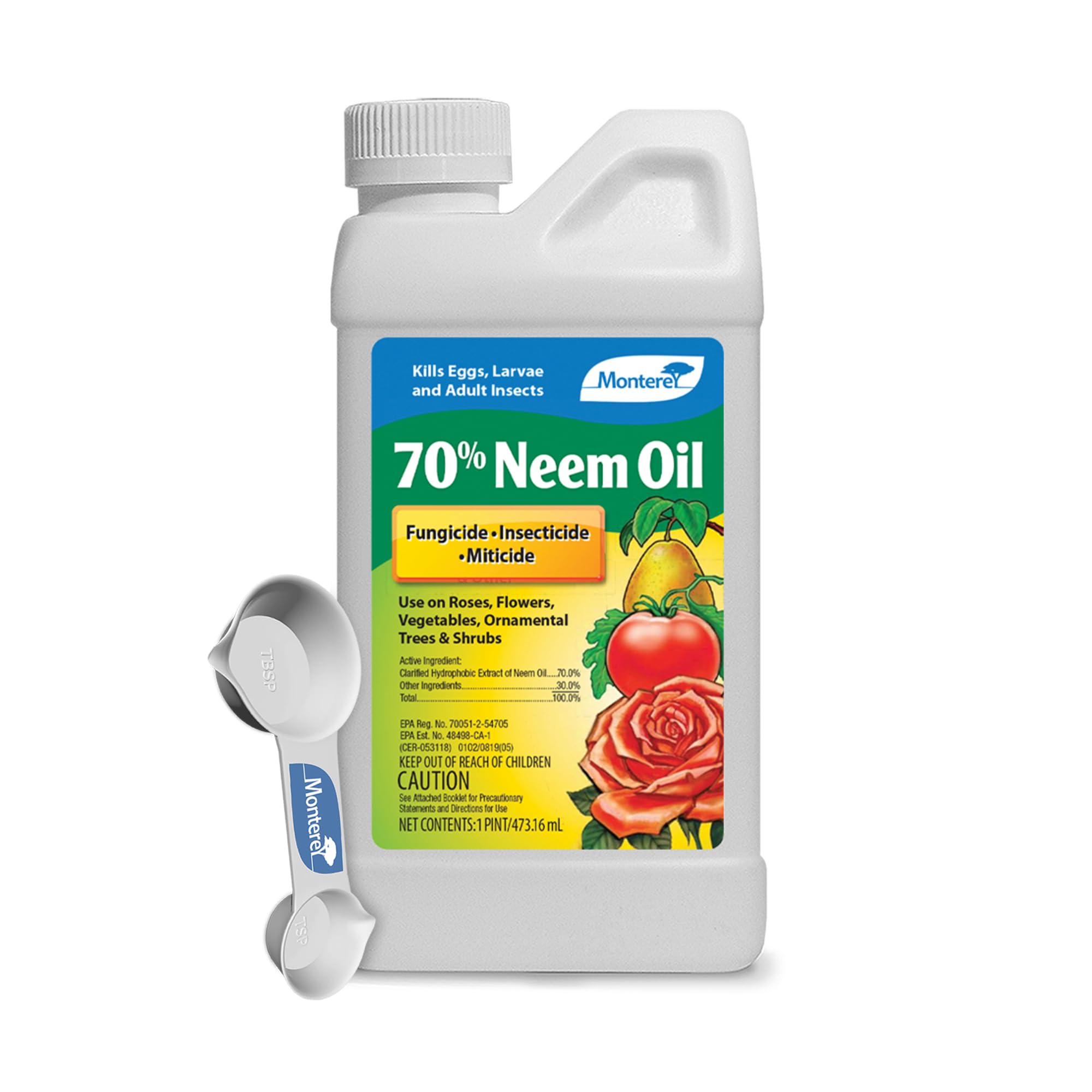
The strongest neem oil concentrate you can buy — mix it yourself for maximum control.
Most neem oil sprays on the shelf are pre-diluted to around 0.9% to 1% neem oil. This Monterey product is a 70% clarified hydrophobic neem oil concentrate — a completely different league of potency. You mix just 5ml per liter of warm water to create a powerful spray that controls black spot, powdery mildew, rust, downy mildew, and anthracnose, while also handling spider mites, aphids, and whiteflies. It is OMRI Listed for Organic Gardening, meeting USDA National Organic Program standards. One reviewer who gardens in the humid South said it is “a must have” and noted “no powdery mildew this year! This has also helped slow down early blight on my tomatoes.”
Compared to the Bonide Captain Jack’s ready-to-use neem oil, this concentrate is far more economical per treatment. A 1-pint bottle makes many gallons of finished spray, and you control the dilution strength based on your specific problem. It also stores better — the concentrate does not go bad as quickly as a pre-mixed spray.
The catch: because it is so potent, it can damage some sensitive plants if you overspray. A buyer warned it “can damage some plants (e.g., oregano) on overspray.” It also has a strong smell typical of concentrated neem oil. You will need your own sprayer, and mixing requires a little effort.
Strengths
- 70% neem oil is the most potent concentrate available
- Very economical — a little goes a long way
- OMRI Listed for organic gardening
Weaknesses
- Can damage sensitive plants if oversprayed
- Strong neem oil smell
- Requires mixing and a separate sprayer
Reach for this if: You are an experienced organic gardener who wants the most concentrated, cost-effective neem oil to mix custom batches for your whole garden.
Avoid this if: You want grab-and-go convenience or are worried about accidentally hurting tender seedlings.
6. Neudorff Plant Fungicide Spray, Copper Soap Fungicide, 32 oz

A precision spray for delicate plants that need a gentle copper treatment.
This copper soap fungicide from Neudorff is a ready-to-use spray in a small 16-fluid-ounce bottle, weighing just 1 pound. It is designed for targeted spot treatment on roses, fruits, vegetables, and ornamentals, including use for early and late blight on tomatoes and potatoes. The active ingredient is a low-concentration copper soap that decomposes into soluble copper and fatty acid, which plants and microbes can use. One owner reported it “worked great to eliminate a fungus that almost killed our decades old gardenia. It’s finally getting its green back and has even flowered.” Another noted it “works immediately on black spot, powdery mildew, red blotch” and appreciated the “blue dye shows coverage” feature.
Compared to the Southern Ag Liquid Copper (which is a much stronger concentrate), this Neudorff spray is far gentler. That makes it a safer choice for sensitive plants like gardenias, but it also means you need to reapply more often — every 7 to 10 days during the growing season. It is very handy for small gardens or indoor houseplants where a large gallon jug would be overkill.
One issue: it can still burn sensitive plants. A buyer warned it “burned hostas,” so test on a small area first. It is also more expensive per ounce than concentrated options, so it is not the best choice for large tomato patches.
Good Points
- Gentle copper formula is safe for sensitive ornamentals
- Blue dye helps you see where you sprayed
- Ultra-light and easy to carry at 1 lb
Limitations
- Small bottle may not last for large gardens
- Can still burn some plants (e.g., hostas)
- Frequent reapplication needed
Great for: Spot-treating a few tomato plants or sensitive flowers in a small garden or greenhouse, where gentleness matters more than raw power.
Not ideal for: Large vegetable plots where the cost per ounce and small bottle size add up fast.
7. Organic Insecticide & Fungicide for Plants, 16 oz Concentrate

A modern bio-based concentrate that protects pollinators while stopping fungus and pests.
This is a newer option that uses an advanced bio-based formula instead of traditional neem oil or copper. It is a 16-ounce concentrate designed to be diluted and applied with any pump, hose-end, or battery sprayer. The label says it tackles leaf disease and chewing or sap-sucking pests in one pass, making it suitable for houseplants, veggies, roses, shrubs, and turf. It is supposed to be gentle enough for use on seedlings and safe for pollinators when applied as directed. The concentrate format yields multiple refills, making it an economical choice for weekly care.
It is a bit of an unknown compared to the established brands like Bonide and Monterey. There are no customer reviews in the data to confirm real-world performance on tomatoes specifically. The manufacturer claims it works on “tomatoes, herbs, ornamentals, fruiting shrubs,” and it targets mites, aphids, whiteflies, thrips, and fungus gnats, plus powdery mildew. If you have had bad luck with neem oil burning your plants or dislike the smell, this bio-based alternative could be worth trying.
The honest truth: without verified buyer feedback, it is a gamble. It is a mid-range option that might be excellent or might not live up to the marketing. For a known-quantity choice, the Bonide Fung-onil or Monterey Neem Oil above are safer bets.
Potential Upsides
- Bio-based formula may be gentler than neem oil
- Concentrate is economical for large gardens
- Claims to be safe for pollinators
Risks
- No customer reviews available to confirm effectiveness
- Newer product with less proven track record
- May not be as potent as chlorothalonil or copper for heavy blight
Consider this if: You want to try a modern, pollinator-friendly bio-fungicide and are willing to experiment without a proven track record.
Stick with another pick if: You need a guaranteed solution for an active, aggressive fungal outbreak and cannot afford to test a new formula.
Understanding the Specs
Active Ingredient Type
This is the single most important spec. Chlorothalonil is a powerful synthetic fungicide that controls a broad range of diseases but is not organic. Copper (as copper ammonium complex or copper soap) is organic and effective against both fungal and bacterial diseases, but it can burn plants in hot sun. Neem oil (clarified hydrophobic extract of neem oil) is an organic, multi-purpose option that works as a fungicide, insecticide, and miticide — it is safer for plants but slower to show results.
Concentrate vs. Ready-to-Use
Concentrate is a raw formula you mix with water. It is cheaper per treatment, gives you control over strength, and stores longer. The downside: you need a separate sprayer and must measure carefully. Ready-to-use is pre-mixed in a spray bottle. It is more expensive per ounce but perfect for quick, small-scale applications where convenience matters more than cost.
Multi-Purpose vs. Single-Purpose
A multi-purpose product (like neem oil) works as a fungicide, insecticide, and miticide all at once. This is ideal if you are also fighting aphids, spider mites, or whiteflies on your tomatoes. A single-purpose fungicide (like chlorothalonil or copper) is more targeted and often more effective against specific fungal diseases like late blight or leaf spot, but it will not touch an insect infestation.
FAQ
Can I use neem oil on tomato plants during flowering?
How often should I apply fungicide to my tomatoes?
What is the difference between early blight and late blight on tomatoes?
Is copper fungicide safe for organic tomato gardening?
Can I mix fungicide with other pesticides or fertilizers?
Should I treat tomato plants before I see signs of fungus?
What causes white powder on my tomato leaves?
How long does a bottle of concentrate last compared to ready-to-use?
Will fungicide wash off my tomatoes before I eat them?
Can I use the same spray on my tomatoes and roses?
Final Thoughts: The Verdict
Across the board, the fungicide for tomatoes winner is the Bonide Fung-onil Multi-Purpose Fungicide because its chlorothalonil active ingredient provides powerful, long-lasting control of blight, leaf spot, and rust at a very economical price per treatment from the concentrate format. If you want an organic, multi-purpose spray that also kills insects, grab the Monterey 70% Neem Oil for its class-leading potency and cost efficiency. And for a ready-to-use, three-in-one gallon that requires no mixing at all, the standout is the Garden Safe Fungicide3 for convenience on a medium-sized garden.
How We Picked
We do not accept paid placement. Every pick is matched to a real buyer and a real use-case; we do not hands-on test units.
Sources & Methodology
Specifications: manufacturer listings and product documentation. Review insights: verified customer reviews, as of July 2026. Pricing: not shown on this page (it changes often); check the current price via the retailer link.
As an Amazon Associate, Lawn Gear Lab earns from qualifying purchases. This does not affect which products we feature.