
Specs are compiled from manufacturer listings and verified buyer reviews and can change over time — please confirm the key details on the product page before buying.
You spray it on the leaves expecting a miracle, but too many foliar fertilizers are either too weak to matter or so strong they burn the foliage. The best foliar fertilizers deliver nitrogen, phosphorus, and trace minerals through leaf pores without clogging or burning.
I’m Rikta — the founder and writer behind Lawn Gear Lab. This guide is built by comparing the manufacturers’ published specifications and the patterns across verified customer reviews, so you get each pick’s real strengths and trade-offs instead of marketing spin.
Whether you are nursing sickly seedlings back to health or pushing mature tomatoes toward a heavy harvest, the right foliar fertilizer makes the difference between a plant that barely survives and one that explodes with new growth.
Our Picks at a Glance

How To Choose The Best Foliar Fertilizer
Foliar feeding delivers nutrients through leaf stomata for absorption within hours, bypassing the root system. Focus on NPK ratio, liquid volume, and organic certification to find a foliar fertilizer that actually works.
NPK ratio — what your leaves actually need
The NPK numbers (nitrogen, phosphorus, potassium) indicate which growth stage the fertilizer supports. A high first number like 5-1-1 or 9-3-6 means the product pushes leafy green growth, which is ideal for vegetables, herbs, and foliage plants. A more balanced ratio like 2-3-1 works better when you want flowers and fruit because the phosphorus (the middle number) supports bloom development. Match the ratio to the stage your plant is in — vegetative growth wants nitrogen, flowering wants phosphorus.
Liquid volume and concentration
Ready-to-use sprays (like 32 oz, no mixing required) are convenient but cost more per feeding than concentrates. Concentrates that you dilute yourself — especially gallon-sized bottles — go much further and let you control the strength per plant. A mixing ratio like 1:32 or 1:100 tells you how many parts water to one part fertilizer; a higher dilution number means the concentrate is more potent and will last longer.
Organic certification matters for edible gardens
If you are spraying something directly onto the leaves of vegetables, herbs, or fruit, an OMRI (Organic Materials Review Institute) listing means the product contains no synthetic chemicals or prohibited substances. Fish-based and kelp-based fertilizers naturally carry more smell, but that odor usually dissipates within a day. Non-organic formulas may use synthetic salts that can burn leaf tissue if you mis-measure the dose.
Quick Comparison
| Model | Best For | NPK Ratio | Liquid Volume | Item Weight | Amazon |
|---|---|---|---|---|---|
| Alaska Fish Fertilizer★ Best Overall | All-purpose organic feeding | 5-1-1 | 115 fl oz | 8.8 lbs | Amazon |
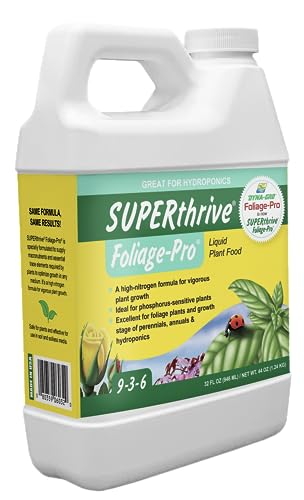
| Foliage-Pro 9-3-6 Plant FoodBest Value | Indoor foliage explosion | 9-3-6 | 0.94 L | 32 oz | Amazon |
| Medina Garrett Juice Plus | Gentle biweekly feeding | Nitrogen-rich | 32 fl oz | 2 lbs | Amazon |
| FOOP Mist Foliar Spray | Instant nutrient correction | Organic blend | 32 fl oz | 32 oz | Amazon |
| Bloom City Supergreen Kelp Spray | Kelp-based leaf feeding | Organic blend | 32 fl oz | 32 oz | Amazon |
| Great Big Roses and Flowers | Rose bloom activation | 70 minerals blend | 32 fl oz | — | Amazon |
| The Grow Co Fish Emulsion | Budget large-garden coverage | 2-3-1 | 128 fl oz | — | Amazon |
In‑Depth Reviews
1. Alaska Fish Fertilizer OMRI Listed 5-1-1
Our pick — over 4.5★ from 850+ verified ratings; the strongest balance of quality and price.
The cold-pressed fish fertilizer that feeds your soil and your leaves all at once.
This cold-pressed fish fertilizer feeds both soil and leaves with a 5-1-1 NPK ratio. With a 5-1-1 NPK ratio (5 parts nitrogen, 1 part phosphorus, 1 part potassium), it pushes intense leafy growth on vegetables, herbs, trees, and container plants without burning when you follow the directions. The Alaska bottle holds 115 fl oz, while the FOOP Mist holds 32 oz, so one purchase covers a whole season of weekly feedings across a large garden.
The fishy smell is real — several reviewers mention it — but it fades within a day once the soil absorbs it. You mix it with water every three weeks during the growing season and apply it as a soil drench or foliar spray. The OMRI (Organic Materials Review Institute) certification means it is safe for organic vegetable gardens. One long-time buyer sums it up simply: “Alaska Fish Fertilizer 5-1-1 used for 10+ years on vegetables, herbs, trees, and containers.”
The Alaska Fish Fertilizer handles vegetables, herbs, trees, and containers without burning when used as directed. The only catch is the odor during application — use it outdoors or in a well-ventilated area, and give it a few hours to dissipate.
Why it wins
- OMRI-listed organic formula safe for edibles
- 115 fl oz covers 1,000 sq ft per bottle
- Gentle nitrogen boost without leaf burn
The trade-off
- Strong fish smell during and right after application
- Low phosphorus and potassium — you may need a bloom booster for flowers and fruit
Garden workhorse: If you grow any combination of vegetables, herbs, trees, or ornamentals and want one organic bottle that does it all, start here.
Mind the smell: The fish odor is pungent for about a day; plan to apply in the evening or in a ventilated spot.
2. Foliage-Pro 9-3-6 Plant Food
One teaspoon per gallon delivers results that buyers call almost unbelievable.
The 9-3-6 NPK ratio delivers nearly double the nitrogen of the Alaska Fish Fertilizer (5-1-1), fueling dense foliage growth on houseplants. The mixing ratio is very concentrated: just 1/4 to 1/2 teaspoon per gallon of water, so a single bottle makes dozens of gallons of feed. Buyers report that “ONE application and every single one of my plants has new growth,” and another notes it saved a 42-year-old bonsai banyan tree within three weeks.
Because it is so concentrated, you get exceptional value per feeding — the upfront price looks comparable to other picks, but the tiny dose means a bottle lasts several months even with weekly use. It is formulated specifically for foliage plants (the brand is literally named Foliage-Pro), so it works best on plants grown for their leaves rather than heavy fruiting. Owners mention that philodendrons and monsteras respond with noticeably faster growth and reduced yellowing on older leaves.
What stands out
- Ultra-concentrated formula — 1/4 tsp per gallon goes a long way
- High nitrogen (9-3-6) fuels explosive leaf growth
- Customers note visible results after a single feeding
Before you buy
- Best for foliage plants, not ideal for heavy-flowering perennials
- Requires a measuring tool for accurate dilution
Indoor foliage king: If you own houseplants and want the most growth per dollar spent, this concentrate is class-leading.
Measure carefully: The high potency means over-dosing can burn leaves — stick to the label’s 1/4 to 1/2 tsp per gallon.
3. FOOP Mist Foliar Spray

A ready-to-use minty foliar spray that revived sickly plants overnight.
This is the only product in the lineup that comes pre-mixed in a spray bottle — no measuring, no mixing, just pump and spray. The 32 oz bottle delivers macronutrients, micronutrients, and soil-enriching microbes directly through the leaf surface, bypassing weak or damaged root systems. A buyer reports it “revived 6 sickly, pale cannabis plants overnight with new growth,” and another saw noticeable improvement in a nutrient-deficient clone within a week of nightly sprays. Compared to the Alaska Fish Fertilizer (115 fl oz, which needs mixing), the FOOP Mist trades volume for convenience — you pay for the ready-to-use format, but you gain the ability to treat a struggling plant immediately.
The OMRI (Organic Materials Review Institute) listing means it is certified for organic use, and the minty scent (which smells nothing like fish) disappears quickly after spraying. Because there is no mixing, there is zero risk of over-concentrating and burning leaves — a real advantage for beginners. The trade-off is the smaller size: 32 oz will cover routine feeding on a few plants, but if you have a large vegetable garden, you will run out fast and pay more per ounce than a concentrate.
The convenience factor
- Zero mixing required — spray straight from the bottle
- Minty scent rather than fish odor
- Reviewers point out overnight revival of sick plants
The limitation
- Small 32 oz bottle covers less area than concentrates
- Higher cost per ounce compared to bulk fish fertilizers
First-aid for plants: If you have a single sickly houseplant or clone that looks beyond saving, this is the fastest way to get nutrients into it without harming the roots.
Not for large gardens: The small volume makes it expensive for weekly feeding across a big vegetable patch — reserve it for targeted rescue jobs.
4. Bloom City Supergreen Organic Kelp Foliar Spray
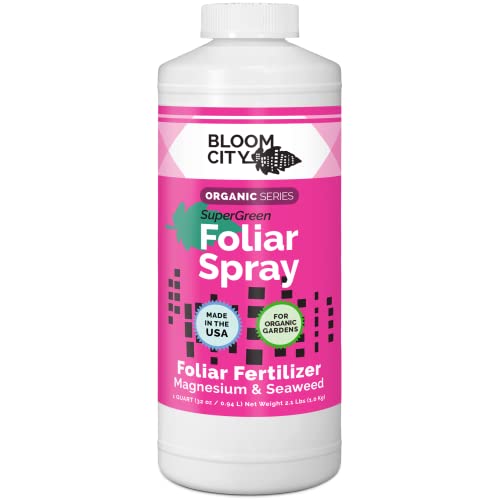
Kelp-based foliar spray that helps clones root and sickly plants bounce back.
Kelp brings a different nutrient profile than fish — it is rich in growth hormones, trace minerals, and enzymes that support root development and stress recovery rather than just pushing nitrogen-heavy leaf growth. The Bloom City formula mixes at either 1:20 or 1:40 (one part concentrate to 20 or 40 parts water), giving you flexibility depending on whether you are spraying tender seedlings or established plants. One reviewer says they “used on cannabis leaves during cloning until the roots started, and it helped a lot.” Another notes that seedings “exploded with growth” and sickly plants recuperated.
Because it is kelp-based rather than fish-based, the smell is far milder — buyers do not complain about odor the way they do with the Alaska Fish Fertilizer. The 32 oz bottle is a concentrate (not ready-to-use like the FOOP Mist), so you need a sprayer and clean water to mix it, but the dilution ratio means the bottle lasts for many applications. It is made in the USA and works across indoor houseplants, outdoor gardens, and container plantings.
What works
- Kelp hormones support root and clone development
- Mild odor compared to fish-based products
- Flexible dilution ratio for different plant stages
What to know
- Requires mixing with water before each use
- Discard mixed solution after a few days per reviewer advice
Clone and seedling specialist: If you propagate plants from cuttings or want a kelp-based foliar that supports root establishment, this is your pick.
Mix fresh each time: The concentrate can degrade after dilution, so only mix what you will use in one or two spray sessions.
5. Great Big Roses and Flowers Liquid Fertilizer Booster
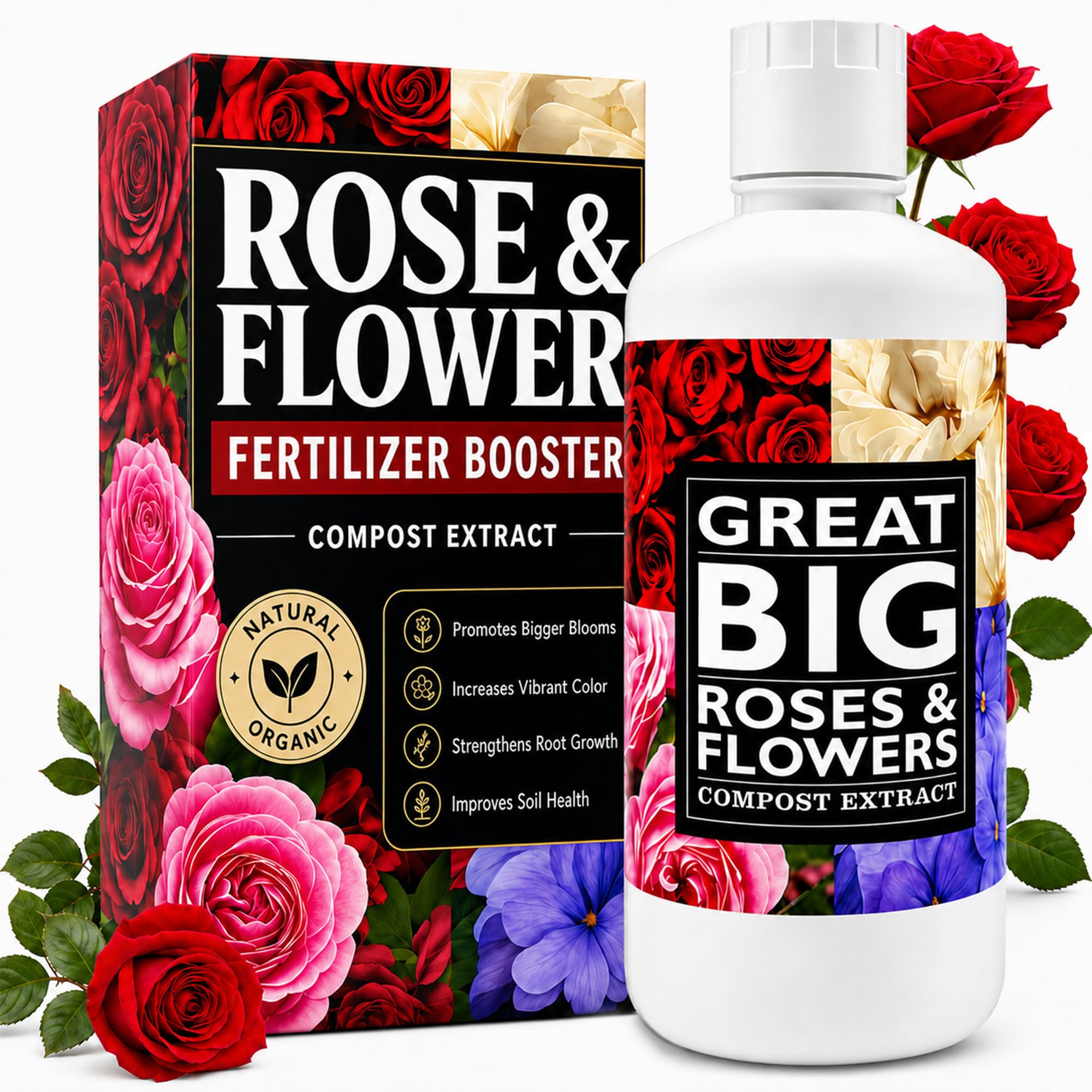
A soil-activator booster that made roses bloom again after years of nothing.
This product works differently from a standard NPK fertilizer — instead of just feeding the plant, it delivers humic acids, seaweed, and over 70 chelated trace minerals into the root zone to open up nutrients already in the soil. That is why the manufacturer markets it as a “booster” that works alongside your existing fertilizer rather than replacing it. Shoppers say rose bushes that had not bloomed in years producing big flowers within weeks after application. One reviewer with three years of use says it produces “abundant, early blooms even after harsh winter” and that “never had so many blooms, and NO black spot.”
The 32 oz bottle makes 8 applications (4 oz per gallon of water), which covers an entire growing season for most home rose gardens. It works on hydrangeas, citrus trees, hibiscus, and perennials too, not just roses. The mixing ratio is 1 tablespoon per pint of water, and it is applied as a soil drench rather than a leaf spray — so it is technically a root-zone foliar supplement rather than a true spray-on foliar. If your plants already have a solid NPK routine but look lackluster, this booster adds the missing micronutrients.
The standout features
- 70 chelated minerals and humic acids improve soil nutrient availability
- Buyers report revived blooms on years-dormant rose bushes
- Works alongside any existing fertilizer program
The catch
- Applied as a soil drench, not a true foliar spray
- Expensive per ounce if used as the sole plant food
Bloom booster for roses: If you have established rose bushes or hydrangeas that underperform despite regular feeding, this open up their potential.
Not a standalone fertilizer: It amplifies your existing regimen — do not expect full nutrition if you use it alone.
6. The Grow Co Organic Fish Emulsion Fertilizer 2-3-1

A full-gallon fish emulsion with balanced 2-3-1 NPK that supports blooms and fruit.
Most fish fertilizers lean heavily on nitrogen (like the Alaska 5-1-1), but this one from The Grow Co flips the ratio to 2-3-1 — higher in phosphorus (the middle number) than nitrogen. That makes it a better match for flowering and fruiting plants like tomatoes, peppers, and roses. The 128 fl oz (1 gallon) is the largest volume in the lineup, and the mixing ratio of 1:100 (one part fertilizer to 100 parts water) means one gallon of concentrate makes over 160 gallons of diluted feed. That is by far the lowest cost per feeding of any pick here.
The odor is pungent — the manufacturer openly says “if it doesn’t smell, then it’s not real fish” — and a long-time gardener who has bought it four times notes it is “very thin” compared to other fish emulsions, though they still report good results. Another reviewer appreciates the 2-3-1 ratio because their soil already runs high in nitrogen, and they wanted more phosphorus for bloom production. It is sustainably sourced and cold-pressed to retain amino acids and vitamins, and it works both as a soil drench and as a foliar spray.
The big advantage
- 128 fl oz at a 1:100 dilution covers 160+ gallons of feed
- 2-3-1 NPK supports flowers and fruit better than high-nitrogen fish formulas
- Sustainably sourced, cold-pressed fish emulsion
The honest trade-offs
- Thin consistency compared to other fish emulsions
- Strong fish smell limits use to outdoor gardens
Bloom-focused budget buy: If you grow flowering or fruiting plants and want a full season of feed for the lowest price, the gallon jug wins on value.
Expect fish smell: This is real fish emulsion — do not use it on indoor plants unless you accept the odor for a day.
7. Medina Garrett Juice Plus Liquid Plant Food
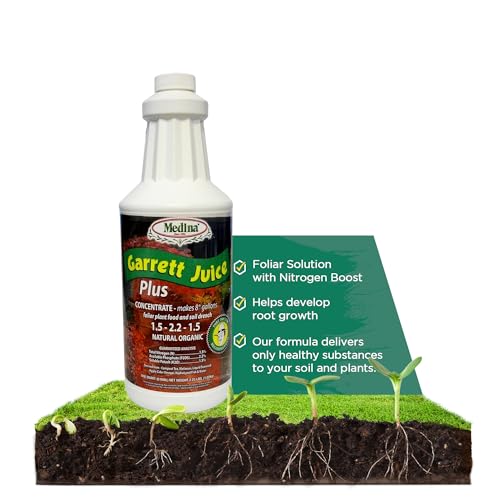
A gentle nitrogen-rich fertilizer with molasses that boosts plant brix levels.
Garrett Juice Plus stands apart because it contains molasses, which feeds soil microbes and raises brix (a measure of plant sugar content that correlates with pest resistance). The mixing ratio is 1:32 (one part concentrate to 32 parts water), and a buyer confirms it is gentle enough for biweekly use on seedlings at just 1 tablespoon per gallon. Another reviewer used it as a restorative for cold-damaged shrubs and trees, diluting it as directed and watering the roots and surrounding ground. At just 2 pounds for 32 oz, it is physically the lightest fish-based product here — the Alaska Fish Fertilizer is 8.8 pounds for 115 fl oz.
One important caveat comes from a reviewer who warns that the sweet molasses mix can attract insects if left in trays. Another user notes that their impatiens died after treatment, though they may have over-applied. The nitrogen-rich formula works best for leafy growth on houseplants, lawn grass, and flowers. It is not as high-nitrogen as the Foliage-Pro 9-3-6, but the addition of molasses makes it a solid choice for gardeners who want to improve soil biology along with feeding the plant.
What makes it different
- Molasses content feeds soil microbes and boosts brix
- Gentle enough for biweekly use on seedlings
- Good for restoring cold-damaged shrubs and trees
Watch out for
- Sweet mix may attract ants and other insects if left in open trays
- Some users reported plant die-off, possibly from over-application
Soil biology booster: If you care about feeding the microbes in your soil as much as feeding the plant itself, the molasses-based formula makes this unique.
Test on a few plants first: The sweet residue can draw insects, and sensitive plants may not tolerate the mix at full strength.
Understanding the Specs
NPK Ratio — the three numbers that tell you what the plant gets
Every fertilizer label shows three numbers like 5-1-1 or 9-3-6. The first is nitrogen (N) — it drives leaf and stem growth. The second is phosphorus (P) — it supports roots, flowers, and fruit. The third is potassium (K) — it strengthens overall plant health and disease resistance. For foliar feeding, a high first number (like 5 or 9) is ideal when you want lush green leaves fast. A higher middle number (like the 3 in 2-3-1) shifts the product toward bloom and fruit production. Pick the ratio that matches what your plant is doing right now.
Liquid Volume and Dilution Ratio — how much feed you actually get
The volume on the label (32 fl oz, 115 fl oz, 128 fl oz) tells you the size of the bottle, but the dilution ratio (like 1:32 or 1:100) tells you how many gallons of feed that bottle makes. A 1:100 ratio means one part fertilizer to 100 parts water — that is very concentrated, so a small bottle stretches far. A ready-to-use product like FOOP Mist has no dilution ratio because you spray it straight. If you have a large garden, a concentrate with a high dilution ratio (like 1:100) gives you the most feed per dollar.
FAQ
What is foliar fertilizer and how does it work?
Can I use foliar fertilizer on vegetables and herbs?
How often should I apply foliar fertilizer?
Should I spray the leaves or water the soil?
What does the NPK ratio mean for my specific plants?
Will fish fertilizer smell attract animals or pests?
Can I mix foliar fertilizer with other products?
How long does a bottle last?
Is it safe to use foliar fertilizer on seedlings and clones?
What is the difference between fish emulsion and fish hydrolysate?
Final Thoughts: The Verdict
Across the board, the foliar fertilizer winner is the Alaska Fish Fertilizer OMRI Listed 5-1-1 because it combines organic certification, a balanced nitrogen boost, and massive 115 fl oz volume at a reasonable cost — making it the single bottle that works on vegetables, trees, shrubs, and containers all season. If you want an instant rescue spray for struggling houseplants or clones, grab the FOOP Mist Foliar Spray. And for indoor foliage plants that need the most growth per drop, the standout is the ultra-concentrated Foliage-Pro 9-3-6.
How We Picked
We do not accept paid placement. Every pick is matched to a real buyer and a real use-case; we do not hands-on test units.
Sources & Methodology
Specifications: manufacturer listings and product documentation. Review insights: verified customer reviews, as of July 2026. Pricing: not shown on this page (it changes often); check the current price via the retailer link.
As an Amazon Associate, Lawn Gear Lab earns from qualifying purchases. This does not affect which products we feature.