
Specs are compiled from manufacturer listings and verified buyer reviews and can change over time — please confirm the key details on the product page before buying.
Your soil needs a gentle nutrient boost that won’t burn tender roots. Dehydrated cow manure feeds plants slowly and improves both sandy and clay-heavy ground. The right product is fully composted (broken down by bacteria) so it is safe to use immediately, not raw manure that can damage seedlings. This guide helps you pick the best bag for your garden size, based on specs like volume, N-P-K (nitrogen-phosphorus-potassium) analysis, and texture.
I’m Rikta — the founder and writer behind Lawn Gear Lab. This guide is built by comparing the manufacturers’ published specifications and the patterns across verified customer reviews, so you get each pick’s real strengths and trade-offs instead of marketing spin.
Whether you are planting tomatoes, reviving a flower bed, or feeding houseplants, the right dehydrated cow manure makes the difference between soil that just sits there and soil that actively grows — and this guide breaks down the best options for every kind of gardener.
Our Picks at a Glance


How To Choose The Best Dehydrated Cow Manure
Before you grab a bag, there are a few things that separate a great soil amendment from a disappointing one. Here is what matters most.
Composted vs. Raw Manure
Composted manure has been broken down by bacteria, which removes the risk of burning plant roots and eliminates most of the smell. Raw manure is too “hot” (high in nitrogen) and can damage delicate seedlings. Every pick on this list is composted, so you can sprinkle it straight into the garden without worry.
Volume and Bag Size
A 1-quart (qt) bag is fine for a few houseplants, but you’ll want a 10-quart bag or a full cubic foot (cu ft) if you are amending a vegetable patch or flower beds. Looking at the volume (quarts or cubic feet) is more useful than the bag weight, because moisture content varies.
Texture and Usability
Some manure comes finely sifted, which mixes easily into potting soil. Others have a chunkier texture with small sticks or clumps that need crumbling for small pots. For raised beds, chunkier blends work fine. For seedlings, you want a finer, more uniform product.
Quick Comparison
| Model | Best For | Volume | Weight | N-P-K | Amazon |
|---|---|---|---|---|---|
| Black Kow (8 qt)★ Best Overall | Best Value | 8 Quarts | 6 Pounds | Not listed | Amazon |
| Brut Cow CompostAlso Great | Best Overall | 10 Quarts | 10 Pounds | Not listed | Amazon |
| Espoma Organic Cow Manure | Premium Choice | 1 Cubic Foot | Not listed | 0.5-0.5-0.5 | Amazon |
| Black Kow (35 lb Bag) | Large Gardens | About 1 Cubic Foot | 35 lbs (claimed) | 0.5-0.5-0.5 | Amazon |
| Home & Country USA | Entry-Level | 1 Quart | Not listed | Not listed | Amazon |
In‑Depth Reviews
1. Black Kow Nitrogen Phosphate Composted Cow Manure Fertilizer (8 qt)
Our pick — 4.5★ from 400+ verified ratings; the strongest balance of quality and price.
An 8-quart bag with a 1:1 mixing ratio that improves both sandy and clay soils.
Black Kow is a familiar name among gardeners, and this 8-quart bag earns its reputation with a simple formula. The granules are easy to pour, and the manufacturer recommends a 1:1 mixing ratio with your existing soil — so one bag goes a long way in a single raised bed or a row of pots. Owners mention that it really helped their garden veggies, and one reviewer noted that her mother uses it in everything she plants with great flower results. This bag fixes two opposite soil problems: it holds moisture in sandy soils (so the nutrients stay near the roots) and it aerates clay-heavy soils (so water and air can reach the roots). At 6 pounds, it is lighter than the 10-pound Brut bag, but the 8-quart volume is still generous for most home gardens. The main trade-off compared to Brut is the noticeable manure smell — one reviewer jokingly described it as “terrible” but said the value made it worth it.
What works well
- 1:1 mixing ratio stretches the bag further than blends that need more product per square foot
- Works in sandy and clay soils by balancing moisture and aeration
- Easy-to-pour granules with no big clumps to break up
What to know before buying
- Noticeable manure smell, especially when working in tight spaces
- Lighter bag weight (6 lbs) means less volume than the 10-lb Brut bag
Best match for: gardeners on a budget who want a proven, no-fuss compost that improves soil structure fast.
skip it if: you are sensitive to manure odor and plan to use it indoors or in a small greenhouse.
2. Brut Cow Compost
A finely sifted, odor-free compost that makes mixing a breeze for any garden project.
This bag solves the two biggest annoyances with cow manure: smell and texture. Brut Cow Compost is processed to be odor-free, so you can work indoors without a lingering scent. It has a finely sifted texture — no clumps to break up. The 10-quart (qt) bag gives you 10x the volume of the 1-quart entry-level bag from Home & Country, which makes it the right choice for a vegetable garden or a flower bed renovation. It also carries an OMRI (Organic Materials Review Institute) listing, meaning it is approved for certified organic use. Buyers report that mixing it at a 3:2 ratio with potting soil helped tomato seeds grow fast in small pots. Unlike the Black Kow 35 lb bag where some buyers noted a weight discrepancy (bag was closer to 20 lbs than the advertised 35), Brut’s 10-pound bag lines up well with expectations.
Why gardeners love it
- Odor-free — you can work indoors without a smell lingering
- Finely sifted texture mixes easily into potting soil or garden beds
- 10-quart volume covers a lot of ground compared to 1-quart options
A couple of trade-offs
- N-P-K analysis is not printed on the bag, so you may want a soil test to plan exact feeding
- Premium price per quart compared to some larger retail bags
Reach for this bag: if you want a clean, fuss-free compost that is ready to use straight out of the bag — for raised beds, containers, or flower gardens.
Look elsewhere: if you need a specific N-P-K guarantee printed on the label; the analysis is not listed here.
3. Espoma Organic Cow Manure (1 Cubic Foot)

A rich, all-natural blend with a printed N-P-K analysis from a trusted organic brand.
Espoma has been in the organic game since 1929, and this 1-cubic-foot bag shows why. It contains dehydrated cow manure blended with aged forest products, which gives it a darker, richer texture than some lighter composts. The 0.5-0.5-0.5 N-P-K (a balanced ratio meaning 0.5% nitrogen, 0.5% phosphorus, and 0.5% potassium) is printed on the bag, so you know exactly what you are feeding. Customers note that both roses and hibiscus responded really well to this blend, and some noticed mushrooms popping up in the soil afterward — a sign the compost is alive with beneficial microbes. One reviewer pointed out small sticks mixed in, which is normal for a natural product but worth knowing if you want an ultra-fine texture. Unlike the Black Kow 35 lb bag where buyers noted weight discrepancies (actual weight about 20 lbs vs. listed 35 lbs), Espoma’s volume of 1 cubic foot matches expectations.
The highlights
- Printed N-P-K of 0.5-0.5-0.5 gives you a clear feeding plan
- Rich, fertile blend with aged forest products for better moisture retention
- From Espoma, a US brand with a long organic track record
Let’s be honest
- Contains small sticks and natural debris — needs crumbling for tiny pots
- Premium price point compared to commodity manure blends
Reach for this: if you want a known N-P-K ratio from a legacy organic brand — great for feeding roses, shrubs, and mixed garden beds.
Look elsewhere: if you need a completely sifted, debris-free product for seed starting trays or very small containers.
4. Black Kow Composted Cow Manure (35 lb Bag)

A bulk-sized bag with an old-school trick for growing tomatoes right in the bag.
This is the bag for the gardener who wants to cover a lot of ground. The 35 lb bag (listed weight) has a 0.5-0.5-0.5 N-P-K analysis and a slow-release formula that will not burn plants, even used straight. Black Kow suggests a shortcut: lay the bag on its side, cut a small opening, punch drain holes in the bottom, and plant tomatoes directly in the bag for a no-dig raised bed. There is an honest catch, though. Several verified reviews report the bag weighs about 19.8 lbs, not 35 lbs as the listing states. That makes the per-pound value less attractive than it first appears, and one buyer mentioned that a comparable 1-cubic-foot bag costs around that at a local home center. If you do not mind the discrepancy for delivery convenience, the compost works well — buyers love it for tomatoes. Compared to the 8-quart Black Kow bag, this one is roughly equivalent to a cubic foot of material, so the volume advantage is real.
What stands out
- Large volume — enough to cover multiple beds or plant directly in the bag
- Slow-release 0.5-0.5-0.5 formula is safe for direct planting
- Clever bag-as-planter trick for tomatoes
What to watch for
- Bag weighs about 20 lbs, not the 35 lbs claimed — disputed by multiple buyers
- Delivery cost can make it pricey vs. local store prices
Best for: large-scale planting projects where bag volume matters more than precise per-pound pricing, and you want the convenience of home delivery.
pass on it if: the weight discrepancy bothers you or you can easily pick up a similar bag at a local garden center for less.
5. Home & Country USA Organic Composted Cow Manure (1 Quart)
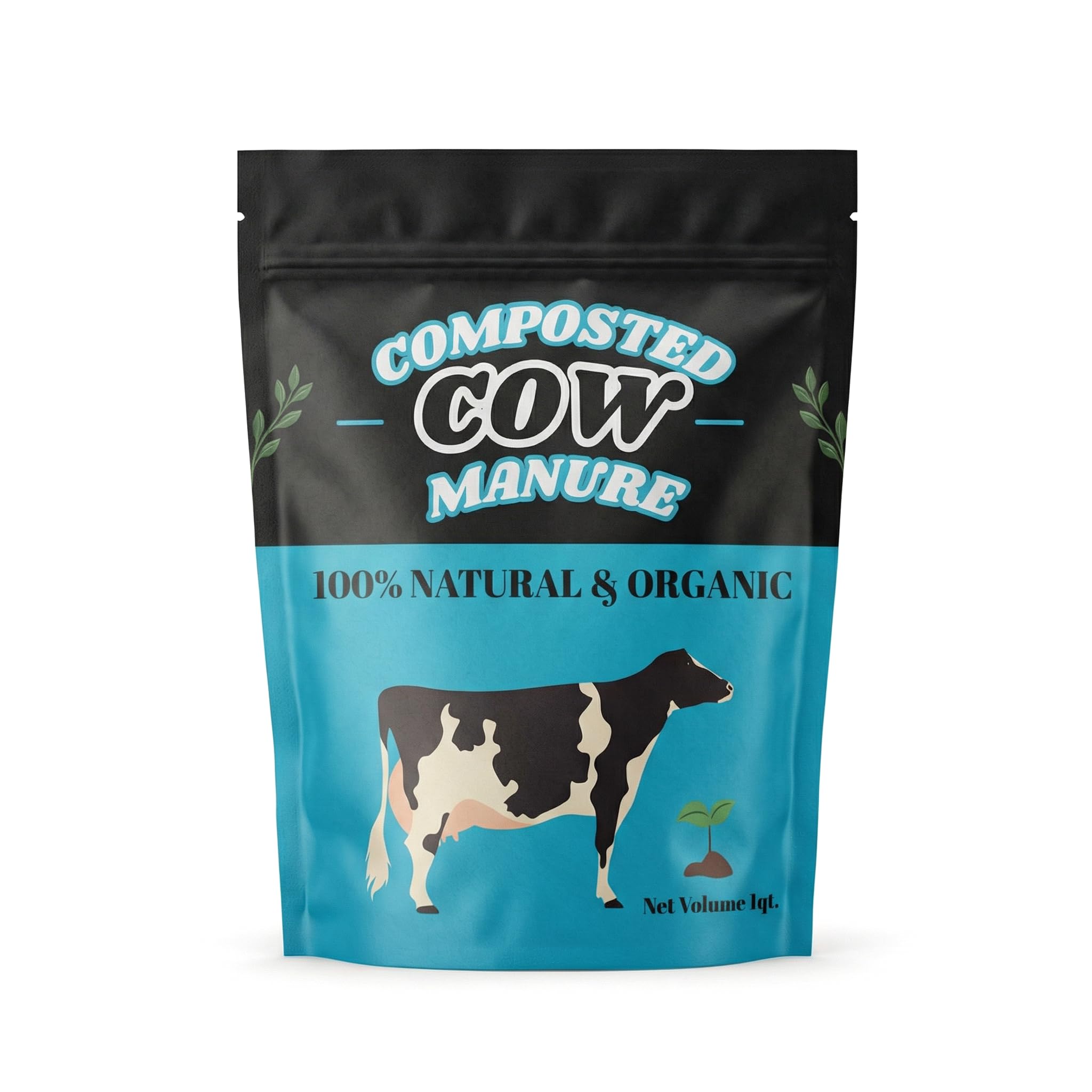
A small, organic bag that works for houseplants — if you know exactly how little you are getting.
This is the smallest bag on the list at just 1 quart (qt), and the honest feedback from buyers is that it is a lot smaller than expected. One reviewer put it plainly: “I will not order more.” If you are looking to fill a raised bed or even a medium-sized planter, you will need several of these bags. The product itself is 100% organic composted cow manure, free from chemicals, and sourced from US farms, so the quality is fine. The texture is chunky and needs crumbling for small pots — some buyers found it works as a supplement for garden houseplants, but noted that a 12-ounce bag for the price feels overpriced compared to larger options. The smell is also noticeably mild, which disappointed one buyer who expected a stronger manure aroma. For a single potted plant or a small indoor herb garden, this bag does the job. For anything bigger, the Brut 10-quart bag (which has 10x the volume) is a dramatically better value.
The positives
- 100% organic, no chemicals or additives
- Sourced from sustainable US farms
- Good single-plant size if you only need a handful of soil amendment
The drawbacks
- Very small bag (1 quart) — poor value versus 8-10 quart alternatives
- Chunky texture needs crumbling for small pots; not finely sifted
Reserve this for: a single houseplant repotting where you need a tiny pinch of organic compost.
For anything larger, the Brut 10-quart bag gives you 10x the material and a far better per-quart value.
Understanding the Specs
Volume (Quarts vs. Cubic Feet)
Volume is the most useful number for comparing manure bags because moisture content can make two bags of the same weight totally different sizes. A 1-quart bag will cover a single pot; a 10-quart bag handles a small raised bed; and a 1-cubic-foot bag (about 30 quarts) is for serious in-ground garden work. Always check the volume before deciding which bag fits your project.
N-P-K Analysis (0.5-0.5-0.5)
N-P-K stands for nitrogen (for leafy growth), phosphorus (for roots and flowers), and potassium (for overall plant health). A 0.5-0.5-0.5 ratio means a balanced, low-dose, slow-release fertilizer — it feeds gently over time without burning roots. Some manure bags do not print the analysis, which is fine if you are just conditioning the soil, but handy if you want to track exactly what your plants are getting.
FAQ
Can I use dehydrated cow manure directly on my plants?
How much cow manure do I need for a raised garden bed?
Does dehydrated cow manure smell bad?
Can I use cow manure for houseplants?
What does OMRI listed mean?
Is it safe to use cow manure with tomato plants?
Why does the bag weight sometimes differ from the listing?
Can I mix cow manure with other fertilizers?
Final Thoughts: The Verdict
For most people, the dehydrated cow manure winner is the Brut Cow Compost because it combines a generous 10-quart volume, an odor-free finish, and a finely sifted texture that works everywhere from raised beds to houseplants. If you want the best balance of proven soil conditioning and value, grab the Black Kow 8-quart bag. And for a legacy organic brand with a known N-P-K ratio and a rich, natural blend, the standout is the Espoma Organic Cow Manure.
How We Picked
We do not accept paid placement. Every pick is matched to a real buyer and a real use-case; we do not hands-on test units.
Sources & Methodology
Specifications: manufacturer listings and product documentation. Review insights: verified customer reviews, as of July 2026. Pricing: not shown on this page (it changes often); check the current price via the retailer link.
As an Amazon Associate, Lawn Gear Lab earns from qualifying purchases. This does not affect which products we feature.