
Specs are compiled from manufacturer listings and verified buyer reviews and can change over time — please confirm the key details on the product page before buying.
You want a greenhouse that actually stands up to the weather, keeps your plants happy, and doesn’t take a month to assemble. The trouble is, sorting through metal vs. polycarbonate vs. wood, figuring out what size you really need, and guessing whether the frame will buckle in a storm can feel like a second job. This guide cuts through the confusion by focusing on the frame materials, panel thickness, and real-world wind ratings that make or break a build-your-own greenhouse kit.
I’m Rikta — the founder and writer behind Lawn Gear Lab. This guide is built by comparing the manufacturers’ published specifications and the patterns across verified customer reviews, so you get each pick’s real strengths and trade-offs instead of marketing spin.
Whether you are starting seedlings or protecting tender perennials, the right build-your-own greenhouse kit hinges on three things: frame strength, covering durability, and how much time you are willing to spend putting it together.
Quick Picks
- Sylviera 12×12 FT T-Shape Greenhouse — Best Overall
- Backyard Discovery Willow 9′ x 6′ Cedar — Premium Pick
- VEIKOU 8′ x 16′ Polycarbonate Greenhouse — Largest Rigid Kit
- ShelterLogic 70658 Greenhouse-in-a-Box 10′ x 20′ — Best Large Tunnel
- FLY BY YAN 8×10 FT Polycarbonate Greenhouse — Fast Build
- WUKHG 8×10 FT Greenhouse with Electronic — Smart Value
- Outsunny 6′ x 4′ Polycarbonate Greenhouse — Compact Classic
- KING BIRD Premium 10x7x7 FT Greenhouse — Irrigation Value
- CROWN SHADES 8×6 Walk-in Pop Up Greenhouse — Pop Up
How To Choose The Best Build-Your-Own Greenhouse Kit
You need a greenhouse that fits your local weather, your yard size, and how much time you want to spend putting it together. These are the main points to think about before you order.
Frame Material: The Backbone of Your Greenhouse
The frame is what keeps your greenhouse standing in a storm. Galvanized steel is heavy and very strong but can rust if the coating is scratched. Aluminum is lightweight, rust-proof, and easier to handle, though it can be less rigid on larger spans. Cedar wood is naturally rot-resistant and looks beautiful, but it is the heaviest and most expensive option. For most buyers, a powder-coated aluminum frame offers the best mix of durability and manageable assembly.
Covering: Polycarbonate vs. Polyethylene
Polycarbonate panels (PC) are rigid, shatter-resistant, and provide better insulation than plastic sheeting. Twin-wall or 4-wall panels trap air between layers, keeping the interior warmer at night. Polyethylene (PE) covers are lighter and cheaper, but they tear more easily and usually need replacement after a few seasons. If you want a year-round greenhouse, polycarbonate is the clear winner for heat retention and longevity.
Size and Walk-In Height
A greenhouse that forces you to stoop the whole time is miserable to work in. Check the peak height and the door dimensions — you want to walk in upright and have room for shelves without banging your head. Footprint matters too: a 6×4 foot model fits a small patio, while an 8×10 gives you room for benches and a potting station. Measure your space before you buy and leave a gap around the structure for airflow and access.
Quick Comparison
| Model | Best For | Frame Material | Covering | Dimensions (L x W x H) | Amazon |
|---|---|---|---|---|---|
| Sylviera 12×12 | Ultimate heavy-duty space | Aluminum | 6mm PC | 143″ x 143″ x 84″ | Amazon |
| Backyard Discovery Willow | Premium wood & integrated features | Cedar Wood | 4-wall PC | 114.25″ x 72.75″ x 94″ | Amazon |
| VEIKOU 8′ x 16′ | Large rigid structure | Aluminum | 4mm PC | 97.3″ x 189.56″ x 90.5″ | Amazon |
| ShelterLogic 70658 | Spacious budget tunnel | Alloy Steel | PE | 240″ x 120″ x 96″ | Amazon |
| FLY BY YAN 8×10 | Quick-assembly polycarbonate | Aluminum | PC | 119″ x 97″ x 77″ | Amazon |
| WUKHG 8×10 with Thermometer | Smart monitoring & value | Aluminum | 4mm PC | 119.2″ x 97.2″ x 80.6″ | Amazon |
| Outsunny 6′ x 4′ | Classic small polycarbonate | Aluminum | PC | 74.75″ x 52″ x 79.25″ | Amazon |
| KING BIRD Premium 10x7x7 | Long tunnel with irrigation | Alloy Steel | PE | 118.1″ x 78.8″ x 78.8″ | Amazon |
| CROWN SHADES 8×6 | Ultra-fast pop-up portability | Steel | PE | 8*6 ft | Amazon |
In‑Depth Reviews
1. Sylviera 12×12 FT T-Shape Greenhouse
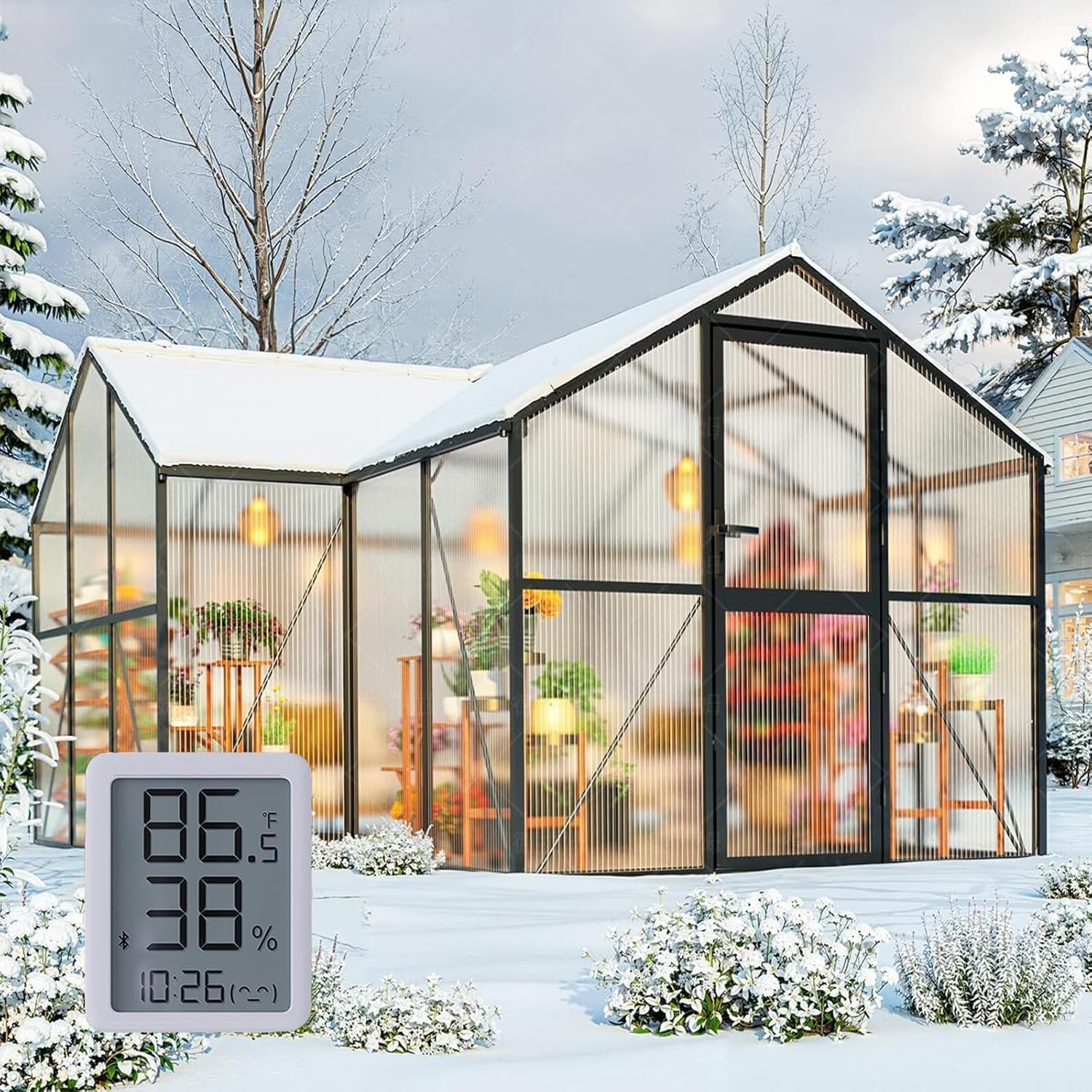
A 144-square-foot fortress with 6mm panels that shrug off snow and wind.
This is the biggest rigid-frame kit on this list, giving you a 143″ x 143″ x 84″ interior — enough for rows of benches, a potting station, and still room to move. The reinforced aluminum alloy frame and 6mm thick double-wall polycarbonate panels provide commercial-grade insulation that holds heat noticeably better than thinner panels. The panels are 1100g and designed to block harmful UV rays while letting in plenty of light for your plants.
Buyers report the lockable door and adjustable roof vents help manage the temperature, though some note the panels feel thin when handled. Unlike the PE-covered tunnel kits here, this polycarbonate structure is built for year-round use. One reviewer who bought the 8×14 version wished they had ordered this 10×12 instead because the peak height is taller, which matters if you are tall or want upper shelves.
The trade-off is that assembly is a project — one experienced builder spent several hours over multiple days with two people. You will want to seal the panel gaps with silicone for best results, as some owners did, and anchor it well to the ground. The included thermometer-hygrometer with an app is a nice touch for tracking conditions remotely.
What Makes It Stand Out
- Massive 12×12 foot interior — 143″ x 143″ footprint
- Thick 6mm double-wall PC panels for insulation
- Includes a smartphone-connected thermometer-hygrometer
- Reinforced aluminum frame with adjustable roof vents
Honest Caveats
- Heavy and requires 2+ people for assembly
- Some buyers found parts needed silicone sealing for full weatherproofing
- Return shipping can be costly if you change your mind
Reach for this if: you have the space and want a big, rigid greenhouse that can handle snow and wind without the cover tearing.
Look elsewhere if: you need something you can put up in an afternoon alone — this one demands patience and a helper.
2. Backyard Discovery Willow 9′ x 6′ Cedar Greenhouse

A beautiful cedar structure built to last a decade, with power and water built in.
This is the premium end of the greenhouse world — a 100% cedar wood frame that naturally resists rot and decay, paired with commercial-grade 4-wall polycarbonate panels. The frame is pre-cut, pre-drilled, and pre-stained so assembly focuses on fitting, not sawing.
Buyers consistently mention the stunning build quality and how solid the structure feels after a storm. One reviewer who assembled it in 21 hours solo used the interactive BILT app and found the step-by-step instructions excellent. The included temperature-activated exhaust fan automatically vents hot air, which solves the biggest problem with glasshouses in summer. The patented PowerPort gives you 3 electrical outlets and 3 USB ports, plus exterior and interior hose hook-ups, so you can run lights, fans, and watering without extension cords everywhere.
By the numbers, this is the heaviest and most expensive option here, and it arrives in multiple boxes — as many as 8, according to one buyer. At 114.25″ x 72.75″ x 94″, the interior is 54 square feet, which is modest compared to larger aluminum kits. But the cedar frame and 5-year warranty make it a true long-term investment. One owner noted the door arrived damaged in shipping, but the company quickly sent a free replacement.
Premium Perks
- 100% cedar wood frame with natural decay resistance
- Temperature-activated exhaust fan for automatic ventilation
- Built-in power (3 outlets, 3 USB) and hose hook-ups
- 5-year warranty and Pro-Tect certified for 100 mph wind
What to Know
- Very heavy (259 kg) and expensive
- Arrives in up to 8 boxes, may come on different days
- 54 sq ft interior is smaller than many cheaper polycarbonate kits
Best suited for: the serious gardener who wants a beautiful, long-lasting structure with power and water built in, and does not mind spending a weekend assembling it.
3. VEIKOU 8′ x 16′ Polycarbonate Greenhouse
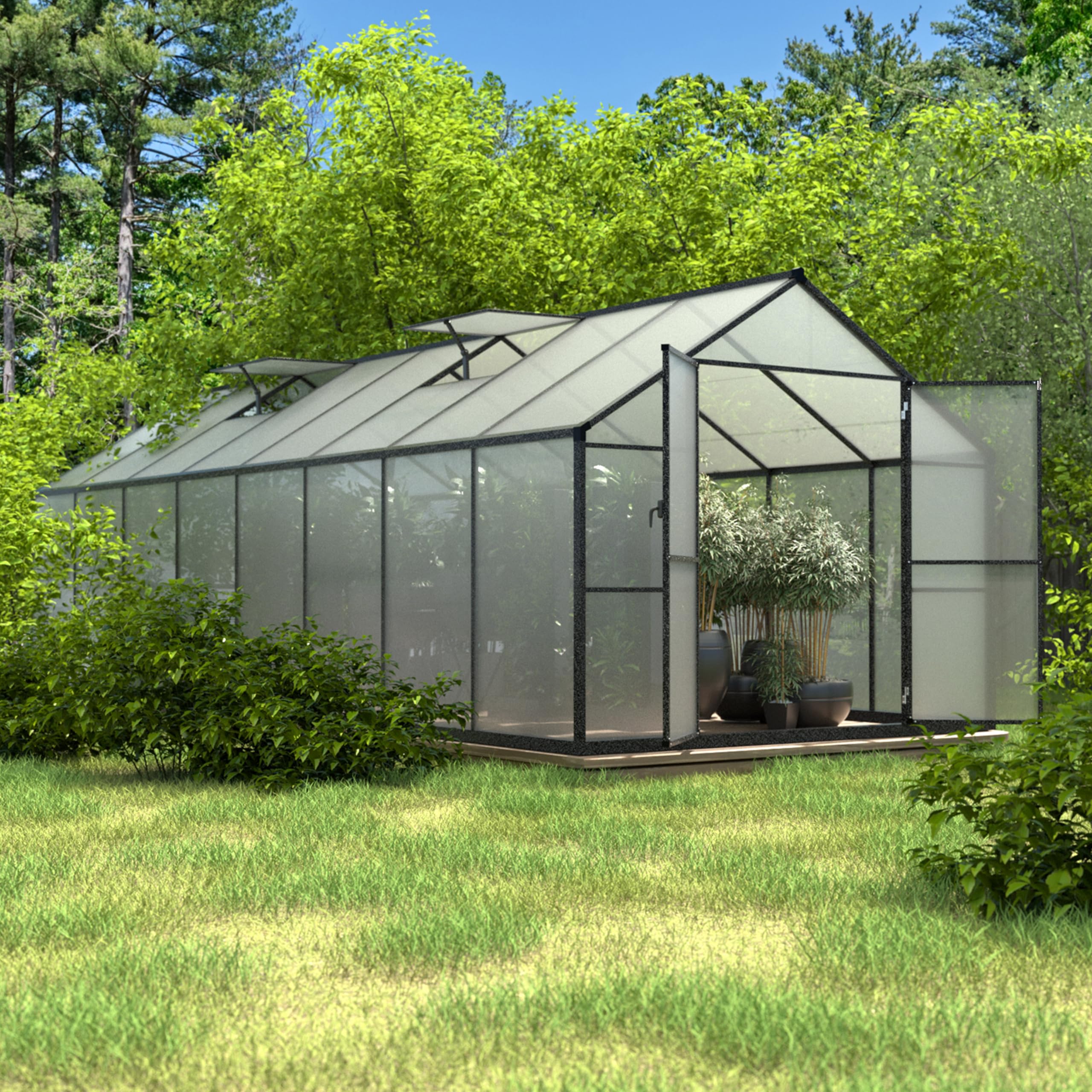
A massive 8×16 foot polycarbonate greenhouse that holds rows and rows of plants.
With an interior size of 97.3″ x 189.56″ and a peak height of 90.5″, this VEIKOU greenhouse gives you more than 128 square feet of growing space. The powder-coated aluminum frame resists rust and corrosion, and the 4mm PC panels offer solid insulation. The adjustable roof vents use a pulley system, so you can open them to any angle to release hot air without propping a stick inside.
The lockable door and metal hinges add security, and the overall height — 90.5″ — means most people can stand fully upright inside. Owners mention the kit is shipped in two boxes that may arrive on different days, so do not panic if the first box shows up alone. One buyer who upgraded from a tunnel greenhouse said this is a big step up in durability, noting the prior tunnel only lasted one season.
Not everyone had a smooth experience. Some owners reported bent frame corners and misaligned panels, and a few said the vent holders were flimsy. Several reviewers recommend using extra anchor kits for high-wind areas. Unlike the smaller Outsunny, this VEIKOU gives you a riveted aluminum structure that feels more permanent, but it also demands a bigger budget and more assembly time.
Why It Wins on Space
- Huge interior: 97.3″ x 189.56″ — nearly 16 feet long
- Powder-coated aluminum frame won’t rust
- Pulley-operated adjustable roof vents
- Lockable door and metal hinges for security
Watch Out For
- Shipped in two boxes that may not arrive together
- Some buyers received bent pieces or had alignment issues
- Vent hardware can be finicky; some owners replaced it with wood stops
Grab this for: large-scale growing where you need the rigidity of a polycarbonate building over a long run.
4. ShelterLogic 70658 Greenhouse-in-a-Box 10′ x 20′

A huge 200-square-foot tunnel that gives you massive growing space for the money.
At 240″ x 120″ x 96″, this ShelterLogic is the largest covered space on the list by a wide margin. The patented ShelterLock 3X stabilizers lock the steel frame together for rock-solid stability, and the 1.34-inch tubing is noticeably thicker than the tubes on budget pop-up greenhouses. The translucent PE cover has a ClearView property that diffuses light so your plants get consistent illumination without harsh shadows or scorching.
Buyers consistently say the frame is sturdy and the 18-inch ground stakes and ratchet straps hold it down well. One owner reported it survived a Vermont winter and 40 mph gusts with no rips. Another noted the plastic is tough — roughly 6mil, with a woven tarp-like feel. Roll-up side panels and half-moon screen vents at each end let you control airflow.
The catch is the PE cover will eventually degrade. Several reviewers said the cover seams tore within a year and the whole cover needed replacement after two years if left up year-round. ShelterLogic does sell exact replacement covers, but the warranty process requires extensive photos. Assembly also needs 2-3 people and can take 6-8 hours alone, though the structure itself is straightforward.
Size and Value
- 200 sq ft interior — 10×20 foot footprint
- ShelterLock 3X stabilizers for frame rigidity
- Diffused translucent cover reduces scorching
- Roll-up sides and end vents for airflow
Things to Consider
- PE cover may need replacement in 2-3 years
- Needs 2-3 people for assembly — 6-8 hours solo
- Warranty process can be cumbersome
Ideal for: budget-minded growers who need a huge, temporary growing space and don’t expect the cover to last more than a few seasons.
5. FLY BY YAN 8×10 FT Polycarbonate Greenhouse
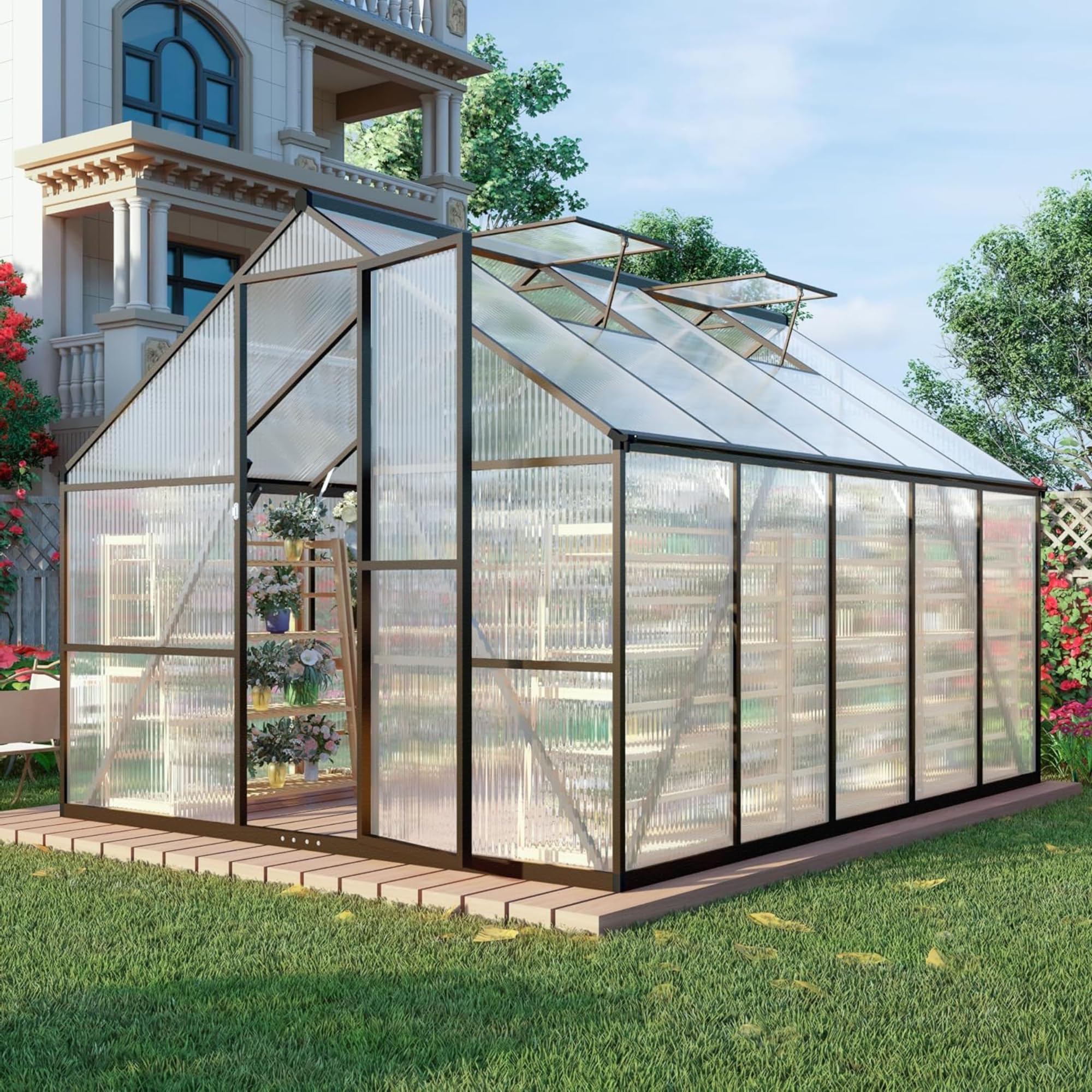
A polycarbonate greenhouse designed to go together faster than most.
The FLY BY YAN greenhouse is built around a “quick setup” structure with slide-in panels. The dark gray aluminum frame and lockable door give it a sleek, modern look that fits nicely in a backyard without feeling like a farm shed.
Customers note the greenhouse survived 60 mph winds with minor damage, which is impressive for a kit at this price level. One buyer assembled it solo in about 5 hours, though they emphasized anchoring it first — one owner described the greenhouse flying 20-30 feet in the wind, though it stayed together structurally. The UV-coated panels protect your plants from harmful solar radiation while maximizing sunlight transmission.
Assembly is still a real project. Multiple reviewers said it took 4-6 people over 6 hours, and the roof panels were difficult to align. Some buyers received panels with a protective film that must be removed from both sides, which is easy to miss if you are not looking for it. The roof vent and gutters are nice touches, but the thin polycarbonate panels do not feel as premium as thicker options like the Sylviera above.
Smart Design
- Slide-in panel system for faster assembly
- Survived 60 mph winds according to reviewers
- UV-coated panels protect plants from scorching
- Includes lockable door and roof vent
Pain Points
- Roof assembly still tricky; panels may misalign
- Need to remove plastic film from both sides of panels
- Some reviewers point out channel defects in extrusions
Choose this if: you want a modern-looking 8×10 polycarbonate greenhouse and are willing to spend a day assembling it with help.
6. WUKHG 8×10 FT Greenhouse with Electronic Thermometer
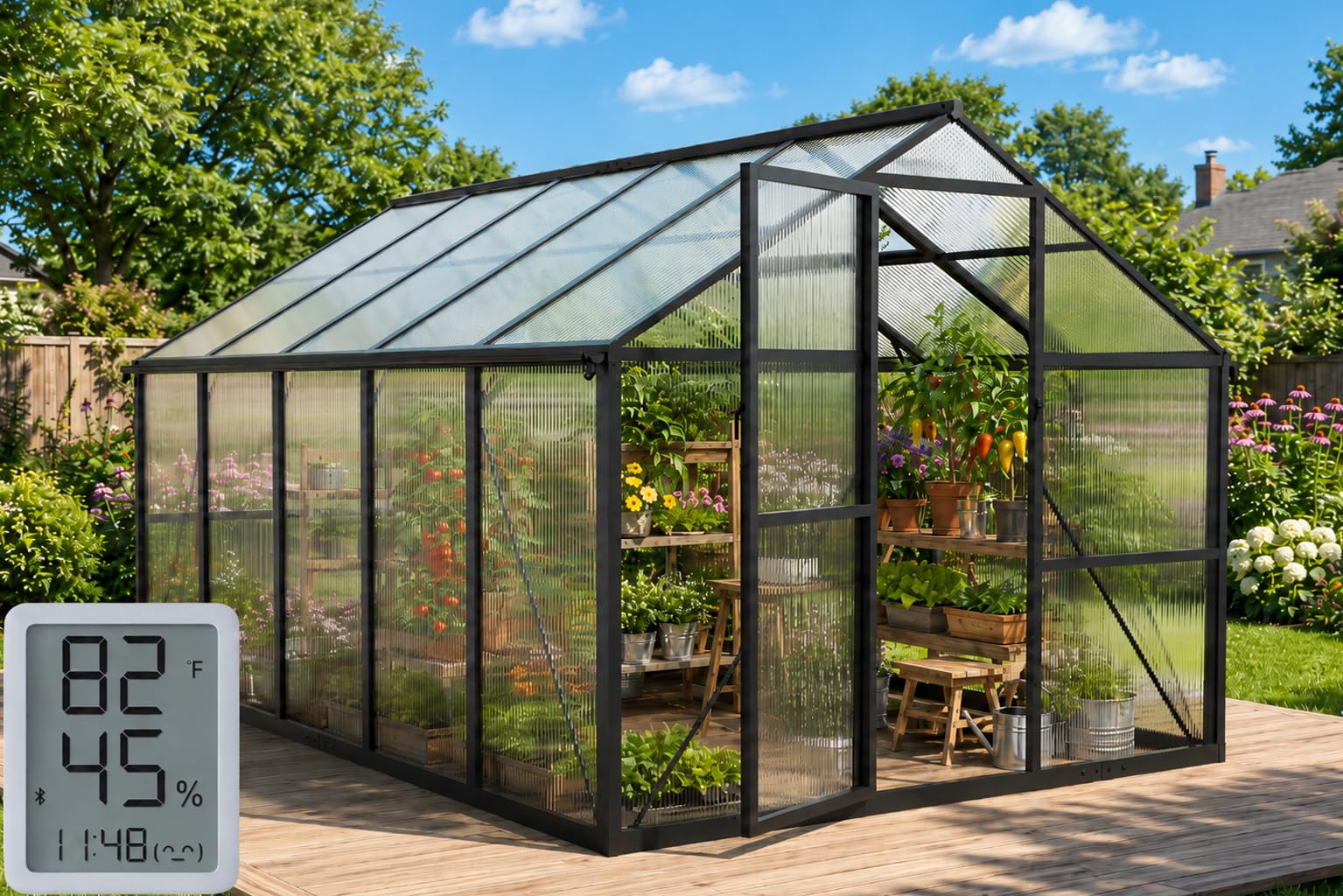
A well-equipped polycarbonate greenhouse with a smart thermometer and drainage gutters.
This WUKHG kit covers the essentials for serious growing. The 8×10 foot footprint (119.2″ x 97.2″ x 80.6″) provides generous room for shelves and plants, while the 4mm thick twin-wall PC panels offer good insulation and UV protection. The aluminum frame is sturdy, and the built-in rain gutter system channels rainwater away from the base so you can collect it for watering.
The included electronic thermometer-hygrometer connects to an app via Bluetooth — it monitors temperature with ±0.54°F accuracy and humidity with ±3%RH, refreshing every 2 seconds. You get access to 14-day data graphs and half-year data export, which is genuinely useful for tracking whether your greenhouse is getting too hot during the day or too cold at night. Shoppers say the panels feel sturdy and the frame holds up well in wind.
Assembly is where this kit loses some shine. Multiple reviews say it took three people to line up and secure the pieces. One reviewer noted the roof window blew out the first night. Another noted it gets up to 100°F inside when the outside is just 40°F, so you will definitely need the ventilation windows open on sunny days. The polycarbonate panels are not as thick as premium models, but at this price, the included thermometer and drainage system add real value.
Value Highlights
- App-connected thermometer with 14-day data tracking
- Rain gutter system for water collection
- 4mm twin-wall PC panels block UV
- Lockable door and adjustable ventilation windows
Assembly Hurdles
- Tricky assembly — parts can be misaligned
- Roof window may blow out without extra sealing
- Does not hold heat overnight well
A smart buy for: anyone who wants a mid-sized polycarbonate greenhouse with digital monitoring but can handle a finicky assembly process.
7. Outsunny 6′ x 4′ Polycarbonate Greenhouse
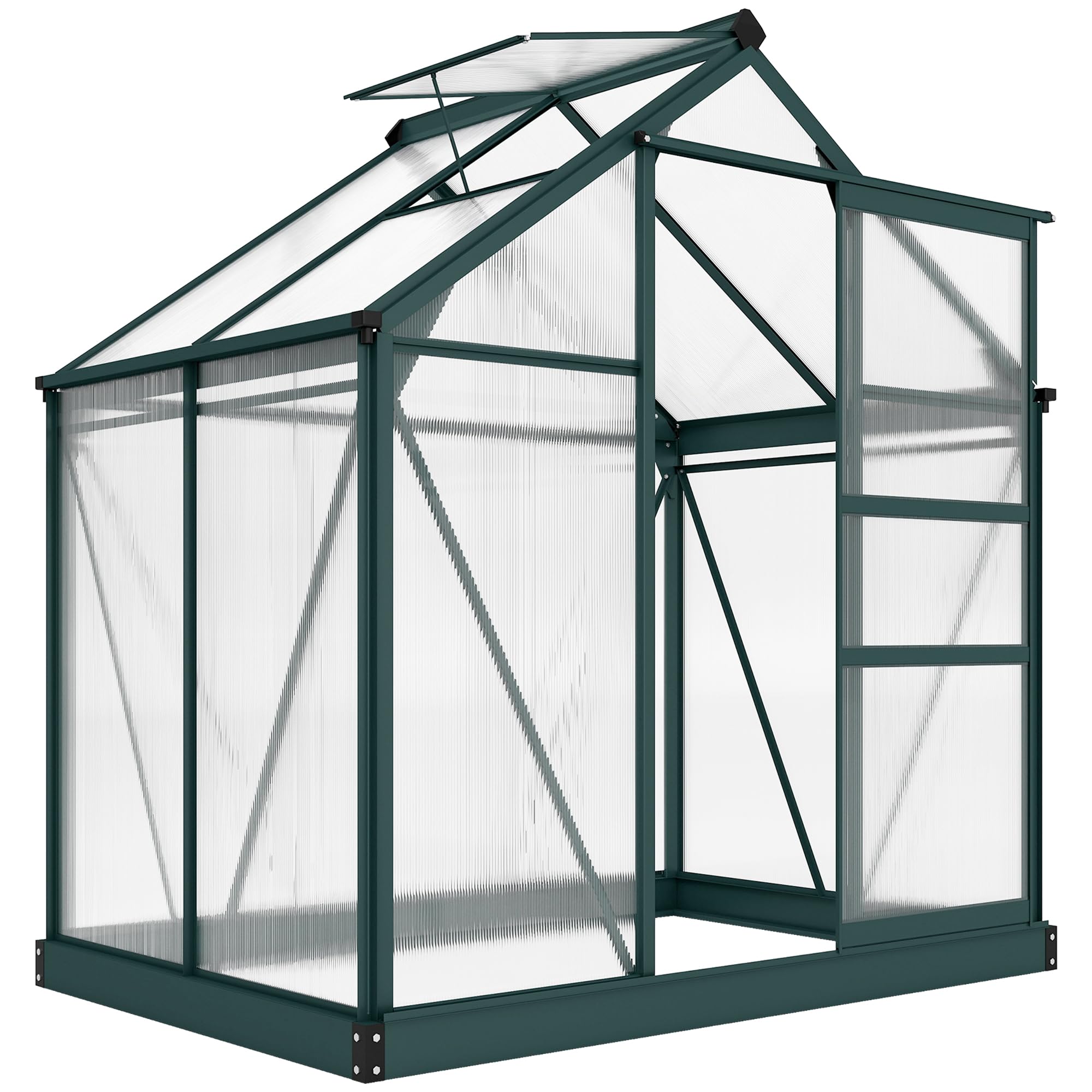
A tidy 6×4 polycarbonate greenhouse that fits narrow spaces without giving up insulation.
At 74.75″ x 52″ x 79.25″, the Outsunny is one of the smallest rigid kits here, but that is exactly its strength. It slides into a corner of a patio or against a wall where a larger structure would overwhelm the space. The powder-coated aluminum frame resists rust, and the translucent polycarbonate panels let in nourishing sunlight while blocking scorching UV rays. A sliding door gives you easy access without swinging outward into your garden path.
The roof vent lets excess heat escape, and the rain gutters collect natural rainwater for your plants. Buyers report the value exceeds the price, but they also warn that assembly is demanding. One well-reviewed buyer said, “Assembly will take at least an entire day.” The instructions are all pictures with no written text, so you rely on diagrams alone. Some customers had to drill extra holes when the bracing did not fit as shown.
The polycarbonate panels are thin — one buyer mentioned they tore loose in a 10 mph breeze and required reinforcement with brackets and tape. At 54 pounds, it is a touch heavier than the KING BIRD tunnel which weighs 47.93 pounds, but the Outsunny’s aluminum frame and rigid panels give it a more permanent feel. Anchor it well; the manufacturer recommends placing it against an out-of-wind wall with ground bolts.
Compact Advantages
- Small footprint fits tight patios and narrow yards
- Sliding door saves space compared to hinged doors
- Powder-coated aluminum won’t rust
- Rain gutters for water collection
Compact Compromises
- Thin polycarbonate panels can blow out in wind
- Pictogram-only instructions; no written guidance
- Needs anchoring against a wall for stability
Ideal for: small-space gardeners who want a real polycarbonate greenhouse and are prepared for a day-long assembly project.
8. KING BIRD Premium 10x7x7 FT Greenhouse
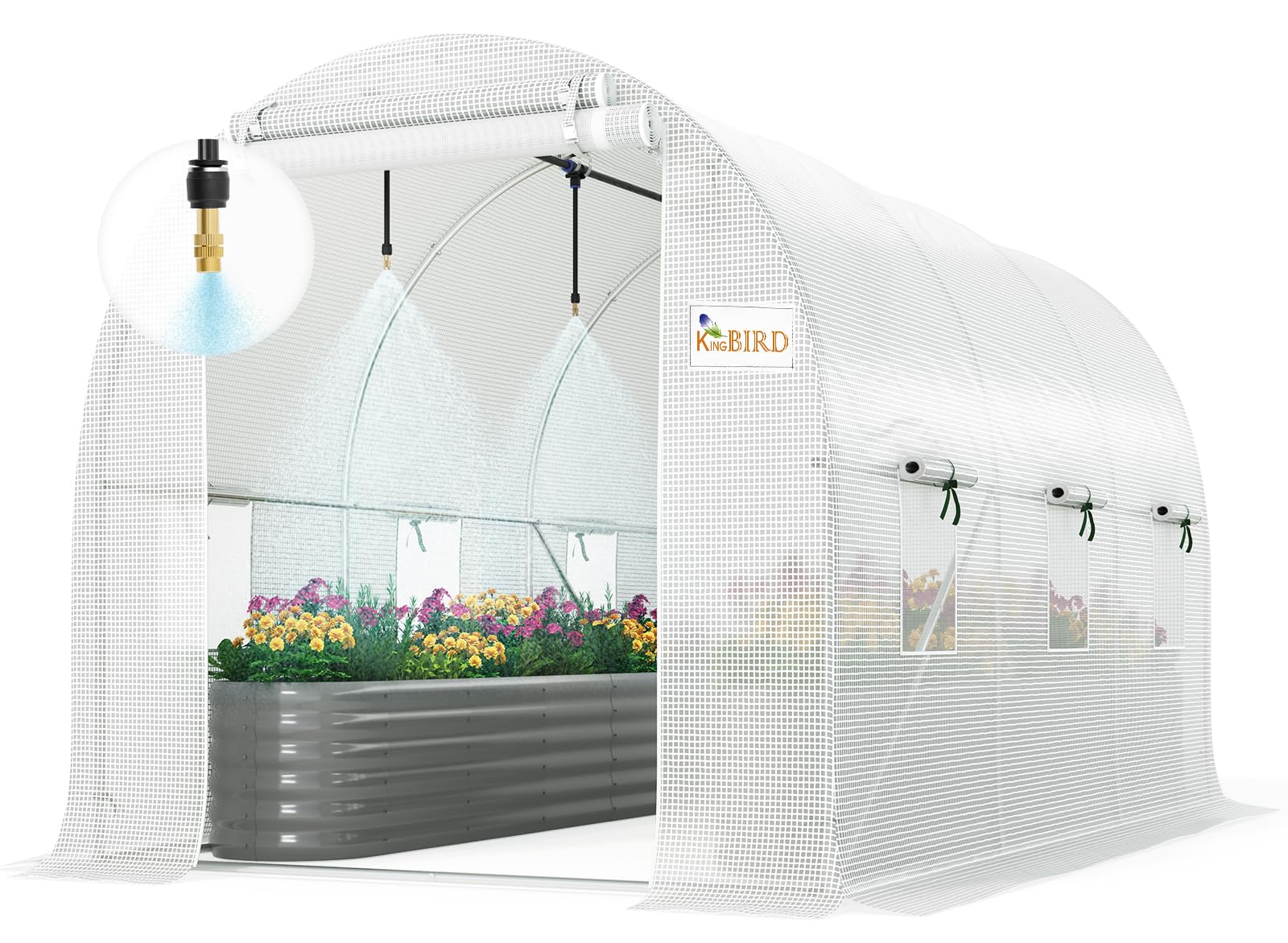
A long tunnel with a built-in brass watering system that waters your plants automatically.
The KING BIRD is a 10x7x7 foot tunnel with a galvanized steel frame and a reinforced PE grid cover that weighs 150g/sqm. At 118.1″ x 78.8″ x 78.8″, it offers noticeably more width than the Outsunny’s 74.75″ x 52″ dimensions. It is also lighter at 47.93 pounds compared to the Outsunny’s 54 pounds, which makes it easier to reposition.
The standout feature is the included brass irrigation kit. You hook up a hose and the system delivers water to all your plants from sprayers. One owner reported it is “super convenient to water plants quickly.” Both ends open fully for ventilation, and the 6 roll-up screen windows provide plenty of airflow. The door has a zippered screen layer plus a solid PE layer, so you can vent without letting bugs in.
Buyers praise the value and say assembly is manageable for one person. However, the cover is not watertight — one customer observed drips and used 4 mil plastic sheeting on top to stop the issue. A few had quality-control quirks, like two of the velcro straps being sewn on backwards, though they were still functional. The PE cover will degrade faster than polycarbonate, so think of this as a season extender rather than a permanent building.
Unique Perks
- Built-in brass watering kit — just connect a hose
- Galvanized steel frame with ground staples and tie ropes
- Roll-up screen windows for good airflow
- Lightweight at 47.93 pounds
Honest Limitations
- PE cover is not fully watertight
- Velcro and zipper quality could be better
- Cover shrinks in cool weather, making zipping tight
Buy this for: the convenience of an integrated drip-irrigation system and a wide tunnel at an affordable price.
9. CROWN SHADES 8×6 Walk-in Pop Up Greenhouse
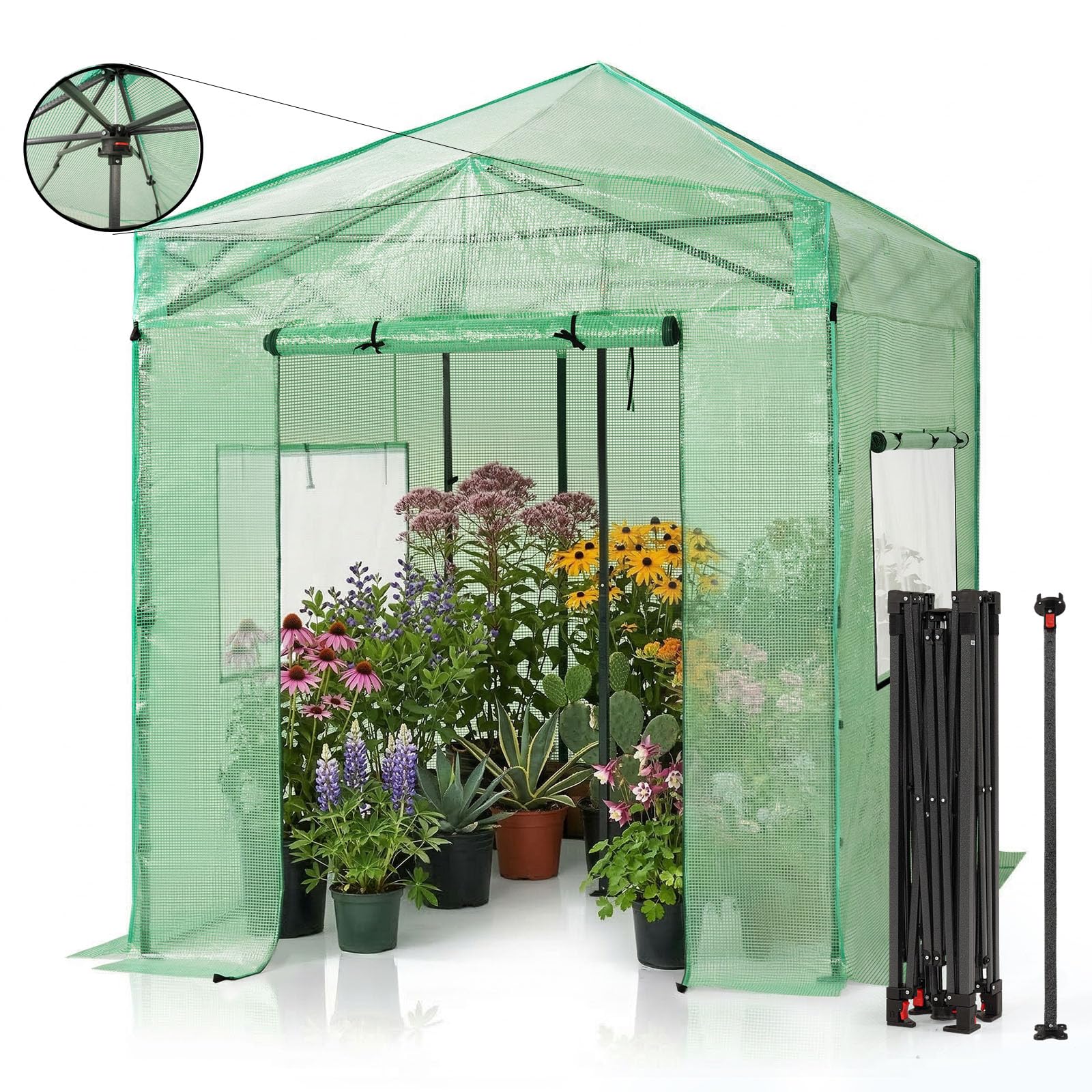
A pop-up greenhouse that sets up in seconds and survives storms it has no right surviving.
The CROWN SHADES greenhouse uses a patented CENTERLOK one-push system that pops the frame open in seconds — no tools, no bag of nuts and bolts. The 8×6 foot walk-in design gives you enough space for shelves and plants, and the adjustable height offers 3 levels to accommodate different plant sizes. This is the kit you buy when you need a greenhouse today, not next week.
Owners mention this greenhouse handles wind better than they expected. One reviewer wrote, “It has withstood 60mph storms, although I did shelter it off my deck by the house and secured around the bottom.” Another called it a “beast” after 24 hours of 50 mph gusts that did not move it. The upgraded PE (polyethylene) cover resists UV (ultraviolet) rays, so it won’t break down quickly in sunlight, and the mesh windows plus roll-up zippered door let air flow through to keep plants cool.
The downside is that this is a lightweight greenhouse built for mild weather or spots protected from wind. The steel frame has an extra support pole under the center hub, but it is still a pop-up design — you won’t get the stiffness of an aluminum frame with polycarbonate (hard plastic) panels. Some buyers found small tears in the cover when they opened the box. If you need a quick setup for extending the growing season or shielding plants from a sudden frost, this is fast to assemble, but it won’t hold up for many years.
Instant Setup
- Patented one-push CENTERLOK opens in seconds
- Surprisingly wind-resistant (60mph winds reported)
- 3 adjustable height levels for different plants
- Roll-up zippered door and mesh windows for airflow
Know the Limits
- PE cover can rip during initial unfolding
- Not meant for permanent year-round use
- Must be anchored well or it will move in wind
Short on time? This is the one — a functional greenhouse in under a minute, perfect for temporary growing or emergency frost protection.
Understanding the Specs
Polycarbonate Thickness
Measured in millimeters, this tells you how thick the wall panels are. Thicker panels (6mm) provide better insulation and wind resistance than thinner ones (4mm). Double-wall and 4-wall designs trap air between layers, keeping the interior warmer in cold weather. For year-round use in climates with real winters, aim for 4mm or thicker twin-wall panels.
Frame Material
The frame supports the whole structure. Galvanized steel is strong but heavy and can rust if the coating chips. Aluminum is lighter, rust-proof, and easier to assemble — most mid-range and premium kits use it. Cedar wood is the premium choice, offering natural rot resistance and exceptional strength, but it costs the most and adds significant weight. For most buyers, powder-coated aluminum strikes the best balance.
PE vs. PC Covers
The cover material determines how long your greenhouse will last and how well it insulates. Polyethylene (PE) is a woven plastic sheeting that is lightweight and cheap. It degrades in UV light and typically needs replacement in 2-3 seasons. Polycarbonate (PC) is rigid, shatter-resistant plastic. It lasts much longer, insulates better, and withstands hail and wind. If you want a permanent greenhouse, go PC. If you need a temporary season extender, PE is fine.
Wind and Snow Load
Not all greenhouse frames are built for heavy weather. Look for kits that state wind ratings explicitly (Backyard Discovery’s 100 mph rating, for example). In general, rigid polycarbonate structures with aluminum frames handle wind better than PE-covered tunnels. Snow load is a different challenge — flat or low-slope roofs need clearing, while peak roofs allow snow to slide off. If you live in a snowy zone, prioritize a peaked roof design.
FAQ
How long does a polyethylene (PE) greenhouse cover last compared to polycarbonate?
Can I leave my greenhouse kit up in the winter with snow on it?
How do I anchor a greenhouse kit to the ground?
Is a polycarbonate greenhouse better than a polyethylene tunnel?
What size greenhouse do I need for a small backyard garden?
How many people does it take to assemble a greenhouse kit?
Do greenhouse kits come with a floor?
Will a pop-up greenhouse like the CROWN SHADES survive strong winds?
What is the difference between a zippered door and a sliding door on a greenhouse?
Do I need a ventilation system for my greenhouse?
Final Thoughts: The Verdict
For most buyers, the build-your-own greenhouse kit winner is the Sylviera 12×12 because it gives you a massive 144-square-foot growing space with thick 6mm polycarbonate panels and a strong aluminum frame at a mid-range price. If you want a beautiful wood structure with power, water, and automated ventilation built in, grab the Backyard Discovery Willow. And for instant setup in a sheltered spot, the CROWN SHADES pop-up will have you growing in minutes instead of days.
How We Picked
We do not accept paid placement. Every pick is matched to a real buyer and a real use-case; we do not hands-on test units.
Sources & Methodology
Specifications: manufacturer listings and product documentation. Review insights: verified customer reviews, as of July 2026. Pricing: not shown on this page (it changes often); check the current price via the retailer link.
As an Amazon Associate, Lawn Gear Lab earns from qualifying purchases. This does not affect which products we feature.