
Specs are compiled from manufacturer listings and verified buyer reviews and can change over time — please confirm the key details on the product page before buying.
A bed of daffodils creeping into the lawn, grass blades sneaking under a tree’s canopy — the line between cultivated garden and wild yard is a constant negotiation. Without a physical barrier, that line blurs fast, and you end up trimming, pulling, and chasing strays all season. A solid border around your trees locks the boundary down so your garden beds stay put and your mower stays off the bark.
I’m Rikta — the founder and writer behind Lawn Gear Lab. This guide is built by comparing the manufacturers’ published specifications and the patterns across verified customer reviews, so you get each pick’s real strengths and trade-offs instead of marketing spin.
if you need a low-profile plastic lip to hold mulch or a heavy steel band to stop aggressive grass roots, knowing which material, height, and stiffness suits your soil and setup matters. This roundup of the best borders for trees breaks down seven distinct edging solutions so you land on the one that actually stays put.
Our Picks at a Glance


How To Choose The Best Borders For Trees
Tree edging does a different job than flower-bed edging. Around a tree, the border needs to keep lawn grass and weeds from creeping into the root zone, and it must also hold mulch — often a thick layer — inside a circle. That means height, material strength, and stake quality matter more than how pretty the finish looks from the driveway.
Height and Visibility
A 2-inch border is enough to define a line and hold a thin layer of mulch, but it won’t stop aggressive grass runners or contain a deep bed of wood chips. A 4-inch or taller edging gives you a real barrier your mower can ride against without sucking up mulch. The trade-off is that taller borders are more visible, so if you want a subtle look, you may choose a shorter piece and accept more maintenance.
Material — Plastic vs Metal
Plastic (usually HDPE, which stands for high-density polyethylene, a tough recycled plastic) is flexible, lightweight, and easy to cut with household scissors. It is also cheaper and won’t rust. The downside is that thin plastic can crack in freezing winters or snap under a weed-whacker. Metal — galvanized (zinc-coated) steel or corten (weathering) steel — is far more durable and stands up to string trimmers, but it is heavier, harder to cut (requires metal snips), and costs more. Galvanized steel stays silver; corten steel develops a deliberate rust patina that protects the metal underneath.
Stake Design and Holding Power
Edging only works if the stakes keep it against the ground. Spiral stakes (a corkscrew shape) grip well in loose soil but can bend if the ground is hard. Flat plastic spikes are the most common — cheap and easy to push in, but they can break if you hammer them into clay. The most sturdy option is a saw-tooth spike made of steel: it cuts through tough ground and does not snap. Some premium edging ships without separate stakes at all — the border itself has spikes molded or welded to the bottom, which you hammer directly into the soil.
Quick Comparison
| Model | Best For | Length | Height | Material | Amazon |
|---|---|---|---|---|---|
| Beuta Polyrock Bricks★ Best Overall | Permanent stone look | 48″ per section | 2.25″ | Resin | Amazon |
| Worth Pre-Rusted 10″x20′Tall Barrier | Deep barrier, rustic look | 240″ | 10″ | Galvanized steel | Amazon |
| Worth Corten Steel 10-Pack | Clean, professional install | 400″ (33 ft) | 5″ (2.5″ above ground) | Corten steel | Amazon |
| GTSABWAY Corrugated 6″x40′ | Long, straight runs | 480″ | 6″ | Galvanized steel | Amazon |
| shsyue 4″ x 33′ | Budget-friendly 4-inch | 393.7″ | 4″ | HDPE | Amazon |
| Anleolife 40′ Spiral-Stake | Long, low-profile curves | 480″ | 2″ | HDPE | Amazon |
| JERIA 2″ x 33′ | Entry-level tree rings | 396″ | 2″ | Plastic | Amazon |
In‑Depth Reviews
1. Beuta Polyrock Bricks
Our pick — over 4.5★ from 900+ verified ratings; the strongest balance of quality and price.
Faux-stone sections that deliver a real-masonry look without the mortar work.
This is the pick for anyone who wants the border itself to look intentional — like a low wall that’s always been there. Each 6-brick section measures 47.5 inches long by 2.25 inches tall, and four packs (the unit count is 4.0) together give you enough coverage for a medium tree ring or a straight flower-bed edge. The resin material (a strong, lightweight plastic compound) mimics the texture and color of stone so convincingly that buyers often describe it as “realistic,” and the interlocking design keeps each section snug to the next without gaps.
Buyers report that “three spikes per six-brick piece” hold each section down, which is a lower stake density than some plastic rolls use, but the weight of the bricks themselves adds stability. A reviewer noted that the edging “handles people standing on them” and survives weed-whacker contact — a sign that the resin holds up better than hollow plastic. The big trade-off is that at 48 inches per section, you have fixed-length pieces rather than a continuous roll, so precise curves require some planning (Beuta sells separate Function Bricks for creative shapes).
What earns its spot
- Realistic stone texture that blends naturally into garden beds
- Interlocking sections stay aligned without gapping
- Made in the USA and weather-resistant in all seasons
Where it tests your patience
- Fixed-length bricks mean tight-radius curves are trickier than with a flexible roll
- You need extra packs for a circle large enough to wrap a mature tree
Who it suits: Gardeners who want a permanent, handsome border that looks like natural stone — the kind of edging you put down and forget about for years.
Who might bounce off it: Anyone edging a tree with a trunk over 4 feet in diameter; you’ll need more than one pack and some patience shaping a circle.
2. Worth Pre-Rusted Wide-Corrugated Garden Edging, 10″ x 20′
A 10-inch tall steel wall that laughs at weed-whackers and aggressive grass roots.
If your problem is grass creeping under a shallow border, this is the solution. At 10 inches tall and 20 feet long (240 inches), the Worth pre-rusted edging creates a deep underground barrier that stubborn rhizomes cannot jump. It weighs 3.73 kilograms (about 8.2 pounds) — at 8.2 pounds versus the JERIA plastic roll at 4 pounds — and that heft translates directly into staying power. The pre-rusted patina (a deliberate, protective rust layer applied during manufacturing) gives it a farmhouse-reclaimed look right from the start, so you don’t wait for the metal to weather naturally.
Buyers rave that it “stands up to weedeater” contact and remains “sturdy, holds shape, professional look” after a full year outdoors. The hemmed edges are rolled smooth, so you won’t cut your hands during install — though once you cut it to length, “after cutting it is very sharp,” one reviewer warned, a point echoed across metal edging of any brand. A tip: wear cut-resistant gloves when trimming with metal snips. Unlike the GTSABWAY 6-inch roll, this one stands 10 inches tall, offering a 4-inch deeper barrier for those who need it.
Why it dominates
- 10-inch height blocks deep-running grass roots that short borders miss
- Pre-rusted finish gives immediate rustic character with no waiting
- Rolled top and bottom edges eliminate sharp edges on the installed piece
The install reality
- Cut edges become razor-sharp — gloves and metal snips are mandatory
- Hard or rocky soil requires trenching before you slide the steel in
Best for: Heavy-duty tree rings or garden beds in lawns with invasive bermudagrass — you need depth, and this has it in spades.
Pass if: You want a subtle, invisible border; a 10-inch metal wall is anything but subtle.
3. Worth Garden Corten Steel 10-Pack Landscape Edging (33 ft)
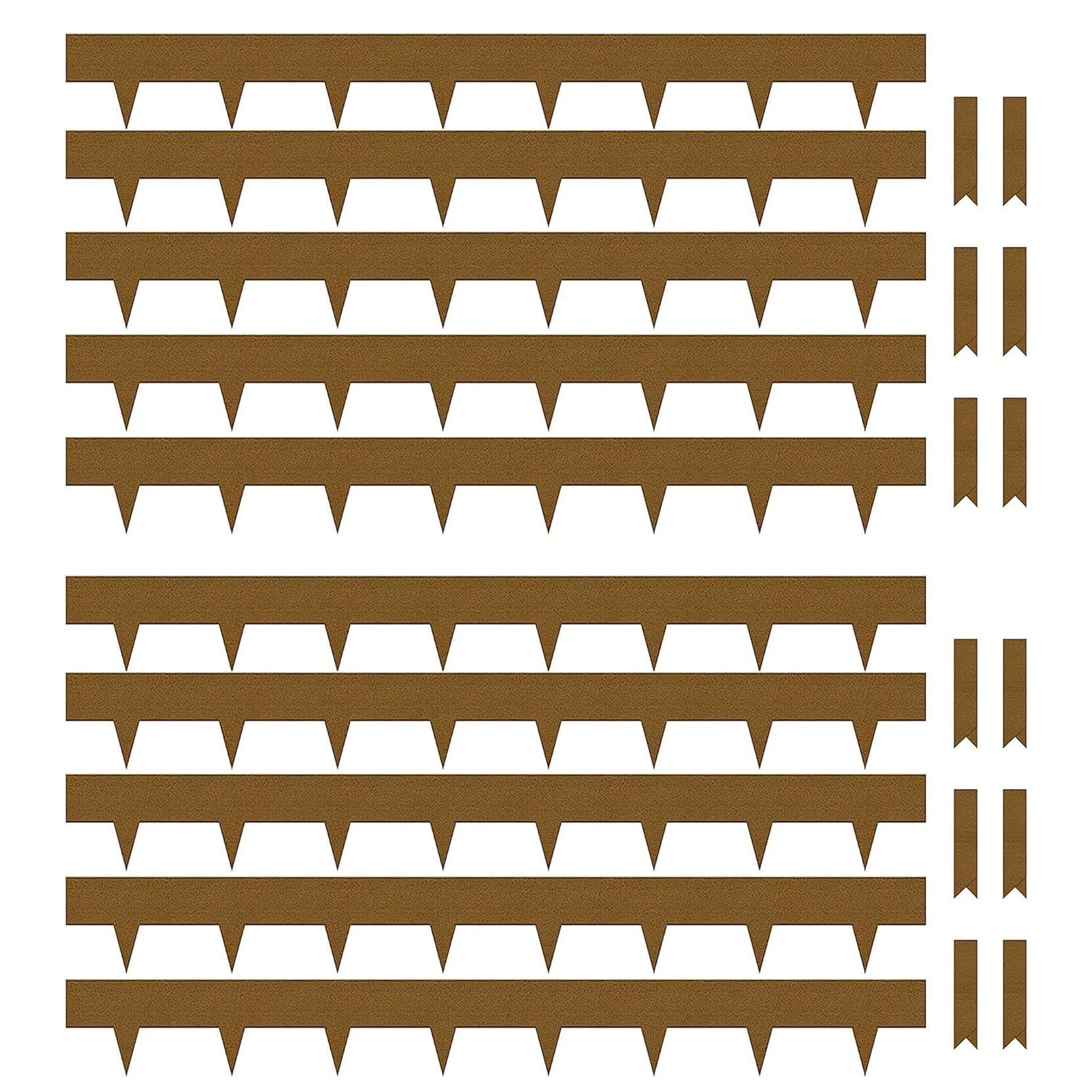
A hammer-in border with integral steel spikes that skip the flimsy-plastic-stake problem.
This kit solves the single biggest complaint about plastic edging — stakes that snap — by eliminating separate stakes entirely. Each of the 10 corten steel strips has 2.5-inch saw-tooth spikes welded to the bottom; you line up the strip and hammer it directly into the soil. The visible portion stands 2.5 inches above ground, giving you enough height to hold a generous layer of mulch without looking like a fortress. Total installed length is 33 feet (each strip is 40 inches), and the kit includes 11 metal clips to lock strips together for extra stability.
Buyers who have “wasted money on plastic edging” for years call this a permanent upgrade: one reviewer installed three boxes and noted the steel “bends nicely for curves and cuts with a hack saw.” The corten material (a weather-resistant steel alloy that forms a stable rust layer) develops a protective patina over time, so the edging actually strengthens as it ages. A few reviews mention that curving the strips a second time after they have been straightened is tough — you want to plan the shape before installation. Unlike the 10-inch Worth pre-rusted roll, this sits lower to the ground, making it a better fit for front-yard tree rings where a tall metal wall would feel out of place.
What you gain
- Integral steel spikes cannot bend or break like plastic stakes
- Rust patina develops naturally, adding durability and character
- Clips and gloves included — a true complete kit
One install nuance
- Hard clay or rocky soil may require a pilot hole (use a smaller metal stake first)
- Once bent into a shape, the steel resists re-bending, so plan your tree-ring diameter carefully
Reach for this if: You want a no-nonsense, permanent tree ring that installs fast and won’t disintegrate after two seasons.
Look elsewhere if: You need a border taller than 2.5 inches above ground to contain deep mulch — the visible height here is fixed at that 2.5 inches.
4. GTSABWAY Corrugated Garden Edging, 6″ x 40′
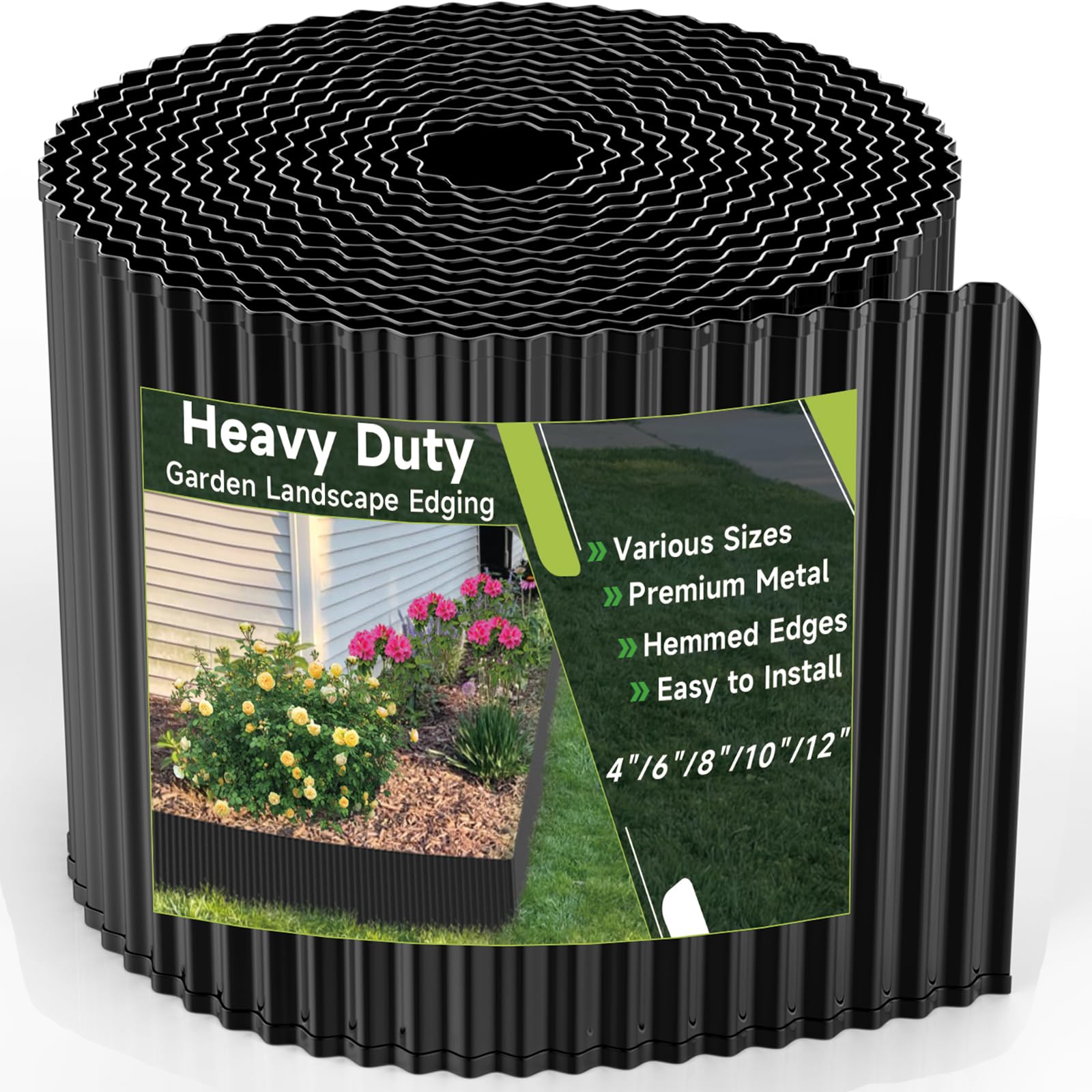
40 feet of corrugated steel that gives you more height per dollar than any other metal pick here.
At 6 inches tall and 40 feet long (480 inches), this roll from GTSABWAY delivers the best length-to-height ratio among the steel options. It weighs 4.54 kilograms (about 10 pounds) — and that weight comes from the 26-gauge galvanized steel, which resists rust and stays rigid once installed. The corrugated profile (a series of parallel ridges stamped into the metal) adds stiffness, so the edging does not buckle when you tap it into the ground. For comparison, the JERIA plastic roll is only 2 inches tall, making this GTSABWAY at 6 inches versus the JERIA at 2 inches.
Owners mention the “galvanized steel feels sturdy and well-made” and that it “does a good job keeping soil in place.” The trick is that “the only issue we had with it is after cutting it is very sharp” — a consistent reality with any cut metal edging. Wear heavy gloves. Unlike the Beuta bricks which require no cutting, this roll needs to be trimmed to length, but the corrugated design also makes it easier to shape into smooth curves without kinking. For a straight tree-ring border or a long lawn edge, this is the most economical way to get a 6-inch galvanized barrier.
Its biggest strengths
- 6-inch height blocks grass and holds deep mulch without looking industrial
- Corrugated profile is rigid yet flexible enough for gentle curves
- Galvanized finish resists corrosion in wet climates
Watch for
- Cut edges turn razor-sharp — invest in metal snips and good gloves
- No stakes are included, so you need to trench or use a mallet carefully
Who it works for: The budget-conscious gardener who wants the durability of steel at a price closer to premium plastic, and has the patience to cut and trench.
Not the pick if: You want a tool-free install — this requires digging or a rubber mallet and planning.
5. shsyue Landscape Edging 33FT, Extra Tall 4″ High
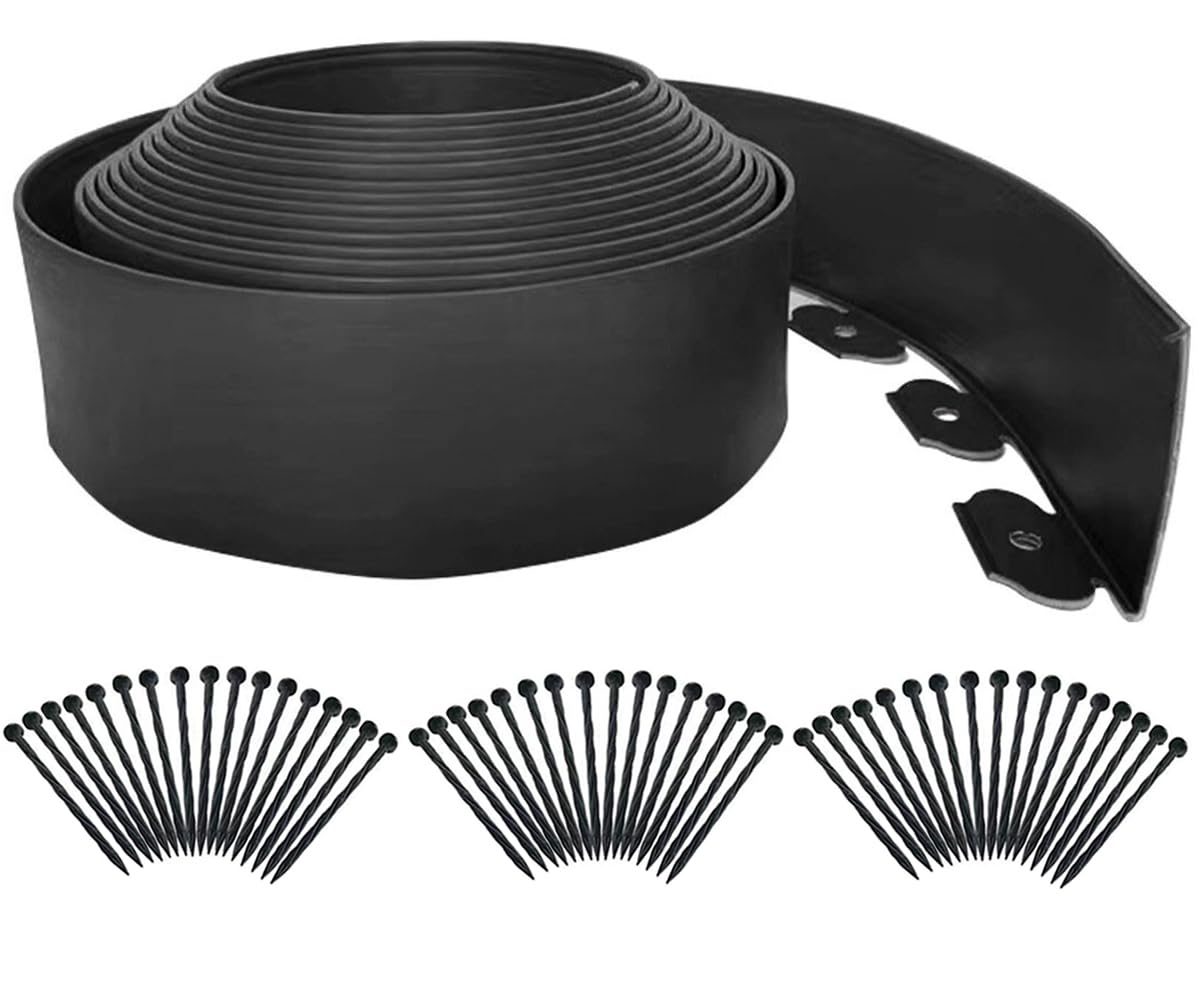
A 4-inch plastic border that hits the balance between height and price for most tree rings.
The 33-foot length (393.7 inches) gives you enough to circle a tree with a 10.5-foot circumference, which covers most mature shade trees. The material is flexible enough to form tight curves around a narrow trunk, yet stiff enough that it holds its shape once staked. A review notes that “two broke as I was hammering them into the ground” regarding the spiral stakes, so pre-drilling in hard soil is a smart first step.
Customers note it creates a “clean, polished look for flower beds and gravel patios” and that it “keeps mulch/soil contained.” However, the spiral stakes — while better than flat spikes in loose soil — can bend or snap if you hit a rock. If you have dense clay like many tree-planting zones, consider swapping for metal landscape staples. The manufacturer recommends hammering stakes every short distance, which is good advice for windy spots.
Why it stands out
- 4-inch height gives you real containment depth at a plastic-accessible price
- 50 stakes included is the highest count in this lineup — fewer trips to the hardware store
- Flexible HDPE shapes around tree roots without cracking
The weak link
- Spiral stakes break in hard soil — consider a pre-drill step or metal replacement stakes
- Not as rigid as steel; can bulge outward if heavy mulch pushes against it over time
Best fit: Homeowners edging multiple trees on a budget who are comfortable with a short pre-drill step to protect the stakes.
Skip it for: Pure clay soil filled with rocks — the stakes will frustrate you, and metal edging may serve you better.
6. Anleolife 40FT NO-DIG Garden Edging with 48 Spikes
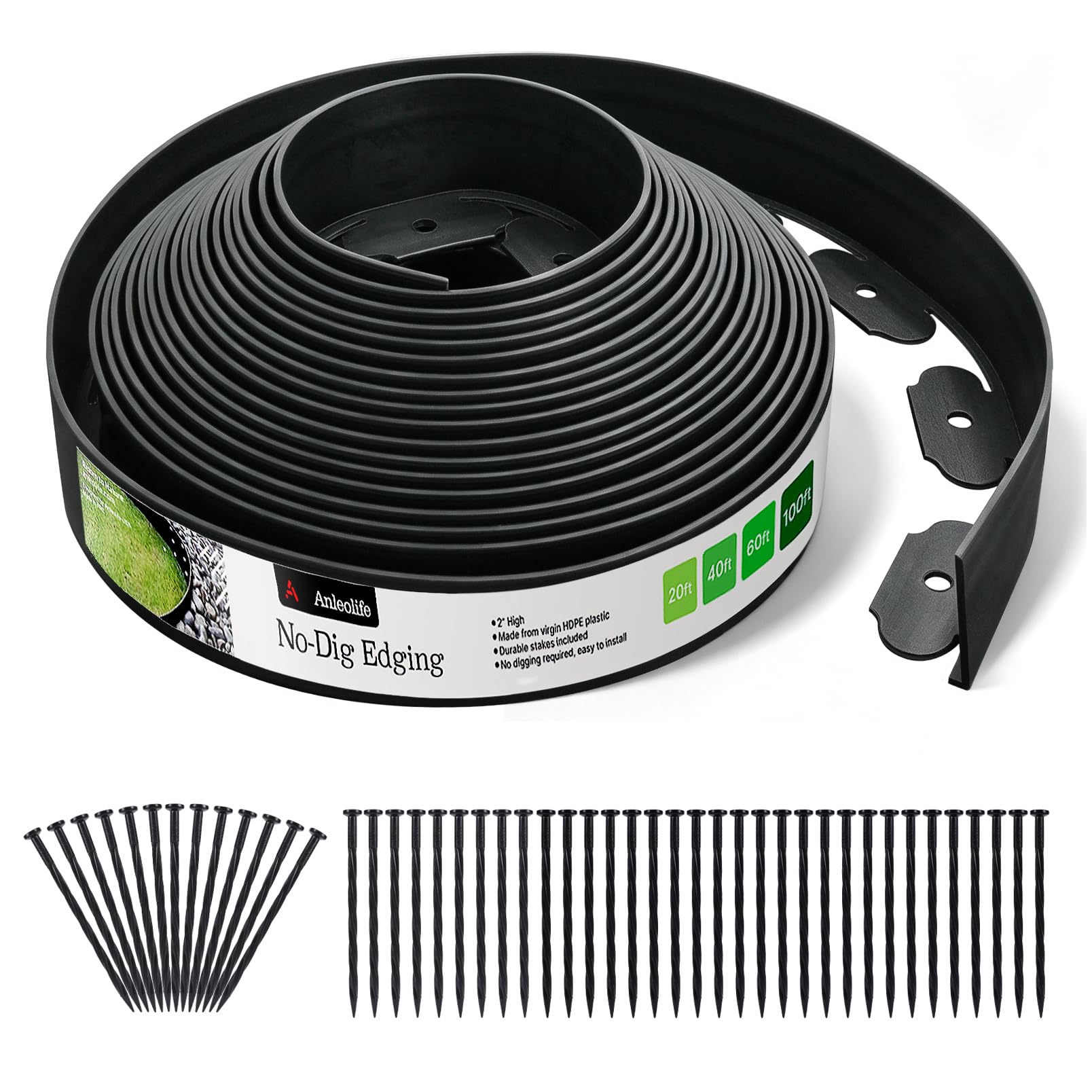
40 feet of nearly invisible black border that fades into your lawn and just does its job.
At only 2 inches tall and 40 feet long (480 inches), this is a low-profile border that works best when you want a subtle line between tree bed and lawn without a raised lip. It comes with 48 spiral stakes, which is more per foot than the JERIA kit (45 stakes for 33 feet). The HDPE material is UV-stabilized (treated to resist fading and cracking from sunlight) and made from recycled plastic, so it won’t warp under summer heat or get brittle in frost. One reviewer says the “plastic pins are sturdy” and the edging “thick enough to hold shape but flexible.” Another notes that the “height 2 inches is enough to separate rock path from mulch bed.”
Where this edges out the JERIA is length: 40 feet vs 33 feet, so it covers a larger tree ring without needing a second roll. But like the JERIA, the stakes are spiral plastic, and a review mentions “includes too few anchor spikes for available holes” — you need to skip every other hole. The no-dig claim holds true: you simply stake it into the ground without trenching. The trade-off is that 2 inches is low — a strong rain or thick mulch layer can push it over unless you weigh it down with stones.
What works
- 40-foot roll is the longest among the plastic picks — fewer joints to manage
- UV-stabilized recycled HDPE resists cracking and fading
- Spiral stakes grab soil well in soft or loamy ground
What to plan for
- 2-inch height is too shallow for deep mulch or aggressive grass runners
- Not every hole gets a stake — you skip roughly two out of three
Reach for this: If you have a large tree ring in soft soil and want a nearly invisible, cheap border that keeps light mulch in place.
Pass if: Your tree sits in a lawn with vigorous rhizome grasses like bermuda or zoysia — they will crawl right over 2 inches.
7. JERIA 2 Inch Tall 33 FT Garden Edging Kit
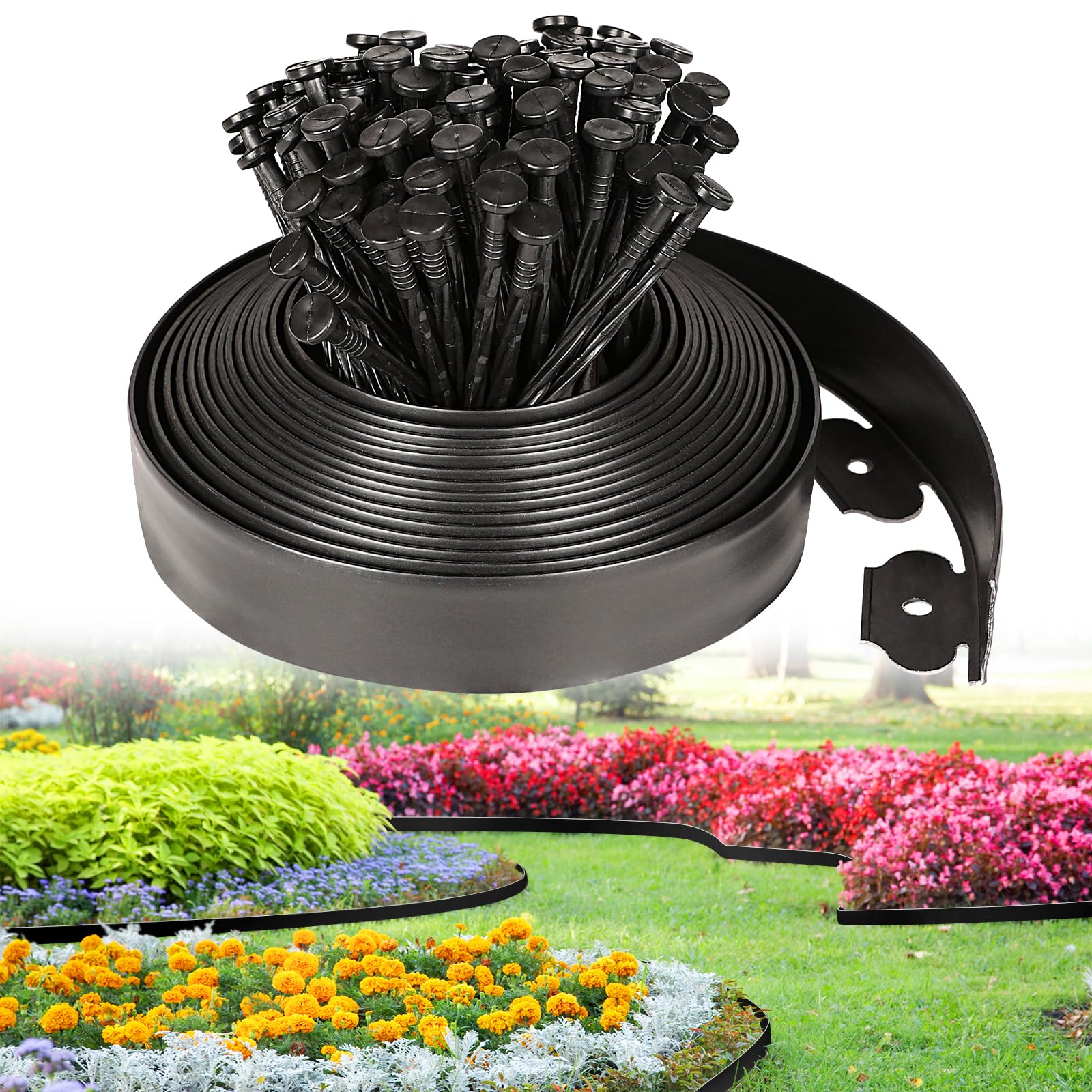
The cheapest entry point to get started, but plan on upgrading the stakes.
At 33 feet long and 2 inches tall, this is the most affordable way to mark a tree ring — but it is a compromise. The plastic material is flexible and easy to cut, and the 45 included spikes let you stake it every 8-9 inches. One reviewer called it “perfect height for tree” and noted it was “cheaper than big box stores.” However, the same fragility that keeps the price down also means the stakes bend and break. “Posts bend and break easily with rubber mallet,” says one buyer, while another reports “four broke” during installation.
If you have soft soil and a gentle hand, this kit will work. But for hard ground, clay, or rocky tree pits, you should budget for metal landscape staples to replace the included spikes. The plastic roll itself is fine — pliable, holds mulch, and blends into the ground. The weakness is purely in the anchoring system. The Anleolife 40-foot roll gives you more length for a similar value range, but the JERIA is the cheapest upfront choice for someone who only needs a small tree ring and does not mind reinforcing it.
What you get for the money
- Generous 33-foot roll covers a 10.5-foot diameter tree ring
- No-dig install — push into soft soil with just your foot or a mallet
- Flexible plastic creates smooth circles without kinking
Where the corners cut
- Plastic stakes snap easily in anything harder than garden loam
- No instructions included — you figure out spacing on your own
Best for: A single small tree ring in loose, sandy, or well-worked soil where the stakes will slide in cleanly.
skip it if: You have clay, rocky, or compacted soil — the stakes will frustrate you into buying a metal kit anyway.
Understanding the Specs
Height — the 2-inch vs 6-inch difference
Height is the single most important spec for tree borders. A 2-inch tall edging is fine for defining a visual boundary in light mulch or pine straw, but it will not stop grass runners or contain a thick wood-chip bed. A 4-inch edge gives you real depth — enough to hold 3-4 inches of mulch and block most surface-level roots. A 6-inch or 10-inch border becomes a serious barrier that also hides the crown of the tree roots from string trimmers. Measure the depth of mulch you want to keep and add an inch: that is the minimum height you need.
Material — HDPE, resin, galvanized, corten
HDPE (high-density polyethylene, a recycled plastic) is lightweight, UV-stabilized, and cheap, but it can crack in deep freeze or warp under heavy soil pressure. Resin is a stronger plastic compound used in faux-stone products like the Beuta bricks — it resists impact better but costs more. Galvanized steel has a zinc coating that stops rust; it is heavy, rigid, and lasts for decades. Corten steel (weathering steel) forms a stable rust patina that protects itself — it starts orange and stays that way, which looks intentional. Pick HDPE for low-stakes beds, resin for visible front-yard borders, and steel where durability and height matter most.
Stake count and design
The number of stakes in the box tells you only part of the story. Spiral or corkscrew stakes grip soil better than flat spikes because they act like a screw thread, but they can bend if you hammer them into hard ground. Flat plastic spikes are the cheapest and most common; they work fine in soft soil but break under a mallet on clay. Steel spikes (like the saw-tooth type on the Worth Corten kit) are the strongest: they slice into the ground rather than forcing their way down. If you have tough soil, plan to replace included plastic stakes with 6-inch metal landscape staples regardless of which plastic edging you choose.
Length and coverage
To find how much edging you need for a tree ring, measure the circumference. For a tree with a 3-foot radius, the circle is about 19 feet. A 10-foot radius tree ring takes about 63 feet. Common roll lengths are 33 feet (which covers a 10.5-foot diameter circle), 40 feet (12.7-foot diameter), and 20 feet (6.4-foot diameter). If your tree is large or you plan to edge a long flower bed, a longer roll reduces the number of joints — each joint is a potential weak spot where grass can sneak through. The Beuta brick system gives you fixed 48-inch sections, so you need to buy multiple packs for a full circle; the metal and plastic rolls give you a single continuous strip.
FAQ
Will plastic tree edging crack in freezing winters?
How do I install edging around an existing tree without damaging the roots?
Can I use the same edging for trees and flower beds?
How do I cut metal edging to length?
Do I need to dig a trench for no-dig edging?
How long does plastic tree edging last?
Will tree edging stop weeds?
What is the difference between galvanized steel and corten steel edging?
Can I reuse tree edging if I move it?
How many edging packs do I need to circle a large oak tree?
Final Thoughts: The Verdict
For most buyers, the best borders for trees winner is the Beuta Polyrock Bricks because it combines the look of natural stone with easy interlocking installation and proven durability across seasons. If you want a deep, heavy-duty barrier for aggressive grass, grab the Worth Pre-Rusted 10″ x 20′ — its 10-inch steel wall stops any root from sneaking through. And for a clean, professional install that avoids flimsy plastic stakes entirely, the Worth