
Specs are compiled from manufacturer listings and verified buyer reviews and can change over time — please confirm the key details on the product page before buying.
Tradescantia—often called Wandering Dude or Inch Plant—is one of the easiest trailing houseplants to grow, yet the single biggest mistake owners make is using a soil that stays wet too long. These plants want a loose, chunky mix that drains fast and lets air reach the roots, because their stems rot quickly in dense, soggy soil.
I’m Rikta — the founder and writer behind Lawn Gear Lab. This guide is built by comparing the manufacturers’ published specifications and the patterns across verified customer reviews, so you get each pick’s real strengths and trade-offs instead of marketing spin.
Below are the top ready‑made potting mixes that give your Tradescantia the airy, free‑draining environment it craves. This is your focused guide to finding the very best soil for tradescantia for a thriving, lush plant.
Our Picks at a Glance
How To Choose The Best Soil For Tradescantia
Picking the right soil for your Tradescantia is all about drainage and aeration. A standard bag of potting mix is often too dense and holds water against the roots, which leads to yellow leaves and stem rot. You want a mix that dries out fairly quickly between waterings.
Texture and Drainage
Look for a “chunky” mix that contains bark fines (small pieces of tree bark), pumice, perlite, or lava rock. These particles create air pockets so water flows through freely instead of pooling. A good test: after a deep watering, excess water should drip out the pot’s hole within seconds, not sit at the bottom.
Organic Matter and Nutrients
Ingredients like worm castings, compost, and coco coir provide steady, gentle nutrients that support leaf growth. Mixes with mycorrhizae (beneficial fungi that partner with roots) can help your plant absorb water and nutrients more efficiently, which is especially useful for a fast‑growing Tradescantia.
Peat-Free vs. Peat-Based
Many quality mixes now skip peat moss. Peat‑free blends often use coco coir (coconut husk fibers) which holds moisture well but drains better and is more sustainable. If you see “peat‑free” on the bag, it often means the mix is lighter and less likely to become compacted over time.
Quick Comparison
| Model | Best For | Volume | Key Ingredients | Organic | Amazon |
|---|---|---|---|---|---|
| Craft Aroid Potting Mix★ Best Overall | Peat‑free, eco‑friendly blend | 2 Quarts | Douglas fir bark, lava rock, pumice, NZ tree fern fiber, coco coir | Yes | Amazon |
| Premium AROID Soil BlendAlso Great | Root & foliage growth | 2 Quarts | Orchid bark, coco coir, pumice, worm castings, biochar | Yes | Amazon |
| Rosy Soil Aroid Mix | Microbially active, carbon‑negative | 4 Quarts | Pine bark fines, pumice, biochar, worm castings, compost | Yes | Amazon |
| Perfect Plants Organic Pothos Soil | Big volume for lots of pots | 8 Quarts | Pine bark, perlite, coconut coir, sand, garden lime | Yes | Amazon |
| Gardenera Premium Monstera Potting Soil | Sterile blend with biochar | 3 Quarts | Peat moss, perlite, coco coir, biochar, worm castings, bark | Yes | Amazon |
| rePotme Hoya Classic Potting Soil | Small batches, conservatory quality | 2 Quarts | Bark chips, peat, roots | — | Amazon |
| Sol Soils Houseplant Chunky Mix | Premium texture, sustainable sourcing | 1 Gallon | Coco coir, husk chips, perlite, pumice, pine bark, LECA | Yes | Amazon |
In‑Depth Reviews
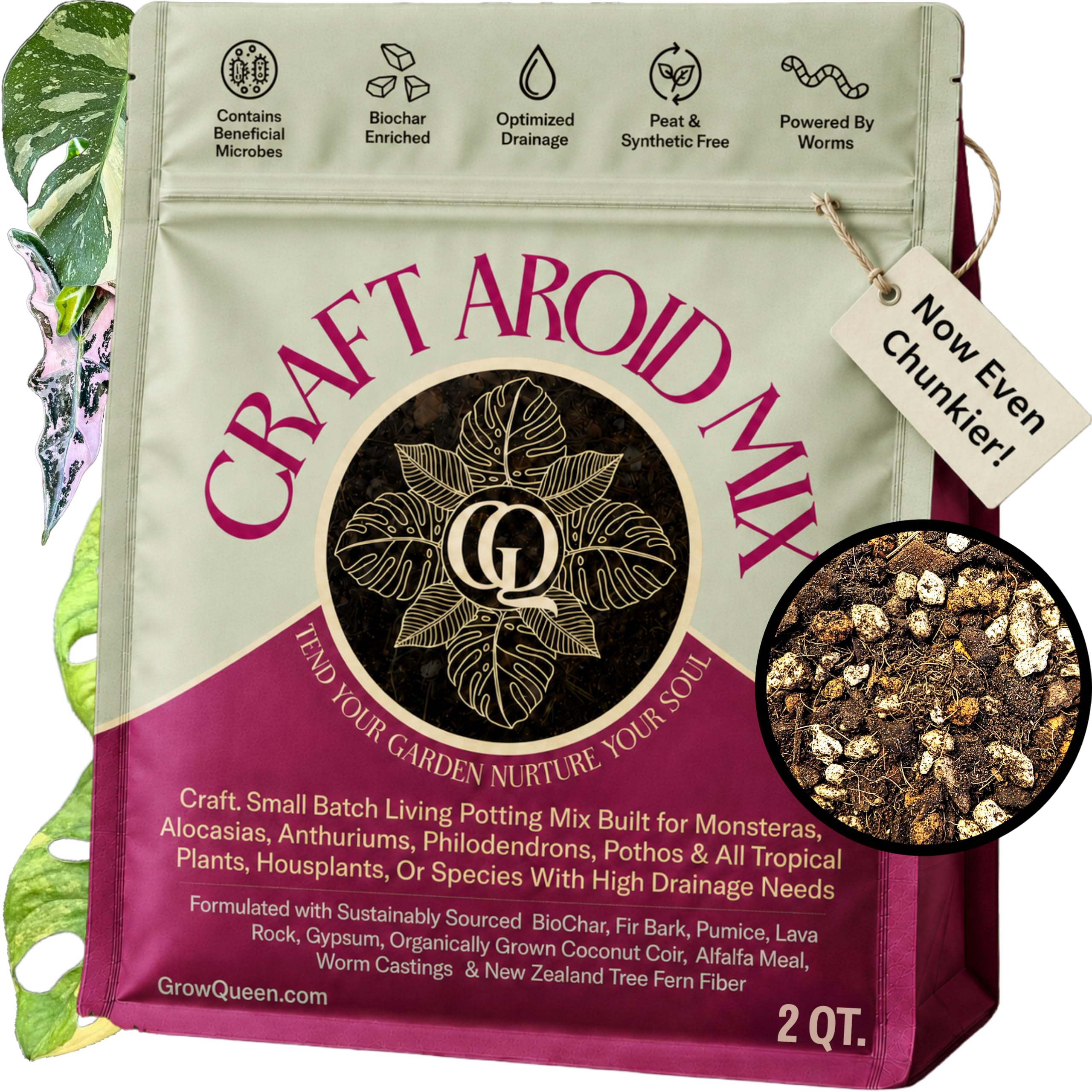
1. Craft Aroid Potting Mix – Grow Queen
Our pick — over 4.5★ from 950+ verified ratings; the strongest balance of quality and price.
This blend skips peat and perlite without skipping quality.
Grow Queen’s Craft Aroid mix replaces peat and perlite with eco‑friendlier alternatives—pumice and lava rock for drainage, and certified organic coco coir that is washed extra times to remove salt. The chunky texture comes from large Douglas fir bark fines and lava rock, which create airflow channels that make overwatering nearly impossible. The mix also contains New Zealand Tree Fern Fiber, which helps neutralize pH down to 6.0, mimicking the natural acidity of tropical forest soil.
However, there is a real‑world limit here. One buyer with larger plants reported that the mix retains too much moisture for bigger pots, causing root rot after over two months. That makes it best suited for smaller pots—six inches or narrower. On the plus side, other reviewers call it their “forever soil,” noting no bugs, mold, or mildew smell after months of use. It is a great pick for a single Tradescantia in a modest pot, especially if you care about the ecological footprint of your soil.
Clean and green: No peat, no perlite—every ingredient is chosen to reduce carbon impact while keeping plants healthy.
Caveat: Swampy for larger pots; stick to containers six inches or smaller to avoid moisture problems.
Reach for this if: You want a low‑impact soil and are potting a single small to medium Tradescantia.
Better pass on it if: You are using a pot larger than 6 inches or tend to water liberally.
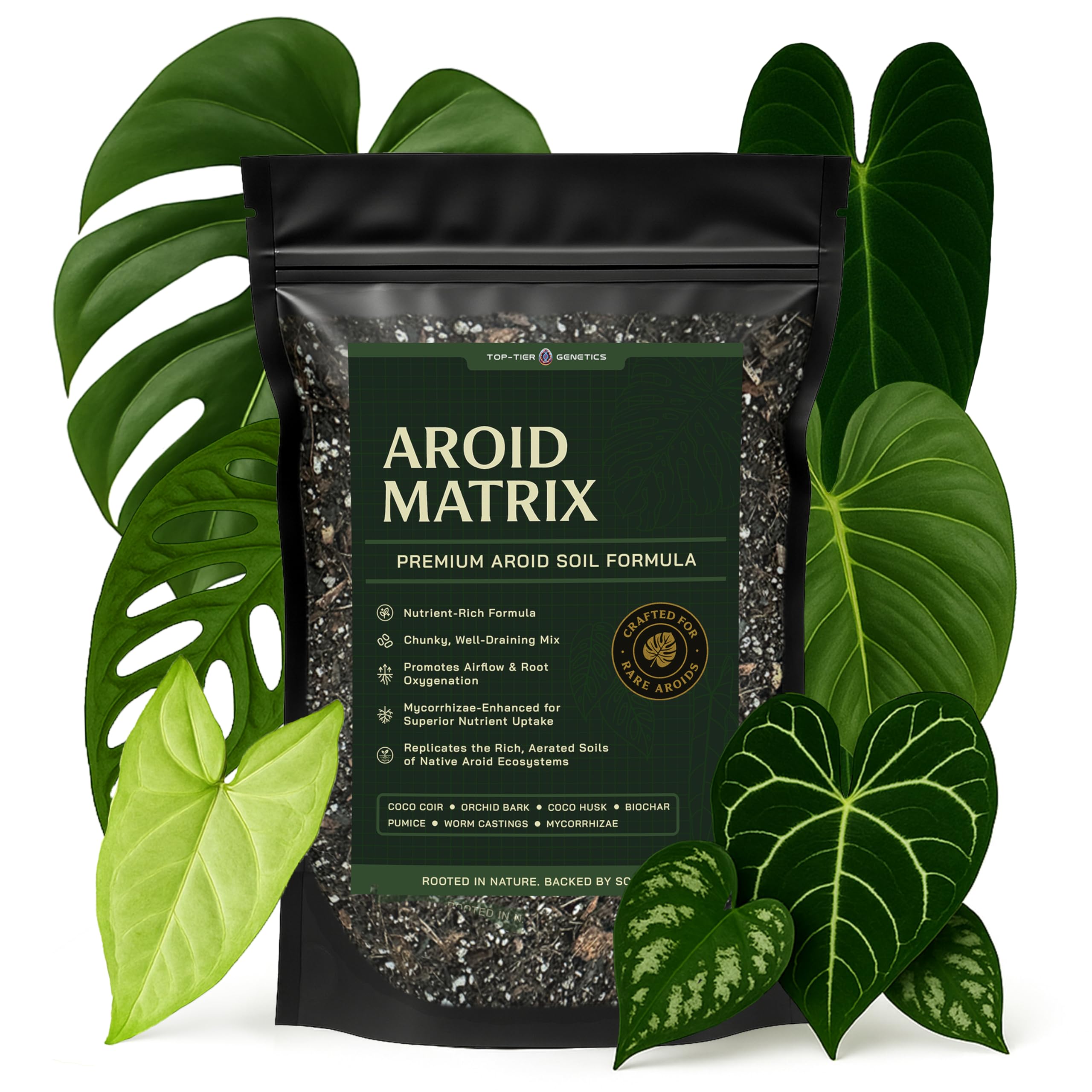
2. Premium AROID Soil Blend – Top Tier Genetics
This blend turns repotting day into a growth explosion for your Tradescantia.
This mix is built specifically for aroids—and Tradescantia fits right in. The high‑nutrient blend combines worm castings and mycorrhizae (beneficial fungi that team up with roots to pull in more water and nutrients) to fuel vigorous leaf and root development. You get excellent drainage from its trio of orchid bark, coco husk, and pumice, so water never lingers long enough to rot stems.
The bag also contains biochar (a form of charcoal that boosts microbial life) for long‑term soil health and coco coir to balance moisture—roots stay hydrated without feeling soggy. Buyers report explosive root growth and healthier, more vibrant foliage after switching to this mix. At 64.0 ounces it is a generous bag for the price, though you use every bit because the texture is light and fluffy.
Owners mention that plants perk up in just a couple of days after repotting. If you want that instant vitality and have a few Tradescantia pots to refresh, this is the one.
Growth powerhouse: Orchid bark + pumice + worm castings deliver both drainage and steady nutrition, so your Wandering Dude shoots out new leaves fast.
One honest catch: At 2 Quarts, it covers roughly one or two medium pots—you may need two bags for a large collection.
Best for: Anyone who wants their Tradescantia to visibly thrive within days of repotting.
Look elsewhere if: You need a bulk bag to repot multiple large hanging baskets at once—the volume is modest.
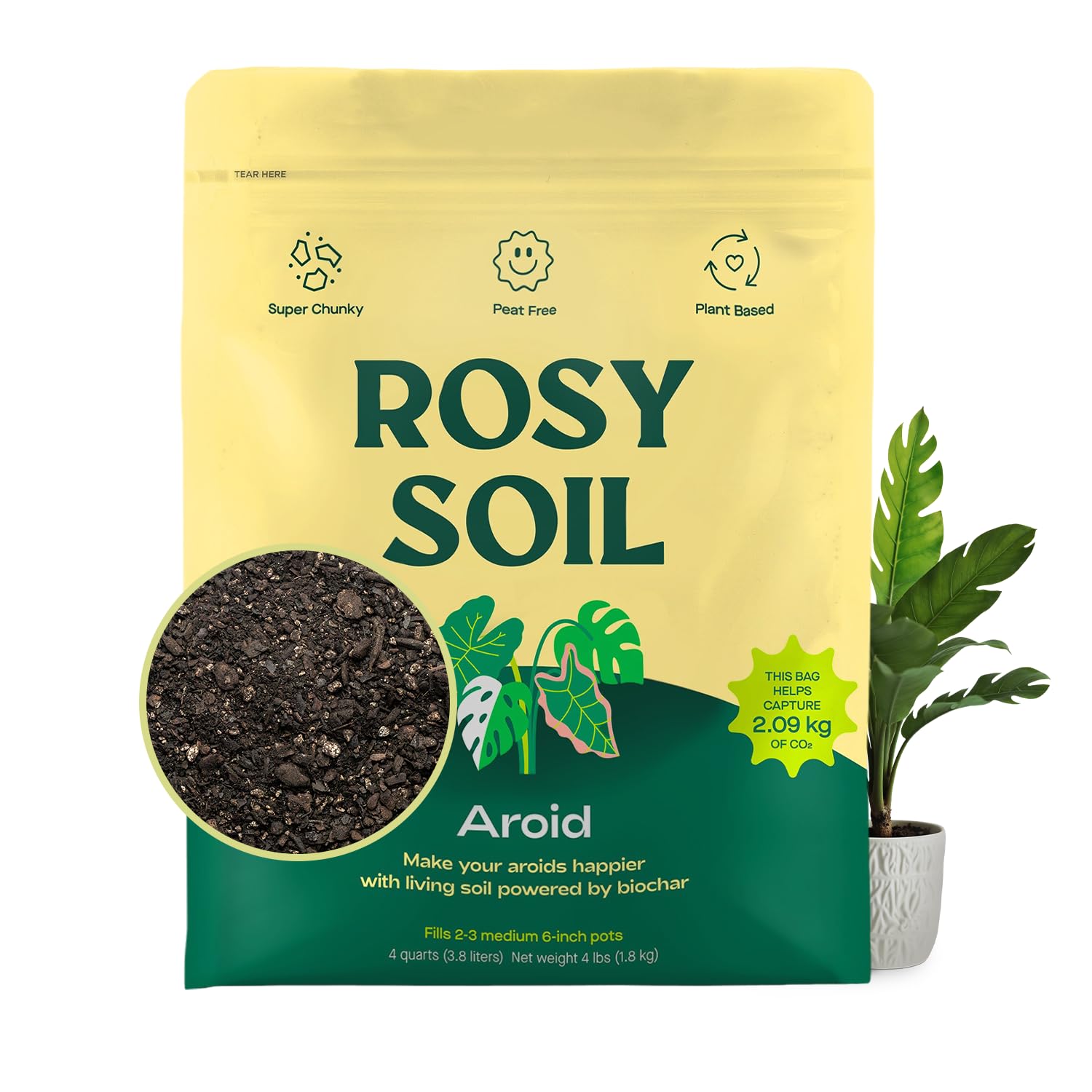
3. Rosy Soil Aroid Soil Mix
This living soil feeds roots with every watering.
Rosy Soil’s aroid blend takes a different approach—instead of just being passive dirt, it is a microbially active environment. It is enriched with worm castings, mycorrhizae, compost, and horticultural biochar, meaning each time you water, beneficial microbes become more active and help your Tradescantia absorb nutrients. The chunky texture comes from pine bark fines, pumice, and biochar, creating a mix that drains fast and stays airy so roots can breathe.
It is peat‑free and carbon‑negative by design—the company uses biochar and volcanic pumice instead of peat, which avoids damaging wetland ecosystems. Customers note seeing new growth within two weeks of switching and, unlike other mixes, no fungus gnat issues. However, one reviewer noted the resealable bag is difficult to close properly, so you may want to store it in a separate container. At 4 Quarts (128.0 ounces) it fills 2–3 medium six‑inch pots, giving you a decent amount for a small collection.
Living infrastructure: The biochar and mycorrhizae create a self‑sustaining soil ecosystem that gets better over time, meaning your Tradescantia gets a steady nutrient supply without extra fertilizer.
The trade‑off: It is pricey for the volume—if you need to repot a lot of plants at once, the cost adds up fast.
Buy it for: The set‑and‑forget gardener who wants a high‑quality, ethically sourced mix that keeps working long after potting.
skip it if: You are on a tight budget or need to fill many large pots in one go.
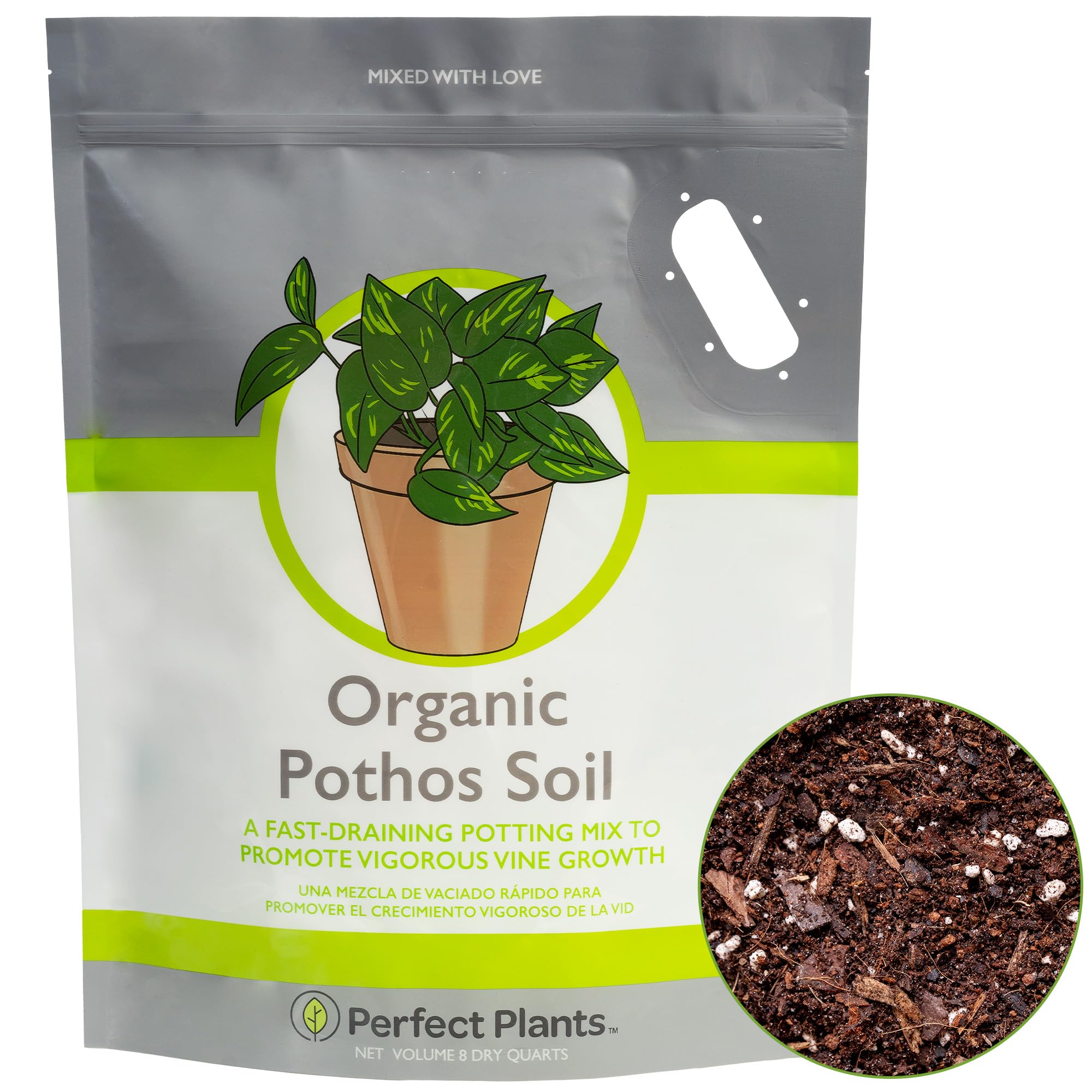
4. Perfect Plants Organic Pothos Soil
A massive bag of farmer‑grade mix that keeps your whole collection happy.
This one is all about scale. At 8 Quarts (296.0 ounces), it is four times the volume of many other aroid mixes—the Premium AROID Soil Blend above holds 2 Quarts, so this Perfect Plants bag gives you a 4.0x gap in size for roughly the same price. That makes it the smart choice if you have several Tradescantia pots or other houseplants to refresh at once.
The mix uses pine bark, perlite, coconut coir, sand, and garden lime. The coco coir handles moisture retention without getting boggy, while the bark and perlite create air pockets for drainage. Reviewers point out that a golden pothos transplanted two months ago is doing amazingly well, and another reviewer said the soil actually grew a mushroom—a sign that it is genuinely good, living material. It is mixed fresh on a farm in the USA, so you get consistent quality bag after bag.
Bulk champion: 8 Quarts means you can repot multiple hanging baskets and still have some left for propagation pots.
Notable detail: The sand content makes it slightly heavier than pure bark mixes, so it holds a pot steady on a shelf.
Perfect for: The plant parent with a medium‑to‑large collection who wants one bag to handle many pots.
Not for: Those who prefer a feather‑light, ultra‑chunky mix—this one has more fine material than the bark‑dominant blends.
5. Gardenera Premium Monstera Potting Soil
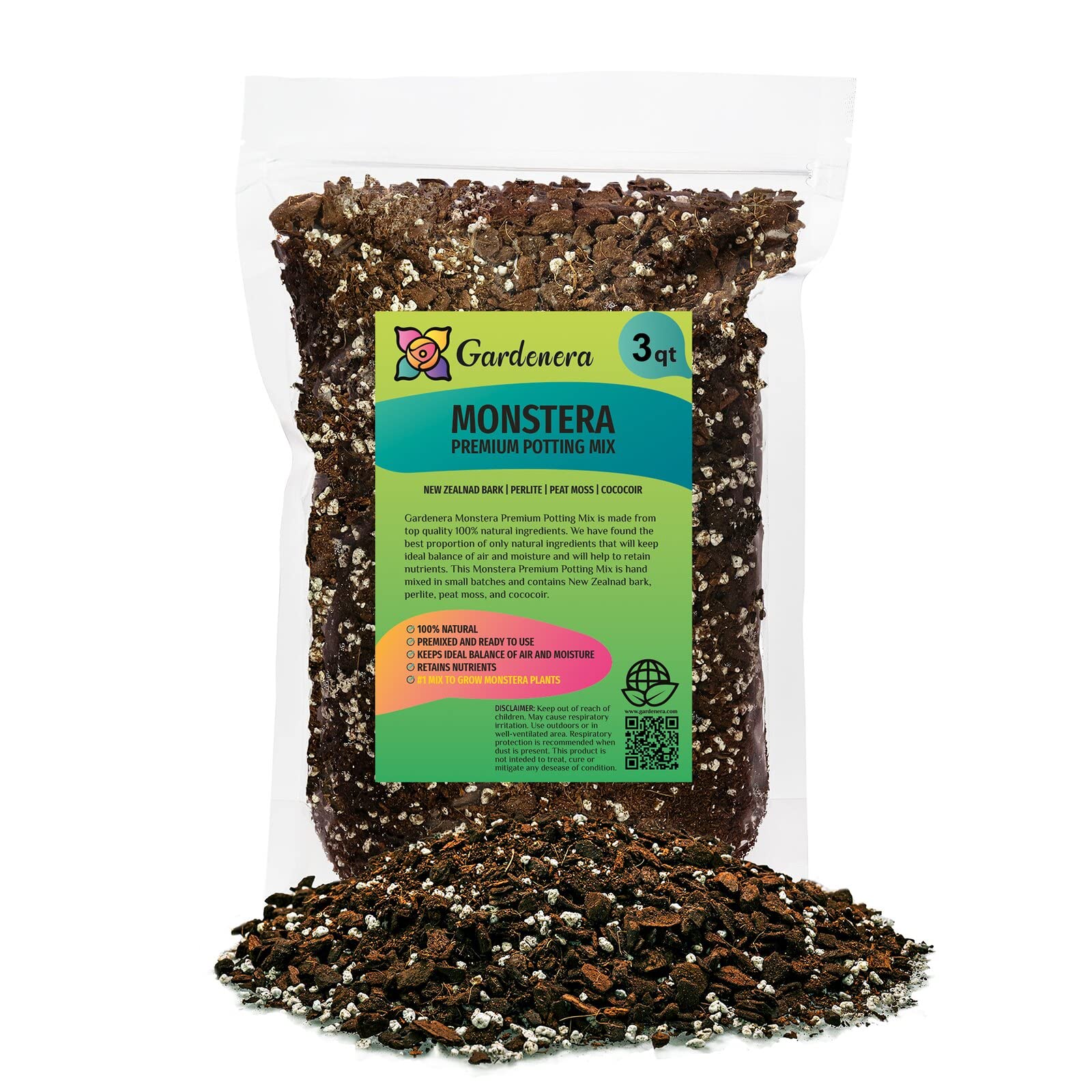
A sterilized, biochar‑boosted mix that prevents the guesswork in watering.
Gardenera takes the worry out of soil‑borne pests and pathogens. Each bag is certified sterile, so you will not introduce fungus gnats or mold from the bag. It blends peat moss, perlite, coco coir, IBI‑certified biochar (a standard that ensures the biochar is high‑quality), worm castings, and bark. The biochar boosts retention of nitrogen and phosphorus, two key nutrients for leafy growth, which helps your Tradescantia produce its signature purple and green stripes.
Shoppers say their monsteras thriving and a Thai Constellation sprouting multiple new leaves. The mix holds moisture without waterlogging, giving you a buffer if you occasionally miss a watering day. One caution: at 3 Quarts, it is a middle‑ground volume between the 2‑quart boutique bags and the 8‑quart bulk option. The resealable bag is practical for storing leftovers.
Sterility plus nutrients: No pests from the bag, plus biochar and worm castings feed your plant steadily from day one.
Only three quarts: You will need multiple bags if you are repotting several plants at the same time.
Best for: The cautious plant parent who wants a clean, predictable mix that minimizes the risk of bugs or mold.
Not for: Bulk repotting jobs where 3 Quarts disappears fast.
6. rePotme Hoya Classic Potting Soil

Small‑batch quality trusted by major botanic gardens.
rePotme produces their mixes in small, handcrafted batches every day, using ingredients sourced globally. The Classic formula contains bark chips, peat, and roots, giving it a light, airy texture that drains readily. It is the same mix used by some of the biggest conservatories and botanic gardens, so the pedigree is strong.
The bag is a resealable pouch, and it comes with a plant tag and a butterfly clip as a small gift. One buyer mentioned that the 2‑quart bag filled a huge vase, two Tupperware planters, and a 4‑inch pot—impressive coverage for a small bag. But the price is noticeably higher than most competitors, and a few buyers report it is too expensive for the volume. It also contains peat moss, so it is not peat‑free. For a single special Tradescantia or a small collection, the quality is there; for bigger jobs, the cost per quart is steep.
Botanic‑garden heritage: The same formula trusted by large conservatories, so you know the drainage and nutrition are dialed in.
Price shock: At roughly the same price as an 8‑quart bag, you are paying for the handcrafted process and small batch size.
Choose this for: A single high‑value Tradescantia cutting or plant where you want the best possible start.
Skip for: Repotting multiple plants or if you need a peat‑free alternative.
7. Sol Soils Houseplant Chunky Mix
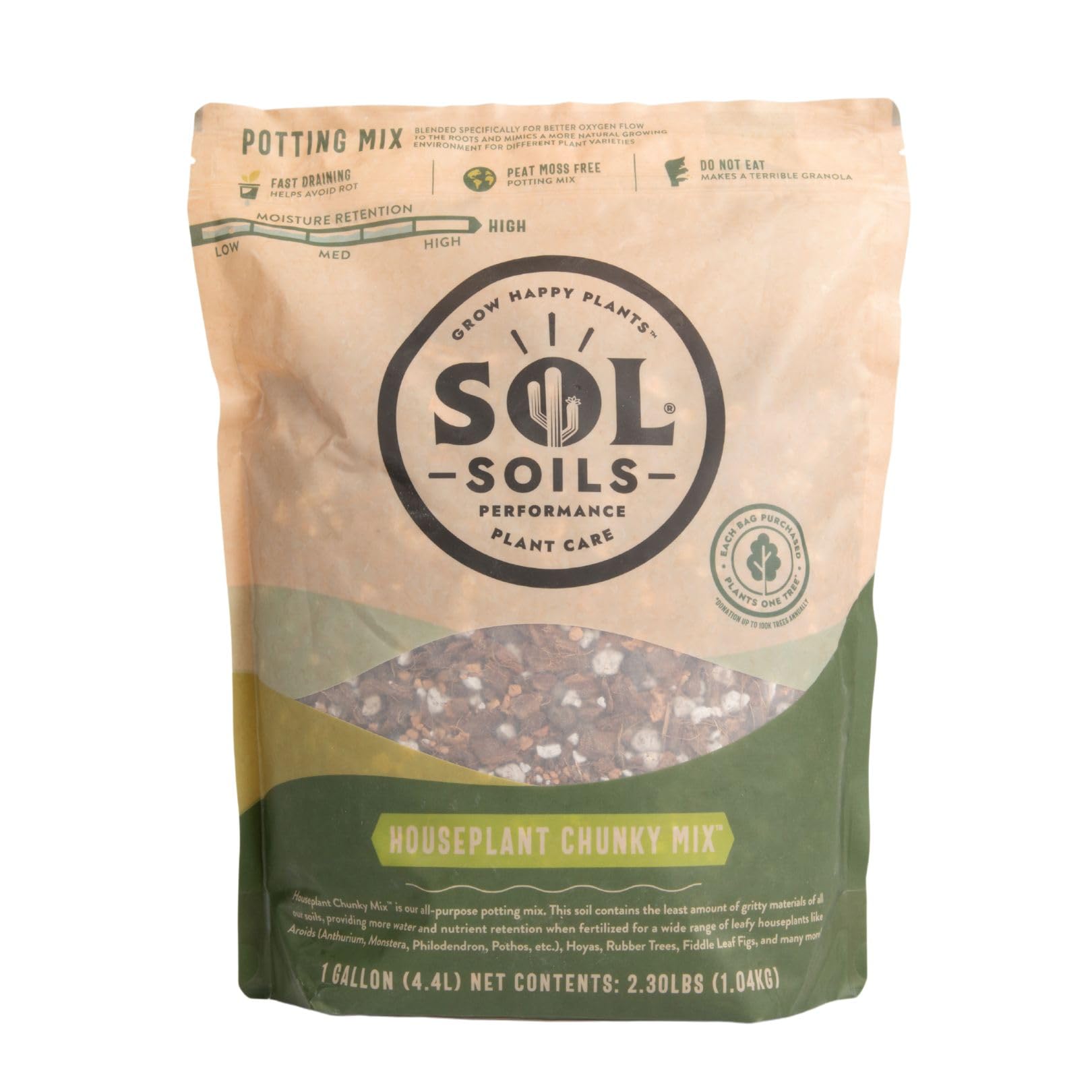
The driest, airiest premade mix for those who hate wet soil.
Sol Soils makes a blend that arrives notably dry—reviewers mention it has no moisture at all out of the bag, which is a feature for anyone who has battled mold or gnats from pre‑moistened bags. The mix uses coconut coir, husk chips, perlite, pumice, pine bark, and LECA (lightweight expanded clay aggregate—small baked clay balls that add aeration). That combination creates exceptional drainage while still holding enough water to keep roots hydrated.
It is peat‑free and a portion of every bag sold goes toward global reforestation. Owners mention that their Thai Constellation monsteras, Hoyas recovering from root rot, and Pothos all thrive in this mix. The bag is 1 gallon (128.0 fluid ounces). The only complaints are about the price—it is the most expensive bag here—and that buyers wish larger sizes were available. For a Tradescantia that likes to dry out between waterings, this dry, chunky blend is an ideal match.
Dehydrated and pure: The dry, chunky texture lets you control exactly how much moisture your plant gets—perfect for Tradescantia.
The premium price: It is the priciest pick on the list, so it is best reserved for plants you really care about.
Go for it if: You want the best drainage possible and are willing to pay for the highest quality texture.
Pass if: You are on a strict budget or need to repot a whole shelf of plants at once.
Understanding the Specs
Chunky vs. Fine Texture
A “chunky” soil contains visible pieces of bark, pumice, or lava rock—usually a quarter-inch or larger. These pieces create air pockets so oxygen reaches roots and water flows out quickly. For Tradescantia, a chunky mix is almost essential because it prevents the stem rot that happens in fine, compacted potting soil.
Biochar and Mycorrhizae
Biochar is a stable form of charcoal that holds onto nutrients and provides a home for beneficial soil microbes. Mycorrhizae are fungi that attach to plant roots and help them absorb water and phosphorus more effectively. Both ingredients turn an ordinary potting mix into a “living” soil that feeds your plant over time rather than washing out with each watering.
Peat‑Free and Why It Matters
Peat moss is harvested from ancient bogs, a process that releases stored carbon and destroys sensitive ecosystems. Many modern mixes replace peat with coco coir (shredded coconut husk) or composted bark, which drain better and are more renewable. A peat‑free mix is lighter and less likely to become compacted, which helps your Tradescantia roots spread freely.
Volume: Quarts vs. Gallons
Soil volume is measured in quarts or gallons. A 2‑quart bag fills roughly one 6‑inch pot. An 8‑quart bag covers four to six 6‑inch pots. When you see a bag labeled in ounces (e.g., 296.0 oz), that is the weight, not the volume—a heavier bag may contain more sand or moisture, not more soil. Always check the actual volume in quarts or gallons to compare how much you are getting.
FAQ
Can I use regular potting soil for Tradescantia?
How often should I repot my Tradescantia in fresh soil?
Does Tradescantia need acidic soil?
What is the difference between aroid soil and regular potting mix?
Should I add perlite myself to a potting mix?
Can peat‑free soil still hold enough water?
Why does my Tradescantia have brown leaves despite good soil?
How can I tell if my soil is causing root rot?
Final Thoughts: The Verdict
For the majority of shoppers, the top soil for tradescantia is the Premium AROID Soil Blend because it strikes a strong balance of drainage, aeration, and nutrient content—your plant will show new growth within days. If you want a sustainable, microbially active mix, the Rosy Soil Aroid Mix with its biochar and mycorrhizae is a close second. And for repotting your entire collection at once, the Perfect Plants Organic Pothos Soil gives you four times the volume for the same price, making it the smart value pick for the hands‑on plant parent.
How We Picked
We do not accept paid placement. Every pick is matched to a real buyer and a real use-case; we do not hands-on test units.
Sources & Methodology
Specifications: manufacturer listings and product documentation. Review insights: verified customer reviews, as of July 2026. Pricing: not shown on this page (it changes often); check the current price via the retailer link.
As an Amazon Associate, Lawn Gear Lab earns from qualifying purchases. This does not affect which products we feature.