
Specs are compiled from manufacturer listings and verified buyer reviews and can change over time — please confirm the key details on the product page before buying.
A tree with weak roots drops leaves, wilts in heat, and could topple in a storm. You need the right fertilizer for tree root growth to fix that — feeding the soil so roots go deep and strong, pulling up the water and nutrients your tree actually needs. For most people, the Fertilome 10650 Root Stimulator with its 4-10-3 N-P-K ratio is the best buy because it uses a plant hormone (Indole-3-butyric acid) that triggers visible root growth in about 2 days, making it faster than a powder mycorrhizal builder for transplants or stressed trees.
I’m Rikta — the founder and writer behind Lawn Gear Lab. This guide is built by comparing the manufacturers’ published specifications and the patterns across verified customer reviews, so you get each pick’s real strengths and trade-offs instead of marketing spin.
Whether you are planting a new sapling, transplanting a stressed shrub, or trying to revive an older tree, you need to match the product to three things: the tree’s condition, your soil type, and if you want a quick root stimulator or a long-term soil builder. The reviews below show exactly which product fits each situation.
Our Picks at a Glance


How To Choose The Best Fertilizer For Tree Root Growth
Not all tree fertilizers work the same way. The one that builds roots fast is different from the one that feeds the soil over months. Here are the three specs that separate a real root builder from a general-purpose plant food.
The N-P-K Ratio: Why the Middle Number Matters Most
The three numbers on the bag (like 4-10-3) stand for nitrogen, phosphate (phosphorus), and potash (potassium) — in that order. For root growth, the middle number (phosphate) matters most because it signals roots to form and spread. A ratio with a high middle number like 10 is better for stimulating new roots than a balanced 10-10-10, which pushes leaf growth instead.
Hormone-Based vs. Biological: Two Different Mechanisms
Some root fertilizers use a plant hormone like Indole-3-butyric acid (IBA, a chemical that forces root cells to divide and grow) — this works fast, often in a few days. Others use mycorrhizal fungi (a beneficial fungus) or bacteria that form a living partnership with the roots, expanding their reach in the soil over weeks. The choice depends on if you need an emergency fix (hormone) or a long-term soil rebuild (biological).
Liquid vs. Powder: How You Apply It Changes the Outcome
Liquid fertilizers mix with water and soak straight into the root zone — they work quickly and are great for transplants or stressed trees that need fast uptake. Powders and granules sprinkle into the planting hole or onto the soil and release slowly as they break down, building soil health over time but taking longer to show results.
Quick Comparison
| Model | Best For | N-P-K Ratio | Item Form | Item Weight | Amazon |
|---|---|---|---|---|---|
| Fertilome 10650★ Best Overall | Fast root formation for transplants | 4-10-3 | Liquid | 9.7 Pounds | Amazon |
| Dr.Raifya’s Mycorrhizal InoculantSoil Builder | Long-term soil & root health | N/A (biological) | Powder | 2.2 Pounds | Amazon |
| Liquinox 0-2-0 Start | Reducing transplant shock | 0-2-0 | Liquid | 1 Gallons | Amazon |
| TPS Tree Fertilizer | Reviving struggling mature trees | N/A | Liquid | 32 Ounces | Amazon |
| TPS Root Boost | Advanced root development in containers | N/A | Liquid | 32 Ounces | Amazon |
In‑Depth Reviews
1. Fertilome (10650) Root Stimulator & Plant Starter Solution 4-10-3 (1 gal)
Our pick — over 4.5★ from 950+ verified ratings; the strongest balance of quality and price.
A fast-acting hormone rooter that brings wilting plants back in days, not weeks.
This is the one you reach for when a transplant looks sad or a shrub needs a jumpstart. It uses Indole-3-butyric acid (a plant hormone that triggers root cells to divide) to give roots a quick chemical signal to grow. You dilute the liquid at just 0.25 tablespoons per 1 pint of water. The 4-10-3 N-P-K ratio (10 is the phosphate, or middle number) means the formula is built around pushing root formation instead of leaf growth.
Buyers report it works fast. One reviewer noted it revived a wilted, dug-up plant in 2 days with the diluted solution, and they saw new growth within a week. Another reviewer noticed their fig tree, which had never produced figs, started filling with little figs about a month after applying Fertilome around the soil. At 9.7 pounds per gallon, this is a heavy bottle — but you get a full gallon of concentrate that goes a long way.
It is heavier than the Dr.Raifya’s powder at 2.2 pounds, but that weight difference means you get more actual product here. The liquid form works faster than a powder when a tree is in immediate stress, because the roots absorb it almost right away instead of waiting for the powder to break down.
Immediate root trigger: If you are transplanting or rescuing a stressed tree, this liquid stimulator shows results in 2 days with the 4-10-3 hormone formula.
One-pick limit: It is a chemical stimulant, not a soil rebuild. For ongoing root health you would add a biological product like the Dr.Raifya’s later.
Situation winner: Best for a gardener transplanting shrubs or trees who needs fast root growth and visible results in the first week.
Look elsewhere if: Your goal is long-term soil biology without using hormones — the Dr.Raifya’s mycorrhizal approach below suits that better.
2. Dr.Raifya’s Mycorrhizal Fungi Inoculant, 10X Concentrated Up to 700 Plants – Organic Root Stimulator, 2.2lb
A living powder that partners with roots to mine soil for hidden nutrients.
Instead of feeding the plant directly, this powder feeds the soil. It contains mycorrhizal fungi (a beneficial fungus), trichoderma (a helper fungus), and bacteria that form a symbiotic partnership with tree roots — effectively extending the root system’s reach deep into the soil. The manufacturer claims it can increase establishment success by up to 30% and reduce transplant shock. Owners mention it really works: one buyer mentioned their outdoor plants were struggling until they added this down the middle of bean rows, and a few days later the plants looked great and started flowering.
It comes as a dry powder weighing 2.2 pounds, which is much lighter than the Fertilome liquid at 9.7 pounds — a 4.4 times weight difference. But 1 ounce treats about 18 plants, so the 2.2-pound bag covers up to 700 plants. You simply sprinkle 1 scoop per plant into the planting hole or mix with water for a root drench. Because it is biological (not a chemical hormone), it takes longer to show results than the Fertilome liquid, but it builds long-term soil health without harsh chemicals.
Buyers also note it works on a wide range of plants — one used it for potted citrus trees grown up north, another for fruit bushes, shrubs, and trees — all with good results. The powder has a distinctive earthy smell (one reviewer called it “funky”), but that is the fungi doing their job.
When it shines
- Organic and safe for pets and family — no synthetic chemicals
- 1 pound covers hundreds of plants, great value for large gardens
- Builds a self-sustaining soil ecosystem over time
The trade-off
- Slower visible results than a liquid hormone stimulator; takes weeks to establish
- Not ideal for an emergency rescue — you need the Fertilome liquid for a 2-day fix
Reach for this if: You prefer organic gardening and want to improve soil biology for long-term root health across many trees and shrubs.
skip it if: You have a tree in immediate stress that needs a quick fix — the Fertilome liquid acts faster and is a better rescue tool.
3. Liquinox 0-2-0 Start with Vitamin B-1, 1-Gallon

A zero-nitrogen starter that keeps transplants from collapsing after the move.
This is a specialized transplant solution, not a general tree food. The N-P-K ratio is 0-2-0, meaning there is no nitrogen at all — the entire formula is built around phosphate and vitamin B-1 (thiamine, which helps plants cope with stress), plus alpha naphthalene acetic acid (a hormonelike substance that supports root cell growth) and yucca extract. The whole point is to reduce transplant shock in bare-root roses, shrubs, bedding plants, seedlings, and cuttings. Customers note it works: one owner reported Liquinox prevented transplant shock in roses and other plants, with no signs of shock after use.
It comes as a liquid concentrate — you mix 1 cap per 1 gallon of water. The 1-gallon bottle is heavy (around 9.7 pounds like the Fertilome), and it is a pure phosphate formula so it does nothing for leafy growth. But if your priority is getting a newly planted tree or shrub through the first two weeks without wilting, this is the right pick.
Compared to the Fertilome 4-10-3, the Liquinox has less nitrogen and no root hormone — it relies on B-1 and the phosphate line to support feeder root growth gradually rather than force root division. One customer observed using it on new additions to planter boxes and said B-1 is essential for young plants being transplanted.
Transplant specialist: Zero nitrogen means no leaf burn on new transplants, and the 0-2-0 plus B-1 combo directly targets root survival during the first stressful week.
Not a growth booster: It prevents shock but does not accelerate root growth the way the Fertilome hormone formula does.
Best for: Any bare-root planting or transplanting job where the main risk is the plant dying from transplant shock within the first few days.
pass on it if: You need visible new root growth quickly — pick the Fertilome or a biological builder instead.
4. TPS Nutrients Tree Fertilizer – Liquid Plant Food for Stronger Roots, Fuller Foliage & Healthy Tree Growth, 32oz
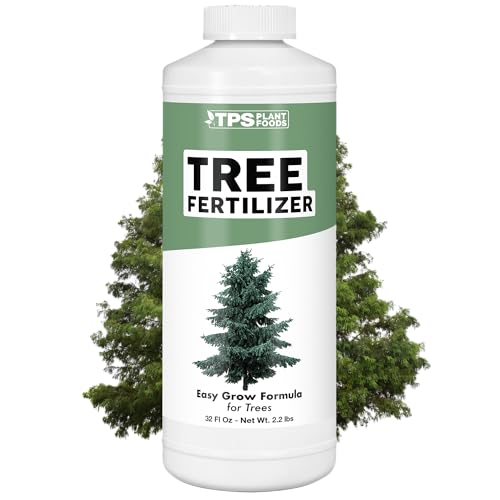
A liquid lifeline for a tree that looks half-dead and needs a full-season comeback.
This 32-ounce liquid concentrate from TPS Nutrients is designed for landscape and garden trees — shade trees, ornamental trees, and yard plantings. You mix it at a 1:64 ratio (1 part fertilizer to 64 parts water) and apply every other week. The real sell is the reviews: one user highlighted their pine tree was almost dead and brown all around, but after using this product every other week for a summer, the tree came back stronger and greener over a whole year. Another reviewer uses it on Blueberry trees in Las Vegas heat and said it helped reduce leaf drop over 1.5 years.
It is a liquid, so it soaks in fast, and at 32 ounces it is much lighter than the 1-gallon (9.7-pound) Fertilome or Liquinox bottles. The mixing ratio is about 2 ounces per gallon of water. The manufacturer says it promotes deep root systems and strong structure. One shopper added it worked great on emerald junipers, with a healthy dark green color appearing just 3 days after fertilizing.
This pick is more specialized for mature trees than the others. It is not a root stimulator for new transplants, but a general tree health formula that supports roots and foliage together. If you have a mature tree that has been struggling for a season, this is the formula that reviewers point out brings it back.
Strong points
- Proven to revive near-dead pine trees over a season, per buyer reports
- Easy 1:64 mixing ratio, no heavy measuring
- Made in USA
Weak points
- No specific N-P-K ratio listed on the label, so you don’t know the exact phosphorus level
- Requires a full season of weekly applications to see results on stressed trees
Reach for this if: You have an established tree that looks weak, brown, or dropped leaves last season and needs a reliable liquid feed to bring it back over a growing season.
it’s not for you if: You are planting a new bare-root tree or transplant and need a shock blocker — the Liquinox or Fertilome is better for that first week.
5. TPS Nutrients Root Boost Advanced Rooting Formula for Plants, Living Soil & Organic Root Support 32 oz (1 Quart)
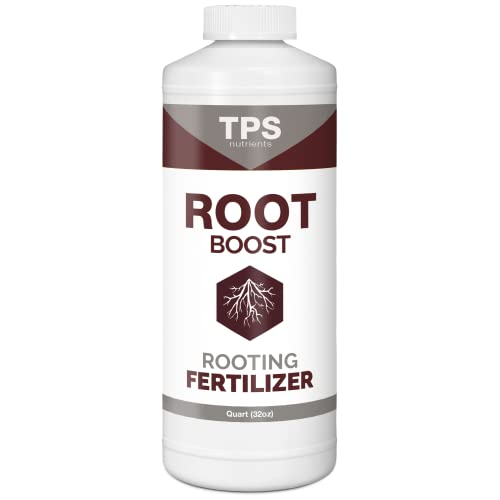
A concentrated organic root booster that makes even succulents explode with new growth.
This is the most root-specific pick from TPS Nutrients — it is formulated specifically for early root formation and long-term root strength, not just general tree health. It comes as a 32-ounce liquid and you mix it at 1:64 for soil gardens or 1:128 to 1:256 for hydroponic gardens. The organic formula is designed to support roots naturally without harsh feeding, making it suitable for new plantings, repotting, and ongoing root support.
Buyers are enthusiastic about the results. One reviewer noted TPS root boost significantly improved outdoor plant size and lushness. Another reported noticeable root growth in a few days at the recommended dose, and found that doubling to 2 ml per gallon pushed roots even faster. A long-term user (4-5 bottles) recommends it for container gardens and prefers the BASE A/B formulas for continued growth. One reviewer even said their succulents grew bigger, faster, with bright colors and more babies after just 3 waterings — and that they had been struggling and wilting before.
Unlike the Fertilome (which is a chemical hormone), this is an organic root boost — so it works more gently but still shows visible results in days rather than months. The 32-ounce bottle is lightweight compared to the 1-gallon competitors, but the mixing ratio means it still goes a long way. One buyer admitted they might not have loosened the soil enough for grass plugs, suggesting that proper soil prep matters with this product.
Organic root driver: For container plants, repotting, and any living soil setup, this formula pushes visible root growth in days without synthetic chemicals.
Picky about prep: Shoppers say that soil loosening and consistent applications are key — it is not a magic fix for compacted clay.
Reach for this if: You grow plants in containers or raised beds and want an organic root booster that shows faster results than a powder mycorrhizal product like Dr.Raifya’s.
look elsewhere if: You need a full-season tree reviver for a mature tree — the TPS Tree Fertilizer above is better for that, while this one focuses on young roots.
Understanding the Specs
N-P-K Ratio
The three numbers on the label stand for Nitrogen-Phosphate-Potash. For root growth, the middle number (phosphate) is the most important — it tells the plant to put energy into root cells instead of leaves. A ratio like 4-10-3 means the phosphate is the highest, which is what you want for root stimulation. A 0-2-0 formula has no nitrogen at all, so it won’t burn new transplants while still feeding the roots.
Hormone vs. Biological
A chemical root stimulator (like Indole-3-butyric acid in Fertilome) directly forces root cells to divide — you see results in days. A biological product (like mycorrhizal fungi in Dr.Raifya’s) builds a living network around roots that expands their reach over weeks or months. The chemical one is better for emergencies; the biological one is better for long-term soil health.
FAQ
Can I use a root stimulator on a mature tree that looks healthy?
Will a mycorrhizal powder work if my soil is heavy clay?
How long does it take to see results from a root fertilizer?
Is 0-2-0 fertilizer safe for newly planted bare-root trees?
What is the difference between Indole-3-butyric acid and vitamin B-1 for roots?
Can I mix a liquid root stimulator with a mycorrhizal powder?
How often should I apply a root growth fertilizer?
Does a root booster work for trees in containers or only in-ground?
Final Thoughts: The Verdict
For most people, the fertilizer for tree root growth winner is the Fertilome 10650 because the 4-10-3 ratio plus the Indole-3-butyric acid hormone gives you fast, visible root growth on new transplants and stressed trees. If you want long-term soil health without synthetic chemicals, grab the Dr.Raifya’s Mycorrhizal Inoculant. And for preventing transplant shock on bare-root trees and shrubs, the standout is the Liquinox 0-2-0 Start.
How We Picked
We do not accept paid placement. Every pick is matched to a real buyer and a real use-case; we do not hands-on test units.
Sources & Methodology
Specifications: manufacturer listings and product documentation. Review insights: verified customer reviews, as of July 2026. Pricing: not shown on this page (it changes often); check the current price via the retailer link.
As an Amazon Associate, Lawn Gear Lab earns from qualifying purchases. This does not affect which products we feature.