
Specs are compiled from manufacturer listings and verified buyer reviews and can change over time — please confirm the key details on the product page before buying.
If you have ever spent a whole weekend weeding only to wake up with a stiff back, you already know why the height of your garden bed matters. A well-built DIY raised planter box lifts the soil up to you, saving your knees and your lower back. The real challenge is picking the right one: too shallow and your carrots cannot stretch, too flimsy and the sides bulge after one season of rain. By the end of this article, the SoliWood Raised Garden Bed stands out as the best value — a 30-inch tall, 300-pound-capacity cedar planter that keeps you standing upright and assembles with pre-drilled holes that one reviewer called “easy for a 76-year-old.”
I’m Rikta — the founder and writer behind Lawn Gear Lab. This guide is built by comparing the manufacturers’ published specifications and the patterns across verified customer reviews, so you get each pick’s real strengths and trade-offs instead of marketing spin.
Matching the material, soil capacity (measured in cubic feet), and height to how you plan to use it is what makes a planter work for you.
Our Picks at a Glance
How To Choose The Best DIY Raised Planter Boxes
Before you click “add to cart,” you want to know which specs make the biggest difference for your garden. Here are three things to focus on.
Soil Capacity: The one number that limits your harvest
This is the total volume of soil the planter can hold, listed in cubic feet. A larger capacity means deeper roots for vegetables and less frequent watering. If you plan to grow root vegetables like carrots or potatoes, look for a planter that holds at least 6 cubic feet of soil — 6 cubic feet gives you enough depth for them to stretch.
Material: How heavy, how long, and how safe for your food
Galvanized steel is lightweight and resists rust, making it a solid choice for large beds you want to last. Cedar and fir wood give you a natural look and are safer for edible gardens, but they are heavier and may need sealing over time. Always check if the finish is non-toxic — look for terms like “water-based” or “CA65 certified” (a California safety standard for food-contact materials) — if you are growing vegetables.
Height: The difference between a hobby and a chore
Standard ground-level beds are only 12 inches tall — that means you are bending or kneeling. improve beds with legs, usually around 30 inches, let you stand upright while planting and weeding. If you have limited mobility or simply want a cleaner gardening experience, an improve planter with legs is the way to go — so your back stays happy.
Quick Comparison
| Model | Best For | Capacity | Height | Material | Amazon |
|---|---|---|---|---|---|
| SoliWood Raised Bed★ Best Overall | Ergonomic improve gardening | 6 cubic feet | 30 in | Cedar Wood | Amazon |
| Ohuhu 8x3x1.5 FTTop Capacity | Large root vegetable patches | 36 cubic feet | 18 in | Galvanized Steel | Amazon |
| Lineware Self-Watering | Low-maintenance watering | — | 12 in | Galvanized Steel | Amazon |
| Maple99 48x24x30 | Premium natural cedar look | 200 lb capacity | 30 in | Cedar Wood | Amazon |
| Yaheetech 8-Pocket | Organizing multiple herb varieties | 2.9 cubic feet | 36.5 in | Fir Wood | Amazon |
| BIRASIL improve Shelf | Gardening with extra tool storage | 150 lb capacity | 30 in | Fir Wood | Amazon |
| DIIYIV 2-Pack | Large, low-cost growing area | — | 12 in | Galvanized Steel | Amazon |
In-Depth Reviews
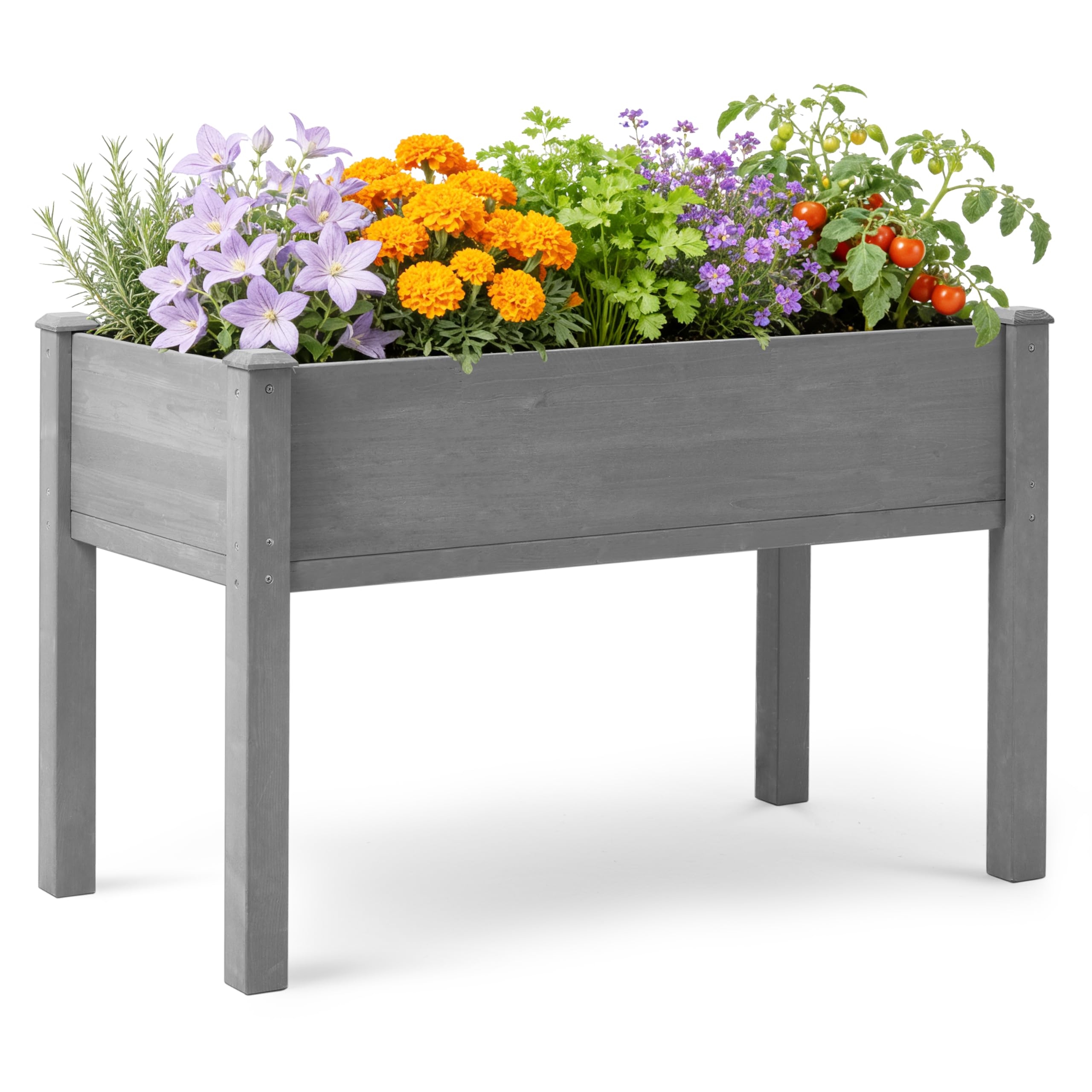
1. SoliWood Raised Garden Bed with Legs
Our pick — over 4.5★ from 850+ verified ratings; the strongest balance of quality and price.
Your back stays straight because cedar legs lift the soil 30 inches off the ground — no kneeling needed.
This is the planter to beat if you want a raised bed that lets you stand up straight while working. The SoliWood improve bed measures 48 inches long, 24 inches wide, and lifts the soil a full 30 inches off the ground — that height means you can plant, weed, and harvest without bending over. The frame uses 2.4-inch thick solid cedar poles and 0.7-inch thick frame panels, giving it a weight capacity of 300 pounds — more than most improve planters at this price. Buyers report it was “easy to assemble for a 76-year-old; holes aligned,” which tells you the DIY effort is genuinely low. The water-based eco finish keeps the wood safe for vegetables and fruits, unlike some painted or treated alternatives that might leach chemicals into your soil. Compared to the Ohuhu metal bed, which holds 36 cubic feet of soil but sits at only 18 inches high, the SoliWood gives you a much better ergonomic experience.
Stand-out strength: The balance of sturdy cedar construction, 30-inch no-bend height, and 300-pound soil capacity makes this the most well-rounded improve planter in the lineup.
Reach for this if: You want a natural wood look and a comfortable working height that saves your back and knees.
One thing to watch: A few owners noted the wood can split slightly if you drill screws in without pre-drilling, so take it slow during assembly.
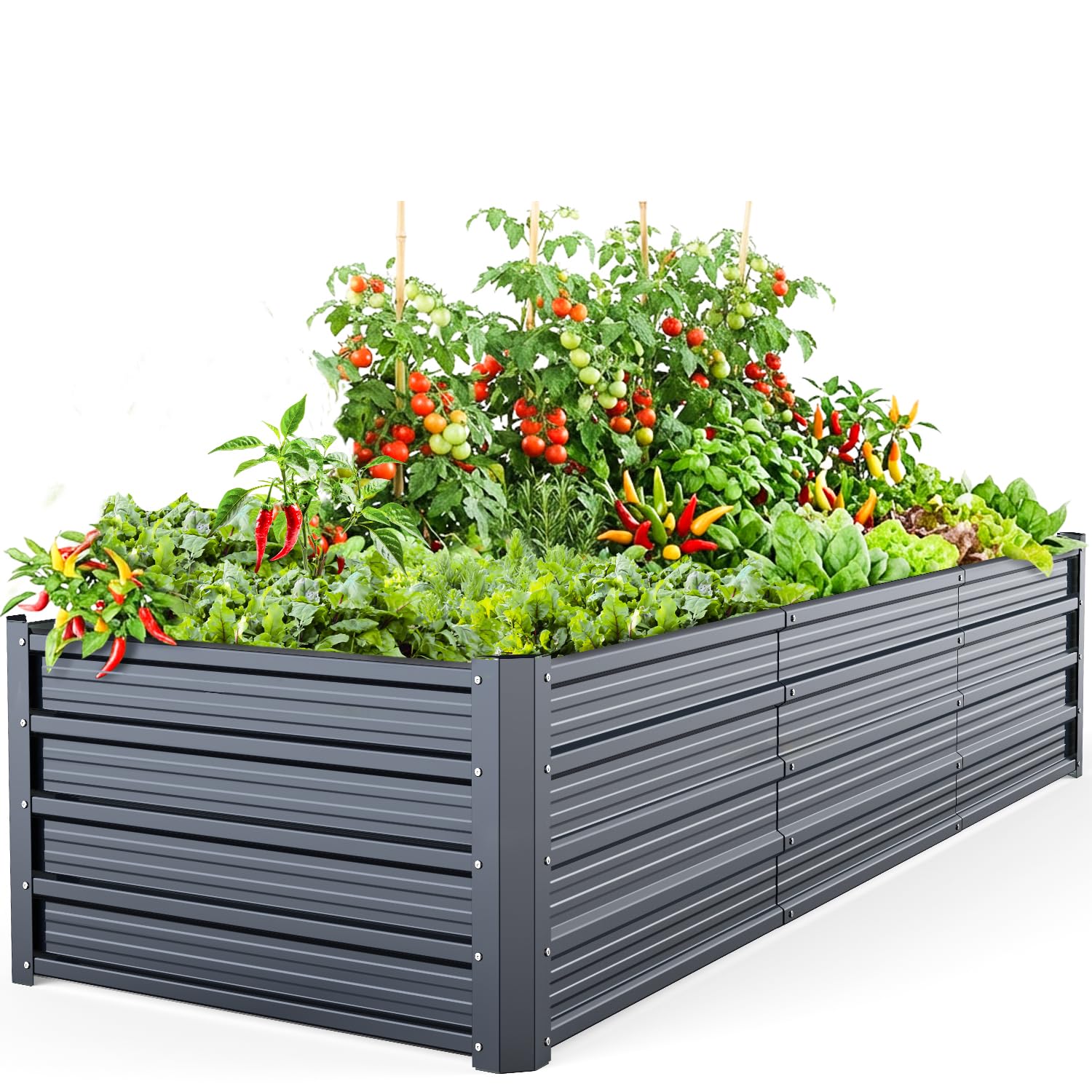
2. Ohuhu 8x3x1.5 FT Metal Raised Garden Bed
A massive 36-cubic-foot canvas — that is enough soil for deep root vegetables that sprawl, like potatoes and carrots.
This metal raised bed gives you 36 cubic feet of soil capacity — the most on this list and 36 cubic feet versus the Yaheetech’s 2.9 cubic feet. At 8 feet long and 3 feet wide, it is designed for serious vegetable gardeners who want room for potatoes, carrots, and sprawling tomato plants. The bed stands 18 inches tall, which is higher than a typical 12-inch ground bed but still requires some bending for planting and weeding. The Ohuhu uses heavy-duty galvanized steel with an eco-coating (a rust-resistant layer) and is certified under CA65 and REACH standards — a European chemical safety regulation — meaning it will not leach toxins into your organic produce. It includes 6 bracing rods and 4 thickened corner brackets to resist warping when fully loaded. One reviewer came back after two years and raised their rating from 3 to 5 stars, noting that the paint looked like new and the structure held up well. The trade-off is that assembly is considered the hardest of the bunch — a two-person job where the metal can feel thin and the edges are sharp if you are not careful.
The bottom line on volume: If you are growing enough for a family and need the raw soil capacity, this bed delivers a footprint the SoliWood improve planter simply cannot match.
Best for: Gardeners with a large backyard who want deep, certified-safe soil for root crops.
Not ideal if: You want a no-bend height or a quick, solo assembly — this needs two people and some patience.
3. Lineware Raised Garden Bed with Self-Watering System
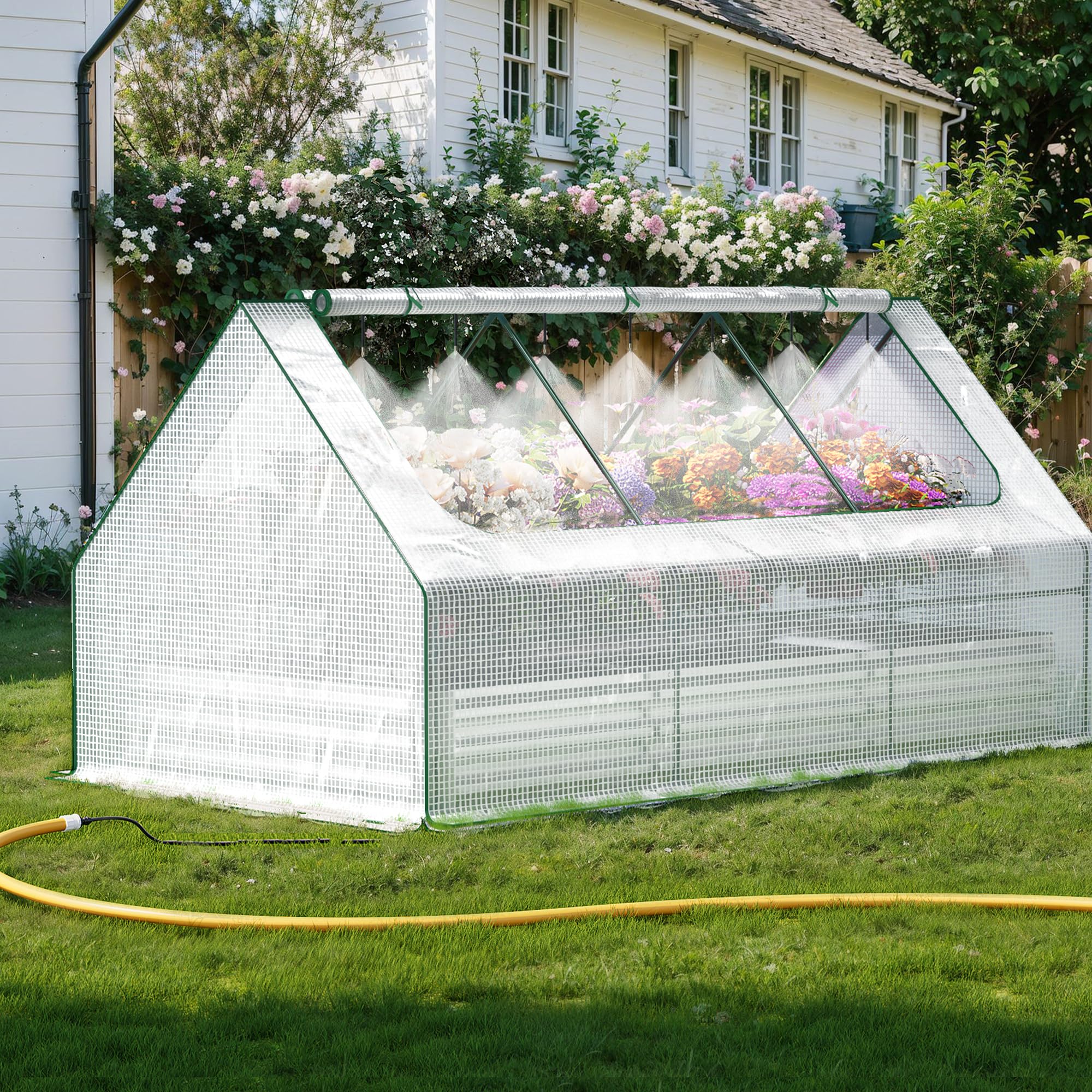
A built-in hose and greenhouse cover water your plants for you — so you do not have to drag a hose around every day.
This is the only planter on the list that waters itself. The Lineware includes a built-in watering hose and spray irrigation system that distributes moisture evenly across the 8×4-foot bed — which means you spend less time dragging a hose around. It also comes with a full-coverage PE (polyethylene) cover that holds in warmth and blocks wind, plus a zipper door so you can still tend to your plants easily. With ground stakes to anchor the canopy frame, it stays put in breezy conditions. The bed is made from rust-resistant galvanized steel, weighs 38.6 pounds, and uses an open-bottom design so excess water drains naturally into the ground. Owners mention the mister function works perfectly and seeds sprout quickly. One owner noted the 12-inch depth is enough for tomatoes. The catch is that the cover has no clips to hold rolled-up flaps, making it a bit awkward for one person to manage on a hot day. Compared to the Ohuhu, which is fully open and relies on you for watering, the Lineware trades some simplicity for convenience when you are busy.
Smart feature: The integrated drip irrigation is a genuine time-saver for anyone who struggles to keep a consistent watering schedule.
Pick this if: You travel often or simply do not want to remember to water every single day.
Just know: The cover adds some setup steps, and you will need your own screwdriver to assemble the metal sheets carefully.
4. Maple99 Raised Garden Bed with Legs 48x24x30

Natural untreated cedar that smells great and repels insects on its own — no chemical sealants needed.
The Maple99 brings the same 48x24x30-inch improve dimensions as the SoliWood, but it uses natural unfinished cedar with no paint or sealant. Cedar naturally repels insects and resists moisture, so you can plant herbs and vegetables directly without worrying about chemical leaching. The planter supports up to 200 pounds of soil, plants, and water, and the brand claims assembly takes less than 30 minutes. Owners praise the fresh cedar scent and the clear instructions, though some mention the cedar is a softer wood (low modulus of elasticity — it bends more easily) and the bottom may sag under heavy wet soil if you push it to the 200-pound limit. One smart buyer added a steel bar support as a simple fix. At 33.3 pounds, it is 33.3 pounds versus the SoliWood’s 38.9 pounds, making it a bit easier to reposition when empty. The SoliWood wins on total load capacity (300 pounds vs. 200 pounds), but the Maple99 beats it on pure material purity if you want a completely untreated natural surface for your soil.
Material advantage: That natural cedar insect-repelling property is a real perk for organic gardeners who avoid synthetic treatments.
Reach for it if: You want an untreated natural wood planter that looks beautiful and weighs a bit less than the competition.
Something to consider: The bottom may need extra support if you plan to fill it with dense, wet soil for deep-rooted vegetables.
5. Yaheetech 36” Hx25” Wx37” L Raised Garden Bed 8 Pocket

Eight separate pockets in one box — keeps herbs like basil, mint, and chives from crowding each other.
The Yaheetech planter takes a different approach than the large single beds above. It is split into 8 individual grids, each perfect for a different herb or flower variety. You can remove the dividers if you want a larger continuous plot. The box stands at 36.5 inches tall (the tallest on this list), with a footprint of 24.5 inches deep and 36 inches wide, and holds 2.9 cubic feet of soil — that capacity is much smaller than the 36 cubic feet of the Ohuhu, so this is for ornamental or small-scale seasoning gardens rather than heavy vegetable production. Built from thick fir wood with solid wood legs, this planter can hold up to 441 pounds. It includes a non-woven fabric liner, drainage holes at the bottom, and corner braces for extra stability. The smaller individual sections help keep different herbs organized and prevent one aggressive plant from crowding out the neighbors. One buyer who assembled it said, “Love this raised garden bed! My husband built it and he liked that it was pretty easy to build!” The caveat is that the 2.9 cubic feet of total soil means you cannot grow sprawling tomatoes or deep-rooted potatoes — this is strictly a contained herb garden.
Key difference: The 8-grid system is unique on this list — no other planter gives you this kind of built-in separation for companion planting.
For you if: You want a tidy, organized improve garden for herbs, lettuce, or flowers with clear sections.
Not for: Large-scale vegetable growing — the total soil volume is a fraction of what a dedicated metal bed offers.
6. BIRASIL Outdoor Wood Raised Garden Bed with Storage Shelf

An improve planter with a bottom shelf — your trowel and gloves stay right where you need them.
This BIRASIL planter combines a roomy growing bed with a clever storage shelf underneath, so you do not have to walk back to the shed for every tool. The bed itself measures 48.5 inches long, 24.4 inches wide, and stands 30 inches tall — giving you a comfortable standing work height. The planter box is made from non-paint, non-toxic solid fir wood and includes drainage holes at the bottom, plus a non-woven fabric liner to hold soil in while letting air and water pass through. At 28 pounds, it is 28 pounds, versus the SoliWood’s 38.9 pounds and the Maple99’s 33.3 pounds, making it the lightest improve wood option here. However, its capacity is rated at 150 pounds, which is half of the SoliWood’s 300 pounds. Owners who have used it for two years say the untreated wood held up well even through snowy winters, though some recommend sealing it for longer life. The shelf underneath is a genuinely useful addition — no other improve planter on this list offers built-in storage.
Standout feature: That bottom shelf is a small change that makes a real difference in keeping your workspace tidy and efficient.
Go for it if: You value convenience and prefer a lighter, shelf-equipped planter for a patio or deck space.
Just be aware: The 150-pound soil capacity is lower than the SoliWood, so take that into account if you plan to use deep, wet soil.
7. DIIYIV 2PCS 12x4x1FT Galvanized Raised Garden Bed Kit

Two long galvanized beds that give you 24 feet of planting edge — for the same cost as a single wood planter.
This kit comes with two separate galvanized steel beds, each measuring 12 feet long, 4 feet wide, and 1 foot tall. Combined, that is 24 linear feet of growing space. The 12-inch height is typical for ground-level beds and works well for shallow-rooted plants like lettuce, peppers, and flowers. Both beds use stainless steel with an all-surface galvanized finish to resist corrosion, and the corners have protective pads to prevent sharp edges from poking you. The DIIYIV is 144 inches per bed, versus the Yaheetech’s 36 inches but sits at ground level with no legs. Customers note they are lightweight and easy to plant and harvest from, though a bit wobbly before the soil firms them up. One owner noted “sharp edges during assembly (gloves provided)” and that the sides may go out of square if you lean on them. The strength is in the sheer coverage area — you get a huge planting surface for the money, but you give up the rigidity and elevation you get from a single-piece wood bed like the SoliWood.
Volume vs. sturdiness: For the price, you are getting an enormous soil area, but the thin metal panels will not tolerate heavy leaning or kneeling.
Best for: A budget-conscious gardener who needs a lot of ground-level space for seasonal crops and flowers.
skip it if: You prefer a sturdy, improve planter that does not require soil weight to hold its shape.
Understanding the Specs
Soil Capacity
This number, listed in cubic feet, tells you how much soil the planter can hold at one time. A larger capacity means deeper root space for vegetables and more water retention between waterings. For reference, a 36-cubic-foot bed (like the Ohuhu) can hold about as much as 13 bags of standard 3-cubic-foot garden soil. Smaller planters around 2.9 cubic feet (like the Yaheetech) are better suited for herbs than heavy feeders like tomatoes — so you do not over-plant in too-small a bed.
Height and Elevation
Height is measured from the ground to the top of the planter box. Ground-level beds are typically 12 inches tall and require bending or kneeling. Raised beds with legs go up to 30 inches, which means you can stand upright to work. A 30-inch height is the general balance for most adults who want to avoid back strain. Taller options exist (like the 36.5-inch Yaheetech), but they can feel too high if you are on the shorter side — so you might need a stool.
Material Type
Galvanized steel is rust-resistant, lightweight, and typically longer-lasting than wood. Cedar is naturally rot-resistant and insect-repelling, making it a safe choice for edible gardens, but it is heavier and may need sealing to prevent cracking. Fir wood is a more affordable natural option that looks good but is less durable than cedar against moisture. Always check for non-toxic finishes if you are growing food — look for “CA65 certified” (a California safety standard) or “water-based” in the description.
Drainage
Proper drainage prevents waterlogged roots, which can rot your plants. Many planters include pre-drilled holes or an open-bottom design that lets excess water soak into the ground below. If your planter sits on a hard surface like a patio or deck, make sure it has drain holes and consider adding a saucer or pot feet to avoid water damage underneath — so your deck stays dry.
FAQ
How much soil do I need to fill a 8x3x1.5 ft raised bed?
Can I use a DIY raised planter box on a concrete patio?
What is the best material for a planter box that grows vegetables?
How long does a galvanized steel raised planter last?
Is it cheaper to build my own planter box or buy one of these kits?
Can I leave my wooden raised planter outside during winter?
What size planter do I need for tomatoes?
How do I stop the sides of a metal raised bed from bending?
Can I paint or stain my wooden raised planter?
What is the difference between a raised bed and an improve planter with legs?
Final Thoughts: The Verdict
For most people, the best diy raised planter boxes pick is the SoliWood Raised Garden Bed because it gives you a sturdy 30-inch standing height, a 300-pound capacity, and natural cedar construction that is safe for vegetables and easy to assemble. If you want the largest soil volume for a serious vegetable patch, grab the Ohuhu 8x3x1.5 FT Metal Bed. And for a low-maintenance option that waters itself and comes with a greenhouse cover, go with the Lineware Self-Watering Raised Garden Bed.
How We Picked
We do not accept paid placement. Every pick is matched to a real buyer and a real use-case; we do not hands-on test units.
Sources & Methodology
Specifications: manufacturer listings and product documentation. Review insights: verified customer reviews, as of July 2026. Pricing: not shown on this page (it changes often); check the current price via the retailer link.
As an Amazon Associate, Lawn Gear Lab earns from qualifying purchases. This does not affect which products we feature.