
Specs are compiled from manufacturer listings and verified buyer reviews and can change over time — please confirm the key details on the product page before buying.
You feed your lawn one last time before winter sets in, and getting that application right is the difference between a lush green spring and a yard full of bare patches. The goal is not to make the grass taller in November — it is to build deep, cold-hardy roots that store energy through freezing soil. Every pick here uses slow-release nitrogen (a form of the nutrient that breaks down gradually, not all at once) plus a solid dose of potassium (the nutrient that strengthens roots and helps grass resist frost).
I am Rikta, the writer behind Lawn Gear Lab. This guide compares manufacturer specs and patterns across verified customer reviews so you get each pick’s real strengths and trade-offs.
The right fall fertilizer for lawn depends on one choice: how much coverage you need, and if you want fast visible greening or slow, sustained root feeding until spring.
Our Picks at a Glance


How To Choose The Best Fall Fertilizer For Lawn
Picking a fall fertilizer is simpler than spring feeding because your goal is narrow: strengthen roots, not grow blades. Three things separate a good winterizer from a waste of money.
NPK Ratio — Focus on the Third Number
The three numbers on the bag (like 24-0-14) stand for nitrogen-phosphorus-potassium. For fall, you want the potassium number (the last one) to be the highest or at least close to the nitrogen number. Potassium is what makes roots thicker and cells more frost-resistant. A 10-0-20 or 22-0-10 ratio is a strong sign the product was built for winter prep.
Release Type — Slow-Release Nitrogen Is Safer
Quick-release nitrogen makes grass green fast, but if you get an early freeze, that tender new growth can die and leave your lawn looking scorched. Slow-release or controlled-release nitrogen (a form of nitrogen coated to break down gradually) feeds the roots without pushing risky top growth. Most premium winterizers include a blend of quick, intermediate, and slow-release nitrogen so you get some color now plus steady feeding through the cold months.
Coverage Area vs. Bag Weight
A 48-pound bag covering 15,000 square feet is economical if you have a large lawn. A 10-pound bag covering 4,000 square feet is easier to store and carry but you will pay more per square foot. Match the bag size to your actual lawn area — buying a massive bag you cannot use in a season leads to clumped, wasted product sitting in your garage.
Quick Comparison
| Model | Best For | Coverage | NPK Ratio | Weight | Amazon |
|---|---|---|---|---|---|
| Scotts WinterGuard Fall Food★ Best Overall | Budget entry, any grass type | 4,000 sq. ft. | 10-0-14 | 10 lb. | Amazon |
| GreenView Fall Lawn FoodAlso Great | Large lawns needing 8-week slow feed | 15,000 sq. ft. | 22-0-10 | 48 lb. | Amazon |
| Green Thumb Winterizer | Small lawns, 16-week feeding | 5,000 sq. ft. | 32-0-10 | 12.6 lb. | Amazon |
| The Andersons Premium Fall Food | Mid-size lawns, deep greening with iron | 5,000 sq. ft. | 24-0-14 | 18 lb. | Amazon |
| Jonathan Green Winter Survival | High-potassium boost for root depth | 15,000 sq. ft. | 10-0-20 | 45.1 lb. | Amazon |
| Almighty 20-0-10 Pro Formula | Heat-stressed lawns, micronutrient boost | 6,250 sq. ft. | 20-0-10 | 25 lb. | Amazon |
In‑Depth Reviews
1. Scotts Turf Builder WinterGuard Fall Lawn Food, 10 lbs. | Lawn Fertilizer for All Grass Types, Covers 4,000 sq. ft.
Our pick — over 4.5★ from 13,500+ verified ratings; the strongest balance of quality and price.
13,840 ratings give it a proven track record that no other pick here matches — customers note it keeps grass bright green even in 25°F weather without pushing rapid growth.
Scotts WinterGuard is the entry-level benchmark for a reason: it works on any grass type, it is available at virtually every big-box store, and the massive review count gives it a proven track record. One reviewer noted that the grass stayed bright green even when temperatures dropped to 25°F and that it did not grow wild, which is exactly the controlled response you want from a fall feed.
The trade-off is that you pay more per square foot compared to buying a larger bag, and the formula is a general-purpose 10-0-14 rather than a specialized high-potassium or high-nitrogen winterizer. For a small lawn or a single-season experiment, that is fine. But if you have a large lawn and want the best root-building chemistry for winter survival, the Jonathan Green or GreenView will outperform it on a cost-per-square-foot and nutrient-matched basis. Still, the sheer volume of positive reviews — including buyers who say it helped stabilize a freshly grown lawn over cold months — makes it a safe, low-risk pick for anyone new to fall fertilizing.
The safe-start verdict: If you are unsure about NPK ratios and just need a bag that will not burn your lawn and helps it survive winter, this is the most forgiving, most available option.
The honest catch: The 4,000-square-foot coverage means you will use an entire bag on a modest lawn — large-yard owners will need multiple bags, which erodes the value advantage quickly.
Grab this if: you have a small lawn (under 5,000 sq. ft.) and want a tried-and-true product with thousands of positive experiences behind it.
Pass if: you want a high-potassium winterizer or need to cover more than 8,000 sq. ft. without buying two bags.
2. GreenView Fall Lawn Food – 48 lb. Bag – Covers 15,000 sq. ft.
A single 48-pound bag covers 15,000 square feet, while a typical 10-pound bag covers about 4,000 square feet — so you avoid buying multiple bags for a medium-to-large lawn.
The GreenView Fall Lawn Food uses a 22-0-10 NPK (nitrogen-phosphorus-potassium) ratio that puts potassium slightly behind nitrogen, which is a solid winterizer balance. The GreenSmart Enhanced Efficiency technology releases the nitrogen gradually for up to 8 weeks, meaning you get some visible greening in late fall without the surge-and-crash pattern of quick-release formulas. One northeastern buyer said the product dissolved well and already showed greening, so you see a payoff without risking frost damage.
At 48 pounds, it is noticeably heavier than the compact 12.6-pound Green Thumb bag. If you are carrying it up a hill or storing it in a small shed, the weight is a real factor. The trade-off is price per square foot — large-bag buyers typically come out ahead on cost when you compare 15,000-square-foot coverage against the 4,000 to 5,000 square feet of smaller bags like the Scotts WinterGuard. Apply this while the grass is actively growing in fall; the built-in slow release means you do not have to reapply every few weeks.
Why It Works for Large Lawns
- Enormous 15,000 sq. ft. coverage per bag — one trip, done.
- Slow-release nitrogen feeds up to 8 weeks with no burn risk.
- 22-0-10 ratio is a proven winterizer formula.
The Real Drawback
- 48 pounds is heavy to carry and store.
- Some buyers said they noticed no visible difference versus cheaper brands.
Reach for this if: you have a large lawn (over 10,000 sq. ft.) and want one bag to handle the whole job without weekly reapplication.
Look elsewhere if: your lawn is under 5,000 sq. ft. or you physically cannot lift a 48-pound bag into a spreader.
3. Jonathan Green (12414) Winter Survival Fall Lawn Food – 10-0-20 Fall Lawn Fertilizer (15,000 Sq. Ft.)

The 10-0-20 ratio means potassium is 20% while nitrogen is 10% — the purest winterizer approach for driving energy into roots.
This is the highest potassium number on the shelf. The 10-0-20 NPK ratio pushes energy into the root system so the grass stores carbohydrates for a strong spring green-up, rather than growing tall blades that frost can kill. The 45.1-pound bag covers 15,000 square feet, matching the GreenView on coverage but taking a completely different nutrient approach. One buyer in the northeastern US applied this in early November; by mid-December the treated front lawn was significantly healthier than the untreated backyard, which shows what the high-potassium formula does in cold soil.
Unlike the GreenView, which emphasizes slow-release nitrogen for weeks of feeding, Jonathan Green uses slow-release nitrogen plus that massive potassium dose. This means less top-growth color in the short term but potentially stronger roots going into deep winter. The bag instructions suggest a second application in early November if you start early in the fall, which rewards planning ahead. Some users noted that the granules are large, which can cause uneven spread with cheaper drop spreaders — a broadcast spreader is recommended for even distribution.
The root-builder verdict: The best pick for a cold-climate lawn where winter kill is a real risk. The high potassium gives grasses like tall fescue and Kentucky bluegrass a measurable head start in spring.
The honest catch: Large granules can lead to uneven coverage if your spreader is not calibrated well. Test a small area first.
Choose this for: northern lawns with harsh winters where root survival, not fall color, is the priority.
skip it if: you have a small lawn (under 5,000 sq. ft.) and do not want to store a 45-pound bag, or if you prefer a more balanced NPK ratio.
4. The Andersons Premium Fall Lawn Food 24-0-14 Fertilizer 5,000 sq ft Bag
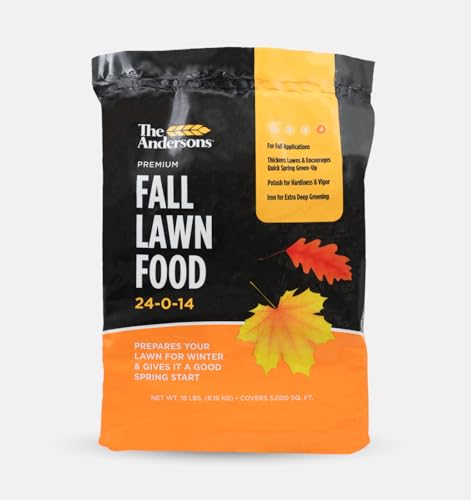
A three-speed nitrogen release plus iron gives you a visible dark green within a week or two and continued feeding for months — something the GreenView cannot match on color.
The Andersons keeps potassium at a solid 14 while pushing nitrogen to 24 for a more aggressive green-up, then balances it with a three-speed release system (quick, intermediate, and slow-release nitrogen). The inclusion of iron is the secret weapon here: buyers report that the grass “really popped with a deep dark green” and that new grass started sprouting even during a drought period. One reviewer posted pictures taken 7 weeks after a September application showing a dramatically thicker lawn.
At 18 pounds covering 5,000 square feet, this is a mid-size bag that is easy to carry and store. Compared to the 10-pound Scotts bag (which covers 4,000 sq. ft.), The Andersons weighs 18 pounds, giving it better value per square foot for mid-size lawns. The 24-0-14 ratio means it has more nitrogen than a strict winterizer, so if you are applying very late (after Thanksgiving) in a cold climate, the quick-release portion of the nitrogen could push growth that frost might damage. But for early-to-mid fall application, the greening effect is tough to top.
The Greening Advantage
- Three nitrogen sources for fast color plus extended feeding.
- Iron gives a deep, dark green that stands out in the neighborhood.
- Light 18-pound bag is easy to haul and store.
When to Be Careful
- Higher nitrogen (24) than a classic winterizer — apply early fall, not late November.
- Coverage is 5,000 sq. ft., so large lawns will need multiple bags.
Best suited for: the homeowner who wants both fall greening and winter root feeding in a single application, especially in mild or transitional climate zones.
Consider the trade-off: if you are north of Zone 5 and apply after early November, the nitrogen surge might hurt more than help — time your application to early September.
5. Almighty 20-0-10 Lawn Fertilizer (25 lbs.) – Professional Slow-Release Nitrogen Formula with NuTrace Micronutrients
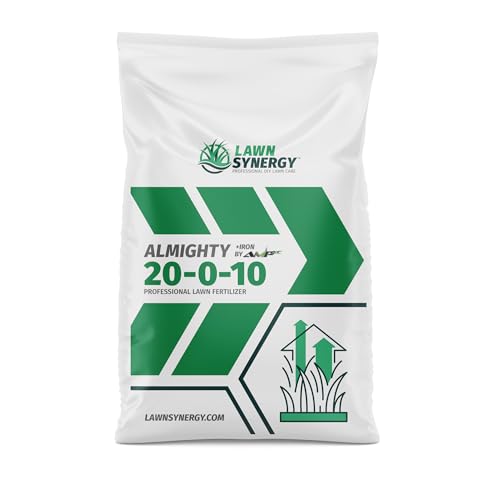
A 20-0-10 ratio plus NuTrace micronutrients (tiny amounts of iron, manganese, and zinc) supports chlorophyll production and disease resistance — a feature most winterizers skip.
Almighty brings a pro-style formula that lands squarely between the high-nitrogen Andersons and the high-potassium Jonathan Green. what separates it is the NuTrace micronutrient package — iron, manganese, and zinc that support chlorophyll production and disease resistance. For lawns like St. Augustine or Tall Fescue that tend to yellow in fall, this micro-boost can keep color deeper. One reviewer specifically noted that their St. Augustine looked great after applying, and another reported that dying Tall Fescue turned green within two weeks.
The 25-pound bag covers 6,250 square feet, which is a nice middle ground — larger than the typical 4,000 to 5,000-square-foot bags like the Scotts WinterGuard, but not as massive as the 48-pound GreenView. At 25 pounds versus the 10-pound Scotts bag, so you get more product per dollar, but the coverage is still manageable for a mid-size lawn. The slow-release nitrogen promises greening within days and steady feeding up to 8 weeks without the burn risk of quick-release. A minority of buyers were not satisfied, so mixing a pre-application water test on a small patch is wise if you have a delicate grass type.
The micronutrient edge: The NuTrace inclusion is genuinely useful for lawns that show iron deficiency (yellowing between veins). Most winterizers skip micros entirely.
The honest catch: Only 73 ratings so far (4.5 stars) — the sample size is smaller than heavy hitters like Scotts (13,840 ratings) or Jonathan Green (327). It is newer on the market, so long-term winter survival data is thin.
Reach for this if: you have finicky warm-season grass (St. Augustine, Zoysia) or a lawn that turns pale in late fall and you want the extra micronutrient support.
Look elsewhere if: you prefer a brand with thousands of reviews and a proven multi-year track record in cold climates.
6. Green Thumb GT58105 Winterizer Lawn Fertilizer, 32-0-10 Formula, 5,000-Sq. Ft. Coverage
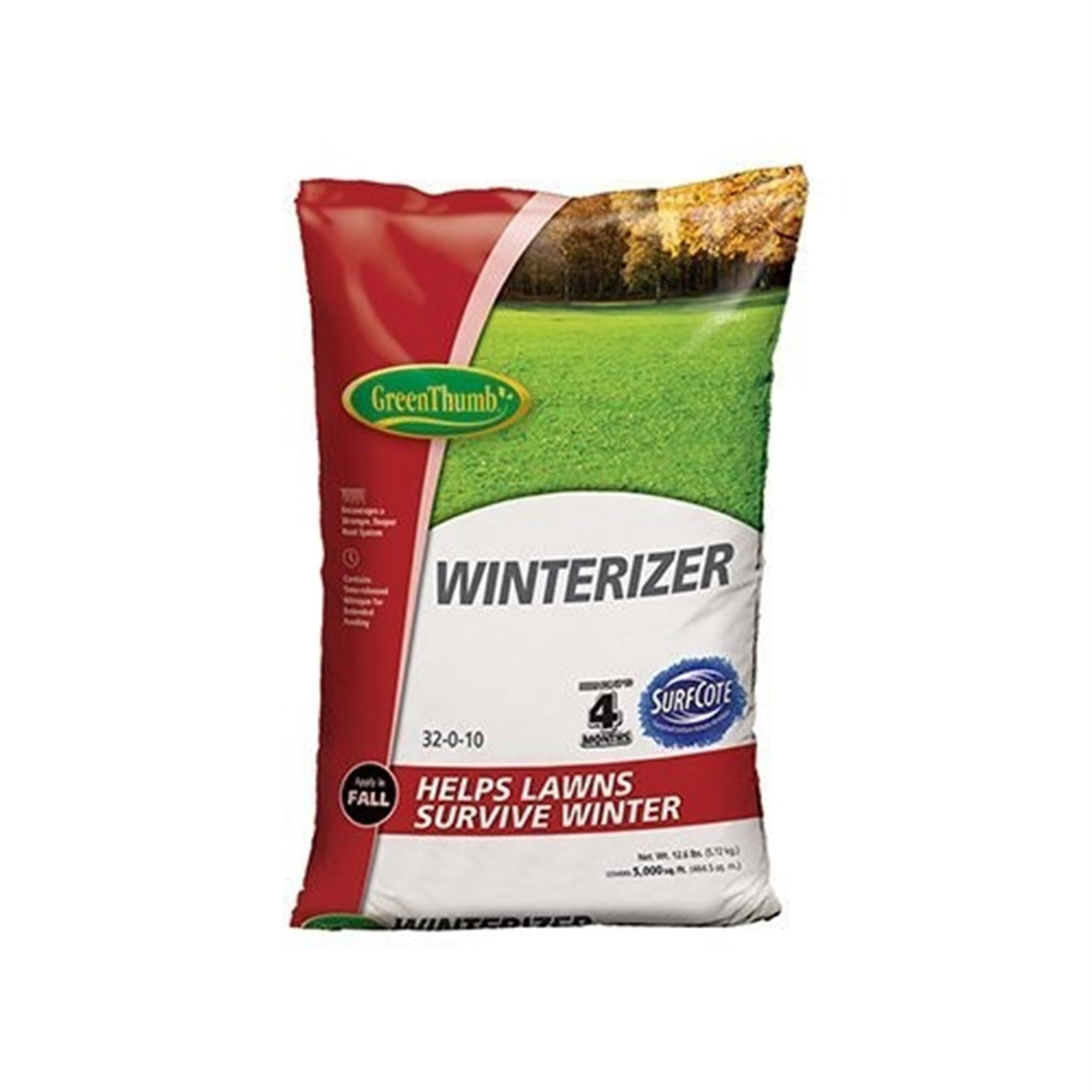
50% of the nitrogen is controlled-release, metering out slowly over up to 16 weeks — while the GreenView and Almighty offer up to 8 weeks.
Green Thumb stands alone with a 32-0-10 ratio — the highest nitrogen number in this lineup — but the controlled-release technology means the grass only accesses what it can use. The 2% iron gives a deep greening shot, and the 12.6-pound bag is light enough to carry with one hand. One buyer followed a specific watering regimen: apply October 1, water five minutes daily for four weeks, then blow out the irrigation system, and reported excellent results the following April.
At 12.6 pounds versus the 48-pound GreenView , this is the clear choice if you have a small lawn (up to 5,000 sq. ft.) and want the longest feeding duration without storing a heavy bag. The 32-0-10 ratio is aggressive on paper, but the controlled-release technology reduces the risk of a late-fall growth surge. Some owners mention that the effectiveness is hard to verify until spring, which is true of any winterizer — you are betting on root health, not instant cosmetic results.
The Long-Feed Advantage
- Up to 16 weeks of continuous feeding — longest in this group.
- 50% controlled-release nitrogen prevents burn and surge growth.
- Compact 12.6-pound bag is ideal for small lawns and easy storage.
The Real Trade-Off
- 32 nitrogen means it is more nitrogen-heavy than a pure winterizer — apply at the right time.
- Only 136 ratings (4.4 stars), so the long-term reliability sample is smaller than big brands.
Best for: small lawns where you want to apply once in early fall and not think about fertilizing again until spring. The 16-week window covers September through December.
Not the pick for: large lawns (over 5,000 sq. ft.) or anyone who wants a traditional low-nitrogen winterizer. This is a feeding approach, not a pure root-builder.
Understanding the Specs
NPK Ratio — What Those Three Numbers Actually Mean
The three digits on every fertilizer bag (for example, 22-0-10) stand for nitrogen-phosphorus-potassium. For fall feeding, you want the third number (potassium) to be relatively high — ideally 10 or above — because potassium helps grass roots store energy and resist frost damage. Phosphorus (the middle number) is often zero in modern formulas because many soils already have enough of it, and excess phosphorus can run off into waterways. A fall-specific winterizer will always show a strong last number: 20 in the Jonathan Green 10-0-20, 14 in The Andersons 24-0-14, or 10 in the GreenView 22-0-10.
Slow-Release Nitrogen — Why It Matters in Cold Weather
Nitrogen can be quick-release (water-soluble, acts in days) or slow-release (coated or controlled, breaks down over weeks or months). In fall, you want at least some slow-release nitrogen so the grass keeps getting fed as soil temperatures drop and microbial activity slows. A bag that is 100% quick-release could push a surge of tender leaf growth right before a frost, which can kill the tips and leave your lawn looking brown in December. Look for phrases like “controlled-release nitrogen” or “slow-release nitrogen” in the description — the Green Thumb and The Andersons both use blends that feed for weeks rather than days.
FAQ
When should I apply fall fertilizer for the best results?
Can I use a regular spring/summer fertilizer in fall?
How much fall fertilizer do I need for my lawn?
Will fall fertilizer make my grass grow and need mowing in winter?
What does 32-0-10 mean on the Green Thumb bag?
Is more potassium always better for winter survival?
How long does a fall fertilizer application last?
Can I apply fall fertilizer to a wet or dry lawn?
What grass types benefit most from a fall fertilizer?
Is it safe to use fall fertilizer near a lake or stream?
Final Thoughts: The Verdict
If you want one dependable pick, the fall fertilizer for lawn winner is the GreenView Fall Lawn Food because it balances a proven winterizer NPK ratio (22-0-10) with massive 15,000-square-foot coverage and 8 weeks of slow-release feeding — one bag handles the whole job for most homeowners. If you want the highest potassium for extreme winter root protection, grab the Jonathan Green Winter Survival. And for a small lawn where easy handling and a proven track record matter most, the Scotts WinterGuard is a reliable fallback that thousands of buyers already trust.
How We Picked
We do not accept paid placement. Every pick is matched to a real buyer and a real use-case; we do not hands-on test units.
Sources & Methodology
Specifications: manufacturer listings and product documentation. Review insights: verified customer reviews, as of July 2026. Pricing: not shown on this page (it changes often); check the current price via the retailer link.
As an Amazon Associate, Lawn Gear Lab earns from qualifying purchases. This does not affect which products we feature.