
Specs are compiled from manufacturer listings and verified buyer reviews and can change over time — please confirm the key details on the product page before buying.
If your African violets are looking a bit sad, the soil mix you choose is likely the reason. These indoor beauties need a very specific kind of potting medium – one that is light, fluffy, and drains quickly, unlike standard potting soil which can suffocate their delicate roots and cause rot. This guide breaks down the top specialized mixes, so you can pick the one that gets your violets thriving again.
I’m Rikta — the founder and writer behind Lawn Gear Lab. This guide is built by comparing the manufacturers’ published specifications and the patterns across verified customer reviews, so you get each pick’s real strengths and trade-offs instead of marketing spin.
Whether you are reviving a plant that is been struggling or potting a new bloom, finding the right african violet soil mix is the single most important step for healthy roots and vibrant flowers.
Our Picks at a Glance

How To Choose The Best African Violet Soil Mix
Picking the right soil for African violets depends on a few key traits that affect how the roots breathe and take in water. The wrong mix – usually a dense, all-purpose potting soil – will hold too much water and cause the roots to rot. Here is what to look for in a mix that works.
Drainage and Aeration
This is the most important quality. African violet roots are fine and sensitive; they need air pockets in the soil to thrive. A good mix includes ingredients like perlite (a lightweight volcanic glass that helps water drain away) or coarse sand to keep the soil loose. Look for mentions of “perlite” or “vermiculite” in the ingredient list, which create those crucial air spaces so the roots are not sitting in water.
Organic Ingredients and pH Balance
African violets prefer a slightly acidic environment, with a pH between about 6.0 and 6.5. Many premium mixes add organic matter like sphagnum peat moss, humus, or composted pine bark, which naturally helps maintain that correct acidity. You might also see “garden lime” added, which balances the pH, or “yucca extract” which helps the soil absorb water evenly without getting waterlogged.
Bag Size and How It Matches Your Pots
The bag size matters more than you might think. A mix can be a great buy on paper, but if it is too much or too little, it is not the right fit. Pay attention to the “quart” or “ounce” volume. For example, a 2-quart bag is usually enough to repot one or two standard-sized violets, while a 4-quart bag can handle three or more. If you have a lot of plants, a larger bag saves you money per pot, but if you only have one plant, a smaller bag prevents waste.
Quick Comparison
| Model | Best For | Volume | Key Ingredients | Unit Count | Amazon |
|---|---|---|---|---|---|
| Leaves and Soul Professional Mix★ Best Overall | Versatile Indoor Use | 2.2 Quarts | Peat Moss, Coco Coir, Perlite, Dolomite | — | Amazon |
| Espoma Organic Potting MixAlso Great | Overall Revival & Growth | 4 Quarts | Sphagnum Peat Moss, Humus, Perlite, Yucca Extract | 128.0 Ounce | Amazon |
| Perfect Plants African Violet Potting Soil | Vibrant Blooms | 2 Quarts | Pine Bark Compost, Perlite, Peat Moss, Garden Lime | — | Amazon |
| Baby Violets Peat Moss & Perlite | Budget-Friendly Starter Mix | 2 Quarts | 50% Peat Moss, 50% Perlite | 64.0 Ounce | Amazon |
| Josh’s Frogs Gesneriad Soil | Quick-Draining Recovery | 1 Quarts | Peat, Vermiculite, Perlite | — | Amazon |
| Omitgoter Acid Soil Mix | pH tune Growth | 4 Quarts | Peat and Bark | 128.0 Fluid Ounces | Amazon |
In‑Depth Reviews
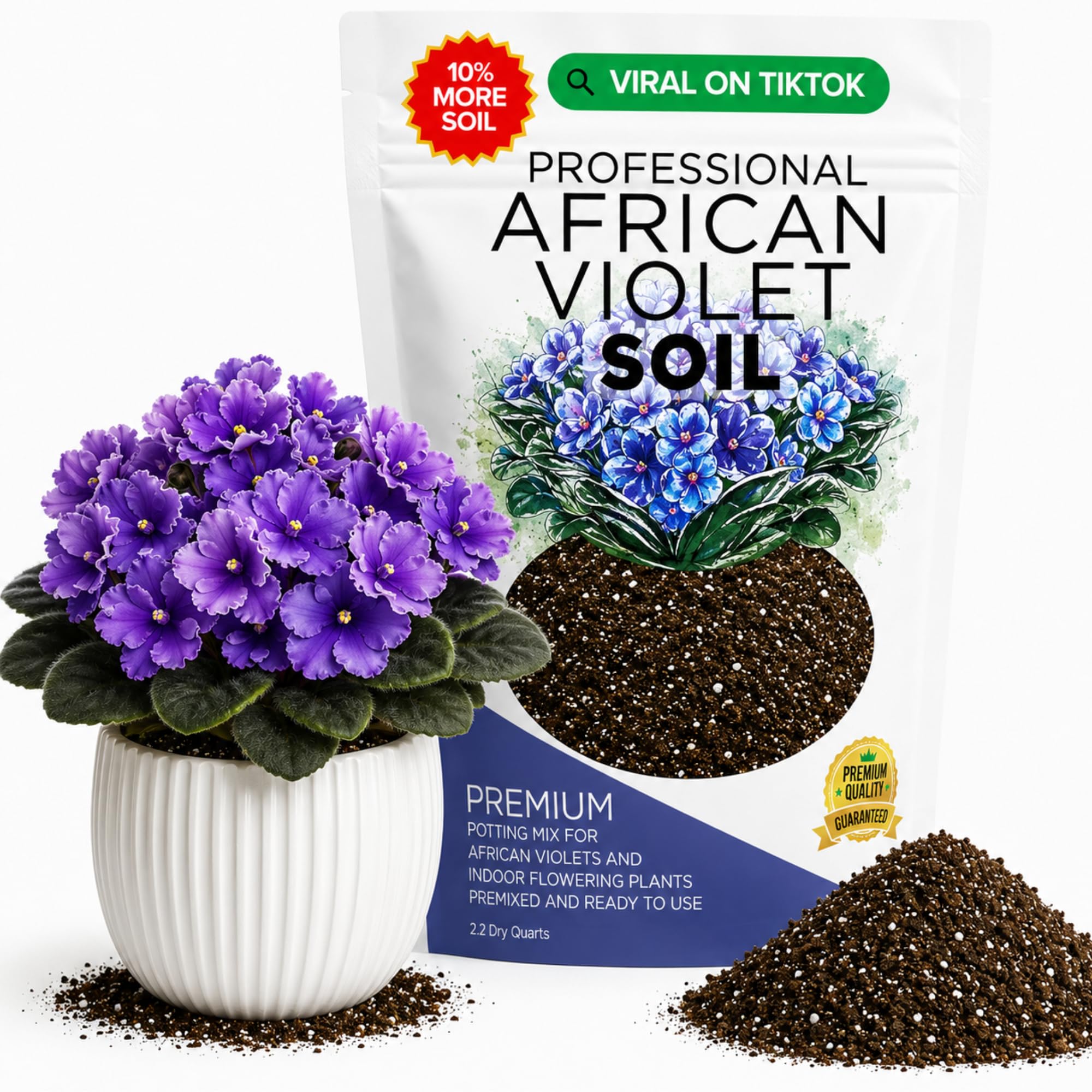
1. Professional African Violet Soil Mix Large 2.2 Quarts by Leaves and Soul
Our pick — 4.5★ from 6,000+ verified ratings; the strongest balance of quality and price.
A coco coir blend that holds moisture just right without getting soggy.
This mix uses coco coir alongside peat moss, perlite, and dolomite. Coco coir is a byproduct of coconut husks that holds water well but still lets air flow through, which is a great balance for African violets. The dolomite, a type of limestone, helps adjust the pH so it stays in the ideal range (between 6.0 and 6.5). This is a professional-grade soil that works for other indoor flowering plants too.
With a strong 4.5/5 rating from over 6,200 reviews, it is clearly a popular choice. One buyer who used it for a different plant (a bonsai) said it was “great product.” The 2.2-quart bag is made from durable, resealable material, and it is made in the USA. While it is not the cheapest per quart, the quality of the ingredients gives it a good reputation among plant owners.
The balanced choice: This is a solid pick if you want a well-known, high-rated mix that uses coco coir for moisture control. The resealable bag makes it easy to store the rest for later use.
Reach for this if: You are looking for a professional-grade mix that is ready to use and comes from a brand with over 6,000 positive reviews.
Look elsewhere if: You want a simple peat-perlite mix without any coco coir, or if you need a larger 4-quart bag.
2. Espoma Organic Natural and Organic Premium Potting Soil Mix for African Violets
A revival powerhouse that turned one neglected violet into a near-constant bloomer.
This is the mix that comes from a company with a long history in natural organics — Espoma has been at it since 1929. What makes it stand out is the ingredient list. It is a rich blend of sphagnum peat moss, humus, perlite, and yucca extract. The yucca extract is a smart touch because it helps the soil take in water evenly, so you do not get dry pockets in the pot. It is already mixed and ready to use, and it works for all indoor flowering houseplants, not just violets.
Buyers report it “revived a neglected 20+ year old African Violet” and that the plant stays “in near-constant bloom after repotting with this mix and occasional feeding.” That kind of result matches the 4.6/5 rating from over 526 reviews. The bag holds 4 quarts (128.0 ounces), which is a solid volume for several pots. At that size, it offers a lot of value compared to smaller bags.
The revival pick: If you have an old, struggling violet or simply want a reliable organic mix that encourages flowering, this is the best bet. The only real trade-off is that it is priced at the upper end of the mid-range, but the bag size balances that out.
Reach for this if: You want an organic, ready-to-use mix with a proven track record for reviving and maintaining healthy violets.
Look elsewhere if: You only need a tiny amount to repot one small plant, because a 4-quart bag is more than you need for a single violet.
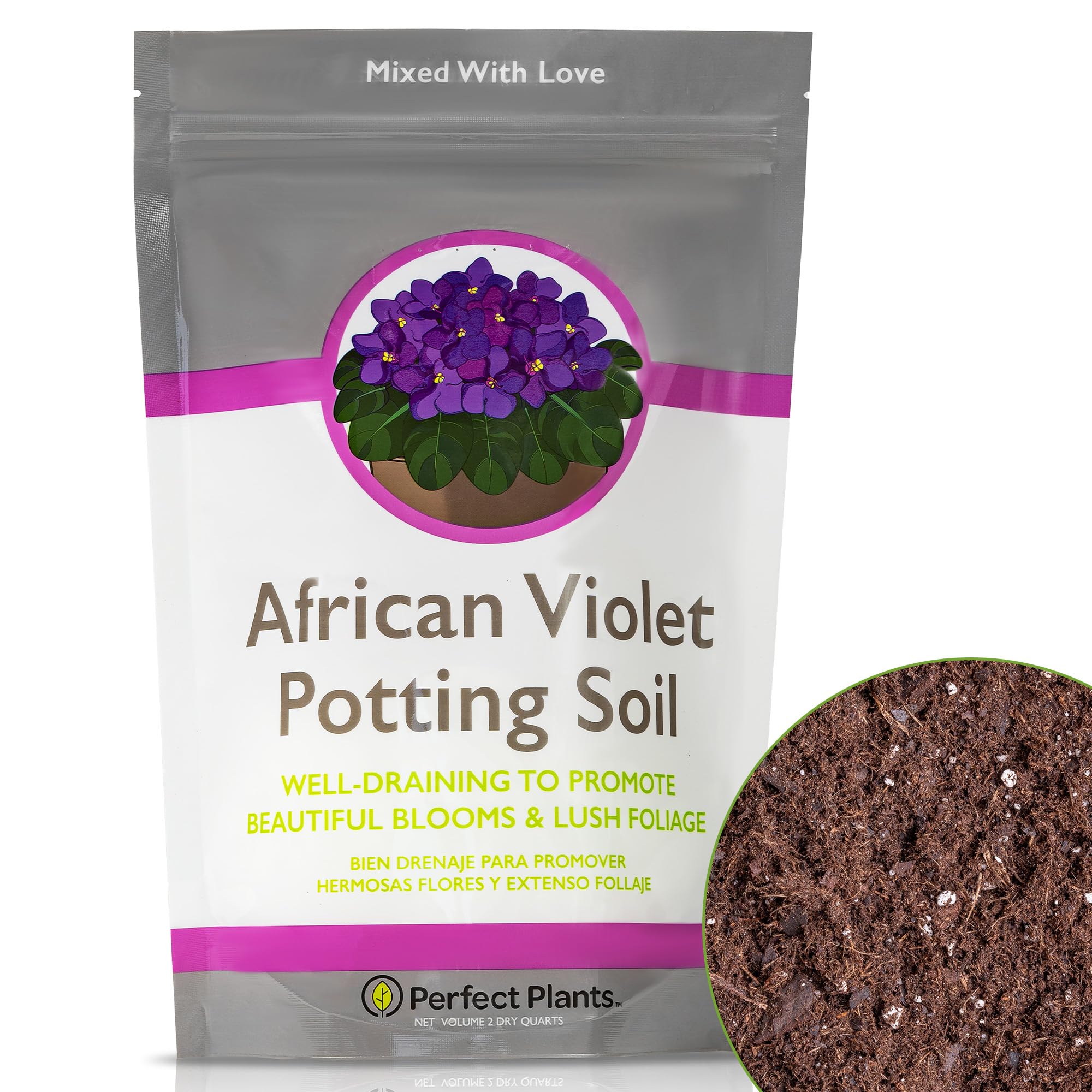
3. Perfect Plants African Violet Potting Soil 2qt.
A composted bark mix that gives your violets a nutrient-dense home for bigger blooms.
This one stands apart from the peat-heavy mixes. The main ingredient here is pine bark compost, mixed with perlite, peat moss, and garden lime. The composted bark provides a slow release of nutrients and creates a very airy, structured soil. The garden lime is added to keep the pH in the slightly acidic range that African violets need for taking in nutrients.
One reviewer noted a big difference: “The nutrients in this soil mix have made a huge difference. Its making a come back! So alive and healthy now.” The 2-quart bag is a good size for one or two plants. The resealable bag is a nice bonus for storing the leftover mix. This is a premium option, and it shows in the all-natural ingredient list with no chemical fertilizers.
Why it works for blooms
- Pine bark compost delivers a steady supply of nutrients that boost flower color.
- Garden lime keeps the pH stable, so your plant can actually use those nutrients.
- Very light and well-draining, which is crucial for delicate violet roots.
The size trade-off
- At 2 quarts, it is a smaller bag than some others in this list, so it may not be the most economical if you have many plants.
- Some owners mention it is a basic mix that works but does not stand out from other brands.
Reach for this if: You want an all-natural mix that emphasizes nutrient-rich, composted ingredients for better flowering.
A word of caution: If you need to repot three or more violets, you will run out of soil quickly with the 2-quart bag.
4. Baby Violets African Violet Plant Potting Soil Mix (½ Gallon / 2 quarts)

A bare-bones, two-ingredient mix that gives you total control over feeding.
This mix is as simple as it gets: 50% peat moss and 50% perlite. There are no added fertilizers or extra components like yucca or humus. That makes it a very light, airy soil that drains extremely well. Since there are no fertilizers in it, you can add your own plant food exactly when and how you want, which some growers prefer. The bag is a custom hand blend made in Maryland, USA.
One buyer mentioned it was a “good value small bag; revived grocery clearance African Violet; plant now thriving.” This matches the 4.5/5 rating. The 2-quart bag (64.0 ounces) is small, but the seller gives a helpful guide: it can fill about 6 four-inch pots. However, other buyers were surprised at the small size, calling it “pretty small.” This is a budget-friendly entry-level mix, not a large-value bag.
Why you might want this
- Simple two-ingredient formula (peat moss and perlite) is lightweight and drains fast.
- No added fertilizer gives you complete control over the feeding schedule.
- Small bag size is perfect for repotting one or two plants without waste.
What to expect
- The bag is much smaller than it looks, which can be surprising if you are used to larger bags.
- It is not a “premium” blend with organic composts or extra nutrients, so you need to fertilize regularly.
Reach for this if: You are a hands-on grower who wants a simple, unamended soil base and you like to control your own fertilizer mix.
Look elsewhere if: You want a large bag for multiple plants, or you prefer an all-in-one mix that feeds your plant right out of the bag.
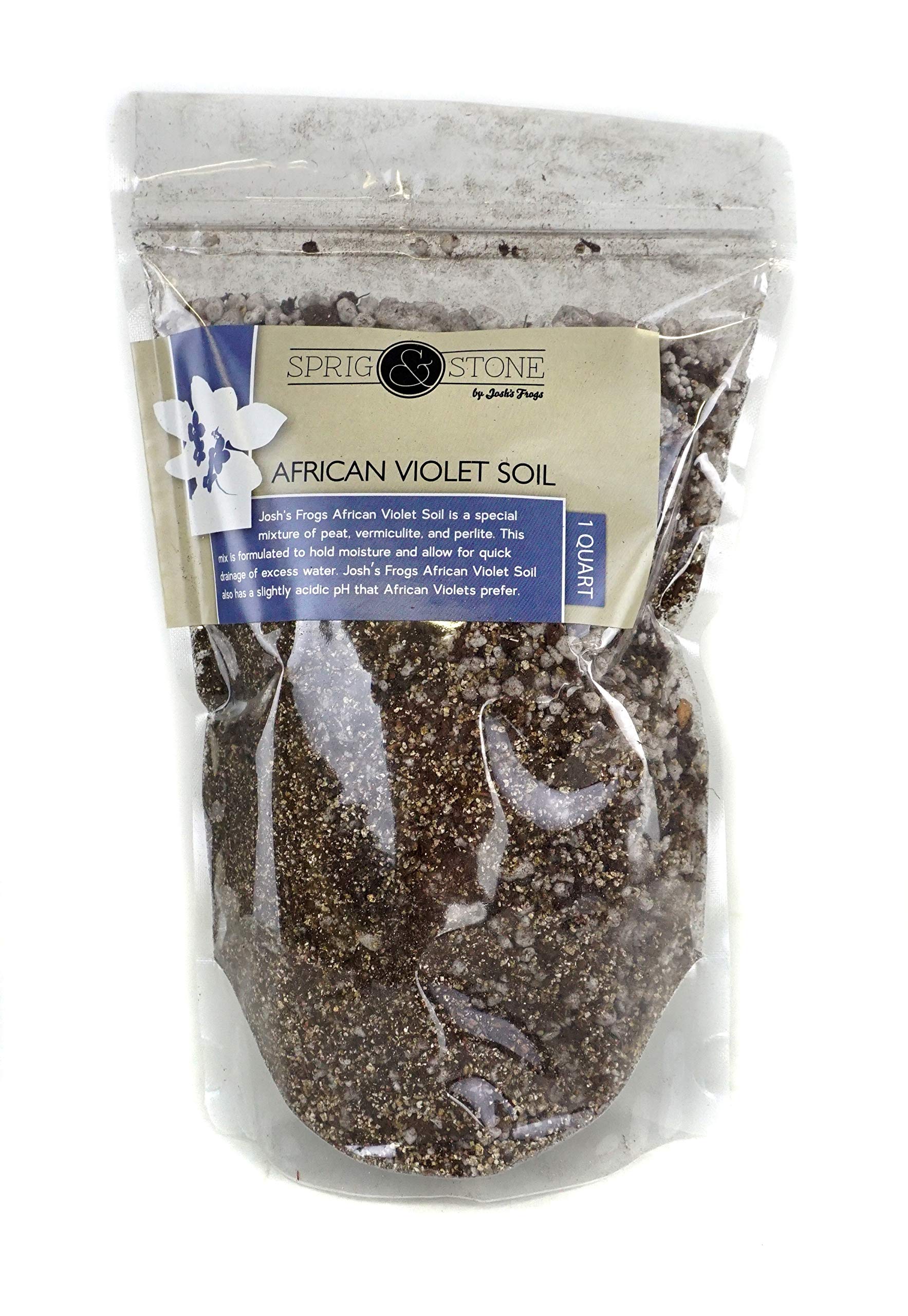
5. Josh’s Frogs African Violet and Gesneriad Soil (1 Quart)
A soilless mix that perked up one buyer’s violet in just two days.
This mix is a specific blend of peat, vermiculite, and perlite. Notably, it is a soilless mixture, which means it is very lightweight and drains extremely fast. The vermiculite helps absorb water and hold onto it, while the perlite and peat ensure good aeration. It is designed not just for African violets, but also for other gesneriads like Columnea, Episcia, and Streptocarpus, making it a versatile choice if you have a variety of these plants.
One buyer shared a very specific success story: “When I repotted my African violet with this soil, 2 days later my plant just ‘perked’ up!” Others noted the quality, saying it is “not cheap but very high quality.” The main thing to know is that this is a 1-quart bag. A reviewer even pointed out that at 1 quart, it is a small amount compared to an 8-quart bag they found elsewhere. However, it is enough to repot one to two plants, and the buyer noted it would let them repot their plant 3 or 4 more times as it grows.
The small-batch quality pick: If you have a single violet that needs a fresh start, this soilless mix is top quality. The volume is small, but that suits a grower with just one or two plants.
Reach for this if: You want a high-quality, soilless mix that drains quickly and is ideal for recovering a single struggling plant.
Look elsewhere if: You are repotting several plants at once, or you need a budget-friendly option, as this is one of the smallest bags for the price.
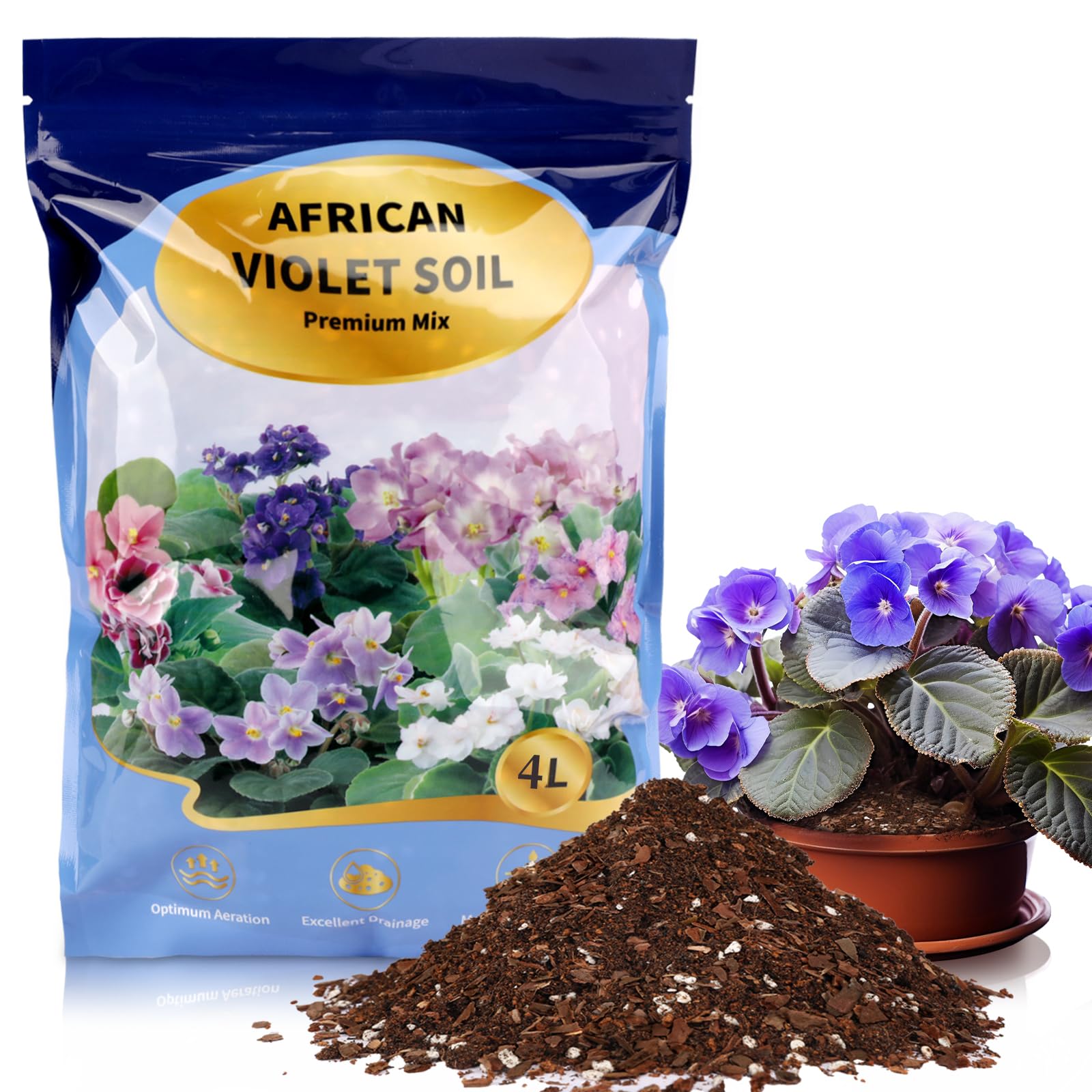
6. Omitgoter African Violet Potting Soil Mix 4qt, Pre-Mixed Acid Soil
A mix with a locked-in pH of 6.0 to 6.5 for reliable nutrient uptake.
This mix is specifically formulated with a pH between 6.0 and 6.5, which is the balance for African violets. It is enriched with organic materials like peat and bark to help with that acidity and to provide essential nutrients. The brand says it helps drainage and moisture retention, which is the balance every violet grower is looking for.
While the 4-quart bag (128.0 fluid ounces) is a standard size, some buyers were not happy with the amount. One said “it is a very small amount of soil for price,” and another simply said “too small.” Despite this, the 4.3/5 rating from 448 reviews shows it works well for its intended purpose. Another buyer noted that their “Pothos loves it,” but they could not fill even two five-inch pots with it, which suggests it compacts down a lot in the bag.
What it does well
- Has a guaranteed pH of 6.0 to 6.5, removing the guesswork from soil acidity.
- Enriched with organic peat and bark to support healthy root growth.
- The 4-quart bag is good if you are repotting 2 to 3 medium-sized violets.
The main drawback
- Multiple reviewers felt the bag was smaller than expected and not the best value for the volume.
- It is a specific pH mix, which might not be necessary if your tap water already provides the right conditions.
Reach for this if: You want a mix with a guaranteed acidic pH to ensure your violet can absorb nutrients properly.
A word of caution: The 4-quart bag is reported to be very compact, so do not expect it to fill as many pots as a typical 4-quart bag would.
Understanding the Specs
Perlite vs. Vermiculite vs. Coco Coir
These are the three main lightening agents you will see. Perlite is a white, popcorn-like volcanic glass that does not hold much water itself — its job is to create air pockets so the soil drains and the roots can breathe. Vermiculite looks like small, flaky, golden-brown particles; it also adds air but soaks up water like a sponge, holding it for the roots. Coco coir is a fibrous material from coconut husks that holds water well but still allows airflow. A mix with perlite is best for fast drainage; vermiculite is good for moisture retention; coco coir sits in the middle.
pH Level and Organic Matter
African violets need a slightly acidic soil, with a pH ideally between 6.0 and 6.5, to take in nutrients like nitrogen and phosphorus. A mix that lists “sphagnum peat moss” or “pine bark” as a main ingredient is naturally acidic. Some mixes add “garden lime” to soften that acidity if it is too strong. “Yucca extract” is a natural wetting agent that helps the peat or coir absorb water more evenly, preventing dry pockets. “Humus” is just decomposed organic matter that feeds the soil microbes and adds a gentle nutrient source over time. The best mix for you depends on your water’s pH and your feeding routine.
FAQ
Can I use regular potting soil for African violets?
How often should I repot my African violet with fresh soil?
Is a soilless mix better for African violets?
How do I know if the pH of my soil mix is right?
How much soil do I need for one African violet?
What is perlite and why is it in the soil?
Should I add fertilizer to an African violet soil mix?
Can I make my own African violet soil mix?
Why is my African violet soil turning hard and crusty on top?
Final Thoughts: The Verdict
For most people, the african violet soil mix winner is the Leaves and Soul Professional African Violet Soil Mix because it combines a coco coir blend that holds moisture without getting soggy with a strong reputation from thousands of positive reviews. If you prefer an organic mix with a proven revival track record, the Espoma Organic Potting Mix is an excellent choice. For composted bark to boost blooms, grab the Perfect Plants African Violet Soil. And for a simple, budget-friendly option that gives you total control over feeding, the standout is the Baby Violets Peat & Perlite mix.
How We Picked
We do not accept paid placement. Every pick is matched to a real buyer and a real use-case; we do not hands-on test units.
Sources & Methodology
Specifications: manufacturer listings and product documentation. Review insights: verified customer reviews, as of July 2026. Pricing: not shown on this page (it changes often); check the current price via the retailer link.
As an Amazon Associate, Lawn Gear Lab earns from qualifying purchases. This does not affect which products we feature.