
Specs are compiled from manufacturer listings and verified buyer reviews and can change over time — please confirm the key details on the product page before buying.
If you have ever watched a potted plant slowly turn yellow and droop, the problem was likely the soil, not your watering schedule. Regular garden soil gets heavy, packs tight, and drowns the roots inside a container — so you need a mix designed to stay loose, drain quickly, and hold just the right amount of moisture for a confined space. This guide is built around the differences that actually matter: which mixes feed your plants from the bag, which stay light enough for a hanging basket, and which ones save you from buying fertilizer for months.
I’m Rikta — the founder and writer behind Lawn Gear Lab. This guide is built by comparing the manufacturers’ published specifications and the patterns across verified customer reviews, so you get each pick’s real strengths and trade-offs instead of marketing spin.
Whether you are potting up a single tomato plant or filling a row of window boxes, the right bag makes the difference between a season of thriving growth and one of constant struggle — and this article is your straightforward look at the container gardening potting mix options worth your money.
Our Picks at a Glance

How To Choose The Best Container Gardening Potting Mix
A potting mix for containers is different from garden soil because it needs to stay aerated (full of tiny air pockets) even after repeated watering. Garden soil turns into mud in a pot, but a good mix stays fluffy for months.
Texture and Drainage
Look for a blend that feels light in the bag. Ingredients like perlite (those small white bits) and coarse peat moss keep water from pooling around roots. If the mix feels dense or heavy, it will likely hold too much water and suffocate the plant.
Built-in Fertilizer vs. Bare Mix
Some bagged mixes contain slow-release plant food that feeds your plants for a set period (often up to 6 months). Others are just a plain growing medium with no added nutrients, meaning you will need to add your own fertilizer right away or after the first few weeks.
Organic vs. Conventional
Organic mixes use ingredients like compost, earthworm castings, and kelp meal instead of synthetic chemicals. They tend to be more expensive but can improve the soil structure over time. Conventional mixes often include synthetic fertilizers that give a fast, predictable growth boost.
Bag Size and Cost Per Pot
Bag sizes are listed in quarts or cubic feet. A 2-cubic-foot bag is heavy (around 40 pounds) but will fill a lot of pots. Smaller 8-quart bags are easier to handle but cost more per pot. Think about how many containers you need to fill before you choose the bag size.
Quick Comparison
| Model | Best For | Volume | Weight | Fertilizer | Amazon |
|---|---|---|---|---|---|
| Miracle-Gro Moisture Control (2 cu ft)★ Best Overall | Best Overall | 2 cu ft | 40.51 lbs | Feeds ~6 months | Amazon |
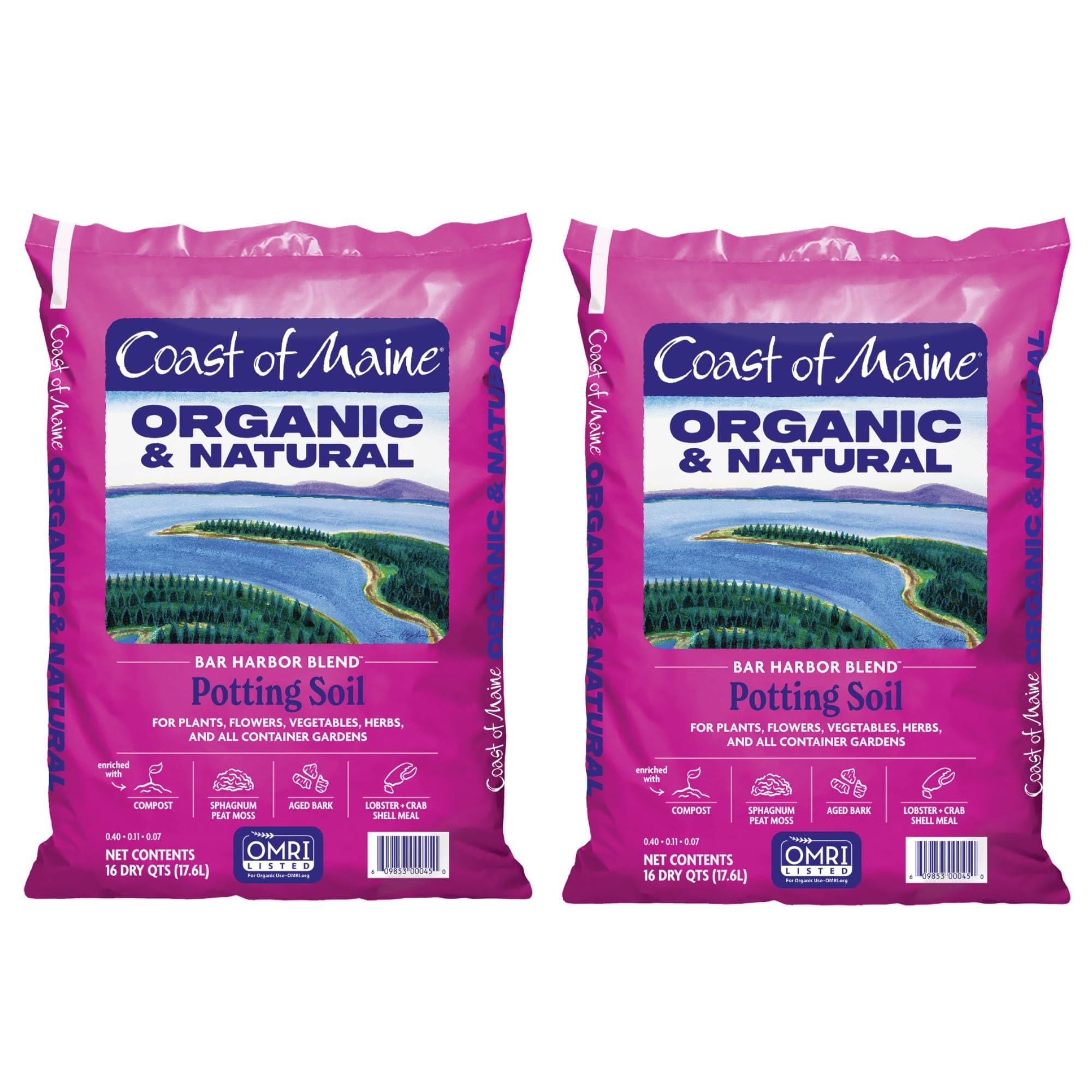
| Coast of Maine Bar Harbor (16 QT)Premium Organic | Premium Organic | 16 QT | 14 lbs | Slow-release organic | Amazon |
| Miracle-Gro Standard (1 cu ft, 2-pack) | Versatile All-Purpose | 1 cu ft (x2) | — | Feeds ~6 months | Amazon |
| Espoma Organic (8 QT, 2-pack) | Indoor & Herb Containers | 8 QT (x2) | — | Organic (feather/kelp meal) | Amazon |
| Midwest Hearth Premium (8 QT) | Entry-Level Ready Mix | 8 QT | 1.25 kg | None (bare mix) | Amazon |
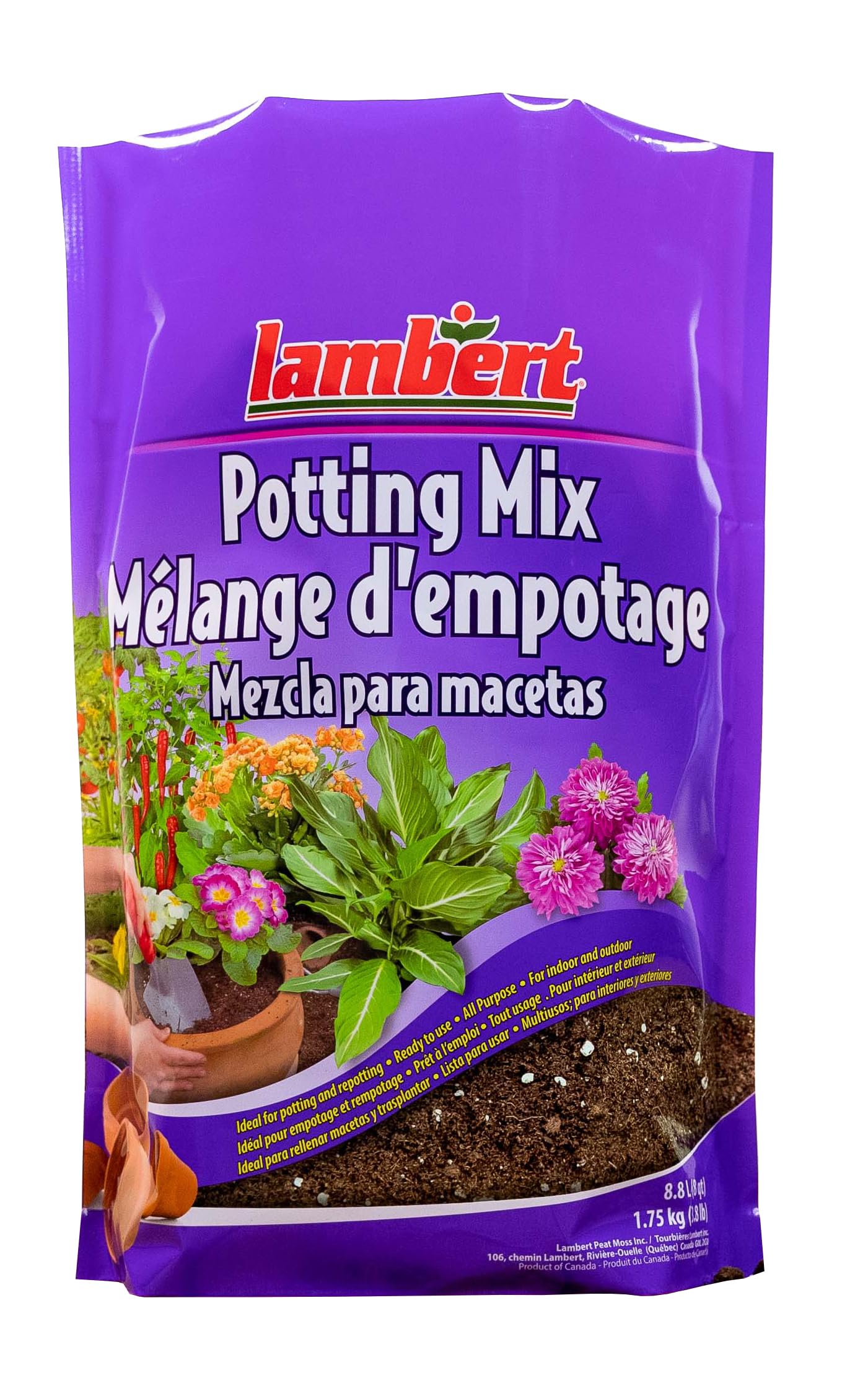
| Lambert All-Purpose (8 QT) | Budget Starter | 8 QT | 1.75 kg | None (bare mix) | Amazon |
In‑Depth Reviews
1. Miracle-Gro Moisture Control Potting Mix (2 cu ft)
Our pick — over 4.5★ from 950+ verified ratings; the strongest balance of quality and price.
The heavy-lifting bag that feeds your plants for two full seasons.
This is the biggest and heaviest bag in the lineup at 40.51 pounds and 2 cubic feet of volume, enough to fill two 14-inch containers. The AquaCoir formula — a mix of sphagnum peat moss, coir, and a wetting agent — absorbs water, which means you buy yourself a buffer if you skip a day of watering during a heat wave.
The real win here is the built-in fertilizer that feeds container plants for up to 6 months. Buyers report that this mix “has helped me become a better gardener” after a decade of use, noting it is consistently free of bugs and small enough debris to start seeds. The nutrient charge is heavy enough that you will not need to add any fertilizer until late summer.
In the Moisture Control version, the bag explicitly protects against both over- and under-watering. That makes it more forgiving for beginners than the standard Miracle-Gro Potting Mix, which does not have the same AquaCoir moisture buffer.
What makes it a top pick
- Feeds plants for up to 6 months out of the bag
- AquaCoir formula absorbs water
- Large 2 cu ft bag fills two 14-inch containers
- Proven track record — 4.6/5 stars from 996 ratings
The honest trade-offs
- Very heavy at 40.51 lbs — awkward to carry from a doorstep
- Not organic; contains synthetic fertilizer
- Can be cheaper at big-box stores in spring if you have a car
Reach for this if: You want the most performance per dollar — one bag feeds your pots for half a year and forgives occasional missed waterings.
Look elsewhere if: You only need a small batch for two or three houseplants; a 40-lb bag is overkill.
2. Coast of Maine Organic & Natural Bar Harbor Blend (16 QT)
The compost-rich blend that smells like a real garden, not a bag.
At 16 quarts and 14 pounds, this is a mid-size bag with serious organic ingredients: sphagnum peat moss, compost, perlite, lobster and crab shell meal, and kelp meal. Owners mention the soil is a noticeably darker color than standard mixes — a direct result of the high compost content — and that it “does not have a funky smell” like some organic blends. The slow-release nitrogen feeds plants over time without the synthetic jolt of a chemical fertilizer.
Reviewers report that this mix “is perfect” because it already has enough nutrients to feed vegetables for a while, and one reviewer noted their tomatoes “never looked so good.” The perlite is evenly distributed so the mix drains well while the compost helps it retain just enough moisture for the roots. Unlike the larger Miracle-Gro bag, this one is sized for a few good-sized pots and is light enough to carry from the delivery drop to your balcony.
Versus the Espoma Organic below, this Coast of Maine bag is larger (16 QT vs 8 QT per pack) and includes compost and shellfish meal for deeper soil biology.
Head-to-head winner on ingredients: the lobster and crab shell meal and kelp meal set this apart from any conventional bag, giving your container plants micronutrients they would only get from a top-dressing in a standard mix.
Grab this bag if: You are growing vegetables, herbs, or flowers in pots and care about organic ingredients. The compost in the mix feeds the soil itself, not just the plant.
skip it if: You need a massive bag for a big project — 16 quarts goes fast when filling deep planters.
3. Miracle-Gro Standard Potting Mix (1 cu ft, 2-pack)

Two manageable bags that each fill a pair of 12-inch pots.
This is the standard Miracle-Gro Potting Mix (not the Moisture Control version) sold as two 1-cubic-foot bags instead of one massive 2-cubic-foot bag. Each bag fills two 12-inch containers, so it is easier to split between projects and much easier to carry than a 40-pound single bag. It feeds plants for up to 6 months, the same claim as the Moisture Control version.
One buyer mentioned it is “reliable, easy to use, and consistently helps my plants thrive,” and noted that while the quality can vary slightly from bag to bag, the performance is still solid. The mix works for flowers, vegetables, shrubs, annuals, and perennials — the same broad use as the Moisture Control version. The trade-off is that this mix lacks the AquaCoir moisture buffer, so you need to be more precise with watering.
Versus the Moisture Control bag, this 2-pack gives you the same total volume (2 cubic feet) but in two lighter bags and without the water-absorbing ingredients.
Why it works
- Two separate bags — easier to lift and store than one giant sack
- Each bag fills two 12-inch containers
- Feeds plants for up to 6 months out of the bag
- Proven brand with 4.6 stars from 947 ratings
The catch
- No moisture-control formula, unlike the AquaCoir version
- Not organic
- Bag-to-bag consistency can vary slightly, per reviewers
Best for: Anyone who wants the convenience of two medium bags for splitting between projects or sharing with a neighbor.
Not ideal if: You tend to over- or under-water — grab the Moisture Control bag instead.
4. Espoma Organic Potting Soil Mix (8 QT, Pack of 2)

A rich organic blend packed with earthworm castings and kelp meal.
Espoma is a well-known name in organic gardening, and this potting soil shines for indoor containers and small herb gardens. It contains a blend of sphagnum peat moss, humus, perlite, and a custom mix of organic goodies: earthworm castings, alfalfa meal, kelp meal, and feather meal. It also includes Myco-Tone — a blend of endo and ecto mycorrhizae, which are beneficial fungi that partner with plant roots to help them absorb water and nutrients more effectively.
One owner reported their African violet “responded very well after being transplanted” and is “growing very quickly.” Another reviewer reported that “the plants took to it immediately and are growing great.” A few buyers did say the mix arrives quite dry, so it needs thorough watering to rehydrate before the roots can drink. The bag sizes are compact (8 quarts each), making this a great choice for repotting a few houseplants without storing a giant bag in your garage.
Versus the Coast of Maine pick above, this Espoma mix has a smaller total volume (16 QT total in two bags) and relies on Myco-Tone rather than compost and shellfish meal for soil life — better for indoor pots where you want a clean, stable medium.
Terrific for indoor pots: the Myco-Tone fungi support root health in tight quarters, and the feather and kelp meal give a steady organic nutrient supply without any synthetic smell.
Reach for this if: You are repotting houseplants, including African violets or other sensitive indoor varieties, and want an organic mix with beneficial fungi already blended in.
pass on it if: You need to fill large outdoor planters — you would go through these small bags fast.
5. Midwest Hearth Premium Potting Soil Mix (8 QT)

The professional-grower formula scaled down for an 8-quart bag.
This mix uses the same three-ingredient base as a professional grower blend — peat moss, vermiculite, and perlite — and it is pH-controlled to work across a wide range of plant types. The vermiculite (the absorbent, flaky mineral) holds onto moisture, while the perlite keeps the structure open for drainage. One buyer described the texture as “light and fluffy, making it a dream to work with,” and noted that “drainage is phenomenal.”
At just 1.25 kilograms, this is the lightest bag in the list — the Lambert mix below weighs 1.75 kg for the same 8-quart volume. That lighter weight means it is easy to carry but also suggests it has less dense material like compost or sand. This bag contains no built-in fertilizer, so you will need to add your own plant food within the first few weeks. One reviewer growing young trees and vines reported that “my young trees and vines are thriving,” and another praised it as a great seed starter for petunias.
It matches the Lambert mix on volume but is lighter and has a pH-balanced formula, giving it a slight edge for seedlings and sensitive transplants.
What stands out
- pH-controlled for broad plant compatibility
- Light and fluffy texture — easy to work with
- Three-ingredient base (peat, vermiculite, perlite)
- Resealable bag, per reviewers
What you need to know
- No built-in fertilizer — add your own within weeks
- Small 8 QT bag is pricey per pot compared to a 2 cu ft bag
- Some reviewers found the bags on the smaller side for deep containers
Best for: Starting seeds or repotting a few indoor or outdoor container plants where you want a clean, pH-stable base.
Not ideal if: You want a mix that feeds out of the bag — this is a blank slate that needs fertilizer.
6. Lambert All-Purpose Potting Mix (8 QT)
The simple mix a nursery owner recommended for a reason.
Lambert is a peat moss company, and this mix is exactly what you would expect: mostly peat and perlite, clean, consistent, and free of cheap fillers. One buyer explained that “a friend of ours uses Lambert in his nursery and told us to look for their retail potting mix,” and upon opening the bag they “could see the difference immediately.” The texture is light and drains well while still holding enough moisture for healthy roots.
Customers note that this mix is “clean and consistent” and that plants “respond well to it.” Another said they repotted houseplants and “when I got home, WOW! One customer observed the mix works well for microgreens but may need a quick sift for very small seeds.
At 1.75 kg, it is the heavier bag compared to the Midwest Hearth mix at 1.25 kg, likely because it holds slightly more dense peat.
Why it gets the nod
- Clean, consistent texture — no sticks or debris like many mass-market bags
- Eco-friendly product from a peat moss specialist
- Versatile — works for indoor and outdoor containers
- Earned a perfect 4.7 stars from 165 ratings
Consider this first
- No built-in fertilizer — you must feed your plants yourself
- 8 QT bag is economical for a few pots but costly for bigger projects
- Contains some larger debris that may need sifting for tiny seeds
Grab this bag if: You want a simple, clean, and reliable base mix for starting seeds or potting a few indoor plants, and you already have plant food on hand.
it’s not for you if: You expect a mix that feeds your plants for months — this is a blank canvas that needs your own fertilizer.
Understanding the Specs
Bag Size (Cubic Feet vs. Quarts)
A 2-cubic-foot bag is the industry standard for large projects — it weighs about 40 pounds and fills two 14-inch containers. Smaller bags measured in quarts (8 QT, 16 QT) are easier to carry but cost more per pot. One cubic foot equals roughly 25.7 dry quarts, so a 2 cu ft bag is about 51 quarts of mix.
Fertilizer vs. No Fertilizer
Some mixes, like the Miracle-Gro variants, come with a slow-release plant food that feeds your plants for up to 6 months. Others are “bare” mixes with nothing added. If you buy a bare mix, you will need to add your own fertilizer within the first few weeks — otherwise your plants will run out of nutrients and stall.
Perlite and Vermiculite
Perlite (white volcanic glass) is the small, lightweight white flecks you see in potting mix. It keeps the soil structure open so water drains instead of pooling. Vermiculite is a flaky mineral that looks like tiny accordions and holds onto water and nutrients, releasing them slowly to roots. A good mix has both in balance.
Organic vs. Synthetic
Organic mixes rely on natural ingredients like compost, kelp meal, and earthworm castings to feed the soil. They do not use synthetic fertilizers or chemical wetting agents. Conventional mixes use synthetic fertilizers for a fast, predictable growth boost. Organic tends to cost more but improves the soil microbiome over repeated uses.
FAQ
Can I use garden soil in a container instead of potting mix?
How many pots does a 2 cubic foot bag of mix fill?
What is the difference between potting mix and potting soil?
Do I need to add fertilizer to a potting mix that feeds for 6 months?
What does perlite do in a potting mix?
Why is my organic potting mix too dry to absorb water at first?
Can I reuse potting mix from last year’s container?
Is organic potting mix better for vegetables than synthetic?
What is the difference between the Miracle-Gro Moisture Control and the standard Miracle-Gro Potting Mix?
How long does an open bag of potting mix last before it goes bad?
Final Thoughts: The Verdict
For the majority of shoppers, the container gardening potting mix winner is the Miracle-Gro Moisture Control (2 cu ft) because 40 pounds of mix feeds your pots for 6 months and gives you a water-absorption buffer that beginners and busy gardeners both appreciate. If you want a premium organic option with rich compost and shellfish meal, grab the Coast of Maine Bar Harbor Blend. And for indoor pots or a small herb garden where a clean, fertilized base matters, the Espoma Organic 2-pack is the right fit.
How We Picked
We do not accept paid placement. Every pick is matched to a real buyer and a real use-case; we do not hands-on test units.
Sources & Methodology
Specifications: manufacturer listings and product documentation. Review insights: verified customer reviews, as of July 2026. Pricing: not shown on this page (it changes often); check the current price via the retailer link.
As an Amazon Associate, Lawn Gear Lab earns from qualifying purchases. This does not affect which products we feature.