
Specs are compiled from manufacturer listings and verified buyer reviews and can change over time — please confirm the key details on the product page before buying.
You walk out to the garden and see it — your flowers are pale, the leaves are yellowing, and the blooms are sparse. Before you dump a random fertilizer onto the soil, there is one thing you need to understand: a “balanced” fertilizer means the three big numbers on the bag (nitrogen, phosphorus, potassium) are all equal, like 10-10-10 or 20-20-20. That equal ratio feeds the whole plant evenly — strong roots, thick leaves, and bright flowers — without pushing only leaves at the expense of buds.
I’m Rikta — the founder and writer behind Lawn Gear Lab. This guide is built by comparing the manufacturers’ published specifications and the patterns across verified customer reviews, so you get each pick’s real strengths and trade-offs instead of marketing spin.
Whether you grow petunias in hanging baskets, tomatoes in raised beds, or hibiscus in tropical heat, a well-chosen balanced fertilizer for flowers makes the difference between a so-so season and a garden neighbors stop to admire.
Our Picks at a Glance

How To Choose The Best Balanced Fertilizer For Flowers
To get the best results from your flowers, you need a fertilizer that feeds them evenly without burning. The three main choices are the NPK ratio (the balance of nitrogen, phosphorus, and potassium), the physical form (powder versus granule), and if you want fast or slow feeding.
NPK Ratio: Why 10-10-10 vs 20-20-20 Matters
The three numbers stand for nitrogen (leaves and stems), phosphorus (roots and flowers), and potassium (overall health and disease resistance). A balanced ratio like 10-10-10 provides the same amount of each. A 20-20-20 is twice as concentrated, meaning you use less powder to get the same punch. For established flower beds, either works — just follow the mixing instructions closely so you do not overfeed.
Water Soluble vs Granular: Speed vs Convenience
Water-soluble powders dissolve instantly and feed the plant within hours — perfect for a quick green-up or for container plants you water regularly. Granular fertilizers need soil moisture to break down and release nutrients over weeks or months. If you want visible results this week, go soluble. If you want to sprinkle once and forget it for a month, go granular.
Extra Ingredients: Iron, Kelp, and Micronutrients
Some balanced fertilizers include extras like iron (to deepen green color and fight yellowing) or kelp extract (a natural growth stimulant). These add-ons can give a noticeable edge for flowers, especially if your soil is already decent. But for severely poor soil, a simple balanced NPK is the first step — fix the soil health separately with compost or a soil test kit.
Quick Comparison
| Model | Best For | NPK Ratio | Form | Bag Size | Amazon |
|---|---|---|---|---|---|
| Fertilome 20-20-20★ Best Overall | Fast green-up & blooms | 20-20-20 | Water Soluble Granules | 3 lb | Amazon |
| Cz Garden 10-10-10Best Value | All-purpose slow feed | 10-10-10 | Granules | 4 lb | Amazon |
| Chimpy’s 20-20-20 | Professional precision feeding | 20-20-20 | Water Soluble Powder | 16 oz | Amazon |
| Lilly Miller 10-10-10 | Long-lasting slow release | 10-10-10 | Granules | 4 lb | Amazon |
| Gardenera 10-10-10 | Lazy, twice-a-season feeding | 10-10-10 | Granules | 64 oz (2 quarts) | Amazon |
| GS Plant Foods 20-20-20 | Kelp-boosted nutrient profile | 20-20-20 | Water Soluble | 3 lb | Amazon |
| GreenView 10-10-10 | Large coverage at low cost | 10-10-10 | Granules | 33 lb | Amazon |
In‑Depth Reviews
1. Fertilome (11722) All Purpose Water Soluble Plant Food 20-20-20 (3 lb.)
Our pick — over 4.5★ from 750+ verified ratings; the strongest balance of quality and price.
The flower-saver that revived hibiscus in just twenty days of root watering.
This 20-20-20 water-soluble powder gives you the fastest visible results of any item on this list. Mix 1 to 2 teaspoons per gallon of water for a soil drench, or a lighter 1/4 to 1 teaspoon per gallon for a foliar spray (spraying the leaves). The 20-20-20 ratio is more concentrated than a 10-10-10, so a little powder goes further — the 3-pound bag is actually heavier than Chimpy’s 16-ounce bag — at 3 pounds versus 1 pound, giving you many more feedings per dollar. Buyers report it revived severely damaged hibiscus bushes in Florida after two root-watering applications within 20 days, producing many green buds.
One reviewer described seeing their drooping, unfed Hosta perk up just 2 hours after leaf feeding, and their indoor Philodendron leaves grew 5x larger. The brand targets Geraniums, Pansies, Petunias, and Impatiens specifically — exactly the flowers most home gardeners start with. The trade-off is that as a water-soluble powder, you need to mix a fresh batch each time you water; it is not a “sprinkle and forget” product.
What pulls it ahead
- Very fast leaf and bloom response — visible within hours
- Can be used as both a soil soak and a leaf spray
- Concentrated 20-20-20 means fewer scoops per feeding
The trade-off
- Requires mixing each use — no slow-release convenience
- Granules, not a fine powder; must fully dissolve before use
Grab this for: anyone with sickly or yellowing flowers who wants a fast, proven green-up — especially tropical plants like hibiscus or indoor philodendrons.
Look elsewhere if: you prefer a one-time sprinkle that feeds for weeks without any mixing.
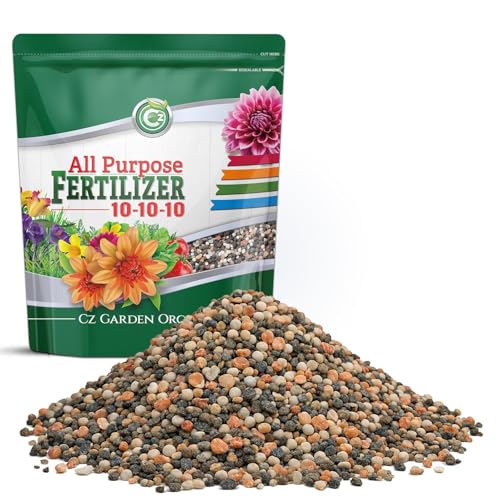
2. 10-10-10 All Purpose Fertilizer – Made in USA – 2% Iron + Micronutrients (4 lb)
A 4-pound granular feed with 2% iron that costs about the same as a single restaurant meal.
If your flowers show yellowing between the leaf veins, the Cz Garden Supply 10-10-10 adds 2% iron (a micronutrient that keeps leaves dark green) to its balanced 10-10-10 NPK ratio. This 4-pound granular bag comes in a resealable easy-pour pouch, so you do not need a separate container. It weighs the same as the Lilly Miller below (4 pounds vs 4 pounds) but adds the iron boost Lilly Miller does not mention. Owners mention it gives quick results in containers and is cost-effective for the size.
Unlike the water-soluble Fertilome above, this is a slow-release granule — you scatter it on the soil and water it in. One reviewer noted the garden looked amazing after using it, though they noted you need to reapply more often than every three months. The bag weight is 4 pounds, which is four times the weight of Chimpy’s 16-ounce bag below, giving you bulk value for beds and borders.
Why it works
- Added iron fights yellowing leaves directly
- Large 4 lb resealable pouch — easy storage
- Made in the USA with quality ingredients
The catch
- Granular feed works slower than water-soluble powders
- Only 72 ratings so far — smaller sample than established brands
Perfect for: flower beds, fruit trees, and lawns where you want even, steady feeding with an iron boost for greener foliage.
Better to skip: if you need instant results on a wilting plant — pick a water-soluble 20-20-20 instead.
3. Chimpy’s 20-20-20 Complete Water-Soluble Plant Food – 16oz Professional Grade
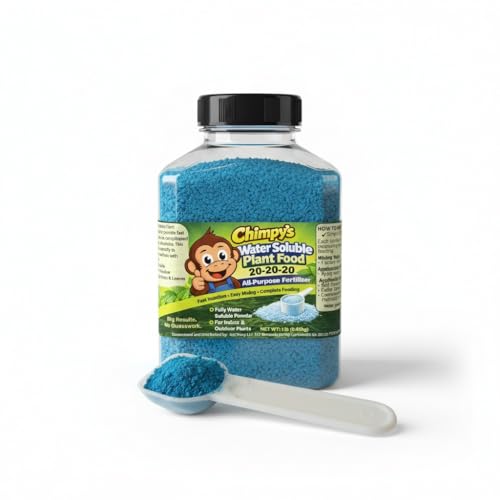
The set-and-forget scoop design leaves no guesswork for amateur mixers.
Chimpy’s 20-20-20 comes in a compact 16-ounce tub that includes a pre-calibrated measuring scoop — a small detail that matters more than you think. Each time you feed, you use the same scoop, the same ratio, and get the same results. The powder dissolves instantly without clumping, so you won’t find undissolved grit at the bottom of your watering can. One buyer specifically noted that, when properly diluted and applied early in the morning, this fertilizer will not burn foliage — it is easily absorbed and gives plants a quick boost. That morning-application tip is worth remembering: cool leaves absorb the spray better and avoid midday heat stress.
Compared to the Fertilome 20-20-20 above, Chimpy’s is just 16 ounces (one pound) versus Fertilome’s 3 pounds — so Chimpy’s is the smaller, more portable option for apartment balconies or small container gardens. Yet it still packs the same 20-20-20 punch. The all-purpose formula works on everything from houseplants to watermelons, per buyers. The only hesitation: with just 48 ratings so far, it is a newer product on the market.
What stands out
- Includes a real scoop — no need to find your own measuring spoon
- Fine powder dissolves instantly, no clumps
- Versatile on all plants, from monsteras to veggies
Short side
- Only 1 lb — runs out faster than 3 lb bags
- Newer brand with a smaller review pool (48 ratings)
Reach for this if: you are new to liquid fertilizer and want a simple to use scoop system that works on every plant you own.
Pass if: you need to feed a large garden or many containers — the 16 oz size will disappear quickly.
4. Lilly Miller All Purpose Planting And Growing Food 10-10-10 4lb
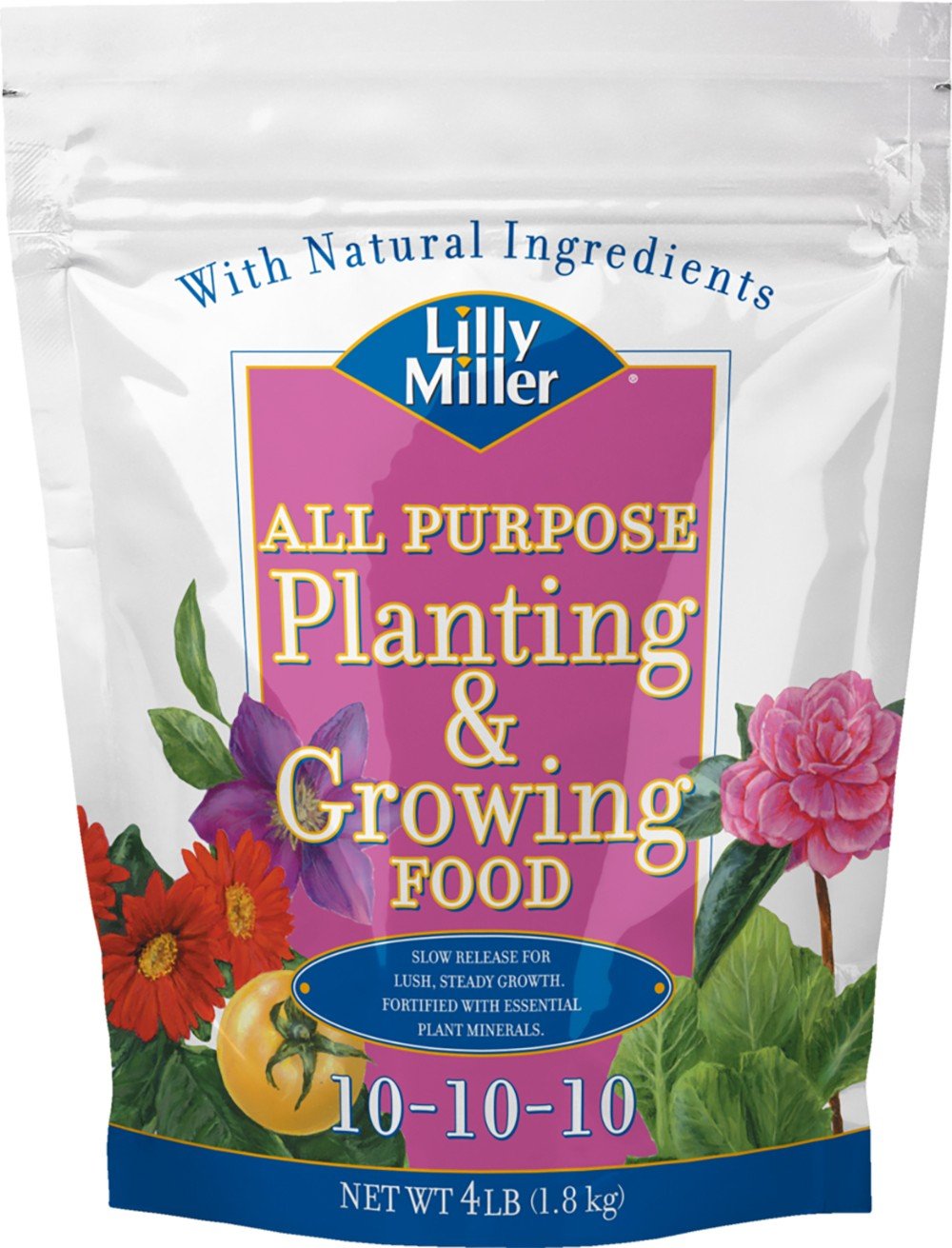
The slow-release champion that revived yellowing tomato plants overnight and kept them green for months.
Lilly Miller’s 10-10-10 is a concentrated granular formula designed for slow, steady release — you spread it once and it keeps feeding for weeks. The 4-pound bag is the same weight as the Cz Garden 10-10-10 above, but Lilly Miller leans harder on the slow-release mechanism. One buyer mentioned that it revived yellowing tomato plants overnight and the effect lasted months. Another buyer said their indoor basil and tomato plants produced for 2 to 3 years with regular use of this fertilizer. The granules work as a soil drench when dissolved in water (place granules in a tea satchel to avoid clogging), or you can scatter them dry.
A fair warning from the same reviewer: the dry granules have an unpleasant odor, and the mixed solution will rot if left out. Always mix fresh and wear a mask when handling the dry powder. That minor hassle aside, the staying power is real — this is a low-maintenance granular that outperforms plant sticks in both cost and results, according to buyers.
What we like
- Slow-release keeps feeding for months after one application
- Revives weak plants noticeably fast for a granular
- Economical — one bag lasts a long time for container plants
What to know
- Dry granules have an unpleasant smell — wear a dust mask
- Mixed solution rots if left sitting out
Best for: gardeners who want to fertilize once and see steady results for months — especially strong for tomatoes, basil, and perennials.
Not for: anyone who dislikes handling smelly dry powder or wants an odorless product.
5. Gardenera 10-10-10 Plant Fertilizer Fast Release (2 Quarts)
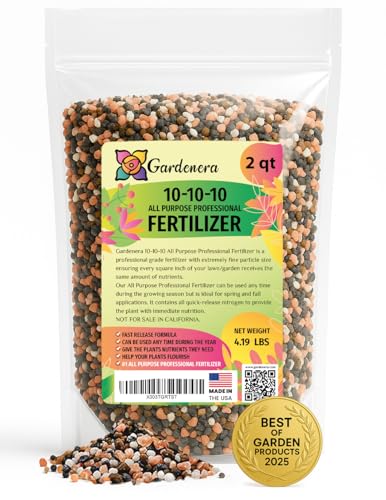
Apply just twice a season and watch flowers look amazing with almost no effort.
Gardenera’s 10-10-10 is the ultimate low-maintenance option for the busy gardener. At 64 ounces (2 quarts), it is the largest liquid volume available — compare that to Chimpy’s 16-ounce bag above, which is a much smaller supply in one purchase. The key selling point: customers note they only have to apply it twice during the entire growing season and still get exceptional flower performance. Just sprinkle a few pellets around each plant, water them in, and the fast-release granules start working immediately.
The product is designed for vegetables, flowers, ornamental gardens, and lawns — it covers everything in a standard home yard. One owner reported that the bag arrived open during shipping, spilling dust on other items, so the packaging could be more secure. But the product itself earned a 4.3 rating from 666 reviews, and multiple reviewers point out it gave their vegetable garden a head start and produced lots of new growth and blooms.
Pro points
- 64 oz (2 quarts) is a huge supply — very cost-effective
- Only 2 applications needed per season according to buyers
- Works on vegetables, flowers, trees, and lawns
Cons
- Packaging may arrive open or leaking per some reviews
- Fast-release means it doesn’t last as long in soil as slow-release
Great for: anyone who wants to scatter fertilizer once in spring and once in summer and forget about it — especially for citrus trees or flower beds.
Hold off if: you want precise, weekly feeding control — fast-release granules don’t give you that fine-tuned schedule.
6. GS Plant Foods All Purpose Water Soluble 20-20-20 Fertilizer with Kelp (3 lbs)
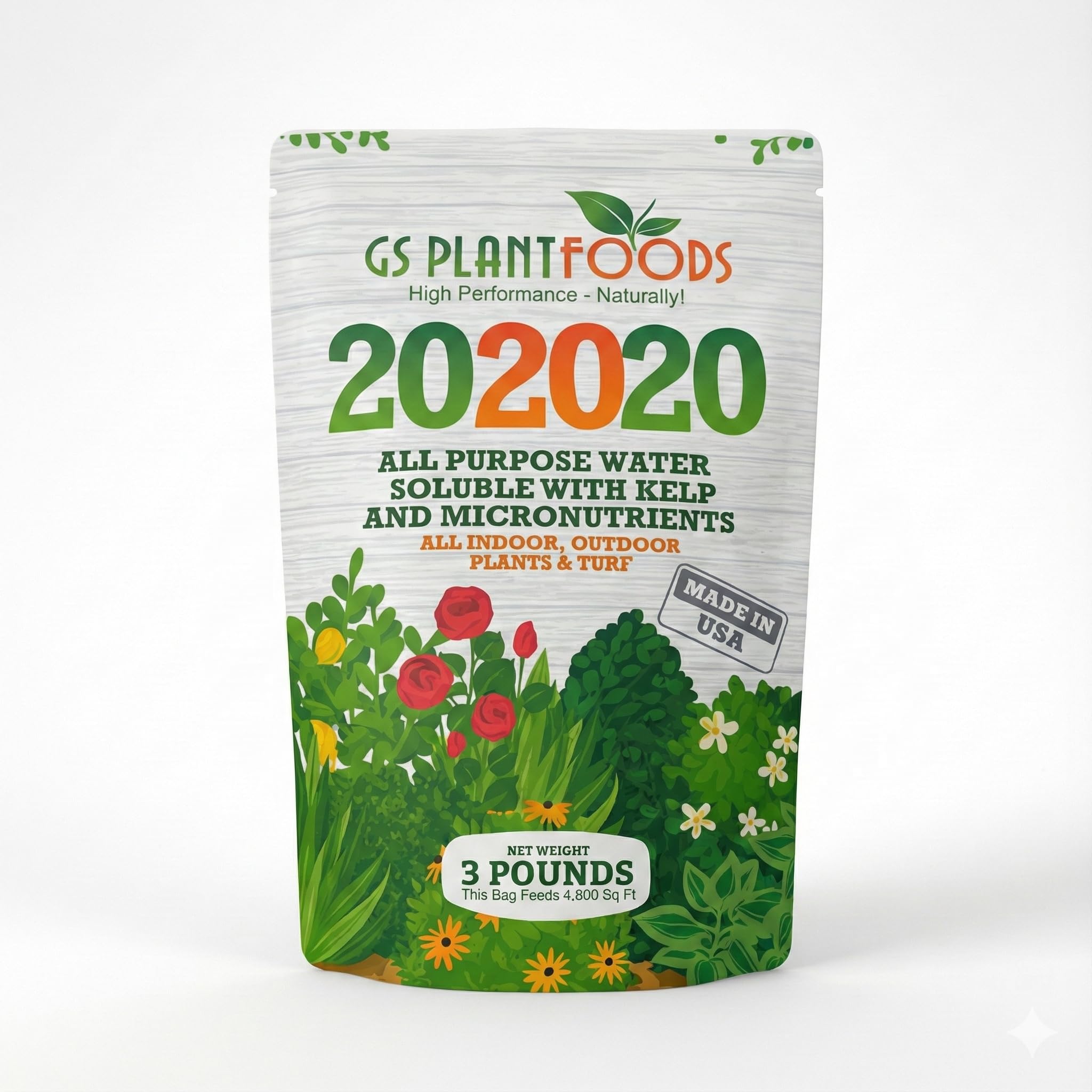
A 20-20-20 that feeds 4,800 sq ft of turf and adds kelp for natural growth stimulation.
GS Plant Foods stands out because it contains Ascophyllum nodosum (a specific species of kelp) mixed into the balanced NPK. Kelp is a natural source of growth hormones and trace minerals that help plants handle stress and develop stronger roots. This 3-pound bag feeds up to 4,800 sq ft of turf when used as directed — far more coverage than any other product here, except the massive 33-pound GreenView below. One reviewer described how their unhealthy Purple Orchid trees responded within a week: dark green leaves and shoots appeared that were larger than before, while the untreated trees stayed yellow and brown.
The dry, water-soluble formula includes a full micronutrient package — iron, manganese, copper, zinc, boron, and molybdenum — so your flowers get trace elements often missing in basic 20-20-20 mixes. Like the Fertilome 20-20-20 above, this is a mix-it-yourself powder, but the kelp addition gives it a biological edge that simple synthetic fertilizers lack.
Why it’s different
- Contains real kelp (Ascophyllum nodosum) for natural growth boost
- Huge coverage — 4,800 sq ft from one 3 lb bag
- Full micronutrient profile (iron, zinc, boron, etc.)
The downsides
- Kelp gives a slight organic odor (not noticeable outdoors)
- Not a certified organic product — blend of natural and synthetic
Choose this for: large flower beds, lawns, and orchards where you want balanced NPK plus the natural growth benefits of kelp.
Skip it for: strict organic gardening — the kelp is good but the base is not organic-certified.
7. GreenView Multi-Purpose Fertilizer, 33 lb. Bag – NPK 10-10-10

A 33-pound bag that covers 10,000 sq feet and still gets delivered to your door with Prime.
GreenView’s 33-pound bag is the heavyweight champion here — it covers 10,000 sq ft of lawn or garden, which is roughly a quarter-acre lot. The 10-10-10 balanced formulation is about as straightforward as fertilizer gets: no fancy extract, no water-soluble mixing, just granules you spread with a broadcast spreader. Buyers rave about the convenience of having a 33-pound bag delivered without heavy lifting at the store — especially useful for older gardeners or anyone with mobility limits. One Hawaii buyer noted it worked as well as 16-16-16 (a different ratio) at a lower cost.
The obvious trade-off is physical size: 33 pounds of granules is heavy and requires storage space. If you only have a few flower pots, this is far more than you need. But if you have a large property with flower beds, shrubs, vegetable patches, and lawn, this bag replaces multiple smaller purchases. The granules are well-formed with no clumping, per reviews, and the product works well on trees, hostas, vegetables, and perennials throughout the growing season.
Biggest strengths
- 33 lb bag delivers 10,000 sq ft of coverage
- Prime delivery means no hauling from the store
- Simple, reliable 10-10-10 ratio for all plants
Biggest limitation
- Overkill for small gardens or container plants
- Requires a spreader or careful hand-scattering for even coverage
Ideal for: serious gardeners with large properties — cover everything (flowers, shrubs, lawn, trees) from one bag for an entire season.
Skip it for: small balcony gardens, container-only growers, or anyone without storage space for a 33 lb bag.
Understanding the Specs
NPK Ratio: 10-10-10 vs 20-20-20
These numbers stand for the percentage of nitrogen (N), phosphorus (P), and potassium (K) in the bag. A 10-10-10 fertilizer contains 10% of each nutrient; a 20-20-20 contains 20% of each — twice as concentrated. For flowers, the key is balance: equal N-P-K means the plant gets equal support for leaves, blooms, and overall health. If you use a 20-20-20, you simply use half as much powder per gallon of water compared to a 10-10-10. Check the label’s mixing chart to match your specific flowers.
Water Soluble vs Granular
Water-soluble powders dissolve in water and feed the plant immediately through roots and leaves (foliar feeding). Granules must be spread on soil and need rain or watering to break down over days or weeks. Soluble is best for containers, hanging baskets, and quick rescue jobs. Granules are better for flower beds, borders, and large areas where you want one application to last. If you are watering plants daily anyway, a soluble fertilizer adds zero extra work — just mix it in the watering can.
FAQ
Can I use a balanced fertilizer like 10-10-10 on all my flowers?
How often should I apply a balanced flower fertilizer?
What is the difference between 10-10-10 and 20-20-20 for flowers?
Can balanced fertilizer burn my flowers?
Should I use water-soluble or granular fertilizer for container flowers?
Can I use a balanced flower fertilizer on my vegetable garden?
How long does a 4-pound bag of granular fertilizer last for flower beds?
What does adding iron do for my flowers?
Is kelp in fertilizer just a marketing gimmick for flowers?
Which balanced fertilizer is best for starting seeds or new flower transplants?
Final Thoughts: The Verdict
For most gardeners, the balanced fertilizer for flowers winner is the Fertilome 20-20-20 because it delivers fast, visible results on everything from petunias to hibiscus, and you can use it as a soil soak or a leaf spray. If you want a slow-release granular with an iron boost, grab the Cz Garden 10-10-10. And for large properties where you need to feed an entire acre’s worth of flowers, trees, and lawns, the GreenView 33 lb 10-10-10 gives you the most coverage per dollar.
How We Picked
We do not accept paid placement. Every pick is matched to a real buyer and a real use-case; we do not hands-on test units.
Sources & Methodology
Specifications: manufacturer listings and product documentation. Review insights: verified customer reviews, as of July 2026. Pricing: not shown on this page (it changes often); check the current price via the retailer link.
As an Amazon Associate, Lawn Gear Lab earns from qualifying purchases. This does not affect which products we feature.