
Specs are compiled from manufacturer listings and verified buyer reviews and can change over time — please confirm the key details on the product page before buying.
You spot yellow stippling on your leaves and fine webbing between the stems—spider mites are taking over. The right spray stops them on contact or breaks their life cycle, and this guide sorts through the top options.
I’m Rikta — the founder and writer behind Lawn Gear Lab. This guide is built by comparing the manufacturers’ published specifications and the patterns across verified customer reviews, so you get each pick’s real strengths and trade-offs instead of marketing spin.
You will find miticides that work on contact, others that protect for weeks, and a few that double as fungicides for powdery mildew. Here is everything you need to choose the right miticide for spider mites.
Quick Picks
- Bonide Captain Jack’s Citrus — Best Overall
- Athena IPM Plant Pest Control Ready-to-Use Spray — Easiest to Use
- Fertilome (12245) Triple Action — Good Value 3-in-1
- Monterey 70% Neem Oil — Organic Powerhouse
- Bonide Rose Rx Multi-Purpose Fungicide — Rose & Ornamental Specialist
- Doktor Doom Spider Mite Knockout — Indoor Mite Buster
- Garden Safe Brand Fungicide3 — Best Ready-to-Use Value
How To Choose The Best Miticide For Spider Mites
Spider mites multiply fast—a small infestation can explode in a week. Picking the right miticide depends on how you want to apply it, what else you want it to handle, and how often you are willing to reapply.
Contact Killers vs. Residual Sprays
Some miticides kill spider mites the moment they get wet. These work great for a quick knockdown but offer little protection against the next batch of eggs that hatch. Sprays with a residual effect leave a film that keeps working for days or weeks which can break the life cycle more effectively.
Single-Purpose vs. Multi-Purpose Formulas
If spider mites are your only problem, a dedicated miticide can be enough. But many of the best options also work as a fungicide (for powdery mildew, black spot, rust) and an insecticide (for aphids, whiteflies, thrips). A three-in-one product simplifies your garden routine.
Concentrate vs. Ready-to-Use (RTU)
A concentrate means you mix it yourself with water—you get more total spray for less money, but you need a sprayer. A ready-to-use bottle is convenient: shake and spray with no measuring. For large gardens or multiple plants, a concentrate usually provides better value.
Quick Comparison
| Model | Best For | Liquid Volume | Active Ingredient | Organic Status | Amazon |
|---|---|---|---|---|---|
| Bonide Captain Jack’s Orchard | Large gardens & fruit trees | 32 oz concentrate | Sulfur & Pyrethrins | Not OMRI listed | Amazon |
| Athena IPM RTU | Quick indoor use | 32 fl oz RTU | EPA 25(b) min risk | EPA 25(b) exempt | Amazon |
| Fertilome Triple Action | Versatile garden protection | 16 fl oz concentrate | Neem oil extract | OMRI Listed | Amazon |
| Monterey 70% Neem Oil | Organic gardening | 1 pint concentrate | 70% clarified neem oil | OMRI Listed | Amazon |
| Bonide Rose Rx | Roses & ornamentals | 16 oz concentrate | Clarified neem oil | USDA organic approved | Amazon |
| Doktor Doom Spider Mite Knockout | Indoor miticide | 16 fl oz RTU | Pyrethrin 0.20% | Not OMRI listed | Amazon |
| Garden Safe Fungicide3 | Large ready-to-use value | 128 fl oz RTU | Clarified neem oil | For organic gardening | Amazon |
In‑Depth Reviews
1. Bonide Captain Jack’s Citrus, Fruit & Nut Orchard Spray

The heavy hitter that treats your whole yard in one bottle.
This Bonide concentrate covers a lot of ground—literally. The bottle holds 32 fluid ounces, and buyers report that one pint makes up to 6.4 gallons of finished spray. That is a 2.0x gap in unit count versus the Fertilome Triple Action at 16.0 ounces, which means more value for large gardens or multiple fruit trees. You use it to keep leaves green and fruit healthy instead of watching yellow spots spread.
You mix it with water and apply through a hose-end or tank sprayer. It handles spider mites, but also beetles, caterpillars, mealybugs, thrips, and scale, and it controls fungal diseases like powdery mildew, rust, and blight. Owners mention it turned yellowing apple trees noticeably greener and wiped out Japanese beetles on grapes. At 2.3 pounds, it is heavier than the 1-pound Fertilome Triple Action—a reminder you are getting more product for bigger jobs.
The tradeoff is that this is not an OMRI-listed organic formula. If you need certified organic ingredients, look to the neem-based options below. But for sheer versatility and coverage per dollar, this is tough to beat.
Why it earns the top spot
- 32 oz concentrate makes up to 6.4 gallons of spray (2.0x more than the 16 oz Fertilome)
- Controls both insects (spider mites, beetles, caterpillars) and diseases (powdery mildew, rust)
- Can be used up to the day before harvest
A couple of things to know
- Not OMRI listed for organic gardening
- Requires a separate sprayer for mixing and application
Grab this if: You have a large garden or multiple fruit trees and want one product that handles bugs, mites, and fungus.
Pass if: You need a certified organic miticide or prefer a ready-to-use spray bottle.
2. Athena IPM Plant Pest Control Ready-to-Use Spray
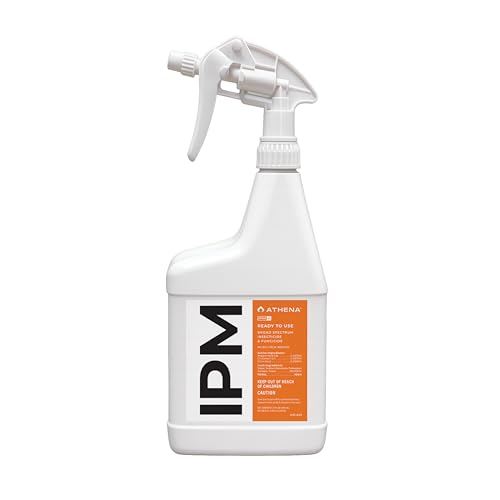
Spray and walk away—no mixing, no measuring.
Two simple steps: shake the bottle and spray. Athena IPM comes ready-to-use, so you never touch a measuring cup or hose-end sprayer. It uses EPA 25(b) minimum-risk ingredients (a classification for ingredients the EPA considers safe enough to skip full registration), which means fewer harsh chemicals around pets and people. The bottle holds 32 fluid ounces—exactly the same liquid volume as the Bonide concentrate before mixing, but this one is ready to spray straight from the bottle. You get immediate mite control without any prep time.
Customers note that it kills bugs instantly, has a pleasant smell, and works great in both indoor grow rooms and outdoor vegetable gardens. It targets spider mites, aphids, thrips, and powdery mildew. Compared to the Fertilome Triple Action at 16 fluid ounces, this gives you 2.0x the liquid in the bottle with zero prep time.
The catch? Because it is ready-to-use, you burn through the bottle faster on a large garden. A concentrate like the Bonide Captain Jack’s gives you more total spray for your money if you have many plants to treat regularly.
Perfect for grab-and-go: Best for indoor plants, small gardens, or anyone who hates measuring and mixing.
Best for: Quick action against spider mites on houseplants or in a grow tent where convenience matters most.
Skip if: You need to cover a large outdoor garden—get a concentrate instead.
3. Fertilome (12245) Triple Action
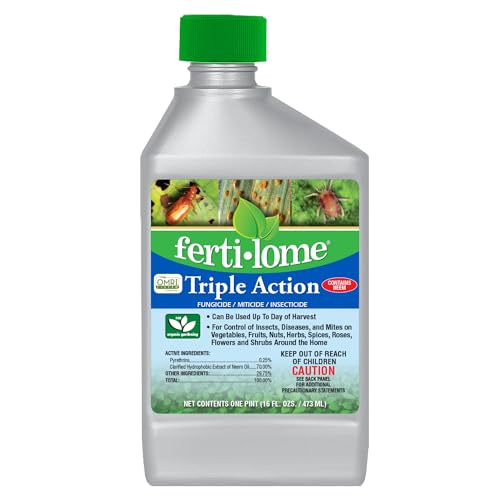
A solid three-way protector that leans on neem oil.
Fertilome Triple Action works as an insecticide, miticide, and fungicide all in one. It uses a neem oil extract (a refined oil from the neem tree that smothers pests) to control spider mites, aphids, leafminers, and leafrollers while also preventing powdery mildew, rust, and leaf spot. The bottle holds 16 fluid ounces, which is half the unit count of the Bonide Captain Jack’s 32.0 ounce bottle, so it is better suited for smaller gardens or targeted treatments—you get enough spray for a few raised beds or a small orchard.
Reviewers point out they have used it for years on apple trees and found it effective for bagworms and lacewings on azaleas. The label recommends reapplying on a 7-14 day schedule, which fits a typical maintenance routine so new mites don’t bounce back. At 1 pound, it is noticeably lighter than the 2.3-pound Bonide concentrate—easier to handle but less product per bottle.
It is OMRI Listed for organic gardening, which is a clear advantage over the Bonide Orchard Spray if you want a certified organic option in a neem-based formula.
What works well
- OMRI Listed for use in organic gardening
- One bottle handles insects, mites, and fungal diseases
- Lightweight at just 1 pound
What to consider
- 16 oz unit count is half the Bonide Captain Jack’s—less coverage per bottle
- Some shoppers say the price has increased over time
Pick it for: An organic, neem-based triple-action spray for small fruit trees, vegetables, and roses.
Look elsewhere if: You have a large orchard or a heavy spider mite infestation that needs more volume per application.
4. Monterey 70% Neem Oil Fungicide/Insecticide/Miticide
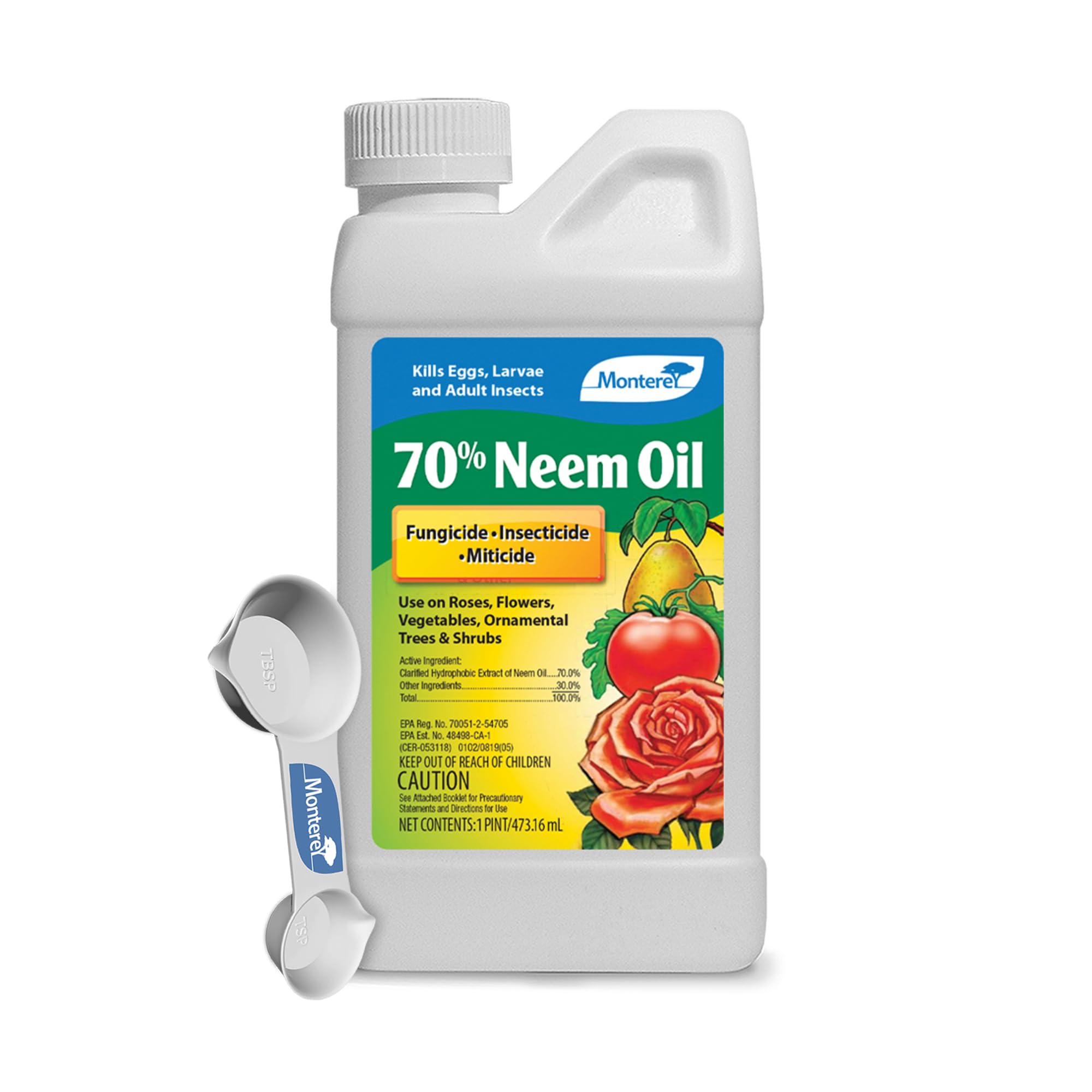
The organic gardener’s ace for mites and mildew.
Monterey 70% Neem Oil is a concentrated miticide with the highest neem oil percentage on this list. It works as a fungicide, insecticide, and miticide—controlling spider mites, aphids, whiteflies, black spot, powdery mildew, and rust. The 1-pint bottle is a concentrate, so you mix it with warm water before spraying, and it is OMRI Listed for organic gardening under the USDA National Organic Program. The high 70% concentration means a small amount goes further against tough infestations than the Fertilome Triple Action’s neem oil extract.
Buyers report that it kills spider mites and sooty mold fast with no collateral damage on most plants, though one reviewer noted it damaged oregano that got overspray—a reminder to cover sensitive plants during application. Some users found that pepper plants do not like it either. Compared to the Fertilome Triple Action, this has a higher concentration of neem oil (70% vs. a neem oil extract), which may be more effective for persistent infestations.
The catch is that neem oil has a strong smell, and some plants are sensitive to it, especially when applied in direct sunlight. Start with a test spot before spraying your whole garden.
Top-tier organic choice: Maximum neem oil concentration for serious mite and disease control in certified organic gardens.
Reach for this if: You are committed to organic gardening and need a concentrated neem oil that takes down spider mites, aphids, and powdery mildew.
Avoid if: Your garden has plants known to be sensitive to neem oil (oregano, peppers) or you dislike the strong smell.
5. Bonide Rose Rx Multi-Purpose Fungicide, Insecticide and Miticide

Neem-based protection made for your prized blooms.
Bonide Rose Rx is formulated specifically for roses, flowers, and ornamentals, though it works on fruits, nuts, and vegetables too. The active ingredient is a clarified hydrophobic extract of neem oil (a purified neem oil that separates from water for even coating), which is approved by the USDA for organic gardening. The 16-ounce concentrate mixes with water and can be applied with a sprinkler can, hand sprayer, or low-pressure sprayer. It coats leaves so mites suffocate and eggs stop hatching.
Owners mention that it smells awful but works better than many other products they have tried—especially for black spot on roses, whiteflies, and aphids. One buyer mentioned it saved their roses and camellias, calling it their go-to solution. It kills eggs, larvae, and adult stages of insects, which is critical for breaking the spider mite life cycle in a single spray routine.
The main limitation is that 16 ounces is a smaller unit count than the 32-ounce Bonide Orchard Spray. If you have a large rose garden, you may need multiple bottles or should step up to the larger concentrate.
What stands out
- USDA-approved for organic gardening
- Kills all life stages of spider mites (eggs, larvae, adults)
- Highly rated by rose and camellia gardeners
What to know
- Strong odor during application (fades quickly)
- 16 oz concentrate covers less than the 32 oz Bonide Orchard Spray
Best for rose lovers: If black spot, aphids, and spider mites ruin your blooms, this neem-based concentrate targets them all.
Not the best fit: For large vegetable gardens or for anyone who wants a ready-to-use spray.
6. Doktor Doom Spider Mite Knockout
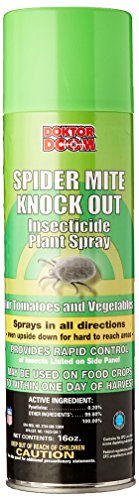
A dedicated spider mite killer for tricky indoor infestations.
Doktor Doom Spider Mite Knockout is a pyrethrin-based spray that targets mites specifically. It contains 0.20% pyrethrin (a fast-acting plant-based nerve poison extracted from chrysanthemums) and comes ready to use in a 16-fluid-ounce bottle. Unlike the multi-purpose neem oil sprays, this one is focused purely on knockdown—customers note it killed spider mites on an indoor Meyer lemon tree immediately and eliminated thrips on contact after three weekly sprays. It gives you instant relief when you see webbing appear.
Because it uses pyrethrin, it works fast, but reviewers recommend applying when the lights are off to prevent leaf burn (a kind of sun damage on wet leaves). Some users found it required three applications over about ten days to fully eradicate an infestation, as the label’s seven-day interval alone may allow the population to rebound. One owner reported it was more effective than Nuke Em or Dead Bug Brew for thrips.
The bottle is small at 16 ounces, so a large indoor grow operation will go through it quickly. For big collections, you may want the larger-volume Garden Safe Fungicide3 or a concentrate.
Targeted indoor solution: Fast-acting pyrethrin spray for spot-treating infested indoor plants without complex mixing.
Best for indoor plants: When you spot webbing on a houseplant or in a grow tent and need immediate knockdown.
Not ideal for: Large outdoor gardens or anyone wanting an organic-certified neem oil option.
7. Garden Safe Brand Fungicide3
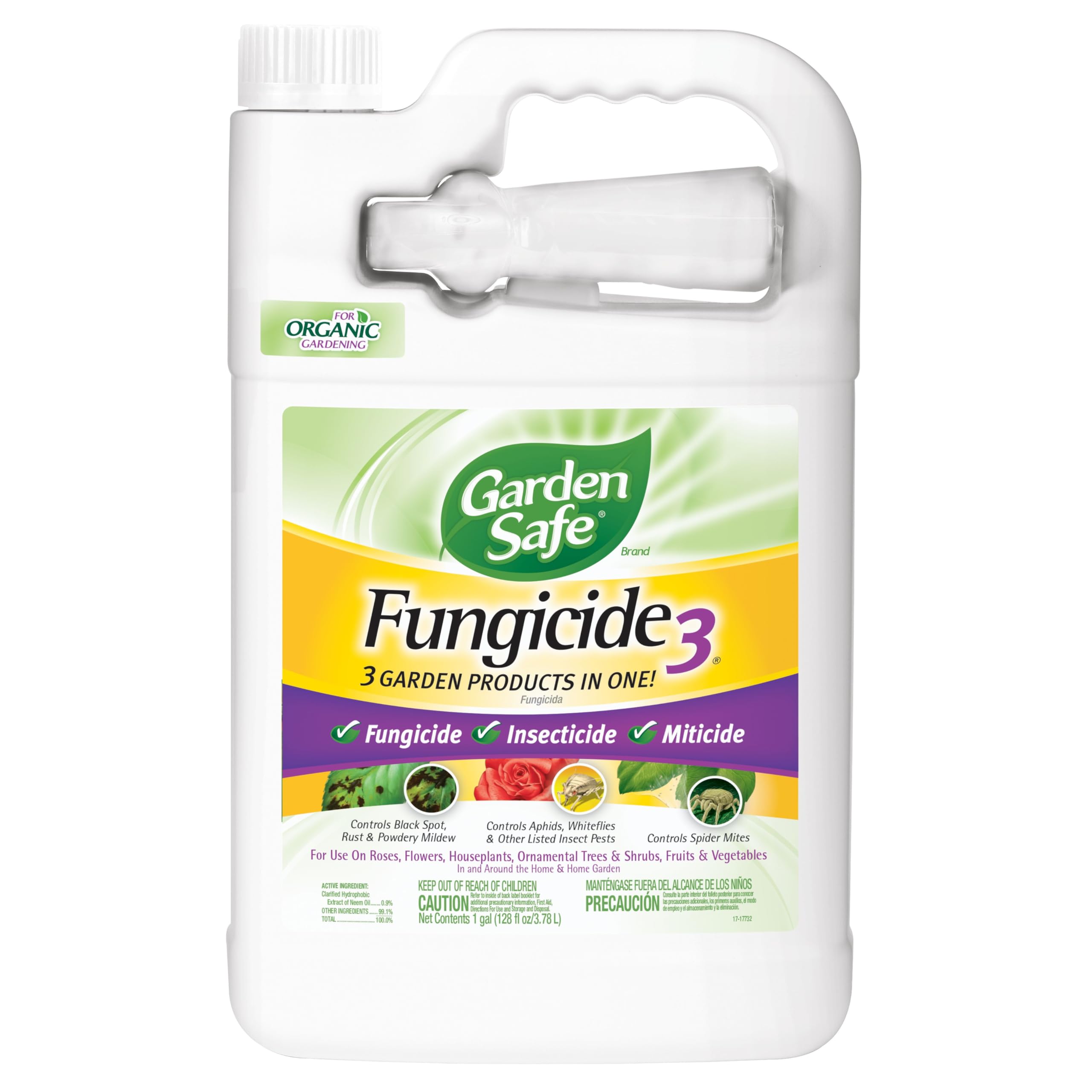
A gallon of ready-to-use neem spray for big coverage.
Garden Safe Fungicide3 comes in a massive 128-fluid-ounce bottle that is ready to spray right from the start. It works as a fungicide, insecticide, and miticide, using clarified hydrophobic extract of neem oil as the active ingredient. That is four times the liquid volume of the 32-ounce Athena IPM, making it the best value pick if you need to cover a large garden without mixing concentrates. You can spray a whole vegetable patch or flowerbed without stopping to refill.
Reviewers point out it works well on orchids, roses, tomatoes, blueberries, and hibiscus, with one reviewer noting it gave them greener foliage and more beautiful rose blossoms. However, several users warn that the sprayer attachment is poorly designed—the hose is very short, and some say it burns plants if used at full strength during the day. One reviewer recommended using less than half the package’s recommended dose to avoid burning foliage.
Despite the sprayer flaw, the sheer volume and ready-to-use convenience make it a strong option for ongoing maintenance. If the sprayer frustrates you, transfer the liquid to a better-quality spray bottle.
The big benefits
- 128 fluid ounces—huge ready-to-use volume for large gardens
- Neem oil extract for organic gardening
- Three-in-one formula targets mites, insects, and fungus
The downsides
- Sprayer attachment has very short hose and poor design
- Can burn plants if used at full strength or in direct sunlight
Best for large gardens: If you want a big ready-to-use bottle of neem-based miticide without measuring or mixing anything.
Reconsider if: You prefer the precision of a concentrate or a sprayer with a longer hose.
Understanding the Specs
Active Ingredient
The ingredient that actually kills spider mites. Common options include neem oil (a plant-derived oil that smothers pests), pyrethrin (a fast-acting plant-based nerve agent), and sulfur (a traditional fungicide and miticide). The concentration matters—Monterey 70% Neem Oil is much stronger than a standard neem oil extract, while Doktor Doom uses 0.20% pyrethrin which is half the strength of some foggers. Higher concentration often means more effective knockdown per spray.
Liquid Volume & Unit Count
This tells you how much product you are actually getting. A 32-ounce concentrate like the Bonide Captain Jack’s makes up to 6.4 gallons of finished spray, while a 16-ounce concentrate covers half that. Ready-to-use sprays (like Athena IPM or Garden Safe Fungicide3) are used as-is, so the bottle size is your total coverage. A 128-ounce ready-to-use bottle obviously covers much more area than a 16-ounce ready-to-use, but both require zero mixing. For gardens larger than a few raised beds, a concentrate or a gallon-sized RTU is the smarter choice: you get more coverage for your money and fewer trips to the store.
FAQ
How do I apply a miticide to get rid of spider mites?
Can I use a miticide on vegetables I plan to eat?
Which is better, neem oil or pyrethrin for spider mites?
Do I need to wear protective gear when spraying miticides?
How long does a miticide stay effective after you spray it?
Can I mix a miticide with other fertilizers or fungicides?
Will a miticide kill beneficial insects like ladybugs?
What is the difference between a miticide and an insecticide?
How many times do I need to spray to completely kill spider mites?
Can I use a miticide in a greenhouse or grow tent?
Final Thoughts: The Verdict
Across the board, the best miticide for spider mites is the Bonide Captain Jack’s Orchard Spray because it covers the most ground per bottle and handles both mites and fungal diseases for fruit trees and vegetables. If you want a no-mix ready-to-use spray for quick indoor or small-garden use, grab the Athena IPM. And for certified organic gardening with maximum neem oil potency, the Monterey 70% Neem Oil is the clear choice.
How We Picked
We do not accept paid placement. Every pick is matched to a real buyer and a real use-case; we do not hands-on test units.
Sources & Methodology
Specifications: manufacturer listings and product documentation. Review insights: verified customer reviews, as of July 2026. Pricing: not shown on this page (it changes often); check the current price via the retailer link.
As an Amazon Associate, Lawn Gear Lab earns from qualifying purchases. This does not affect which products we feature.