
Specs are compiled from manufacturer listings and verified buyer reviews and can change over time — please confirm the key details on the product page before buying.
The single biggest mistake new raised-bed gardeners make? Grabbing the cheapest bag of “garden soil” they can find, only to watch their seedlings turn yellow and stall out by mid-season. The dirt you fill your beds with is the entire foundation of your garden—get it wrong, and you will be troubleshooting weak growth, poor drainage, and disappointing harvests all summer long. This guide cuts through the marketing claims to compare the pre-mixed, organic, ready-to-use soils that actually deliver on their promises for raised beds and containers.
I’m Rikta — the founder and writer behind Lawn Gear Lab. This guide is built by comparing the manufacturers’ published specifications and the patterns across verified customer reviews, so you get each pick’s real strengths and trade-offs instead of marketing spin.
Whether you are filling a new bed from scratch or revitalizing an established one, the right mix of drainage, aeration, and organic nutrition makes all the difference. Below, you will find a detailed breakdown of the best dirt for raised bed gardens, rated on volume, nutrients, and real-world results reported by fellow gardeners.
Quick Picks
- Coast of Maine Organic & Natural Castine — Best Overall
- Espoma Organic Raised Bed Mix — Best Value
- Wiggle Worm Raised Bed Mix, 40lbs — Worm Power
- Purple Cow Organics All Purpose Veggie Mix — Container Champ
- BuildASoil Light Garden Soil — Clean Formula
- Gaia Green Organic Living Soil, 1 cu ft — Pre-Charged
How To Choose The Best Dirt For Raised Bed Gardens
Not every bag of dirt is built the same. A mix designed for in-ground flower beds can turn into concrete in a raised bed. Here are the three specs you need to check before you buy.
Volume vs. Weight: What Fills Your Bed
Bag weight is a poor guide—a wet, heavy bag may contain less usable soil than a lighter, fluffier one. You need to know the volume in cubic feet to plan how many bags your bed requires. A 4×4-foot bed that is 12 inches deep needs 16 cubic feet of soil. Matching that volume against a bag’s cubic feet is the only reliable way to avoid over- or under-ordering.
Organic Matter and Nutrients
The best dirt for raised beds is “pre-charged” with slow-release organic nutrients like worm castings, kelp meal, alfalfa meal, and bone meal. These feed your plants steadily without the risk of chemical burn. In the data below, you will see that mixes enriched with mycorrhizae (beneficial fungi that attach to roots and help them absorb water and nutrients) give young plants a noticeable head start.
Texture and Drainage
Raised beds drain faster than in-ground gardens, so your soil needs to hold enough moisture without becoming waterlogged. Look for a mix that includes perlite, coco coir, or biochar—these create tiny air pockets that let roots breathe and excess water drain away. A review mentioning “no twigs or bugs” and a “loamy” texture is a good sign that you are getting a well-processed product, not leftover landscape debris.
Quick Comparison
| Model | Best For | Volume | Item Weight | Key Nutrient | Amazon |
|---|---|---|---|---|---|
| Coast of Maine Castine Blend | Premium all-around raised bed mix | 2 Cubic Feet | 40.3 Pounds | Lobster & Crab Shell Meal | Amazon |
| Espoma Organic Raised Bed Mix | Value mix with mycorrhizae | 1.5 Cubic Feet | — | Endo & Ecto Mycorrhizae | Amazon |
| Wiggle Worm Raised Bed Mix | Worm casting booster | 640 Fluid Ounces | 40 Pounds | Worm Eggs & Castings | Amazon |
| Purple Cow Organics Veggie Mix | Container and lightweight mix | 1 Cubic Foot | 240 Ounce | Plant-Based Compost | Amazon |
| BuildASoil Light Garden Soil | Low-sodium formula for sensitive roots | 1 Cubic Feet | 30 Pounds | High Worm Castings | Amazon |
| Gaia Green Organic Living Soil | All-in-one pre-charged mix | 1728 Cubic Inches | 35 Pounds | Kelp Meal & Bone Meal | Amazon |
In‑Depth Reviews
1. Coast of Maine Organic & Natural Castine Blend Soil
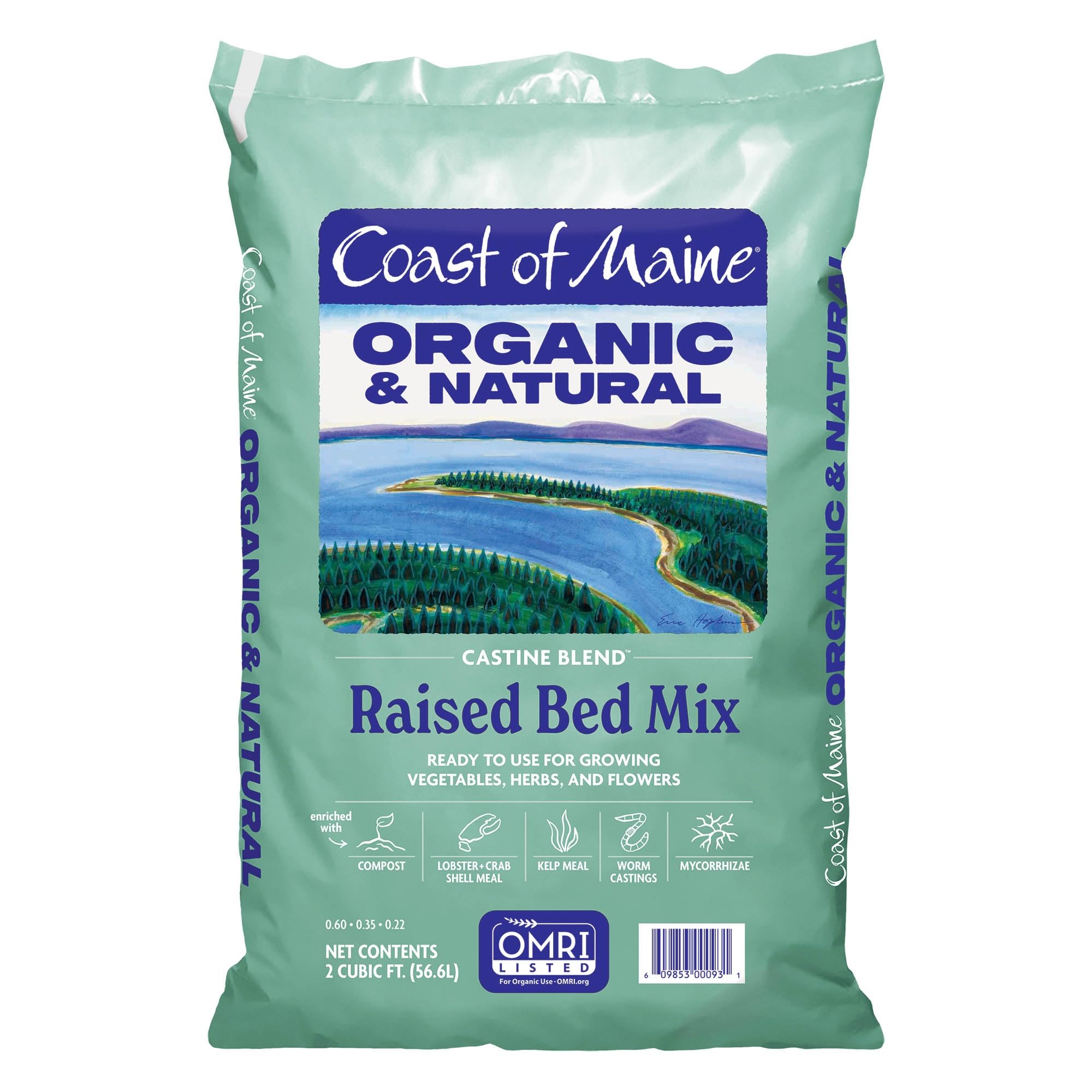
The 2-cubic-foot bag that beats the rest on volume and ingredient depth in one shot.
You get the biggest single-bag volume in this lineup — 2 cubic feet — which means you fill a standard 4×4 bed with fewer bags than any other pick here. At 40.3 pounds, it is naturally heavier than the 1.5 cu ft Espoma mix, but the trade-off is that it has 2 cubic feet per bag compared to the Espoma’s 1.5 cubic feet. Inside, you find worm castings, mycorrhizae (beneficial root fungi), biochar (a charcoal that locks in moisture and nutrients), greensand, kelp meal, and lobster and crab shell meal. That last ingredient is what makes this soil feel like a coastal seafood feast for your tomatoes.
Buyers report they “found no bugs and no twigs” and describe the dirt as “soft, rich, dark, organic dirt, perfect for the veggies I’m growing.” Unlike some mixes that arrive looking like shredded bark, this one lands with a loamy, ready-to-use texture. Reviewers also mention it “loosens soil already in the beds,” making it a strong choice for refreshing existing beds rather than starting completely from scratch. It is ready to use right out of the bag — no mixing or amending needed.
The only caution is price: this is a premium-tier bag, so your initial fill cost will be higher than budget mixes. But given the volume per bag and the rich ingredient list, it works out to solid value for serious gardeners who want a biodiverse, living soil that boost yield.
The defining ingredient: The lobster and crab shell meal provides a slow-release calcium and chitin boost that strengthens plant cell walls and naturally deters certain soil pests — a spec you rarely see in other bagged soils, backed by four decades of brand history.
Honest limitation: The premium price per bag adds up when filling large beds. For small container gardens, a smaller-volume mix might fit your budget better.
Reach for this if: you want the biggest single bag with the richest, most unique organic ingredient list on the market.
Look elsewhere if: you need to fill a very deep bed on a tight budget and want more bags for less upfront cost.
2. Espoma Organic Raised Bed Mix

A balanced 1.5 cu ft mix that brings mycorrhizae and organic meals at a fair price.
This is the entry point for organic raised-bed mixes that actually include the good stuff — earthworm castings, alfalfa meal, kelp meal, and feather meal are all in the bag, plus a proprietary blend of endo and ecto mycorrhizae (two types of beneficial fungi that attach to roots and help them pull in water and nutrients from the soil). The 1.5-cubic-foot volume is a practical size: big enough to partially fill a standard bed, but light enough to carry from the car to the garden without a dolly.
Several buyers praise its “excellent moisture retention” in subtropical Florida and note it “supports sturdy root growth for vegetables, herbs, and flowers from seed.” The mix is ready to use for new beds or as a top-dress for existing ones. Espoma also avoids synthetic plant foods, so you get a clean organic label. However, one buyer who bought six bags reported that “the seeds came up 3 weeks ago and they are not growing now they are turning yellow,” describing the mix as “mostly wood” that “looks like mulch.” This seems to be a batch-quality concern—some bags may be heavier on wood fines than others.
Compared to the Coast of Maine above, the Espoma offers a smaller volume (1.5 cu ft vs 2 cu ft) and a more standard ingredient roster. Where it wins is price per bag: it sits in a noticeably lower cost tier, making it a reasonable starter mix for new gardeners who want mycorrhizae without the premium price tag. Just inspect the bag contents before dumping the whole batch into your bed.
What works
- Includes both endo and ecto mycorrhizae for strong root support
- Enriched with earthworm castings, alfalfa meal, and kelp meal
- Ideal moisture retention even in warm, humid climates
Watch out for
- Some bags reported to contain mostly wood fines and mulch
- Smaller volume than top-tier competitors (1.5 cu ft vs 2 cu ft)
Best for: budget-conscious organic gardeners who want mycorrhizae and a balanced nutrient profile without a premium price.
Not for: anyone who needs guaranteed fine-texture soil—batch quality may vary, so check the bag before using it on a full bed.
3. Wiggle Worm Raised Bed Mix, 40lbs
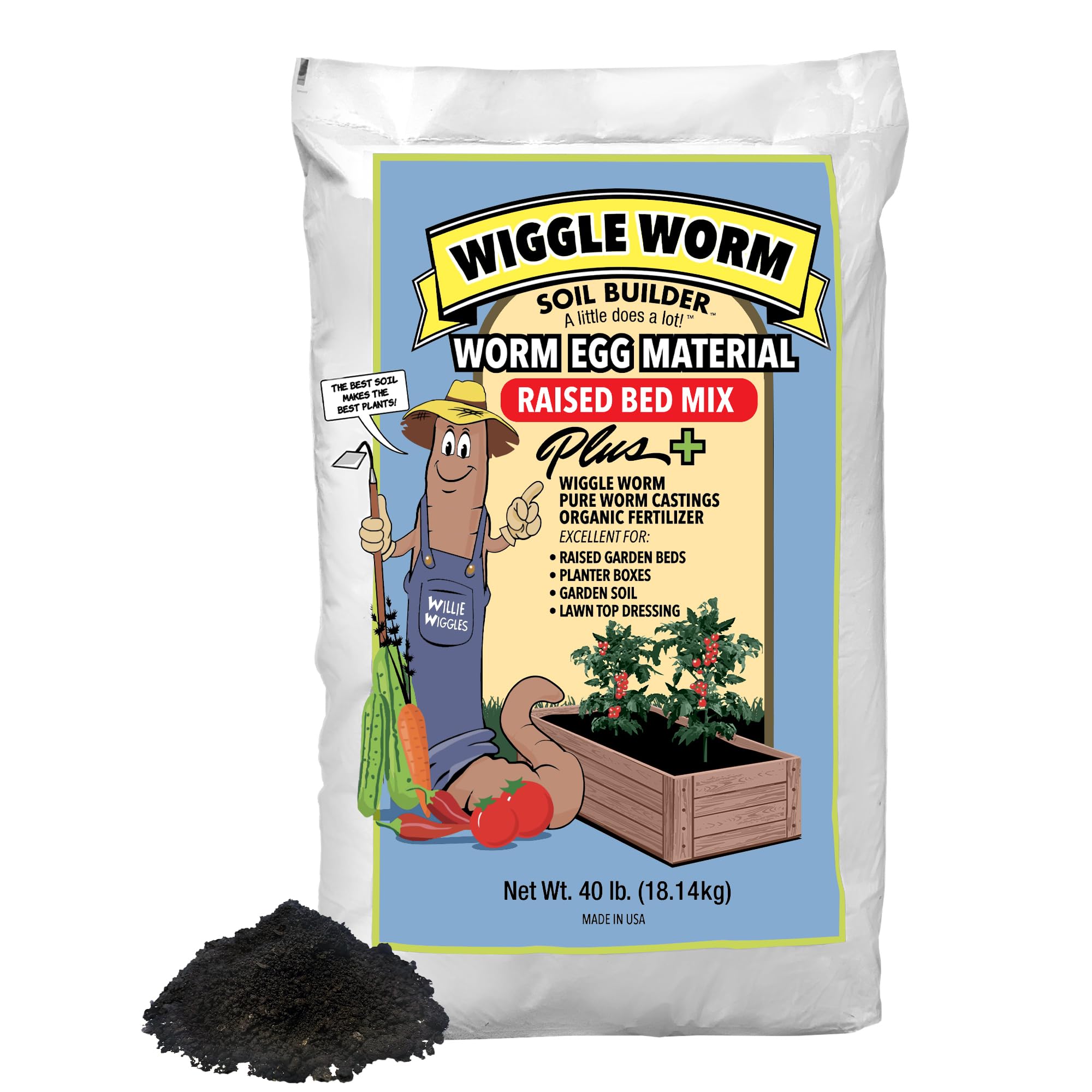
The worm-casting booster that turns your bed into a living, self-improving ecosystem.
This is not your standard bag of dirt — it is a soil and fertilizer mixture that includes both worm castings (the concentrated organic matter worms leave behind) and actual worm eggs. The idea is that the eggs may hatch inside your bed, and the resulting worms will aerate the soil, create drainage tunnels, and produce more castings as they feed. At 40 pounds (640.0 ounce unit count), this is a heavy bag, though its volume is smaller than a 2-cubic-foot soil bag. Compared to the Purple Cow mix, the Wiggle Worm offers 640.0 oz unit count versus the Purple Cow’s 240 oz, but that is ounces, not cubic feet — so it is denser and more concentrated.
Owners mention it as “the absolute best stuff ever for moving young plants out to the garden.” One reviewer noted they “put a small scoop in the bottom of where you’re going to plant it, and the plant takes off like wildfire,” adding that they now have “a lot of worms in the raised beds that we used it in last year.” The mix is designed to be used alone or alongside other organic materials, and it can also be used for trees and bushes grown in the ground. A few reviewers, however, complained about “rocks and twigs and chunks of wood” that required sifting, so quality control on the physical texture is not always perfect.
Where this mix stands out is as a booster rather than a full-bed fill. Because of its density and concentrated casting content, it works best when mixed into existing soil or used as a planting-hole amendment rather than dumping the whole bag in a large bed. If you love the idea of a self-sustaining worm population in your garden, this is the only pick that actively encourages that.
The living ingredient: Worm eggs can hatch and establish a permanent worm colony inside your raised bed, providing ongoing aeration and natural fertilizer — no other soil in this lineup makes that claim.
The honest catch: Some bags contain debris like rocks and wood chunks, and the concentrated nature makes it better as an additive than a standalone bed filler.
Pick this if: you want to kickstart a worm population in your existing raised bed and prefer a concentrated casting booster over plain soil.
skip it if: you are filling a brand-new bed from scratch and need bulk loamy soil at volume — this bag is denser and less fluffy than standard mixes.
4. Purple Cow Organics All Purpose Veggie Mix
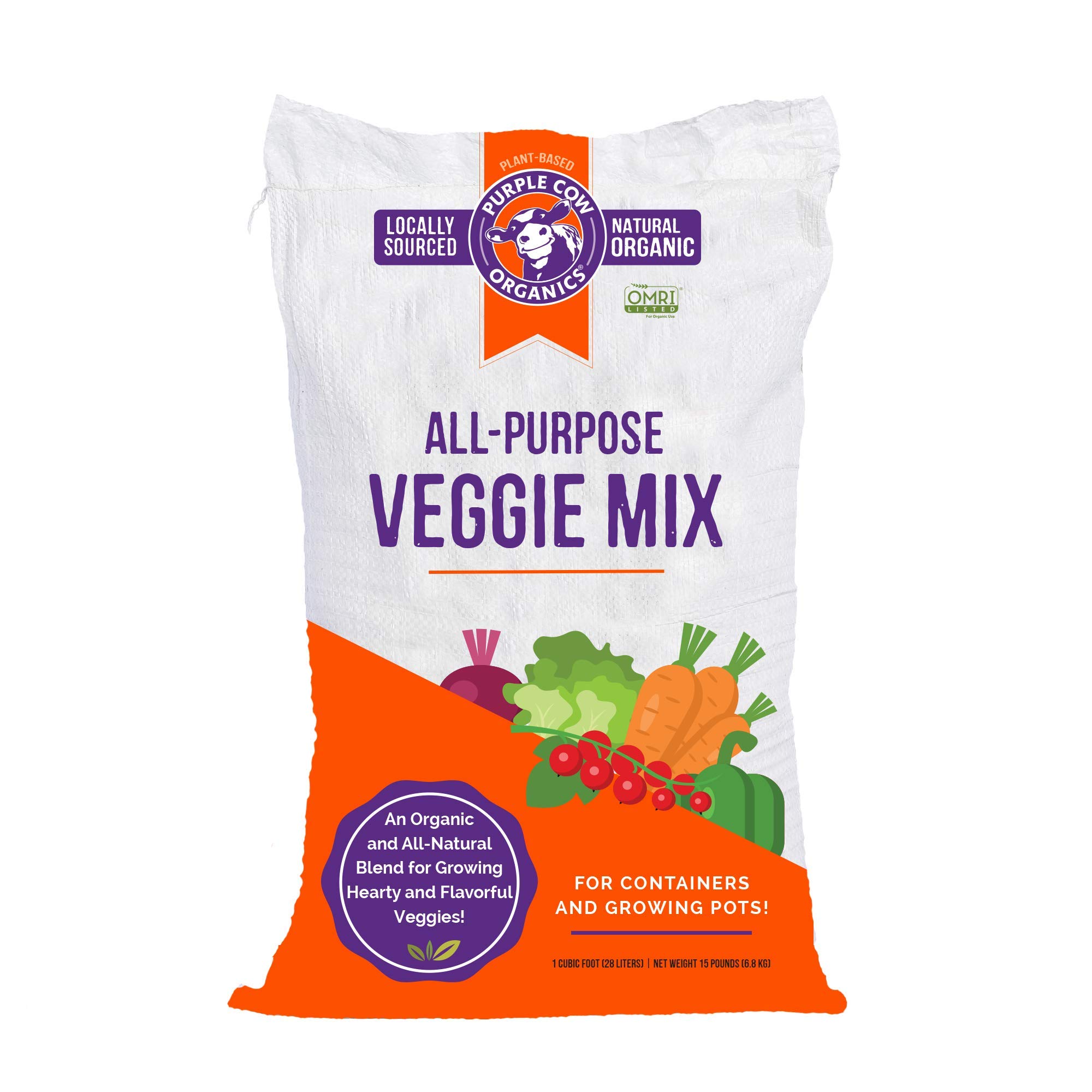
A lightweight, OMRI-listed compost blend that gets vegetables growing “noticeably faster.”
If you garden in containers, limited-space patios, or small raised beds, this 1-cubic-foot bag is built for you. It is an organic, chemical-free plant-based compost blend that is OMRI-listed (meaning it passes the Organic Materials Review Institute’s standards for organic production). The bag is lightweight by design, so you can carry it to a rooftop or balcony garden without a struggle. It is ready to use: just fill your container and plant your seedlings. Compared to the Wiggle Worm mix, the Purple Cow is significantly lighter in unit count (240 oz vs 640 oz) but fills more space with fluffy, compost-based texture.
Customers note excellent results: “they started growing noticeably faster as soon as i used this soil.” Another reviewer called it “the best potting soil for patio vegetables” and noted that with “deep watering weekly and liquid fish/seaweed fertilizer every 2 weeks,” their plants thrived. The compost base provides essential nutrients and beneficial organic matter, though the manufacturer notes it has enough fertility “for those lighter feeders” — heavier feeders like tomatoes or squash may need an additional fertilizer boost. A minority of reviewers found that it “doesn’t drain well,” carried gnats, and was “very smelly.”
This mix is more of a specialty product than the all-purpose Espoma or Coast of Maine. It is the right choice when portability and organic certification matter most. For larger raised beds, you might need multiple bags, and the 1-cubic-foot volume means the per-bed cost climbs faster than larger bags.
Why it shines
- OMRI-listed for organic gardening — meets strict certification standards
- Lightweight and easy to carry to containers and raised beds
- Reviewers point out noticeably faster growth after switching to this soil
Heads up
- Some batches may have drainage and gnat issues
- 1 cu ft volume means you need multiple bags for a large raised bed
Reach for this if: you need a lightweight, certified-organic bag for container veggies on a patio or balcony and want a compost-based mix.
Look elsewhere if: you need to fill a large deep bed — the small volume per bag will require many bags, and the drainage complaints make it less ideal for water-sensitive plants.
5. BuildASoil Light Garden Soil
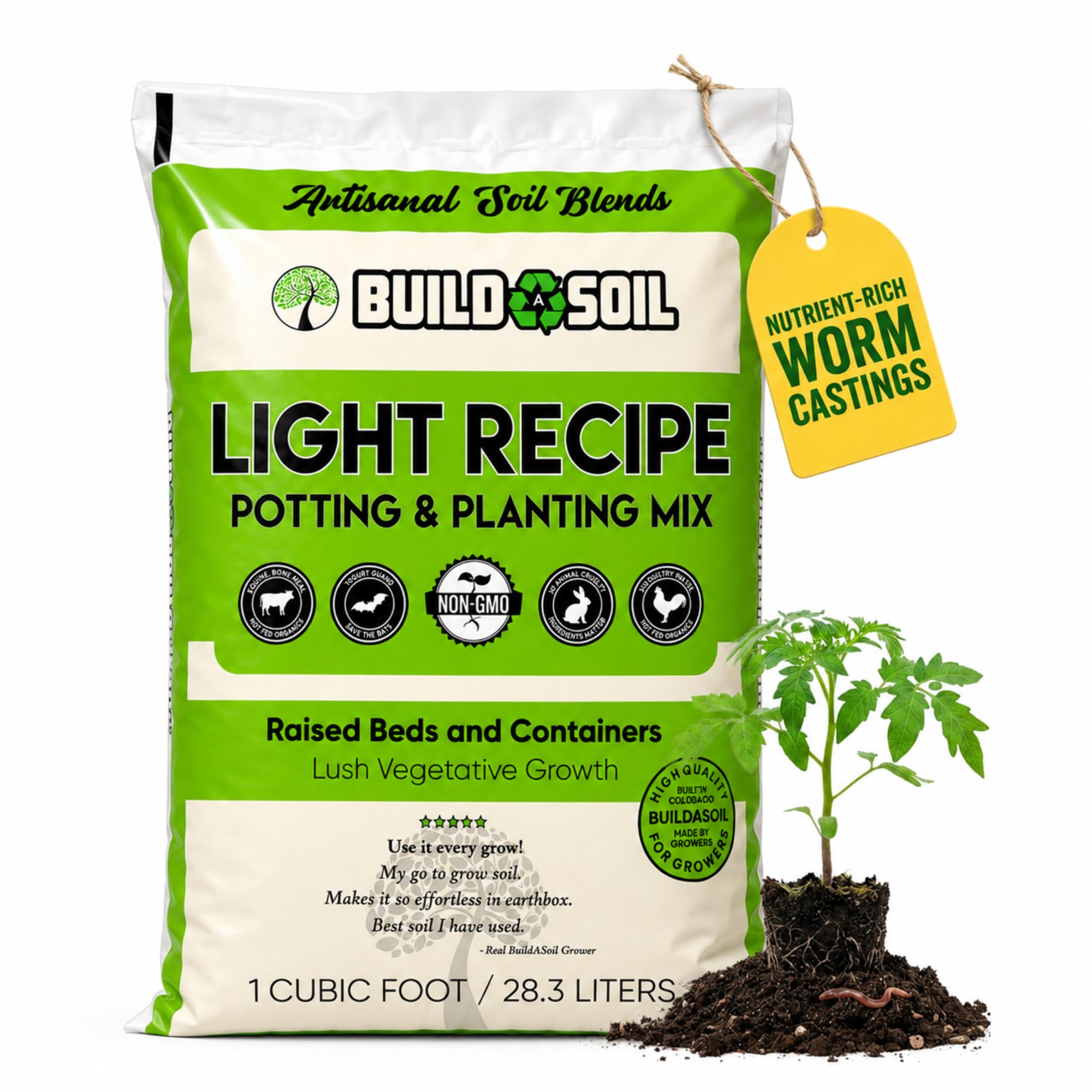
The low-sodium, lab-tested mix for gardeners who demand total ingredient transparency.
This 1-cubic-foot bag makes a unique promise: it is a low-sodium formula designed to reduce salt stress on roots while promoting beneficial soil biology. Many cheaper bagged soils rely on salt-based fertilizers that can burn delicate roots, but BuildASoil’s recipe uses certified organic inputs with zero synthetic additives. It is high in worm castings and compost, giving it a loamy texture that provides “excellent aeration, drainage, and moisture retention.” The brand also publishes complete ingredient transparency, so you know exactly what is in the bag. It weighs 30 pounds, making it the lightest per cubic foot among the premium options here.
Shoppers say it is “amazing and won’t burn your plants” — a direct consequence of the low-sodium formula. It is BuildASoil’s most popular recipe, trusted for vegetables, herbs, flowers, and houseplants both indoors and out. The bag is designed for raised beds, containers, planter boxes, seeds, and transplants. However, at 1 cubic foot, the bag volume is smaller than the Coast of Maine (2 cu ft), meaning you will need 16 bags of BuildASoil compared to 8 bags of Coast of Maine to fill a 16-cubic-foot bed. That pushes the total cost higher than it first appears.
Compared to the Espoma mix, the BuildASoil is a cleaner, more controlled product — no batch-quality complaints about wood fines have surfaced in its reviews. The trade-off is a smaller bag and a higher per-bag cost, which makes this a precision soil for the gardener who cares more about ingredient purity than bulk value. If you are starting seeds or transplanting into a small container bed, this is a solid choice. For a full-size raised bed, the volume-cost ratio gets less favorable quickly.
The lab-tested edge: Low sodium and low chloride/bicarbonate levels mean your roots face less osmotic stress, so water and nutrients flow into the plant more freely — a spec that matters for hydroponic and sensitive transplant starts.
The honest trade-off: The 1-cubic-foot volume means filling a standard 4×4 bed takes 16 bags of this soil, which adds up fast on price. Best for smaller raised beds, containers, and seedling mixes.
Best for: precision gardeners, seed starters, and container growers who want a low-sodium, transparent-ingredient soil that will not burn young roots.
Not ideal for: large-scale raised-bed filling where bulk volume per dollar matters more than formula purity.
6. Gaia Green Organic Living Soil, 1 cu ft

A pre-charged, biologically active mix that feeds your plants from the first watering.
This is the one-stop-shop dirt for gardeners who do not want to mix, measure, or amend anything. It comes pre-loaded with slow-release nutrients — kelp meal, alfalfa, bone meal, glacial rock dust, oyster shell, worm castings, insect frass (a fancy name for caterpillar droppings, which are rich in beneficial microbes), and composted inputs. You simply open the bag, fill your pot or bed, plant, and water. The 35-pound bag (1728 cubic inches volume) is exactly 1 cubic foot, putting it in a smaller size class than the 1.5-cubic-foot Espoma mix. It is CDFA-registered (California Department of Food and Agriculture registered organic input) and free from synthetic chemicals.
Buyers report it is “one of the best out of the bag soils on the market” and that “plants love this soil.” The mix includes peat, perlite, and coco coir for a light, well-draining structure that supports strong root growth. Because it is biologically active, the soil community (microbes, fungi, and small organisms) continues working to break down organic matter and make nutrients available to your plants over time. One buyer mentioned it is “nice and fresh” and “worked out great,” though they cautioned that “the prices a little high” and the free delivery helps offset the cost.
Where this mix sits in the lineup: it is a premium-priced bag but offers the convenience of a true “living soil” that is ready to go. If you are an organic gardener who wants to avoid the guesswork of measuring amendments, this is a strong pick. However, if you already have a favorite fertilizer regimen, you might be paying for nutrients you do not need. Against the Coast of Maine, the Gaia Green has a smaller fill volume (1728 cu in vs 2 cu ft) but a more diverse pre-charged nutrient profile.
Why it works
- Pre-charged with a broad spectrum of slow-release organic nutrients
- CDFA-registered and free from synthetic chemicals
- Includes insect frass and worm castings for a biologically active soil
Consider this
- Premium price for a 1.5 cu ft volume bag — more expensive than the Espoma mix per cubic foot
- Not ideal for gardeners who already have their own fertilizer schedule
Pick this if: you want a true pre-charged living soil that needs zero mixing or amendments — just fill, plant, and water.
pass on it if: you are on a strict budget or prefer to control your own fertilizer inputs separately from the base soil.
Understanding the Specs
Cubic Feet vs. Cubic Inches
Bag volume is the most important number for planning how much dirt you need. A standard raised bed that is 4 feet by 4 feet and 12 inches deep requires 16 cubic feet of soil. If a bag says “2 cu ft,” you need eight bags. If it says “1728 Cubic Inches,” that is exactly 1 cubic foot (because 12×12×12 = 1,728). Always convert everything to cubic feet before ordering — weight in pounds is misleading because fluffy, compost-based mixes weigh less than dense, sand-heavy soils but fill the same volume.
Mycorrhizae and Beneficial Fungi
Mycorrhizae (pronounced my-ko-RYE-zee) are a type of beneficial fungus that attaches to plant roots. In exchange for sugars from the plant, the fungi extend their network far beyond the root zone, pulling in water, phosphorus, and other nutrients the roots could not reach on their own. Soils that list “endo & ecto mycorrhizae” on the bag are giving your plants a built-in nutrient-delivery team — especially useful for tomatoes, peppers, and squash, which are heavy feeders.
FAQ
How much dirt do I need for a 4×4 raised bed that is 12 inches deep?
Can I use potting mix instead of raised bed soil?
How often do I need to replace the dirt in a raised bed?
What does “pre-charged” mean in a bagged soil?
Is bagged raised bed soil safe for organic gardening?
Why does my bagged soil have woody chunks and twigs in it?
Can I mix two different bagged soils together in one bed?
What is biochar, and why is it in some raised bed soils?
Do I need to add fertilizer to a pre-charged raised bed mix?
How long does a bag of raised bed soil last once opened?
Final Thoughts: The Verdict
For the majority of shoppers, the best dirt for raised bed gardens winner is the Coast of Maine Castine Blend because it delivers the largest single-bag volume (2 cubic feet) with the richest ingredient roster — lobster and crab shell meal, mycorrhizae, and biochar — for a truly sturdy, living soil that reviewers consistently praise for its texture and results. If you want a budget-friendly option with mycorrhizae and a fair price, grab the Espoma Organic Raised Bed Mix. And for container gardeners who need a lightweight, OMRI-listed, plant-based compost that makes seedlings take off noticeably faster, the Purple Cow Organics Veggie Mix is your best bet.
How We Picked
We do not accept paid placement. Every pick is matched to a real buyer and a real use-case; we do not hands-on test units.
Sources & Methodology
Specifications: manufacturer listings and product documentation. Review insights: verified customer reviews, as of July 2026. Pricing: not shown on this page (it changes often); check the current price via the retailer link.
As an Amazon Associate, Lawn Gear Lab earns from qualifying purchases. This does not affect which products we feature.