
Specs are compiled from manufacturer listings and verified buyer reviews and can change over time — please confirm the key details on the product page before buying.
You open a bag of garden soil and three weeks later your seedlings still look the same. That is the sign of a mix that suffocates roots or drowns them. The best garden soil lets roots breathe, holds water without getting soggy, and feeds plants steadily. After comparing manufacturers’ specs and verified buyer feedback, one blend stands out for most medium-scale gardeners: the Coast of Maine Organic Planting Soil – a 20-quart OMRI-listed (a certification for organic gardening products) mix that feeds tomatoes and veggies without synthetic shortcuts.
I’m Rikta — the founder and writer behind Lawn Gear Lab. This guide is built by comparing the manufacturers’ published specifications and the patterns across verified customer reviews, so you get each pick’s real strengths and trade-offs instead of marketing spin.
The key is matching the bag to your planting style. If you fill raised beds, set up pots on a patio, or mix your own blend, you need a base that holds water without getting soggy and feeds roots without burning them. Read on to find the best garden soil for your garden this season.
Quick Picks
- Coast of Maine Organic & Natural Planting — Best Overall
- Midwest Hearth Premium Potting Soil Mix (8 qt) — Best Texture
- Espoma Organic Potting Soil Mix (8qt, Pack of 2) — Top Organic Value
- Michigan Peat General All Purpose Premium — Bulk Power
- Coast of Maine Bar Harbor Blend Potting Soil — Premium Blend
- Miracle-Gro Potting Mix (8 qt, 3-Pack) — Feeds Itself
- FoxFarm Ocean Forest Potting Soil (4 x 12 Quart) — Grower’s Choice
How To Choose The Best Garden Soil
Picking the right bag means matching the mix to where you plant. In-ground beds need a heavier base that improves native dirt, while containers demand a light, fluffy blend that drains fast. Here are the three specs that separate a good bag from a disappointing one.
Volume vs. weight
A 20-quart bag can be lighter than an 8-quart bag if the ingredients are mostly peat and compost rather than sand and topsoil. Always check the quart or cubic-foot volume, not how heavy the bag feels on the shelf. More quarts per dollar usually means more growing medium, but read the ingredients to make sure you are not buying mostly filler.
Drainage and aeration
Perlite (white volcanic glass granules that create air pockets), vermiculite (a flaky mineral that soaks up water like a sponge), and coarse sand create air pockets that let roots breathe and water flow through. Without them, soil turns into a brick that suffocates roots. Look for mixes that list these components — fine-textured soils often hold too much water for containers and invite root rot.
Feeding schedule
Some bags come with slow-release fertilizer that feeds for months, and others are nutrient-free so you can control the feeding yourself. If you want a “water and forget” setup, pick a blend with added nutrients. If you prefer to adjust feed per plant, choose a base mix and add your own liquid fertilizer.
Quick Comparison
| Model | Best For | Volume | Key Additives | Feed Duration | Amazon |
|---|---|---|---|---|---|
| Coast of Maine Organic Tomato & Veggie | Rich organic feeding | 20 Quarts | Composted manure, peat | Nutrient-rich, no added chemical feed | Amazon |
| Midwest Hearth Potting Mix | Seed starting & delicate roots | 8 Quarts | Peat, vermiculite, perlite | Nutrient-free base | Amazon |
| Espoma Organic Potting Mix (2-Pack) | Indoor container gardening | 8 Quarts (per bag) | Earthworm castings, kelp, alfalfa, myco-tone | Natural slow-release | Amazon |
| Michigan Peat All Purpose (50 lb) | Heavy in-ground beds | — (50 lb) | Reed sedge peat, perlite, sand | Starter + slow-release fertilizers | Amazon |
| Coast of Maine Bar Harbor Blend (2-Pack) | Premium container gardens | 16 Quarts | Lobster & crab shell, kelp, compost | Natural slow-release nitrogen | Amazon |
| Miracle-Gro Potting Mix (3-Pack) | Convenient feeding for 6 months | 8 qt per bag | Fertilizer blend | Feeds up to 6 months | Amazon |
| FoxFarm Ocean Forest (4 x 12 qt) | Serious container growers | 12 Quarts per bag | Fish meal, crab meal, earthworm castings | Nutrient-rich, no nitrogen needed initially | Amazon |
In‑Depth Reviews
1. Coast of Maine Organic & Natural Planting Soil for Vegetables & Tomatoes (20 qt)

The 20-quart heavyweight that feeds tomatoes and vegetables without any synthetic shortcuts.
You get 20 quarts of composted manure and sphagnum peat moss (a lightweight fibrous material that holds water) in a single bag — which is 2.5x more volume than the 8-quart bags common at this price tier, making it a genuine value for anyone filling several large pots or prepping a small raised bed. The mix is OMRI-listed (a seal from the Organic Materials Review Institute saying it meets organic standards) for organic use, so you can feel confident the ingredients meet certified organic standards. Buyers report it is “lightweight” and consider it a “quality foil for potting tomatoes/zucchini in 5-gallon pots,” with plants thriving through the season.
Unlike the lighter Midwest Hearth mix that lacks any added nutrients, this Coast of Maine blend comes packed with composted manure, so you get a nutrient boost from the start. The trade-off is that the bag can feel heavy to carry, and some owners mention it may contain twigs or uncomposted matter that you might want to pick out before planting fine-seeded crops like carrots. For standard tomatoes, peppers, and leafy greens, it works right out of the bag.
What stands out
- 20 quarts of organic mix at a strong value — 2.5x the volume of 8-quart competitors
- OMRI-listed for organic gardening confidence
- Lightweight texture that avoids compaction in containers
Watch for
- May contain some twigs or uncomposted wood pieces
- Bag is heavy — not ideal if you have trouble carrying bulky items
Grab this if: you need a large-volume organic mix for container tomatoes, peppers, or zucchini and don’t mind the occasional bit of wood.
Look elsewhere if: you need a fine, sifted soil for tiny seeds like carrots or a lighter bag for easy handling.
2. Midwest Hearth Premium Potting Soil Mix (8 qt)

The light, fluffy mix built for starting seeds and nurturing delicate root systems.
This 8-quart bag uses peat moss, vermiculite, and perlite in a pH-controlled (adjusted acidity for plant health) formula that is identical to what professional growers use. The combination creates an airy texture that promotes strong root growth without packing down hard around the roots — something buyers specifically note: “does not appear to harden around the roots.” It is perfect for germinating seeds, transplanting tiny petunias, or potting up houseplants that need consistent moisture without sogginess.
Compared to the Coast of Maine blend, this mix contains no added fertilizer, making it a blank slate. You control the feeding schedule entirely. The downside is the 8-quart volume — some reviewers wish the bag was larger, especially when filling multiple containers. It is a premium size for delicate tasks, not for bulk filling raised beds.
Why it works
- Light, fluffy texture perfect for seed starting and sensitive roots
- pH-controlled for a broad range of plants
- No weeds or bugs reported by buyers
The size catch
- Only 8 quarts — small for large planting projects
- Nutrient-free, so you must add your own fertilizer for heavy feeders
Reach for this if: you are starting seeds, rooting cuttings, or repotting houseplants where texture and drainage matter most.
skip it if: you need a soil that feeds plants from the bag or need more than a few quarts at a time.
3. Espoma Organic Potting Soil Mix (8qt, Pack of 2)

An organic two-pack loaded with earthworm castings and mycorrhizae for indoor and outdoor containers alike.
This blend combines sphagnum peat moss, humus (decayed organic matter that improves soil structure), and perlite with a rich lineup of natural additives: earthworm castings (worm droppings packed with nutrients), alfalfa meal, kelp meal, and feather meal. It also includes Myco-Tone (a blend of endo and ecto mycorrhizae — beneficial fungi that attach to roots and help them absorb more water and nutrients). The pack contains two 8-quart bags, giving you 16 quarts total. Customers note the soil “came quickly and well packaged” and that plants “took to it immediately” — one reviewer noted their African violet “responded very well” after transplanting.
Where the Midwest Hearth mix is a blank canvas, Espoma comes with a built-in organic feeding system. The drawback, noted by some buyers, is that the mix can arrive “too dry” to absorb water easily on a new plant — you may need to moisten it before use. It is also pricey per quart compared to bulk blends, so it works best for individual pots rather than large beds.
What you get
- Rich organic ingredients: worm castings, kelp, alfalfa, feather meal
- Myco-Tone for root health and nutrient uptake
- Works for both indoor and outdoor container plants
Keep in mind
- Can arrive very dry and needs pre-moistening
- More expensive than bulk or synthetic mixes
Best for: indoor potted plants, African violets, herbs, and anyone who wants a natural, easy-to-use organic mix for a few containers.
Not for: filling raised beds or large gardens where budget per quart matters most.
4. Michigan Peat General All Purpose Premium Potting Soil (50 lb)

The heavy-duty 50-pound bag that goes straight from the drop-off to the raised bed without mixing.
Michigan Peat’s all-purpose blend is a ready-to-use mix of rich dark reed sedge peat, perlite, and sand, plus starter and slow-release fertilizers already included. This is a soil that feeds plants gradually rather than flooding them with quick-release nutrients. At 50 pounds, it is a serious bag meant for filling multiple pots, planters, or the bottom layers of a raised bed. One buyer simply summed it up: “it’s dirt. But it’s a good potting mix and arrived moist.” Others confirm it has a “perfect consistency for potting.”
Compared to the finely tuned Espoma blend, this is a more basic, heavy, all-purpose solution. The main warning from buyers is that the soil can harbor fungus gnats — a common issue with rich soil mixes that stay moist. If you are prone to gnats indoors, consider using this outdoors only or letting it dry out between waterings.
The upside
- 50-pound bag offers bulk value for large projects
- Ready to use with slow-release fertilizer already mixed in
- Moist on arrival, which buyers appreciate
The downside
- Several reviews mention fungus gnats emerging from the soil
- Heavy — lifting and moving the bag is a workout
Choose this for: outdoor raised beds, large container gardens, and any project where buying in bulk makes sense.
Avoid it if: you are potting indoor plants and want to skip the gnat risk, or you cannot handle a 50-pound bag.
5. Coast of Maine Bar Harbor Blend Potting Soil (16 QT, 2-Pack)
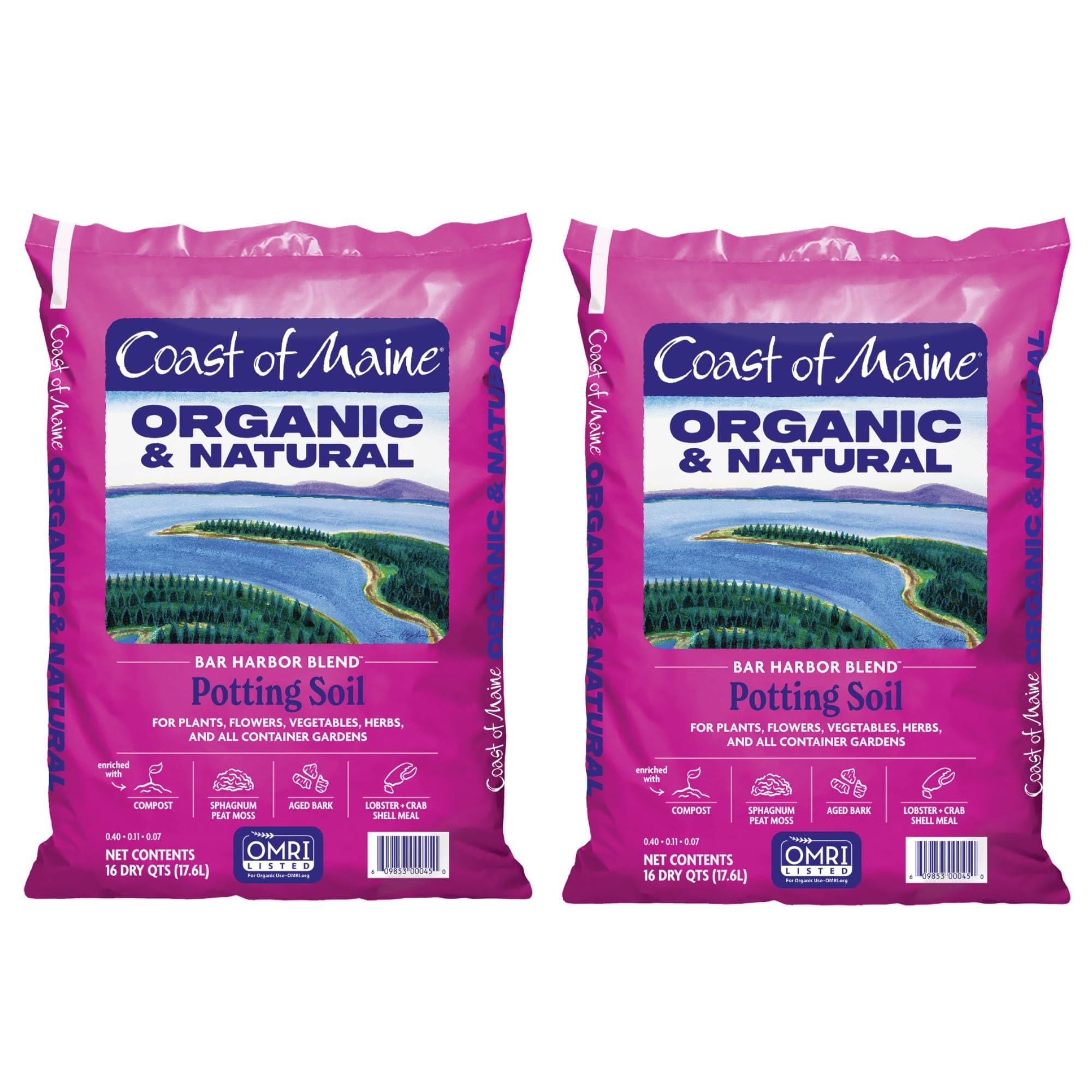
A coastal Maine blend with lobster shell meal that makes container tomatoes and flowers explode with growth.
This 16-quart pack (two 8-quart bags) combines sphagnum peat moss, compost, perlite, lobster and crab shell meal (ground shells that release nitrogen slowly and contain chitin, a compound some gardeners believe helps suppress soil-dwelling pests), and kelp meal into a nutrient-dense organic mix. Buyers are emphatic: “Some excellent soil for container garden,” “my tomatoes never looked so good,” and “I used to swear by a certain ‘top brand,’ but now I will never go back.” The texture is dark, rich, and smells earthy rather than sour — no bad odor reported.
This is the premium choice next to the mid-range Coast of Maine Tomato & Veggie blend. The Bar Harbor costs more per quart but delivers a richer compost mix with less peat and better added nutrients (lobster/crab meal vs. just manure). The catch is the price — at a premium tier, this is best reserved for high-value containers like tomatoes and flowering baskets where you want dramatic results.
Why it shines
- Exceptional nutrient profile with lobster, crab, and kelp meals
- Reviewers point out explosive growth in tomatoes, potatoes, and peas
- No weeds or bad smells, unlike some compost-heavy mixes
The trade-off
- Premium price — not a budget buy for large beds
- Only 16 quarts total in the 2-pack
Best for: serious container gardeners growing tomatoes, peppers, or flowers in pots where you want maximum organic nutrition.
Look elsewhere if: you need to fill a large raised bed on a budget or prefer a soil with no added shell meal scent.
6. Miracle-Gro Potting Mix (8 qt, 3-Pack)

The self-feeding three-pack that automatically feeds potted plants for six months after planting.
This bundle gives you three 8-quart bags of the classic Miracle-Gro potting mix, which includes a built-in fertilizer that feeds plants for up to 6 months. The manufacturer claims it “Grows Plants Twice As Big! (vs. unfed plants).” Each bag fills two 8-inch containers, making the three-pack ideal for a small patio garden of annuals, perennials, and herbs. Buyers like the smaller bag size for easy handling — one buyer mentioned they “order in these smaller bags so I don’t have to lug around the large ones.”
Where the Coast of Maine Bar Harbor blend relies on natural slow-release nitrogen, Miracle-Gro uses a controlled-release synthetic fertilizer (manufactured nutrients that feed plants immediately). That is convenient but not organic. The texture drains well and stays loose, so roots get good aeration. The downside is a smaller total volume compared to the bulk Michigan Peat bag — 24 quarts total across all three bags, versus a single 50-pound mass. If you prefer organic gardening, skip this one.
What works
- Built-in feeding for 6 months — no extra fertilizer needed
- Light, well-draining texture that doesn’t compact
- Small individual bags are easy to carry and store
What doesn’t
- Synthetic fertilizer — not suitable for organic gardeners
- 24 quarts total may not be enough for large pots or beds
Best for: casual patio gardeners who want a reliable, low-effort soil that feeds itself through the growing season.
Not for: organic gardens, or anyone needing a large bulk bag for extensive planting.
7. FoxFarm Ocean Forest Potting Soil (4 x 12 Quart)
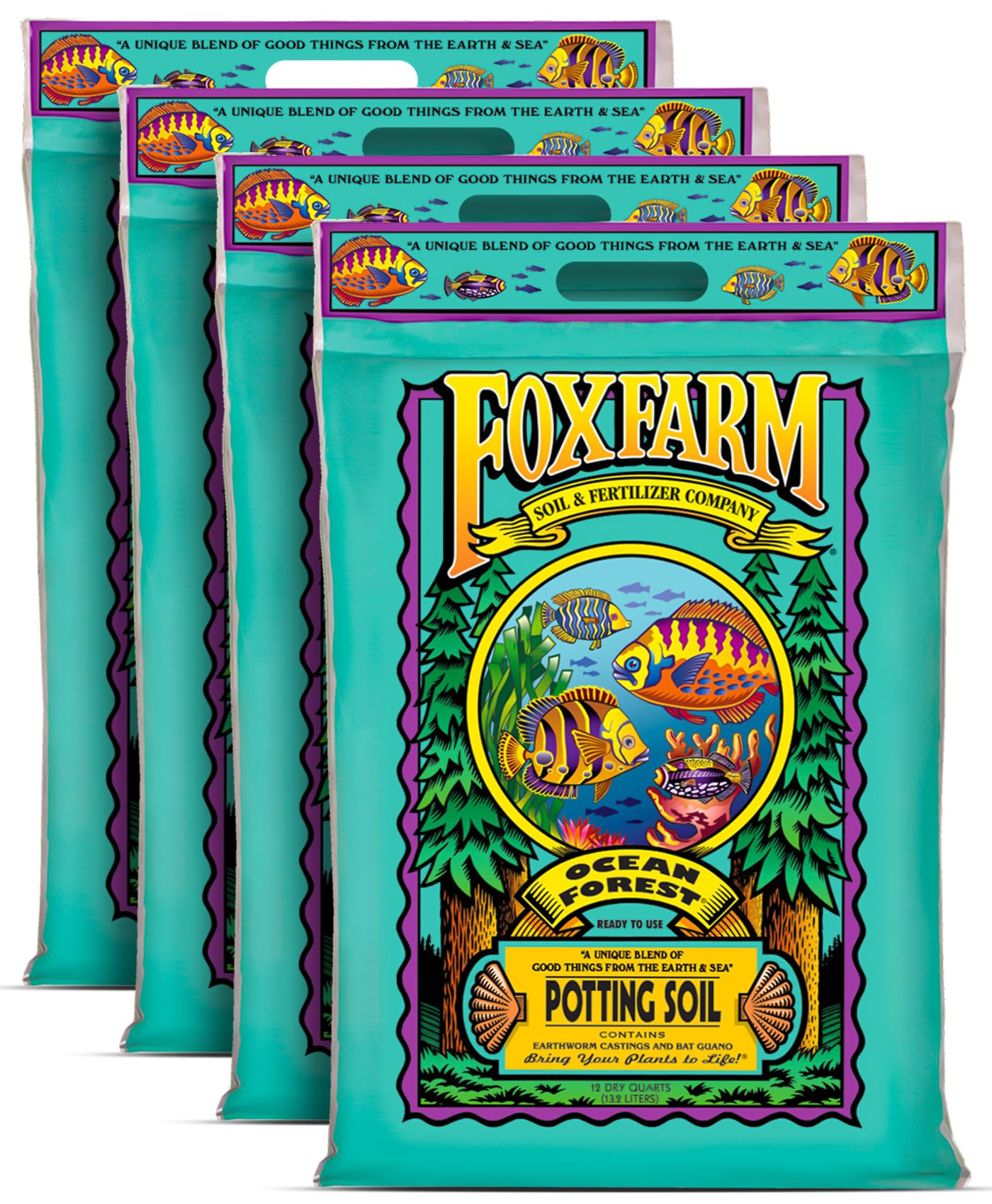
The gold-standard potting soil with a 6.8 pH and a blend of fish, crab, and worm castings that serious container growers swear by.
FoxFarm Ocean Forest is a legendary mix in the gardening community, and this bundle gives you four 12-quart bags — 48 quarts total — of the same formula used by professional container growers. The blend features aged forest products, sandy loam (a balanced soil type with sand, silt, and clay), sphagnum peat moss, fish meal, crab meal, and earthworm castings. Its pH (a measure of acidity or alkalinity) is balanced to 6.8 (slightly acidic, ideal for most vegetables and flowers), which covers most plants’ balance. Buyers confirm it is “PH balanced, great stuff!” and note an “earthy smell” plus excellent drainage. One owner reported their “fiddle leaf fig already looks happier” after repotting.
Compared to the Coast of Maine Bar Harbor blend, FoxFarm uses a slightly different base (more aged forest products and sandy loam) and comes at a steeper price. Reviewers uniformly say it is “premium organic soil worth the cost.” The only common complaint is the price — it is the most expensive option per quart in this lineup. Many experienced growers actually mix this with a cheaper base soil to stretch the value while still getting the nutrient boost.
What makes it special
- pH 6.8 — ready for a wide variety of plants without adjustment
- Loaded with fish meal, crab meal, and earthworm castings
- Excellent drainage and light, aerated texture
The steep cost
- Highest price per quart — not a budget pick
- Some buyers recommend mixing with a cheaper base to reduce cost
Perfect for: serious indoor and outdoor container growers who want a premium, pH-balanced organic mix with proven nutrients for maximum growth.
Avoid if: you are on a tight budget or need dozens of cubic feet for in-ground beds — mixing down with a base soil is wiser.
Understanding the Specs
Volume (Quarts)
Bag size tells you how much you are actually buying — and bag weight is a poor guide. A 20-quart organic blend can weigh less than an 8-quart sand-heavy mix. Always check the quart volume to compare value between products. For a typical 5-gallon pot (about 11 inches wide), you will use about 10-12 quarts to fill it completely. A single 8-quart bag covers about one large pot; a 20-quart bag handles two or three.
Aeration: Perlite & Vermiculite
Perlite (white volcanic glass granules that look like tiny popcorn) and vermiculite (golden-brown flaky mineral that absorbs water) both create air pockets in the soil, but they act differently. Perlite provides sharp drainage and aeration — great for succulents and plants that hate wet feet. Vermiculite holds water like a sponge and releases it slowly, making it ideal for moisture-loving plants and seed starting. A mix with both gives you a balanced soil that drains well but holds enough moisture between waterings.
FAQ
What is the difference between garden soil and potting mix?
How many quarts of soil do I need for a raised bed?
Does garden soil expire or go bad?
Can I reuse garden soil from last year’s pots?
What is Myco-Tone and why should I care?
Is organic garden soil better than synthetic?
How do I store an open bag of garden soil?
Should I add extra perlite to my garden soil?
Can I use garden soil in an indoor pot?
What does a pH of 6.8 mean for my plants?
Final Thoughts: The Verdict
If you want one dependable pick, the best garden soil winner is the Coast of Maine Organic Planting Soil because it delivers 20 quarts of nutrient-rich organic blend at a practical volume for medium-scale container gardening. If you want a finer texture and absolute control over feeding, grab the Midwest Hearth Potting Mix. And for serious container growers chasing maximum organic nutrition, the standout is the Coast of Maine Bar Harbor Blend or the FoxFarm Ocean Forest — just expect to pay more per quart for those results.
How We Picked
We do not accept paid placement. Every pick is matched to a real buyer and a real use-case; we do not hands-on test units.
Sources & Methodology
Specifications: manufacturer listings and product documentation. Review insights: verified customer reviews, as of July 2026. Pricing: not shown on this page (it changes often); check the current price via the retailer link.
As an Amazon Associate, Lawn Gear Lab earns from qualifying purchases. This does not affect which products we feature.