
Specs are compiled from manufacturer listings and verified buyer reviews and can change over time — please confirm the key details on the product page before buying.
Sick of thin, patchy grass and soil that feels like concrete no matter how much you water and fertilize? Your lawn might be missing one thing — carbon. Carbon powder for lawns (usually sold as biochar or activated charcoal) rebuilds soil structure, holds onto nutrients so they do not wash away, and gives microbes a place to live. The right pick saves you money on water and fertilizer. The wrong one is basically a bag of dust.
I’m Rikta — the founder and writer behind Lawn Gear Lab. This guide is built by comparing the manufacturers’ published specifications and the patterns across verified customer reviews, so you get each pick’s real strengths and trade-offs instead of marketing spin.
Your lawn lives or dies by what is happening underground, and adding a quality carbon amendment is the fastest way to build living, fertile soil that feeds grass without dumping on synthetic chemicals. Read on for the five best carbon powder for lawns options that actually deliver measurable results.
Quick Picks
- Char Bliss (24 Qts) – Organic Biochar Soil — Best Overall
- Wakefield Biochar Soil Conditioner — Large Area Pick
- FOOP Organic Inoculated Biochar (128oz) — Premium Pick
- GreenGro Earthshine – Biochar & Humic Acid — Niche Value
- FOOP Organic Inoculated Biochar (64oz) — Entry-Level
How To Choose The Best Carbon Powder For Lawns
Not all black bags are the same. Raw charcoal from a fire pit can actually rob your soil of nitrogen. The right carbon powder is “charged” or “inoculated” — meaning it is already loaded with microbes or nutrients so it helps immediately instead of stealing.
Check if it’s inoculated (charged)
Raw biochar acts like a sponge. If you mix dry, uncharged char into your soil, it will suck up available nutrients before your grass can use them. Look for a product that says it is pre-charged, inoculated, or blended with compost/humic acids. That means you can mix it in and see results right away.
Match the bag size to your lawn
Carbon powder is measured in pounds or quarts (or cubic feet for bulk bags). A 2-pound bag covers a few potted plants or a small garden bed. If you are treating a full lawn, you will want a larger format like a cubic foot bag (roughly 10-12 pounds) or a 128-ounce bag. Always check the mixing ratio on the label.
Look for a clean, fine texture
Chunky pieces are harder to mix into soil and take ages to break down. The best carbon powders for lawns have a consistent, fine-to-medium grain that blends easily into topsoil or potting mix without clumping. Buyers report that too much dust at the bottom of the bag is a sign of low-quality processing.
Quick Comparison
| Model | Best For | Size | Form | Inoculated | Amazon |
|---|---|---|---|---|---|
| Char Bliss (24 Qts) | Versatile all-rounder | 24 Quarts | Fine powder | No (needs charging) | Amazon |
| Wakefield Biochar (1 cu ft) | Large lawns & gardens | 1 Cubic Foot | Fine granules | No (needs charging) | Amazon |
| FOOP Biochar 128oz | Instant microbe kick-start | 128 Fluid Ounces | Inoculated powder | Yes | Amazon |
| GreenGro Earthshine 2lb | Small beds & potted plants | 2 Pounds | Powder (with worm castings) | Yes | Amazon |
| FOOP Biochar 64oz | Entry-level / first try | 64 Fluid Ounces | Inoculated powder | Yes | Amazon |
In‑Depth Reviews
1. Char Bliss (24 Qts) – Organic Biochar Soil Amendment
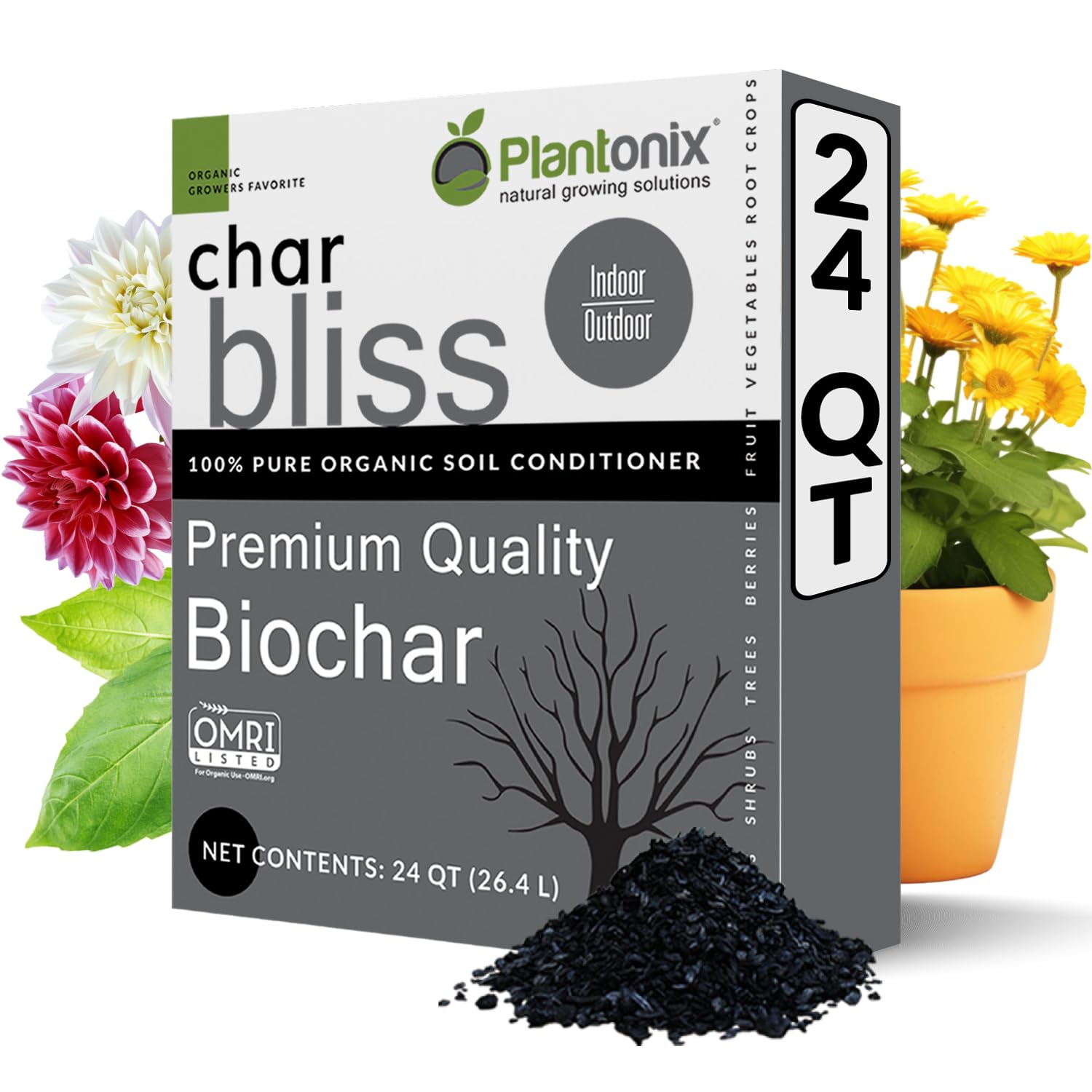
A finely ground, OMRI-listed biochar that disappears into soil and holds nutrients like a sponge.
Char Bliss gives you 24 quarts of fine-grained biochar — more volume per dollar than the pre-inoculated FOOP picks below. It arrives raw (uncharged), so you must mix it with compost or compost tea before applying to your lawn to stop it from stealing nutrients at the start. Once charged, its porous structure traps moisture so you water less often, and it loosens compacted clay for better root penetration. Owners mention mixing “1 cup per 3 cubic feet” into potting mixes, noticing “more vigorous” growth. One reviewer praised the “no dust at the bottom” — a sign of clean processing.
Reviewers also note it helps deter mold in moist conditions, useful if you overwater. The trade-off: you pay for raw char and must charge it yourself. If you want something that works the second you open the bag, the FOOP picks below skip that step.
Best bang for your bag: Char Bliss earns its spot as Best Overall because it delivers a generous volume (24 quarts) of clean, fine-grained biochar at a great per-quart cost — just be ready to charge it with compost before use.
Reach for this if you want the most biochar for your money and you already have compost or worm castings to charge it with.
Look elsewhere if you want a pre-inoculated product you can sprinkle straight onto the lawn without any extra steps.
2. Wakefield Biochar Soil Conditioner (1 Cubic Foot)
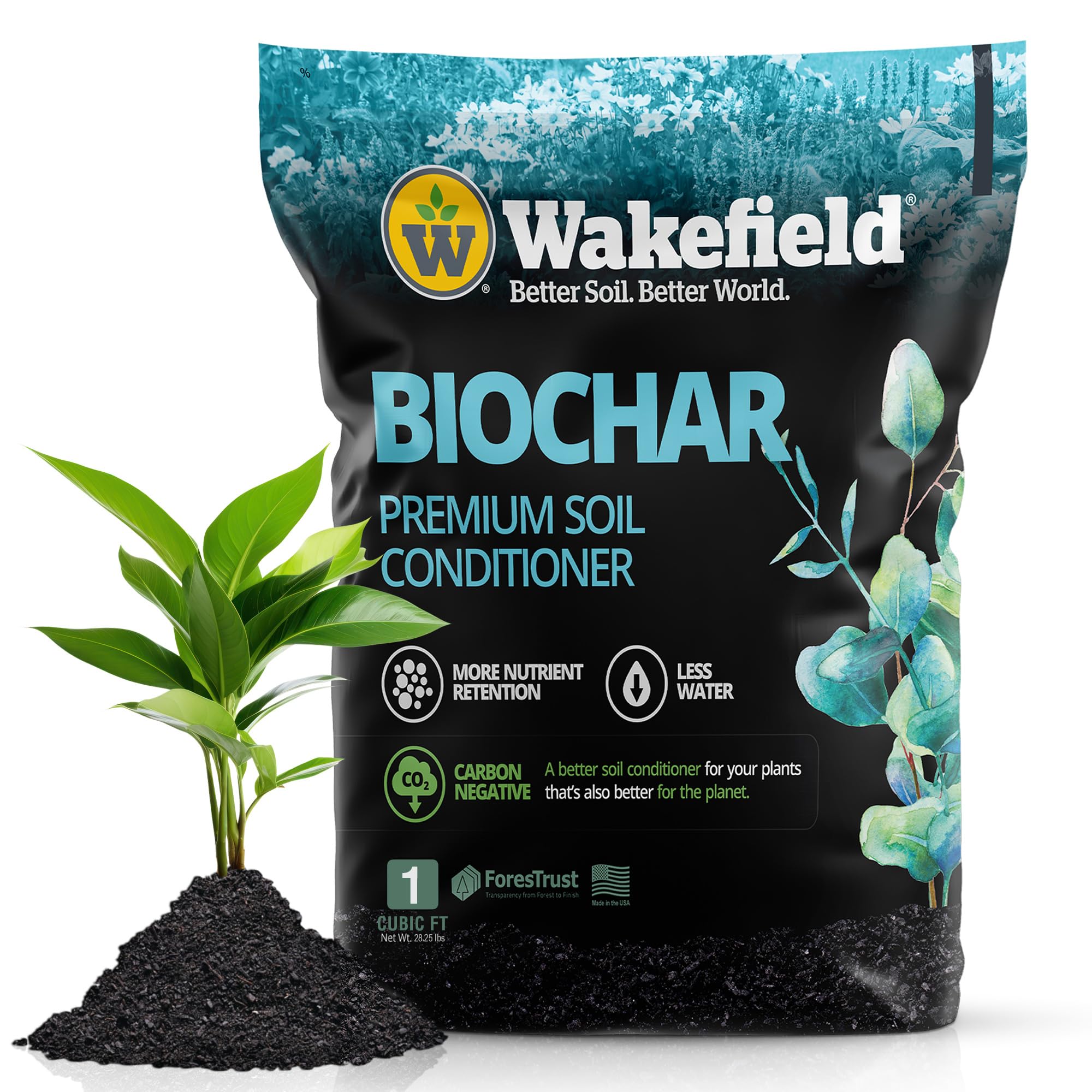
A cubic-foot bulk bag engineered to improve moisture retention by up to 30% across large lawns.
At 1 cubic foot, Wakefield delivers the most coverage of any product here — enough for a substantial lawn or multiple raised beds. The maker says its sponge-like pores absorb excess rainwater and release it during dry spells, cutting down on how often you need to run the sprinkler. This is raw biochar, so like Char Bliss you need to charge it with compost or let it sit in water for a few days before using it on living soil.
One reviewer noted the bag is “surprisingly small for the price” and noted it “requires a lot of it to add to planter pots or raised garden.” Another buyer found it helped balance low soil pH after three uses. If you are covering a big lawn and want a single bag that goes furthest, this is the one — just factor in the extra step of charging it before spreading.
Why it earns its spot
- Largest single-bag volume (1 cubic foot) for broad coverage
- Engineered to boost water retention and reduce leaching of nitrogen, phosphorus, and potassium
- Sustainably sourced from agricultural byproducts with a carbon-negative claim
Watch out for
- Requires charging with compost or water before use — not pre-inoculated
- Some buyers found the bag smaller than expected relative to the price
Best for big projects: The Wakefield bag covers the most ground per purchase, making it the smart choice for anyone treating a full lawn or multiple large garden beds.
skip it if you only have a few potted plants or a tiny yard — the 24-quart Char Bliss goes further for less.
3. FOOP Organic Inoculated Biochar (128oz)
Ready-to-use biochar already loaded with billions of microbes — zero prep, just mix in.
FOOP solves the biggest headache with raw biochar. The 128-ounce bag comes pre-inoculated and “soaked in tea,” so it will not suck nutrients out of your soil. You can mix the whole bag with a 2 cubic foot bag of potting or garden soil and apply immediately. No waiting, no pre-charging. That convenience costs more per ounce than the raw bags, but you save time and avoid the risk of nutrient lock-up.
Reviewers report that it “transformed unhealthy soil” — one buyer mentioned a peony planted in treated soil “grew immediately vs. prior one rotted.” Another buyer who makes their own soil called it “an essential ingredient” because it is “already soaked in tea.” The brand says it is sustainably sourced from pine industry waste with no dusty particles and no PPE required.
The “open-and-mix” winner: If your top priority is avoiding the extra step of charging biochar, FOOP 128oz is the easiest premium option — just be prepared to pay a premium per ounce for that readiness.
Grab this for instant results without the wait — ideal if you are new to biochar and want a simple to use first experience.
Consider another option if you need to cover a huge area and your budget is tighter; the raw bags stretch further per dollar.
4. GreenGro Earthshine – Biochar & Humic Acid Blend (2lb)

A fortified biochar blend with humic acid and worm castings that works like a complete soil tonic.
GreenGro stands apart because it is not just char — it is a mix of biochar, humic acid, glacial rock dust, and worm castings. That means it is already charged with organic matter and ready to use right out of the bag. The 2-pound size is small, so this is best for container plants, small garden beds, or spot-treating struggling areas rather than blanketing a whole lawn.
Buyers rave about the results: one reviewer called it “magic in a bag for old soil like coir to be reused.” Another reported that their hibiscus “exploded to about 6 ft in its first year” and a first-year toona sinensis grew to 4.5 feet from a seedling. The downside is the small bag size versus the price — you pay a premium for the added ingredients, and for a big lawn you would need multiple bags.
Small-space specialist: If you are reviving a few raised beds or potted trees, the pre-blended nutrients in GreenGro deliver faster results than raw biochar alone — just know the 2-pound size limits your coverage.
Best for container gardens, fruit trees, and small patches where you want an all-in-one soil booster with no extra mixing.
Not the pick for large lawns — you will run out too fast and the per-pound cost gets steep.
5. FOOP Organic Inoculated Biochar (64oz)
The smaller, budget-friendly version of FOOP’s inoculated biochar — perfect for a first trial.
If you are not ready to commit to a big bag, the 64-ounce FOOP is the same pre-inoculated, ready-to-use biochar as its larger sibling but at about half the price. The mixing instruction says to combine the entire bag with one cubic foot of soil. Like the 128oz version, it is loaded with billions of microbes so you can mix it straight in without waiting.
Customers note it “transformed unhealthy soil” and one first-time gardener said a master gardener “was surprised that I already taken this approach.” Another reviewer noted it is “already soaked in tea” so it does not steal nutrients from your soil. The downside? At 64 fluid ounces, this bag covers 1 cubic foot of soil compared to the 128oz version’s 2 cubic feet — for a full lawn you would need several bags.
Why start here
- Pre-inoculated and ready to use — no extra charging step
- Smaller bag is a low-cost way to test biochar on a few plants or a small bed
- Sustainably sourced from pine industry waste with no dusty particles
Limitations
- Coverage is limited (one bag mixes with 1 cubic foot of soil)
- Per-ounce cost is higher than buying the 128oz version
Try-before-you-commit pick: The 64oz FOOP is the smartest way to dip your toe into biochar without spending a lot — if you like the results, step up to the 128oz bag next time.
pass on it if you already know biochar works for you and you want to cover more ground — the larger FOOP bag or Wakefield cubic foot will save you money per ounce.
Understanding the Specs
Inoculated vs Raw Biochar
Inoculated (or “charged”) biochar has been soaked in compost tea or a microbial solution before bagging. That means the carbon is already full of nutrients and beneficial microbes, so you can mix it into soil immediately. Raw biochar is like an empty sponge — it needs to sit in compost or water for a few days before use, or it will pull nutrients away from your plants. If you see “pre-inoculated” or “charged” on the label, that is a convenience you pay extra for.
Bag Volume and Coverage
Carbon powder is sold in pounds, quarts, fluid ounces, or cubic feet — and they are not interchangeable. A 2-pound bag is small (good for pots or a single garden bed). A 24-quart bag holds about 10 pounds and covers several raised beds or a small lawn section. A 1 cubic foot bag is roughly 10-12 pounds and is the best choice for treating a full lawn. Always check the mixing ratio on the label: most products tell you to mix one bag with a certain volume of soil (e.g., “combine with 1 cubic foot of soil”).
FAQ
What exactly is carbon powder for lawns?
Can I use charcoal from my fire pit instead?
How do I apply carbon powder to an existing lawn?
How much biochar do I need for my lawn?
Will biochar change my soil pH?
Is biochar safe for pets and children?
How long does biochar last in the soil?
Can I mix biochar with my fertilizer?
Is biochar the same as activated charcoal for plants?
Why would I choose a pre-inoculated product over raw biochar?
Final Thoughts: The Verdict
For most buyers, the carbon powder for lawns winner is the Char Bliss (24 Qts) because it gives you the most volume for your money and the fine, clean texture mixes easily into any soil — just remember to charge it with compost first. If you want a ready-to-use option that works straight out of the bag, grab the FOOP Organic Inoculated Biochar (128oz). And for large lawns needing bulk coverage, the standout is the Wakefield Biochar (1 cu ft) for sheer square footage per bag.
How We Picked
We do not accept paid placement. Every pick is matched to a real buyer and a real use-case; we do not hands-on test units.
Sources & Methodology
Specifications: manufacturer listings and product documentation. Review insights: verified customer reviews, as of July 2026. Pricing: not shown on this page (it changes often); check the current price via the retailer link.
As an Amazon Associate, Lawn Gear Lab earns from qualifying purchases. This does not affect which products we feature.