
Specs are compiled from manufacturer listings and verified buyer reviews and can change over time — please confirm the key details on the product page before buying.
If you start seeds indoors, you already know the frustration: flimsy trays that collapse when you move them, cells too shallow for proper root growth, and plastic that cracks before you get to transplant. A 50 cell seed tray needs to hold up to soil, water, and repeated handling — and the differences between them are huge.
I’m Rikta — the founder and writer behind Lawn Gear Lab. This guide is built by comparing the manufacturers’ published specifications and the patterns across verified customer reviews, so you get each pick’s real strengths and trade-offs instead of marketing spin.
Whether you are a home gardener starting a handful of tomatoes or a greenhouse grower propagating hundreds of plants, the right tray changes your success rate. Here is everything you need to confidently choose the best 50 cell seed tray for your setup.
Quick Picks
- Nothers RooTrimmer 50 Cell — Best Overall
- RooTrimmer 50-Pack Extra-Deep 50 Cell Seed — Bulk Pro
- RooTrimmer 10 Pack 1020 Trays — Complete Kit
- Ferry Morse Jiffy Seed Starter Tray Kit — Entry-Level
- 50 Cell Plug Flats, 10 Each — Budget Pick
How To Choose The Best 50 Cell Seed Tray
Not all 50-cell trays are built the same. A cheap tray can save you a few dollars upfront but cost you seedlings when it buckles under wet soil. Here is what separates the long-lasting trays from the one-season disposables.
Cell Depth — The Root Room Factor
The single most important spec is how deep the cells are. Shallow cells around 2.3 inches work fine for quick-turn seedlings like lettuce or herbs, but plants that develop a taproot — tomatoes, peppers, milkweed — need at least 3.5 inches to grow strong before transplant. Deeper cells also hold more soil, which means the tray stays moist longer between waterings.
Plastic Thickness and Material
Thicker trays survive being carried, dropped, and washed. Look for trays described as 1mm thick or “heavy-duty” plastic. Polystyrene is the most common material — it is rigid and affordable, but it becomes brittle in direct sunlight. Polypropylene is more flexible and UV-resistant, though less common at this price point.
Drainage and Airflow
A good 50 cell seed tray has drainage holes at the bottom of each cell to prevent waterlogging, which causes damping-off disease. Some trays also have guide channels on top to route water evenly to each cell — a small detail that makes bottom-watering much easier.
Standard 1020 Compatibility
The “1020” standard means the tray fits into a flat that is roughly 10 inches by 20 inches. If you already own heat mats, humidity domes, or greenhouse shelving, check that your tray is 1020-compatible. A non-standard tray is a headache you do not need.
Quick Comparison
| Model | Best For | Cell Depth | Material | Pack Size | Amazon |
|---|---|---|---|---|---|
| Nothers RooTrimmer 50 Cell (10-Pack) | Best Overall — deep cells and thick plastic | 3.54″ | PS Plastic (1mm) | 10 trays | Amazon |
| RooTrimmer 50-Pack Extra-Deep | Commercial-scale propagation | 3.55″ | Plastic | 50 trays | Amazon |
| RooTrimmer 1020 + 50 Cell Combo (10 Sets) | All-in-one kit with trays and flats | 3.54″ | Plastic | 10 sets | Amazon |
| Ferry Morse Jiffy Seed Starter Kit | Beginners — includes peat pellets and dome | — | Peat/Plastic | 2 trays | Amazon |
| 50 Cell Plug Flats (10-Pack) | Budget-friendly for standard 1020 setups | 2.3″ | Plastic | 10 trays | Amazon |
In‑Depth Reviews
1. Nothers RooTrimmer 50 Cell, 10pcs-Pack Thick Durable Seedling Plastic Nursery Trays

The thick-walled workhorse that survived a tumble across the yard without a crack.
This is the tray you reach for when you are serious about strong transplants. Each cell is 3.54 inches deep — versus the 2.3-inch cells on the standard 50 Cell Plug Flats, giving taproot-heavy plants like tomatoes and peppers room they need before moving to the garden. The 1mm-thick PS plastic (a rigid and affordable plastic) feels solid in your hands, unlike thinner trays that flex when full of damp soil.
Buyers report these “survived being dumped on the ground and hauled around the yard without cracking,” transitioning well from indoor use to planting time. At 9.8 ounces per tray, they are light enough to move but heavy enough to feel built for the long haul. The drainage holes at the bottom prevent overwatering, and the guide channels on top help water reach each cell evenly when you bottom-water.
The catch is that the 11.02 x 21.26 inch dimensions are slightly larger than standard 1020 flats (the common 11 x 21 inch greenhouse tray size) — you need a tray that matches, and direct sunlight weakens polystyrene over time, so store them out of the sun. But for the home gardener starting 10 trays of seedlings each season, this pack hits the balance of depth, durability, and value.
Why It Stands Out
- 3.54-inch deep cells support strong root development for tall plants
- 1mm thick plastic resists cracking — buyers confirm it survives drops and hauling
- Guide channels make bottom-watering simple and even
Watch For
- Dimensions slightly larger than standard 1020 — verify tray fit
- Polystyrene becomes brittle if left in direct sunlight
Grab these if: you want deep cells in a durable tray that will survive re-use for several seasons without cracking or warping.
Look elsewhere if: you need a tray that fits existing 1020 flats perfectly — measure your setup first.
2. RooTrimmer 50-Pack Extra-Deep 50 Cell Seed Starter Trays
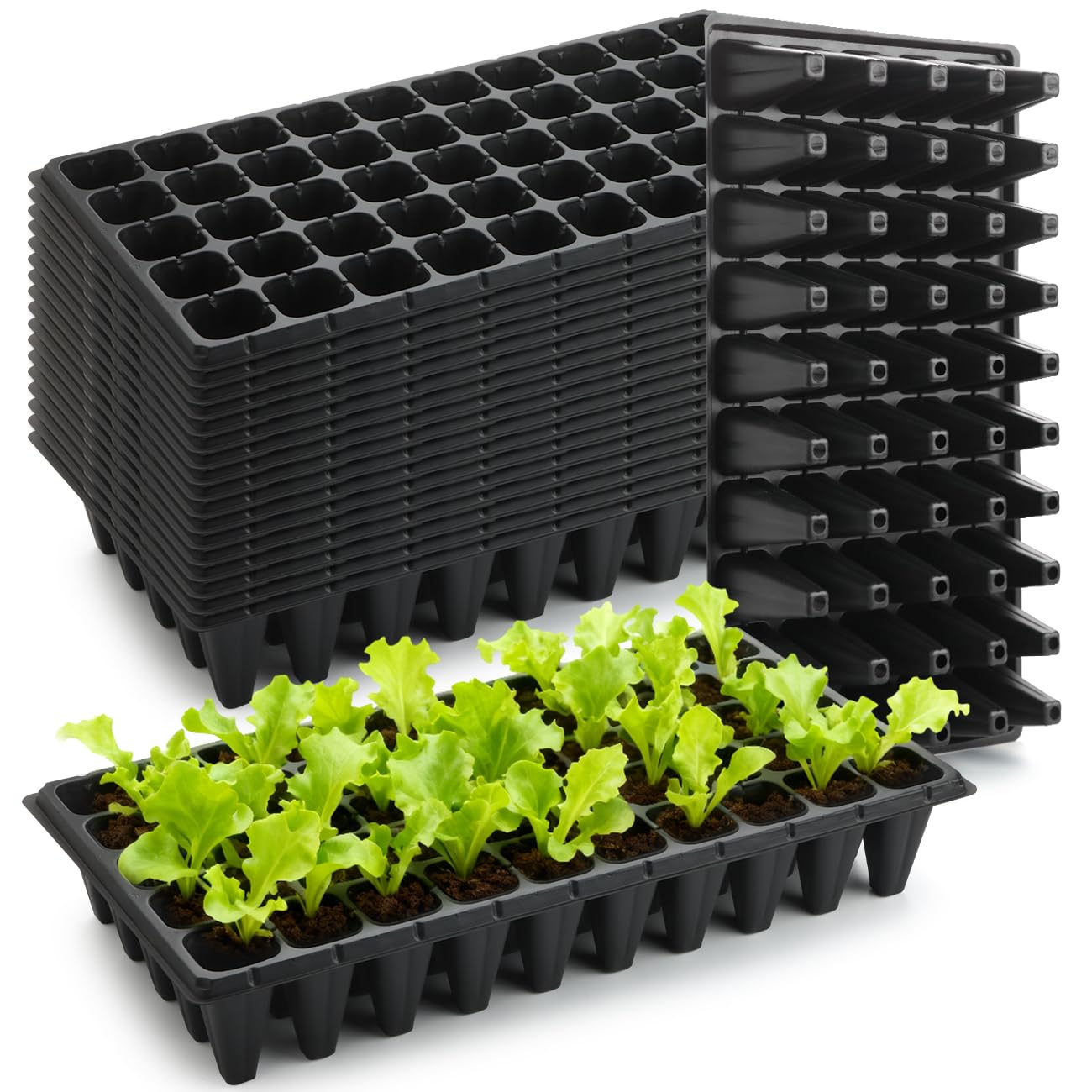
Fifty trays built for the grower who thinks in hundreds, not dozens.
When you are running a greenhouse, a community garden, or a serious urban farm, buying trays one pack at a time gets old fast. This bulk 50-pack gives you 2,500 total cells — all at a 3.55-inch depth compared to the 2.3-inch standard flats. The cone-shaped cells (cells that taper toward the bottom) improve drainage and root aeration, which owners mention promotes faster, more uniform germination.
At 4.8 pounds for the entire pack, each tray is light but the heavy-duty plastic is designed to resist warping through repeated use. Because these trays are built to the standard 1020 size (11 x 21 x 3.55 inches), they fit smoothly into heat mats (warming pads for germination), humidity domes (clear covers that trap moisture), and greenhouse shelving without any adapter or modification. Customers note these trays are “nice and roomy” and transplant well for tomato plants moving from 72-cell trays into this size.
The honest trade-off is the upfront cost — you are investing in bulk, which only makes sense if you actually need 50 trays. The plastic is sturdy but some buyers mention it has “some give,” which actually helps pop plants out at transplant time. If you are starting a nursery or plan to propagate across multiple seasons, this pack saves you from buying trays twice.
Bulk Advantage
- 3.55-inch cone cells improve root aeration and drainage
- Standard 1020 size fits all common greenhouse gear
- 50 trays at once — no repeat ordering mid-season
Consider This
- High up-front cost is only justified for large-scale propagation
- Cone shape means slightly less soil volume than square cells
Reach for this if: you run a greenhouse or homestead and need 50 uniform trays that fit standard 1020 systems for years of rotation.
skip it if: you are a casual home gardener starting a couple dozen seeds — you will be storing unused trays.
3. RooTrimmer 10 Pack 1020 Trays and 10 Pack 3.5″ Deep 50 Cell Seed Starter Trays
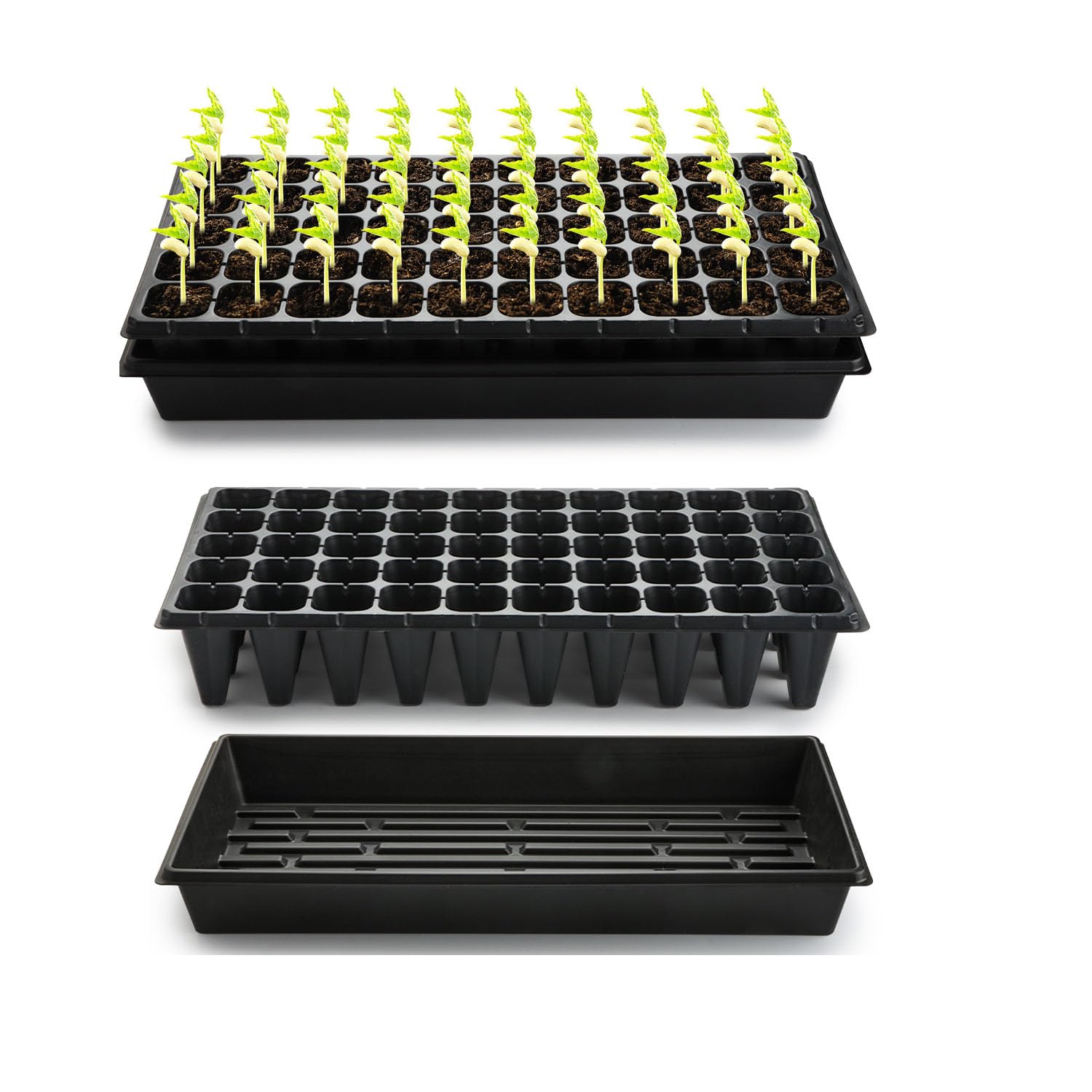
Everything you need in one box — cells and flats, matched from the start.
Mismatched trays and flats are a common headache: a deep cell tray that does not quite fit, or a flat that buckles under the weight. This combo solves that by giving you 10 deep 50-cell inserts (3.54 inches per cell) plus 10 solid-bottom 1020 trays (the standard 10×20 inch nursery flat). The flats have no drainage holes, so you can bottom-water without water running everywhere — a real benefit for consistent moisture during germination.
The 1020 flat itself is 1.8mm thick and weighs 277 grams — buyers call them “much sturdier than the units you buy at local retail shops.” The inserts have guide channels at the top to route water evenly to each cell, a detail that makes watering uniform across all 50 spots. One reviewer noted using RooTrimmer trays in constant rotation for two years — germinating spring veggies, cleaning and disinfecting, then cut flowers, then fall veggies — and “every single one of them is still in perfect condition.”
The caveat is that the insert trays are slightly smaller than full-size 1020 inserts, so they do not lock in as snugly as some users expect. If you bottom-water heavily, use the included flat — it is the right match. For anyone building a home propagation setup from scratch, this kit removes the guesswork of finding compatible parts.
Why This Combo Works
- Includes both 50-cell inserts and 1020 flats — guaranteed fit
- Solid-bottom flats support bottom-watering without leaks
- 1.8mm thick flats resist bending even when full
Note
- Inserts are slightly smaller than some 1020 trays — use the included flats for best results
Best for: the gardener who wants a turnkey system — buy one box and you have 10 complete, matching propagation stations ready to go.
Not ideal if: you already own a pile of 1020 flats and just need more inserts.
4. Ferry Morse Jiffy Seed Starter Tray Kit – 50 Cell, Bonus SUPERthrive, Plant Labels – 2 Pack
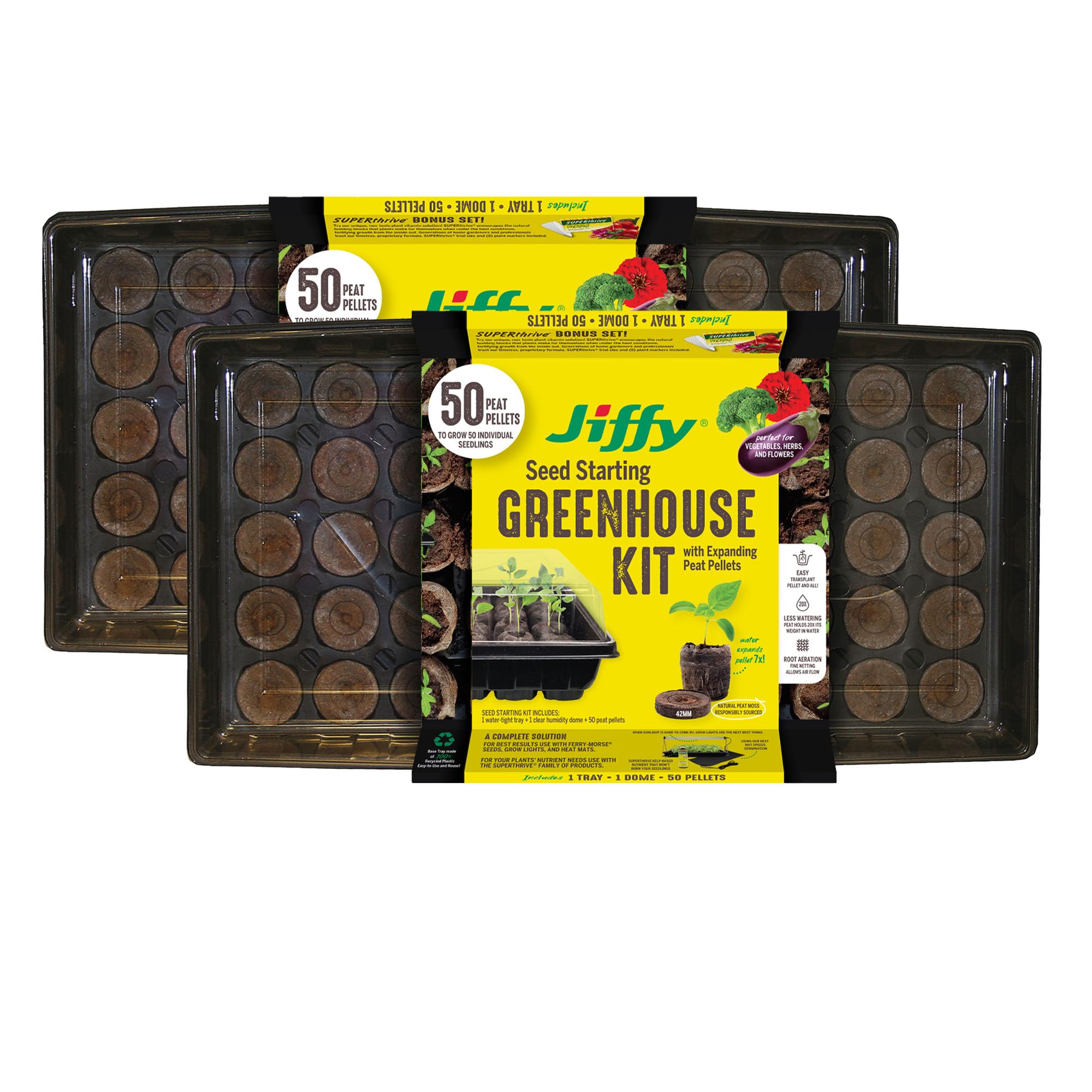
The classic starter kit that gets beginners germinating in one purchase.
This is the all-in-one set for someone starting seeds for the first time. It comes with two 50-cell trays, 42 mm peat pellets (small, compressed discs of peat that expand when wet), a humidity dome, and a bonus bottle of SUPERthrive plant supplement plus plant labels. Just add water to the pellets, sow your seeds, and put the clear dome on — the greenhouse effect keeps moisture and temperature stable for germination.
The trays measure 21 x 11 x 3 inches, and the plastic bottom and clear lid are designed to be reused year after year. Many long-time gardeners swear by the Jiffy method — one buyer mentioned it “lets you start as many, or as few, seeds as you like” and the design allows adjustment of water. The included humidity dome is a real plus for maintaining moisture during the first week of germination.
However, one critical buyer report flags an issue with the netting around the peat pellets (compressed peat discs that expand when wet): “After transplanting all of the plants into the garden I started noticing die off as the plants grew larger…the netting on the dead plants was still tight around the root ball constricting the root growth.” Some growers recommend peeling the netting off before transplanting. The peat pellets also mean you are locked into that medium — you cannot easily swap to your own soil mix.
What You Get
- Complete kit with trays, peat pellets, dome, and labels
- Humidity dome creates a stable germination environment
- Reusable plastic bottom and lid designed for multiple seasons
Watch For
- Peat pellet netting may restrict root growth — remove before transplanting
- Not compatible with standard 1020 trays or your own soil
Reach for this if: you are new to seed starting and want a single box with everything you need to germinate successfully.
pass on it if: you already have a seed-starting system and just want bare trays that fit your existing setup.
5. 50 Cell Plug Flats, 10 Each

The no-frills standard that fits existing 1020 trays without drama.
If you already own 1020 flats and just need a reliable, inexpensive insert for quick-turn seedlings, this is your tray. Each flat has 50 cells at 1.9 inches square and 2.3 inches deep — the standard depth that has been used in greenhouses for decades. The rigid plastic design means these flats can be used without a carrying tray, though buyers warn the structure is “weak” and can “fold if lifted from the center.”
At just 1 pound for a 10-pack, these are the lightest trays in this lineup — great for shipping and storage, but less reassuring when full of wet soil. Buyers confirm they are “standard size, fits existing trays” and work well for starting seeds indoors. One Florida gardener uses them to make “perfectly sized bermuda grass plugs” with good results. The die-cut centered drainage holes let excess water escape, which helps prevent damping-off.
The honest downside is durability. Multiple reviews describe them as “very flimsy” — one owner reported 4 trays arrived heat-shrunk and damaged, and noted you “cannot lift when filled with soil, must drag.” These are best treated as semi-disposable or single-season trays. If you want trays that survive washing and re-use, the thicker options above are worth the extra investment. For starting a few flats of lettuce or herbs, this pack delivers the lowest cost per tray.
The Upside
- True standard 1020 size — fits existing flats and heat mats
- Die-cut drainage holes prevent waterlogging
- Lowest weight and cost per tray in the lineup
The Downside
- Flimsy structure — can fold when lifted from the center
- 2.3-inch depth is too shallow for taproot plants like tomatoes
- Not built for re-use; some trays arrive damaged
Best for: budget-conscious growers starting shallow-root crops who already have sturdy 1020 flats to support these inserts.
Look elsewhere if: you need deep cells for tomatoes or peppers, or want trays sturdy enough for multiple seasons.
Understanding the Specs
Cell Depth
This is the vertical space your seedling’s root system has to grow before transplant. Shallow cells (around 2.3 inches) are fine for quick crops like lettuce, herbs, or flowers that you transplant early. Deep cells (3.5 inches and above) allow taproots and strong root masses to develop, especially important for tomatoes, peppers, squash, and anything with a long growing season. Deeper cells also hold more soil volume, so the tray dries out less quickly — a real advantage if you cannot water twice a day.
1020 Standard
The “1020” refers to a tray that is roughly 10 inches by 20 inches — the standard size that fits virtually all greenhouse shelving, heat mats, and humidity domes. When a tray is labeled “fits 1020 flats,” it means the insert slots into a solid-bottom flat of that dimension. Buying 1020-compatible gear ensures everything in your propagation setup works together. Non-standard trays can still work, but you may need to hunt for matching flats or modify your setup.
Plastic Thickness and Material
Tray thickness is often given in millimeters — 1mm is a solid, durable tray that resists cracking when handled. Thinner trays flex and can fold under the weight of wet soil. Most seed trays are made from polystyrene (PS), a rigid plastic that is economical but becomes brittle in UV light. Polypropylene is more flexible and holds up better outdoors. If you plan to reuse trays for several seasons, thickness and material are the specs that determine how many years you will get out of them.
Drainage Holes vs Solid Flats
A 50 cell seed tray typically has drainage holes at the bottom of each cell — essential for preventing waterlogged soil and the fungal disease known as damping-off. The solid-bottom flat underneath catches the runoff and allows for bottom-watering (filling the flat with water so the soil wicks it up from below). Some trays also have guide channels on the top surface that route water evenly across all cells when you pour — a small engineering detail that makes a big difference in watering consistency.
FAQ
Will a 50 cell seed tray fit my standard 1020 flat?
How deep should a 50 cell seed tray be for tomatoes and peppers?
Can I reuse 50 cell seed trays year after year?
What is the difference between cone-shaped and square cells?
How do I prevent damping-off disease in a 50 cell seed tray?
Should I buy a kit with peat pellets or buy bare trays?
How many 50 cell trays do I need for a home vegetable garden?
Can I use a 50 cell seed tray without a bottom flat?
What is the weight of a standard 50 cell seed tray when filled with soil?
Are 50 cell seed trays better than 72 cell trays for starting seeds?
Final Thoughts: The Verdict
For most gardeners, the best 50 cell seed tray is the Nothers RooTrimmer 50 Cell 10-Pack because its 3.54-inch deep cells and 1mm thick plastic deliver the root room and durability that make the difference between a so-so transplant and a thriving one. If you are setting up a greenhouse or growing at scale, the RooTrimmer 50-Pack Extra-Deep gives you 50 uniform trays that integrate smoothly with standard 1020 gear. And if you want a complete, simple to use starter kit with everything but the seeds, the Ferry Morse Jiffy Kit gets beginners germinating on day one — just remember to peel that netting off before transplanting.
How We Picked
We do not accept paid placement. Every pick is matched to a real buyer and a real use-case; we do not hands-on test units.
Sources & Methodology
Specifications: manufacturer listings and product documentation. Review insights: verified customer reviews, as of July 2026. Pricing: not shown on this page (it changes often); check the current price via the retailer link.
As an Amazon Associate, Lawn Gear Lab earns from qualifying purchases. This does not affect which products we feature.