
Specs are compiled from manufacturer listings and verified buyer reviews and can change over time — please confirm the key details on the product page before buying.
You pick a bloom booster to get more flowers, but grabbing the wrong bag leaves you with green leaves and zero blooms. The right organic fertilizer pushes buds into full color without synthetic chemicals — you just need the one that matches your plant type and how you garden.
I’m Rikta — the founder and writer behind Lawn Gear Lab. This guide is built by comparing the manufacturers’ published specifications and the patterns across verified customer reviews, so you get each pick’s real strengths and trade-offs instead of marketing spin.
Whether you grow roses, dragon fruit, or container flowers, these picks cover granules, liquids, and specialty boosters — every option in this list for the best bloom organic fertilizer category is backed by real buyer feedback and measurable specs.
Quick Picks
- Dr. Earth Flower Girl Bud & Bloom Booster — Best Overall
- Miracle-Gro Performance Organics Blooms Plant — Widest Coverage
- True Organic Rose & Flower Food 4:5:3 — Organic Ingredient Power
- Roots Organics Terp Tea Bloom Natural Dry — High-Yield Specialist
- General Hydroponics GH5132 BioThrive Bloom 2-4-4 — Liquid Fast-Action
- Espoma Organic Rose-Tone 4-3-2 Fertilizer — Rose Specialist
- Great Big Roses and Flowers Liquid Fertilizer — Soil Activator
How To Choose The Best Bloom Organic Fertilizer
Choosing the right bloom booster is simpler when you focus on a few key specs. You do not need a chemistry degree — you just need to match the product to your plant type and how you like to garden.
N-P-K Ratios and What They Mean for Blooms
Three numbers on every bag (like 5-7-10) stand for nitrogen, phosphorus, and potassium. For flowering plants you want the last two numbers — phosphorus and potassium — higher than the first. Phosphorus drives bud formation and potassium builds strong stems. A ratio like 4-10-7 is typical for bloom boosters, while a 4-3-2 mix is better for general rose health across the whole season.
Granules Versus Liquids: Which Is Right for Your Routine
Granular fertilizers like Miracle-Gro Performance Organics or True Organic Rose & Flower Food are slow-release. You sprinkle them on the soil and water them in; they feed over weeks. Liquids, like General Hydroponics BioThrive Bloom or Great Big Roses, work faster because nutrients are available immediately. Granules are easier for a monthly “set and forget” approach. Liquids give quicker results but require more frequent mixing.
Organic Certifications and Ingredient Quality
Look for products with certified organic ingredients or OMRI listing if that matters to you. Ingredients like seabird guano, fish bone meal, kelp meal, and shrimp meal show real organic composition. Avoid products listing “proprietary blend” without source disclosure — the best organic boosters tell you exactly what is inside the bag or bottle.
Quick Comparison
| Model | Best For | N-P-K Ratio | Weight | Form | Amazon |
|---|---|---|---|---|---|
| Dr. Earth Flower Girl 4-10-7 | High-phosphorus bloom burst | 4-10-7 | 4 lbs | Granules | Amazon |
| Miracle-Gro Performance Organics 5-7-10 | Wide coverage & fast results | 5-7-10 | 2.5 lbs | Granules | Amazon |
| True Organic Rose & Flower Food 4:5:3 | Rich organic ingredient list | 4:5:3 | 4 lbs | Granules | Amazon |
| Roots Organics Terp Tea 3:7:4 | Heavy-feeding, high-yield plants | 3:7:4 | 3 lbs | Dry / Micronized | Amazon |
| General Hydroponics BioThrive 2-4-4 | Hydroponics & liquid feeding | 2-4-4 | 1.2 lbs | Liquid | Amazon |
| Espoma Organic Rose-Tone 4-3-2 | Monthly rose feeding & health | 4-3-2 | 4 lbs (2-pack) | Granules | Amazon |
| Great Big Roses Liquid Booster 1Tbsp/pint | Soil activation & fast blooms | 1Tbsp per pint | 32 oz | Liquid | Amazon |
In‑Depth Reviews
1. Dr. Earth Flower Girl Bud & Bloom Booster 4-10-7

The phosphorus-rich booster that turned 3 dragon fruit blooms into 25 in one season.
This pick delivers the highest phosphorus number (10) of any product in this list without synthetic additives — phosphorus is the nutrient that drives bud formation, so more of it means more flowers. The 4-10-7 ratio gives you a middle number of 10 compared to the True Organic Rose & Flower Food’s middle number of 5, making it the better choice for a targeted bloom explosion rather than general plant health.
It is certified organic with no GMOs, chicken manure, or sewage sludge (often called “biosolids”) — and the label explicitly says it is safe for people and pets. One reviewer noted their dragon fruit trees went from just three blooms the year before to twenty-five after using this, a direct quote from the reviews that shows real-world impact. It covers less ground than the Miracle-Gro (which covers 165 sq ft versus an estimated 70 sq ft for this 4-lb bag), but the phosphorus punch per pound is class-leading.
Reviewers confirm it works across vegetables, flowering trees, and perennials. The main catch: it only comes in granules, so you cannot get the faster uptake of a liquid. And 4 lbs may not be enough for a very large garden — you may need multiple bags.
What Gives It the Edge
- Highest phosphorus ratio (4-10-7) in this comparison for serious bloom drive
- Certified organic and non-GMO with no biosolids
- Safe for people and pets — explicitly labeled
What to Know Before You Buy
- Only 4 lbs — may need multiple bags for large gardens
- Granular only; no liquid option for faster uptake
Reach for this if: You want the most phosphorus punch per pound for heavy bloomers like dragon fruit, dahlias, and flowering trees.
Look elsewhere if: You need a slow-release formula for roses and want a more balanced 4-3-2 ratio like the Espoma Rose-Tone.
2. Miracle-Gro Performance Organics Blooms Plant Nutrition Granules 5-7-10

The biggest coverage per bag that feeds butterfly bushes into full, fast color.
This bag covers 165 square feet — 165 sq ft compared to the True Organic’s 70 sq ft. That makes it the best choice for gardeners with larger beds or multiple planters who want one bag to go a long way. The 5-7-10 ratio is well-balanced for blooming plants, with potassium (10) slightly higher than phosphorus (7) to support stem strength alongside flower production — so stems stay sturdy as blooms get heavy.
It is OMRI listed (meaning it passes organic input standards) and uses natural ingredients, so you get brand name reliability without synthetic chemicals. Buyers consistently report visible results within 1-2 weeks. One reviewer specifically noted large blooms on butterfly bush — a plant that is notorious for needing the right phosphorus boost to flower heavily. The granules are easy to apply: just sprinkle and water, then reapply every 4-6 weeks.
The trade-off is the bag is 2.5 pounds — 2.5 pounds compared to the 4-pound options — but the coverage spec (165 sq ft) matters more for most home gardens than raw weight. Reviewers also mention that the paper lid under the cap can come loose during shipping.
The Big Draw
- 165 sq ft coverage — widest in this comparison
- OMRI listed organic with natural ingredients
- Visible bloom results in 1-2 weeks per buyer reviews
The Catch
- Only 2.5 lbs — lighter than most granular competitors
- Paper lid under cap can come loose during shipping (reviewers noted)
Choose this for: Large flower beds, multiple containers, or butterfly bushes that need fast visible results across a wide area.
skip it if: You need a higher phosphorus ratio for heavy bloomers like dragon fruit — the Dr. Earth 4-10-7 is stronger there.
3. True Organic Rose & Flower Food 4:5:3
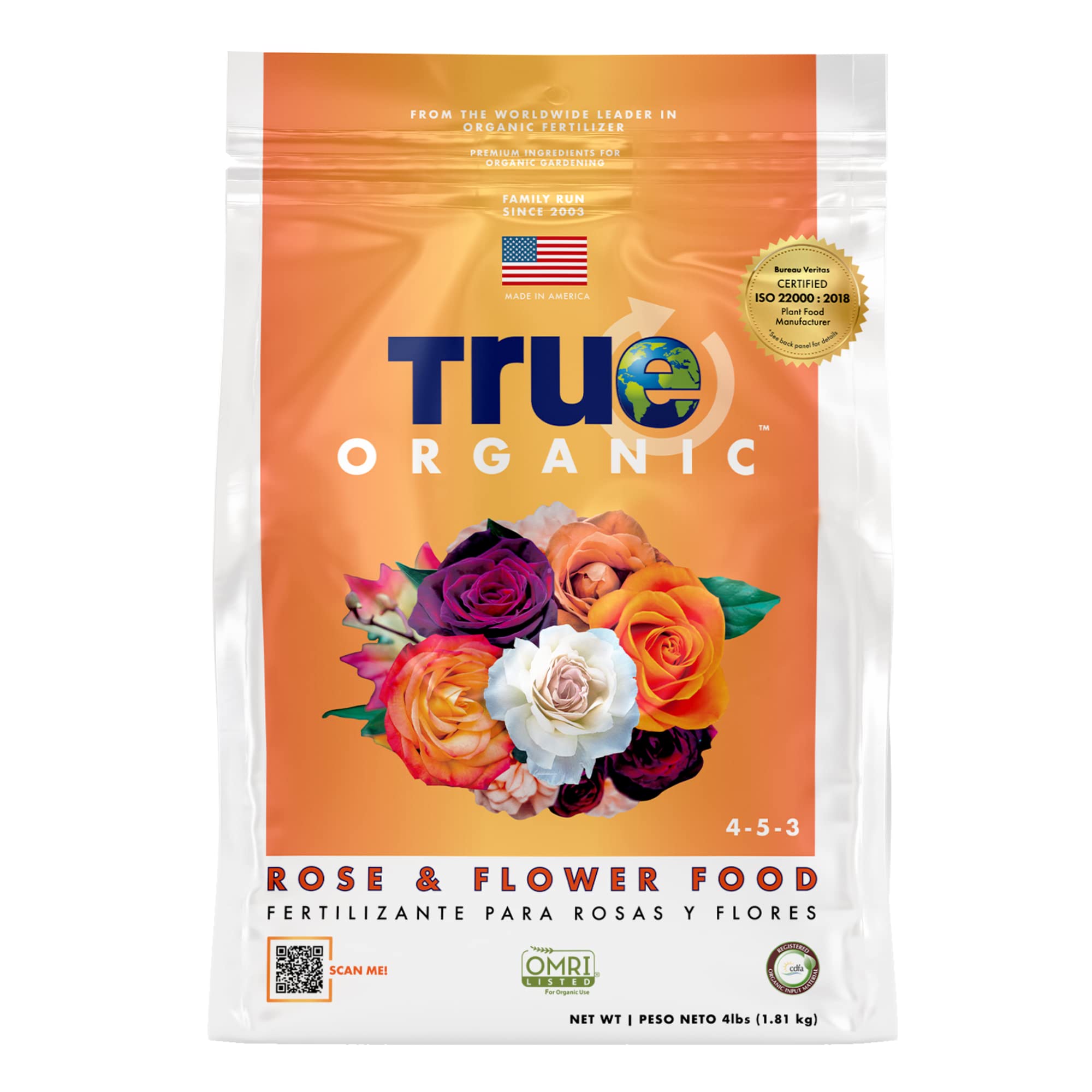
The seabird guano blend that rescued dying zinnias into 4-foot double blooms.
You get an ingredient list that reads like a soil health manual: seabird guano, shrimp and crab shell meal, fish bone meal, and soybean meal. That is a broad spectrum of organic sources that feed both the plant and the soil microbes around it. One buyer threw a bag of this between rows without working it into the soil, and within two weeks their zinnias were pushing 4 feet tall with double blooms — a direct review quote that shows the power of those ingredients.
But the Roots Organics product is micronized (a finer powder) and may be easier to mix into soil for heavy feeders.
The 4-pound bag covers up to 70 square feet — 70 sq ft compared to the Miracle-Gro’s 165 sq ft — so it is better for focused beds or containers rather than wide open gardens. The earthy, ripe smell (from the fish and shellfish meals) is noted by reviewers, so be aware the odor is real and lasts during application.
What Stands Out
- Excellent organic ingredients — seabird guano, crab meal, fish bone meal
- Proven to revive struggling plants (zinnias went from poor to 4 ft tall)
- Versatile for in-ground beds and container gardens
The Downside
- Strong fishy smell during application
- 70 sq ft coverage is less than half of Miracle-Gro’s 165 sq ft
Best for: Gardeners who prize organic ingredient transparency and want to revive struggling flower beds.
Not your pick if: You need massive coverage for a large flower bed — go with the Miracle-Gro for the 165 sq ft spec.
4. Roots Organics Terp Tea Bloom Natural Dry Gardening Fertilizer 3:7:4
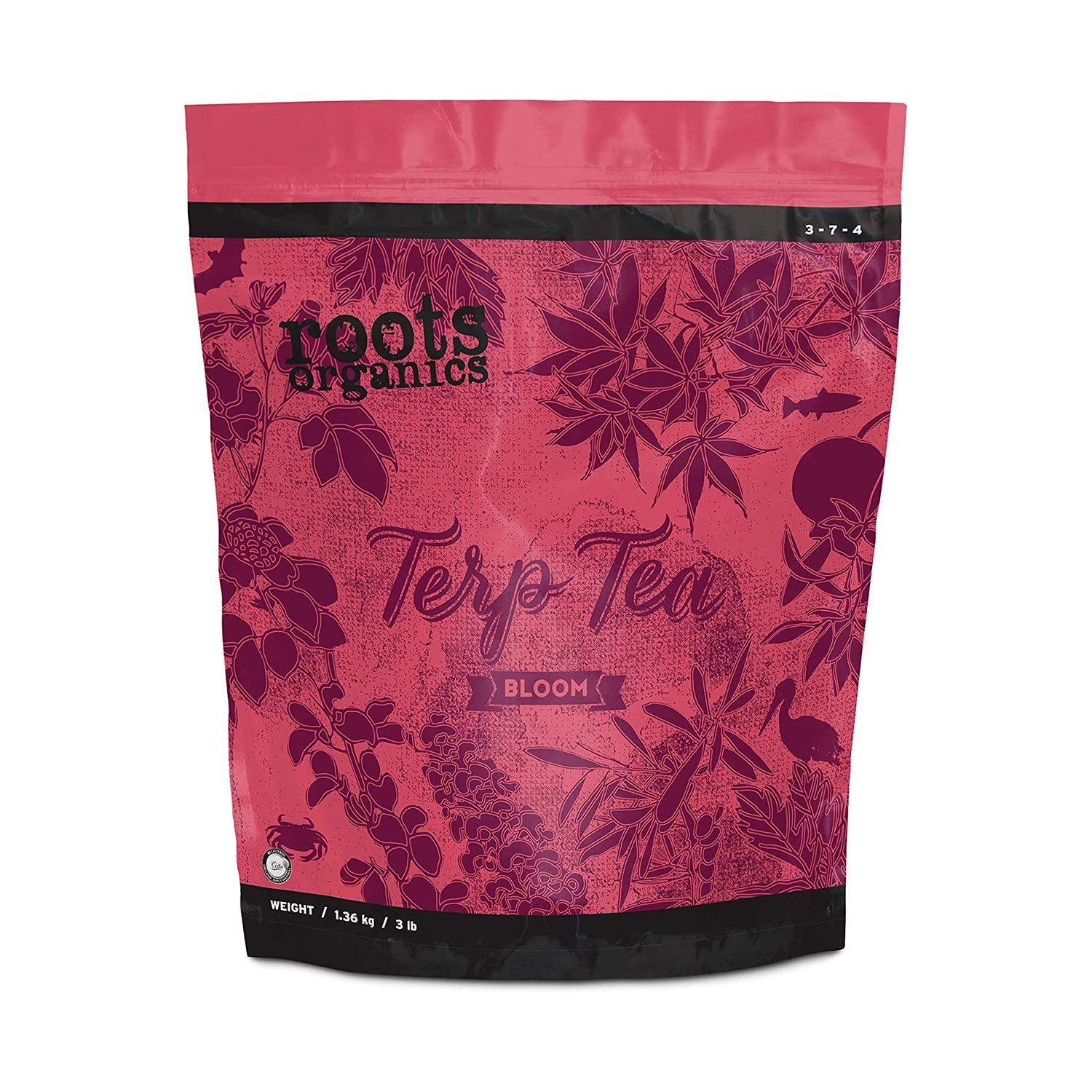
The micronized powder that heavy feeders like cannabis and flowers crave for dense buds.
This fertilizer is designed for plants that demand maximum nutrition during the flowering phase — the 3:7:4 ratio puts phosphorus (7) well ahead of nitrogen (3) to drive heavy bud production. The powder is micronized (ground extra fine) so it mixes thoroughly into soil for better root contact than standard granules.
Ingredients include feather meal, dolomite, soybean meal, langbeinite, crab meal, fish bone meal, bat guano, and kelp meal — a diverse organic profile that feeds both the plant and the soil microbiome. One buyer mentioned they run a fully no-till organic garden and this is the only feed their soil receives, calling it a “fantastic product.”
The 3-pound bag weighs less than the 4-pound granular options here — 3 pounds compared to 4 pounds — but the higher phosphorus concentration means you use less per feeding. Unlike the liquid General Hydroponics BioThrive (which weighs just 1.2 lbs), this lasts longer for dry gardeners. But the GH product is better if you grow in a hydroponic system because it is formulated specifically for that medium.
Top Features
- High phosphorus ratio (3:7:4) for heavy-feeding, high-yield plants
- Micronized dry form mixes thoroughly into soil
- Diverse organic ingredients — feather meal, bat guano, kelp meal
Watch Out
- 3 lbs is a smaller bag than the 4-lb competitors like True Organic
- Not suitable for hydroponic systems — that is the GH BioThrive’s job
Perfect for: No-till organic gardeners and high-yield flower growers who want a potent dry fertilizer for heavy feeders.
Skip it for: Hydroponic setups — the General Hydroponics BioThrive is the right liquid for that method.
5. General Hydroponics GH5132 BioThrive Bloom 2-4-4

The vegan liquid bloom booster that greened pale tomato plants overnight.
If you grow in a hydroponic system (a soil-less method where roots sit in nutrient-rich water) or prefer liquid feeding for faster uptake, this is the only bloom booster in this list specifically designed for that. The 2-4-4 ratio is milder than the high-phosphorus granular options, but liquids deliver nutrients immediately because they are already dissolved. The bottle weighs just 1.2 pounds — compared to the 4-pound granular bags — but one quart (32 fluid ounces) goes a long way when you mix per the instructions.
It is made from pure plant and mineral extracts (a vegan formulation), so no animal byproducts are involved. One reviewer described it as “unbelievable stuff,” reporting that their pale, yellow-green corn and tomato plants were visibly greener the next morning after feeding. The same user noted their corn reached 9 feet high within two weeks of use. However, the label says it contains Molybdenum (a trace mineral) and recommends using with caution on food crops — worth checking if you are growing edible flowers or vegetables.
Compared to the Great Big Roses liquid (which is a soil activator rather than a straight fertilizer), the GH BioThrive is a complete bloom nutrient. Multiple reviewers mention a strong, unpleasant smell during mixing.
Why It Wins
- Specifically formulated for hydroponic systems
- Vegan formulation — no animal products
- Fast-acting results — greener plants by next morning per buyer review
Heads Up
- Contains Molybdenum — caution recommended on food crops
- Strong unpleasant smell during mixing (noted by multiple reviewers)
Choose this if: You run a hydroponic garden or want a vegan liquid option that acts fast on pale plants.
Look elsewhere if: You prefer dry granular feeding or need a higher phosphorus ratio for heavy bloomers.
6. Espoma Organic Rose-Tone 4-3-2 Fertilizer (2-Pack)

The balanced rose feed that transformed spindly drift roses into heavy bloomers in a month.
This is not a high-phosphorus bloom bomb like the Dr. Earth — it is a balanced 4-3-2 ratio designed for overall rose health rather than a flowering explosion. The lower phosphorus number (3) means it is better used as a monthly maintenance feed (May through September) for established roses, knockouts, and climbers. what separates it is the Bio-tone formula, Espoma’s proprietary blend of beneficial microbes that help roots absorb nutrients from the soil.
It also contains 5% calcium, which helps prevent blossom-end rot (a disorder where the bottom of fruit rots) and strengthens cell walls in rose stems. One buyer using it on drift roses reported that 1 cup per plant per month dramatically increased flower production, transforming spindly plants. The 2-pack gives you 4 pounds total — the same weight as a single True Organic bag — so value is comparable. The smell is mild compared to fish-based fertilizers, though one reviewer’s wife noted a mild odor she disliked.
Compared to the Dr. Earth 4-10-7, the Rose-Tone has a phosphorus ratio of 3 compared to the Dr. Earth’s 10 — so it is not the choice for a bloom burst. But for rose bushes that need steady nutrition without overloading phosphorus, this is the safer long-term play. It is approved for organic gardening as a registered Organic Input Material.
The Strong Points
- Bio-tone microbial formula boosts nutrient uptake
- 5% calcium content strengthens rose stems and prevents rot
- Approved for organic gardening — made in USA since 1929
Weak Points
- Low phosphorus ratio (4-3-2) — not for targeted bloom boosting
- Mild odor some users find unpleasant
Reach for this: If you grow roses (especially knockouts and climbers) and want a monthly organic feed that strengthens the whole plant.
Not the one if: You need a high-phosphorus bloom booster — the Dr. Earth 4-10-7 or Roots Organics 3:7:4 fit that need better.
7. Great Big Roses and Flowers Liquid Fertilizer Booster – 32 oz
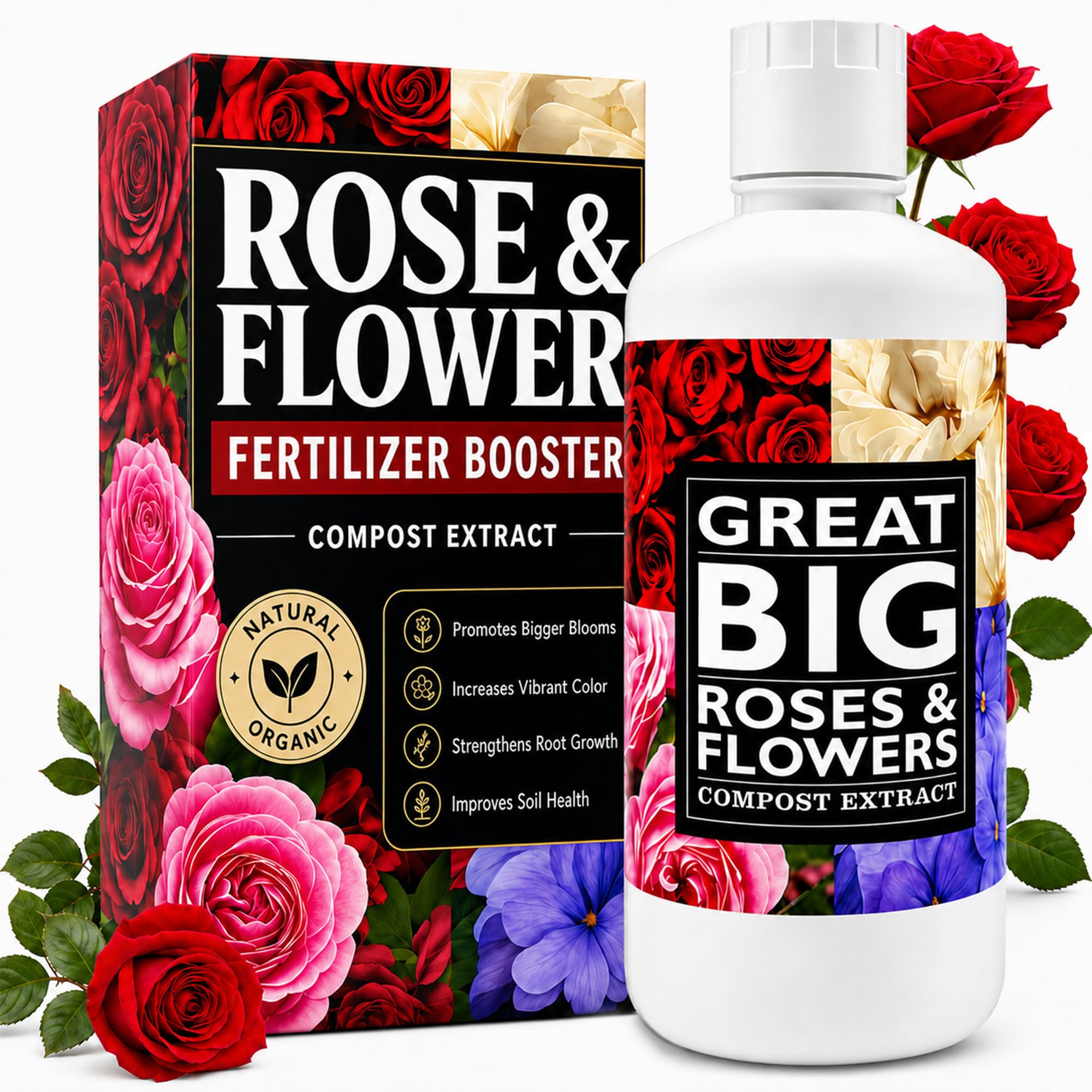
The soil activator that woke up rose bushes that had not bloomed in years.
This product works differently from the others on this list. It is not a high-NPK fertilizer — instead, it is a soil activator that delivers humic acids (natural compounds that improve nutrient uptake), seaweed, and over 70 chelated trace minerals (minerals bound to organic molecules so roots can absorb them) into the root zone. The idea is to open up nutrients already in your soil rather than piling on more fertilizer. That makes it a companion product you can use alongside any other organic fertilizer, fish emulsion, or bone meal.
One 32-ounce bottle makes over 30 gallons of working solution when you mix 4 oz per gallon of water. Buyers report that rose bushes which had not bloomed in years produced big, beautiful flowers within weeks of the first application. Multiple reviews highlight the “immediate” and “noticeable” difference in bloom quantity and color, especially on roses and hydrangeas. One long-term user said this is the only fertilizer they have used reliably for three years.
Compared to the General Hydroponics BioThrive (a liquid at 1 quart), the Great Big Roses product is a larger volume at 32 oz and focuses on soil biology rather than direct NPK feeding. If your soil is already rich but your plants are not blooming, this might be the missing piece. The one downside: it works best as a booster alongside another fertilizer, so it adds an extra step to your feeding routine.
Why It Stands Out
- open up soil nutrients — 70 chelated minerals + humic acids + seaweed
- Reportedly revived rose bushes that had not bloomed in years
- Makes 30+ gallons from one 32 oz bottle
Consider This
- Not a standalone fertilizer — best combined with another NPK source
- Requires mixing every application (4 oz per gallon of water)
Use this: When your soil seems healthy but plants refuse to bloom — the mineral and humic acid boost often solves the mystery.
pass on it if: You want a complete all-in-one bloom fertilizer; pair this with a granular option like True Organic instead.
Understanding the Specs
N-P-K Ratio — The Three Numbers
These three numbers (like 5-7-10) tell you the percentage of nitrogen, phosphorus, and potassium in the bag. For bloom fertilizers, the second number (phosphorus) is the one that drives flower and fruit production. The third number (potassium) supports stem strength and overall plant health. A ratio like 4-10-7 is heavy on phosphorus — perfect for a bloom push. A ratio like 4-3-2 is more balanced for general plant maintenance.
Granules vs Liquids — What Changes
Granular fertilizers are slow-release. You sprinkle them on the soil and water them in; they break down over weeks. Liquids work faster because nutrients are already dissolved, so plants can absorb them immediately. Granules are better for monthly “apply and forget” feeding. Liquids suit hydroponics or when you need a quick correction. Each has its job — the key is matching the form to your gardening style.
FAQ
What is the best N-P-K ratio for blooming plants?
Can I use bloom fertilizer on vegetables?
How often should I apply organic bloom fertilizer?
What is the difference between bloom booster and all-purpose fertilizer?
Is bloom organic fertilizer safe for pets?
How do I apply granular organic bloom fertilizer?
Does organic bloom fertilizer smell bad?
Can I use bloom fertilizer in a hydroponic system?
What does OMRI listed mean for organic fertilizer?
Final Thoughts: The Verdict
If you want one dependable pick, the best bloom organic fertilizer winner is the Dr. Earth Flower Girl Bud & Bloom Booster 4-10-7 because it delivers the highest phosphorus ratio for serious bloom production with certified organic ingredients and proven results from dragon fruit to dahlias. If you need maximum coverage across a large flower bed, grab the Miracle-Gro Performance Organics 5-7-10 and its 165 sq ft coverage. And for hydroponic systems or liquid feeding, the standout is the General Hydroponics BioThrive Bloom 2-4-4 for its fast-acting vegan formulation.
How We Picked
We do not accept paid placement. Every pick is matched to a real buyer and a real use-case; we do not hands-on test units.
Sources & Methodology
Specifications: manufacturer listings and product documentation. Review insights: verified customer reviews, as of July 2026. Pricing: not shown on this page (it changes often); check the current price via the retailer link.
As an Amazon Associate, Lawn Gear Lab earns from qualifying purchases. This does not affect which products we feature.