
Specs are compiled from manufacturer listings and verified buyer reviews and can change over time — please confirm the key details on the product page before buying.
Downy mildew does not waste time. One humid night, and that yellow spotting on your leaves turns into a full collapse before the weekend is over. You need a fungicide that hits it hard, hits it fast, and keeps your garden producing — not just something that smells nice in the bottle.
I’m Rikta — the founder and writer behind Lawn Gear Lab. This guide is built by comparing the manufacturers’ published specifications and the patterns across verified customer reviews, so you get each pick’s real strengths and trade-offs instead of marketing spin.
Whether you are protecting tomatoes, grapes, roses, or a treasured shade tree, the right fungicide for downy mildew depends on how the disease attacks, when you catch it, and what else is growing nearby — here are four proven options, each with a different strategy.
Quick Picks
- Monterey Garden Phos Bundled — Systemic Power
- Monterey 70% Neem Oil — Triple Threat
- Earth’s Ally Disease Control Concentrate — Best Value
- Neudorff Plant Fungicide Spray, Copper Soap — Grab & Go
How To Choose The Best Fungicide For Downy Mildew
Downy mildew is not a true fungus — it belongs to a group called oomycetes, which means many general-purpose fungicides miss it entirely. The first thing you check is the product label: if it does not name “downy mildew” in the list of controlled diseases, it will not stop this pathogen. The second thing is the mode of action — some products protect the leaf surface (contact), while others move through the plant tissue to stop the disease from the inside (systemic).
Contact vs Systemic Protection
A contact fungicide coats the leaves and kills the downy mildew spores on contact. It works well as a preventative, but you must reapply after rain or irrigation. A systemic fungicide is absorbed into the plant’s vascular system, so it provides longer-lasting protection from within and can treat an infection that has already started. The choice depends on whether you are protecting healthy plants or fighting an active outbreak.
Formulation and Application Method
Ready-to-use sprays are the easiest grab for small gardens or indoor plants — no mixing, just spray and go. Concentrates are more economical for larger areas, as one bottle can make several gallons of spray. A soil drench or basal bark application targets the roots and is especially useful for trees and shrubs where spraying every leaf is impractical. Check whether the product needs a pump sprayer, a hose-end sprayer, or just a simple trigger bottle.
Organic Suitability and Harvest Intervals
If you grow vegetables or fruit you intend to eat soon, look for an OMRI-listed product that can be used up to the day of harvest. Some copper-based or neem oil sprays meet this standard, while others have a required waiting period. The label is the final authority — never assume a product is “safe” because it sounds natural; check the active ingredient and the pre-harvest interval printed on the bottle.
Quick Comparison
| Model | Best For | Active Ingredient | Form | Volume | Amazon |
|---|---|---|---|---|---|
| Monterey Garden Phos | Systemic control for trees & ornamentals | Phosphonate | Liquid concentrate | 1 Pint | Amazon |
| Monterey 70% Neem Oil | Multi-pest organic defense | Clarified hydrophobic neem oil (70%) | Liquid concentrate | 1 Pint | Amazon |
| Earth’s Ally Disease Control | Eco-friendly value for large gardens | Citric acid | Liquid concentrate | 32 fl oz (makes 10 gal) | Amazon |
| Neudorff Copper Soap Fungicide | Ready-to-use for small gardens | Copper soap | Ready-to-use spray | 16 fl oz | Amazon |
In‑Depth Reviews
1. Monterey Garden Phos Bundled with Measuring Spoon

The systemic treatment that travels through the plant to stop downy mildew from the inside.
You cannot spray every single leaf on a mature tree or a dense shrub bed. That is where this systemic fungicide earns its spot: the active ingredient, a phosphonate (a salt of phosphorous acid that moves through plant tissue), is absorbed into the plant’s vascular system and travels throughout the whole plant. You can apply it as a foliar spray, a soil drench (pouring the mix onto the soil around the roots), or a basal bark application (painting the lower trunk) — which means you can treat a tall avocado tree or a sprawling rose bush without chasing every leaf. Unlike contact sprays that wash off in the first rain, this protection keeps working from within the plant tissue, so it can shield new growth that appears after you spray.
Reviewers report results fast. One reviewer noted it “saved my avocado tree from root rot” and praised the company’s application advice. Another reported that after spraying their apple tree for fire blight, they “haven’t seen any more on the leaves/stems.” One limitation: it is not OMRI-listed for organic gardening, so if you are strictly organic, you will want a different pick. Another drawback is that it can cause leaf burn if you mix it too strong — the included measuring spoon helps, but follow the label directions carefully.
At 1.6 lbs, the bottle itself is heavy, but a little goes a long way when used as a systemic drench. Compared to the ready-to-use Neudorff spray below, this Monterey product delivers a completely different kind of protection: it treats the plant rather than just the leaf surface, so it is the better call for trees, established perennials, and anyone fighting a stubborn infection that keeps coming back.
Why it stands out
- Systemic absorption protects new growth after application
- Three application methods — spray, drench, basal bark
- Controls root rot and downy mildew in one treatment
Known drawbacks
- Not OMRI-listed for organic gardening
- Can burn foliage if mixing ratio is off
- Higher upfront cost than contact alternatives
Best for deep infections: Reach for this if you need to save a tree, a shrub, or a plant where downy mildew has already taken hold in the roots or stems.
Not for quick spray-and-go: Look elsewhere if you want a simple trigger bottle for a few tomato plants and prefer OMRI-certified ingredients.
2. Monterey 70% Neem Oil Fungicide/Insecticide/Miticide
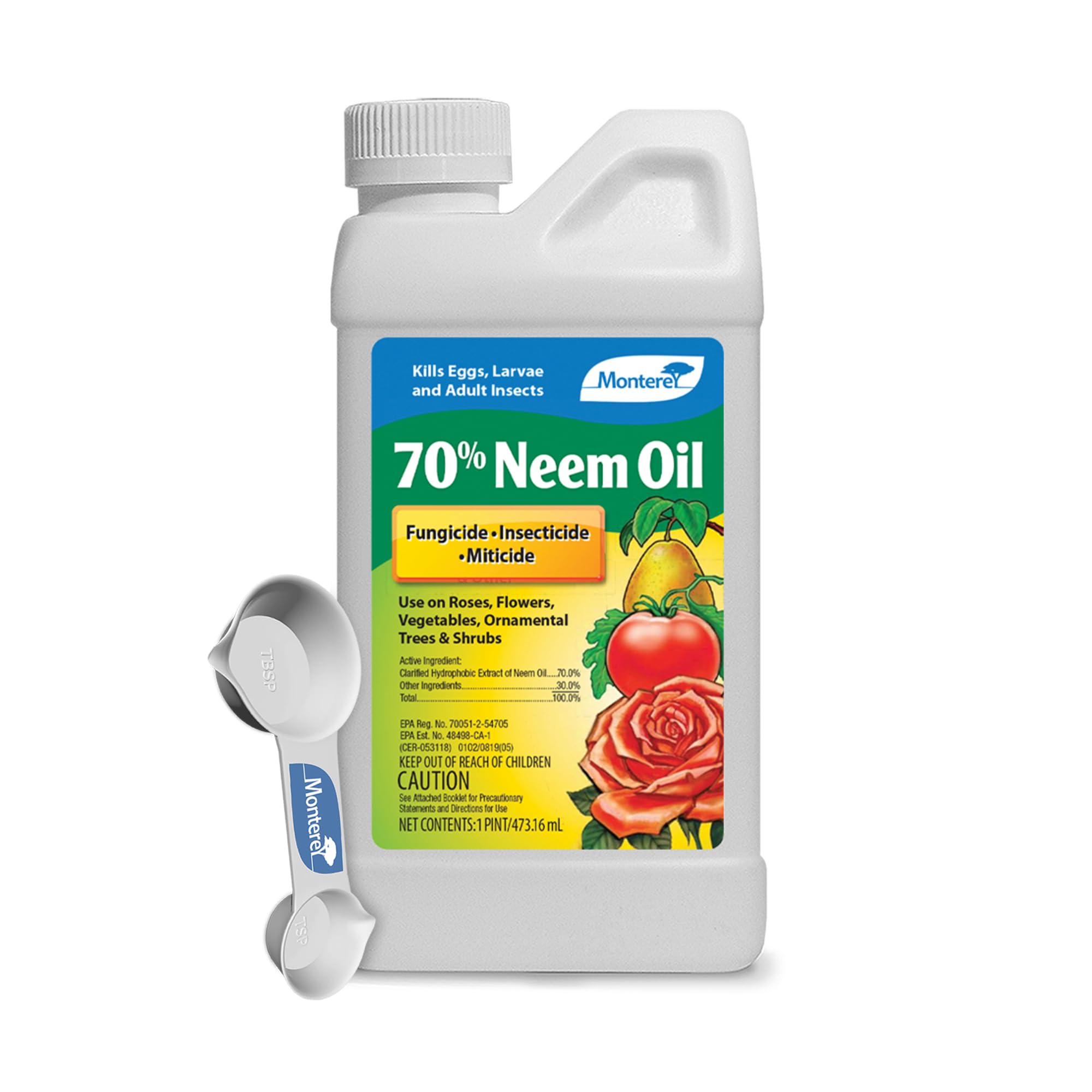
The natural oil that hits fungus, insects, and mites with a single bottle.
If your downy mildew problem is just one of several things crawling or spotting on your plants, this neem oil concentrate gives you triple coverage. With 70% clarified hydrophobic neem oil (a refined oil from the neem tree seed that repels water but smothers soft-bodied pests and fungal spores), it works as a fungicide (including against downy mildew), an insecticide (aphids, spider mites, whiteflies), and a miticide — all in one application. It is OMRI-listed for organic gardening, so it fits into a strict organic program without question.
Buyers in humid climates swear by it. One buyer mentioned “no powdery mildew this year!” and noted it also tames aphids and blight. Another said it saved orchids and hibiscus from scale and mites after weekly sprays for 2-3 weeks. The catch is that neem oil is not gentle on every plant: oregano and pepper plants can get damaged on contact, so test a small spot before going all-in. The 1.08 lb bottle is lighter than the Earth’s Ally concentrate (2.3 lbs), making it easier to handle, but you still need to mix 5 ml per liter of warm water, so it is not grab-and-go.
Despite the small size, this concentrate lasts — one pint stretches across many spray sessions. It is the smart pick if you want a single product that handles both the downy mildew and the pest pressure that often follows a disease-weakened plant.
Where it shines
- One product fights fungus, insects, and mites
- OMRI-listed, suitable for organic gardening
- Effective against powdery mildew and downy mildew
Watch out for
- Can damage sensitive plants like oregano and peppers
- Mild smell that lingers after spraying
- Needs careful mixing and warm water to emulsify
Ideal for mixed problems: Grab this when your garden has both downy mildew and an aphid or mite infestation — one application handles both.
Skip if plants are sensitive: Avoid this if you grow peppers, oregano, or other foliage that reacts badly to neem oil coating.
3. Earth’s Ally Disease Control Concentrate
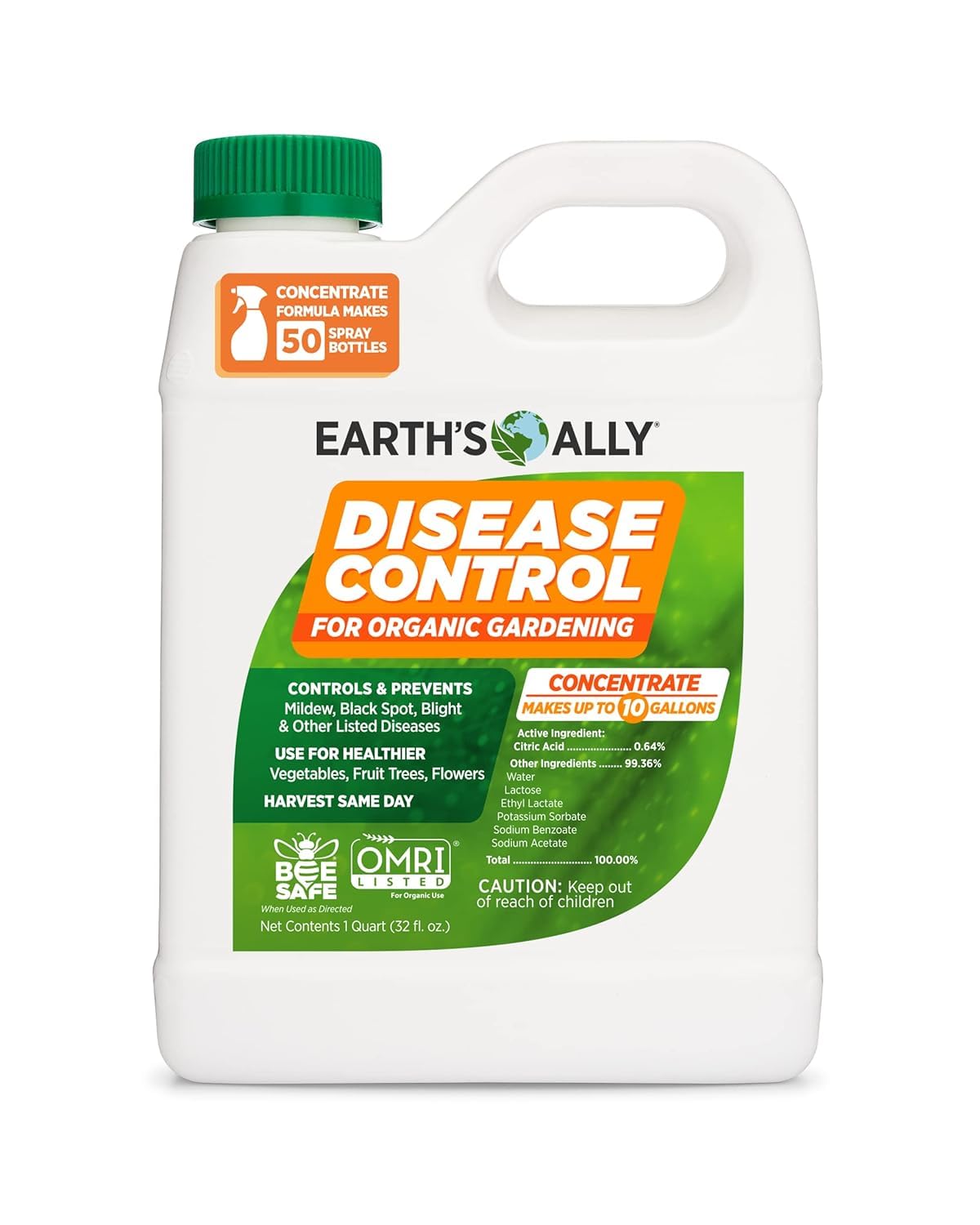
The concentrate that stretches to 10 gallons and keeps pets and people safe.
If you are covering a large vegetable patch, a long row of roses, or a fruit tree orchard, this concentrate delivers serious value per spray. A 32-ounce bottle makes a full 10 gallons of ready-to-use spray — just mix 6 tablespoons into 1 gallon of water. That kind of volume makes it far more economical per gallon than the ready-to-use Neudorff spray, especially if you are reapplying weekly during humid downy mildew season.
The active ingredient is citric acid, a natural fungicide that is OMRI-listed and formulated without harsh chemical residues. You can spray it on fruits and vegetables right up to the day of harvest, and the manufacturer says it is safe for people, pets, and the environment. One buyer with a grapefruit tree said it “worked perfect” and used very little concentrate per gallon. Another reported it “stopped root fungus in 2 applications,” though that application took advice from an arborist.
At 2.3 lbs, the bottle is the heaviest in this lineup, but that weight carries a lot of product. The biggest trade-off is that it is a contact spray — it needs direct coverage of the leaves and stems, and rain washes it off, so you must reapply. It works best as a preventative treatment rather than a rescue cure for an advanced downy mildew infection. For that, you would want the systemic power of the Garden Phos.
Why it earns its place
- 32 oz concentrate makes 10 gallons of spray — huge value
- OMRI-listed, safe for use up to day of harvest
- Citric acid formula leaves no harsh residues
Limitations to know
- Contact-only protection — washes off in rain
- Best as a preventative, less effective on advanced infections
- Heavier bottle at 2.3 lbs
Volume champion: This is the right choice for big gardens, repeated spraying, and anyone who wants an eco-friendly option without the premium price.
Not a rescue treatment: If downy mildew has already taken over your plants, you need the systemic power of the Garden Phos instead.
4. Neudorff Plant Fungicide Spray, Copper Soap

The ready-to-use copper soap spray for a quick fix on small gardens.
You open the bottle and spray — no measuring, no mixing, no spooning. This is the simplest entry point if you have a few pots on the patio, a couple of rose bushes, or a single gardenia that needs immediate attention. The active ingredient is copper soap, a low-concentration copper fungicide that is safe for organic gardening and can be used up to the day of harvest.
One buyer wrote that it “worked great to eliminate a fungus that almost killed our decades old gardenia” — the plant got its green back and flowered again. Another reviewer focuses on ease of use, spraying weekly on roses and seeing a real difference. The downsides are real: the 16-ounce spray bottle is the smallest volume here, and you will burn through it fast if you have a large garden. More importantly, one owner reported that it “burned hostas,” so test-spray a small leaf before coating the whole plant.
Unlike the Monterey Garden Phos which moves through the plant systemically, this copper soap just sits on the leaf surface. That means you must reapply every 7 to 10 days and after every rain. For a small garden or indoor plants where convenience matters more than coverage area, this is the fastest way to stop downy mildew in its tracks.
What makes it easy
- Ready-to-use — no mixing required
- Works immediately on black spot, powdery mildew, downy mildew
- Safe for organic gardening, use up to harvest day
Things to watch
- Small 16 oz bottle runs out fast on larger gardens
- Can burn sensitive plants like hostas
- Contact-only, needs reapplication after rain
Instant access: Great for the casual gardener who wants grab-and-go protection without mixing chemicals.
Better for small spaces: If you are covering dozens of plants or trees, you will save money with a concentrate like Earth’s Ally.
Understanding the Specs
Contact vs Systemic Fungicides
A contact fungicide, like the copper soap in the Neudorff spray, stays on the leaf surface and kills spores on contact. It is effective as a preventative, but rain or overhead watering washes it off, so you must reapply often. A systemic fungicide, like the phosphonate in Monterey Garden Phos, enters the plant tissue and moves through the vascular system. That means it protects new growth and can treat an infection that is already inside the plant. For downy mildew, which can hide inside leaf tissue, a systemic option is often more reliable once the disease is established.
Concentrate vs Ready-to-Use
A concentrate requires you to mix a measured amount — such as 6 tablespoons per gallon — before spraying. It costs less per application and fills dozens of spray sessions from a single bottle, making it the right choice for large gardens. A ready-to-use (RTU) spray comes pre-mixed in a trigger bottle. It costs more per ounce, but you pay for convenience: no mixing, no cleanup, no chance of a too-strong solution that burns your leaves. For a few plants or a small patio garden, the higher per-ounce cost of an RTU is worth the time saved.
FAQ
Can I use a general-purpose fungicide for downy mildew?
What is the difference between powdery mildew and downy mildew treatment?
How often should I apply a fungicide for downy mildew?
Is it safe to spray downy mildew fungicide on vegetables I will eat?
Can I use Monterey Garden Phos as a soil drench for my avocado tree?
Does neem oil really control downy mildew?
How do I mix Earth’s Ally Disease Control concentrate?
Will copper soap fungicide damage my rose petals?
Which fungicide works fastest on downy mildew?
Can I mix downy mildew fungicide with insecticidal soap?
Final Thoughts: The Verdict
For most buyers, the fungicide for downy mildew winner is the Monterey Garden Phos because its systemic action protects the plant from within, works as a soil drench or foliar spray, and targets root rot and downy mildew in a single treatment. If you want a triple-threat product that handles insects and mites alongside the fungus, grab the Monterey 70% Neem Oil. And for a budget-friendly, eco-conscious concentrate that stretches across a large garden, the standout is the Earth’s Ally Disease Control Concentrate.
How We Picked
We do not accept paid placement. Every pick is matched to a real buyer and a real use-case; we do not hands-on test units.
Sources & Methodology
Specifications: manufacturer listings and product documentation. Review insights: verified customer reviews, as of July 2026. Pricing: not shown on this page (it changes often); check the current price via the retailer link.
As an Amazon Associate, Lawn Gear Lab earns from qualifying purchases. This does not affect which products we feature.