
Specs are compiled from manufacturer listings and verified buyer reviews and can change over time — please confirm the key details on the product page before buying.
You want the flashy, crested birds at your feeder, but they are picky eaters. Blue Jays are large, loud, and love a meal they can crack open or swallow whole. The right mix means less waste on the ground and more birds at the window every morning.
I’m Rikta — the founder and writer behind Lawn Gear Lab. This guide is built by comparing the manufacturers’ published specifications and the patterns across verified customer reviews, so you get each pick’s real strengths and trade-offs instead of marketing spin.
Blue Jays need high-fat energy, so the best bird seed for blue jays uses ingredients like black oil sunflower seeds and nuts — no leftover filler that other birds ignore.
Quick Picks
- CountryMax 25LB Backyard Seeds Black Oil — Best Overall
- Armstrong Wild Bird Food All Season Bird Seed — Top Performer
- Pennington Ultra Double Nut — Best Variety
- Wildlife Black Oil Sunflower Seeds — Eco Pick
- Pennington Wild Bird Food 22.5-lb. — Storage Champ
- Happy Wings Sunflower Hearts & Chips — No Mess
- Kaytee Cardinal Wild Bird Seed, 7 lb — Squirrel Buster
How To Choose The Best Bird Seed For Blue Jays
Blue Jays are larger songbirds with strong beaks built for cracking. They prefer whole seeds and nuts over fine grain, so the ingredient list matters more than the brand name when picking a seed blend.
Look for High-Fat Ingredients First
Blue Jays burn a lot of energy flying and defending their feeding spot. Black oil sunflower seeds are the top choice because the thin shell is easy for them to crack and the kernel inside is packed with fat and protein. Sunflower hearts (shelled) are an alternative that leaves zero mess, but they cost more per pound.
Avoid Fillers That Go to Waste
Red milo, cracked corn, and wheat are cheap fillers that Blue Jays often ignore. A blend heavy on these leaves a pile of uneaten seed under the feeder that attracts rodents or goes moldy. Look for blends where the first ingredient is sunflower seeds, nuts, or safflower.
Consider the Packaging for Fresness
Bird seed goes rancid when exposed to heat and moisture. Resealable bags or buckets with tight lids keep the seed fresh longer. A bag flushed with CO2 or a lidded bucket also keeps out pantry moths and squirrels who might chew through a thin bag.
Quick Comparison
| Model | Best For | Weight | Main Ingredient | Package Type | Amazon |
|---|---|---|---|---|---|
| CountryMax 25LB Black Oil | Pure sunflower value | 25 Pounds | Black Oil Sunflower | Bag | Amazon |
| Armstrong Wild Bird Blend | Large-budget bulk | 40 Pounds | Multi-grain & Sunflower | Barrier Bag | Amazon |
| Pennington Ultra Double Nut | Variety of nuts & fruit | 10 Pounds | Mixed Nuts & Fruit | Bag | Amazon |
| Wildlife Black Oil Sunflower | USA-grown & non-GMO | 4.51 Kilograms | Black Oil Sunflower | Resealable Bag | Amazon |
| Pennington Critter-Proof Bucket | Storage convenience | 22.5 Pounds | Sunflower & Seed Blend | Plastic Bucket | Amazon |
| Happy Wings Sunflower Hearts & Chips | Zero mess under feeder | 2.28 Kilograms | Shelled Sunflower | Bag | Amazon |
| Kaytee Cardinal Blend | Squirrel-deterring blend | 7 lb | Safflower & Sunflower | Bag | Amazon |
In‑Depth Reviews
1. CountryMax 25LB Backyard Seeds Black Oil Sunflower Seeds
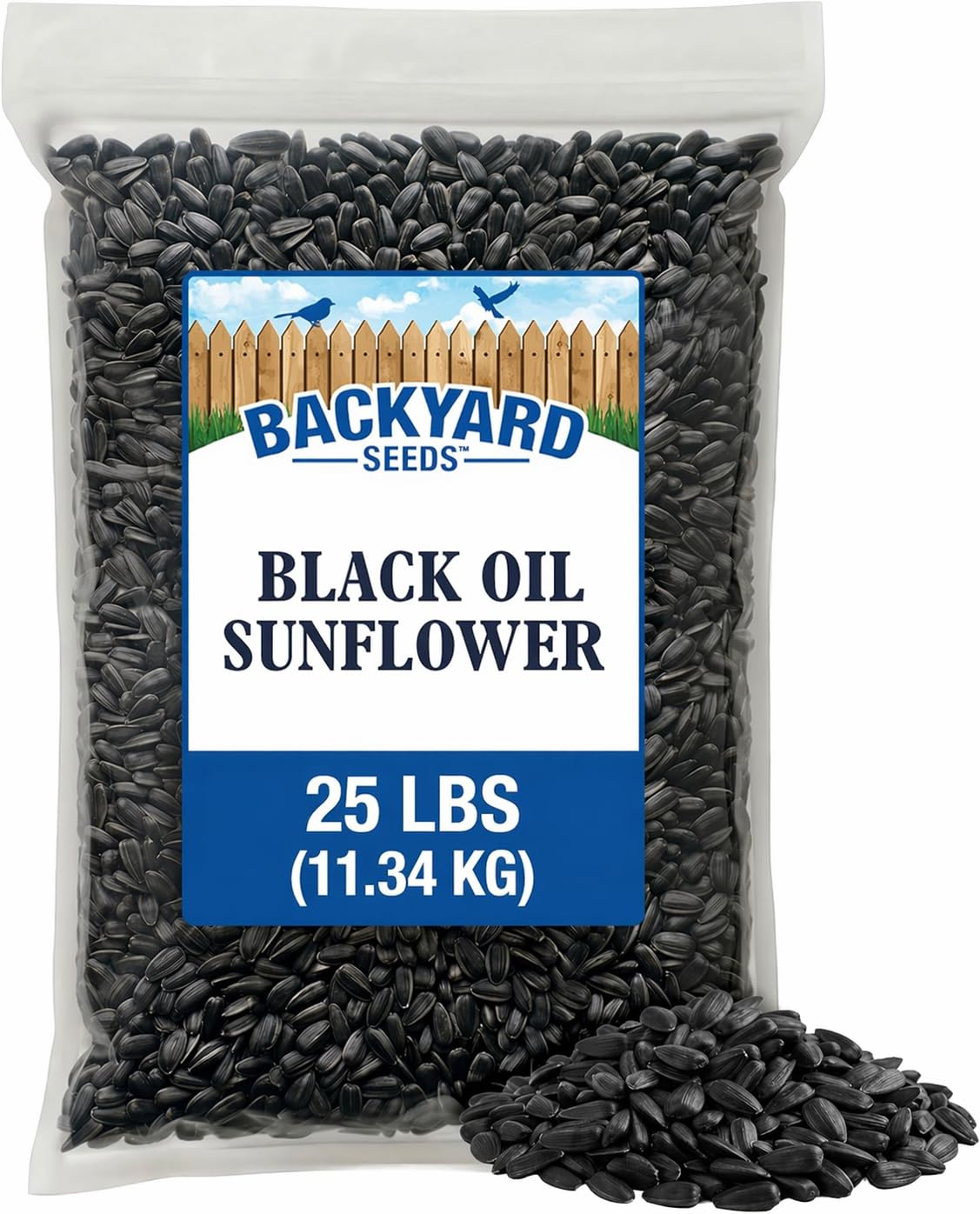
Thin-shelled sunflower seeds that Blue Jays crack in seconds with zero filler.
This is a pure black oil sunflower seed bag, meaning every single seed in the 25-pound bag is edible for a jay. There are no fillers like red milo or wheat that end up as waste on the ground. The thin shells are a real-world advantage — a Blue Jay’s beak cracks them faster than it would a thick-shelled striped sunflower, so the birds stay at the feeder longer and eat more.
Buyers report this is the “cleanest bag of sunflower seeds” they have seen, with no sticks or debris mixed in. One reviewer noted it is “the best and freshest looking seed” they have ever bought. At 25 pounds, it is a bigger bag than the 10-pound Pennington blends but lighter than the 40-pound Armstrong bag, hitting a middle ground for households that fill a tube feeder weekly.
Unlike the Armstrong blend which includes cracked corn and millet, this bag has no junk. That means you are buying less weight in filler, but the per-pound price is higher than a bulk blend. Store it in a sealed container to keep it fresh, as the bag is not resealable.
Premium pure seed: For birders who want 100% edible seed with no waste, this is the strongest pick on the list. The thin shells also make it accessible for smaller birds that share the feeder.
Buy the bucket for storage: The bag works great, but a 5-gallon bucket with lid keeps it fresh and rodent-proof longer.
Reach for this if: You want a straightforward, high-protein sunflower seed you can trust and don’t want to sort through filler.
Look elsewhere if: You prefer a nut-and-fruit variety or need a smaller bag for a single feeder.
2. Armstrong Wild Bird Food All Season Bird Seed Blend, 40 Pounds
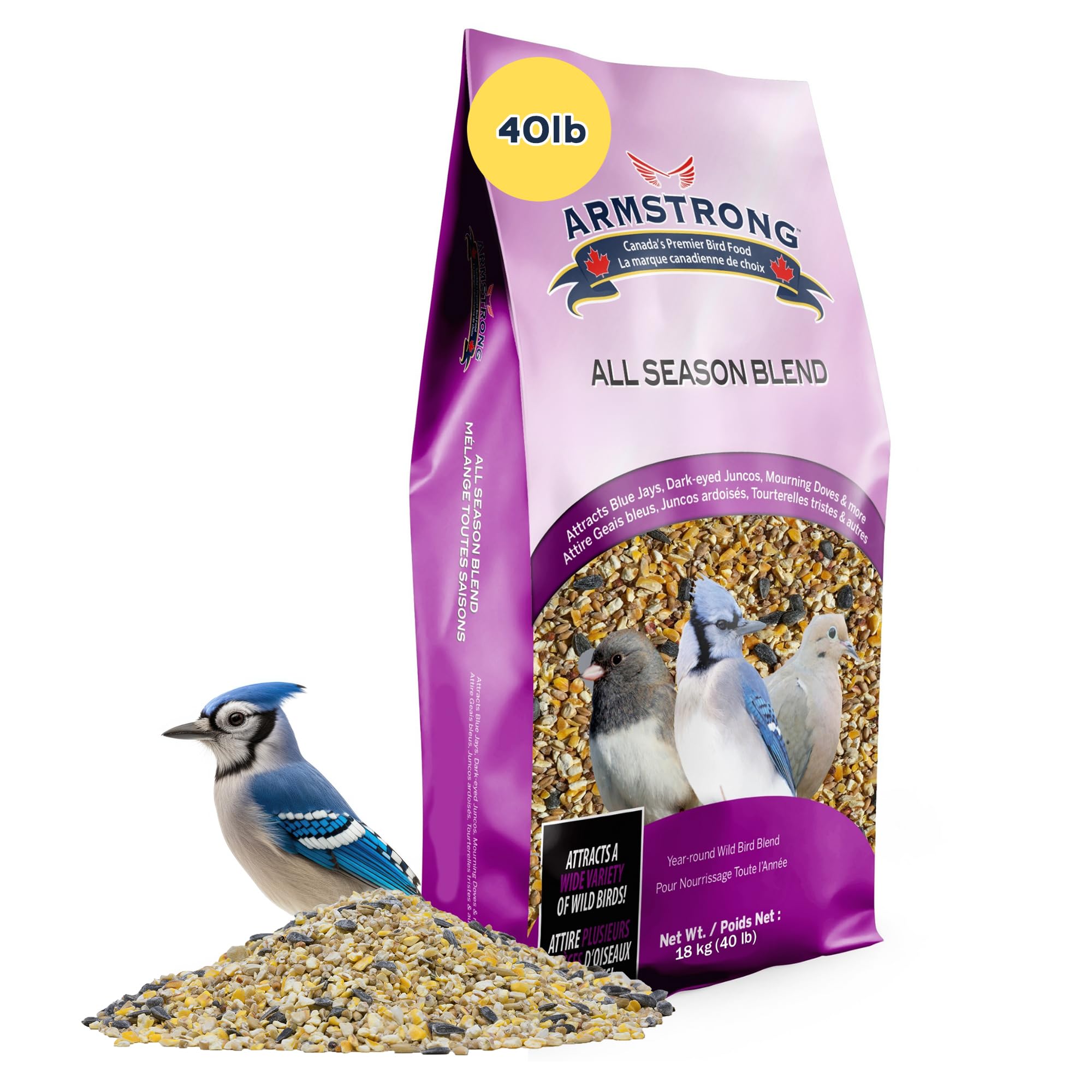
A 40-pound bulk blend that brings in flocks, but filler content is high.
This is the biggest bag by weight on the list, offering a massive 40 pounds of seed for heavy feeders. The blend includes black oil sunflower, cracked corn, wheat, white and red millet, and milo. Blue Jays eat the sunflower and corn first, but the millet and milo often end up on the ground. That is worth knowing if you want zero waste, unlike the CountryMax bag which is 100% seed.
Owners mention that birds “line up every morning waiting for me to fill the feeder.” The barrier bag is flushed with CO2 to keep the seed fresh during shipping, a feature the Pennington bags lack. However, one reviewer had a negative experience, calling it “90% dust,” so the quality consistency may vary by batch — something to check when it arrives.
At 40 pounds, this is a 4.0x larger bag than the Pennington Ultra Double Nut’s 10 pounds, making it a better fit for someone with multiple feeders. The flip side is that the filler content means you might go through it slower on a per-bird basis, but the variety attracts a wider range of species including mourning doves and juncos.
Bulk volume champion: Ideal for feeding a crowd of birds without frequent refills, but expect some waste from the millet and milo.
Reach for this if: You have a large hopper feeder and want to attract a wide variety of birds including sparrows and doves for the lowest cost per pound.
Look elsewhere if: You want a clean, no-filler seed that Blue Jays finish completely with no leftovers.
3. Pennington Ultra Double Nut, Nut & Fruit Blend 10lbs
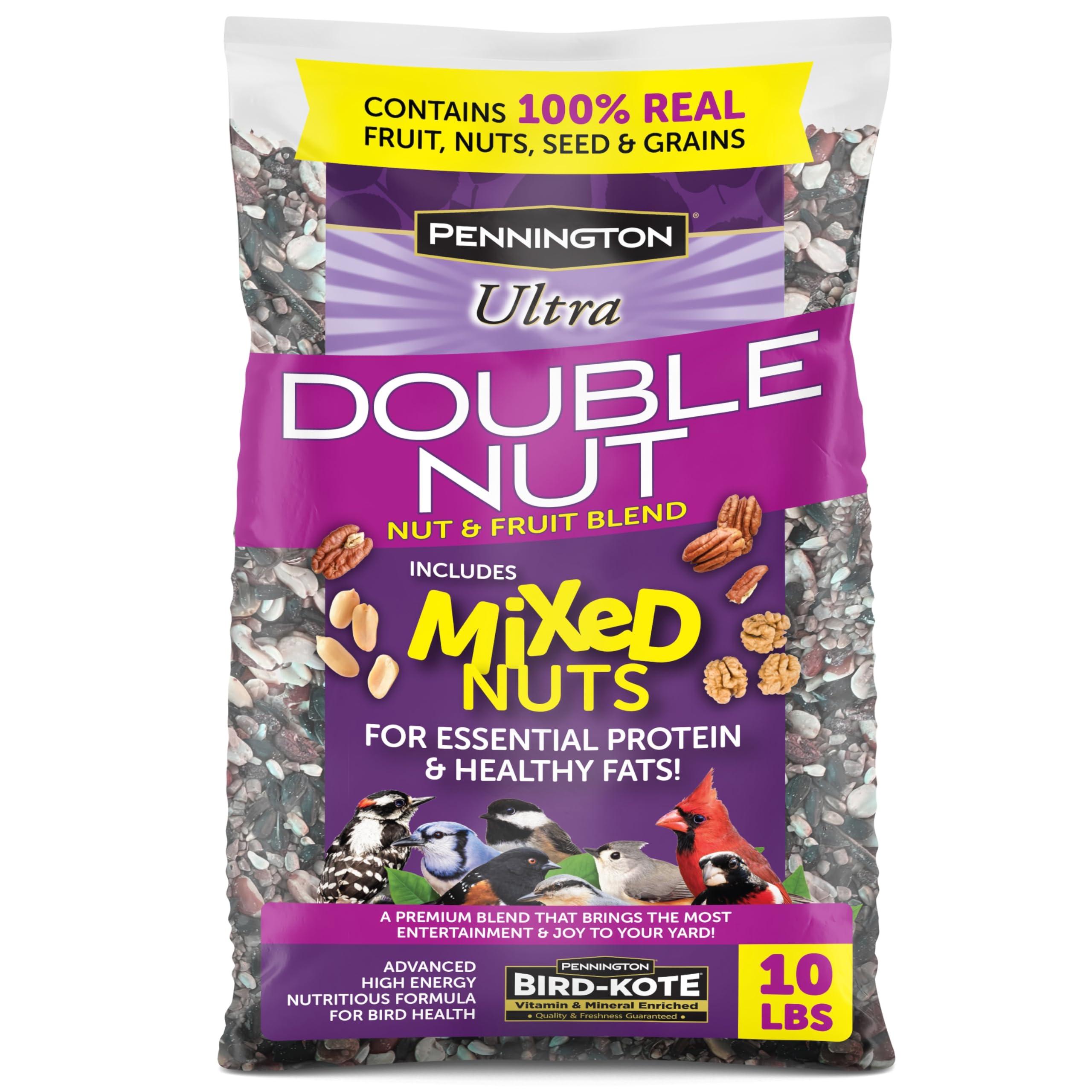
A nut-and-fruit medley that Blue Jays love and that brings in new species.
This blend is different from the sunflower-heavy picks — it includes mixed nuts, dried fruit, seeds, and grains. Blue Jays are naturally drawn to nuts and fruit in the wild, and this bag mimics a diversified woodland diet. The included Bird Kote technology adds vitamins and minerals that the Armstrong and CountryMax bags do not have.
One buyer reports “we’ve had 3 additional bird types show since adding this to our feeders.” That includes cardinals, chickadees, and woodpeckers. The 10-pound bag is noticeably smaller than the 40-pound Armstrong bag and the 25-pound CountryMax bag, but the higher ingredient quality (nuts vs filler grains) means you get more fat and protein per scoop. It is compatible with hopper, platform, and tube feeders.
Customers note it is “slightly expensive but worth it” and that the dried fruit may have added sugar, which is not stated on the label. If you want to avoid fruits with added sugar, the Wildlife Black Oil Sunflower Seeds or CountryMax bag gives you total control over the ingredient list.
What stands out
- Mixed nuts provide high fat for Blue Jays
- Bird Kote adds vitamins not in basic seed blends
- Attracted more species, per buyer reports
What to know
- Smaller bag size (10 lbs) means more frequent refills
- Dried fruit may contain added sugar
Best for variety seekers: If you want to see a broader mix of birds and are okay with a smaller bag, this blend delivers the best ingredient diversity.
4. Wildlife Black Oil Sunflower Seeds for Birds and Wildlife, Non-GMO & USA Grown (12 lbs)

Non-GMO sunflower seeds grown on small farms with a resealable bag.
These are pure black oil sunflower seeds in-shell, weighing 4.51 kilograms (about 10 pounds). The bag is resealable, which is a clear advantage over the CountryMax 25LB bag that requires a separate container. The seeds are Non-GMO and sourced from small USA farms, which some buyers prefer for traceability.
One buyer reports the bag “lasts about a month” for three feeders and enjoys seeing “the variety of birds consistently in the back yard.” The seeds contain traces of field debris and twigs, which the maker says indicates the seeds are unprocessed. Compared to the Happy Wings shelled hearts (2.28 kg), this bag is 2.0x larger by weight, so it lasts much longer for a similar price point.
One drawback is that in-shell seeds create a mess of hulls under the feeder, which you do not get with the Happy Wings sunflower hearts. If a clean patio is a priority, the shelled hearts are a better fit even though they cost more per pound.
Clean sourcing: For buyers who care about non-GMO and domestic farming, this is the top choice among the sunflower-only options.
Reach for this if: You want a resealable bag and prefer to buy seeds grown in the USA with no genetic modification.
Look elsewhere if: You want a mess-free feeding experience without hulls on the ground.
5. Pennington Wild Bird Food 22.5-lb. Critter-Proof Bucket

A sealed bucket that keeps seed fresh and rodents locked out.
The standout feature here is the container itself — a 22.5-pound plastic bucket with a tight-sealing critter-proof lid. If you have ever had squirrels chew through a bag or pantry moths get into your seed stash, this solves it. The seed inside is a standard Pennington wild bird blend featuring sunflower seeds, so Blue Jays get their favorite ingredient.
Buyers appreciate the convenience, with one saying “the birds are happy and so am I.” The Bird-Kote technology adds vitamins and minerals, similar to the Ultra Double Nut blend. The biggest complaint — also mentioned by a reviewer — is that the bucket is hard to open for people with arthritis. Another buyer wishes Pennington sold refill bags for the bucket, so you are paying for the reusable container each time.
Unlike the Armstrong bag, this bucket is not CO2-flushed, but the tight seal does a good job keeping out moisture. If you store seed in a garage or shed, this is the most practical option on the list.
Container matters: The bucket alone is worth the premium for anyone tired of spilled bags and pest problems.
Reach for this if: You want a portable, stackable storage solution that keeps seed fresh without an extra container.
Look elsewhere if: You have difficulty opening tight lids or want a larger bucket size.
6. Happy Wings Sunflower Hearts & Chips – Sunflower Kernels and Chips Bird Food – 5 Lb
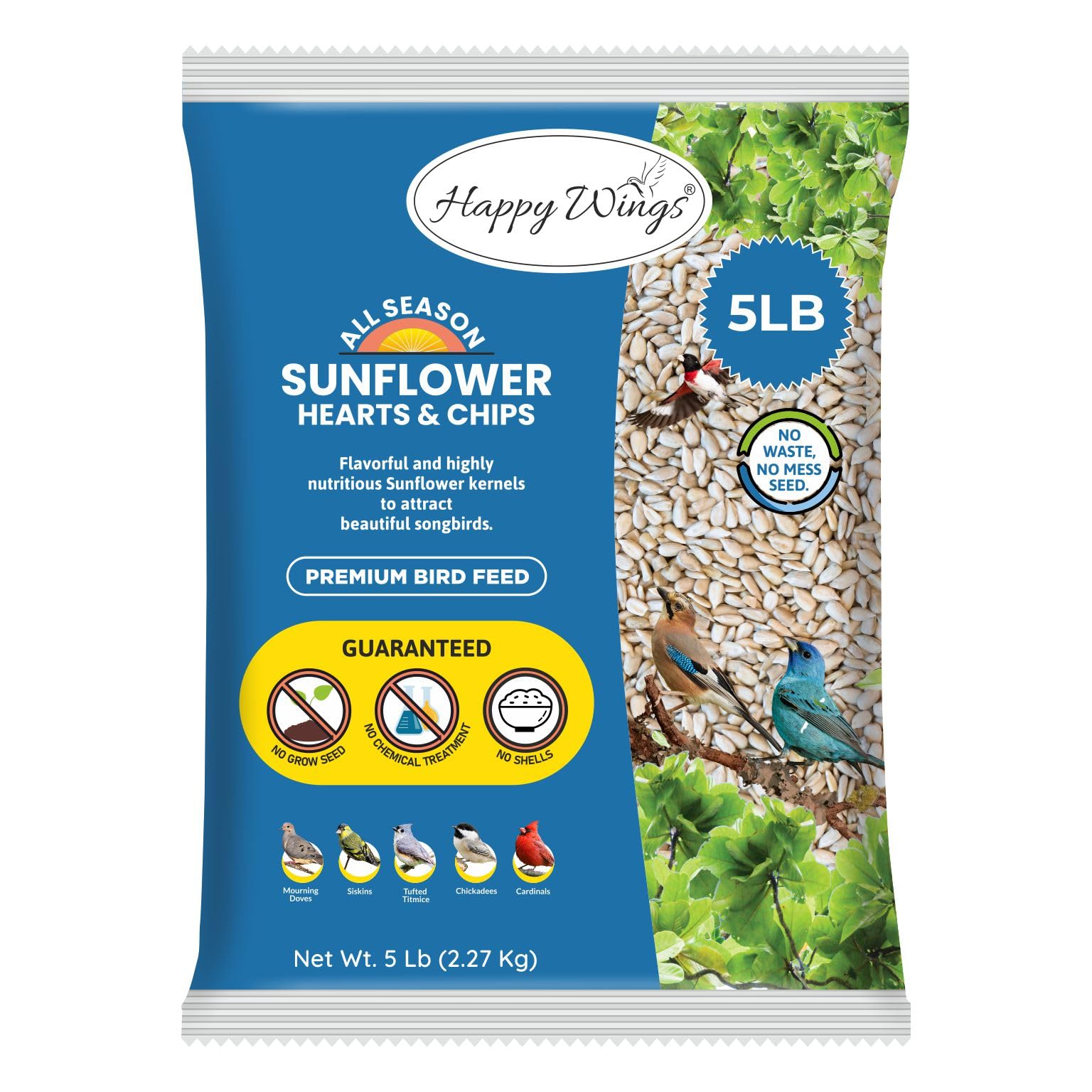
Shelled sunflower hearts that leave zero hulls on your patio.
These are sunflower seeds with the husk already removed, so there is no mess of shells under the feeder. Blue Jays eat the entire piece because there is nothing to crack and discard. The seeds are high in protein and fat, matching the energy needs of active birds. They also will not germinate, so you get no volunteer seedlings in your garden.
One buyer mentioned “bag appears small because sunflower hearts are shelled,” which is an honest observation — 2.28 kilograms (5 pounds) of shelled seeds takes up less volume than the same weight of in-shell seeds. That means the bag looks smaller than the 12-pound Wildlife Black Oil Sunflower bag at 4.51 kg (a 2.0x weight gap), but the actual edible content is higher per scoop since there is no husk.
Some reviewers point out the seeds arrived with a mix of chips (broken kernels) and whole hearts, and one owner reported there were still some hulls present that created a mess. The price per pound is higher than in-shell seeds, so you pay for convenience. For Blue Jays that prefer cracking, some may still enjoy the in-shell experience of the CountryMax seeds.
Why buyers choose this
- No messy hulls on the ground or deck
- No risk of sprouting weeds under the feeder
- High protein and fat content for all birds
What to watch
- Bag looks small for the price (shelled seeds weigh less volume)
- Some buyers found a few hulls mixed in
Best for mess-free feeding: If you keep your feeder on a deck or patio and cannot stand husk cleanup, this is the cleanest pick by a wide margin.
7. Kaytee Cardinal Wild Bird Seed, 7 lb

A safflower blend that attracts Blue Jays while sending squirrels elsewhere.
This blend mixes black oil sunflower seeds with safflower seeds. Safflower has a bitter taste that squirrels tend to avoid, so if you have a persistent squirrel problem at the feeder, this is the strategic choice. It attracts cardinals, chickadees, nuthatches, and blue jays without drawing the local rodent population.
The 7-pound bag is the smallest on the list. One customer observed “I have to refill the feeder every other day, which makes this an expensive hobby.” That is a real-world trade-off — the bag empties fast if you have a busy feeder. Compare that to the 40-pound Armstrong bag, which lasts weeks. The smaller size also means this is a budget-friendly way to try a safflower blend before committing to a larger bag.
Some shoppers say that squirrels still manage to eat this seed, so the bitterness is not a guaranteed deterrent. If squirrels are your main concern, use this in a tube feeder that they cannot climb rather than a platform feeder. The Kaytee blend is additive-free and raw, with no artificial ingredients.
Squirrel-deterring blend: The safflower content makes this a better choice for feeders in squirrel-heavy yards, but expect to refill often.
skip it if: You need a large bag for multiple feeders or your main goal is to attract Blue Jays only (they prefer straight sunflower).
Reach for this if: Squirrels are driving you crazy and you want a seed they are less likely to eat.
Understanding the Specs
Black Oil Sunflower Seeds
These are the highest-fat seed that songbirds, including Blue Jays, prefer over striped sunflower or millet. The thin shell is easy to crack, and the kernel inside provides the high energy a jay needs for its active lifestyle. Most premium blends lead with this ingredient.
Filler Seeds vs No-Waste Blends
Filler seeds (red milo, wheat, cracked corn) are cheap and add bulk, but Blue Jays often ignore them. A “no waste” blend like sunflower hearts eliminates the husk entirely, so every gram you buy is edible. The trade-off is cost — shelled seeds are more expensive per pound than in-shell blends.
FAQ
Will Blue Jays eat safflower seeds?
How much bird seed does a Blue Jay eat per day?
Is it safe to feed Blue Jays sunflower hearts?
Can I mix different bird seed brands together?
What is Bird Kote technology in Pennington seed?
Does bird seed go bad if stored in a bag?
What is the difference between in-shell and shelled sunflower seeds?
Will Blue Jays eat from a tube feeder?
Final Thoughts: The Verdict
For most buyers, the bird seed for blue jays winner is the CountryMax 25LB Black Oil Sunflower Seeds — it is 100% edible seed with thin shells Blue Jays love and zero filler waste. If you want a nut-and-fruit variety to attract more species, choose the Pennington Ultra Double Nut. And for a mess-free patio experience, the Happy Wings Sunflower Hearts & Chips leaves no shells to clean up.
How We Picked
We do not accept paid placement. Every pick is matched to a real buyer and a real use-case; we do not hands-on test units.
Sources & Methodology
Specifications: manufacturer listings and product documentation. Review insights: verified customer reviews, as of July 2026. Pricing: not shown on this page (it changes often); check the current price via the retailer link.
As an Amazon Associate, Lawn Gear Lab earns from qualifying purchases. This does not affect which products we feature.