
Specs are compiled from manufacturer listings and verified buyer reviews and can change over time — please confirm the key details on the product page before buying.
Growing a giant pumpkin isn’t about luck — it’s about giving the plant the specific nutrition it craves during each growth phase. The right formula pushes vine length, leaf size, and eventually fruit weight, while the wrong one leaves you with a patch of ordinary jack-o’-lanterns. This guide cuts through the fertilizer aisle confusion to find the products that actually move the needle.
I’m Rikta — the founder and writer behind Lawn Gear Lab. This guide is built by comparing the manufacturers’ published specifications and the patterns across verified customer reviews, so you get each pick’s real strengths and trade-offs instead of marketing spin.
Whether you are aiming for a county-fair winner or just want a backyard behemoth that impresses the neighbors, the right plant food makes the difference. Here is the fertilizer for giant pumpkins that gets results.
Quick Picks
- Pumpkin Juice 11-8-5 — Best Overall
- TPS Nutrients Pumpkin Fertilizer — Best Value
- Greenway Biotech Cucumber Fertilizer 8-16-36 — Premium Build
- Great Big Tomatoes and Vegetables Liquid — Organic Soil Builder
How To Choose The Best Fertilizer For Giant Pumpkins
Pumpkins are heavy feeders, especially the giant varieties that can add dozens of pounds per day during peak growth. Picking a fertilizer means matching the nutrient profile to the plant’s current stage — vine expansion needs nitrogen, while fruit swelling demands potassium and phosphorus.
Understand the NPK Ratio
The three numbers on a fertilizer bag — nitrogen (N), phosphorus (P), and potassium (K) — tell you the primary nutrient balance. High nitrogen fuels leaf and vine growth early in the season. Later, you want a higher middle and last number (phosphorus and potassium) to support flower production and fruit size. Products like Greenway Biotech’s 8-16-36 formula are built for this shift with very high potassium at 36%.
Liquid vs. Powder vs. Organic
Liquid fertilizers, like the TPS Nutrients Pumpkin Fertilizer, deliver nutrients immediately to roots and leaves — great for a quick boost. Powder formulas, such as Greenway Biotech’s, are water-soluble and cost-effective for large gardens. Organic compost extracts like Great Big Plants supply slow-release trace minerals and humic acid to condition the soil long-term. For giant pumpkins, many growers use a combination: a liquid feed for quick uptake and a powder or organic base for sustained nutrition.
Don’t Overlook Micronutrients
Beyond the big three (NPK), pumpkins need boron, iron, manganese, and zinc for proper fruit set and disease resistance. Chelated micronutrients — like the EDTA-chelated iron and zinc in Greenway Biotech’s formula — stay plant-available across a range of soil pH levels, so the roots can actually absorb them. A fertilizer that lists these extras gives your pumpkin a measurable edge.
Quick Comparison
| Model | Best For | Form | NPK Ratio | Volume | Amazon |
|---|---|---|---|---|---|
| Pumpkin Juice 11-8-5 | Foliar feeding & rapid vine growth | Liquid | 11-8-5 | 32 fl oz | Amazon |
| TPS Pumpkin Fertilizer | All-purpose liquid feeding | Liquid | — | 32 fl oz | Amazon |
| Greenway Biotech 8-16-36 | High-potassium fruit swelling | Powder | 8-16-36 | 1 lb | Amazon |
| Great Big Tomatoes & Vegetables | Organic soil conditioning | Liquid | — | 32 fl oz | Amazon |
In‑Depth Reviews
1. Pumpkin Juice 11-8-5

The foliar specialist that rewards you with noticeably larger leaves and vines in a single week.
This liquid formula from Pendelton Turf Supply is engineered specifically for pumpkins and vegetables, with an NPK of 11-8-5 that delivers a strong nitrogen punch for explosive vine and leaf growth. It is designed as an acidic foliar feed, meaning you spray it on the leaves for direct absorption while also watering the roots — a two-way attack that speeds up the entire growth cycle. Buyers report the product “doubles plant size (leaves and vines) rapidly,” and one reviewer noted it “tripled pumpkin size in one week with biweekly use.”
Unlike the TPS Nutrients liquid above, this one comes with a squeeze-and-measure bottle that makes dosing simple — 1 to 2 ounces per gallon of water, yielding up to 32 gallons of mixed feed. It also includes boron, iron, manganese, and zinc as micronutrients, which support fruit set and prevent common deficiencies. The main trade-off, noted by a reviewer, is that it may not outperform a general-purpose fertilizer like Miracle-Gro during the early flowering stage — one grower saw better results from the cheaper option. This pick shines best during peak vine expansion and fruit sizing.
What Boosts Growth
- High nitrogen (11%) fuels rapid leaf and vine expansion
- Foliar AND root feeding for faster uptake
- Built-in measuring bottle for easy dosing
- Includes key micronutrients for fruit health
What to Watch
- One reviewer found it less effective than Miracle-Gro during flowering
- Higher price per ounce than some powders
Reach for this if: you want a fast-acting foliar feed that visibly expands leaf and vine size within a week, backed by reviews of tripling fruit size.
Look elsewhere if: you need a budget option for the entire season — the 32-ounce bottle may not stretch as far as a powdered concentrate.
2. TPS Nutrients Pumpkin Fertilizer
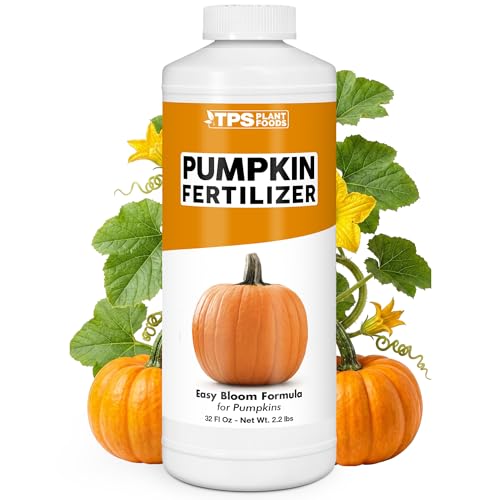
The balanced liquid that doubled pumpkin growth in under two weeks, according to buyers.
This 32-ounce liquid from TPS Nutrients is built for pumpkin and squash varieties, providing a steady supply of balanced nutrition for vines and fruit development. It is made in the USA and designed for garden beds and raised rows. One buyer mentioned that after starting this fertilizer, “pumpkin growth doubled from a few inches to rapid expansion,” with noticeable results in just 13 days. Another reviewer found it effective on Giant Max seeds, using 2 tablespoons per watering can over two weeks to increase growth and flower production.
It earns its Best Value slot by delivering fast results at a lower price point than the premium Pumpkin Juice, while still being versatile enough for foliar sprays and soil drenches. However, the blend’s exact NPK ratio is not listed in the data, which makes it harder to plan precise feeding schedules compared to the 8-16-36 of the Greenway Biotech powder. Also, one first-time grower felt the difference wasn’t dramatic — their plants were doing well but not transformed. For most backyard growers, this is a reliable all-purpose pick that won’t break the budget.
Why It Works
- Buyers saw doubled pumpkin growth in about 13 days
- Effective on Giant Max seeds and standard varieties
- Works as a soil drench and foliar spray
- No strong odor reported by users
Consider This
- Exact NPK ratio not listed — harder to balance with other feeds
- Some first-time growers saw only moderate results
Grab it if: you want a straightforward liquid that buyers have seen double growth in under two weeks, without needing to mix powders.
skip it if: you require precise NPK numbers to coordinate a multi-stage feeding plan with other fertilizers.
3. Greenway Biotech Cucumber Fertilizer 8-16-36
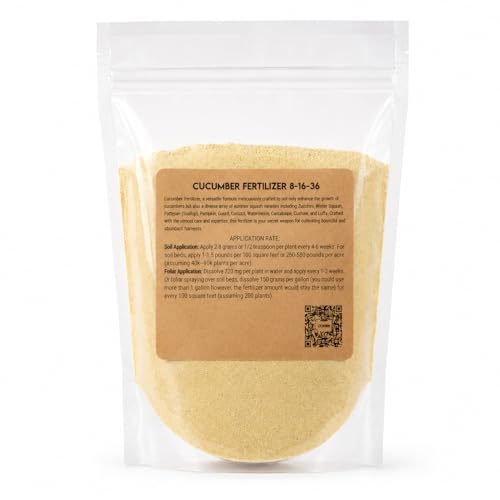
The high-potassium powder that revived dying plants in four days, according to a hydroponic grower.
This 1-pound powder from Greenway Biotech has an NPK of 8-16-36 — notably high in potassium (36%), which is the key nutrient for fruit development, size, and sweetness. While the label says cucumber, it works on all cucurbits: pumpkins, squash, melons, and zucchini. One reviewer running a hydroponic tower (20-gallon reservoir) mixed 60g of this product with 60g of calcium nitrate every 3-4 weeks and revived dying cucumbers — they greened up, flowered, and pushed new shoots in about 4 days. That kind of turnaround is hard to ignore.
It is a professional-grade powder that dissolves completely in room-temperature water, making it ideal for drip irrigation, foliar sprays, and hydroponic systems without clogging nozzles. The EDTA-chelated micronutrients — iron, manganese, zinc, and copper — remain plant-available across a wide pH range (4-9), preventing the nutrient lockout common in alkaline soils. The catch is the price per pound: it is a premium product, and as a reviewer put it, “the package was far smaller than I expected for that money.” But they also admitted, “one watering with it and my cucumbers really took off.” For serious pumpkin growers targeting maximum fruit weight, the 36% potassium makes this easy to recommend.
The Edge It Gives
- Very high potassium (36%) for maximum fruit swelling
- Revived dying plants in about 4 days in hydroponic systems
- 100% water-soluble, no nozzle clogging
- Chelated micronutrients stay available across pH 4-9
The Trade-Offs
- Premium price per pound compared to generic blends
- One bag arrived split open due to poor packaging
Choose this for: the late-season boost when your pumpkin is setting fruit — the 36% potassium pushes size where liquid all-purpose feeds fall short.
Pass on it if: you are on a tight budget or only growing a few standard pumpkins — the price per pound is hard to justify for small patches.
4. Great Big Tomatoes and Vegetables Liquid Fertilizer Booster
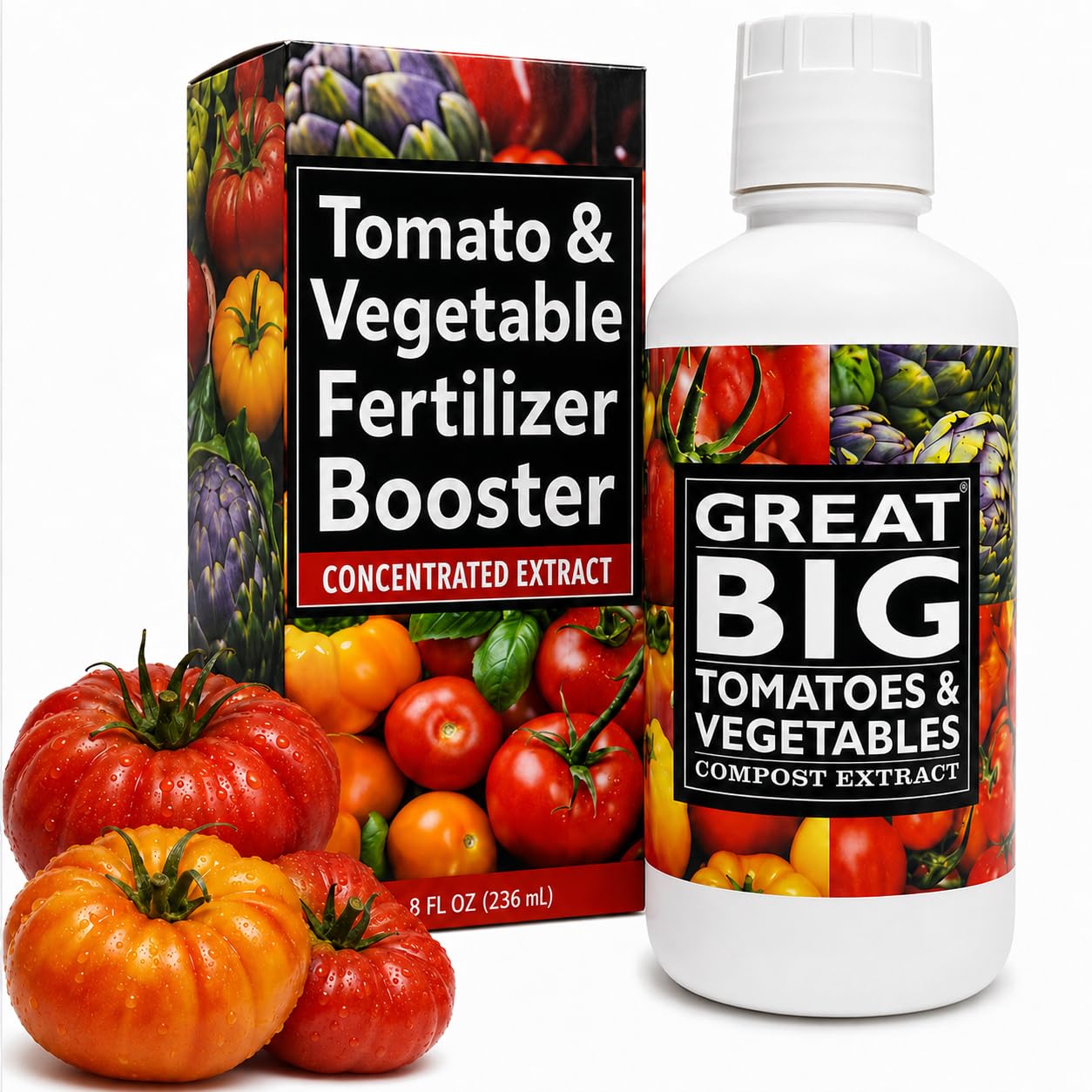
The compost extract that cures end rot and open up trace minerals in tired soil.
This 32-ounce organic liquid from Great Big Plants is less a direct fertilizer and more a soil conditioner — it delivers humic acid from leonardite, over 70 chelated trace minerals, and kelp seaweed to make existing soil nutrients plant-available. Unlike the high-potassium Greenway Biotech powder or the foliar-focused Pumpkin Juice, this one works below the surface, feeding the root zone and correcting deficiencies. Owners mention “big tomatoes, no end rot,” a common issue caused by calcium and micronutrient imbalances. It also revives plants showing yellowing or wilting after hot days, according to reviewers.
It is registered with the California Department of Food and Agriculture as an organic input, making it a good fit for organic gardens. The trade-off is that it is best used alongside a primary fertilizer rather than as a standalone feed. It won’t provide the nitrogen push of the TPS liquid or the potassium punch of the Greenway powder, but for long-term soil health and preventing problems like blossom-end rot, it is a smart companion product.
Where It Excels
- Eliminates blossom-end rot with its trace mineral and humic acid content
- Registered organic input for certified gardens
- Revives heat-stressed plants within days
Its Limits
- Low in NPK — not a standalone feed for giant pumpkins
- Best used as a booster alongside a primary fertilizer
Use this when: your soil needs a mineral reset — if you have battled end rot or yellowing leaves in past seasons, this organic conditioner fixes the root cause.
pass on it if: you want a complete fertilizer that supplies all the NPK your pumpkin needs — this is a booster, not a primary feed.
Understanding the Specs
NPK Ratio
This is the three-number code on every fertilizer label, representing the percentages of nitrogen (N), phosphorus (P), and potassium (K) by weight. Nitrogen drives leaf and vine growth; phosphorus supports root development and flower formation; potassium is critical for fruit size, disease resistance, and overall plant strength. For giant pumpkins, you want a fertilizer with higher potassium late in the season — something like a 8-16-36 formula signals the plant to put energy into fruit swelling.
Foliar vs. Soil Feeding
Foliar feeding means spraying liquid fertilizer directly onto the leaves, where the plant absorbs nutrients through its stomata — the tiny pores on leaf surfaces. This method delivers a rapid boost because the nutrients skip the soil and root system. Soil drenching, by contrast, pours the fertilizer into the ground around the roots for slower, sustained uptake. Many pumpkin growers use both: a foliar spray for quick corrections and a soil drench for long-term nutrition.
FAQ
Can I use a general vegetable fertilizer for giant pumpkins?
When should I switch from a high-nitrogen to a high-potassium fertilizer?
How often should I fertilize a giant pumpkin plant?
What happens if I use too much fertilizer on my pumpkin?
Is foliar feeding better than soil feeding for pumpkins?
Can I use a cucumber fertilizer on pumpkins?
Do I need micronutrients for giant pumpkins?
How do I apply a water-soluble powder fertilizer?
What is humic acid and why would my pumpkin need it?
Final Thoughts: The Verdict
For most growers aiming for a giant pumpkin, the fertilizer for giant pumpkins winner is the Pumpkin Juice 11-8-5 because it delivers rapid foliar-fed vine and leaf expansion backed by reviews of tripling fruit size in a week. If you want a targeted high-potassium push for the final fruit-swelling stage, grab the Greenway Biotech 8-16-36. And for organic soil conditioning that prevents end rot and open up locked-up minerals, the Great Big Tomatoes Booster is a reliable companion product.
How We Picked
We do not accept paid placement. Every pick is matched to a real buyer and a real use-case; we do not hands-on test units.
Sources & Methodology
Specifications: manufacturer listings and product documentation. Review insights: verified customer reviews, as of July 2026. Pricing: not shown on this page (it changes often); check the current price via the retailer link.
As an Amazon Associate, Lawn Gear Lab earns from qualifying purchases. This does not affect which products we feature.