
Specs are compiled from manufacturer listings and verified buyer reviews and can change over time — please confirm the key details on the product page before buying.
You sprout your seeds and watch them grow, but then the moment comes to lift them out of the tray, and you risk snapping the tender roots. A good seed starting tray makes that transfer easy and sets your vegetables up for a strong start before they ever hit the garden soil. The RooTrimmer 10 Pack is the one most serious growers should buy: it gives you 200 durable cells that fit standard 1020 trays, and buyers report the thick plastic lasts multiple seasons.
I am Rikta, the founder of Lawn Gear Lab. I built this guide by lining up the manufacturers’ published specs and checking patterns across verified customer reviews, so you see each pick’s real strengths and trade-offs — not marketing spin.
This guide covers six reliable kits to help you find the best seed starting trays for vegetables, whether you are starting a few tomato plants on a windowsill or filling a whole greenhouse with peppers.
Quick Picks
- RooTrimmer 10 Pack 200 Cell Seed Starter Trays — Best Overall
- Mr. Pen- Seed Starter Tray Kits — Premium Pick
- Gardzen 5-Pack Seed Starter Kits, 75-Cell — Beginner Friendly
- VIVOSUN 6-Pack Seed Starter Trays, 72-Cell — Budget Champion
- 5 Pack Seed Starter Tray Seed Starter Kit — Compact Value
- POROLIR 10PCS Seed Starter Tray, 120 Cells — Long-Life Pick
How To Choose The Best Seed Starting Trays For Vegetables
Picking the right tray means matching it to your space, the number of vegetables you want to grow, and how much time you have for watering. Here are the three most important things to check before you buy.
Cell Count and Spacing
More cells let you start more plants at once, but smaller cells force you to transplant sooner. A 200-cell tray (like the RooTrimmer) gives you high volume for microgreens or compact starts, while a 15-cell tray (like the Gardzen) gives each seedling more room to grow before you need to repot it. If you are starting tomatoes, peppers, or other large vegetables, deeper and fewer cells usually work better.
Humidity Control and Ventilation
A humidity dome (a clear plastic cover that traps warmth and moisture) helps seeds sprout faster, but too much trapped heat can cook your seedlings. Look for a tray with adjustable vents on the dome, like the VIVOSUN 6-Pack or the 5 Pack Seed Starter Tray from VPQZUPG. These vents let you slowly reduce humidity as sprouts emerge, which prevents mold and strengthens the young plants.
Durability and Reusability
Cheap, thin plastic trays can crack during the first season or warp under a heat mat (a warming pad that speeds germination). If you plan to garden year after year, invest in thick plastic or high-quality polypropylene (a tough, flexible plastic) that can be rinsed and reused. Reviewers noted that the RooTrimmer and POROLIR trays held up for multiple seasons, while thinner kits may only last one or two cycles before the plastic becomes brittle.
Quick Comparison
| Model | Best For | Total Cells | Dome Vents | Item Weight | Amazon |
|---|---|---|---|---|---|
| RooTrimmer 10 Pack | High-volume & commercial use | 200 | No | 16 oz | Amazon |
| Mr. Pen 10 Set | Organized multi-variety starts | 150 | Yes | 2.28 kg | Amazon |
| Gardzen 5-Pack | Compact spaces & beginners | 75 | Yes | 1.09 kg | Amazon |
| VIVOSUN 6-Pack | Budget-friendly starter kit | 72 | Yes | — | Amazon |
| 5 Pack 200 Cells | Cost-effective seed plug starter | 200 | Yes | — | Amazon |
| POROLIR 10PCS | Long-term reusability | 120 | Yes | 0.2 lbs | Amazon |
In‑Depth Reviews
1. RooTrimmer 10 Pack 200 Cell Seed Starter Trays

The volume you need for a serious greenhouse or a big backyard harvest.
With 200 individual cells across 10 trays, you can start a large crop at once. Each cell has its own drainage hole, so you avoid waterlogging (oversaturating the soil and drowning the roots). The cells are shallow at 1.5 inches deep, which works well for vegetables, herbs, and microgreens that do not need deep root space right away — an advantage for quick-sprouting crops like lettuce.
Owners mention these are made from thick, durable plastic that resists cracking, and many say they expect them to last several seasons. One reviewer noted the trays fit standard 1020 trays (a common 10-by-20-inch nursery flat) perfectly for bottom watering. The main trade-off is the lack of a built-in humidity dome, so you will need to buy separate clear covers or use a plastic tent if you want to trap moisture during germination. This makes it a harder sell for a casual windowsill gardener compared to the Mr. Pen kit, which includes domes and tools.
Best for high-volume starting: This pack is a smart pick for anyone who routinely starts dozens of vegetable varieties and wants a sturdy, reusable system that handles commercial-like volumes.
The catch is no included domes: Without domes you have to manage humidity manually, which adds a step for seeds that need consistent moisture to sprout.
Ideal if you are a serious grower: Get this if you already own a heat mat and bottom trays and need a durable, high-capacity solution for vegetables, herbs, and flowers.
skip it if you need an all-in-one kit: You will have to buy humidity domes separately, which reduces the convenience for a casual windowsill gardener.
2. Mr. Pen- Seed Starter Tray Kits, 10 Set, Total 150 Cells
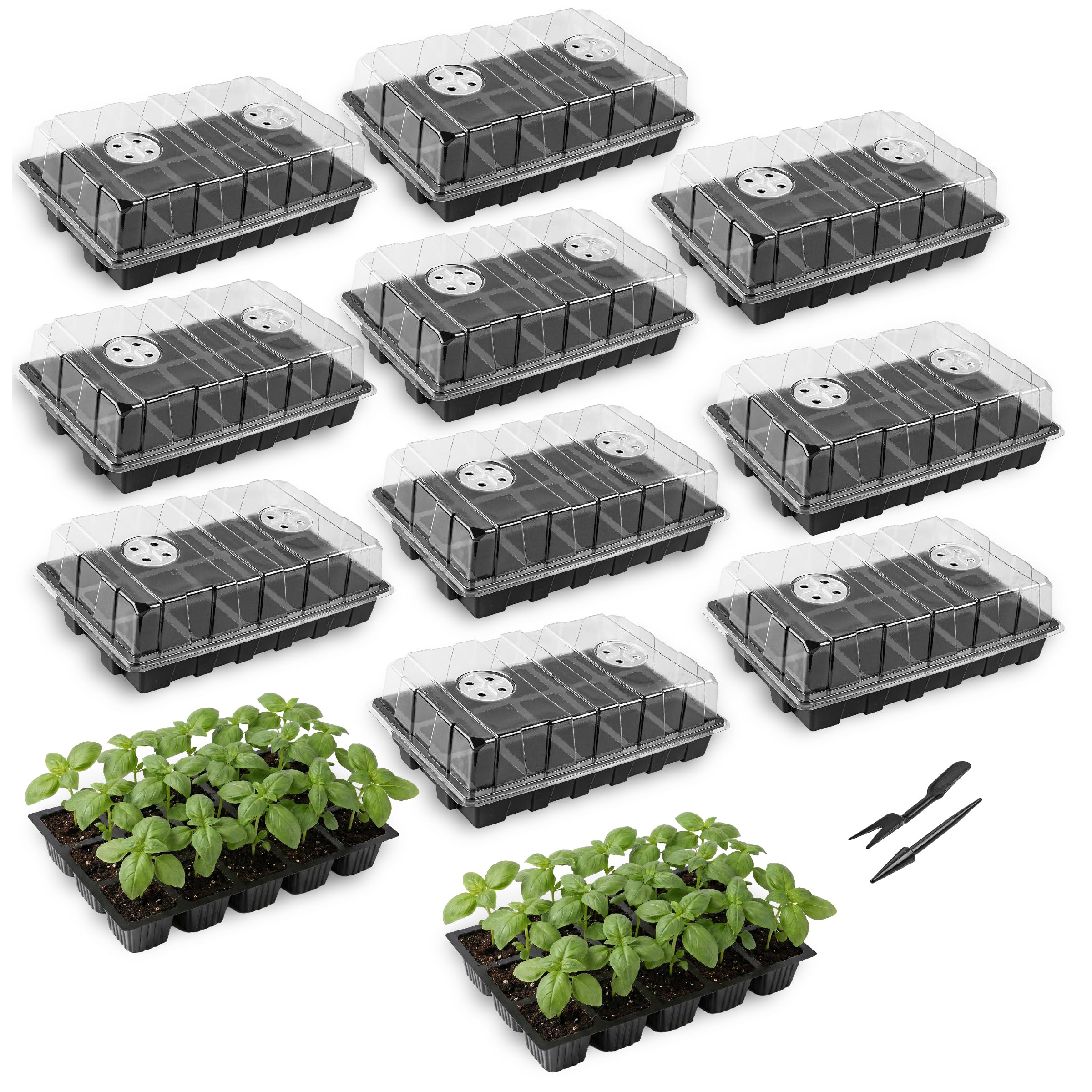
A tidy system for starting multiple vegetable varieties without mixing them up.
Each of the 10 trays in this Mr. Pen set holds 15 cells, giving you 150 total cells in organized, manageable blocks. The 15 cells per tray are roomier than the 12-cell trays in the POROLIR kit, giving seedlings a bit more space before you need to transplant. Each cell has drain holes to prevent overwatering, and the transparent dome has adjustable ventilation to control humidity as your sprouts emerge.
Reviewers highlight that the sturdy black trays hold up well, and the included dibber (a small tool for poking planting holes) and widger (a tool for lifting seedlings) make sowing and transplanting cleaner. One buyer mentioned cracks in two of the bases when used with a heat mat, but said the humidity retention was excellent and seeds sprouted faster than expected. The domes slide off easily, which some users saw as a bonus for quick access and others saw as a minor drawback if they want a tighter seal.
What stands out
- Comes with useful dibber and widger tools for precise seed placement and transplanting.
- Adjustable vents on the domes let you ease humidity as seedlings mature.
- 15-cell trays are spacious enough for strong root development before moving up to pots.
What to watch for
- Some bases may crack under heat mat use, though the trays remain functional.
- Domes slide off easily, which may be a pro or con depending on your preference for access vs. seal.
Best for organized indoor gardeners: If you like starting different vegetable varieties side by side and appreciate bonus tools that reduce handling, this kit is a solid choice — especially if you dislike the no-dome setup of the RooTrimmer.
Better if domes stay on: If you need a snap-tight seal for high humidity, the looser fit of these domes might be a mild annoyance.
3. Gardzen 5-Pack Seed Starter Kits, 75-Cell
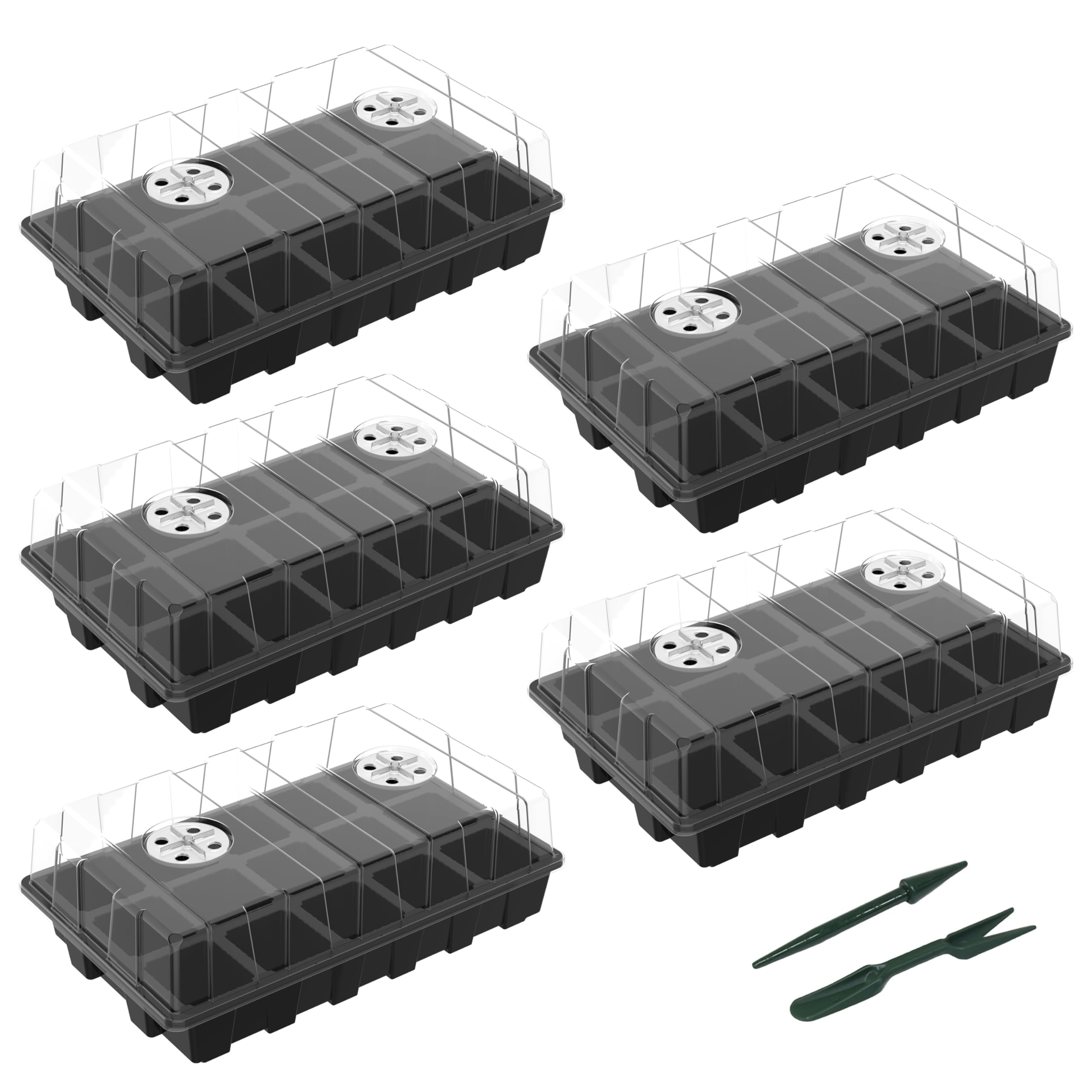
Room to grow with tall covers and adjustable ventilation built right in.
The Gardzen kit comes with 5 trays, each holding 15 cells, for a total of 75 cells — a comfortable number for a small family garden. The domes are tall, so your seedlings can grow quite a bit before you need to move them to larger pots, giving you a head start compared to the shorter domes on the VIVOSUN 6-Pack. Each dome has two adjustable air vents at the top, so you can dial in the perfect humidity for germination without lifting the lid.
One reviewer praised the “excellent” cell size and noted that the plastic feels strong rather than flimsy, and that all trays and covers stack neatly for storage at the end of the season. A few buyers reported that the plastic lids do not stay on securely, and one mentioned a lid corner cracked in the first week. However, for the price, most users found it functional for initial seedling growth.
A good beginning set: The Gardzen hits a balance of cell count, dome height, and venting for someone starting their first vegetable garden from seed.
Durability is a mixed bag: While the plastic feels solid to most, a small number of lids may crack early — so handle with care if you plan to reuse them for many seasons.
Great for new vegetable growers: If you want a simple, affordable kit with tall domes that let your plants grow strong before transplanting, this is a smart buy — and it is much less intimidating than the 200-cell RooTrimmer.
Not for heavy reuse: If you demand heirloom-level durability across a decade of use, the lid fit issues make this less ideal than a thicker alternative.
4. VIVOSUN 6-Pack Seed Starter Trays, 72-Cell
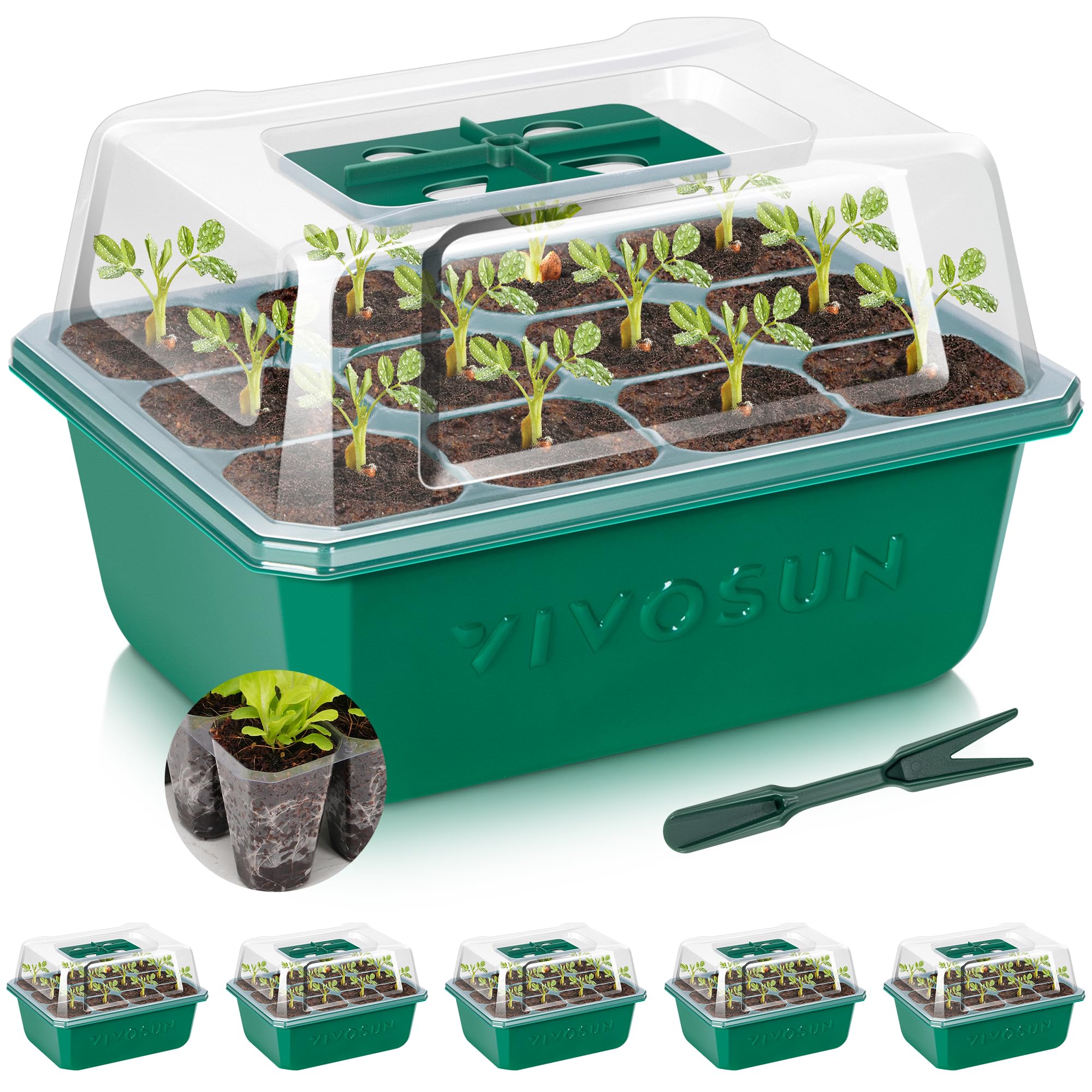
A small but mighty pack that gives you everything needed for a windowsill nursery.
This VIVOSUN kit packs 6 separate trays, each with 12 cells, for a total of 72 cells. It also includes a base tray, humidity dome, and a small set of garden tools and plant labels — everything a beginner needs to get started right away. The dome features an adjustable vent, so you can manage the humidity and temperature during germination, and the drain holes at the bottom of each tray help prevent overwatering.
One owner reported planting 48 seeds and saw about 75% success after two weeks, noting that the kits work well indoors with indirect sunlight. Another reviewer mentioned they would be ordering at least two more sets for vegetables. While the trays are durable enough for indoor use, a reviewer warned they may feel flimsy if used outdoors in cold weather. If you compare it to the 200 cells in the VPQZUPG 5-Pack, the VIVOSUN offers much less volume, but the included tools and labels makes it a better value for someone starting small.
Why it works
- Comes with useful garden tools and 10 plant labels for organized tracking.
- Adjustable vent on the dome gives you climate control as seeds germinate.
- Very affordable entry point for a full 6-tray system.
Its limits
- Each tray only holds 12 small cells, which may feel cramped for larger vegetable starts.
- Not built for outdoor cold-weather use; best kept on a warm, bright windowsill indoors.
Smart buy for the budget-conscious: If you are trying seed starting for the first time and want a complete, low-cost kit with no extra purchases, this is a fantastic choice — and its 72 cells are a manageable start compared to the 200 in the RooTrimmer.
Best for small-scale starts: If you plan to start more than 70-80 plants per season, you will outgrow this set fast and need a larger kit.
5. 5 Pack Seed Starter Tray Seed Starter Kit, 200 Cells Total
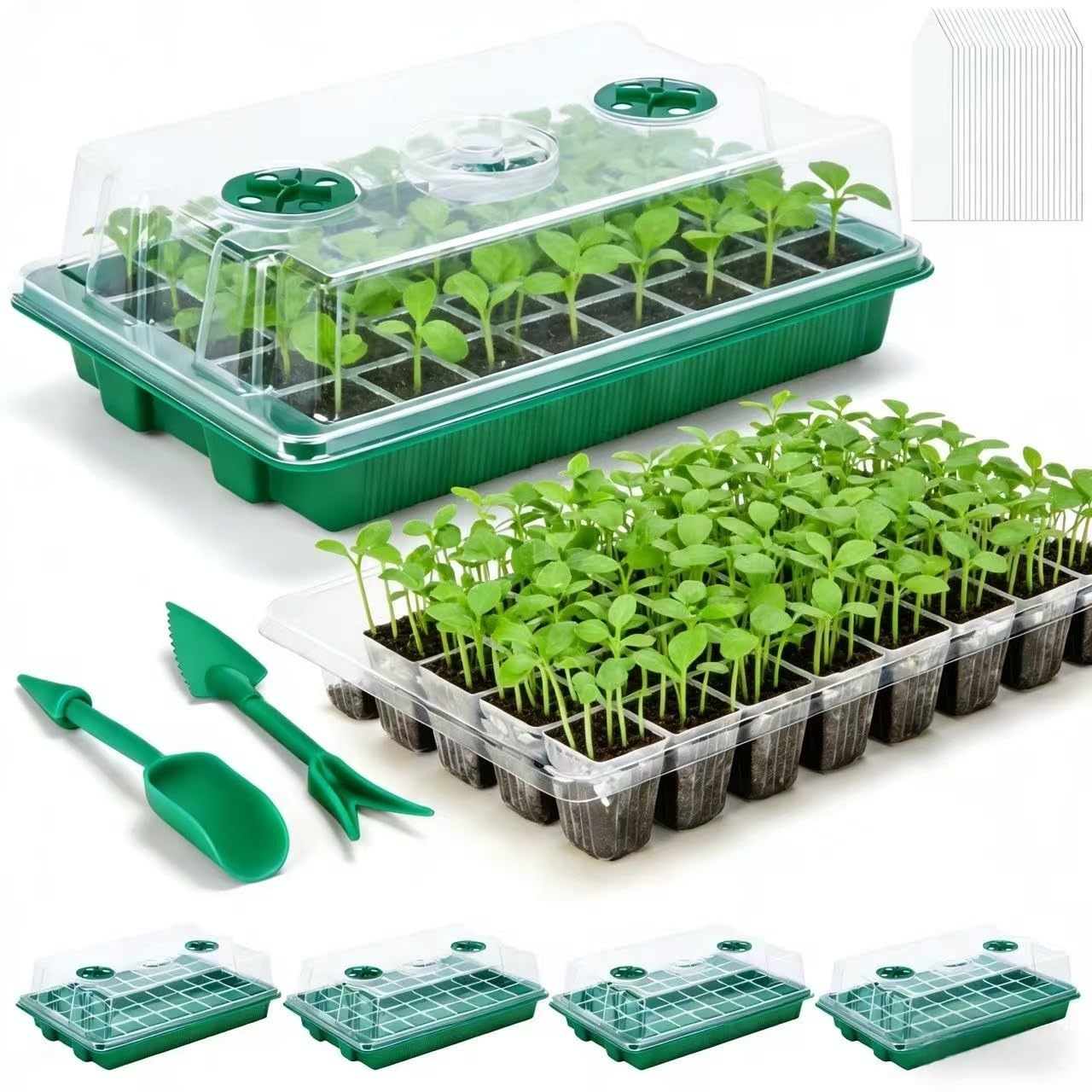
Packs 200 cells into a nestable kit that keeps humidity under control.
This VPQZUPG 5-pack gives you 200 total cells across 5 trays (40 cells per tray), which is the same total as the RooTrimmer but spread across fewer, larger trays. Each tray has a transparent lid with two adjustable circular vents, so you can fine-tune the humidity for each stage of seedling growth. The bottom of each tray features drainage holes, and the entire set nests perfectly for compact storage between seasons.
One reviewer found the “small squares ideal for starting seed plugs for later transplanting.” Buyers praise the surprising thickness and sturdiness of the plastic for the price, with many noting it held up well to frequent moving. The one complaint a few owners shared is that the vent adjustment covers occasionally come loose, but they snap back easily. If you need high volume but prefer adjustable humidity domes, this kit gives you the 200-cell count of the RooTrimmer with climate control built in.
Great for seed plug production: The 40-cell trays are ideal for starting dense plugs of vegetables or herbs that you plan to transplant into larger containers later.
Watch the vent caps: The small vent covers can pop off during handling, so you may need to keep a close eye on them when moving the trays around.
Best for cost-effective high volume: If you want 200 cells with adjustable venting and sturdy plastic at a low per-tray cost, this set is tough to top — and it beats the RooTrimmer on dome inclusion.
Not for deep root vegetables: The cells are on the smaller side, so larger root vegetables like tomatoes will need an early transplant to a bigger container.
6. POROLIR 10PCS Seed Starter Tray, 120 Cells
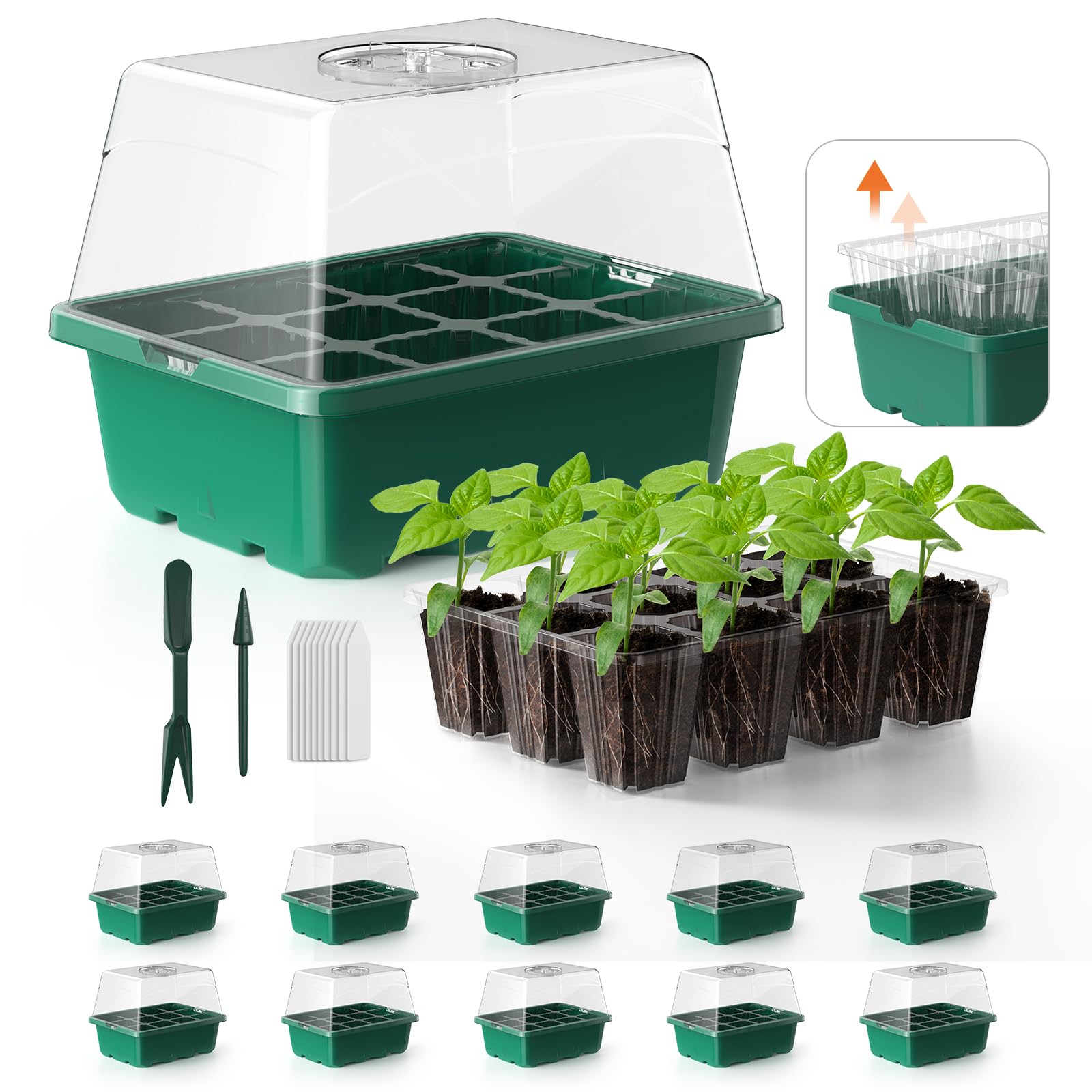
Lightweight trays that customers note survive season after season without cracking.
The POROLIR kit gives you 10 trays, each with 12 cells, for a total of 120 cells. At just 0.2 pounds per tray, they are the lightest in this guide, which makes them easy to move around and stack. Each tray has a taller cover and a rotating air vent to maintain airflow during germination, plus drainage holes at the bottom to prevent root rot (root damage from standing water). The kit is made of polyethylene (PE), a flexible plastic that resists shattering.
One customer observed that the trays are “durable after 2 years” and used them annually for seedlings including vegetables, flowers, and fruit trees. Another reviewer noted that the cells are very small and require prompt transplanting once seeds sprout. A few users suggested bottom watering to prevent fungus gnats, and one mentioned that leaving the empty trays in direct sunlight can cause them to melt. Compared to the 200 cells of the VPQZUPG 5-Pack, this set has fewer cells but lighter individual trays, making it more portable for moving between a windowsill and a greenhouse shelf.
Reasons to pick it
- Proven multi-season durability; reviewers point out 2+ years of annual use without issues.
- Taller dome gives seedlings vertical space before you need to transplant.
- Lightweight and easy to move around the windowsill or greenhouse shelf.
Things to think about
- Cells are on the smaller side, so you will need to repot quickly after germination for vigorous growth.
- Can deform if left in direct sun while empty, so store them out of harsh light.
Perfect for the thrifty seasonal gardener: If you want a lightweight, reusable kit that has proven it can last years for vegetables, flowers, and fruit trees, this is a smart investment — and it outlasts the VIVOSUN for roughly the same cell count.
Not for large starts: If you prefer to let your seedlings grow big before moving them out, the small cells will force you to transplant earlier than you might like.
Understanding the Specs
Cell Count and Depth
The number of cells in a tray tells you how many seeds you can start at once, but the depth of each cell matters just as much. A shallow cell (around 1.5 inches deep) works well for quick-sprouting vegetables like lettuce or microgreens, while deeper cells (2 inches or more) give tomatoes and peppers room to develop strong roots before transplanting. Larger cells also mean fewer total cells per tray, so you trade volume for root space.
Humidity Dome and Ventilation
A clear humidity dome traps warmth and moisture to speed up germination — it is essentially a mini greenhouse for your seeds. Once the seedlings sprout, they need airflow to prevent mold and strengthen their stems. Trays with adjustable vents let you slowly reduce humidity over a few days without removing the dome entirely, which reduces shock. If a kit does not include a dome, you can cover the tray with plastic wrap as a temporary alternative.
FAQ
How many cells do I need for a small vegetable garden?
Can I reuse seed starting trays year after year?
Do I need a heat mat for my seed starting tray?
What does a humidity dome do?
How do I water my seed tray without drowning the seeds?
What size tray fits a standard 1020 nursery tray?
Are reusable seed trays better than biodegradable peat pots?
How deep should the cells be for starting tomato seeds?
What is the difference between 12-cell and 15-cell trays?
Can I start seeds directly in these trays outdoors?
Final Thoughts: The Verdict
For most people, the best seed starting trays for vegetables is the RooTrimmer 10 Pack 200 Cell because it offers the highest cell count, thick durable plastic, and compatibility with standard 1020 trays for serious growing. If you want a complete all-in-one kit with bonus tools, grab the Mr. Pen 10 Set. And for a first-time windowsill gardener who wants a reliable system with adjustable humidity domes, the standout is the VIVOSUN 6-Pack.
How We Picked
We do not accept paid placement. Every pick is matched to a real buyer and a real use-case; we do not hands-on test units.
Sources & Methodology
Specifications: manufacturer listings and product documentation. Review insights: verified customer reviews, as of July 2026. Pricing: not shown on this page (it changes often); check the current price via the retailer link.
As an Amazon Associate, Lawn Gear Lab earns from qualifying purchases. This does not affect which products we feature.