
Specs are compiled from manufacturer listings and verified buyer reviews and can change over time — please confirm the key details on the product page before buying.
Your raised beds deserve soil that feeds your plants from day one, not stuff that sits there like dead weight. The right mix gives roots room to spread, holds just enough water, and delivers steady nutrition so you get more tomatoes and peppers instead of frustration.
I’m Rikta — the founder and writer behind Lawn Gear Lab. This guide is built by comparing the manufacturers’ published specifications and the patterns across verified customer reviews, so you get each pick’s real strengths and trade-offs instead of marketing spin.
You will find three very different approaches here — a premium bag from a Maine-based soil maker, a classic organic mix from a trusted garden brand, and a heavy-duty worm casting blend for true believers in living soil. Each one earns its spot as a contender for the title of best bagged soil for raised beds.
Quick Picks
- Coast of Maine Castine Blend — Premium Pick
- Espoma Organic Raised Bed Mix — Best Value
- Wiggle Worm Raised Bed Mix — Living Soil
How To Choose The Best Bagged Soil For Raised Beds
Not all bagged soil is the same. The wrong pick can turn your raised bed into a soggy mess or leave your plants starving weeks into the season. Here is what to check before you buy.
Volume vs Weight — What Is Actually in the Bag
Raised bed soil is sold by both cubic feet (volume) and pounds (weight). A 2 cubic foot bag holds noticeably more than a 1.5 cubic foot bag, but weight varies by moisture and density. For example, a 1.5 cubic foot bag of Espoma Raised Bed Mix weighs far less than a 40-pound bag of Wiggle Worm mix because the Wiggle Worm product is denser compost with worm castings. Use the cubic feet number to plan your fill — that is the space it will occupy in your bed, regardless of weight.
Organic Content and Nutrient Sources
Look for soil that includes real nutrient sources like worm castings, kelp meal, alfalfa meal, or feather meal rather than just synthetic fertilizer numbers. These organic ingredients release nutrients slowly as microbes in the soil break them down. Products that list mycorrhizae — a type of beneficial fungus that attaches to plant roots — help roots absorb more water and nutrients, which directly improves growth in a raised bed.
Ready-to-Use vs Mix-Your-Own
Most quality bagged raised bed mixes require zero extra work — you open the bag and pour it straight into the bed. Some, like the Wiggle Worm mix, are designed as a complete planting medium that you can use alone or blend with other organic materials. Avoid plain topsoil or cheap garden soil that does not list raised bed or container use on the label; those can compact and suffocate roots in the confined space of a raised bed.
Quick Comparison
| Model | Best For | Volume | Item Weight | Key Ingredient | Amazon |
|---|---|---|---|---|---|
| Coast of Maine Castine Blend | Premium all-in-one soil | 2 cu ft | 40.3 lbs | Biochar & mycorrhizae | Amazon |
| Espoma Organic Raised Bed Mix | Reliable organic blend | 1.5 cu ft | — | Worm castings & kelp meal | Amazon |
| Wiggle Worm Raised Bed Mix | Living soil boost | 3 x 40 lb bags | 120 lbs | Worm castings & eggs | Amazon |
In‑Depth Reviews
1. Coast of Maine Castine Blend
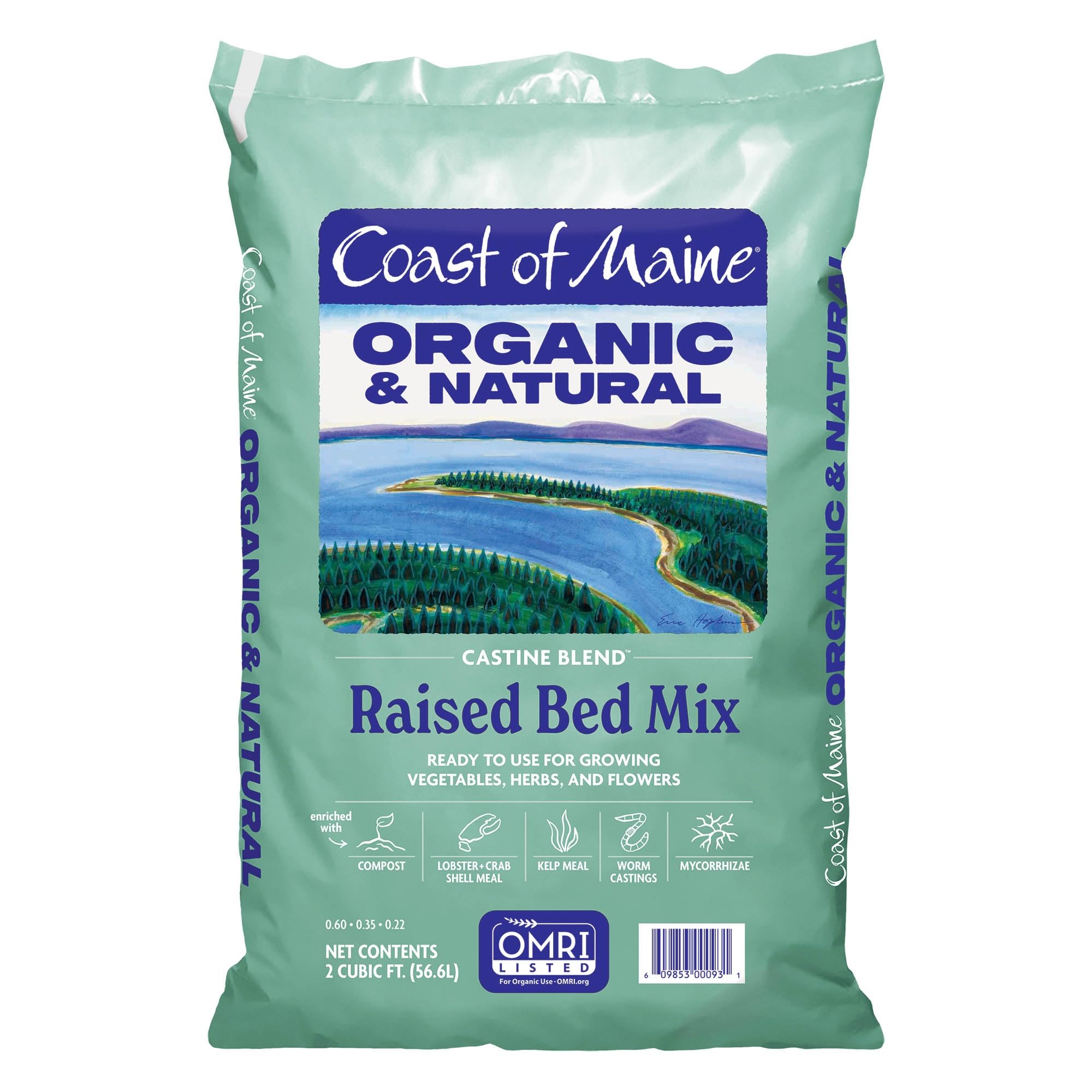
A premium soil blend that packs 33% more volume than the typical bag.
Your plants get a head start from the moment the mix hits the bed. The Castine Blend includes worm castings, mycorrhizae (beneficial root fungi), and biochar (a charcoal-like material that holds nutrients and moisture in the soil), plus green sand, kelp meal, and lobster and crab shell meal for a steady supply of trace nutrients. At 2 cubic feet, this bag gives you 33% more volume than the Espoma bag below — enough to fill a standard 4×4-foot bed a few inches deeper without buying a second bag.
The 40.3-pound weight per bag is manageable for one person to carry, yet the ingredients list is more diverse than most competitors — buyers report that the lobster shell meal gives this soil a distinctive coastal scent when first opened, but that smell fades quickly after planting. It is labeled ready-to-use, so you pour it straight from the bag into a raised bed or a large container garden.
Unlike the Wiggle Worm mix below — which comes in a trio of 40-pound bags totaling 120 pounds and is far denser — the Coast of Maine soil is lighter per cubic foot and focuses on aeration and drainage from the start. Owners mention that it does not compact as quickly over a season, reducing the need to fluff the soil mid-summer.
Strongest Ingredients List
- 2 cu ft is the largest single-bag volume here
- Diverse organic nutrients (kelp meal, green sand, crab meal)
- Biochar improves water retention and drainage
One Trade-Off
- Premium price compared to the Espoma bag
- Some buyers dislike the initial oceanic smell from the shell meal
Reach for it if: you want the most feature-rich, ready-to-use soil with the largest volume per bag and a diverse organic nutrient lineup.
Pass it by if: you are filling many beds on a tight budget and need the cheapest cost per cubic foot.
2. Espoma Organic Raised Bed Mix

The entry-level organic mix that still delivers real nutrient amendments.
If you are stocking a new bed without spending a premium, this 1.5 cubic foot bag from Espoma gives you a solid organic foundation. The blend includes earthworm castings, alfalfa meal, kelp meal, and feather meal — all organic sources of nitrogen and trace minerals — plus Myco-Tone, Espoma’s proprietary blend of endo and ecto mycorrhizae (two types of beneficial root fungi). That means you get the same root-boosting biology found in the more expensive Coast of Maine bag, just at a smaller volume per bag.
The key difference is volume: at 1.5 cubic feet, it holds 33% less soil than the 2 cubic foot Coast of Maine bag, so you may need two bags to fill the same space. That matters if you are topping off a large bed. Buyers also note that this soil is lighter in texture than dense compost-based mixes, which helps root vegetables like carrots grow straight instead of twisting in compacted soil.
It says “ready to use” on the bag, and it is — no mixing required. Just pour it in. For organic gardeners who want a straightforward mix without the coastal ingredients or the heavier weight of worm-casting-heavy blends, this is the no-nonsense middle path.
Solid Organic Base
- Contains mycorrhizae for root health
- Light, aerated texture good for root vegetables
- No synthetic chemicals or fertilizers
Smaller Bag Matters
- 1.5 cu ft is noticeably less than the 2 cu ft Coast of Maine bag
- You may need two bags for a standard 4×4 bed
Stick with this if: you want a proven organic soil at a reasonable cost and do not mind buying two bags for a deeper bed.
Consider the alternative if: a single larger bag with more volume and diverse ingredients matters more than the per-bag price.
3. Wiggle Worm Raised Bed Mix
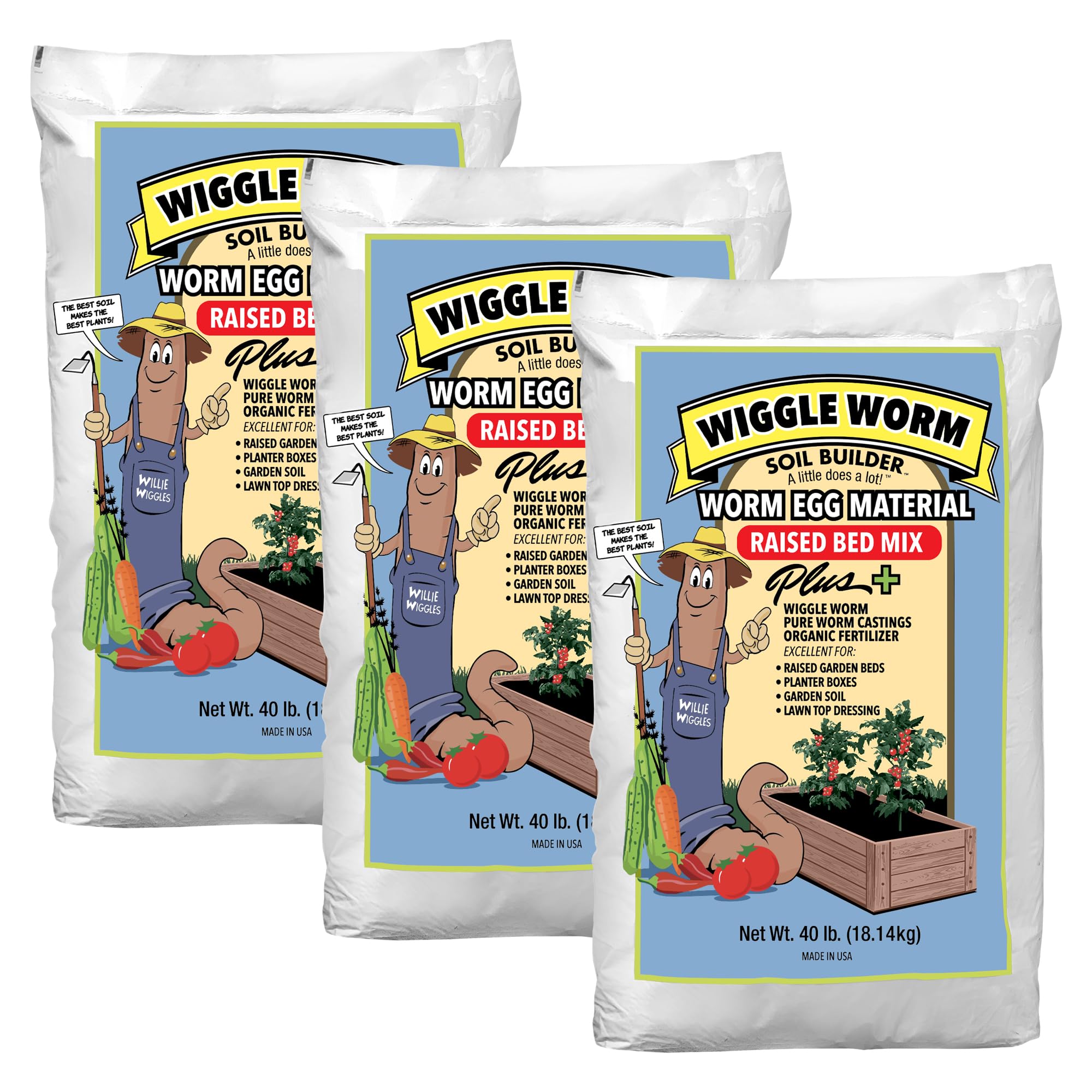
A heavy-duty compost blend that weighs three times as much as the Coast of Maine bag.
This is for gardeners who believe a living soil is the secret to a great harvest. Wiggle Worm sends you three 40-pound bags — 120 pounds total, which is a 3.0x weight gap compared to the 40.3 pounds of Coast of Maine. Each bag is a mix of high-quality compost blended with worm castings and worm eggs. The eggs may hatch in your raised bed, producing live worms that tunnel through the soil, bringing oxygen to roots, improving drainage, and creating more castings over time.
You pour it straight from the bag into the bed. It works alone or mixed with other organic materials, and the maker notes it also works for trees and bushes planted in the ground. Customers note that the soil stays dark and crumbly even after several weeks, a sign that the compost content is well-processed rather than raw bark. One owner mentioned that the worm eggs are nearly invisible in the mix — you will not see them, but you may spot tiny worms a month later if conditions are right.
The trade-off is weight and cost. At 120 pounds total, this is a workout to move from a car trunk to the garden. It is also the most expensive option here. But if you value a biologically active soil that keeps improving as worms work through it, this gives you something no sterile bagged mix can match.
Living Soil Advantage
- Worm eggs can hatch and create self-sustaining soil
- 120 lbs total gives you serious bulk for large beds
- Compost-rich texture stays loose and dark
Physical & Budget Considerations
- 120 lbs is heavy to transport and pour
- Highest cost of the three picks
Go for this if: you are committed to organic gardening with a living soil approach and have the muscle to move 120 pounds.
skip it if: you need a single lightweight bag or want the lowest per-bed cost — the Coast of Maine or Espoma will serve you better.
Understanding the Specs
Cubic Feet (Volume)
This is the real measure of how much space the soil will fill in your raised bed. One cubic foot fills a 1-foot-by-1-foot area to a depth of 1 foot. A 2 cubic foot bag fills roughly half of a standard 4×4-foot bed to a 6-inch depth. Always check the cubic feet number before buying — it tells you how many bags you will need.
Mycorrhizae
These are beneficial fungi that attach to plant roots and act like an extra root system, pulling in more water and nutrients from the soil. Soil that lists mycorrhizae on the bag gives your vegetables and flowers a built-in growth boost without any extra fertilizer. Both the Coast of Maine and Espoma bags include this; the Wiggle Worm mix relies on worm activity instead.
FAQ
How many bags of soil do I need for a 4×4 raised bed?
Can I use regular potting mix in a raised bed?
Is bagged raised bed soil worth the cost compared to mixing my own?
Can I reuse soil from my raised bed next season?
What does Myco-Tone mean on the Espoma bag?
Will the worm eggs in Wiggle Worm mix actually hatch?
Which bagged soil is best for growing vegetables vs flowers?
How long does bagged raised bed soil last unopened?
Final Thoughts: The Verdict
If you want one dependable pick, the best bagged soil for raised beds winner is the Coast of Maine Castine Blend because it delivers the largest single-bag volume at 2 cubic feet, the most diverse organic nutrient lineup, and built-in biochar and mycorrhizae that support plants from planting day through harvest. If you want a reliable organic mix at a lower cost, grab the Espoma Organic Raised Bed Mix. And if you are committed to building a living soil ecosystem with worm activity, the Wiggle Worm Raised Bed Mix gives you 120 pounds of compost and worm eggs to kickstart that process.
How We Picked
We do not accept paid placement. Every pick is matched to a real buyer and a real use-case; we do not hands-on test units.
Sources & Methodology
Specifications: manufacturer listings and product documentation. Review insights: verified customer reviews, as of July 2026. Pricing: not shown on this page (it changes often); check the current price via the retailer link.
As an Amazon Associate, Lawn Gear Lab earns from qualifying purchases. This does not affect which products we feature.