
Specs are compiled from manufacturer listings and verified buyer reviews and can change over time — please confirm the key details on the product page before buying.
You spot them first on the new rose shoots or the underside of your tomato leaves: tiny green or black specks that cluster like a miniature invasion. Aphids multiply fast, sucking the sap right out of your plants and leaving behind a sticky mess called honeydew that invites mold. Getting rid of them means picking a spray that actually lists aphids on the label — and knowing if you want a gentle oil that smothers them or a stronger concentrated chemical that knocks them out in one pass.
I’m Rikta — the founder and writer behind Lawn Gear Lab. This guide is built by comparing the manufacturers’ published specifications and the patterns across verified customer reviews, so you get each pick’s real strengths and trade-offs instead of marketing spin.
Whether you are protecting a single houseplant or a whole vegetable bed, the right insecticide for aphids means the difference between watching your plants thrive or watching them wilt under a stubborn infestation.
Quick Picks
- Bonide All Seasons Horticultural & Dormant — Best Overall
- Summit Year-Round Spray Oil — Best Value
- Arber Organic Insecticide Liquid Concentrate — Best for Houseplants
- Garden Safe Brand Fungicide3, 1 Gallon — Top Performer
- Eliminator Natural Insecticide & Fungicide — Premium Pick
- Hi-Yield 55% Malathion Spray (32 oz) — Budget Champion
- Evergreen Way Organic Insecticide & — Most Versatile
How To Choose The Best Insecticide For Aphids
Not every bug spray works on aphids. These soft-bodied pests need an insecticide that either smothers them with an oil coating or poisons them on contact. The first thing to check is the label — if it does not list “aphids” somewhere in the target species, put it back. From there, you decide between a gentle oil-based spray for ongoing prevention and a stronger chemical concentrate for a heavy infestation.
Active Ingredient: Oil vs Chemical
The active ingredient tells you how the product works. Horticultural oils, like mineral oil or neem oil extract (a plant-based oil), coat the aphid’s body and block its breathing pores — they suffocate the pest without leaving harsh residues on your vegetables. Chemical actives like Malathion (a synthetic nerve poison) work differently by attacking the insect’s nervous system on contact. Oils are safer for daily use around pets and pollinators (when dry), but strong chemicals often clear a tough infestation faster.
Concentrate vs Ready-to-Use
A ready-to-use spray comes in a bottle with a trigger or hose-end attachment — you pull the trigger and spray, no mixing. That convenience costs you more per ounce and creates plastic waste with every bottle. A concentrate, on the other hand, asks you to measure and dilute the product with water in your own sprayer. Concentrates cost less per treatment and let you adjust the strength for light maintenance or heavy outbreaks, but they require a separate sprayer and a few extra minutes of setup.
Organic Certification and Residue
If you are spraying vegetables or herbs that you will eat within days, look for an organic label or an OMRI listing (a seal from the Organic Materials Review Institute confirming the product is allowed in organic farming). Oil-based sprays break down quickly in sunlight and leave no toxic residue, meaning you can harvest sooner. Conventional chemical insecticides often carry a longer pre-harvest interval — the number of days you must wait between spraying and picking.
Quick Comparison
| Model | Best For | Active Ingredient | Liquid Volume | Item Weight | Amazon |
|---|---|---|---|---|---|
| Bonide All Seasons Spray Oil | Year-Round Prevention | Mineral Oil | 32 fl oz | 32 oz | Amazon |
| Summit Year-Round Spray Oil | Leaf Shine & Pest Control | — | 32 fl oz | 2 lbs | Amazon |
| Arber Organic Insecticide Concentrate | Custom Dilution for Houseplants | Organic Biologicals | — | 1.1 lbs | Amazon |
| Hi-Yield 55% Malathion Spray | Heavy Chemical Knockdown | 55% Malathion | 32 fl oz | 2.5 lbs | Amazon |
| Evergreen Way Organic Insecticide & Fungicide | Dual Disease & Pest Control | Bio-based Formula | 16 fl oz | 1.1 lbs | Amazon |
| Garden Safe Fungicide3 | Large Coverage & 3-in-1 Action | Neem Oil Extract | 128 fl oz | — | Amazon |
| Eliminator Natural Insecticide & Fungicide | Professional Oil-Free Control | Natural Enzymes | — | 2.27 lbs | Amazon |
In‑Depth Reviews
1. Bonide All Seasons Horticultural & Dormant Spray Oil

A gentle year-round oil spray that smothers aphids without leaving toxic residue on your vegetables.
You can use this spray during the dormant season when trees are bare, at the green tip stage just before buds open, or right through the active growing season — it is a 3-in-1 product that kills insects, mites, and helps prevent fungal diseases. The active ingredient is plain mineral oil, which coats the aphid’s body and suffocates it without harsh chemical poisoning. Bonide claims it is safe to use around people and pets once it dries, and it is approved for organic gardening, so you can spray your peppers, roses, and fruit trees without worrying about toxic leftovers.
At 32 fluid ounces, this is a ready-to-use spray that hooks directly to your garden hose — you do not need to mix or measure anything. That makes it much more convenient than a concentrate, but you pay for that convenience in the per-ounce cost. It also holds 32 fl oz versus the Garden Safe Fungicide3 at 128 fl oz, so if you have a large garden with many plants, you will run through this bottle faster and need to buy refills more often.
What Makes It a Standout
- Approved for organic gardening with no harsh chemical residues left behind
- Works at every plant stage from dormant to full growth — a true year-round tool
- Hose-end ready-to-spray design means zero measuring or mixing
Where It Falls Short
- Only 32 fl oz per bottle — you will go through it faster than a gallon jug on large gardens
- Oil-based sprays may need a second application after rain washes the coating off
Reach for this if: you want a single, gentle spray that protects your organic vegetables and ornamentals all year long without needing to switch products between seasons.
Look elsewhere if: you need to cover a very large garden and want the lowest cost per ounce — a gallon-size concentrate like the Garden Safe Fungicide3 stretches farther for the money.
2. Summit Year-Round Spray Oil for Garden Insects Concentrate

An oil concentrate that kills aphids and adds a visible shine to your plants’ leaves after each spray.
Summit’s spray oil controls aphids, spider mites, fungus gnats, scale, and whitefly — a broad lineup that covers most of the common garden pests. The manufacturer says it is safe to use on edible plants right up to the day of harvest, so you can spray your vegetable garden without counting down a pre-harvest waiting period. Buyers report that it also clears up powdery mildew on ornamentals, giving you dual pest-and-disease control in one bottle.
This is a concentrate, meaning you dilute it yourself with water in a pump sprayer or hose-end sprayer. That makes each treatment cheaper than a ready-to-use spray because you are not paying for all the water in the bottle. It also weighs 2 pounds, noticeably heavier than the 1.1-pound Arber Organic Insecticide concentrate, because the oil-based formula is denser. One note: the oil leaves a sheen on leaves that some gardeners love for the clean look and others find slightly messy on indoor houseplants.
Why Gardeners Like It
- Organic formula lets you spray veggies and herbs up to harvest day with no waiting
- Concentrated form delivers more treatments per bottle than a ready-to-use spray
- Leaves a glossy shine on plant foliage that many gardeners find appealing
Consider This First
- You need a separate sprayer to mix and apply it, adding to the upfront cost
- Oil residue may look unattractive on indoor houseplant leaves near windows
Grab this bottle for: an affordable concentrate that protects a large edible garden through the whole season without forcing you to wait days before picking your produce.
skip it if: you want a grab-and-spray bottle for a single houseplant — a ready-to-use product like Bonide All Seasons is simpler for one-off jobs.
3. Arber Organic Insecticide Liquid Concentrate
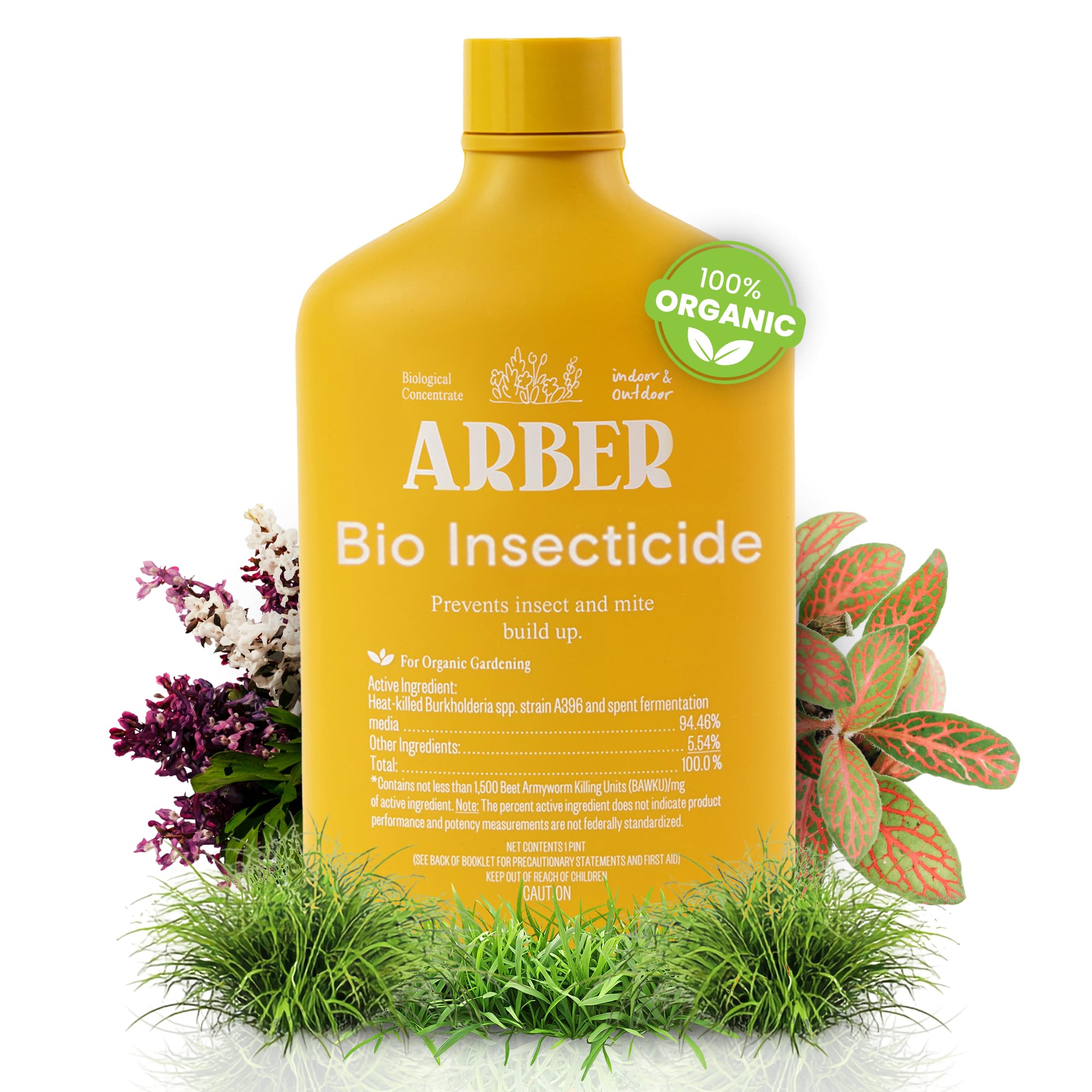
A true liquid concentrate powered by organic biologicals that you dilute yourself for gentle daily protection.
The formula uses organic biologicals — naturally occurring microorganisms — that penetrate the foliage and soil to interrupt the pest life cycle without leaving harsh synthetic residues. You mix it with water in a pump sprayer, and the manufacturer says you can adjust the dilution strength: a lighter mix for weekly maintenance on healthy plants, or a stronger ratio when you spot a flare-up of aphids or whiteflies. That flexibility makes it ideal for a mixed collection of seedlings, herbs, roses, and shrubs growing together in the same garden bed.
At 1.1 pounds, this is one of the lighter concentrates in the lineup (the Hi-Yield Malathion is 2.5 pounds, while the Arber is 1.1 pounds). The product dimensions are 3.8 x 2 x 7 inches, while the Evergreen Way organic concentrate is 6.3 x 1.8 x 6.3 inches — so it stores compactly on a shelf. Owners mention that the low-odor, dye-free mix is pleasant to use indoors on houseplants without stinking up the living room. The catch is that biological sprays work best when you catch the infestation early; for an established aphid explosion, you might need a faster knockdown product first.
What We Love
- Customizable dilution lets you switch between light maintenance and heavy outbreak strength
- Organic biological formula supports the soil microbiome while controlling pests
- Low odor and dye-free — comfortable to spray on indoor houseplants
One Trade-Off
- Biological action is gentler and slower than a chemical knock-down spray for severe infestations
- Requires a separate sprayer and a few minutes of mixing before each use
Ideal for: indoor gardeners and plant collectors who want a gentle, organic spray they can use weekly on houseplants without worrying about fumes or plant damage.
Not the best fit for: a vegetable garden currently drowning in aphids — you may need a faster-acting oil or chemical spray to stop that damage immediately.
4. Garden Safe Brand Fungicide3, 1 Gallon
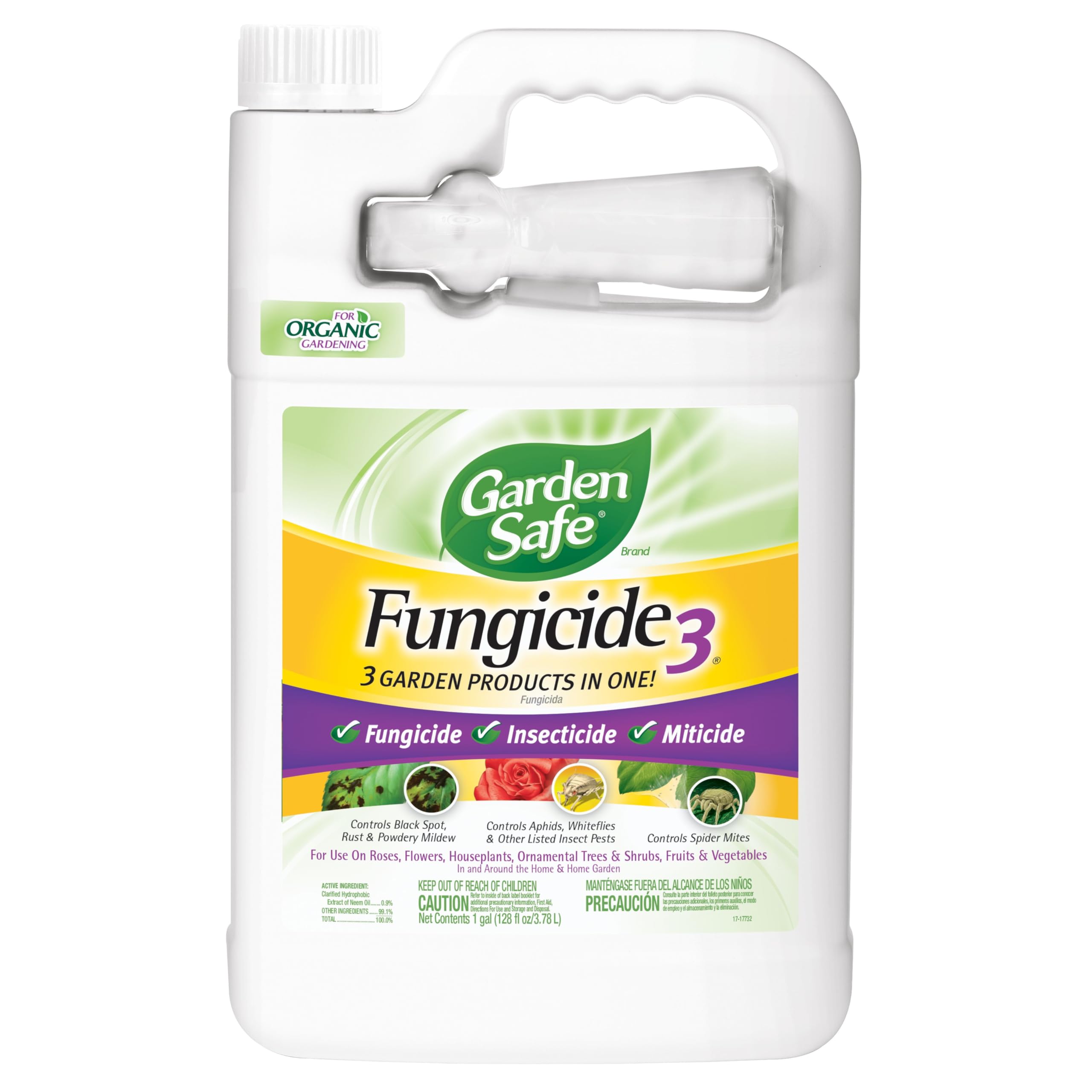
A gallon jug of neem oil spray that kills aphids, controls fungus, and covers your whole garden without refilling.
This is a three-in-one product: a fungicide that prevents black spot, rust, and powdery mildew, an insecticide that controls aphids and whiteflies, and a miticide that tackles spider mites. The active ingredient is clarified hydrophobic extract of neem oil (a plant-based oil), a plant-based oil that smothers soft-bodied pests and disrupts fungal growth on the leaf surface. At 128 fluid ounces, this jug holds 128 fl oz versus the Bonide All Seasons Spray Oil at 32 fl oz, so you will refill your sprayer far less often when treating a large garden.
Garden Safe is labelled for use on roses, flowers, houseplants, ornamental trees and shrubs, plus fruits and vegetables, making it among the most versatile picks here. The manufacturer is United Industries and it carries an EPA registration (a mark from the Environmental Protection Agency confirming the formula meets safety and efficacy standards), meaning the formula has been reviewed for safety and efficacy by the Environmental Protection Agency. Because the neem oil is already diluted into a ready-to-use spray, you do not need to mix anything — just attach a hose-end sprayer or pump sprayer and start spraying. The trade-off is that neem oil has a distinct earthy smell that some users find strong, and you need to reapply after a heavy rain washes the coating off the leaves.
Why It Stands Out
- Gallon-sized bottle means dramatically fewer refills compared to 32 oz competitors
- Three-in-one action — kills aphids, mites, and stops fungal disease in one pass
- Ready-to-use with no mixing; just attach your sprayer and go
Keep in Mind
- Neem oil has a strong, earthy odor that lingers for a few hours after spraying
- You will need to reapply after rain or overhead watering since the oil coating washes off
Best for: the avid gardener with multiple flower beds and vegetable rows who needs a large volume of ready-to-use spray to treat everything in one afternoon.
pass on it if: you are sensitive to strong smells or only have a few houseplants — a smaller, milder concentrate like the Arber Organic Insecticide will be less wasteful and more pleasant indoors.
5. Eliminator Natural Insecticide & Fungicide
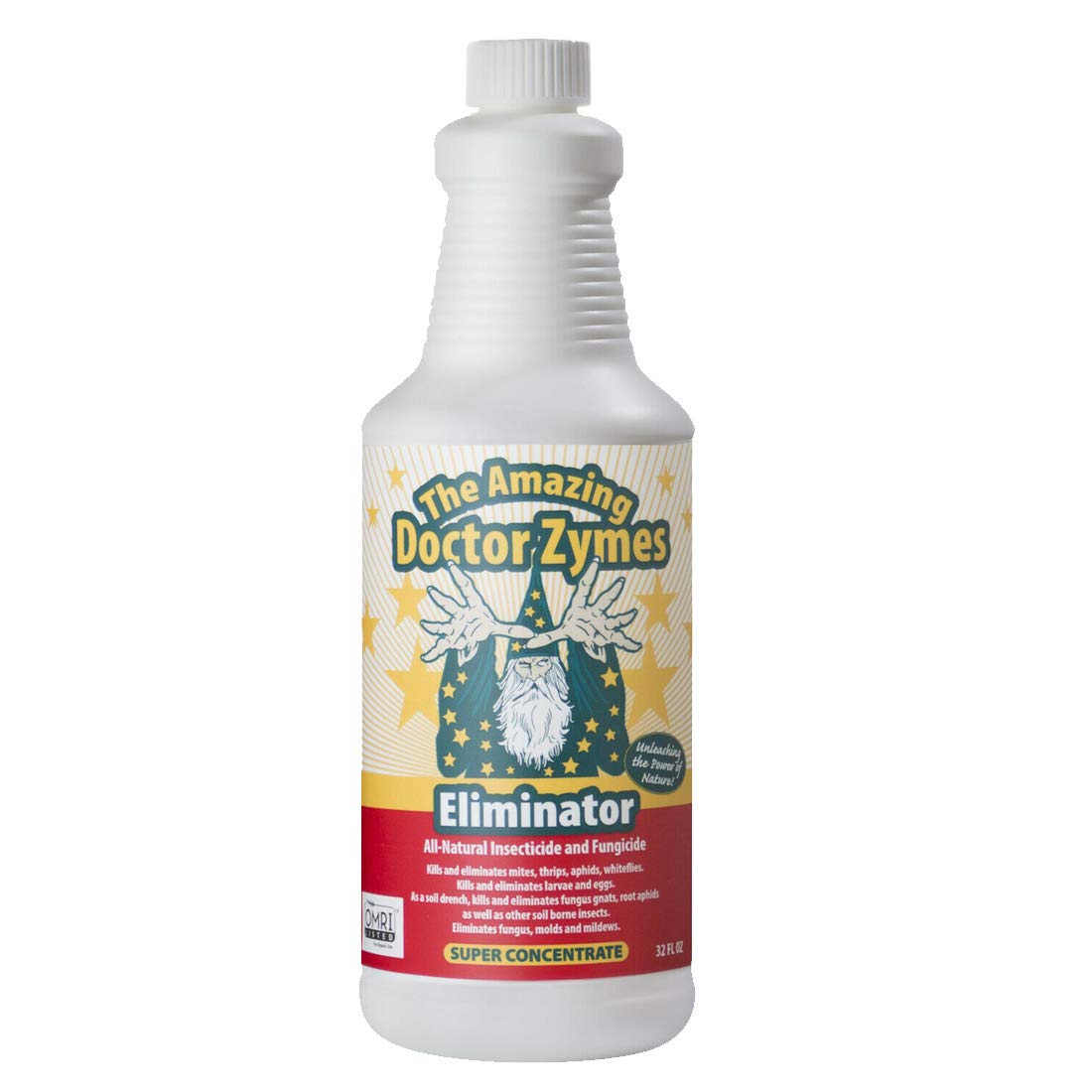
An oil-free professional concentrate that uses natural enzymes to kill aphids without leaving any sticky residue.
Unlike the oil-based sprays from Bonide, Summit, and Garden Safe, the Eliminator formula relies on natural enzymes (proteins that break down pest cell walls) instead of mineral or neem oil. That means it kills aphids, spider mites, whiteflies, and thrips on contact without coating the leaves in a greasy film — an advantage for indoor grow rooms, greenhouses, and ornamental plants where you want a clean finish. The manufacturer says it is OMRI Listed for organic use (a certification from the Organic Materials Review Institute), biodegradable, non-toxic, and safe to use around children, pets, and livestock when applied according to the label.
This is a concentrate: one bottle makes multiple gallons of ready-to-use spray, so the upfront cost per bottle is higher but the cost per treatment is lower than ready-to-use sprays. The package dimensions are 9.84 x 3.46 x 3.31 inches and it weighs 2.27 pounds. The catch is that enzyme-based sprays work best when the spray directly hits the pest — they do not have the residual smothering effect that an oil coating provides, so thorough coverage of both the top and underside of leaves is essential for a clean kill.
What Makes It Professional-Grade
- Oil-free and residue-free — perfect for indoor grow rooms and greenhouses where clean foliage matters
- OMRI Listed for organic use and biodegradable, so it aligns with sustainable farming practices
- Concentrated formula yields multiple gallons, lowering the cost per treatment over time
The Hard Truth
- Requires direct contact with each aphid to work — no residual smothering effect left on leaves
- Higher upfront price per bottle than any other product in this guide
Choose this if: you run a greenhouse, grow room, or indoor garden where a clean, oil-free finish is critical and you want a professional-grade organic concentrate.
Pass on it if: you need a budget-friendly grab-and-spray option for a single outdoor rose bush — the Bonide All Seasons Spray Oil is simpler and cheaper for small jobs.
6. Hi-Yield 55% Malathion Spray (32 oz)
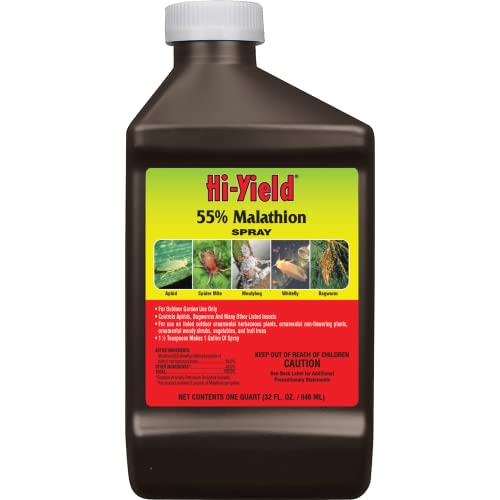
A heavy chemical spray with 55% Malathion for when aphids need a fast, decisive knockdown, not gentle persuasion.
If you have tried oils and biological sprays and the aphids are still thriving, this is your chemical hammer. The active ingredient is 55% Malathion, a conventional organophosphate (a synthetic nerve poison) that attacks the insect’s nervous system on contact. It controls aphids, thrips, spider mites, and lace bugs on herbaceous plants, ornamental non-flowering plants, shrubs, vegetables, and fruit trees. You apply it using a hose-end or tank sprayer in calm weather when rain is not forecast for the next 24 hours, and the manufacturer says to check the label for exact application rates per plant type.
At 2.5 pounds, this bottle is 2.5 pounds, while the Arber Organic Insecticide concentrate is 1.1 pounds, reflecting the different formula density. It comes with a USDA specification met label (a standard from the US Department of Agriculture for the stated use), meaning it meets the standards of the US Department of Agriculture for the stated use. The clear downside is the chemical nature: you need to follow the safety instructions carefully, avoid spraying during bloom to protect bees, and observe the pre-harvest interval (the waiting period from spray to harvest) before picking any edible crops. For a dedicated vegetable gardener who wants to avoid synthetic chemicals entirely, this is not the right choice — but for a heavy outbreak on ornamentals or fruit trees, nothing in this lineup stops aphids faster.
The Knockdown Power
- 55% Malathion concentration delivers fast, reliable kill on contact for stubborn infestations
- Covers a wide range of pests beyond aphids — thrips, spider mites, and lace bugs included
- Works on many plant types from ornamentals and shrubs to vegetables and fruit trees
The Serious Caveats
- Chemical insecticide that requires strict safety precautions and careful timing around pollinators
- Heavier than organic concentrates at 2.5 lbs — more mass to handle and store
- Not suitable for organic gardening or edible crops you want to harvest soon
Reach for this when: the aphid population has exploded on your ornamental shrubs or fruit trees and you need a one-and-done knock-down that oils or biologicals cannot deliver fast enough.
Avoid it if: you grow organic vegetables or have edible crops you plan to harvest within the next week — the pre-harvest interval is too restrictive.
7. Evergreen Way Organic Insecticide & Fungicide Concentrate

A compact 16 oz concentrate that tackles both leaf disease and sap-sucking pests in one bio-based spray pass.
Evergreen Way’s formula is a plant-safe concentrate designed to coat leaves and soil zones, disrupting pest life cycles while suppressing powdery growths. It works on mites, aphids, whiteflies, thrips, and fungus gnats, and the manufacturer says it protects pollinators when used as directed — a critical detail for gardeners who want to kill the bad bugs without hurting the bees. You dilute the 16 oz bottle with water and apply it with a pump sprayer, hose-end sprayer, or battery sprayer to foliage and the root zone.
The product dimensions are 6.3 x 1.8 x 6.3 inches and it weighs 1.1 pounds, making it the same weight at 1.1 pounds, but the Evergreen Way bottle dimensions are 6.3 x 1.8 x 6.3 inches while the Arber bottle is 3.8 x 2 x 7 inches. The manufacturer positions it for use after rainy spells, during heat waves, before vacations, and when bringing new nursery plants home — real-world scenarios where pest pressure suddenly spikes.
Why It Fits a Mixed Garden
- Bio-based formula targets both insect pests and fungal diseases, reducing the number of products you need
- Compact 16 oz concentrate stores easily and produces multiple gallons of spray
- Safe on a wide range of plants from tomatoes and herbs to roses, shrubs, and lawns
One Thing to Know
- Requires a separate sprayer and manual dilution, which adds a step compared to ready-to-use bottles
- Smaller concentrate bottle may not feel like a value compared to larger gallons if you have a huge garden
Pick this for: a mixed garden with both disease-prone plants and pest-prone plants where you want one concentrate that handles both problems without switching products.
Look elsewhere if: you prefer the grab-and-spray convenience of a ready-to-use bottle and do not mind paying more per ounce for that ease.
Understanding the Specs
Active Ingredient
The active ingredient is the chemical or oil inside the bottle that actually kills the aphid. Mineral oil and neem oil extract (a plant-based oil) work by suffocation — they coat the bug and block its breathing pores. Malathion is a synthetic nerve poison that kills on contact but leaves a residue that requires a waiting period before harvest. Natural enzymes are a newer option that break down the pest’s cellular structure without leaving a greasy film. Your choice here dictates everything else: safety, speed, and harvest timing.
Liquid Volume and Unit Count
Liquid volume tells you how much product is in the bottle, measured in fluid ounces. A 32 fl oz bottle is the standard size for both ready-to-use sprays and concentrates. A 128 fl oz (1 gallon) bottle is for heavy coverage across large gardens. The unit count is the same number — it is just the official way the manufacturer reports the volume on the label. Bigger volume per bottle means fewer refills and lower cost per ounce, but you also have to store a larger container.
FAQ
Will an insecticide for aphids also kill other garden pests?
How soon can I harvest vegetables after spraying an aphid insecticide?
Can I use an insecticide for aphids on my indoor houseplants?
What is the difference between a concentrate and a ready-to-use spray?
How often should I reapply an insecticide for aphids?
Will these insecticides hurt bees or other pollinators?
What does OMRI Listed mean on an insecticide label?
Can I spray an aphid insecticide on seedlings or very young plants?
Is neem oil the same as mineral oil for aphid control?
What is the best way to apply an insecticide to get rid of aphids?
Final Thoughts: The Verdict
For most people, the insecticide for aphids winner is the Bonide All Seasons Horticultural & Dormant Spray Oil because it offers the best balance of gentle organic safety, year-round versatility, and ready-to-use convenience at a accessible price. If you want the largest volume for broad garden coverage, grab the Garden Safe Fungicide3 in its 128 fl oz gallon jug. And for a tough chemical knockdown when softer options have failed, the standout is the Hi-Yield 55% Malathion Spray.
How We Picked
We do not accept paid placement. Every pick is matched to a real buyer and a real use-case; we do not hands-on test units.
Sources & Methodology
Specifications: manufacturer listings and product documentation. Review insights: verified customer reviews, as of July 2026. Pricing: not shown on this page (it changes often); check the current price via the retailer link.
As an Amazon Associate, Lawn Gear Lab earns from qualifying purchases. This does not affect which products we feature.