
Specs are compiled from manufacturer listings and verified buyer reviews and can change over time — please confirm the key details on the product page before buying.
You pick healthy flowers at the nursery, bring them home, repot them with care, and then watch them droop, yellow, or rot. Nine times out of ten, the problem isn’t you or the plant — it’s the potting soil holding the roots. The wrong mix either turns into a soggy sponge that drowns roots or dries into a hard block that starves them of air. Picking the best potting soil for flowers means choosing a blend that drains fast enough to prevent rot but holds moisture long enough that you aren’t watering twice a day.
I’m Rikta — the founder and writer behind Lawn Gear Lab. This guide is built by comparing the manufacturers’ published specifications and the patterns across verified customer reviews, so you get each pick’s real strengths and trade-offs instead of marketing spin.
Every mix below was chosen for how it handles the two things flowers need most: consistent moisture without suffocating roots. If you are tired of bagged soil that turns to mud or concrete, this comparison of the 5 best potting soil for flowers options will point you to the right bag for your garden.
Quick Picks
- Coast of Maine Organic & Natural Bar Harbor — Best Overall
- Miracle-Gro Moisture Control Potting Mix — Heavy Lifter
- Michigan Peat General All Purpose Premium — Best Value
- Midwest Hearth Premium Potting Soil Mix — Seed Starter
- rePotme All Purpose Potting Soil — Compact Specialist
How To Choose The Best Potting Soil For Flowers
When you shop for potting soil, the bag label can say “all purpose” or “premium” without telling you what is actually inside. For flowering plants in containers, three things matter most — and they all involve the roots.
Aeration and Drainage
Flower roots need oxygen as much as they need water. A mix heavy on fine peat or garden soil holds water too long and rots roots. Look for ingredients like perlite (those small white volcanic rocks) or sand that create air channels. The bag should feel light and fluffy, not dense and wet. If you squeeze a handful and water pours out like a soaked sponge, the drainage is poor for most flowers.
Nutrient Content vs. Fertilizer Additives
Some bags come “pre-charged” with slow-release fertilizer, which is great if you want steady feeding without mixing. Others are lean blends that let you control the fertilizer yourself. Both work — but if a mix already contains fertilizer, you skip adding more for the first few weeks to avoid burning roots. The key is knowing what is in the bag before you pour it into a pot.
Bag Volume and Your Pot Count
A small bag of 2 quarts is fine for a single houseplant. Estimate your total pot volume before buying: a 10-inch standard pot holds roughly 3-4 quarts. Oversized bags that sit half-open lose moisture and can grow mold. Buy the size that matches your current project.
Quick Comparison
| Model | Best For | Volume | Weight | Key Ingredient | Amazon |
|---|---|---|---|---|---|
| Coast of Maine Bar Harbor Blend | Container flowers & veggies | 16 Quarts | 14 Pounds | Lobster/crab meal, kelp | Amazon |
| Miracle-Gro Moisture Control | Busy plant owners & large pots | 2 Cubic Feet | 40.51 Pounds | AquaCoir Formula | Amazon |
| Michigan Peat All Purpose | Big garden beds & budget | — | 50 Pounds | Reed sedge peat, perlite | Amazon |
| Midwest Hearth Premium Mix | Seed starting & small pots | 8 Quarts | 1.25 Kilograms | Peat moss, perlite, vermiculite | Amazon |
| rePotme All Purpose | Indoor houseplants & small spaces | 2 Quarts | — | Organic bark, peat, roots | Amazon |
In‑Depth Reviews
1. Coast of Maine Organic & Natural Bar Harbor Blend Potting Soil
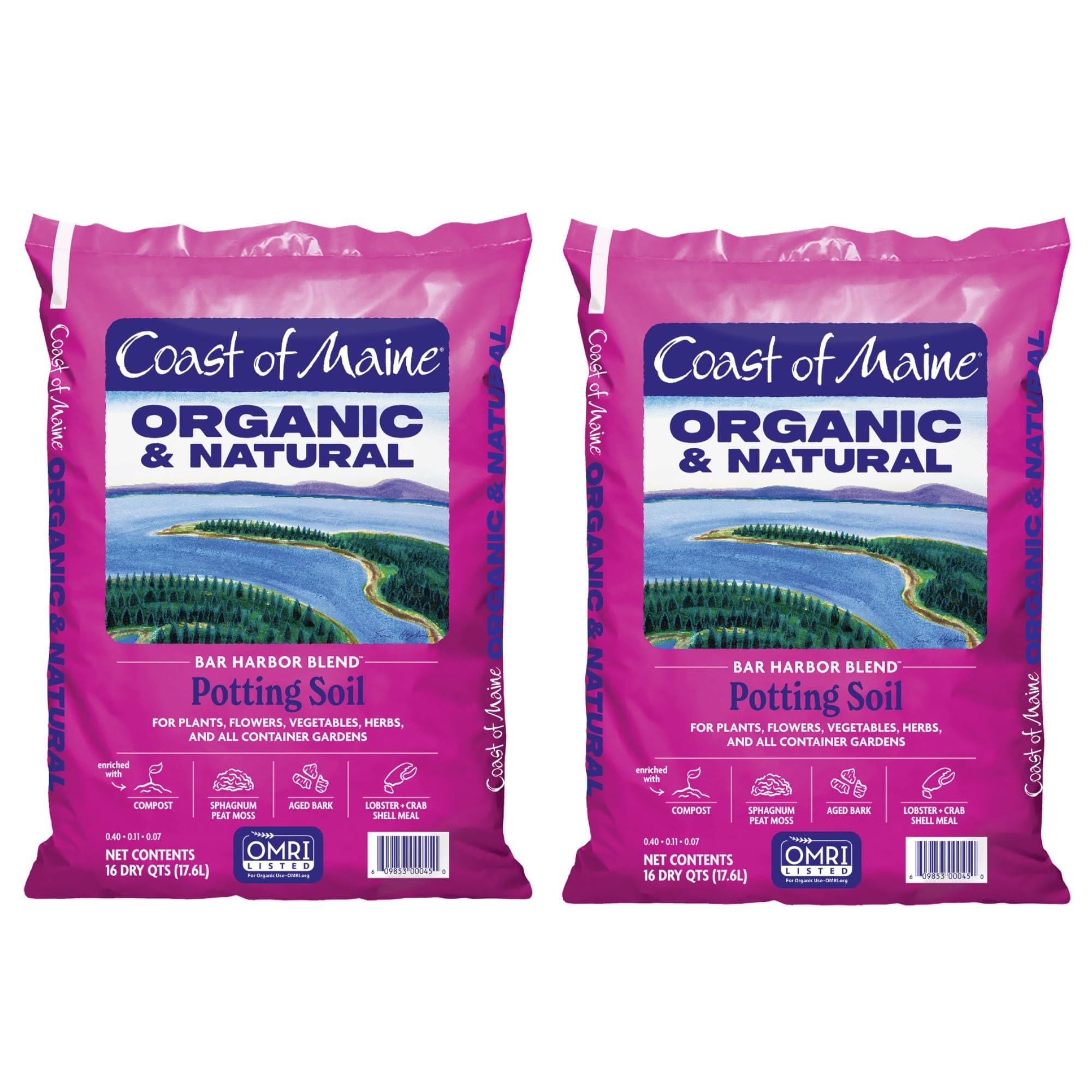
The organic powerhouse packed with lobster meal and kelp that your flowers will visibly thank you for.
This is the potting soil that makes you wonder why you ever bought the cheap stuff. The blend combines sphagnum peat moss, compost, perlite, lobster and crab shell meal, and kelp meal — ingredients you feel just by opening the bag. The soil is noticeably darker than standard mixes, which buyers report is due to the compost content, and it arrives without that funky chemical smell some bags have. It holds moisture well without turning into a mud clump, and the perlite creates enough air space that roots don’t suffocate.
Versatility is where it flexes. The same bag works for hanging baskets, raised beds, window boxes, indoor containers, and outdoor planters. It is approved for organic gardening and contains slow-release nitrogen, so you don’t need to add fertilizer the first few weeks. One reviewer noted that two bags were enough to mound up eight potato plants with extra soil left over for two more planters — that is a lot of growing power for the volume. Buyers consistently say their tomatoes and container flowers have never looked better after switching to this brand.
The only real downside is the price per bag compared to basic big-box mixes. At 16 quarts, it is not the cheapest option, but every reviewer who bought it says it was worth the cost. If you have a small balcony or just a couple of pots, consider whether you will use the full bag before it starts to dry out.
Why flowers love it
- Nutrient-dense organic ingredients (lobster meal, kelp, compost)
- Perfect balance of drainage and moisture retention
- No surprises — reviewers report no weed seeds or sticks in the bag
- Works for both indoor and outdoor containers
The honest trade-off
- Premium price per quart compared to entry-level soils
- 14-pound bag is heavy to carry if you have mobility limits
Best pick for: Gardeners who want organic-rich soil that feeds flowers for weeks without extra fertilizer, and who value quality over the lowest price.
skip it if: You need a massive volume for cheap — this bag delivers results, not bulk value.
2. Miracle-Gro Moisture Control Potting Mix

The 2-cubic-foot juggernaut that protects against overwatering while feeding plants for six months straight.
If you have ever killed a flower by loving it with too much water, this mix is designed to forgive that mistake. The AquaCoir formula absorbs up to 33% more water than basic potting soil that lacks sphagnum peat moss, coir, and a wetting agent — and then releases it slowly so roots don’t sit in a puddle. It also protects against underwatering, which means if you get busy and skip a weekend, the soil holds enough moisture to keep annuals alive.
One 2-cubic-foot bag weighs 40.51 pounds and fills two 14-inch containers The mix feeds your flowers for up to six months, and the manufacturer claims it grows plants twice as big compared to unfed plants. Buyers who start seeds or baby plants indoors consistently come back to this bag — one buyer mentioned starting 500 to 700 baby plants every year using this mix. Unlike some cheaper soils, this bag tends to have fewer large sticks and chunks, especially when purchased in spring.
The bag is enormous, so you will need storage space. Once opened, you have to reseal it well or it dries out. Also, the moisture control formula is excellent for forgiving watering mistakes, but some expert growers prefer a leaner, more drain-heavy mix for succulents or cacti — this one is best for general container flowers and vegetables.
Why it leads the pack
- Massive 2-cubic-foot bag offers best price-per-volume ratio
- Moisture control protects against both over- and under-watering
- Feeds plants for 6 months right out of the bag
- Owners mention fewer bugs and sticks vs. other bulk soils
What to watch for
- Bag is heavy (40.51 lbs) and hard to carry without a cart
- Higher moisture retention means it’s not ideal for cacti or succulents
Go-to for: Anyone repotting multiple large containers or raised beds who wants the convenience of built-in feeding and a wide safety net for watering mistakes.
Pass on it if: You only have a few small pots — the bag size will be more than you need, and the moisture control is overkill for very dry-loving plants.
3. Michigan Peat General All Purpose Premium Potting Soil with Perlite

The 50-pound workhorse that comes pre-loaded with fertilizer and works straight out of the bag.
For gardeners who fill raised beds or a long row of patio pots, this is the mix that balances price with performance. The blend uses rich dark reed sedge peat, perlite, and sand to create a soil that drains steadily while still holding enough moisture for flowering plants. It includes both starter and slow-release fertilizers, so you don’t need to worry about feeding your flowers for the first month or two — the bag does it for you.
Unlike some all-purpose soils that arrive dry and dusty, customers note this mix arrives moist and ready to use. Reviewers describe the consistency as “perfect” for potting container gardens, and it works well for flowers, vegetables, bulbs, and even raised beds. The 50-pound bag (model number 1250) offers serious bulk volume, making it a practical choice if you have a lot of ground to cover. It comes as a single 1-count bag.
The catch is that some reviewers point out fungus gnats hatching from the bag after opening — a known risk with peat-heavy mixes that are stored moist. While many bagged soils carry this risk, it is note if you are bringing the soil indoors. Also, at 50 pounds, this is not a bag you want to carry far from the car. If you are planting a large garden, the cost per pound is tough to beat.
What makes it a value king
- 50-pound bag provides excellent volume for the price
- Includes slow-release fertilizer for extended feeding
- Ready to use — no mixing or wetting needed
- Sand + perlite blend creates reliable drainage for flowers
The honest downside
- Some reviewers experienced fungus gnats coming from the bag
- Extremely heavy — moving the bag is a two-person job
Smart buy for: Large-scale container gardens and raised beds where you need volume and built-in feeding at a low per-pound cost.
Not the one for: Indoor houseplants or anyone who wants a lightweight, easy-to-carry bag — this is a heavy, bulk purchase.
4. Midwest Hearth Premium Potting Soil Mix with Peat Moss, Vermiculite, Perlite (Made in USA)

The light, fluffy mix that germinates petunias like a pro without the heavy price of boutique soils.
If you are starting flowers from seed or repotting a handful of small containers, this 8-quart bag hits the balance between quality and waste. The blend uses peat moss for moisture, perlite for aeration, and vermiculite (a mineral that soaks up water like a sponge) for additional moisture control — a combination that professional growers use. The manufacturer pH-balances the mix, so it works well for a broad range of plants without you needing to adjust acidity.
Buyers rave about how this mix worked for germinating petunias — one reviewer called it “great for my germinating petunias” and said they would buy it again despite some complaints about the price. The texture comes out of the bag light and fluffy, unlike some dense soils that compact into bricks around delicate roots. It also comes with a resealable bag opening, which helps keep unused soil from drying out. The bag is only 1.25 kilograms (under 3 pounds), making it easy to carry and store.
The bag size is modest at 8 quarts, so if you are filling multiple 12-inch pots, you will need two bags. Some reviewers mention the bags are “too small” for bigger projects. For a single planter or a few houseplants, it is exactly right. This is a targeted performer — excellent for seed starting and small containers, not the bag for large-scale garden work.
What makes it shine for seeds
- Balanced peat moss + perlite + vermiculite blend for optimal aeration and moisture
- pH controlled so you don’t have to test or adjust
- Lightweight at 1.25 kg — easy to carry and store
- Resealable bag keeps unused soil fresh
What limits it
- 8 quarts is small for larger planting projects
- Price per quart is higher than bulk bags
Ideal for: Seed starting, small container flowers, and anyone who wants a quality mix without committing to a heavy 50-pound bag.
Look elsewhere if: You need to fill multiple large pots or a raised bed — the volume will run out fast.
5. rePotme All Purpose Potting Soil for Indoor and Outdoor Plants

The mini-bag powerhouse that conservatories trust for fussy houseplants like snake plants and African violets.
Do not let the 2-quart size fool you — this is serious soil used by some of the largest conservatories and botanic gardens in the world. The all-organic blend comes dry in a fully sealed bag, which is perfect for apartment living where you don’t want moisture or bugs leaking through. The contents include visible bark chips, roots, peat, and good organic matter — it is designed to drain readily while holding the right amount of moisture for plants like snake plants, pothos, and peace lilies.
A long-time buyer mentioned they have been using this mix for years with various snake plants and never had a problem, praising how it drains without leaving roots bone-dry. Another reviewer repotted an African violet and saw lots of blooms shortly after. The 2-quart bag filled a large vase, two tupperware planters, and a 4-inch pot for one user, so the dry material goes further than wet soils. The bag also comes with a small business card that doubles as a plant tag — a tiny but thoughtful detail noted by multiple customers.
The honest catch is cost per quart — this is the smallest bag for the highest relative price. For a single African violet or a snake plant, it is perfect. For a garden full of flowers, you would need many bags, and the cost adds up fast. The style is called “Tropical” and is made for indoor fussy plants, so if you are planting hardy outdoor annuals in a large pot, a bigger-value mix makes more sense.
What indoor growers love
- Excellent drainage that prevents root rot in sensitive houseplants
- All-organic blend with visible bark and peat
- Fully sealed bag keeps it clean for indoor storage
- Trusted by botanical gardens and conservatories
The real limit
- 2-quart bag is very small — not suitable for large flower beds
- High cost per quart compared to bulk potting soils
Best for: Indoor houseplant owners who want a premium, organic mix for a single potted snake plant, pothos, or African violet and don’t want to store a giant bag.
Not for: Large container gardening or outdoor flower beds — you will need far more volume than this bag provides.
Understanding the Specs
Volume (Quarts vs. Cubic Feet)
Potting soil bags measure volume, not weight. A dry quart is roughly 1/30th of a cubic foot. A 2-cubic-foot bag (like the Miracle-Gro) holds about 60 quarts — more than enough for two large containers. A 2-quart bag (like the rePotme) is tiny, fitting a single small houseplant pot. Always estimate your pot volume before buying: a typical 10-inch pot needs around 3-4 quarts of soil. Matching bag size to your project saves you from either running short or storing half a wet bag.
Perlite and Aeration
Perlite is a white volcanic glass that is heated until it pops like popcorn, creating lightweight air pockets in the soil. These pockets allow oxygen to reach flower roots and let excess water drain out faster. A mix with visible perlite (the small white flecks) generally drains better than one without. Too little perlite, and the soil compacts into a dense layer that suffocates roots. Too much, and the soil dries out too fast. Most all-purpose flower soils aim for about 10-20% perlite by volume.
Organic vs. Synthetic Fertilizer
Organic soil relies on natural materials like compost, kelp meal, or bone meal to slowly release nutrients as they break down. Synthetic fertilizers provide immediate, concentrated feeding. Both work, but organic soils like the Coast of Maine mix feed more gently and improve soil structure over time, while synthetic-fortified mixes like the Miracle-Gro give fast, measurable growth. The right choice depends on your watering habits and if you want to add your own fertilizer.
Moisture Control Additives
Some bags include coir (coconut fiber) or wetting agents that help soil absorb and hold water more evenly. This is useful if you tend to underwater or live in a hot climate, because the soil can soak up 33% more water than plain peat-based mixes. The trade-off is that moisture-control soils stay wet longer, so you need to be careful with plants that prefer drier root zones, like succulents or cacti. For most flowering annuals and perennials, the extra water buffer is a benefit, not a problem.
FAQ
Can I use any potting soil for outdoor flower pots?
What is the difference between potting soil and garden soil?
Does potting soil go bad if I keep a bag open?
How much potting soil do I need for a 10-inch flower pot?
Should I add fertilizer to potting soil that already says “feeds for months”?
Why does my potting soil have fungus gnats?
Can I reuse potting soil from last year’s flowers?
What is pH-balanced potting soil and do my flowers need it?
Is organic potting soil better for flowers than non-organic?
Can I use potting soil for flowers in raised vegetable beds?
Final Thoughts: The Verdict
If you want one dependable pick, the potting soil for flowers winner is the Coast of Maine Bar Harbor Blend because it combines rich organic ingredients (lobster meal, kelp, and compost) with excellent drainage and moisture retention — everything container flowers need to thrive without extra fertilizer mixing. If you want the best value for large pots and raised beds, grab the Miracle-Gro Moisture Control for its massive 2-cubic-foot bag and built-in 6-month feeding that forgives watering mistakes. And for small indoor houseplants in tight spaces, the rePotme All Purpose stands out for its clean, organic composition trusted by botanical gardens.
How We Picked
We do not accept paid placement. Every pick is matched to a real buyer and a real use-case; we do not hands-on test units.
Sources & Methodology
Specifications: manufacturer listings and product documentation. Review insights: verified customer reviews, as of July 2026. Pricing: not shown on this page (it changes often); check the current price via the retailer link.
As an Amazon Associate, Lawn Gear Lab earns from qualifying purchases. This does not affect which products we feature.