
Specs are compiled from manufacturer listings and verified buyer reviews and can change over time — please confirm the key details on the product page before buying.
You can water, sunlight, and prune all you like, but if the soil under your plant is wrong, nothing else fixes it. This guide compares five specific mixes that each solve a different real-world gardening problem, from heavy bags that fill large containers to premium blends that feed without bottled nutrients.
I’m Rikta — the founder and writer behind Lawn Gear Lab. This guide is built by comparing the manufacturers’ published specifications and the patterns across verified customer reviews, so you get each pick’s real strengths and trade-offs instead of marketing spin.
Whether you are potting up a few houseplants or filling raised beds for a vegetable garden, the right mix saves you time, money, and frustration — this article cuts through the options to find the best soil for plant growth that actually matches how you garden.
Quick Picks
- Coast of Maine Organic & Natural Bar Harbor — Best Overall
- BuildASoil Potting Soil Recipe 3.0 — Living Soil Champion
- Miracle-Gro Potting Mix 8 qt. (3-Pack) — Best Value Multi-Pack
- Premium Potting Soil Mix with Peat Moss — Seed Starter Pick
- Michigan Peat General All Purpose Premium — Budget Bulk Option
How To Choose The Best Soil For Plant Growth
Garden soil is too heavy for pots, and pure topsoil compacts around roots — what you want is a potting mix designed for containers. The three specs that tell you if a bag is right for your setup are volume (does it fill your planters without waste?), weight (can you carry it from the car to the garden?), and what it actually contains (does it have built-in fertilizer or is it a blank slate?).
Volume and Container Fit
Mixes come in quarts or cubic feet. An 8-quart bag typically fills two 8-inch pots, while a 16-quart bag covers about four. If you are filling a large raised bed or multiple large containers, you want a bigger volume or a multi-pack to avoid running out mid-project. Check the bag size against your planter volume before you buy — running short means using an incompatible top-up.
Texture and Aeration
Peat moss holds moisture, perlite (white volcanic glass beads) creates air pockets for root breathing, and vermiculite (golden mineral flakes) traps water and nutrients. A mix with all three — like the Premium Potting Soil Mix — gives you moisture retention, drainage, and fluffy texture. If you tend to overwater, a higher perlite ratio helps. If you forget to water, more vermiculite and peat moss buys you a few extra days.
Fertilizer vs. Living Soil
Some mixes like the Michigan Peat include starter and slow-release fertilizers, so you get several weeks of feeding before you need to add anything. Others, like the BuildASoil mix, are “living soil” — loaded with compost, worm castings, and beneficial microbes that convert organic matter into nutrition for months, no bottled nutrients required. The trade-off is simple: conventional fertilized mixes cost less upfront; living soils save you from buying separate fertilizers later.
Quick Comparison
| Model | Best For | Volume | Weight | Key Ingredient | Amazon |
|---|---|---|---|---|---|
| Coast of Maine Bar Harbor Blend | Organic container gardens | 16 Quarts | 14 Pounds | Lobster & crab shell meal | Amazon |
| BuildASoil Recipe 3.0 | Water-only living soil | 1 Cubic Foot | 28.3 Pounds | Living microbial blend | Amazon |
| Miracle-Gro Potting Mix (3-Pack) | Outdoor containers, no-fuss feeding | 8 qt. (×3) | — | Slow-release fertilizer | Amazon |
| Midwest Hearth Premium Mix | Seed starting & small pots | 8 Quarts | 1.25 Kilograms | Peat moss, perlite, vermiculite | Amazon |
| Michigan Peat General Purpose | Large planters & raised beds on a budget | — | 50 Pounds | Reed sedge peat & perlite | Amazon |
In‑Depth Reviews
1. Coast of Maine Organic & Natural Bar Harbor Blend Potting Soil
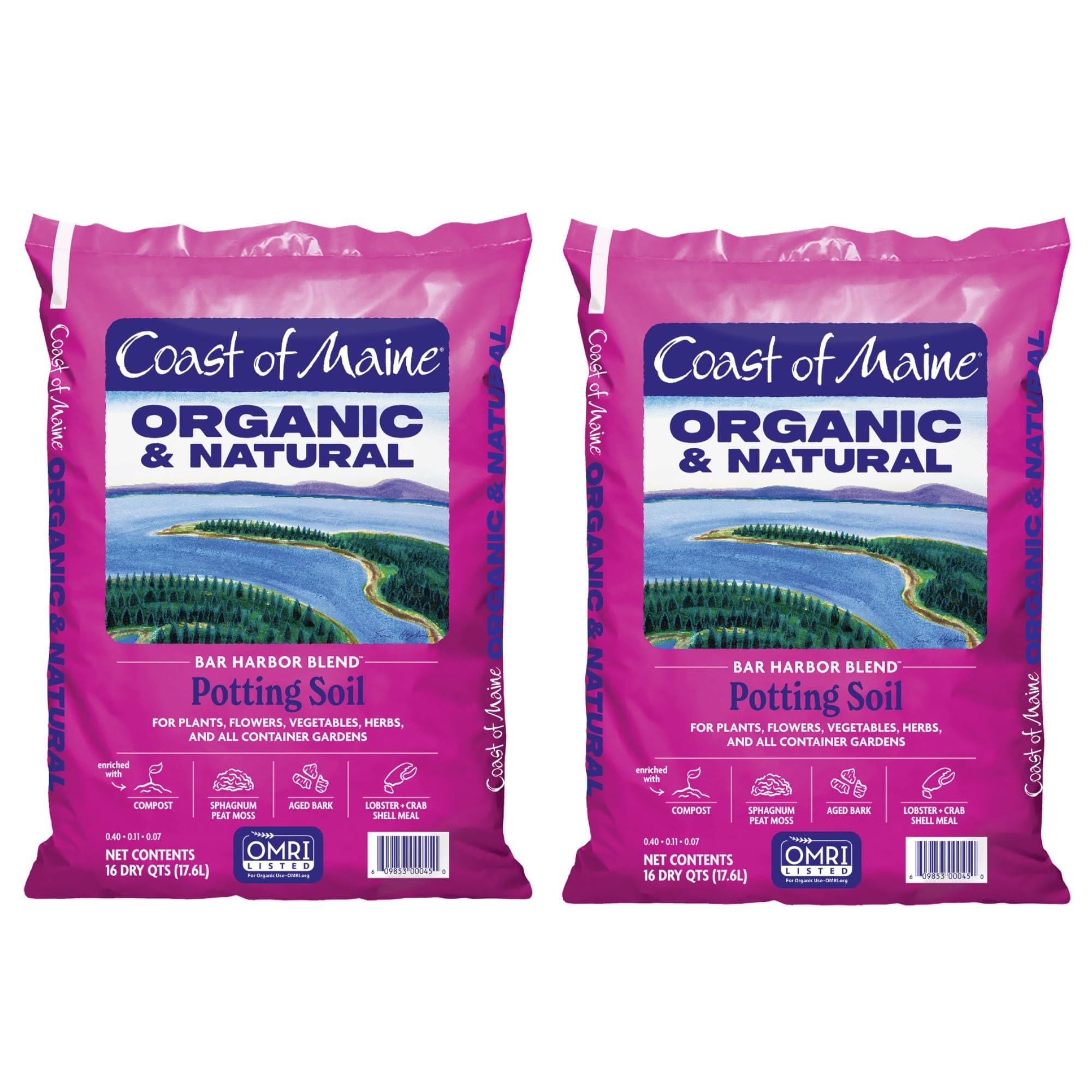
Lobster shells and kelp meal turned into the richest organic mix we found for containers.
You get a dark, nutrient-dense soil that feels almost like compost right out of the bag — the 16-quart volume holds 2x the volume of the Midwest Hearth mix, which means fewer refills when you are potting up a row of vegetables or a set of hanging baskets. The blend combines sphagnum peat moss, compost, perlite, lobster and crab shell meal, and kelp meal for a slow-release nitrogen supply that keeps feeding for weeks. Buyers report two bags mounded up 8 potato plants with enough left for two more planters, showing this mix goes further than typical bagged soils.
Weighing 14 pounds, it is light enough to carry comfortably — unlike the 50-pound Michigan Peat option — and the natural ingredients mean you will not see random sticks or debris that sometimes show up in cheaper blends. One reviewer noted it is organic and free of unexpected weeds, a common annoyance with bulk potting soils. Unlike the synthetic fertilizer in the Miracle-Gro mix, this one relies on natural slow-release nitrogen from the seafood compost, which also helps improve soil structure over time rather than just dumping nutrients.
Nutrient-rich texture
- Organic ingredients with no synthetic fertilizers
- 16 quarts covers multiple large planters (2x the Midwest Hearth volume)
- Owners mention it grows vegetables faster than expected
Consider this first
- More expensive per quart than standard fertilized blends
- The 14-lb bag is moderate weight but not the largest value option
Reach for this if: you want an organic, nutrient-rich soil that performs like a premium garden blend for vegetables, flowers, and herbs in containers or raised beds.
Look elsewhere if: you need the absolute lowest cost per pound for filling massive beds — the Michigan Peat bag gives you nearly 4x the weight for a similar price, though without the organic certification.
2. BuildASoil Potting Soil Recipe 3.0
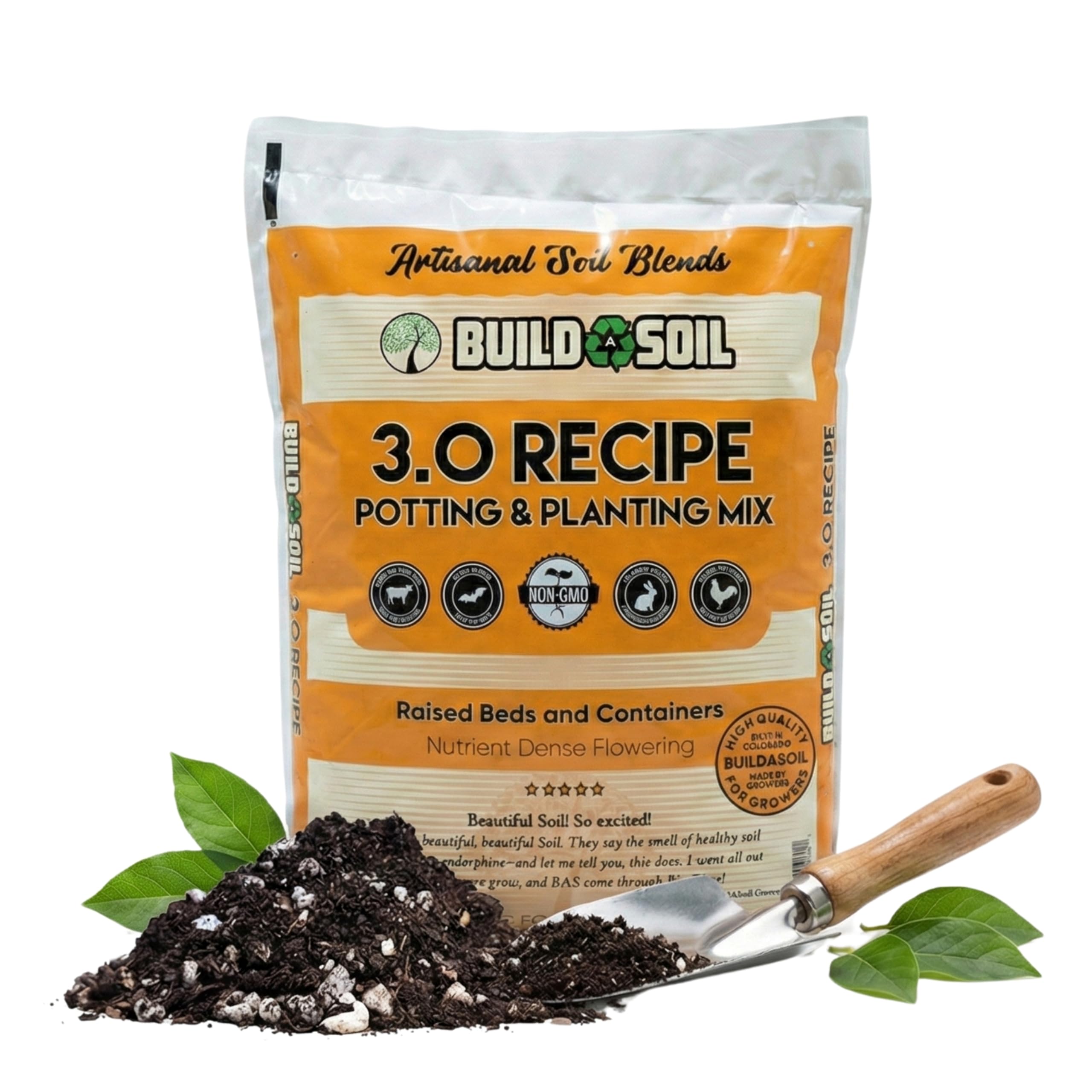
The water-only living soil that turns watering into the only chore you have left.
Every nutrient your plant needs — from vegetative growth to flowering — is already built into this 28.3-pound bag, so you simply add water for the entire growth cycle. Texture is chunky and aerated; one reviewer called it “airy, well-balanced” with no debris, which stands in contrast to cheaper soils that sometimes contain sticks or clumps.
The living soil technology means beneficial microbes convert the organic compost, worm castings, and mineral amendments into plant food over time. Buyers reported dramatic visible changes, with one noting plants turned from light green to dark green and very healthy. Unlike the Michigan Peat mix where buyers reported gnats emerging, reviewers of the BuildASoil noted a clean, consistent blend with no bugs or weeds. The catch is the higher upfront cost — one reviewer even said the price is the only negative and wished it were 25% cheaper. But if you factor out the cost of bottled fertilizers you would otherwise buy, the math changes.
Set-and-forget nutrition
- Living soil feeds plants for the full growth cycle with zero bottled nutrients
- 1 cubic foot volume (equals 32 dry quarts) — biggest single-bag option here
- Clean, consistent texture with no debris or gnats, per multiple reviews
Know before you buy
- Significantly more expensive than conventional potting mixes
- Heavier than most — 28.3 lbs may be a reach for some users
Best pick when: you want a true living soil that handles every stage of growth with just water — ideal for indoor plant enthusiasts and organic container gardeners who want to skip the bottle routine.
Not for you if: you only need a small bag for a couple of houseplants or you prefer a conventional fertilized mix at half the price.
3. Miracle-Gro Potting Mix 8 qt. (3-Pack)

The home-garden staple that feeds for half a year so you do not have to.
Each 8-quart bag fills two 8-inch containers, and the 3-pack gives you six containers’ worth of soil in one order — convenient if you are planting a batch of annuals or a row of vegetable pots. The built-in fertilizer feeds plants for up to 6 months, which is longer than the slow-release fertilizers in the Michigan Peat mix and eliminates the need to mix in amendments like the Coast of Maine or BuildASoil require for long-term feeding. One buyer mentioned it is well draining and does not pack down hard, so roots get consistent airflow and water reaches the root zone.
Unlike the heavier 50-lb Michigan Peat or the 28.3-lb BuildASoil, each 8-quart bag here is light and manageable — ideal if you want to avoid hauling bulk sacks. The manufacturer claims this mix grows plants twice as big versus unfed plants, a standard Miracle-Gro performance claim.
Convenient feeding
- Feeds container plants for up to 6 months — no extra fertilizer needed
- 3-pack covers six 8-inch pots for batch planting
- Buyers confirm it drains well and stays loose around roots
Watch for
- Not organic — uses synthetic slow-release fertilizer
- Three small bags mean more packaging than a single bulk bag
Grab this for: predictable, long-feeding performance in outdoor containers without needing to mix in extra nutrients — especially smart for annual flowers, vegetables, and shrubs in pots.
skip it if: you want organic certification or a single bulk bag with less packaging waste.
4. Premium Potting Soil Mix with Peat Moss, Vermiculite, Perlite (Made in USA) 8 Dry Quarts

The light-as-fluff blend that gives seedlings the airy start they crave.
At 1.25 kilograms (about 2.75 pounds) for 8 quarts, this is the lightest option in the lineup by a wide margin — comparing volumes, the 8-quart bag here holds half the volume of the 16-quart Coast of Maine and weighs 11 pounds less, which makes it incredibly easy to handle and pour. The mix of peat moss, perlite, and vermiculite gives you what one buyer described as a “light, fluffy texture” with perfect moisture retention but no sogginess, thanks to the drainage from perlite. Another reviewer praised it for germinating petunias, calling it “great seed starter.”
Unlike the Michigan Peat bag where buyers reported gnats coming out of the soil, this mix had no such complaints — reviewers noted “no weeds or bugs” in their bags. The pH is controlled to work across a broad spectrum of plant types, so you do not need to test and adjust before planting. The volume (8 quarts) is modest, making it better suited for small pots, seed trays, and a few houseplants than for filling large raised beds or multiple big containers. One reviewer did note “the bags are too small though,” so factor that in if you have larger projects.
Fluffy and clean
- Balanced blend of peat, vermiculite, and perlite for drainage and moisture retention
- Buyers confirm no weeds, bugs, or debris in the bag
- pH-controlled for broad plant compatibility
Consider the size
- 8-quart bag is small — not ideal for large planters or raised beds
- No built-in fertilizer, so you will need to feed plants later
Choose this for: seed starting, germinating delicate flowers, or repotting a few houseplants where you want a lightweight, pH-stable blend with no surprises.
Not for big jobs: if you are filling a raised bed or multiple large containers, the 50-lb Michigan Peat or the 16-quart Coast of Maine give you more volume for your money.
5. Michigan Peat General All Purpose Premium Potting Soil with Perlite — 50 Pounds

The 50-pound workhorse that fills massive planters without emptying your wallet.
This bag weighs 50 pounds — a 3.6x weight gap compared to the 14-pound Coast of Maine, which means you get serious volume for large-scale container gardening, raised beds, or mixing into garden soil. The blend uses dark reed sedge peat, perlite, and sand, plus starter and slow-release fertilizers are already included so you get several weeks of feeding from the bag itself. Buyers generally like the quality, with one noting it is “perfect for planting pot and container gardens” and arrived moist and ready to use.
The honest catch appears in the reviews: multiple buyers mentioned “lots of gnats come out of it.” Compared to the Midwest Hearth mix where reviews specifically note no bugs, and the BuildASoil where texture is described as clean with no debris, the gnat issue is a real trade-off for the low per-pound cost. The fertilizer package means you do not need to mix in anything extra right away — unlike the unfertilized Midwest Hearth mix — but once the gnats are in the bag, they can be hard to eliminate. If you are using this outdoors in raised beds, the gnats are less of a concern than they would be for indoor houseplants.
Value in bulk
- 50 pounds — far more soil per dollar than any other bag here
- Comes with starter and slow-release fertilizers blended in
- Works for pots, planters, raised beds, and container vegetables
Honest warning
- Multiple buyer reports of fungus gnats emerging from the bag
- Very heavy — 50 lbs is a strain to carry and pour
Reach for this when: you have large outdoor containers, raised beds, or a vegetable garden to fill and you need the most soil volume for your dollar — the slow-release fertilizer is a bonus.
Avoid it if: you are potting indoor plants where fungus gnats would be a problem, or if you cannot handle lifting a 50-lb bag.
Understanding the Specs
Volume (Quarts vs. Cubic Feet)
Volume tells you how many pots a bag can fill. Most standard potting mixes list volume in quarts or cubic feet. One cubic foot equals roughly 32 quarts. An 8-quart bag typically fills two 8-inch diameter pots. A 16-quart bag covers about four. If you are working with large planters (over 12 inches), you want a bigger volume or a multi-pack — the BuildASoil’s 1 cubic foot is the largest single volume here, while the 8-quart Midwest Hearth is the smallest.
Weight and Portability
Weight matters because you carry the bag from the store, and you lift it to pour into pots. The 1.25-kilogram (2.75-lb) Midwest Hearth bag is easily handled with one hand. The 14-pound Coast of Maine is manageable for most people. The 28.3-pound BuildASoil requires two hands. The 50-pound Michigan Peat is a genuine lift — be sure you can handle it or you will need to scoop from the bag on the ground.
Texture: Peat Moss, Perlite, and Vermiculite
These three ingredients control how the soil feels and behaves. Peat moss is the base that holds moisture. Perlite (small white volcanic glass beads) creates air pockets so roots can breathe and excess water drains out. Vermiculite (golden mineral flakes) soaks up water like a sponge and releases it slowly. A mix with all three — like the Midwest Hearth — gives you the best of both: moisture retention plus drainage. A mix heavy on peat moss alone may stay wet too long, while one heavy on perlite may dry out faster.
Fertilizer: Slow-Release vs. Living Soil
Some mixes come with synthetic slow-release fertilizer pellets that feed plants for weeks or months. The Michigan Peat and Miracle-Gro mixes both include this. Other mixes — like the Coast of Maine and BuildASoil — use organic compost, worm castings, and mineral amendments that break down naturally. The organic approach feeds the soil microbes, which in turn feed the plant over a longer period. If you prefer to control exactly what goes into your plants, a base mix like the Midwest Hearth is a blank slate you can fertilize on your own schedule.
FAQ
What is the difference between garden soil and potting mix?
How much potting soil do I need for an 8-inch pot?
Will these mixes work for indoor houseplants?
Do I need to add fertilizer to any of these soils?
What does “living soil” mean exactly?
Is the Coast of Maine Bar Harbor Blend organic certified?
Why do some potting soils attract fungus gnats?
Can I use these mixes in a raised garden bed?
How long does a bag of potting soil last before it goes bad?
Which of these is best for seed starting?
Final Thoughts: The Verdict
For most people, the best soil for plant growth winner is the Coast of Maine Bar Harbor Blend because it combines nutrient-rich organic ingredients (lobster shell meal, kelp meal, compost) with a 16-quart volume that covers several containers without being as heavy as the 50-lb Michigan Peat. If you want a water-only living soil that feeds itself for the full growth cycle, grab the BuildASoil Recipe 3.0. And for budget-conscious container gardening on a large scale, the standout is the Michigan Peat General Purpose for sheer volume per dollar — just keep it outdoors to avoid gnat trouble.
How We Picked
We do not accept paid placement. Every pick is matched to a real buyer and a real use-case; we do not hands-on test units.
Sources & Methodology
Specifications: manufacturer listings and product documentation. Review insights: verified customer reviews, as of July 2026. Pricing: not shown on this page (it changes often); check the current price via the retailer link.
As an Amazon Associate, Lawn Gear Lab earns from qualifying purchases. This does not affect which products we feature.