
Specs are compiled from manufacturer listings and verified buyer reviews and can change over time — please confirm the key details on the product page before buying.
You watch a promising plant turn yellow, wilt, or just stop growing after you repotted it. The problem is almost always the dirt below the surface. Potting soil controls how often you need to water, how much food reaches the roots, and whether those roots get enough air. The right mix makes gardening feel easy. The wrong one turns every pot into a battle with fungus gnats, crusty topsoil, or water that runs straight through and out the bottom.
I’m Rikta — the founder and writer behind Lawn Gear Lab. This guide is built by comparing the manufacturers’ published specifications and the patterns across verified customer reviews, so you get each pick’s real strengths and trade-offs instead of marketing spin.
Finding the best rated potting soil for your project depends on three things: ingredients, drainage, and how long the nutrients last. Whether you grow heirloom tomatoes on a balcony, start seeds in a sunny window, or fill a dozen patio pots, we break it all down here.
Quick Picks
- FoxFarm Ocean Forest Potting Soil — Premium Performer
- Coast of Maine Organic & Natural Planting — Top Value
- Coast of Maine Organic & Natural Bar Harbor — Container Champion
- Miracle-Gro Moisture Control Potting Mix — Tech-Forward Blend
- Miracle-Gro Potting Mix (2-pack, 1 cu. ft. each) — Classic Workhorse
- Espoma Organic Potting Soil Mix — Indoor Specialist
- Black Gold 1302040 8-Quart All Organic Potting — Gnat-Free Pick
How To Choose The Best Potting Soil
Not every bag of potting soil is the same, even when they look similar on a store shelf. A mix designed for succulents will drown a fern. A heavy garden loam will suffocate roots in a container. Here are the three things to check before you buy.
The Ingredient List Tells the Whole Story
The first thing to look for is what the bag actually contains. Sphagnum peat moss or coconut coir (a fiber from coconut husks) hold moisture. Perlite (tiny white volcanic rocks that look like Styrofoam) creates air pockets so roots can breathe. Compost adds slow-release nutrients. A mix with lots of bark chunks or unlabeled “forest products” can rob the soil of nitrogen as it decomposes, making leaves turn yellow a few weeks after planting.
Drainage and Water Retention Are a Balancing Act
Your watering style matters as much as the plant’s needs. If you tend to water generously, a soil that boasts “moisture control” — often with coir and a wetting agent (a substance that helps dry soil absorb water evenly) — can keep roots from rotting. If you often forget to water, look for soil with extra perlite and organic matter like composted manure, which holds moisture longer without getting soggy. Bag labels rarely say “best for forgetful waterers,” but reading the ingredient list tells you exactly what you are getting.
Nutrient Content and How Long It Lasts
Some soils come “pre-charged” with enough fertilizer to feed plants for months. Others are lean, assuming you will add your own plant food. A bag that says “feeds up to 6 months” usually contains a slow-release synthetic fertilizer (man-made nutrients that dissolve gradually). A purely organic mix — compost, worm castings (the waste from earthworms, rich in nutrients), kelp meal (dried, ground seaweed) — releases nutrients more slowly and is gentler on sensitive roots. But it may require a liquid fertilizer boost after a few weeks. Neither is better. The right one depends on if you want to low-maintenance or prefer to control feeding yourself.
Quick Comparison
| Model | Best For | Volume | Weight | Organic? | Amazon |
|---|---|---|---|---|---|
| FoxFarm Ocean Forest | Serious container gardens | 1.5 cu ft | 34 lb | Yes | Amazon |
| Coast of Maine Tomato & Veg | Vegetables in pots & beds | 20 qt | — | Yes | Amazon |
| Coast of Maine Bar Harbor | Versatile container gardening | 16 qt | 14 lb | Yes | Amazon |
| Miracle-Gro Moisture Control | Forgiving moisture management | 2 cu ft | 40.51 lb | No | Amazon |
| Miracle-Gro Potting Mix (2-pack) | Everyday all-purpose replanting | 1 cu ft | — | No | Amazon |
| Espoma Organic Potting Mix (2-pack) | Indoor & sensitive transplants | 8 qt | — | Yes | Amazon |
| Black Gold Organic Potting Soil (2-pack) | Fungus-gnat-free houseplant care | 8 qt | — | Yes | Amazon |
In‑Depth Reviews
1. FoxFarm Ocean Forest Potting Soil with 2 Plant Tags, 1.5 cu ft
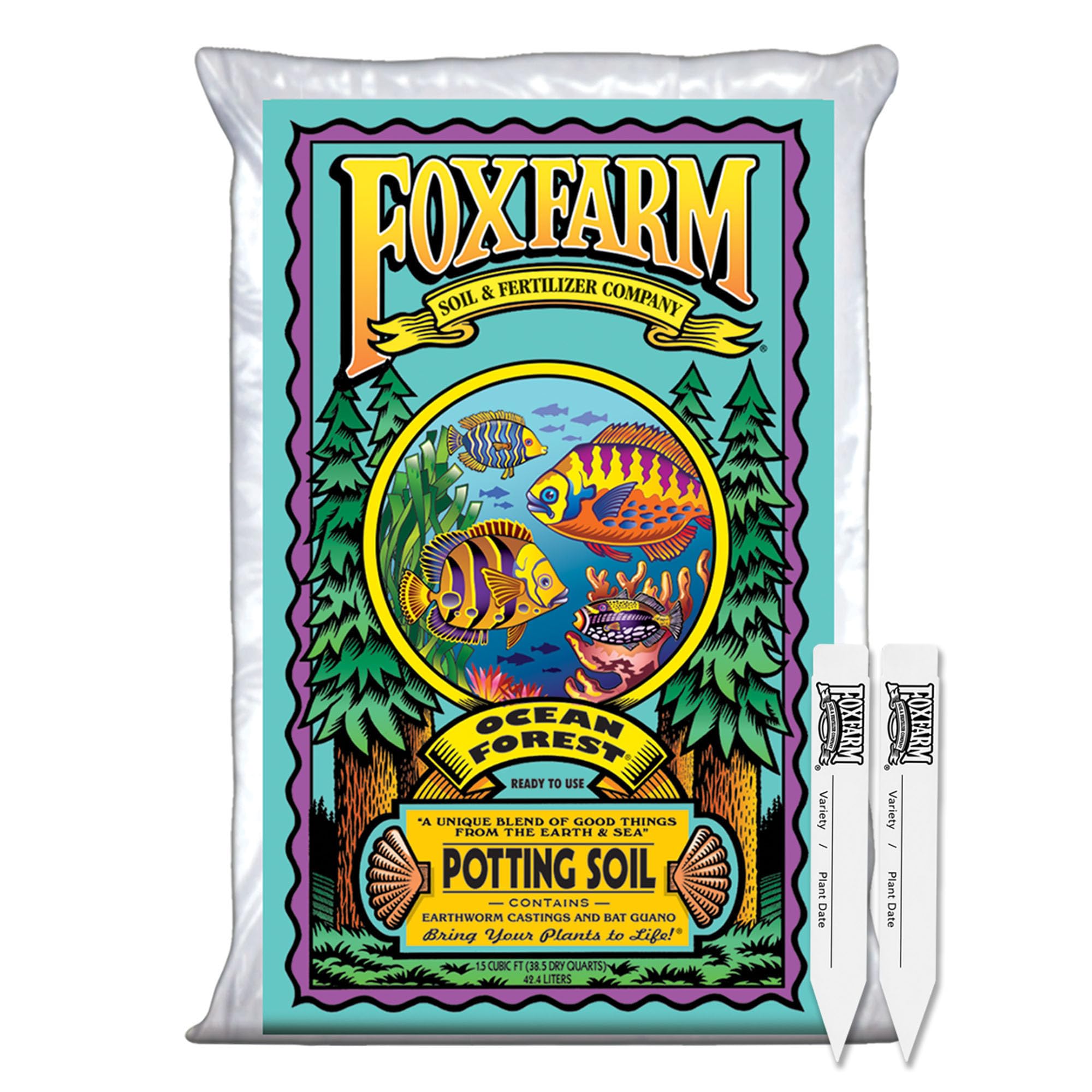
The heavyweight champion that makes container plants outgrow everything else in the garden.
You get a 1.5 cu ft bag at 34 pounds and the Coast of Maine Bar Harbor blend is 14 pounds for 16 quarts — because it is packed with nutrient-dense ingredients like aged forest products, sandy loam (a crumbly, mineral-rich soil), and oyster shell. Buyers report that tomato plants started from seed and planted side-by-side — one in FoxFarm, one in a competing brand — produced visibly bigger, greener plants in the FoxFarm soil, even with identical watering. The weight means water absorbs into the soil immediately rather than pooling on top.
While the price sits at the premium end, the soil is ready to use straight from the bag — no mixing, no extra fertilizer needed. The recipe includes fish emulsion (liquid fish waste), crab meal, shrimp meal, earthworm castings, and kelp meal, giving seedlings everything they need to become vigorous plants. You also get two plant tags for marking varieties and planting dates.
The growth gap is real: FoxFarm gives you a 1.5 cu ft bag at 34 pounds, packing more nutrient-dense ingredients per scoop than lighter mixes. If you are serious about container vegetables or flowers and want to skip the guesswork of amending cheap soil, this is the choice that shows results in weeks, not months.
Reach for this if: you are growing vegetables, flowers, or seedlings in containers and want the richest ready-to-use mix on the market.
Look elsewhere if: your budget is tight, or you need to carry bags up stairs — the 34-pound weight is no joke.
2. Coast of Maine Organic & Natural Planting Soil for Vegetables & Tomatoes (20 Qt)

A lightweight organic blend that pushes tomatoes and veggies into fast, visible growth.
This mix gives you 20 quarts of soil compared to the Black Gold or Espoma 8-quart packs — at a price that lands comfortably in the mid-range. It is built around composted manure and sphagnum peat moss, which balance moisture retention and drainage well enough for both in-ground planting and containers. Owners mention that plants show visible growth within days after transplanting, and that the lightweight texture makes it easy to fill 5-gallon pots without the bag feeling like a workout.
The soil includes aromatic wood material to help deter insects, and it holds moisture without turning into a swamp — a common complaint with cheaper organic blends. However, some reviewers mention it may contain small twigs or undecomposed matter, so if you are sowing fine seeds like carrots, a quick sift before planting helps.
Unlike the denser, nutrient-packed FoxFarm, Coast of Maine takes a lighter, more airy approach that roots seem to love. The 20-quart bag covers more ground for less money, making it the best pick for anyone filling multiple vegetable planters.
Why this works
- 20 quarts gives you the most volume for the money among mid-range organic options
- Lightweight texture means you can fill pots without heavy lifting
- OMRI-listed for organic gardening
One real trade-off
- May contain small twigs or uncomposted material — sift before direct-sowing tiny seeds
Perfect for vegetable gardeners: if you are planting tomatoes, peppers, or squash in pots or raised beds and want an organic soil that delivers quick results, start here.
Not ideal for: indoor houseplant fans who want a screened, uniform mix without any woody bits.
3. Coast of Maine Organic & Natural Bar Harbor Blend Potting Soil (16 QT)
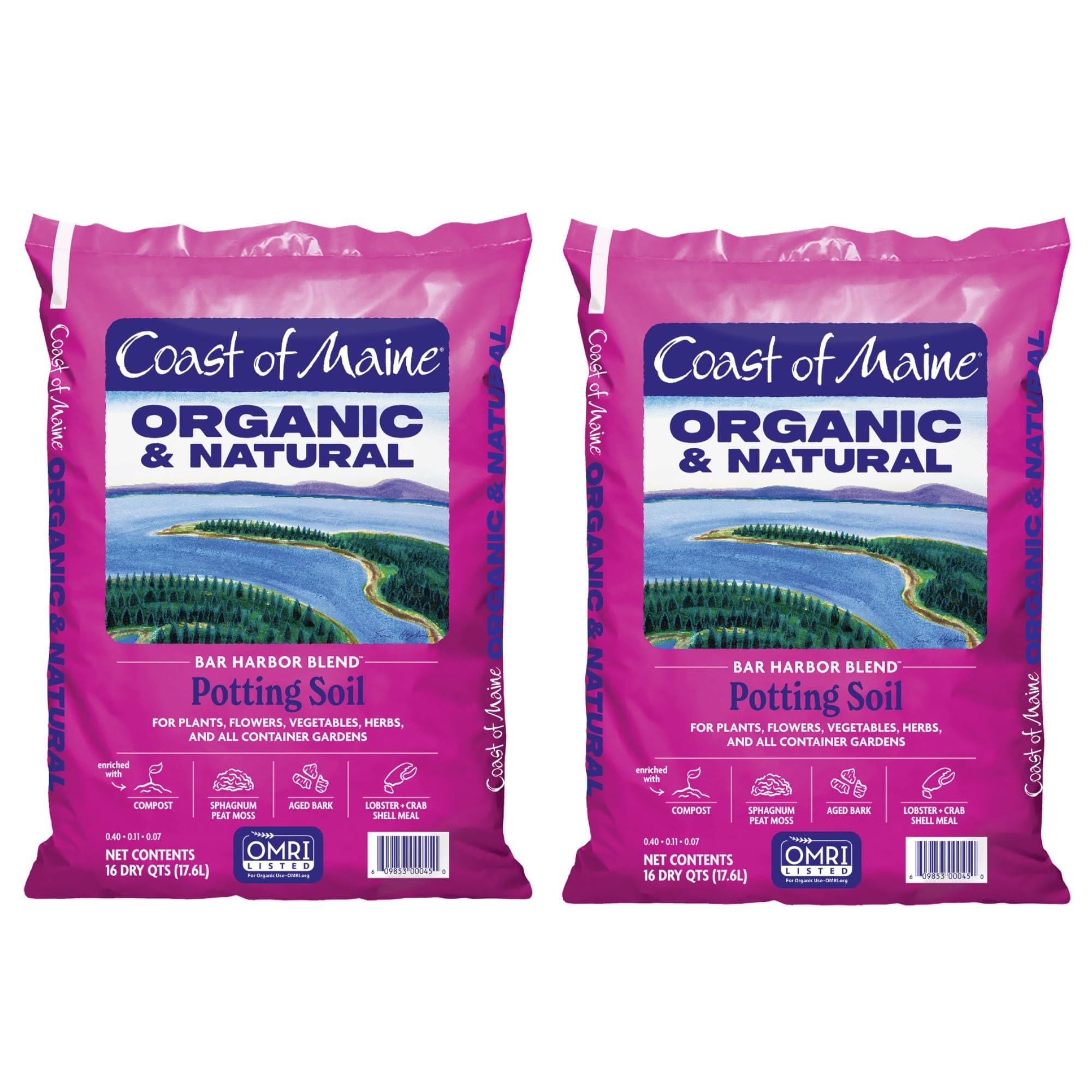
The dark, rich soil that makes potato mounding easy and tomatoes look their best.
Formulated with sphagnum peat moss, compost, perlite, and a signature mix of lobster and crab shell meal (ground shells that add calcium and chitin, a compound that helps plants build strong cell walls), this 16-quart bag is an upgrade over standard organic blends. Customers note that two bags were enough to mound up eight potato plants, with extra soil left for two more planters. The soil has a noticeably darker color than peat-heavy competitors, which comes from the rich compost content, and reviewers point out it does not have the funky smell some compost-based soils carry.
At 14 pounds for 16 quarts, FoxFarm’s bag is 1.5 cu ft at 34 lb; this Bar Harbor blend is 16 quarts at 14 lb, making it easier to move around the yard. The Bar Harbor Blend uses natural slow-release nitrogen, so it feeds plants steadily without the risk of burning roots. It also includes enough perlite and coco coir to keep the texture loose and well-draining.
One experienced reviewer called it “only the best” and said their tomatoes never looked so good after switching from a top brand. If you want an organic soil that feels like real earth — dark, crumbly, and alive — rather than fluffy peat, this is it.
Sustainable performance: The lobster and crab shell meal adds calcium and chitin, which helps plants build strong cell walls. This is not a gimmick — it is a measurable difference in structure and feeding.
Grab this for: heavy-feeding vegetables in containers, raised beds, or hanging baskets where you want organic ingredients and a mix that actually looks and feels like good soil.
Hold off if: you are on a strict budget — the price is higher than basic 8-quart organic packs, even though the volume is double.
4. Miracle-Gro Moisture Control Potting Mix (2 cu. ft.)

The forgiving mix that covers your back when you water too much or too little.
This is the bag to reach for if you have ever killed a plant by overwatering. Miracle-Gro’s proprietary AquaCoir Formula is designed to absorb up to 33% more water than basic potting soil (the kind without sphagnum peat moss, coir, and a wetting agent), but it also releases excess moisture so roots do not sit in a puddle. It feeds plants for up to 6 months from a single application and promotes vigorous growth, according to the manufacturer’s claim.
Buyers who have used this mix for ten years say it helped them become better gardeners, and one reviewer noted starting 500 to 700 baby plants per season in this soil without issues. At 2 cubic feet and 40.51 pounds, it is the heaviest bag on this list, but it also gives you the most volume for your money among the premium options. Reviewers consistently note that the spring batches tend to be finer and more consistent than bags bought late in the season, which sometimes have larger chunks.
One key distinction from the organic mixes above: the moisture control and extended feeding come from synthetic ingredients. That is not a knock — it is simply a different philosophy. If you want a plug-and-play soil that handles inconsistent watering schedules, this is the one.
The moisture advantage
- AquaCoir formula protects against both over- and under-watering
- Feeds plants for up to 6 months without additional fertilizer
- Large 2 cu ft bag fills two 14-inch containers
The synthetic reality
- Not organic — uses synthetic slow-release fertilizer
- Bag consistency can vary by season; later-season bags may have chunkier texture
Choose this for: forgetful waterers, indoor container plants, or anyone starting a large number of plants who cannot afford to lose them to moisture swings.
Pass on it for: organic gardening, seed starting that requires precise moisture control without chemical feed, or anyone who wants to use their own fertilizer regimen.
5. Miracle-Gro Potting Mix (2-pack, 1 cu. ft. each)

The no-surprises potting mix that has been getting the job done for decades.
This two-pack gives you 1 cubic foot per bag — enough to fill two 12-inch containers each — and feeds plants for up to 6 months. It grows plants vigorously, a claim backed by generations of weekend gardeners, according to the brand. The texture is good and workable, helping plants settle quickly and maintain consistent moisture without turning into a solid block. Shoppers say it works well for both indoor and outdoor container plants.
Where this mix differs from the moisture-control version above is simplicity. It does not have the AquaCoir additives, which means you need to be a little more careful about overwatering, but it also costs less and delivers the same reliable feeding schedule. Some buyers experienced occasional small debris in their bags, and quality can vary slightly from bag to bag, but the overall consistency is solid enough that gardeners keep coming back. One reviewer summed it up: it is the “only dirt” their plants love.
Straightforward and effective: The 2-pack format gives you two 1 cu ft bags, making it a flexible choice for mid-size projects. If you know how to water and just want soil that works, this is the reliable standard.
Best for: general-purpose container planting — flowers, vegetables, shrubs — where you want proven performance at a fair price per cubic foot.
Skip it for: organic gardening, moisture-sensitive plants, or if you have strong feelings about avoiding synthetic fertilizers.
6. Espoma Organic Potting Soil Mix (2-pack, 8 qt. each)

A clean, fine organic mix that indoor plants and African violets respond to immediately.
Espoma’s AP8-2 blend includes sphagnum peat moss, humus (decomposed organic matter), perlite, earthworm castings, alfalfa meal, kelp meal, and feather meal — a rich list of organic ingredients that smells earthy rather than chemical. The standout ingredient is Myco-Tone, a proprietary blend of endo and ecto mycorrhizae (beneficial fungi that attach to roots and help them absorb water and nutrients more efficiently). This makes it particularly good for transplants, where reducing root shock matters.
Buyers report that the soil arrives clean and fine-textured, but one reviewer pointed out a key drawback: the mix is too dry on arrival to absorb water on a new plant. You will need to moisten it before use or water very thoroughly after potting. This is common with peat-heavy organic mixes that have been sitting in a warehouse, and it is not a defect — it just requires a small extra step. An African violet responded “very well” after transplant, and the variegated ivy next to it took off quickly.
The 2-pack format gives you two 8-quart bags, which together hold 16 quarts — about the same as the Coast of Maine Bar Harbor bag. But the volume, at 512 oz total, is better suited for smaller indoor pots and houseplant repotting sessions than big vegetable planters.
What makes it special
- Myco-Tone mycorrhizae help roots absorb nutrients more efficiently
- Organic ingredients — no synthetic plant foods or chemicals
- Fine, clean texture with no large bark chunks
The catch
- Arrives very dry and needs pre-moistening before it absorbs water well
- More expensive per quart than larger organic bags
Reach for this when: repotting indoor plants, African violets, or herbs in containers where you want the root-boosting benefit of mycorrhizae without synthetic chemicals.
Not the right choice for: large outdoor planters or raised beds — the 8-quart bags go fast and the cost adds up quickly at scale.
7. Black Gold 1302040 8-Quart All Organic Potting Soil (2-pack)

The surprising houseplant favorite that came through without a single fungus gnat.
If you grow houseplants, you know the dread of opening a bag of organic soil and seeing tiny flying insects emerge days later. One reviewer tried Black Gold specifically while keeping their fingers crossed that it would not introduce fungus gnats to their houseplants — and it did not. Not one. That alone makes this a standout for indoor gardeners who have been burned by contaminated organic mixes in the past.
The soil arrives rich and moist, with a texture that does not compact or cause standing water after watering. Owners mention plants thrive in it and specifically call out how it revives old soil when mixed in. At 8 quarts per bag with a two-pack, the total volume is 16 quarts — the same total as the Espoma pack, but Black Gold comes at a slightly lower price point. It is a pure organic mix with no synthetic additives, so it works well for container gardens, herbs, and reviving tired potting soil from previous seasons.
Where it differs from the similarly-priced Espoma is simplicity: no mycorrhizae boost, no special ingredients — just good, clean organic soil that does its job without drama or pests.
A clean, safe repotting experience: The two-pack delivers 16 total quarts of organic soil that arrives moist and ready to use. For houseplant owners who have been fighting fungus gnats, this is the most reassuring option on the list.
Ideal for: houseplant owners, container gardeners, and anyone who wants organic potting soil that does not introduce gnats or other pests into their home.
Not the best fit for: large container vegetables or heavy feeders — the 8-quart bags disappear fast in big pots, and the nutrient density is lighter than purpose-built veggie blends.
Understanding the Specs
Volume — Quarts vs Cubic Feet
Potting soil is sold in quarts (qt) or cubic feet (cu ft). One cubic foot is roughly 25.7 quarts. A 20-quart bag is about 0.78 cubic feet. When comparing prices across brands, convert everything to the same unit so you are not fooled by a small bag that looks like a bargain. A 1.5-cubic-foot bag holds nearly 39 quarts, while an 8-quart bag fills only a handful of medium pots.
Weight and Texture
A heavier bag often means more mineral content — sand, loam, or rock dust — which can improve drainage and nutrient density. A lighter bag usually contains more peat moss, perlite, or bark, making it easier to carry but potentially quicker to dry out. Neither is inherently better; the right weight depends on whether you prioritize ease of handling or moisture retention.
FAQ
What is the difference between potting soil and garden soil?
Can I use the same potting soil for indoor and outdoor plants?
How do I prevent fungus gnats in my potting soil?
How long does potting soil last in an opened bag?
Does organic potting soil really make a difference?
What is perlite and why is it in potting soil?
Can I reuse potting soil from last season?
What does “feeds up to 6 months” actually mean?
Is more expensive potting soil worth the money?
What is the difference between 8-quart and 1.5-cubic-foot bags?
Final Thoughts: The Verdict
Across the board, the best rated potting soil winner is the FoxFarm Ocean Forest because it packs the most nutrient density per scoop with a proven growth advantage over standard mixes. If you want a large-volume organic option that is lighter to carry and still produces fast results, grab the Coast of Maine Tomato & Vegetable soil. And for indoor houseplant owners who have dealt with fungus gnats one time too many, the Black Gold organic potting soil is the safe, clean pick that finally ends the pest cycle.
How We Picked
We do not accept paid placement. Every pick is matched to a real buyer and a real use-case; we do not hands-on test units.
Sources & Methodology
Specifications: manufacturer listings and product documentation. Review insights: verified customer reviews, as of July 2026. Pricing: not shown on this page (it changes often); check the current price via the retailer link.
As an Amazon Associate, Lawn Gear Lab earns from qualifying purchases. This does not affect which products we feature.